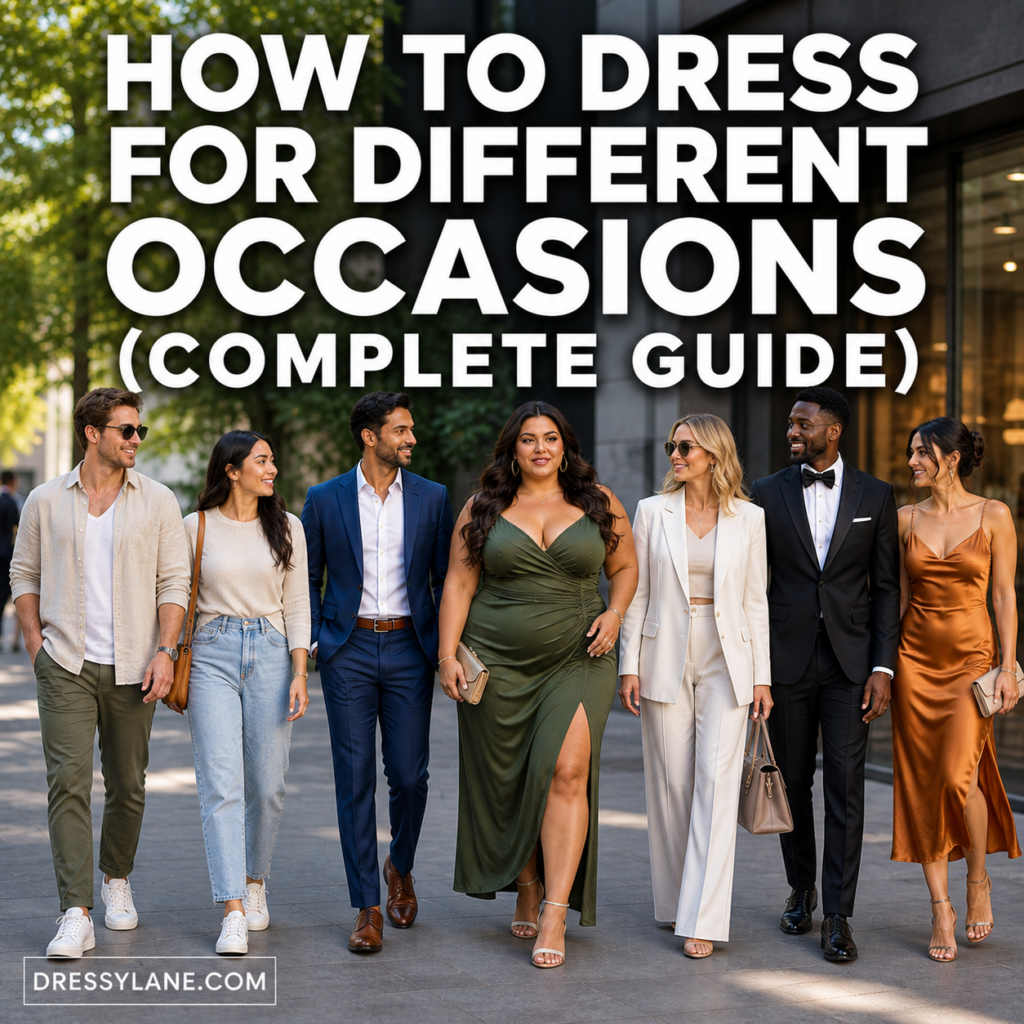
Knowing how to dress for different occasions is less about memorizing dozens of dress codes and more about learning how to read a situation.
A wedding, job interview, casual lunch, outdoor concert, long travel day, and formal dinner obviously require different clothes. But the decision-making process is surprisingly similar: consider the occasion, setting, formality, weather, activity, and people around you, then choose clothes that meet those needs without making you uncomfortable.
Once you understand that process, getting dressed becomes much easier—even when an invitation is vague, the weather changes halfway through the day, or you have ten minutes to put an outfit together.
This guide covers those situations and more, with practical advice for men and women on dressing appropriately without overthinking every outfit.
Start With the Situation, Not the Clothes
Before opening your closet, answer five questions:
- Where am I going?
- Why am I going there?
- How formal is it likely to be?
- What will I actually be doing?
- What will the weather and environment be like?
These questions eliminate many unsuitable choices immediately.
A birthday dinner at an upscale restaurant calls for something different from a birthday barbecue. An outdoor wedding on grass creates different footwear requirements from a ballroom wedding. A work conference where you’ll stand for eight hours requires more comfortable shoes than a two-hour dinner.
When you’re uncertain, think in terms of appropriateness before style.
Our guide to choosing an outfit that fits the situation explores this approach in greater detail.
Understand the Basic Levels of Formality
Most occasions fall somewhere along a spectrum rather than into perfectly defined categories.
Casual
Think:
- Jeans
- Chinos
- Casual trousers
- T-shirts
- Polos
- Casual dresses
- Knit tops
- Sneakers
- Flat sandals
- Casual boots
Casual doesn’t mean careless. Clothes can be relaxed while still fitting properly and looking maintained.
Smart Casual
Smart casual bridges everyday clothes and traditional business clothing.
For men, this might mean chinos, an Oxford shirt or knit polo, and loafers or clean minimalist sneakers.
For women, consider tailored trousers with a knit top, a midi dress with flats, or dark jeans with a blouse and structured jacket.
Business Casual
Business casual varies considerably by workplace.
Typical pieces include:
- Tailored trousers
- Chinos
- Button-down shirts
- Blouses
- Fine-gauge knitwear
- Midi skirts
- Simple dresses
- Loafers
- Flats
- Conservative boots
A blazer can increase the formality without requiring a full suit.
Business Professional
More traditional workplaces may expect suits, tailored dresses, conservative separates, dress shirts, and polished leather footwear.
Cocktail
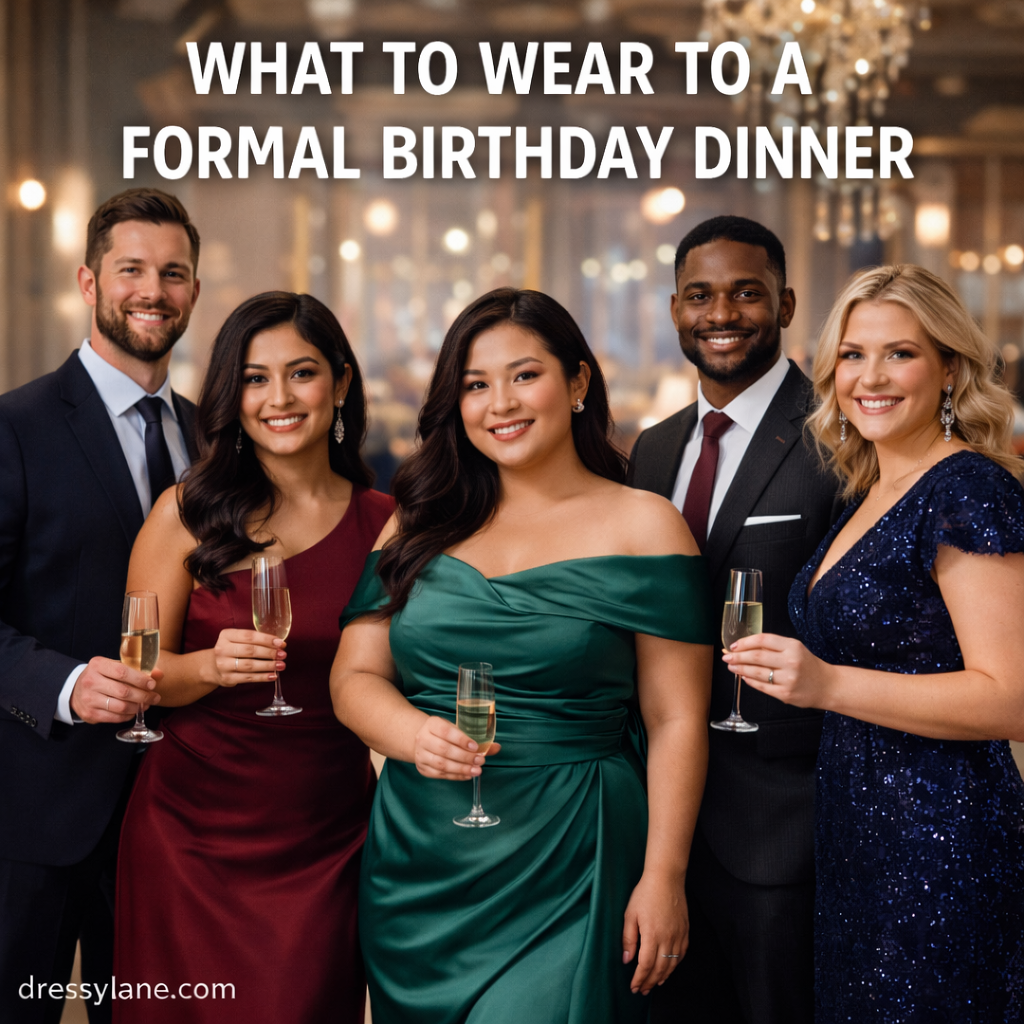
Cocktail attire is dressier than ordinary evening clothes but generally less formal than black tie.
A cocktail or midi dress, dressy jumpsuit, tailored suit, or dark jacket-and-trouser combination can work depending on the event.
Formal and Black Tie
Black tie has considerably clearer expectations.
For men, a tuxedo is the traditional standard.
For women, floor-length evening gowns are conventional, although sophisticated formal dresses may be acceptable depending on the event.
When an invitation specifies a dress code, treat that as more important than generic fashion advice.
How to Dress Casual Without Looking Sloppy
Casual clothing is where small details matter most.
The difference between relaxed and sloppy often isn’t the type of garment—it’s its condition and fit.
A plain cotton T-shirt, straight-leg jeans, and sneakers can look excellent when:
- The shirt holds its shape.
- The jeans fit properly.
- The sneakers are clean.
- Colors work together.
- Nothing is excessively wrinkled.
The same outfit looks careless when the shirt has a stretched collar, the jeans drag along the ground, and the shoes are dirty.
Easy Casual Formulas
For men:
Dark jeans + heavyweight cotton T-shirt + clean sneakers
Chinos + polo + casual leather shoes
For women:
Straight-leg jeans + fitted or draped knit top + flats
Casual midi dress + denim jacket + sneakers
If you want to look slightly elevated without becoming conspicuously dressy, see our guide to what to wear when you don’t want to overdress.
How to Look Dressy but Still Casual
Sometimes neither jeans-and-a-T-shirt nor formal clothing feels right.
This is where polished casual dressing works particularly well.
Instead of adding more pieces, upgrade one or two elements.
Swap:
- Athletic sneakers for loafers
- A graphic T-shirt for a solid knit top
- Distressed jeans for dark denim
- A hoodie for a cardigan or overshirt
- Leggings for relaxed tailored trousers
Women can combine straight-leg trousers with a simple tank and cardigan or wear a casual midi dress with understated jewelry.
Men can pair chinos with a knit polo or wear dark jeans with an Oxford shirt.
You look intentional without appearing as though you’re headed somewhere much more formal.
Weddings, Ceremonies, and Formal Events
Weddings require particular attention to the stated dress code, venue, season, and time of day.
Weddings
Avoid treating every wedding as interchangeable.
A summer garden ceremony might call for breathable linen blends, lightweight wool, cotton poplin, or flowing dresses.
A winter evening wedding may suit heavier wool tailoring, velvet, crepe, satin, or darker seasonal colors.
For specific wedding situations, see:
- What to Wear to a Summer Wedding as a Guest
- What to Wear to a Winter Wedding
- What to Wear to a Black-Tie Wedding
Traditional and Cultural Ceremonies
Religious and traditional ceremonies may have expectations that go beyond ordinary formalwear.
There may be customs concerning:
- Head coverings
- Shoulder coverage
- Hem length
- Footwear
- Colors
- Removing shoes
- Traditional garments
Don’t guess when you’re attending a ceremony from a tradition unfamiliar to you. Ask the host or consult guidance from the relevant institution or community.
Respect for the ceremony matters more than finding the most fashionable interpretation of its dress code.
Funerals and Memorial Services
Respect and restraint should guide clothing for funerals and memorial services.
Dark or subdued colors are usually dependable unless the family requests something different.
Suitable choices may include:
For men:
Dark trousers + collared shirt + dark sweater, jacket, or suit
For women:
Dark trousers and blouse, conservative dress, or skirt with a simple top
Avoid clothing that is unusually revealing, attention-grabbing, or obviously casual unless the circumstances specifically call for it.
See our guides to what to wear to a funeral for more specific guidance.
Interviews, Work, and Professional Occasions
Professional clothing should communicate that you understand the environment.
That doesn’t always mean wearing a suit.
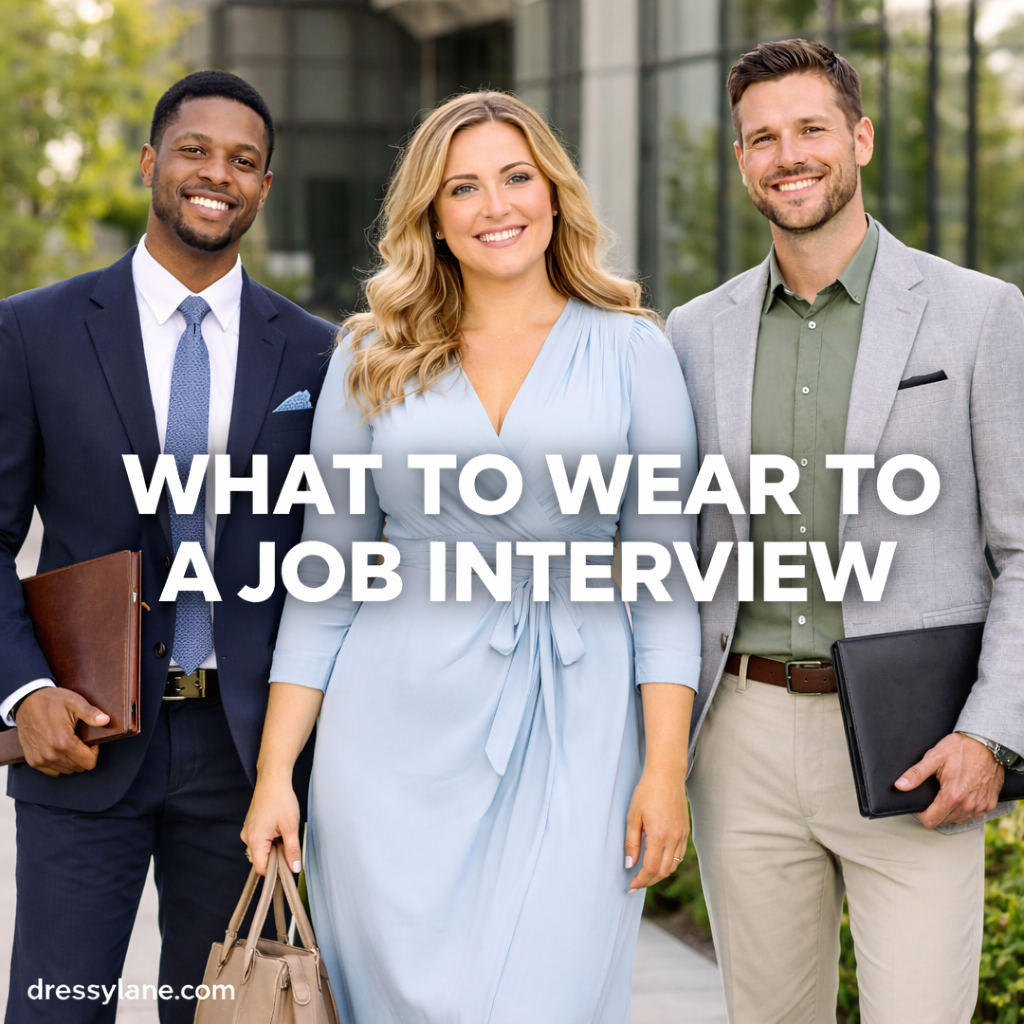
Job Interviews
Research the organization before deciding what to wear.
A conservative financial firm and a small creative studio may have completely different expectations.
When uncertain, being somewhat more polished than the organization’s normal daily clothing is generally a practical starting point.
See what to wear to a job interview for the full breakdown.
For traditional corporate environments, use our corporate interview attire guide.
Your First Day at Work
Your first day isn’t the ideal time to test the outer limits of the dress code.
Start relatively conservatively, observe what coworkers actually wear, and adjust over the following days.
Our guide to what to wear on your first day at work covers that transition in more detail.
Everyday Professional Success
Keep a few dependable combinations available.
For example:
Men: chinos + Oxford shirt + loafers
Women: tailored trousers + knit top + flats
More formal: coordinating trousers or skirt + button-down/blouse + blazer + leather shoes
Repeatable combinations reduce morning decisions without making you look repetitive.
Parties, Dinners, and Social Events
Social occasions usually provide more room for personality.
Birthday Parties
Let the venue determine the outfit.
A backyard birthday may require little more than polished casual clothes, while dinner at an upscale restaurant could call for smart casual or cocktail-adjacent clothing.
See what to wear to a birthday party.
Dinner Parties
For a dinner at someone’s home, polished casual is often safer than arriving in either extremely relaxed clothing or formalwear.
Consider dark jeans or trousers, a blouse, button-down, knit polo, simple dress, loafers, flats, or understated boots.
For more ideas, see what to wear to a dinner party.
Cocktail Parties
This is the time to move noticeably beyond everyday casual clothing.
Think cocktail dresses, sophisticated jumpsuits, dressy separates, dark tailoring, dress shirts, loafers, or dress shoes.
See what to wear to a cocktail party.
Hotel Dining
Hotels range from casual resort restaurants to dining rooms with explicit dress policies.
Look up the restaurant before arriving, particularly at luxury properties and resorts.
Our guide to how to dress for hotel dining covers this specific situation.
What to Wear When You’re Not Sure of the Vibe
An invitation may simply say “dinner,” “party,” or “celebration.”
Start with clues.
Check:
- The venue
- Start time
- Host
- Event photos from previous years
- Restaurant dress policies
- Whether the event is indoors or outdoors
If you still aren’t sure, build an adjustable outfit.
A blazer can come off. Jewelry can dress up a simple dress. Loafers can elevate chinos. A cardigan can soften an otherwise formal combination.
If the wording itself is confusing, see how to dress when the invitation is vague.
Day-to-Night Events and One Outfit for Multiple Occasions
Sometimes changing completely isn’t practical.
The best day-to-night outfits have a simple base and removable layers.
For women:
Tailored trousers + sleeveless knit top + flats + blazer
Remove or change the blazer, add jewelry, and switch to dressier shoes for evening.
For men:
Chinos or dark trousers + Oxford shirt + lightweight jacket + loafers
The same base can work for an afternoon meeting and dinner.
Instead of trying to make one outfit perfect for two completely different events, aim for something that sits comfortably between them and adjust the details.
Last-Minute Event Outfits That Still Look Intentional
When you’re short on time, don’t experiment.
Use your most dependable neutral base.
For example:
Women: black or navy trousers + solid top + structured layer + simple jewelry
Men: dark trousers + solid button-down or knit polo + clean leather shoes
Then check three things:
fit, shoes, grooming.
Those have more visual impact than frantically adding accessories.
A practical styling lesson: when an outfit isn’t working five minutes before you leave, remove something before adding something. Too many competing elements are often the problem.
How to Fix an Outfit That Feels Wrong
You put everything on, look in the mirror, and something feels off.
Don’t immediately replace the whole outfit.
Diagnose it.
Check the Proportions
If the top and bottom are both extremely loose, adding some definition may help.
If everything is very fitted, a more relaxed layer can create balance.
Check the Shoes
Shoes can change the character of an entire outfit.
Switching running shoes for simple sneakers, sneakers for loafers, or heels for flats may solve the problem immediately.
Check the Color
If too many unrelated colors compete, remove one.
Check the Formality
A very formal shoe with extremely casual clothing—or the reverse—may be causing the disconnect.
Check Comfort
Sometimes an outfit feels wrong because you’re physically uncomfortable.
Our guide to how to dress to feel comfortable in your body is useful when fit and comfort are the real issue.
Dressing Stylishly When You’re Walking or Running Around All Day
A good outfit is not good if you cannot function in it.
For days involving miles of walking, errands, sightseeing, commuting, or standing, start with footwear.
Choose broken-in shoes with adequate cushioning and room for normal foot movement.
Then build upward.
Good options include:
- Straight or relaxed trousers with stretch
- Jeans you can comfortably sit and walk in
- Cotton T-shirts
- Merino wool layers
- Breathable button-down shirts
- Lightweight knitwear
- Comfortable dresses
- Practical crossbody bags or backpacks
Avoid wearing brand-new shoes for an all-day walking event.
If you know you’ll walk five miles, don’t plan the outfit around shoes that are comfortable for only five blocks.
Travel, Airports, and Being On the Go
Travel clothing needs to handle sitting, temperature changes, luggage, and movement.
Useful travel fabrics include:
- Cotton jersey
- Merino wool
- Stretch denim
- Ponte knit
- Nylon blends
- Wrinkle-resistant wool blends
Layers are particularly helpful because aircraft cabins and terminals can vary dramatically in temperature.
For detailed guidance, see:
Dressing for Changing Weather and Transitional Months
Spring and fall frequently create the hardest dressing conditions because the temperature can change significantly during the day.
Cold Morning, Warm Afternoon
Use removable layers rather than one heavy garment.
Try:
T-shirt + cardigan + lightweight jacket
or:
Button-down + fine-gauge sweater + overshirt
You can remove pieces gradually as temperatures rise.
Indoor-Outdoor Transitions
Restaurants, offices, theaters, stores, and transit may be much warmer or cooler than outside.
Choose a base layer that works by itself so removing your jacket doesn’t leave you uncomfortable or feeling underdressed.
Outdoor Evening Events
Temperatures can fall quickly after sunset.
Bring a layer even when the afternoon feels warm.
A lightweight wool sweater, cardigan, overshirt, shawl, or packable jacket can save an otherwise uncomfortable evening.
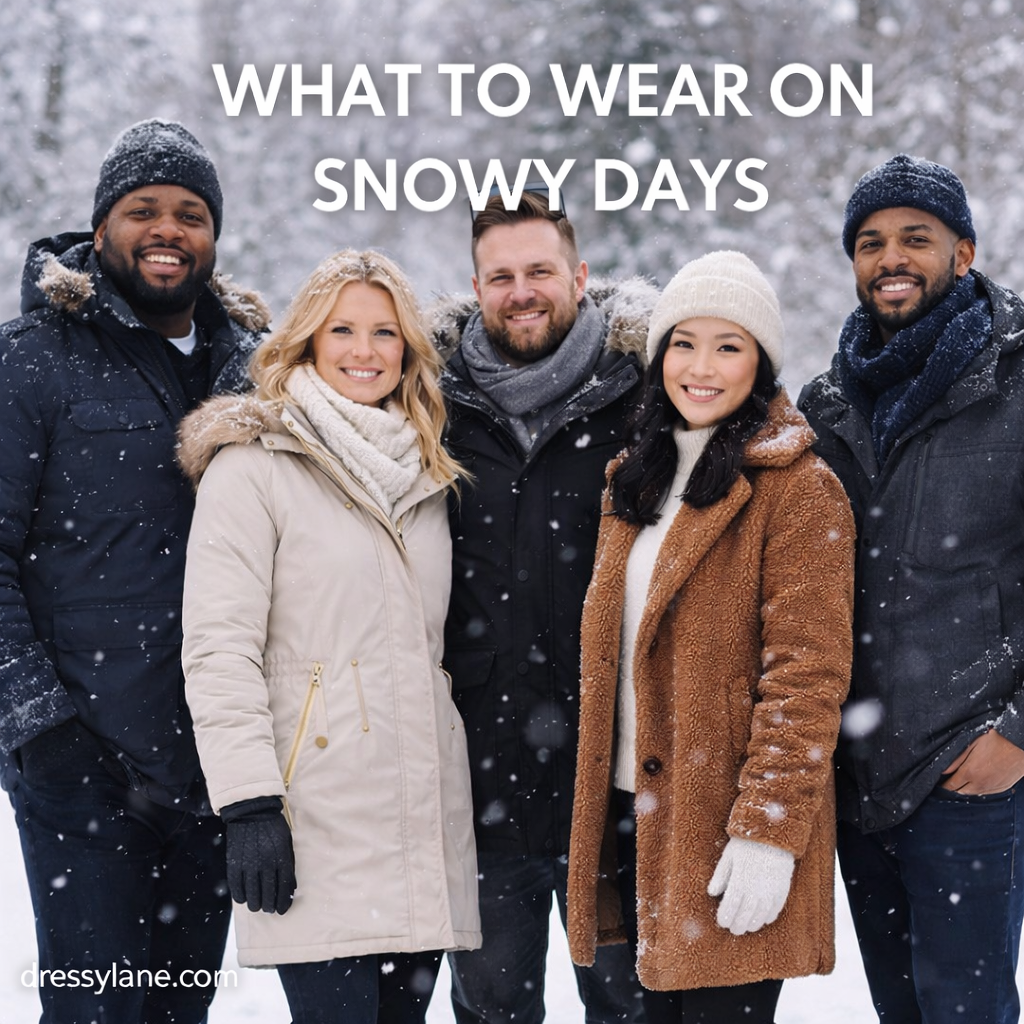
Dressing for Short Winter Days
Winter outfits have to function through changing light and temperature.
Instead of piling on several bulky pieces, use layers with specific purposes:
- Comfortable base
- Insulating middle layer
- Weather-resistant outer layer
Merino wool, wool blends, fleece, down, and appropriate synthetic insulation can provide warmth without unnecessary bulk.
Footwear should match actual conditions. Leather dress shoes may work for a winter dinner reached by car but make little sense for walking through snow or heavy rain.
For broader seasonal advice, see our guides to what to wear in winter, summer, spring, and fall.
How to Dress Stylishly Year-Round
You don’t need four unrelated wardrobes.
Maintain a core of year-round pieces and rotate seasonal layers around them.
Dark jeans, Oxford shirts, basic tops, trousers, lightweight knitwear, simple dresses, and some sneakers can cross several seasons.
Summer adds linen, lightweight cotton, sandals, and breathable fabrics.
Winter adds wool, insulation, boots, coats, and heavier knitwear.
This approach is especially useful when closet space is limited.
Dressing Well With a Small Closet
A small closet can actually simplify occasion dressing.
Prioritize clothes that serve multiple purposes.
A navy blazer might work for:
- Work
- Dinner
- An interview
- A party
- Travel
A simple midi dress could work for brunch with sneakers, the office with flats, and dinner with dressier accessories.
The goal isn’t to own as little as possible. It’s to reduce pieces that perform only one highly specific job.
If that approach appeals to you, see our guide to minimalist style.
Sustainable Style and Dressing for the Long Term
Sustainable dressing isn’t limited to buying clothing marketed as sustainable.
One of the most practical approaches is simply extending the useful life of what you own.
Buy pieces you expect to wear repeatedly. Repair minor damage. Wash garments according to their care instructions. Avoid replacing clothes merely because a microtrend changed.
Natural fibers such as linen, cotton, wool, and silk each have useful properties, but fiber choice alone does not determine sustainability or longevity. Construction, care, frequency of use, and how long you keep the garment matter too.
A long-term wardrobe should evolve slowly rather than being replaced every season.
How Men Can Dress Better Without Overthinking
Men don’t need complicated layering or an enormous collection of accessories to look well dressed.
Build around a few reliable combinations:
- Dark jeans + solid T-shirt + overshirt
- Chinos + Oxford shirt
- Trousers + knit polo
- Suit + simple dress shirt for formal occasions
Keep colors compatible, get the trouser length right, and pay attention to shoes.
That’s enough for a large percentage of everyday situations.
How Women Can Dress Stylishly With Basics
Basic pieces become useful when the silhouettes and proportions work together.
Examples:
- Straight trousers + fitted knit + cardigan
- Dark jeans + blouse + loafers
- Midi skirt + tucked T-shirt + jacket
- Simple dress + flats + structured bag
Instead of buying increasingly complicated clothing, use texture, jewelry, shoes, belts, and layers to vary straightforward foundations.
Fit Is the Foundation of Every Dress Code
An appropriate garment in the wrong fit can still look wrong.
Pay attention to:
- Shoulder placement
- Sleeve length
- Trouser and skirt waist
- Hem length
- Pulling around buttons
- Excess fabric
- Whether you can comfortably sit and move
Don’t become overly attached to the number on the tag. Clothing sizes vary between manufacturers.
Fit the garment to your body rather than trying to fit your body to a particular size.
How to Look Put-Together Without Trying Too Hard
You don’t need an elaborate outfit.
Focus on four things:
Fit. Condition. Coordination. Footwear.
Make sure clothes fit reasonably well, aren’t visibly damaged or badly wrinkled, coordinate with one another, and are paired with appropriate shoes.
That’s often enough.
If fashion itself isn’t something you enjoy thinking about, our guide to dressing well when you don’t like fashion offers an even simpler system.
You can also create several dependable combinations in advance using our guide to simple outfits that always work.
When Everything in Your Closet Feels Wrong
Everyone has days when nothing seems to work.
Don’t respond by trying on progressively more complicated outfits.
Return to a combination you’ve worn successfully before.
Choose:
- A comfortable bottom
- A simple top
- Appropriate shoes
- One optional layer or accessory
Then stop.
Having two or three “reset outfits” is surprisingly useful for rushed mornings, travel days, unexpected invitations, and days when you simply don’t want to think about clothing.
Frequently Asked Questions
What should I wear when I don’t know how formal an event is?
Research the venue and time first. If you’re still uncertain, choose polished smart-casual clothing that can be adjusted with a jacket, different shoes, or accessories.
Is it better to be overdressed or underdressed?
Neither is automatically better. Aim to be within the expected range of the occasion. If uncertain, being slightly more polished than ordinary everyday clothing is often easier to adjust than wearing something extremely formal.
How can I make a simple outfit look intentional?
Use a coherent color palette, make sure the fit is right, choose clean shoes, and add one purposeful finishing element such as a belt, watch, necklace, jacket, or structured bag.
How do I dress well if I hate thinking about clothes?
Create several outfit formulas and repeat them. There’s no requirement to constantly create new combinations.
What should I wear when I’ll be walking all day?
Start with comfortable, already-tested footwear. Add breathable or temperature-appropriate clothes that allow full movement, then use a light layer if conditions may change.
How do I dress for an event that goes from day to night?
Choose a neutral base appropriate for both portions and change smaller elements such as your jacket, shoes, jewelry, or accessories.
What if the weather changes throughout the day?
Wear removable layers. Your base outfit should be presentable on its own so you can comfortably remove outer layers as temperatures rise.
How can I dress well with a small wardrobe?
Choose pieces that work across several levels of formality. Neutral trousers, dark denim, simple tops, versatile dresses, knitwear, a structured jacket, and a few appropriate shoes can cover many situations.
How do I dress stylishly every day without constantly buying clothes?
Repeat successful silhouettes and vary smaller details. Style comes from how pieces work together, not from wearing something new every day.
Final Thoughts
Dressing for different occasions becomes much easier once you stop treating every event as a completely new fashion problem.
Start with the situation.
Ask where you’re going, what you’ll be doing, how formal the setting is, what the weather requires, and whether you’ll need to move between different environments.
Then build from clothes you already know fit and feel comfortable.
For casual situations, concentrate on fit and condition rather than adding unnecessary formality. For professional settings, pay attention to workplace expectations. For weddings and ceremonies, follow the stated dress code and respect cultural or religious customs. For travel and active days, let comfort and footwear influence the outfit from the beginning rather than treating them as afterthoughts.
And when you’re unsure? Keep things simple.
A well-fitting, coordinated outfit with appropriate shoes will get you through far more situations than a closet full of highly specific clothes.
The goal isn’t to have a unique outfit for every possible occasion. It’s to understand your wardrobe well enough that you can adapt what you own to the occasion in front of you.