

The first cool mornings of fall don’t mean your summer wardrobe suddenly becomes unusable. In fact, some of the easiest transitional outfits start with pieces you’ve already been wearing for months—a cotton T-shirt, midi dress, lightweight button-down, or relaxed pair of trousers.
The difference is what you put around them.
Learning how to adapt summer clothes for fall is mostly about adding one useful layer, changing the footwear, and introducing slightly heavier textures. Done well, you can keep a surprising amount of your summer wardrobe in rotation until genuinely cold weather arrives.
Don’t Transition Everything at Once
One mistake I see with seasonal dressing is treating the first cool September day as a signal to bring out every sweater and boot.
Early fall often isn’t cold enough for that.
Instead, keep the breathable base of your summer outfit and change one element at a time. A white T-shirt and jeans might get an olive cotton-twill jacket. A sleeveless midi dress might get loafers and a cardigan instead of sandals.
This works particularly well when mornings are cool but afternoons are still warm. You can remove the outer layer without being left with an outfit that only makes sense underneath it.
Start With the Summer Pieces That Have Some Structure
Certain warm-weather clothes transition much more easily than others.
Cotton T-shirts, Oxford and poplin shirts, lightweight trousers, midi skirts, denim, and dresses in cotton or substantial jersey are good candidates.
Extremely beach-specific pieces are harder to carry into fall. A gauzy cover-up or very thin linen drawstring short isn’t necessarily improved by putting a cardigan over it.
I wouldn’t force every summer purchase to become a fall piece. Concentrate on clothes with enough structure and coverage to look natural next to heavier fabrics.
How Women Can Adapt Summer Clothes for Fall
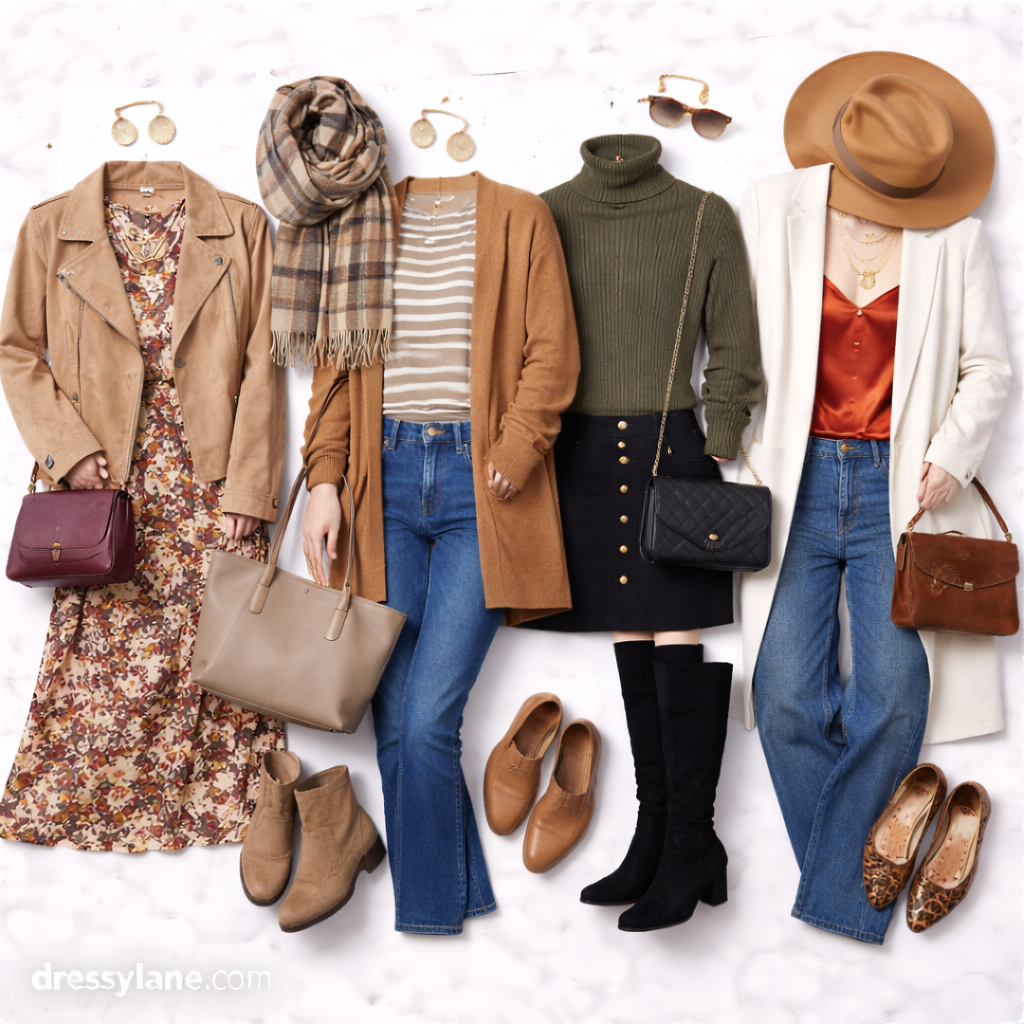
A summer midi dress is one of the easiest pieces to keep wearing.
Take a simple cotton or jersey dress that you wore with sandals in July. In early fall, switch to loafers or ankle boots and add a denim jacket. When temperatures drop further, add tights and replace the denim with a cardigan or wool-blend jacket.
You can use the same approach with skirts. A lightweight midi skirt can work with a fitted knit and loafers instead of a tank and sandals.
Some reliable transitions include:
- Tank top → tank + cardigan + jeans
- Summer dress → dress + denim jacket + ankle boots
- T-shirt + midi skirt → fitted sweater + same skirt + loafers
- Lightweight trousers + sleeveless top → same outfit + blazer
I’d be selective about layering sweaters over dresses. A fine-gauge crewneck over a simple dress can make it look like a skirt-and-sweater combination, but a thick oversized sweater over a full dress often creates more bulk than you expect around the waist and hips.
A cropped cardigan or shorter knit is usually easier to proportion.
How Men Can Adapt Summer Clothes for Fall
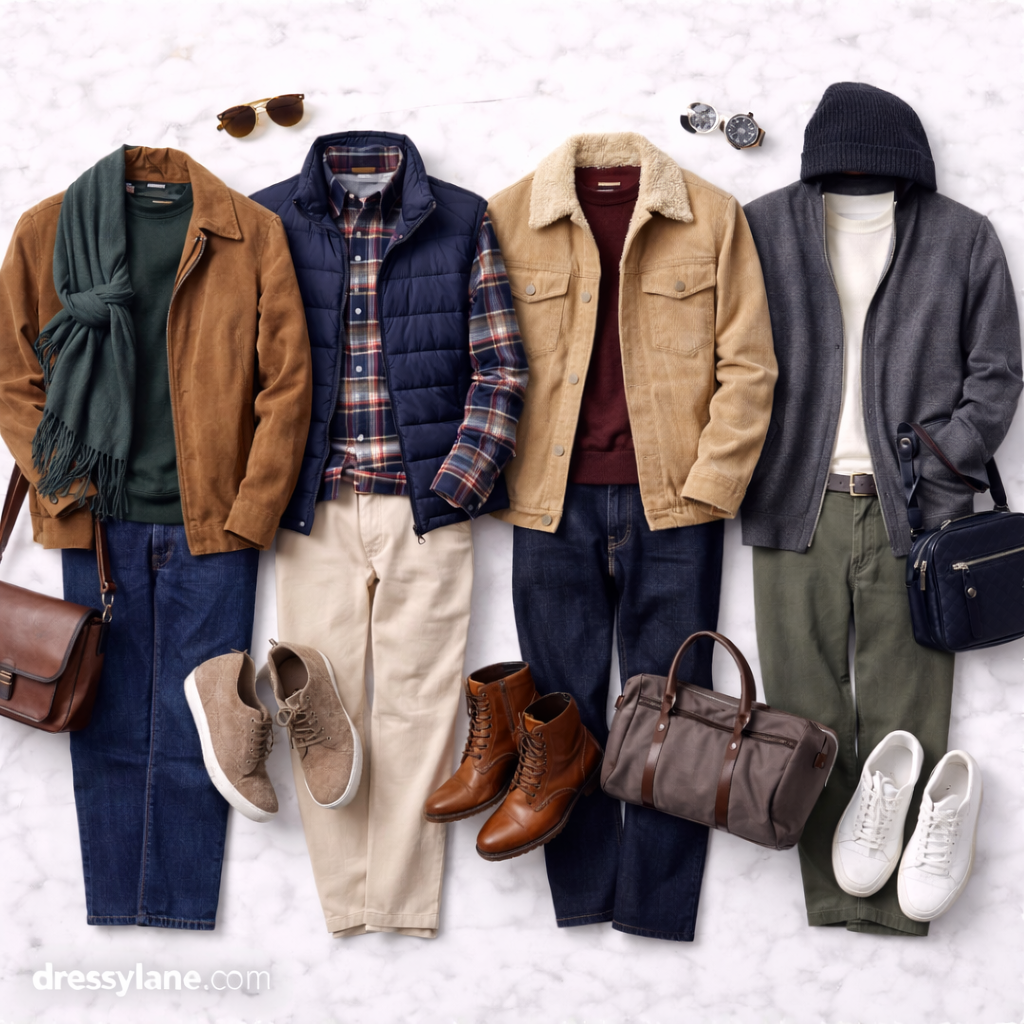
For men, summer basics make excellent fall base layers.
A plain cotton T-shirt that was worn with shorts and sneakers in August can be paired with chinos, an overshirt, and the same sneakers in October.
Short-sleeve polos can also stay in rotation underneath lightweight bomber or field jackets. Oxford shirts are even easier: wear them open over a T-shirt when it’s mild, then underneath a merino sweater when temperatures fall.
Try combinations such as:
- T-shirt + shorts → T-shirt + chinos + overshirt
- Polo + lightweight trousers → polo + bomber jacket + trousers
- Oxford shirt + chinos → Oxford + crewneck sweater + chinos
- T-shirt + jeans → T-shirt + field jacket + jeans
You don’t necessarily need to replace every light-colored summer piece either. Cream chinos or a pale blue shirt can still work in fall when they’re paired with brown suede, olive twill, dark denim, or textured knitwear.
Let Texture Do More Than Color
You don’t need to transform your wardrobe into rust, mustard, and burgundy as soon as September arrives.
One of the easiest ways to make summer clothing feel appropriate for fall is to place a lighter fabric next to a more substantial texture.
A white cotton T-shirt looks different underneath a brown corduroy overshirt. A lightweight dress feels more autumnal with suede boots and a wool cardigan. Summer chinos work naturally with a merino sweater.
Useful fall textures include:
- Corduroy
- Brushed cotton
- Denim
- Merino wool
- Suede
- Cotton twill
- Lightweight wool blends
You can absolutely introduce olive, burgundy, camel, chocolate brown, or forest green, but texture often creates the seasonal shift more naturally than color alone.
Change the Shoes Before You Change the Whole Outfit
Footwear can move an outfit from summer into fall almost instantly.
Replace sandals with loafers, closed-toe flats, sneakers, or ankle boots. For men, swapping very lightweight canvas shoes for leather sneakers, suede loafers, or casual boots can have the same effect.
This is especially useful during early fall when it’s still too warm for serious layering.
A summer dress with ankle boots already reads differently from the same dress with strappy sandals, even before you add a jacket.
That said, don’t rush into heavy winter boots. They’re often unnecessarily warm and visually heavy when the rest of your outfit is still made from transitional fabrics.
Keep Your Layers Easy to Remove
The most practical fall outfits are complete outfits before the jacket goes on.
If you’re wearing a cotton tee, straight-leg trousers, and loafers, you can add a cardigan or utility jacket for the morning commute and remove it later.
That’s better than depending on three tightly stacked layers to create the entire look.
I generally prefer one substantial removable layer over several thin decorative layers during transitional weather. It’s simpler to manage and gives you a much wider comfort range when the temperature changes by 15 or 20 degrees during the day.
Know When a Summer Piece Has Reached Its Limit
Eventually, some summer clothes need to go back into storage.
Very thin linen, open sandals, lightweight shorts, sheer fabrics, and loosely woven pieces become less practical as temperatures fall. Adding more and more layers around them can make an outfit feel mismatched rather than intentionally transitional.
That’s the point where it’s better to replace the summer piece instead of continuing to compensate for it.
The transition should feel natural: cotton becomes brushed cotton, lightweight trousers become denim or corduroy, and thin cardigans eventually give way to wool sweaters and coats.
Final Thoughts
Learning how to adapt summer clothes for fall isn’t about disguising summer clothing as something else. It’s about recognizing which pieces still work and giving them enough warmth, texture, and structure for changing weather.
Keep wearing your cotton T-shirts, button-downs, midi dresses, skirts, and lightweight trousers. Add an overshirt, cardigan, denim jacket, blazer, or lightweight knit as needed, then gradually introduce loafers, boots, suede, corduroy, and wool.
Most importantly, transition according to the temperature rather than the calendar. If it’s still warm in the afternoon, there’s no reason to abandon a perfectly useful summer piece just because fall has officially arrived.