Choosing what to wear to a funeral or memorial service can feel unexpectedly difficult. You want to look respectful without seeming overdressed, avoid drawing attention to yourself, and stay comfortable through what may be a long and emotional day.
Fortunately, appropriate funeral attire does not require an elaborate wardrobe—or even an all-black outfit.
The most reliable approach is to choose clothing that is subdued, neat, modest, and appropriate for the setting. Dark colors are traditional in many Western funeral settings, but navy, charcoal, deep brown, muted green, and other restrained shades can work just as well.
This guide covers traditional funerals, memorial services, religious and non-religious ceremonies, casual services, celebrations of life, outdoor gatherings, what to wear when you do not own black, appropriate shoes, and what to do when you do not have formal clothes.
In This Guide
- The basic rules of respectful funeral attire
- What women can wear
- What men can wear
- Traditional funeral attire
- Memorial services and celebrations of life
- Religious funerals
- Non-religious funerals
- What to wear when you don’t own black
- What to wear without formal clothes
- Appropriate funeral shoes
- Outdoor, graveside, and seasonal services
- Colors, patterns, fabrics, and accessories
- What not to wear
- Frequently asked questions
The Basic Rule: Dress for Respect, Not Attention
Funeral clothing is less about following a rigid fashion rule and more about understanding the purpose of the occasion.
You are there to remember someone, support their family, and participate in a meaningful event. Your clothing should make that easy rather than becoming part of the conversation.
A reliable funeral outfit usually has four qualities:
- Subdued: Dark, neutral, or muted colors rather than loud shades
- Neat: Clean, pressed, and in good condition
- Modest: Reasonable coverage without very revealing cuts
- Practical: Comfortable enough for sitting, standing, walking, or attending a graveside service
Black remains the traditional choice for many funerals, but it is not an absolute requirement.
If you are choosing between an elegant navy outfit you already own and an awkward black outfit purchased at the last minute, the navy outfit will often look more appropriate.
For outfit-by-outfit examples, see our complete guide to what to wear to a funeral.
What Women Can Wear to a Funeral
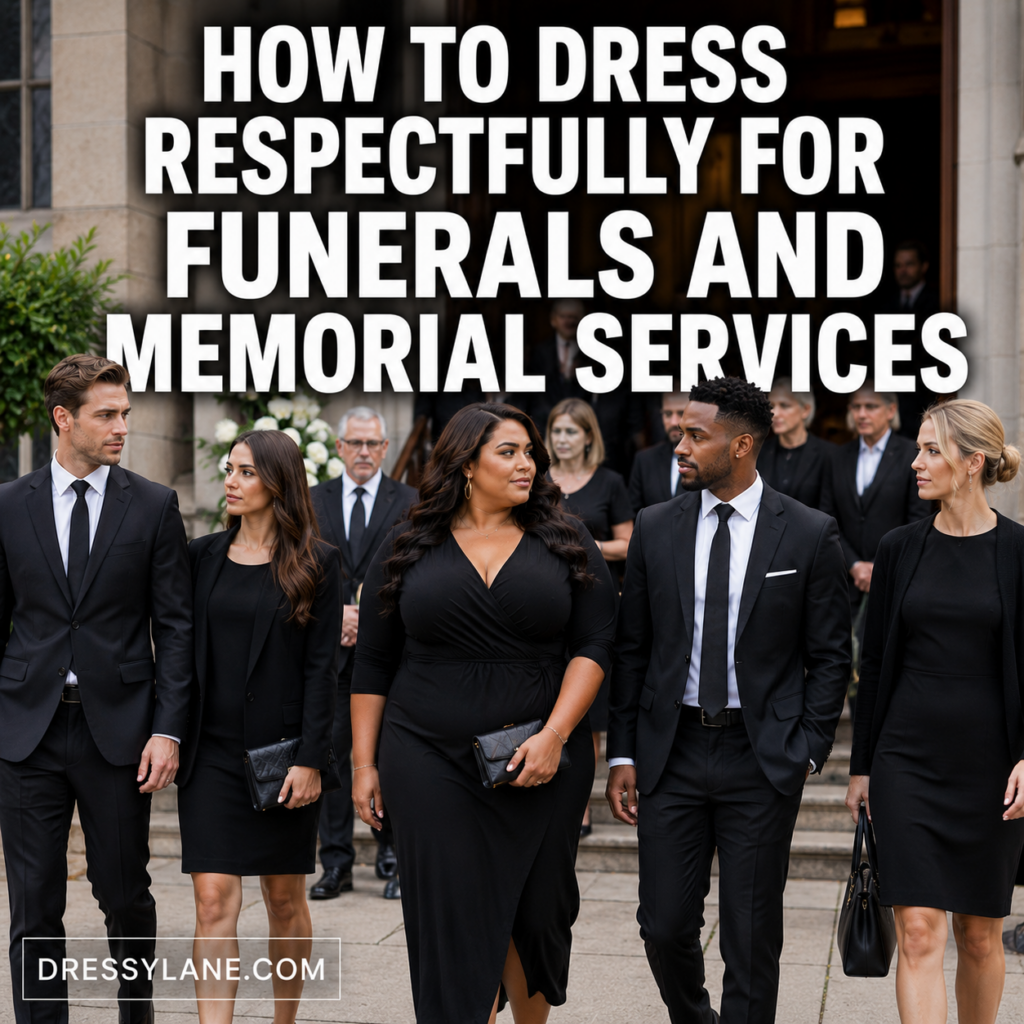
Women’s funeral attire can range from a simple dress to tailored trousers and a blouse. The goal is refinement without making the outfit feel festive or fashion-forward.
Appropriate Dress Options
A knee-length or midi dress is one of the easiest choices.
Look for styles such as:
- Black crepe midi dress
- Navy wrap dress with a modest neckline
- Charcoal sheath dress
- Dark long-sleeved knit dress
- Simple A-line dress in a muted color
Matte fabrics such as crepe, ponte knit, wool blends, cotton twill, and understated jersey generally work better than highly reflective satin, sequins, or metallic fabrics.
The dress does not need to be completely plain, but this is usually not the occasion for dramatic cutouts, very high slits, plunging necklines, or elaborate embellishment.
Trousers and Separates
A dress is not required.
A polished outfit could include:
- Black tailored trousers + ivory blouse + black blazer
- Navy trousers + gray fine-knit sweater
- Charcoal trousers + black blouse + structured coat
- Dark midi skirt + simple long-sleeved blouse
An understated pantsuit is also an excellent choice, particularly for a formal funeral.
Accessories
Keep accessories restrained.
Small earrings, a simple pendant, a watch, or one understated bracelet are usually enough. A structured black, navy, taupe, or dark brown handbag works well.
There is no need to remove your personality completely. The goal is simply to avoid accessories that become the focal point of the outfit.
What Men Can Wear to a Funeral
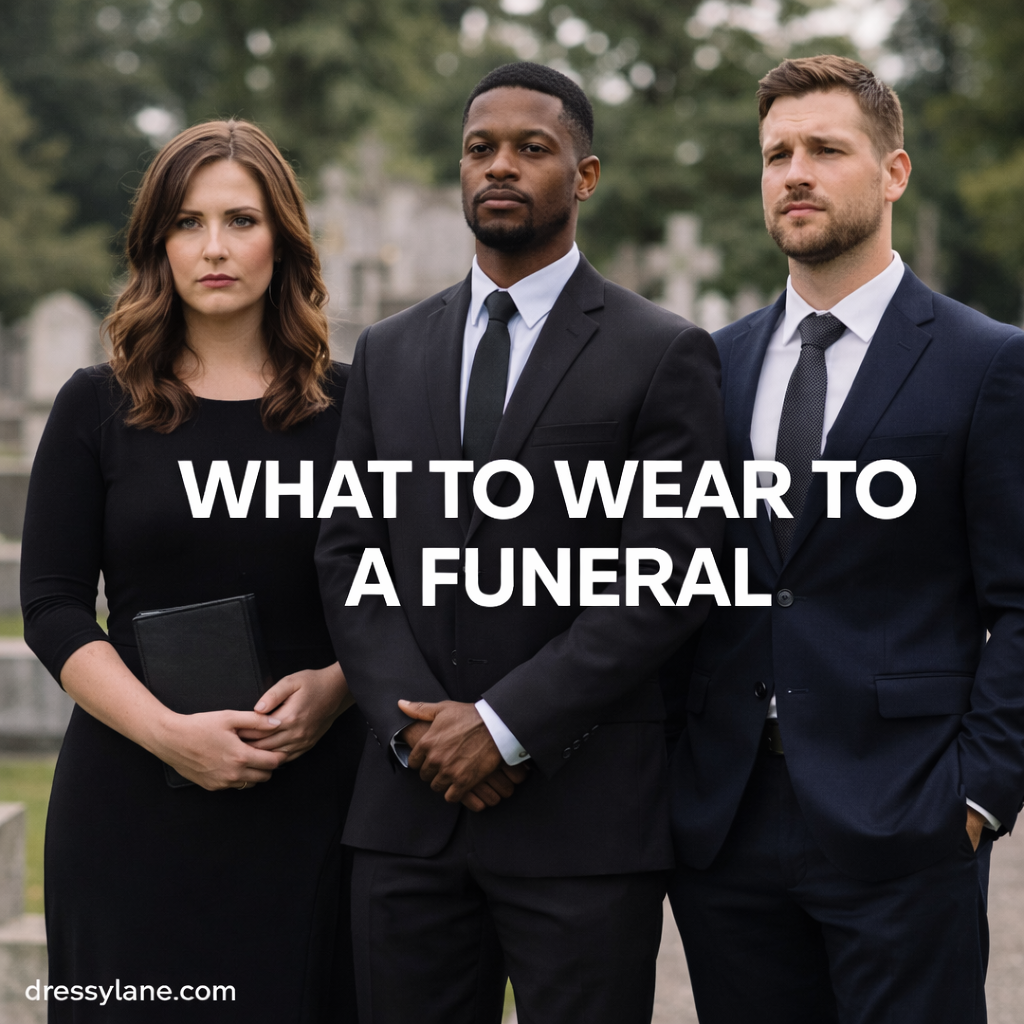
For a traditional funeral, a dark suit remains one of the safest choices for men.
A straightforward combination is:
- Navy, charcoal, or black suit
- White, pale blue, or muted dress shirt
- Dark tie
- Black or dark brown leather shoes
A black suit is appropriate but not mandatory. A well-fitting charcoal or navy suit can be equally respectful.
If You Don’t Own a Suit
You can still dress appropriately.
Try:
- Charcoal trousers + white button-down + navy blazer
- Dark chinos + light blue Oxford shirt + dark sweater
- Black trousers + white shirt + dark cardigan
- Navy trousers + muted button-down + structured jacket
Tucking in the shirt and wearing a belt and clean dress shoes can make even relatively simple pieces look intentional.
A tie is often appropriate for traditional or religious funerals, but it is not universally required. Consider the formality of the service and the family’s customs.
Traditional Funeral Attire
Traditional funerals tend to call for the most conservative clothing.
This is especially true when the service takes place in a church, synagogue, mosque, funeral home, or another formal setting.
Good choices include:
For women: a dark midi dress with closed-toe shoes, tailored trousers with a blouse and blazer, or a dark skirt with a fine-knit sweater.
For men: a dark suit and tie, or dark trousers with a collared shirt and blazer when a full suit is unavailable.
Black, charcoal, navy, dark gray, deep brown, and other subdued colors all work.
The more traditional the ceremony, the more useful it is to keep the outfit simple.
What to Wear to a Memorial Service
A memorial service differs from a funeral in that the person’s body or remains may not be present, and the gathering may happen days, weeks, or even months later.
That can make the dress code less predictable.
Some memorial services are almost identical to traditional funerals. Others take place in restaurants, gardens, community centers, beaches, family homes, or other informal settings.
Start with the location and invitation.
For a Formal Memorial Service
Choose clothing similar to traditional funeral attire:
- Dark dress
- Tailored trousers and blouse
- Dark suit
- Collared shirt and dress trousers
- Blazer or structured jacket
For a Relaxed Memorial
You can reduce the formality while keeping the outfit polished.
For example:
- Navy chinos with a tucked-in Oxford shirt
- Dark trousers with a knit polo
- Midi skirt with a simple blouse
- Dark tailored pants with a fine-gauge sweater
“Relaxed” should not automatically mean everyday casual clothing. Unless the family indicates otherwise, aim for something a little more polished than what you would wear while running errands.
What to Wear to a Celebration of Life
Celebrations of life often intentionally feel less somber than traditional funerals.
The family may encourage guests to wear:
- A favorite color of the deceased
- Bright colors
- Floral clothing
- Team colors
- Hawaiian shirts
- Clothing connected with a hobby or shared memory
If the family has made a specific request, following it is generally more respectful than defaulting to traditional black.
Without specific instructions, however, don’t assume “celebration of life” means party clothes. Smart-casual clothing in restrained colors is a sensible starting point.
Dressing for a Religious Funeral
Religious services can have customs that go beyond the general Western convention of wearing dark clothing.
Depending on the faith tradition and congregation, expectations may involve:
- Head coverings
- Covered shoulders
- Longer skirts or dresses
- Long trousers
- Removing shoes
- Avoiding particular colors
- Wearing particular colors
- Different expectations for men and women
If you know the service belongs to a tradition unfamiliar to you, check before attending.
The family’s instructions should take priority over generalized fashion advice. A trusted friend, family member, funeral home, or place of worship can often explain what guests are expected to wear.
When you cannot obtain specific guidance, modest clothing with good coverage and understated styling is generally the safest starting point.
What to Wear to a Non-Religious Funeral
A non-religious funeral may take place at a funeral home, cemetery, crematorium, event venue, outdoor location, or private home.
There may be fewer ceremonial clothing requirements, but that does not necessarily make the event casual.
Dark or muted smart clothing remains appropriate.
For example, a woman might wear charcoal trousers, a black blouse, and flats. A man might choose navy trousers, a pale shirt, and a dark blazer.
Pay more attention to the location, family preferences, and stated dress code than to whether the service is religious.
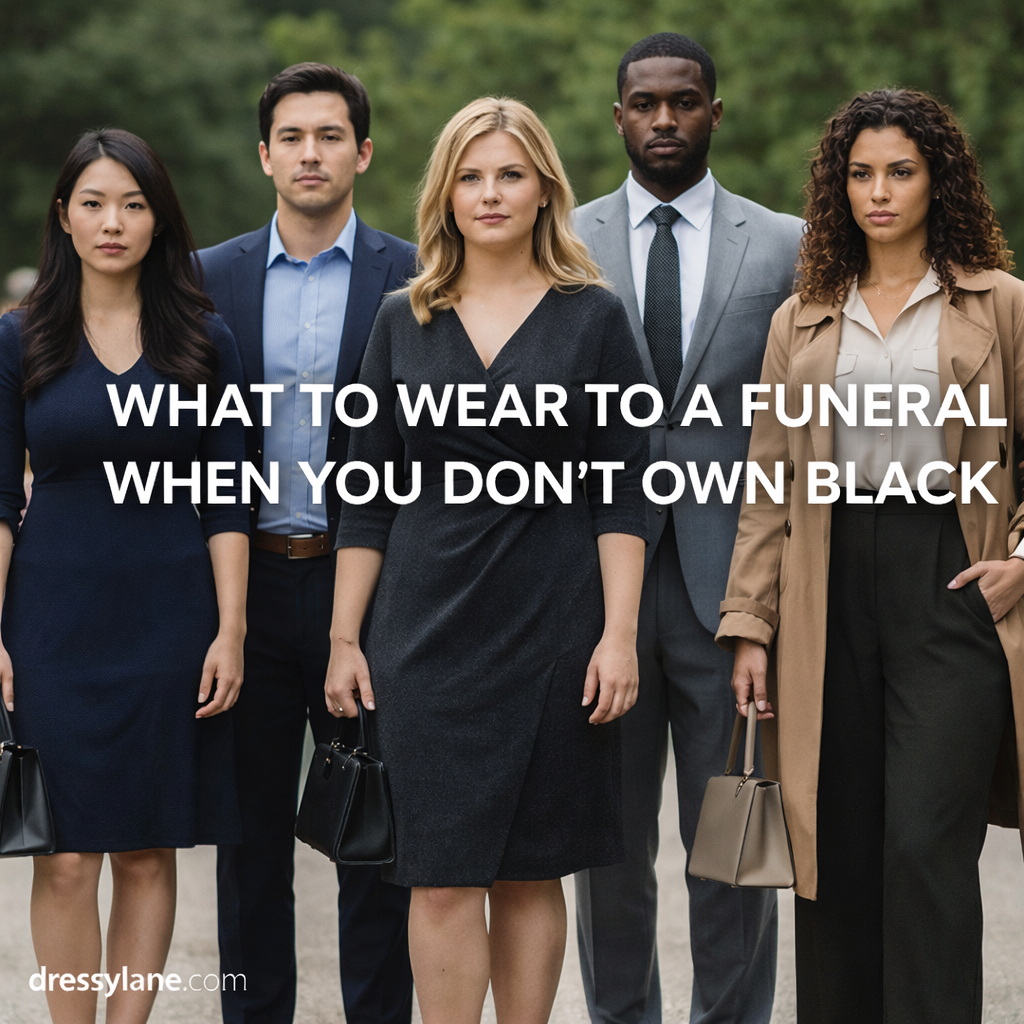
What If You Don’t Own Black?
You do not need to buy an entirely new outfit simply because you don’t own black clothing.
Other suitable colors include:
- Navy
- Charcoal
- Dark gray
- Deep brown
- Muted burgundy
- Forest green
- Dark blue
- Taupe and other subdued neutrals
Even lighter neutrals can sometimes work when balanced with darker pieces.
For example, an ivory blouse under a navy blazer with charcoal trousers can be entirely appropriate. A pale blue shirt with a charcoal suit is also standard funeral attire.
What matters is the overall effect.
A restrained navy outfit is usually more appropriate than an all-black outfit covered in sequins, dramatic detailing, or clubwear-inspired styling.
For more combinations, see what to wear to a funeral when you don’t own black.
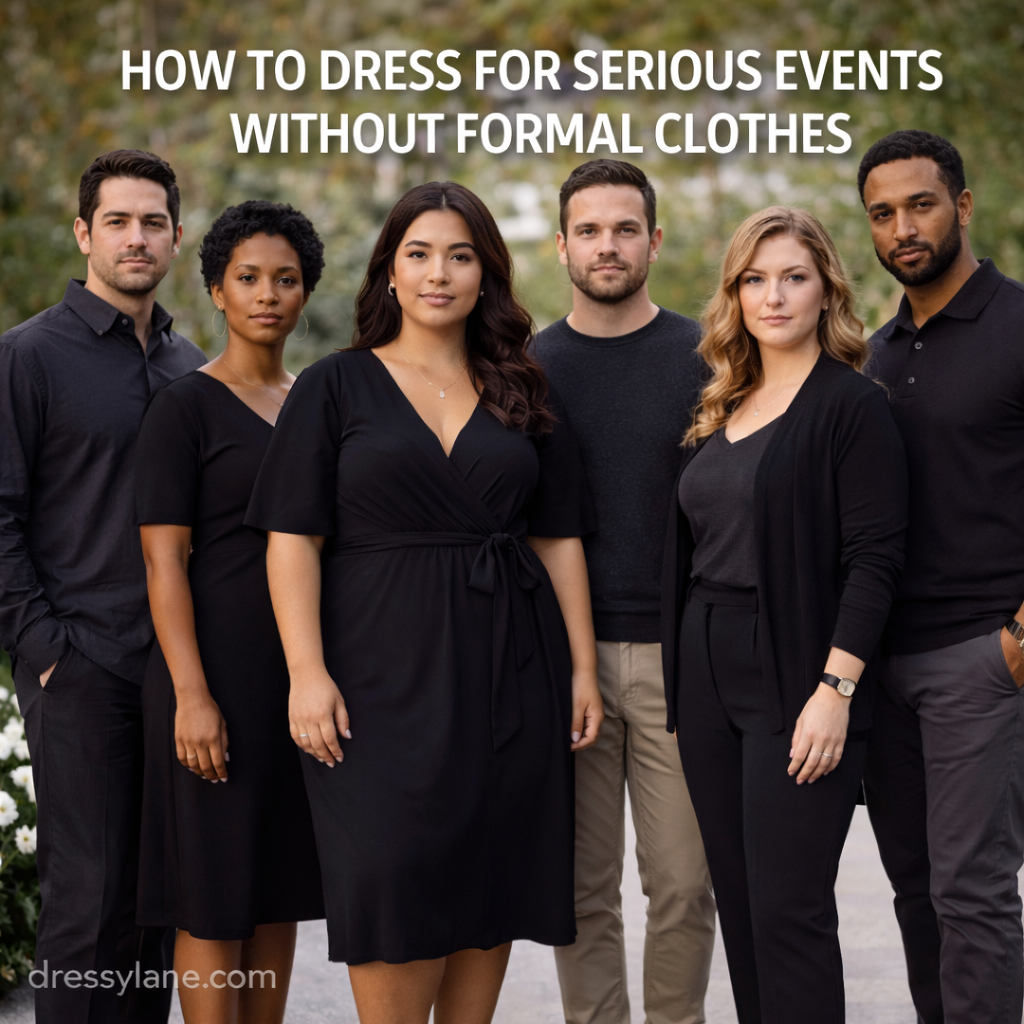
How to Dress for a Funeral Without Formal Clothes
Not everyone owns a suit, blazer, formal dress, or dress shoes. You can still put together a respectful outfit from ordinary wardrobe basics.
Focus first on condition, fit, and simplicity.
For Women
Try combining:
- Dark trousers with a plain blouse
- A simple knee-length or midi skirt with a sweater
- Dark ankle-length pants with a cardigan
- A modest everyday dress with understated shoes
For Men
Try:
- Dark chinos with a button-down shirt
- Dark trousers with a plain sweater over a collared shirt
- Black or navy pants with a tucked-in Oxford shirt
- Dark chinos with a knit polo for a less formal service
Avoid trying to imitate formalwear with pieces that do not work together. A clean, understated smart-casual outfit generally looks better than an uncomfortable attempt at formal dressing.
This principle also applies beyond funerals. Our guide to dressing for serious events when you don’t own formal clothes explains how to build a respectful outfit from basic wardrobe pieces.
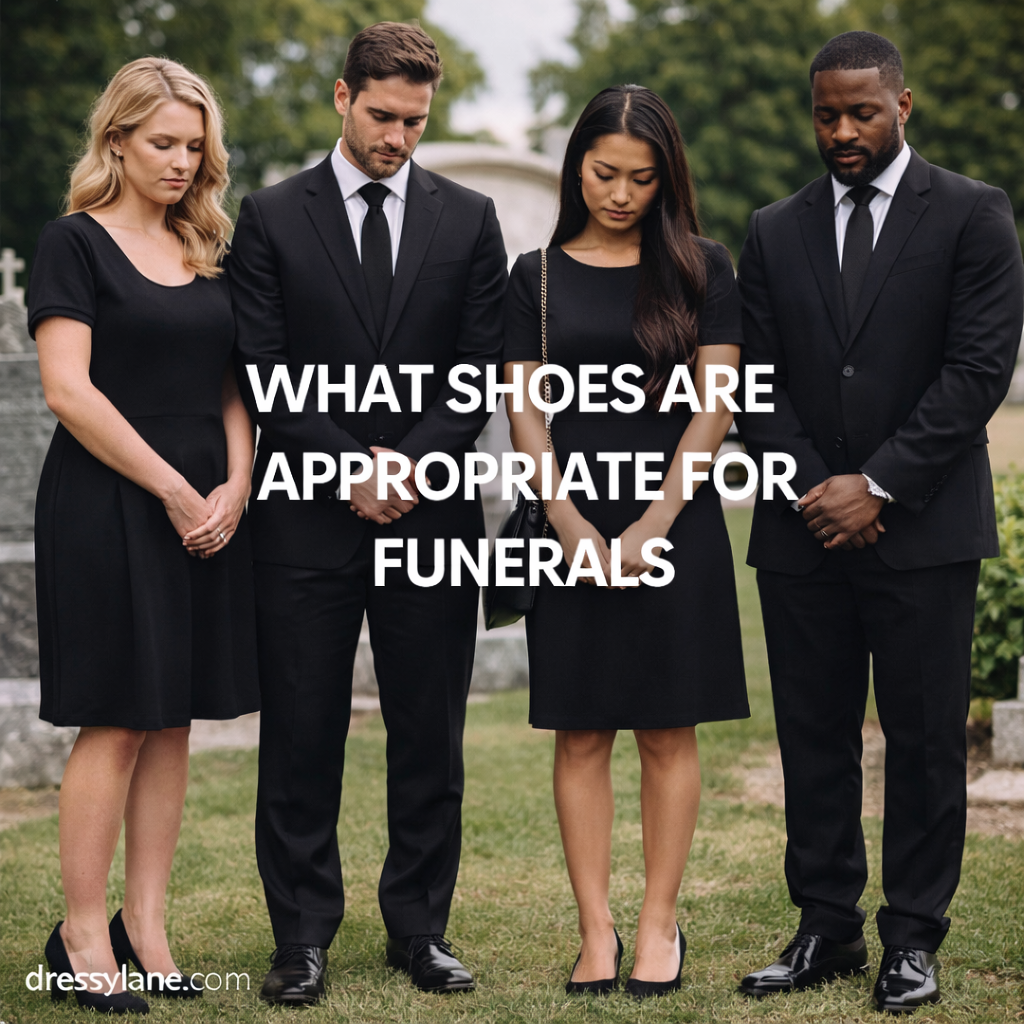
What Shoes Are Appropriate for Funerals?
Shoes are easy to overlook, but funerals may involve more walking and standing than expected.
For women, suitable options include:
- Ballet flats
- Loafers
- Low block heels
- Simple pumps
- Dressy ankle boots
- Understated flat boots
For men:
- Oxfords
- Derbies
- Loafers
- Plain leather boots
- Other clean, understated dress shoes
Black is easy to coordinate, but dark brown, oxblood, navy, or another subdued shade can also work with the right outfit.
Very high heels can become impractical, particularly if the service includes a cemetery visit. Thin stilettos also sink easily into grass and soft ground.
Clean, minimalist sneakers may be acceptable at a very casual memorial or when mobility requires them, but conventional dress shoes remain the safer choice for a traditional service.
See our full guide to appropriate shoes for funerals for more options.
What to Wear to an Outdoor or Graveside Service
Graveside services require a little more practicality.
You may be walking across:
- Grass
- Gravel
- Mud
- Uneven cemetery paths
- Wet or frozen ground
Choose stable shoes rather than delicate heels.
A waterproof trench coat, wool coat, dark raincoat, or simple overcoat is appropriate in poor weather. In cold conditions, understated gloves, a scarf, and a warm coat are completely reasonable.
For hot outdoor services, lightweight fabrics such as linen blends, cotton poplin, tropical wool, or breathable crepe can help you remain comfortable while still looking polished.
Practical clothing is not disrespectful. Being visibly uncomfortable because your outfit cannot handle the setting serves no one.
Dressing for Funerals in Different Seasons
Summer
Choose breathable, opaque fabrics and simple silhouettes.
Good options include:
- Lightweight wool trousers
- Cotton or linen-blend button-down shirts
- Short-sleeved midi dresses with modest necklines
- Lightweight blazers
- Loafers or flats
Avoid beachwear, flip-flops, very short shorts, or extremely casual sundresses unless the family specifically requests that type of clothing.
Winter
Layering makes formal dressing easier.
Consider:
- Wool trousers
- Fine-gauge merino sweaters
- Long-sleeved dresses
- Dark suits
- Wool coats
- Leather boots
Your outerwear becomes part of the outfit during a graveside service, so a simple dark coat is particularly useful.
Rain
A plain trench or raincoat and practical closed shoes are preferable to risking a fall or arriving soaked simply to preserve a more formal outfit.
Can You Wear Patterns?
Yes, provided the pattern is subdued.
Appropriate examples might include:
- Fine pinstripes
- Small checks
- Muted florals
- Subtle herringbone
- Low-contrast geometric prints
A charcoal herringbone blazer, for example, can look completely appropriate.
Large neon florals, novelty prints, oversized logos, and extremely high-contrast patterns are more likely to draw unnecessary attention.
What About Jeans?
Jeans are not the first choice for a traditional funeral.
If you have dark trousers or chinos available, choose those instead.
There are exceptions. A casual memorial held at someone’s home, ranch, beach, or another informal setting may make clean dark jeans appropriate, particularly if the family specifically describes the gathering as casual.
If jeans are your only practical option, choose a clean dark pair without distressing, rips, fading, or decorative details and combine them with a collared shirt, blouse, sweater, or jacket.
Showing up respectfully is more important than staying away because your wardrobe is not perfect.
Accessories, Makeup, and Grooming
Accessories do not have to disappear completely.
Keep jewelry simple and avoid pieces that are especially noisy or visually dominant. Sunglasses are practical for outdoor services and may also provide some privacy during an emotional day.
Makeup can be worn as usual, though many people prefer a simple, natural look. Waterproof mascara can be particularly practical.
Hair should simply look neat and intentional.
Perfume and cologne deserve special consideration. Because services often involve close seating and hugging, heavy fragrance can be distracting. A very light application—or skipping fragrance entirely—is considerate.
What Not to Wear to a Funeral
Context always matters, but certain items are generally worth avoiding unless the family specifically requests them.
These include:
- Clothing with offensive or distracting graphics
- Very revealing garments
- Heavily distressed or ripped clothing
- Sequins and highly reflective party fabrics
- Large logos
- Extremely bright neon colors
- Beachwear
- Flip-flops at a formal service
- Clothing that looks noticeably dirty or neglected
The issue is not that every funeral requires rigid formality. It is that clothing should not compete with the purpose of the gathering.
When the Family Requests Something Unusual
Family instructions override most conventional funeral fashion rules.
If the invitation says:
“Please wear bright colors.”
Wear color.
If everyone has been asked to wear the deceased’s favorite sports jersey, wearing a jersey is appropriate.
If the family requests Hawaiian shirts because they remind everyone of the person being honored, a Hawaiian shirt may be far more meaningful than a black suit.
Respectful dressing is ultimately about responding to the people and occasion—not mechanically following a rule about black clothing.
A Practical Styling Tip
One of the easiest mistakes is concentrating so much on whether an outfit is “formal enough” that you forget what the day actually involves.
Before leaving, ask yourself: Could I comfortably sit in this for an hour, walk across a cemetery lawn, greet grieving relatives, and remain in it for a reception afterward?
If the answer is no, change the impractical piece.
A slightly simpler outfit that lets you move comfortably and focus on the people around you is almost always the better choice.
A Simple Funeral Outfit Formula
When you’re short on time, you don’t need to overthink every garment.
For women, a dependable formula is:
Dark trousers or midi dress + simple layer + understated shoes + minimal accessories
For men:
Dark trousers or suit + collared shirt + dark shoes + optional blazer and tie depending on formality
These formulas can be adjusted for weather, venue, culture, and the family’s instructions.
For situations beyond funerals, our complete guide to dressing for different occasions can help you judge the appropriate level of formality.
Frequently Asked Questions
Do you have to wear black to a funeral?
No. Black is traditional in many Western settings, but navy, charcoal, dark brown, deep green, and other subdued colors can also be appropriate. Family or cultural customs should take priority when specific instructions are given.
Can women wear pants to a funeral?
Yes. Tailored trousers with a blouse, sweater, blazer, or structured jacket can be just as appropriate as a dress or skirt.
Does a man need to wear a suit?
Not always. A dark suit is a dependable choice for a traditional funeral, but dark trousers, a collared shirt, polished shoes, and an optional blazer can also work.
Do I need to wear a tie?
A tie is appropriate for many traditional and formal funerals but is not universally required. Consider the venue, family’s expectations, and overall formality.
Can I wear white to a funeral?
A white or ivory shirt or blouse paired with darker clothing is generally appropriate in many Western settings. Cultural traditions differ, however, and white itself has mourning significance in some cultures.
Can I wear jeans?
For a traditional funeral, trousers or chinos are preferable. Clean dark jeans can work for an explicitly casual memorial or when they are the most appropriate clothing available to you.
Can I wear sneakers?
Dress shoes, loafers, flats, or understated boots are generally better for traditional services. Simple, clean sneakers can be reasonable for informal gatherings or when comfort, disability, age, or mobility makes them the practical choice.
What should I wear to a religious funeral if I don’t practice that religion?
You do not need to imitate religious clothing that is not expected of visitors. Instead, find out whether guests are asked to cover their head, shoulders, arms, or legs or observe another specific custom. When uncertain, conservative clothing with good coverage is a sensible choice.
What if the funeral invitation asks guests to wear bright colors?
Follow the family’s request. If bright clothing has been specifically encouraged, wearing black simply because it is traditional is not necessary.
What should I wear to a memorial service at someone’s home?
Aim for polished smart-casual clothing unless told otherwise. Dark trousers with a blouse or collared shirt, a modest dress, or chinos with a sweater can all work. You can usually dress less formally than you would for a church or funeral-home service without looking overly casual.
What should I wear to a graveside service?
Dress for both respect and the terrain. Choose stable shoes, weather-appropriate layers, and clothing that allows you to stand outdoors comfortably. Avoid narrow heels if you will be walking on grass.
Final Thoughts
There is no single outfit that works for every funeral or memorial service.
A traditional church funeral, a graveside ceremony, a non-religious memorial at a community center, and a colorful celebration of life can all call for different clothing.
The most useful rule is simple: consider the family, the setting, the customs, and the practical realities of the day.
When no dress code is provided, choose something clean, understated, modest, and slightly more polished than your everyday clothing. Black is always an option, but it is not the only respectful one.
And if the family asks guests to dress differently from tradition, follow their lead. Respect is not really about wearing a particular color or owning formal clothes. It is about dressing in a way that recognizes why everyone has gathered.