Knowing what to wear to a funeral can feel harder than it should, particularly when you’re already dealing with an emotional situation. You may wonder whether you need to wear black, whether a suit is necessary, if pants are appropriate for women, or whether the clothes you already own are formal enough.
The reassuring answer is that respectful funeral attire is usually simpler than people think.
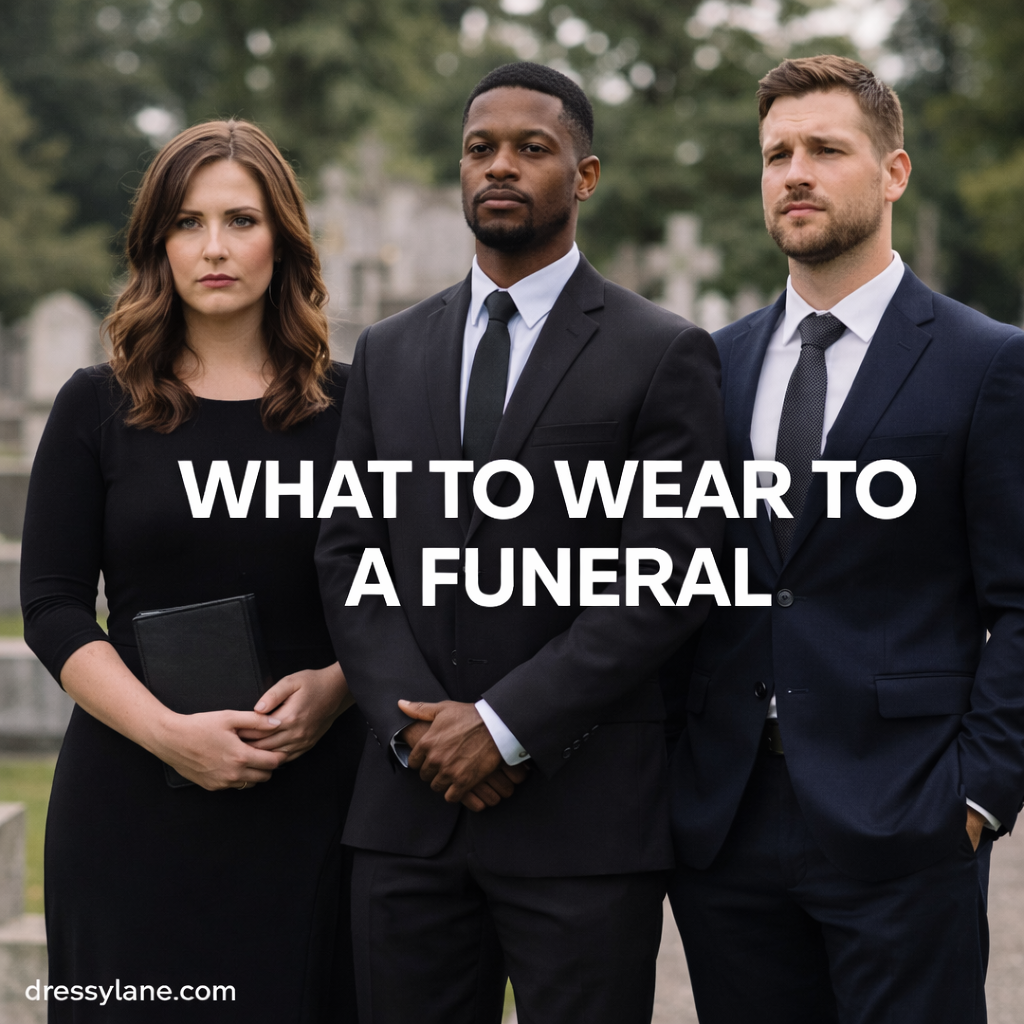
For most funerals, choose clothing that is clean, understated, modest, and appropriate for the setting. Black is traditional, but navy, charcoal, dark brown, deep green, and other subdued colors can also work. A suit or formal dress can be appropriate, but neither is universally required.
What matters most is that your clothing does not distract from why everyone has gathered.
This guide covers funeral attire for women and men, colors, jeans, religious and non-religious services, wakes, memorial services, celebrations of life, summer and winter funerals, dressing at different ages, and what to do when you have limited clothing options.
In This Guide
- The basic funeral dress code
- What women should wear to a funeral
- What men should wear to a funeral
- Whether you have to wear black
- Wearing other colors to a funeral
- Whether jeans are appropriate
- Religious and non-religious funerals
- Wakes, memorial services, and celebrations of life
- Summer and winter funeral attire
- Dressing appropriately at any age
- Dressing comfortably
- What to wear when you have limited options
- How to dress when emotions are high
- Shoes and accessories
- Common funeral attire mistakes
- Frequently asked questions
What Is the Dress Code for a Funeral?
There is no universal funeral dress code. Customs vary by family, culture, religion, location, and the type of service.
In many Western settings, however, traditional funeral attire is relatively conservative.
A dependable outfit is usually:
- Dark or muted in color
- Modest in coverage
- Clean and wrinkle-free
- Simple rather than decorative
- Comfortable enough for several hours
- Appropriate for the weather and venue
Black remains a traditional mourning color, but wearing black from head to toe is not mandatory.
Think less about creating a “funeral outfit” and more about looking quietly put together.
A navy suit with a white shirt, for example, is entirely appropriate. So is a charcoal midi dress with black flats or dark trousers with a simple blouse and cardigan.
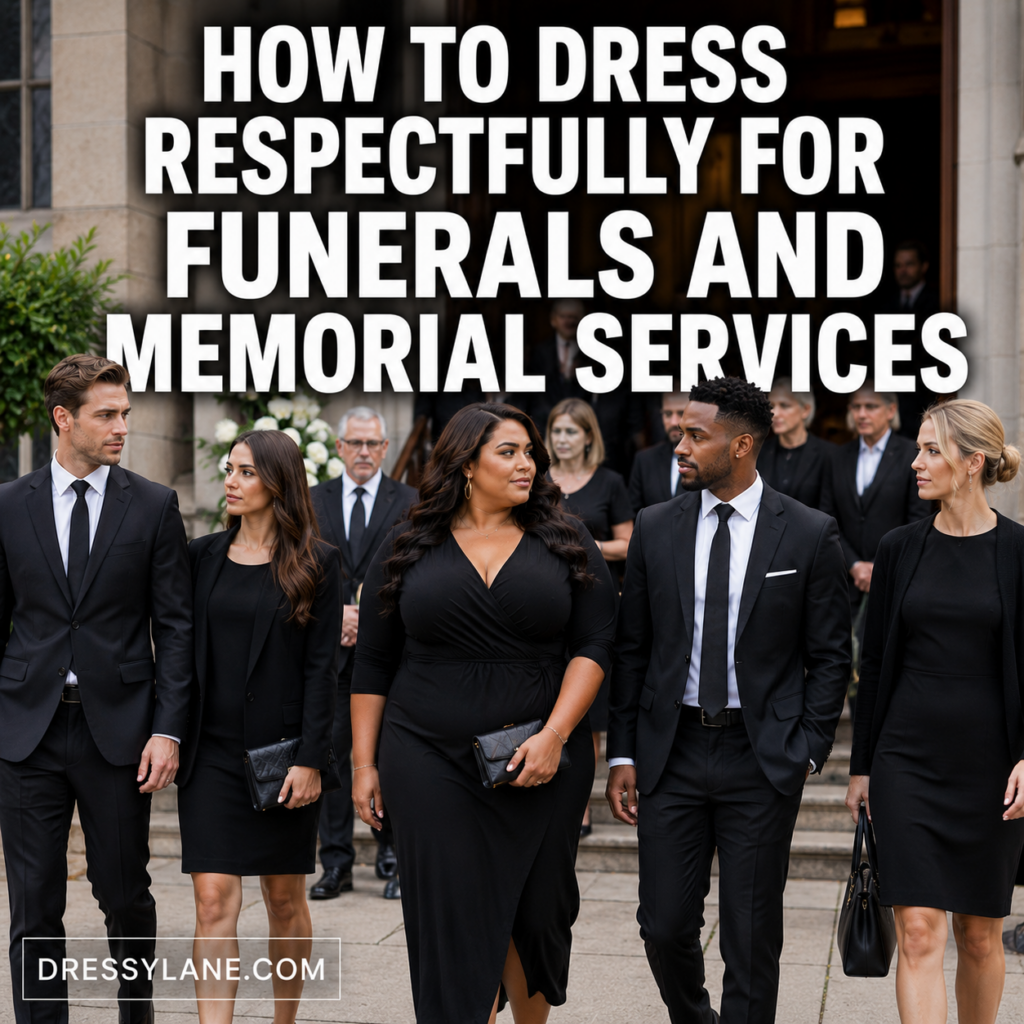
For a broader look at the principles behind respectful dressing, see our guide to dressing respectfully for funerals and memorial services.
What Women Should Wear to a Funeral
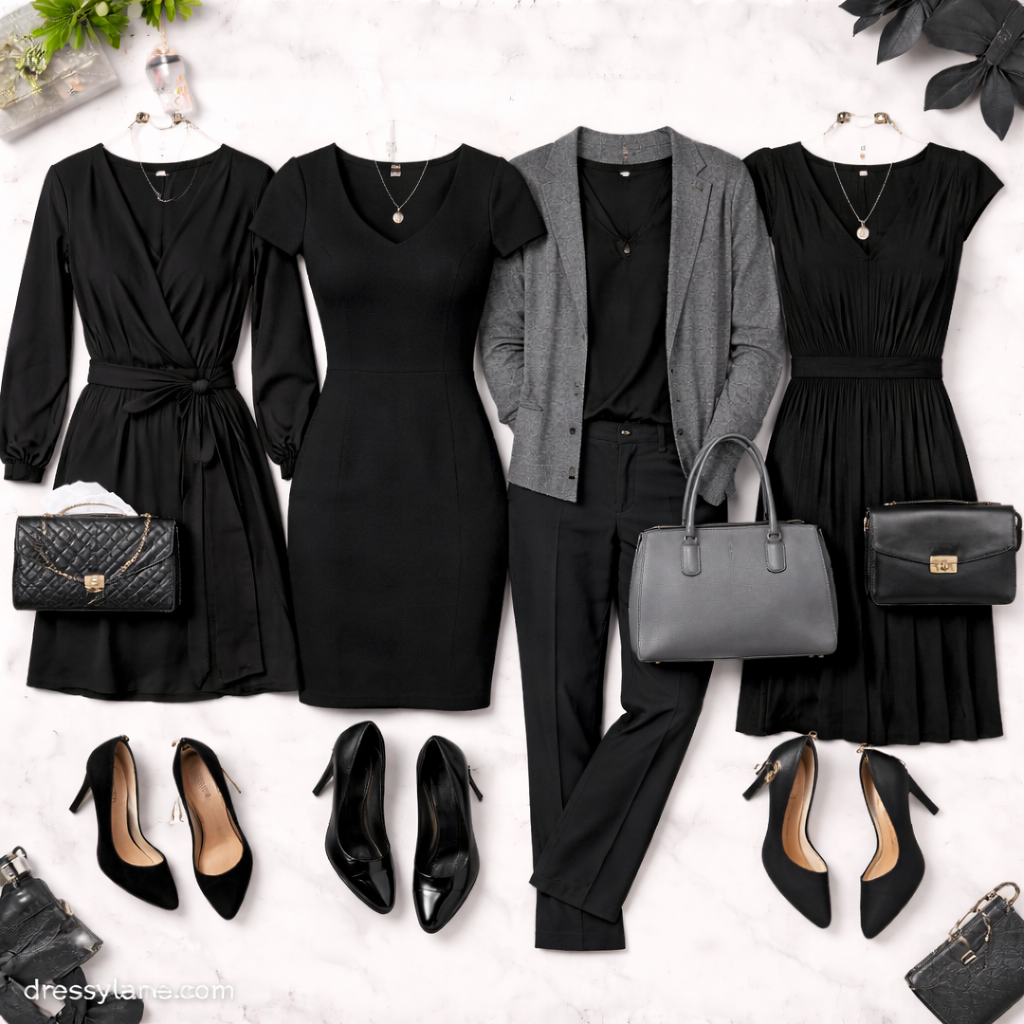
Women have considerably more options than the traditional black dress.
A funeral outfit can include a dress, skirt, trousers, pantsuit, blouse, sweater, blazer, or a combination of simple separates.
Dresses
A knee-length or midi dress is a dependable choice.
Suitable examples include:
- Black crepe midi dress
- Charcoal sheath dress
- Navy wrap dress with a modest neckline
- Dark long-sleeved jersey dress
- Simple A-line dress
- Subdued knit dress with a cardigan
Look for fabrics with a relatively matte finish, such as crepe, ponte knit, wool blends, cotton twill, or substantial jersey.
You don’t need to avoid all texture, but sequins, metallic finishes, glossy party satin, dramatic lace, and elaborate embellishment can make an outfit feel more festive than the occasion calls for.
Trousers
Women absolutely can wear pants to a funeral.
Good combinations include:
- Black tailored trousers + ivory blouse + black blazer
- Charcoal trousers + navy fine-knit sweater
- Navy trousers + white blouse + dark cardigan
- Black wide-leg trousers + simple tucked-in blouse
- Dark pantsuit + understated shell or blouse
A trouser outfit can be every bit as respectful as a dress.
Skirts
A knee-length or midi skirt works well with a blouse, fine-gauge sweater, or cardigan.
A charcoal wool midi skirt with a black sweater and loafers, for example, is polished without looking overly formal.
Women’s Shoes and Accessories
Good footwear options include:
- Ballet flats
- Loafers
- Low pumps
- Low block heels
- Simple ankle boots
- Understated knee-high boots in cold weather
Keep jewelry relatively simple: stud earrings, a small pendant, a watch, or a restrained bracelet.
A black handbag is easy, but navy, taupe, charcoal, or dark brown can work too.
What Men Should Wear to a Funeral
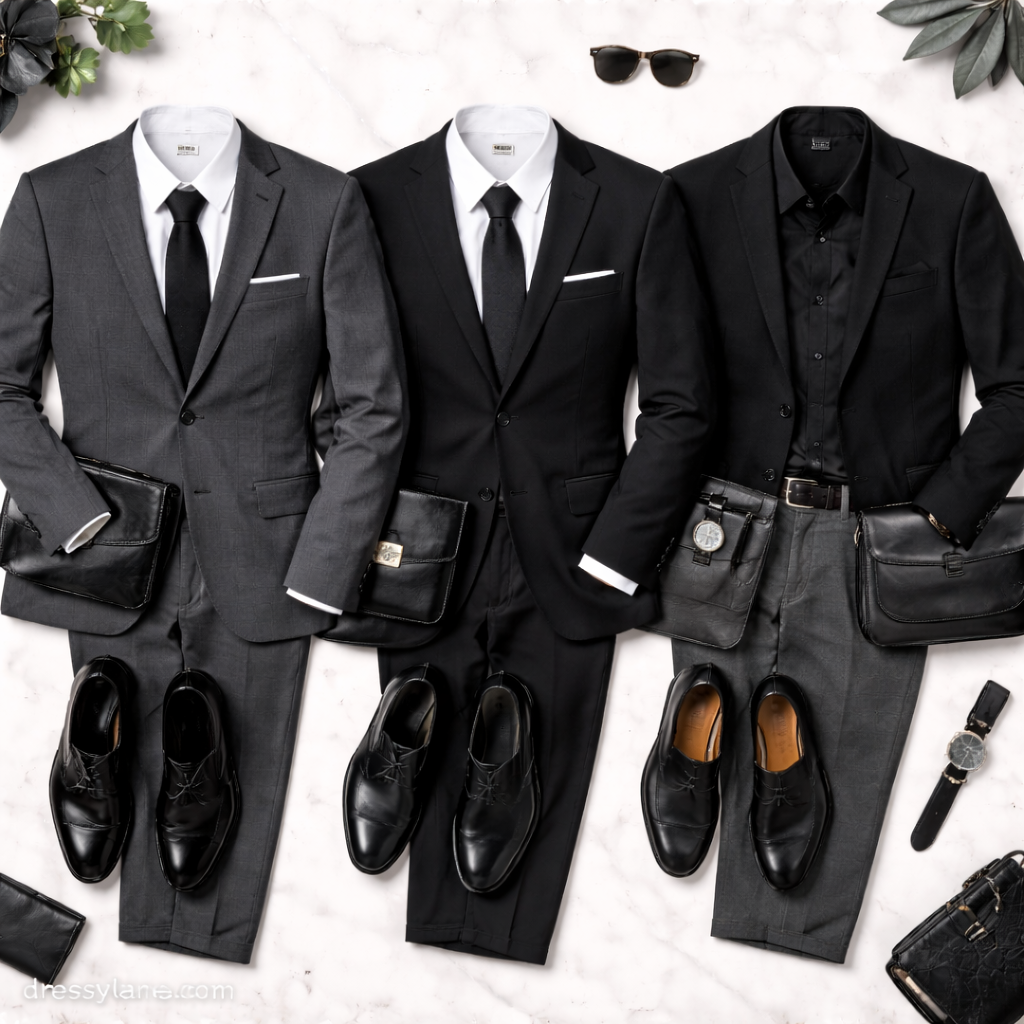
For a traditional funeral, a dark suit remains the easiest choice for men.
That does not mean you must buy a black suit specifically for the occasion.
Traditional Funeral Outfit
A reliable combination is:
- Navy, charcoal, or black suit
- White or pale blue dress shirt
- Dark tie
- Black or dark brown leather shoes
- Matching or coordinating belt
Charcoal and navy suits are particularly useful because they are appropriate for funerals without being limited to mourning occasions.
If You Don’t Own a Suit
Try:
- Dark dress trousers + white button-down + navy blazer
- Charcoal trousers + pale blue Oxford shirt
- Navy chinos + white shirt + dark sweater
- Black trousers + gray sweater over a collared shirt
For many funerals, a collared shirt and neat dark trousers are preferable to buying a poorly fitting suit simply because you think one is required.
Does a Man Need a Tie?
Not always.
A dark tie is a sensible choice for a formal or traditional funeral, particularly in a religious setting. For a less formal memorial, wake, or celebration of life, it may be unnecessary.
When uncertain, bringing a tie gives you the option to put it on after seeing how other attendees are dressed.
Do You Have to Wear Black to a Funeral?
No.
Black has a long association with mourning in many Western traditions, which makes it an easy and conventional choice. But it is not the only respectful color.
Other appropriate colors can include:
- Navy
- Charcoal
- Dark gray
- Deep brown
- Forest green
- Muted burgundy
- Dark blue
- Taupe
- Soft gray
A white or ivory blouse worn with dark trousers is also perfectly normal, as is a white dress shirt under a dark suit.
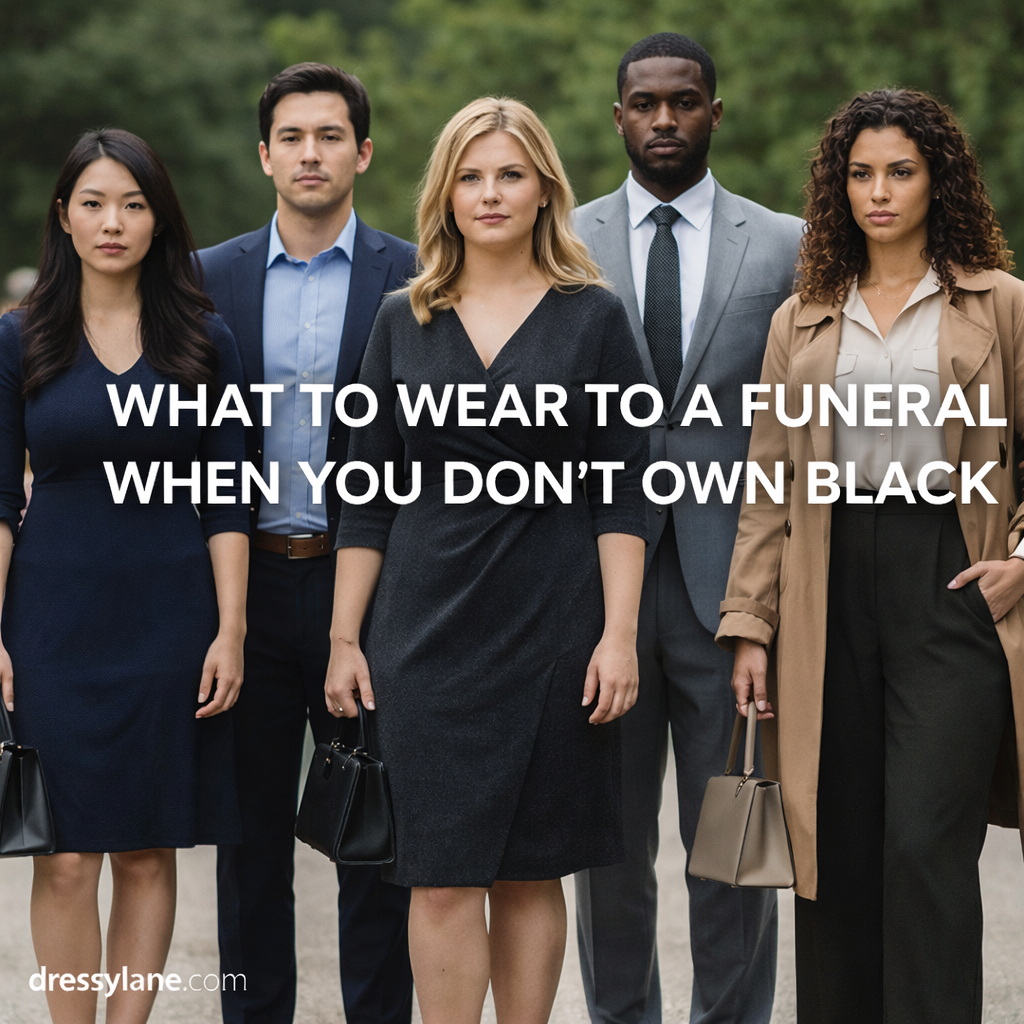
If you don’t own black clothing, there is usually no reason to buy an entirely new wardrobe. See our guide to what to wear to a funeral when you don’t own black for additional combinations.
Can You Wear Colors to a Funeral?
Yes, but consider the intensity of the color and the overall outfit.
Muted colors generally work better than vivid ones.
A deep burgundy blouse with charcoal trousers, a forest-green dress, or a dusty blue shirt under a navy blazer can all look appropriate.
Bright red, fluorescent colors, bold tropical prints, and highly saturated statement pieces may attract more attention than you want at a traditional service.
There is an important exception: the family’s wishes.
Some families specifically ask guests to wear a person’s favorite color. Others request bright clothing instead of black.
When the family provides a dress request, follow it.
Can You Wear Jeans to a Funeral?
For a traditional funeral, jeans generally aren’t the first choice.
If you own trousers, chinos, a skirt, or a simple dress, choose those instead.
But context matters.
Dark jeans may be reasonable for:
- A casual memorial at someone’s home
- A rural or outdoor gathering
- An explicitly casual celebration of life
- A service where the family specifically says casual clothing is welcome
- Situations where jeans are genuinely your best available option
Choose dark, clean jeans without rips, distressing, heavy fading, embroidery, or decorative hardware.
Pair them with something more polished, such as a button-down shirt, blouse, sweater, cardigan, or blazer.
It is better to attend in clean dark jeans than to avoid supporting someone because you don’t own formal clothing.
What to Wear to a Religious Funeral
Religious funerals may have expectations that go beyond general funeral fashion.
Depending on the faith, congregation, and cultural tradition, visitors may be expected to:
- Cover their shoulders
- Cover their knees or legs
- Wear a head covering
- Remove shoes
- Avoid particular colors
- Wear particular colors
- Dress differently according to gender
- Avoid certain jewelry or accessories
Don’t assume every religious service follows the same rules.
If you’re unfamiliar with the tradition, ask the family, funeral home, or place of worship for guidance.
When you cannot find specific information, choose modest clothing with good coverage and restrained colors.
What to Wear to a Non-Religious Funeral
A non-religious funeral does not necessarily mean a casual funeral.
Services held at funeral homes, crematoriums, cemeteries, community venues, or private event spaces may still have a formal atmosphere.
Good options include:
Women: dark trousers and a blouse, a midi dress, a simple pantsuit, or a skirt and sweater.
Men: a dark suit, dress trousers and a button-down, or chinos with a blazer.
Without religious dress requirements, use the venue and family’s preferences to judge formality.
What to Wear to a Wake
A wake or visitation often has a slightly different atmosphere from the funeral itself.
You may be standing, greeting family members, moving around the room, or attending directly before or after work.
Traditional funeral attire is always safe, but polished business-casual clothing can also be appropriate.
Examples include:
- Dark trousers + blouse + cardigan
- Midi dress + flats
- Chinos + button-down shirt + blazer
- Dress trousers + fine-knit sweater
If the wake and funeral occur on the same day, dress for the more formal event so you don’t need to change.
What to Wear to a Memorial Service
Memorial services vary considerably.
Some are formal ceremonies in churches or funeral homes. Others take place weeks later at a restaurant, park, family home, community hall, or other meaningful location.
For a formal memorial, dress much as you would for a funeral.
For a relaxed memorial, polished smart-casual clothing may be enough.
Pay particular attention to the invitation. Words such as formal, casual, garden, beach, reception, remembrance, or celebration of life can help you understand the tone.
What to Wear to a Celebration of Life
A celebration of life often emphasizes remembering the person’s personality and experiences rather than following traditional mourning customs.
The family might ask guests to wear:
- Bright colors
- A favorite color
- Floral prints
- Sports jerseys
- Hawaiian shirts
- Clothing connected to a hobby
- Something that reminds guests of the deceased
Follow those instructions even if they contradict conventional funeral attire.
If no instructions are given, smart-casual clothing in subdued colors is a reasonable starting point.
Avoid interpreting “celebration” as permission to dress as though you’re attending a party unless the invitation clearly indicates that kind of atmosphere.
What to Wear to a Funeral in Summer
Hot weather makes fabric choice particularly important.
Look for breathable materials such as:
- Cotton poplin
- Linen blends
- Tropical-weight wool
- Lightweight crepe
- Lightweight cotton twill
- Breathable viscose blends
Women might wear a lightweight midi dress, tailored trousers with a short-sleeved blouse, or an A-line skirt with a simple top.
Men can choose lightweight wool trousers or a summer-weight suit with a cotton dress shirt.
Short sleeves can be appropriate depending on the service, although bringing a lightweight cardigan or jacket is useful for air-conditioned indoor venues or religious settings where more coverage is expected.
Avoid beach sandals, flip-flops, tank tops, and very short shorts unless the family specifically requests extremely casual attire.
What to Wear to a Funeral in Winter
Winter funerals make layering easier, but outdoor portions of the service require more planning.
Useful pieces include:
- Wool overcoat
- Dark trench coat
- Merino wool sweater
- Wool trousers
- Long-sleeved midi dress
- Opaque tights
- Leather ankle boots
- Simple scarf and gloves
Your coat may be visible throughout a graveside service, so treat it as part of the outfit.
It does not have to be black. Navy, charcoal, camel, or another subdued neutral can work.
Warmth is more important than rigidly following a color rule.
What to Wear to an Outdoor or Graveside Funeral
Footwear matters especially at cemeteries.
You may encounter:
- Wet grass
- Gravel
- Mud
- Uneven pathways
- Snow or ice
- Soft ground
Women may want to avoid thin stilettos, which can sink into grass. Flats, loafers, block heels, or boots are usually easier.
Men should consider sturdy dress shoes or simple leather boots when conditions require them.
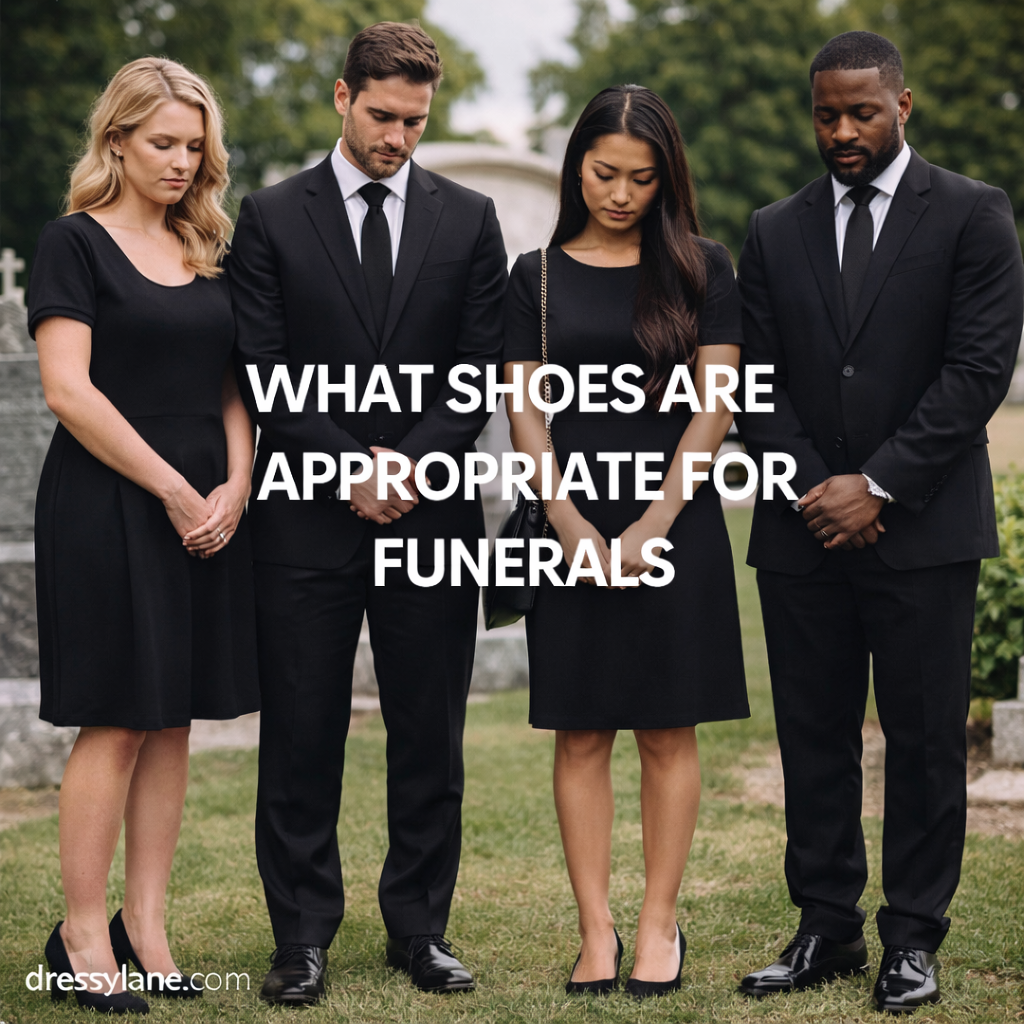
For a more detailed footwear guide, see what shoes are appropriate for funerals.
How to Dress Respectfully for Serious Events at Any Age
Respectful clothing is not determined by age.
A teenager does not need to dress like a middle-aged adult, and an older adult does not need to follow a different mourning uniform.
The same principles work across age groups: clean, subdued, modest, and appropriate for the setting.
Children and Teenagers
Use clothes they already own when possible.
Dark trousers with a polo, sweater, or button-down can work well. A simple dress, skirt and blouse, or neat trousers and sweater are also appropriate.
There is rarely a need to purchase elaborate formalwear for a child.
Adults
Choose the level of formality that fits the service rather than trying to dress “for your age.”
Older Adults
Comfort and mobility deserve priority. Supportive shoes, easy layers, comfortable waistbands, and weather-appropriate clothing can still look polished.
How to Dress Comfortably for a Funeral
Funerals can involve several hours of sitting, standing, walking, hugging people, and traveling between locations.
Comfort is therefore part of dressing appropriately.
Avoid:
- Shoes you cannot comfortably walk in
- Waistbands that become uncomfortable when seated
- Fabrics that require constant adjustment
- Jackets that severely restrict movement
- Clothing inappropriate for the temperature
A stretch-wool trouser, ponte-knit dress, soft merino sweater, or low block heel can look polished without making an already difficult day physically harder.
How to Dress When Emotions Are High
Sometimes choosing an outfit is one more decision than you have the energy to make.
Keep it simple.
Choose one dependable formula:
Women: dark trousers + plain blouse or sweater + flats.
Men: dark trousers + collared shirt + dark shoes.
Add a blazer, cardigan, coat, or tie if needed.
You do not need to create a perfectly coordinated outfit.
If you’re grieving, caring for family members, traveling unexpectedly, or attending a funeral on short notice, being present matters considerably more than getting every clothing detail right.
How to Dress With Limited Options
You may be traveling, working with a small wardrobe, unable to shop, or simply not own formal clothes.
Start with the most polished items you already have.
Prioritize them in this order:
- Clean and in good condition
- Appropriate coverage
- Simple silhouette
- Muted color
- Formality
This order is useful because a clean navy sweater and dark chinos can look more appropriate than a damaged or badly fitting black suit.
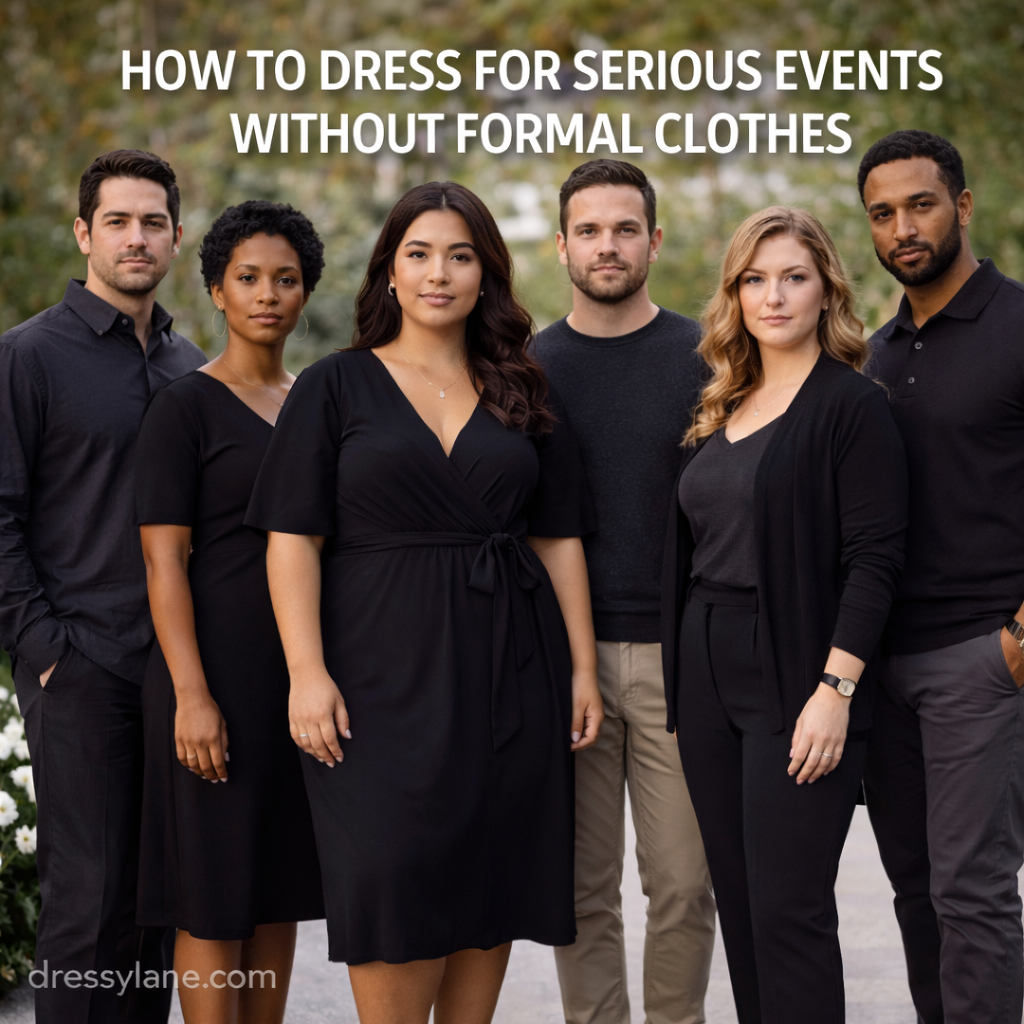
If your wardrobe is limited, our guide to dressing for serious events without formal clothes has additional outfit formulas.
How to Dress Without Overthinking It
Funeral attire can become stressful because people worry that there is a hidden rule they might accidentally break.
In most cases, there isn’t.
When no special cultural or family instruction applies, ask yourself three questions:
Is it neat? Is it subdued? Can I comfortably spend several hours wearing it?
If the answer to all three is yes, your outfit is probably suitable.
You don’t need perfectly matching blacks, a brand-new suit, special mourning jewelry, or an outfit purchased specifically for the occasion.
Dressing With Dignity and Respect
“Dignified” does not mean expensive.
It means your clothing acknowledges the seriousness of the occasion without making you the center of attention.
A $30 pair of clean dark trousers and a pressed shirt can accomplish that just as effectively as an expensive designer suit.
Avoid treating a funeral as an opportunity to display labels, luxury accessories, or elaborate styling.
Quietly appropriate clothing is usually the goal.
Funeral Shoes and Accessories
Shoes should complement the outfit while remaining practical.
Good choices include:
Women: flats, loafers, pumps, low block heels, and simple boots.
Men: Oxfords, Derbies, loafers, and understated leather boots.
Dark brown shoes can be perfectly appropriate; shoes do not automatically have to be black.
Keep handbags, belts, watches, jewelry, and other accessories relatively understated.
Sunglasses are appropriate outdoors and can be especially useful during an emotional graveside service.
What Not to Wear to a Funeral
Unless the family requests otherwise, avoid clothing that is likely to become distracting:
- Neon colors
- Very revealing clothing
- Large graphics or slogans
- Heavily ripped or distressed jeans
- Sequins
- Clubwear
- Beachwear
- Flip-flops at formal services
- Oversized logos
- Noisy jewelry
Be cautious with fragrance as well. Funerals often involve close seating and physical greetings, so heavy perfume or cologne can be uncomfortable for others.
A Practical Styling Tip
When I’m judging whether an outfit works for a funeral, I find it more useful to look at the whole outfit rather than obsess over one item.
A white blouse isn’t disrespectful because it isn’t black. Dark brown shoes aren’t wrong because they’re not black. A pair of trousers isn’t too casual simply because it isn’t part of a suit.
Stand in front of a mirror and look at the complete impression.
If the outfit appears quiet, neat, intentional, and appropriate for where you’re going, you’ve probably got it right.
Frequently Asked Questions About Funeral Attire
Do I have to wear black to a funeral?
No. Black is traditional, but navy, charcoal, dark brown, deep green, and other subdued colors can be appropriate.
Can I wear colors to a funeral?
Yes. Muted colors are generally safest unless the family specifically requests bright clothing or a particular color.
Can women wear pants to a funeral?
Absolutely. Tailored trousers, pantsuits, and dark separates are appropriate alternatives to dresses and skirts.
Can men attend a funeral without a suit?
Yes. Dark trousers with a collared shirt and polished shoes can be appropriate. Add a blazer or sweater when the service calls for more formality.
Can I wear jeans?
Trousers are preferable for traditional services. Clean, dark, non-distressed jeans may be acceptable at casual memorials or when they are your best available option.
Can I wear sneakers?
Traditional dress shoes, loafers, flats, or simple boots are generally preferable. Clean minimalist sneakers may work for an informal service or when comfort or mobility requires them.
What if I don’t own anything formal?
Wear the neatest, simplest clothing you have. You don’t need to buy a suit or formal dress solely to attend a funeral.
What if I don’t own black?
Wear navy, charcoal, dark gray, brown, or another muted shade. Black is not mandatory.
What should I wear to a wake?
Traditional funeral attire works, but polished business-casual clothing is often appropriate, particularly for an informal visitation.
What should I wear to a memorial service?
Follow the venue and family’s instructions. Formal memorials call for funeral-style clothing, while informal gatherings may allow smart-casual attire.
What should I wear to a celebration of life?
Follow any requests from the family. Bright colors, floral clothing, sports jerseys, or another meaningful style may be specifically encouraged.
What should I wear to a religious funeral?
Check the customs of the particular faith or congregation. Requirements regarding head coverings, shoulders, legs, footwear, and colors can differ considerably.
What if I’m attending immediately after work?
Wear the most subdued professional clothing available to you. A business-casual outfit is generally preferable to missing the service because you cannot change.
Is it disrespectful to dress casually if I cannot afford formal clothing?
No. Wear clothing that is clean, neat, modest, and as appropriate to the occasion as your circumstances allow.
Final Thoughts
The best funeral outfit is rarely the most formal or expensive one. It is the outfit that allows you to enter the room, pay your respects, support the people who are grieving, and stop thinking about what you’re wearing.
For a traditional service, dark or muted clothing remains the safest approach. Women can wear dresses, skirts, trousers, or suits; men can wear suits or simpler combinations of dark trousers and collared shirts. Black is traditional but not mandatory, and clothing does not need to be expensive or specifically purchased for mourning.
Memorial services, wakes, religious ceremonies, non-religious funerals, celebrations of life, outdoor services, and seasonal conditions can all change what is most appropriate. When the family gives specific instructions, those instructions should take priority over general fashion conventions.
Most importantly, don’t allow uncertainty about clothing to keep you from attending.
Choose something clean, understated, comfortable, and respectful, then focus your attention where it belongs: on the person being remembered and the people who need your support.
For guidance across weddings, interviews, religious events, funerals, parties, and other dress codes, visit our complete guide to dressing for different occasions.