

Spring is awkward to dress for precisely because it isn’t consistently warm. You can leave home on a 45°F morning, walk outside at lunch when it’s 65°F, and end the day dealing with wind or rain.
The solution isn’t to build an entirely new spring wardrobe. It’s to keep some lighter winter pieces in rotation, bring back breathable warm-weather clothes gradually, and rely on one removable layer.
A cotton shirt, straight-leg trousers, loafers, and a lightweight jacket can handle a surprising number of spring days. As temperatures rise, the jacket disappears. When they’re cooler, add a fine-gauge sweater underneath.
Dress for the Temperature Swing, Not Just the Afternoon High
A forecast showing a high of 70°F can make a summer outfit seem reasonable—until you realize it’s only 48°F when you’re leaving for work.
I find it more useful to build the outfit for the warmest part of the day and add one practical removable layer for the cooler hours.
For example:
T-shirt + straight-leg jeans + sneakers + cotton-twill jacket
or:
Button-down + lightweight trousers + loafers + fine-gauge cardigan.
Once the afternoon warms up, the jacket or cardigan can come off without leaving you with an incomplete outfit.
I’d rather do this than wear a shirt, sweater, scarf, blazer, and trench simultaneously. Spring layers are most useful when they’re easy to remove and carry.
Keep the Right Winter Clothes Around
Don’t pack away every sweater and boot at the first sign of warmer weather.
Fine-gauge merino sweaters, cotton knits, lightweight wool trousers, dark denim, ankle boots, and Chelsea boots can continue working well through early spring.
The pieces I’d retire first are the genuinely winter-specific ones: heavily insulated parkas, very chunky sweaters, fleece-lined pants, and snow boots once conditions no longer require them.
A fine merino crewneck that was a mid-layer underneath your winter coat can become an outer layer over a T-shirt or Oxford shirt in spring.
That’s one of the easiest ways to transition your wardrobe without buying anything new.
Bring in Lighter Fabrics Gradually
As the season warms up, replace heavier fabrics one piece at a time.
Useful spring materials include:
- Cotton poplin
- Lightweight denim
- Cotton twill
- Fine-gauge merino
- Cotton knitwear
- Linen blends
- Lightweight wool
- Tencel or lyocell
You don’t necessarily need to eliminate wool. A lightweight merino sweater or pair of tropical-weight wool trousers can be perfectly comfortable during mild spring weather.
Likewise, linen doesn’t need to appear on the first warm day. Save very lightweight linen shirts and trousers for later spring when temperatures consistently justify them.
The goal is to match fabric weight to the actual weather rather than the season printed on the calendar.
What Women Can Wear in Spring
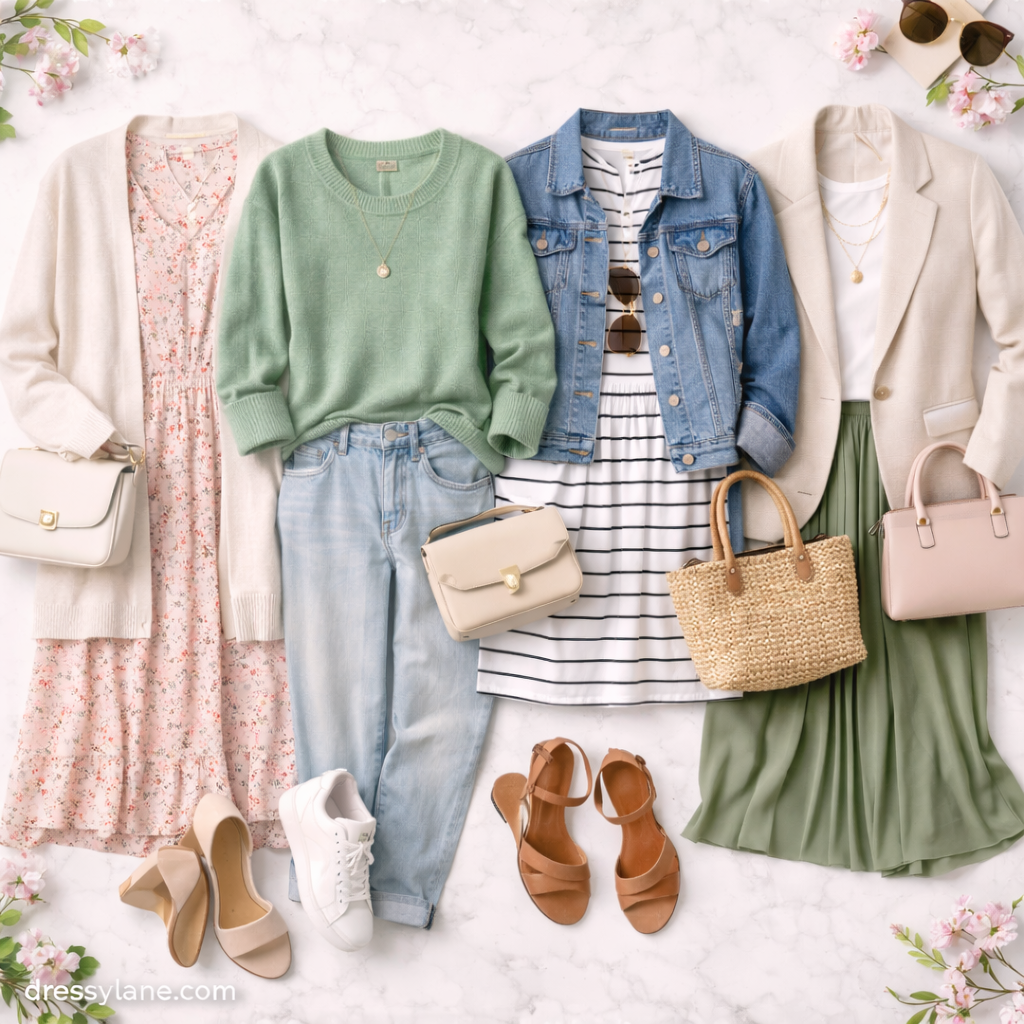
Spring is a particularly useful time to bring dresses and skirts back into regular rotation.
A cotton midi dress can start the season with ankle boots and a trench. Several weeks later, the same dress can work with loafers, ballet flats, or sneakers and no outer layer.
Other easy combinations include:
- Straight-leg jeans + striped tee + trench + loafers
- Wide-leg trousers + lightweight cardigan + flats
- Midi skirt + fitted knit + ankle boots
- White button-down + relaxed jeans + leather sneakers
- Shirt dress + cropped jacket + loafers
Pay attention to proportions when adding jackets.
A cropped denim or cotton-twill jacket can work particularly well with a fuller midi dress because it defines the waist without covering most of the dress. A longer trench creates a cleaner line over straighter dresses and trousers.
I’d keep at least one fine cardigan accessible even after the weather becomes fairly mild. Spring restaurants, offices, and evenings can still be much colder than the afternoon temperature suggests.
What Men Can Wear in Spring

For men, an overshirt or lightweight jacket does a lot of the work.
A cotton-twill overshirt can be worn open over a T-shirt on mild days or buttoned over an Oxford when it’s cooler.
Try:
- White T-shirt + olive chinos + denim jacket + sneakers
- Oxford shirt + tan chinos + loafers
- Cotton crewneck + dark jeans + leather sneakers
- Polo + lightweight trousers + suede loafers
- T-shirt + chinos + bomber jacket + sneakers
A lightweight navy, olive, tan, or stone jacket is usually more useful than something heavily insulated.
I’d also keep a fine-gauge merino or cotton crewneck around rather than moving directly from winter sweaters to short sleeves. It fills the gap when a shirt isn’t quite warm enough but a jacket feels unnecessary.
You Don’t Have to Wear Pastels
Spring style is often presented as an immediate switch to pale blue, mint, lavender, blush, and cream.
Those colors can look great, but they’re optional.
Navy, black, olive, charcoal, denim, and brown can all stay in your wardrobe. Simply pairing them with lighter fabrics or one lighter neutral can change the overall feel.
For example:
Navy trousers + white Oxford + brown loafers
or:
Dark jeans + cream sweater + tan jacket.
If you enjoy seasonal color, introduce one at a time. A pale blue shirt, sage cardigan, or cream pair of trousers is enough to make an outfit feel lighter without rebuilding your wardrobe around pastels.
Spring Shoes Need to Handle Unpredictable Ground
Spring is when footwear starts becoming lighter, but weather still matters.
Loafers, ballet flats, leather sneakers, casual Derby shoes, and low-profile boots all work well.
Ankle and Chelsea boots can stay in rotation during early spring, especially on cold or wet days.
Before wearing suede, delicate flats, or light canvas sneakers, check the forecast. A shoe that works beautifully on a dry April afternoon may be a poor choice for puddles and steady rain.
I’d also avoid rushing into sandals simply because you get one unusually warm day. Closed-toe shoes usually remain more versatile until warm weather becomes consistent.
What to Wear on Rainy Spring Days
For rain, focus on the outer layer first.
A lightweight trench, water-resistant field jacket, or simple rain shell can be more useful than trying to compensate with several warm layers underneath.
Wear it over an outfit that still works once you arrive indoors.
For example:
Cotton shirt + chinos + water-resistant jacket + leather shoes with a practical outsole.
Or:
Lightweight knit + straight trousers + trench + ankle boots.
Traction matters when sidewalks are wet, so check the sole rather than choosing shoes purely by how weatherproof the upper appears.
And while suede isn’t automatically ruined by a little moisture when properly cared for, I’d still choose smooth leather or another less delicate material when prolonged rain is expected.
Let Spring Arrive Gradually
There’s rarely a clean moment when winter ends and spring begins.
Early spring may still require wool trousers, sweaters, boots, and coats. By mid-spring, those pieces can be mixed with cotton shirts, lighter jackets, loafers, and sneakers. Late spring starts introducing linen blends, short sleeves, lighter dresses, and warmer-weather footwear.
That’s why I wouldn’t reorganize the entire closet after the first sunny weekend.
Keep a small selection of both cool- and warm-weather clothes available while temperatures are changing. You’ll get more use from what you already own and be much better prepared when the forecast suddenly changes.
Final Thoughts
Knowing what to wear in spring is mostly about making your wardrobe adjustable.
Build an outfit that works during the warmer part of the day, then add one removable layer for cool mornings, evenings, wind, or air conditioning. Keep fine-gauge sweaters and lighter winter pieces around while gradually introducing cotton poplin, lighter denim, linen blends, and other breathable fabrics.
Women can transition dresses and skirts with jackets, knitwear, and changing footwear, while men can rely on overshirts, lightweight jackets, chinos, Oxford shirts, and fine sweaters.
Most importantly, dress for the actual forecast rather than the idea of spring. The season becomes much easier once you stop expecting every day to feel like the warmest afternoon of April.