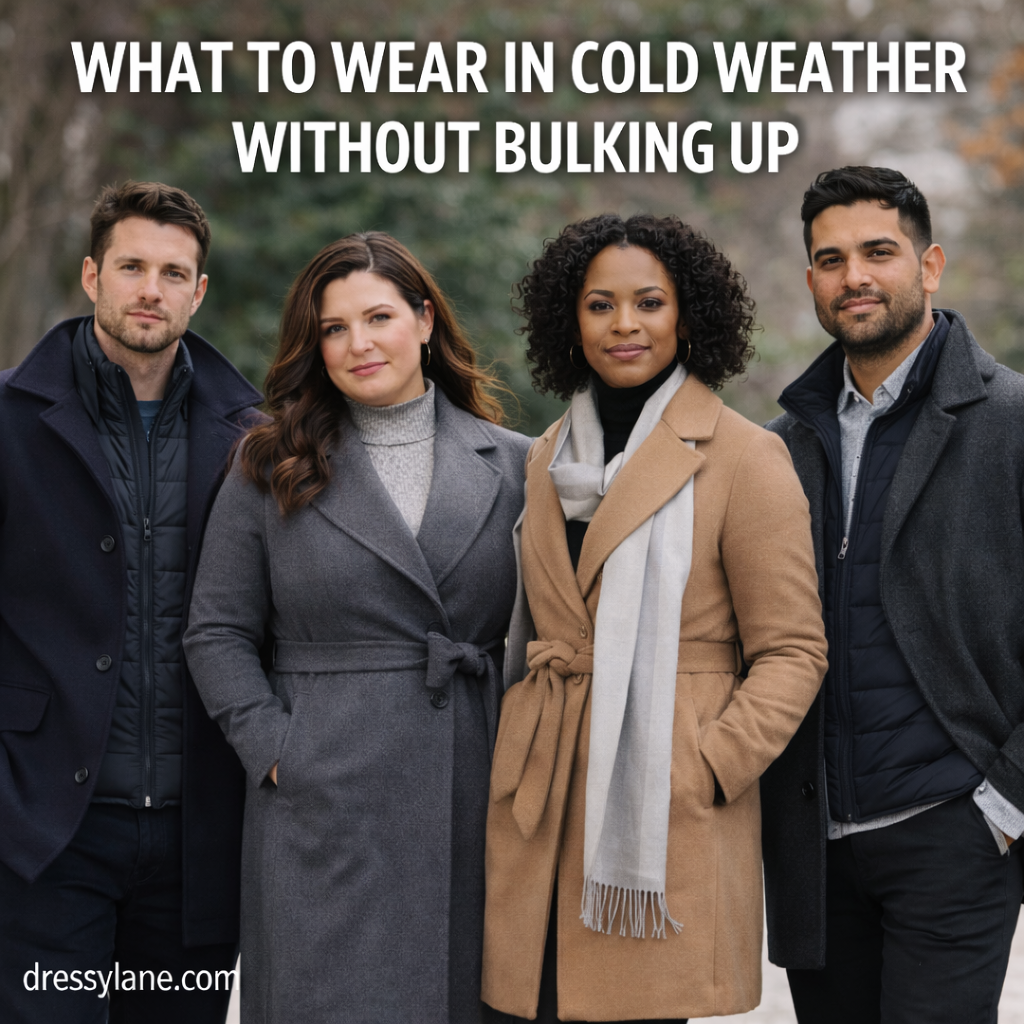
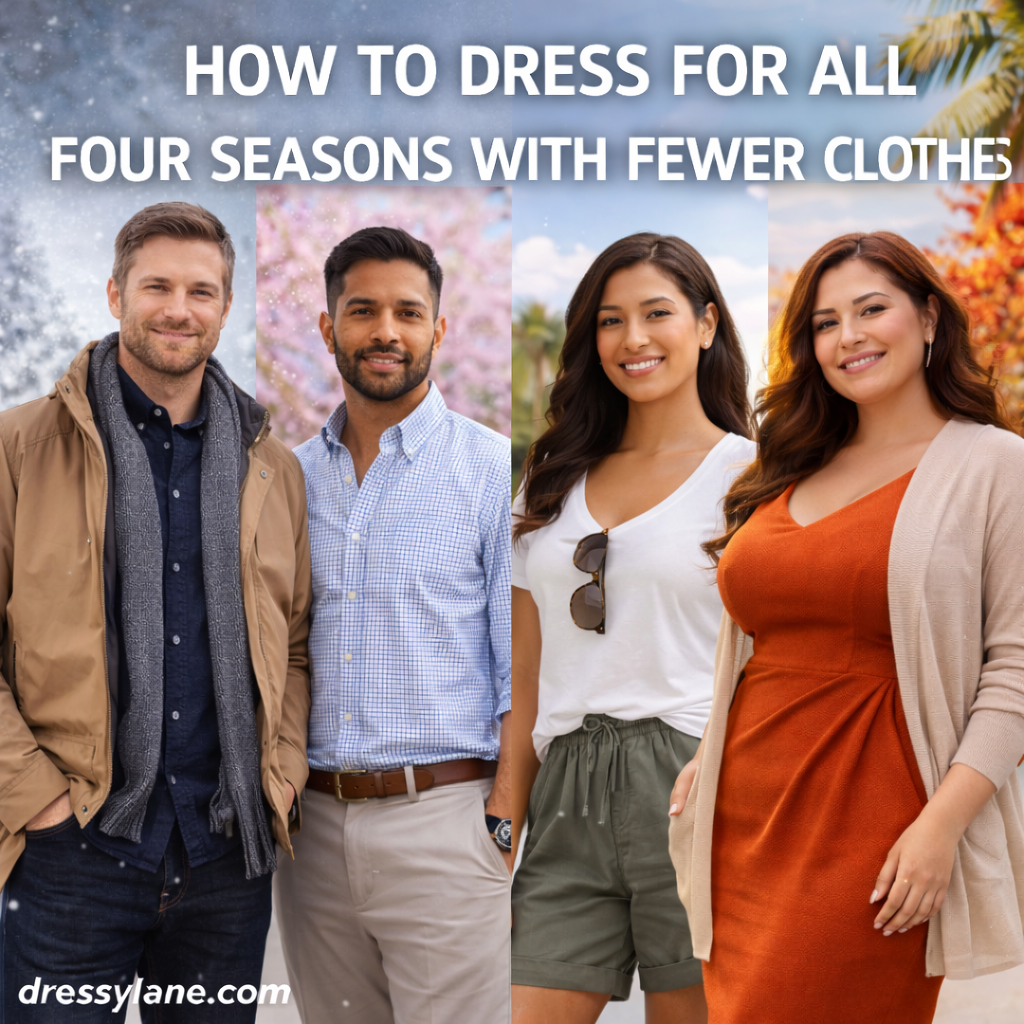
Building a wardrobe that works year-round doesn’t mean you need four separate wardrobes. Most people can get far more mileage from their clothes by choosing pieces that handle temperature changes well and can be layered without becoming bulky.
The trick is to stop thinking of clothes as strictly “summer” or “winter” pieces. A cotton button-down, lightweight merino sweater, straight-leg trousers, or simple midi dress can work for much of the year. What changes from season to season is usually what you wear underneath or over it.
If you want to dress for all four seasons with fewer clothes, versatility matters much more than the number of pieces hanging in your closet.
Start With Clothes You Can Actually Layer
Not every basic is automatically versatile. Fit and fabric make a big difference.
For example, an oversized chunky sweater may be wonderful in January, but it is difficult to wear under anything except a roomy coat. A fine-gauge merino or cotton sweater can be worn by itself in fall, over a collared shirt in winter, or under a light jacket in early spring.
The same principle applies to bottoms. Straight-leg jeans, chinos, ankle-length trousers, and simple skirts tend to transition between seasons better than pieces designed around a very specific trend or temperature.
A useful year-round foundation might include:
- Cotton or cotton-blend T-shirts
- Oxford or poplin button-down shirts
- Fine-gauge merino or cotton sweaters
- Straight-leg jeans or lightweight denim
- Chinos or tailored trousers
- A lightweight jacket or blazer
- A weather-appropriate coat for genuinely cold conditions
I’d actually skip buying several “transition jackets.” One good lightweight jacket that fits comfortably over a sweater is usually more useful than three jackets that only work during a narrow temperature range.
Think in Three Layers, Not Four Seasons
Instead of rebuilding your outfit every few months, think of getting dressed in three parts: a base, an insulating layer, and weather protection.
Imagine starting with a white cotton T-shirt and straight-leg trousers.
On a warm summer day, that may be the entire outfit. When September evenings cool down, add a lightweight cardigan or overshirt. In winter, wear the same base with a merino sweater and coat. When spring arrives, lose the heavy coat and return to the lighter layer.
That approach is especially useful in places where mornings and evenings can feel dramatically different from the middle of the day.
Thin layers are generally more useful than one extremely heavy layer because you can adjust them as the temperature changes.
Choose Fabrics That Earn Closet Space
Fabric determines whether a garment can realistically cross seasons.
Cotton poplin works particularly well for shirts because it is crisp enough to wear alone but thin enough to layer. Fine merino wool is another standout because it provides warmth without the bulk of a heavy knit.
Lightweight denim can work through most of the year, while very thick raw denim becomes uncomfortable in hot weather. Linen is excellent for summer, but a linen-cotton blend often has a longer wearable season because it wrinkles less dramatically and feels slightly more substantial.
Tencel and modal can also work well for soft shirts, dresses, and base layers.
The goal isn’t to find one magical fabric for every temperature. It’s to avoid filling the wardrobe with pieces that can only be worn comfortably for six weeks a year.
A Smaller Four-Season Wardrobe for Women
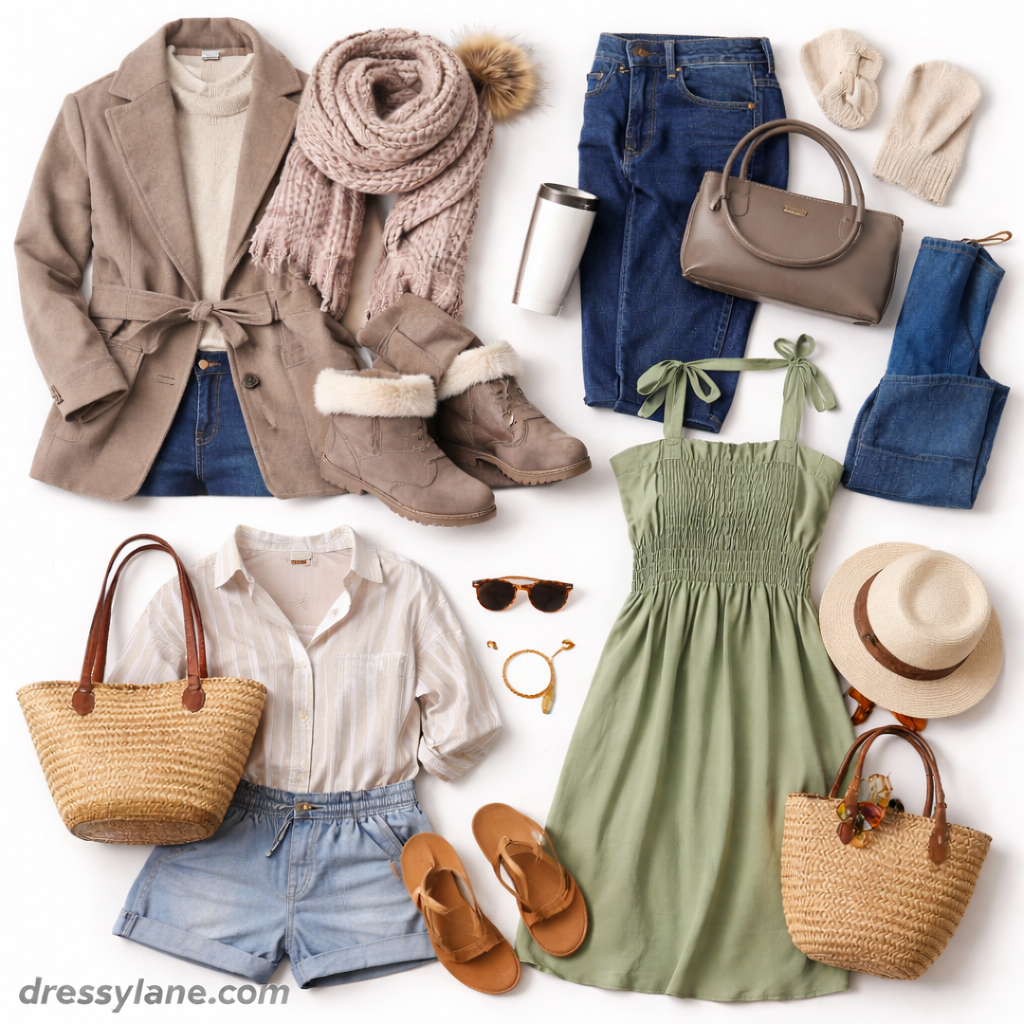
For women, dresses and separates become especially useful when they leave enough room for layering.
A simple sleeveless or short-sleeve midi dress, for example, can be worn with sandals in summer, loafers and a cardigan in fall, or tights, boots, and a coat during cooler weather. A dress with an extremely summery cut or very delicate fabric won’t make that transition nearly as easily.
Cardigans, unstructured blazers, straight-leg trousers, lightweight knit tops, and midi skirts are similarly adaptable.
Shoes deserve some thought too. Rather than buying footwear for every tiny seasonal shift, focus on a few distinct jobs: a warm-weather shoe, a closed everyday shoe, and weather-resistant footwear if your climate requires it.
Scarves and tights are particularly useful because they can noticeably change the warmth of an outfit without requiring another coat or sweater.
A Smaller Four-Season Wardrobe for Men
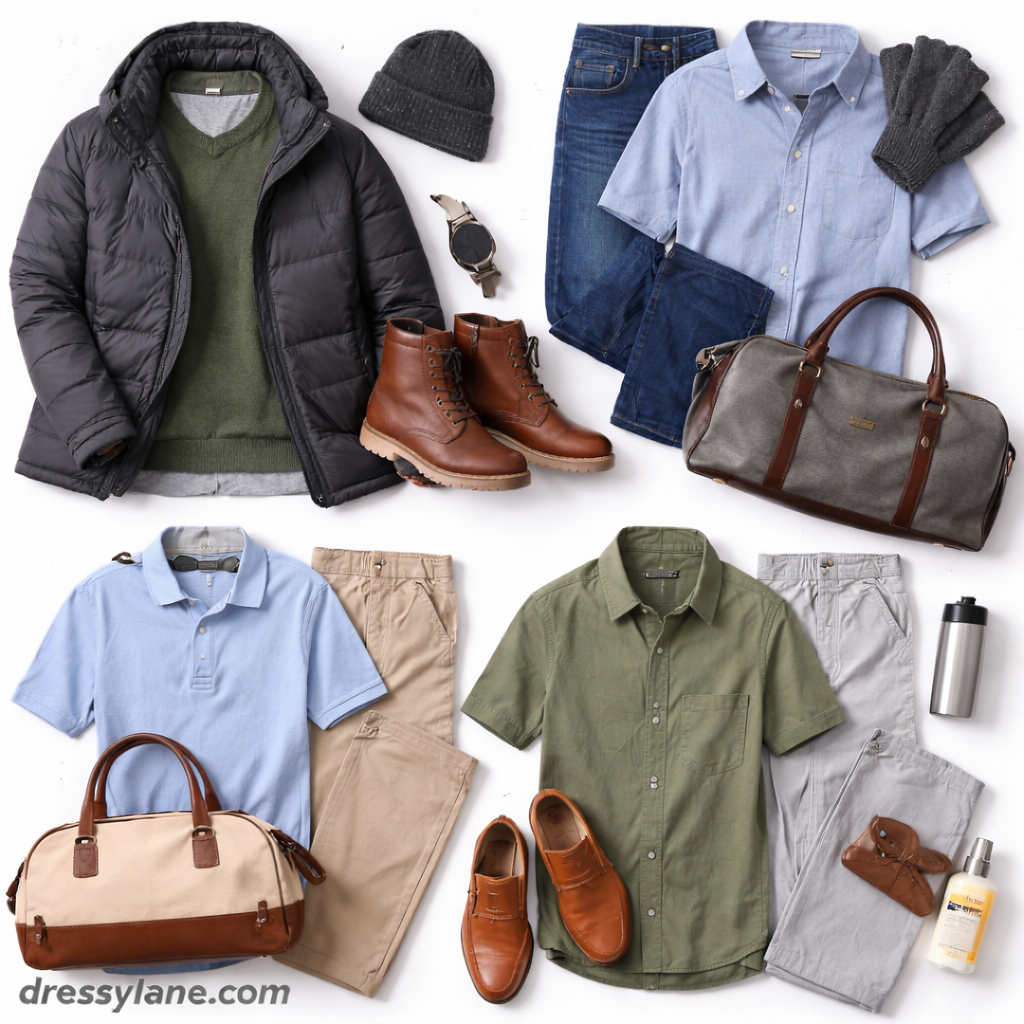
For men, button-down shirts are some of the hardest-working pieces in a small wardrobe.
An Oxford shirt can be worn with the sleeves rolled in warmer weather, underneath a crewneck sweater when temperatures drop, or under a jacket in winter. It also moves easily between casual and slightly dressier outfits.
Chinos and medium-weight trousers are usually more versatile than very heavy winter pants or ultra-thin summer styles. Dark, medium-weight denim can also cover a surprisingly large portion of the year.
When choosing sweaters and jackets, check how they fit together before buying. A sweater that looks great on its own but bunches badly underneath your everyday jacket is much less useful in a small wardrobe.
That sounds obvious, but it’s one of those details you notice only after living with a wardrobe for a while.
Let Accessories Handle the Smaller Temperature Changes
You don’t necessarily need another garment every time the weather changes by ten degrees.
A scarf, thicker socks, tights, gloves, or a lightweight hat can extend the useful range of clothing you already own. They also take up considerably less closet space than additional jackets and sweaters.
This works especially well during spring and fall, when you may only need a little extra warmth in the morning.
Keep the Colors Easy to Combine
A smaller wardrobe becomes frustrating if half the pieces don’t work together.
You don’t have to wear nothing but black, beige, and navy, but having two or three dependable neutrals makes outfit building much easier. Navy trousers, a white shirt, gray knitwear, and a camel or olive jacket, for example, can produce several combinations without looking identical every day.
Accent colors can then come from shirts, scarves, knitwear, or other smaller pieces.
The practical test is simple: before buying something, picture at least three things you already own that you could wear with it.
What Usually Goes Wrong
The biggest mistake is trying to create a minimalist wardrobe by simply getting rid of clothes.
Owning fewer clothes only works when the remaining pieces cover your actual life and climate.
Someone dealing with snowy winters still needs proper insulated outerwear. Someone living through very hot summers probably needs more lightweight shirts than sweaters. Your wardrobe should reflect the weather you actually experience rather than an arbitrary capsule-wardrobe number.
Also be careful about keeping uncomfortable clothing simply because it is theoretically “versatile.” If trousers pinch when you sit down or a sweater always feels itchy, you probably won’t reach for them often enough to justify the closet space.
Final Thoughts
Learning how to dress for all four seasons with fewer clothes is less about creating a tiny wardrobe and more about eliminating unnecessary duplication.
Start with comfortable base pieces, choose fabrics that can handle more than one season, and use lightweight layers to adjust for temperature. Keep colors reasonably coordinated and reserve truly season-specific clothing for weather that genuinely requires it.
A good year-round wardrobe doesn’t need to be large. It needs pieces that work together—and that you actually want to wear.