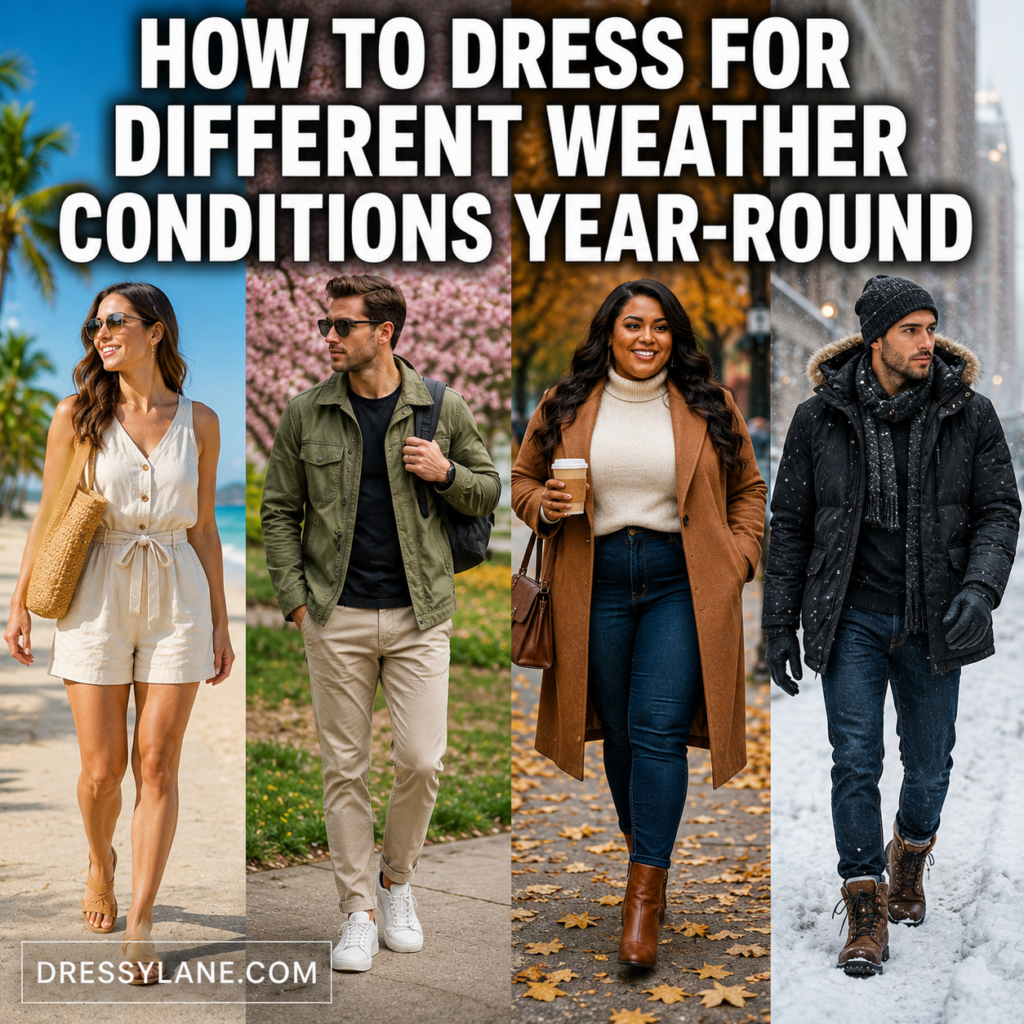
Knowing how to dress for the weather sounds simple until the forecast says 48°F in the morning, 70°F in the afternoon, windy after sunset, and a chance of rain somewhere in between.
Real-world weather rarely fits neatly into “summer clothes” or “winter clothes.” Temperature changes throughout the day. Humidity can make mild temperatures feel hot. Wind can make a cool day feel much colder. Indoor heating and air conditioning create another set of conditions entirely.
The solution isn’t owning a separate wardrobe for every possible forecast. It’s learning how to adjust a relatively versatile wardrobe using fabric, layers, coverage, footwear, and outerwear.
This guide covers dressing for heat, cold, rain, wind, humidity, rapidly changing forecasts, seasonal transitions, long days, evenings, walking, events, and the many situations where the weather doesn’t cooperate with your plans.
Table of Contents
- Start With the Forecast, Not the Season
- The Four Parts of a Weather-Ready Outfit
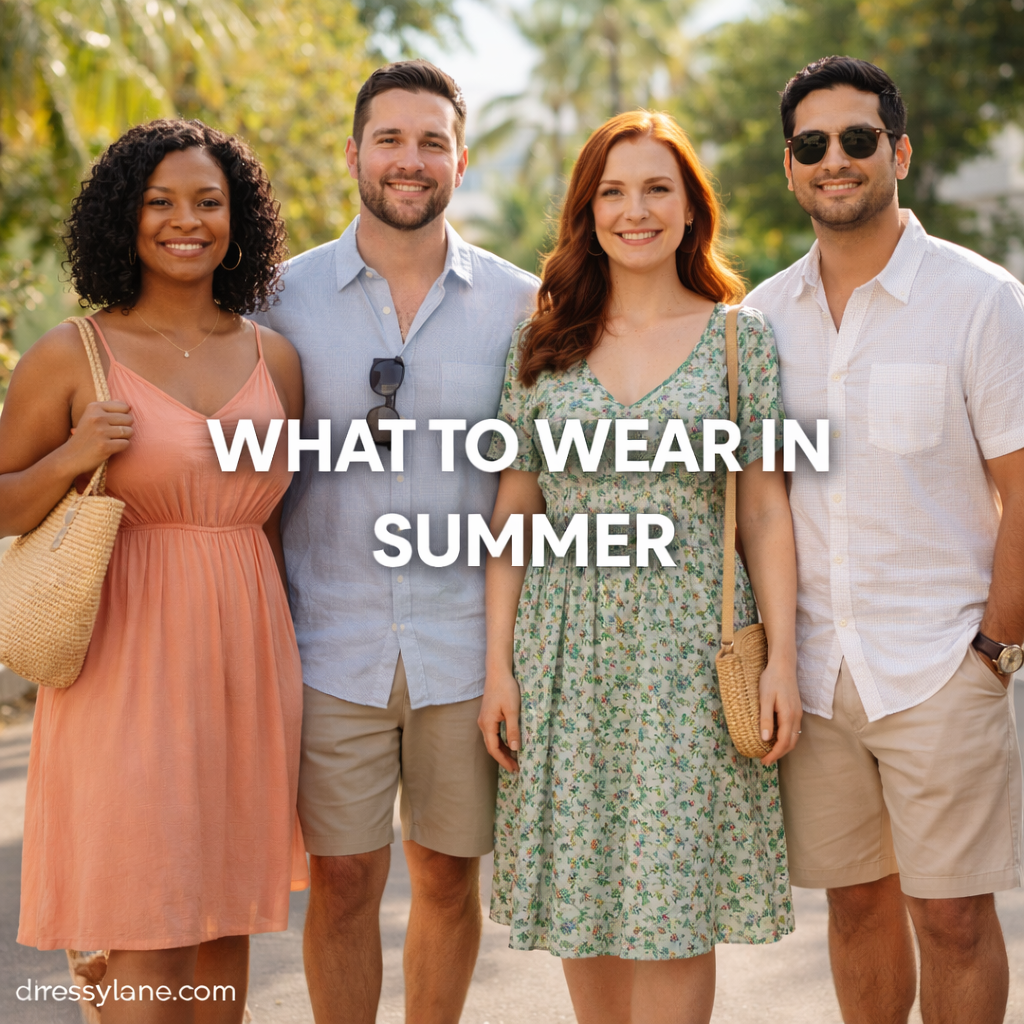
- What to Wear in Hot Weather
- How to Dress for Extreme Heat
- What to Wear in Humid Weather
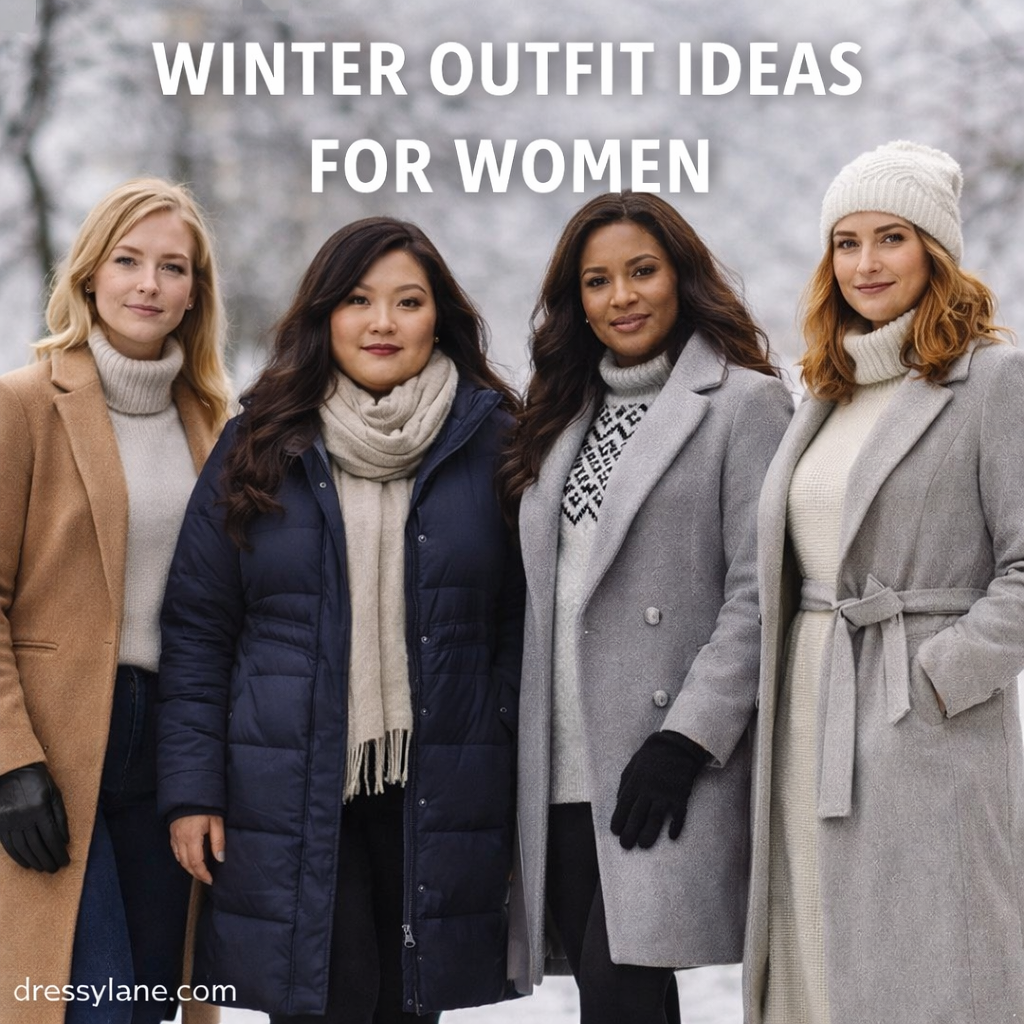
- What to Wear in Cold Weather
- Dressing When You’re Always Cold
- How to Dress for Cold Mornings
- What to Wear in Rain
- What to Wear in Wind
- Dressing for Unpredictable and Rapidly Changing Weather
- How to Layer for Changing Temperatures
- Dressing When Seasons Overlap
- Choosing Fabrics for Different Seasons
- Dressing for Long Days, Walking, and Travel
- Dressing for Evenings and Hot Nights
- Dressing for Events in Different Weather
- Everyday Outfit Ideas for Women and Men
- Night-Out Outfit Ideas for Women and Men
- How to Build a Seasonal Capsule Wardrobe
- Rewearing Clothes Across Seasons
- Looking Polished Without Overthinking the Weather
- Frequently Asked Questions
- Final Thoughts
Start With the Forecast, Not the Season
One of the easiest ways to dress poorly for the weather is to dress according to the calendar.
September doesn’t automatically mean sweaters. April doesn’t guarantee mild temperatures. A sunny winter afternoon may be warmer than a rainy spring morning.
Before getting dressed, check more than the day’s headline temperature.
Pay attention to:
- Morning low
- Afternoon high
- Evening temperature
- Chance of precipitation
- Wind
- Humidity
- Sun exposure
- How long you’ll be outdoors
A forecast of 65°F tells you very little by itself.
If the day starts at 48°F and reaches 65°F under full sun, removable layers make sense. If it’s 65°F with strong wind and rain, you’ll need something entirely different.
For a broader explanation of how seasonal wardrobes change, see Seasonal Outfit Planning: What Changes and Why.
The Four Parts of a Weather-Ready Outfit
You can simplify most weather-related clothing decisions into four areas.
1. Base Clothing
This is the outfit you would be comfortable wearing when your outer layers come off.
Examples include:
- T-shirt and trousers
- Blouse and skirt
- Oxford shirt and chinos
- Dress
- Polo and jeans
Your base outfit should suit the destination as well as the weather.
2. Adjustable Layers
Layers let you respond to temperature changes.
Useful options include:
- Cardigans
- Overshirts
- Lightweight sweaters
- Fleece jackets
- Denim jackets
- Blazers
The best layers are easy to remove and don’t ruin the outfit when they’re gone.
3. Weather Protection
Sometimes insulation isn’t the main issue.
You may need protection from:
- Rain
- Wind
- Snow
- Strong sun
A lightweight waterproof shell can be more useful during a rainy 60°F day than a warm wool coat.
4. Footwear
Shoes need to suit both the weather and your activity.
Consider traction, water resistance, ventilation, warmth, and how far you’ll be walking.
If you’re trying to reduce the number of shoes you own, Best Shoes for All-Season Wear covers versatile options in more detail.
What to Wear in Hot Weather
Hot weather is primarily a problem of heat management.
You want clothing that allows air to circulate and doesn’t unnecessarily trap body heat.
Look for:
- Linen shirts
- Cotton poplin
- Seersucker
- Chambray
- Lightweight cotton
- Loose or moderately relaxed silhouettes
- Breathable footwear
For women, that might mean linen trousers with a sleeveless blouse, a lightweight cotton midi dress, or relaxed shorts with a breathable button-down.
For men, consider lightweight chinos with a polo, linen trousers with a short-sleeve shirt, or tailored shorts with a cotton or linen button-down.
Avoid assuming that every natural fabric is automatically cool. A thick heavyweight cotton sweatshirt will obviously feel much warmer than lightweight cotton poplin.
Fabric weight and weave matter as much as the fiber name.
How to Dress Comfortably in Extreme Heat
Once temperatures become extreme, fashion choices need to become more functional.
Reduce unnecessary layers and choose clothes that don’t cling tightly to the body.
Useful choices include:
- Loose linen trousers
- Lightweight dresses
- Cotton or linen shirts
- Lightweight shorts
- Moisture-managing base layers
- Breathable sandals or sneakers
If you’ll be exposed to direct sunlight, lightweight coverage can sometimes be more comfortable than exposing additional skin. A loose linen or lightweight cotton long-sleeve shirt can provide sun coverage while remaining relatively breathable.
Color can help slightly with direct sun exposure, but fabric weight, weave, fit, and ventilation generally make a much bigger practical difference.
If you personally become uncomfortable in heat faster than most people, see How to Dress When You Overheat Easily.
What to Wear in Humid Weather
Humidity changes how heat feels because perspiration evaporates less efficiently.
This can make a moderately warm day feel much more uncomfortable.
Choose clothing that allows airflow and doesn’t become heavy or restrictive as you warm up.
Good options include:
- Linen
- Seersucker
- Lightweight cotton
- Moisture-wicking performance fabrics
- Relaxed trousers
- Unlined dresses or skirts
- Lightweight shirts
Dressing for Humidity Indoors
Humidity isn’t only an outdoor problem.
Restaurants, older buildings, crowded event spaces, public transportation, and venues with weak air conditioning can become surprisingly warm.
If you’re moving between humid outdoor conditions and air conditioning, carry one lightweight layer rather than dressing heavily from the start.
A cardigan, light overshirt, or unstructured jacket is usually enough.
What to Wear in Cold Weather
Cold-weather dressing works best as a system.
Instead of searching for one enormous sweater, combine several layers that each perform a job.
Base Layer
Your first layer can help retain warmth without adding much bulk.
Examples include:
- Merino wool base layers
- Thermal tops
- Lightweight long-sleeve shirts
Mid-Layer
This provides insulation.
Try:
- Wool sweater
- Merino cardigan
- Fleece
- Knit vest
- Lightweight insulated vest
Outer Layer
Your coat protects you from the outside conditions.
Depending on the weather:
- Wool overcoat
- Puffer jacket
- Parka
- Insulated raincoat
- Weather-resistant shell
Accessories such as scarves, gloves, warm socks, and hats can make a surprisingly large difference without requiring another bulky torso layer.
How to Stay Stylish in Cold Temperatures
Cold-weather outfits can easily become visually heavy.
One way to keep them polished is to vary proportions rather than making every garment oversized.
For example:
Women: straight-leg trousers + fitted merino sweater + long wool coat + ankle boots.
Men: wool trousers + Oxford shirt + fine-knit sweater + structured overcoat + leather boots.
Casual versions might use jeans, sneakers, fleece, or a puffer jacket.
The goal isn’t to hide every outfit beneath a coat. Choose an outer layer that feels like an intentional part of what you’re wearing.
How to Dress When You’re Often Cold
Some people need additional warmth long before everyone else does.
If that’s you, don’t simply wear a much heavier outfit from the beginning. Build warmth using thin, effective layers.
Try:
- Merino base layer under a shirt
- Thin thermal leggings beneath trousers
- Wool socks
- Fine-knit sweater
- Insulated vest
- Scarf
These pieces can add substantial warmth without dramatically changing the silhouette of your outfit.
How to Dress for Cold Mornings
Cold mornings are tricky when the rest of the day will be warm.
The solution is temporary insulation.
Start with the outfit you expect to wear during the warmer portion of the day, then add a removable layer.
For example:
T-shirt + jeans + cardigan + lightweight jacket.
As the temperature rises, the jacket and cardigan can come off independently.
Avoid dressing entirely for the coldest hour of the day unless you’ll actually spend most of your time outside during that period.
Early Morning vs. Evening Weather
Morning and evening temperatures can be similar, but your clothing needs may be different.
In the morning, you may be walking quickly, commuting, or entering a heated building.
At night, you may be sitting outside, waiting for transportation, or walking more slowly.
That means an outfit that felt perfectly comfortable at 55°F during an active morning commute may feel chilly at the same temperature while sitting outdoors at dinner.
Consider activity level, not temperature alone.
What to Wear in Rain
Rain changes footwear and outerwear more than almost any other condition.
Useful pieces include:
- Waterproof or water-resistant jacket
- Trench coat for lighter rain
- Waterproof boots
- Water-resistant sneakers
- Quick-drying trousers
- Compact umbrella
Avoid delicate shoes that water can easily damage, particularly untreated suede.
Trouser length matters too. Wide or long hems that drag near wet pavement quickly become uncomfortable.
For heavy rain, function should take priority. A genuinely waterproof shell and practical shoes are more useful than an outfit that merely looks appropriate for rainy weather.
What to Wear in Windy Weather
Wind can make cool temperatures feel considerably colder and can turn otherwise practical clothing into a nuisance.
Consider:
- Wind-resistant jackets
- Secure outer layers
- Trousers rather than very loose skirts in strong wind
- Close-fitting hats
- Shoes with stable footing
Long scarves, very wide-brimmed hats, flowing skirts, and extremely loose outerwear may require constant adjustment in strong gusts.
For more specific outfit strategies, see What to Wear in Windy Weather.
Dressing for Unpredictable Weather
Some climates simply don’t provide reliable conditions.
You might experience sun, wind, rain, and a significant temperature drop within the same day.
The best approach is modular dressing.
Build around:
base outfit + removable warmth + weather protection
For example:
Oxford shirt + chinos + lightweight sweater + packable rain shell.
Or:
T-shirt + trousers + cardigan + trench coat.
You may not wear every layer simultaneously. That’s the point.
How to Dress When the Forecast Keeps Changing
When forecasts are inconsistent, don’t try to predict the exact outcome.
Prepare for the reasonable range of conditions instead.
If forecasts vary between 58°F and 70°F with possible rain, you probably don’t need winter clothing.
You do need:
- A comfortable base outfit
- One removable warm layer
- Light rain protection
- Appropriate shoes
This is more useful than rebuilding your entire outfit every time the forecast changes.
Dressing for Sudden or Rapid Weather Changes
When weather can shift within an hour, prioritize clothing you can adjust quickly.
Zip jackets, cardigans, overshirts, and lightweight shells are particularly useful because they can be opened or removed easily.
A pullover sweater underneath another pullover and a tightly fitted coat gives you far fewer adjustment options.
Practical tip: I like to think about layers as controls rather than decoration. If I can’t remove, open, tie around my shoulders, or comfortably carry a layer, it isn’t doing much to help me handle changing weather.
How to Layer Clothes for Changing Weather
Good layering isn’t simply stacking clothes.
Each layer should have a purpose.
Layer 1: Comfortable Base
Choose something appropriate for your destination.
Examples:
- T-shirt
- Blouse
- Polo
- Oxford shirt
- Lightweight dress
Layer 2: Adjustable Warmth
Add:
- Cardigan
- Sweater
- Overshirt
- Fleece
- Vest
Layer 3: Weather Protection
Finish with:
- Trench
- Rain jacket
- Windbreaker
- Coat
- Parka
This approach works particularly well during spring, fall, travel, and climates with large daily temperature swings.
Dressing When Seasons Overlap
Seasonal transitions rarely happen overnight.
During these periods, combine garments from both seasons instead of completely changing wardrobes.
Winter Into Spring
Keep:
- Jeans
- Trousers
- Long sleeves
- Lightweight sweaters
Replace:
- Heavy parka with a trench or lighter jacket
- Insulated boots with sneakers or loafers
Summer Into Fall
Continue wearing:
- T-shirts
- Lightweight shirts
- Jeans
- Chinos
- Dresses
Then add:
- Cardigans
- Overshirts
- Denim jackets
- Lightweight boots
For additional inspiration, see Fall Outfit Ideas for Women and Fall Outfit Ideas for Men.
How to Choose Fabrics for Different Seasons
Fabric is one of the most effective ways to control comfort without dramatically changing your style.
Warm-Weather Fabrics
Useful options include:
- Linen
- Cotton poplin
- Seersucker
- Chambray
- Lightweight jersey
Transitional Fabrics
Spring and fall work well with:
- Cotton twill
- Denim
- Lightweight merino
- Medium-weight cotton
- Light flannel
Cold-Weather Fabrics
Consider:
- Wool
- Merino wool
- Cashmere
- Flannel
- Corduroy
- Fleece
- Heavyweight denim
Synthetic performance materials can also be useful when moisture management, wind resistance, waterproofing, or low weight is important.
There isn’t one universally “best” fabric. Match the material to the job.
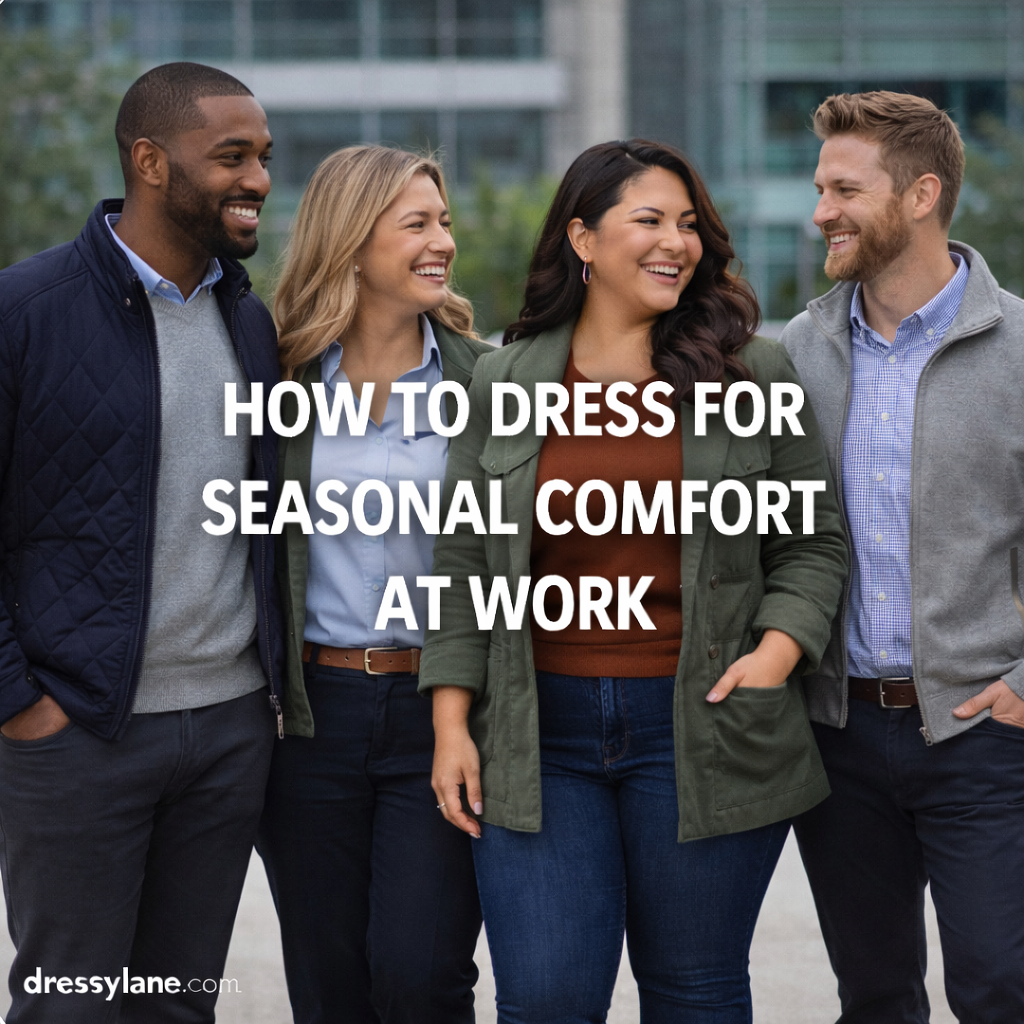
Dressing for Long Seasonal Days
An outfit for two hours is easier than an outfit that has to work from breakfast until midnight.
For a long day, plan around the temperature range, not just the conditions when you leave home.
Suppose your day includes:
- Cool morning commute
- Warm afternoon
- Air-conditioned office
- Outdoor dinner
- Cold trip home
A T-shirt or blouse, trousers, lightweight cardigan, and packable jacket may work better than committing to either a summer or cold-weather outfit.
Carry a bag large enough to hold at least one removed layer when necessary.
Dressing for Seasonal Walking
If you’ll be walking for hours, footwear and temperature regulation become more important.
Prioritize:
- Cushioned shoes
- Breathable socks
- Layers that don’t restrict movement
- A jacket you can carry
- Trousers that don’t drag on wet ground
In hot weather, walking generates additional body heat.
In cold weather, you may need less insulation while actively moving but more warmth when you stop.
Dress for what you’ll be doing, not simply what the thermometer says.
Dressing for Hot Nights
Hot evenings present a different challenge because you may want to look more dressed up while still dealing with high temperatures.
For women, options include:
- Lightweight midi dress + sandals
- Linen trousers + fitted sleeveless top + low heels
- Lightweight skirt + silk-blend or breathable blouse
For men:
- Lightweight trousers + linen shirt + loafers
- Cotton chinos + knit polo + minimal sneakers
- Lightweight button-down + tailored trousers
Avoid adding a jacket solely because an evening outfit is supposed to look formal if the setting doesn’t require one.
Late Nights and Cold Evenings
The opposite problem happens when a warm afternoon turns into a chilly evening.
If you’ll be out after sunset, check the hourly forecast rather than only the daytime high.
Useful layers include:
- Cardigan
- Lightweight sweater
- Denim jacket
- Blazer
- Leather or faux-leather jacket
- Light coat
This is especially important for outdoor dinners, concerts, patios, sporting events, and waterfront locations.
Dressing Smart for Events in Every Season
An event has two dress codes: the social one and the weather.
You need to satisfy both.
Warm-Weather Events
For weddings, dinners, graduations, or celebrations, consider:
- Linen-blend tailoring
- Lightweight dresses
- Cotton or lightweight wool trousers
- Breathable dress shirts
- Loafers or dressy sandals when appropriate
Cold-Weather Events
Try:
- Wool trousers
- Long-sleeve dresses
- Fine knitwear
- Heavier tailoring
- Dress boots
- Structured coats
Your coat matters more at a winter event because it may be visible for a significant portion of the arrival, departure, or outdoor portion.
For dress-code guidance beyond the weather itself, see How to Dress for Different Occasions: Complete Guide.
Seasonal Comfort at Events
Don’t assume you’ll be comfortable just because an event is indoors.
Summer venues can have aggressive air conditioning. Winter parties can become very warm once a room fills with people.
Wear an outfit with at least one adjustable element.
For example, a blazer over a breathable shirt gives you more control than a heavy sweater you can’t comfortably remove.
At outdoor events, plan for what happens after sunset.
Everyday Outfit Ideas for Women
Everyday outfits should be easy to adjust rather than complicated.
Warm Day
Cotton T-shirt + wide-leg linen trousers + sneakers.
Mild Day
Blouse + straight-leg jeans + loafers + cardigan.
Cool Day
Fine-knit sweater + trousers + ankle boots + trench coat.
Cold Day
Merino sweater + wool trousers + boots + long coat.
The silhouettes can remain relatively consistent while fabric weight and layering change.
Everyday Outfit Ideas for Men
The same principle works for men’s clothing.
Warm Day
Cotton T-shirt + lightweight chinos + sneakers.
Mild Day
Oxford shirt + chinos + loafers + overshirt.
Cool Day
Crewneck sweater + jeans + casual boots + lightweight jacket.
Cold Day
Oxford shirt + merino sweater + wool trousers + boots + overcoat.
A relatively small set of basics can cover a large range of conditions.
Night-Out Outfit Ideas for Women
Weather shouldn’t force you to abandon the level of dress you want.
For a warm evening:
- Midi dress + sandals
- Tailored trousers + sleeveless top + heels
- Skirt + lightweight blouse + flats
For a cool evening:
- Dark jeans + blouse + blazer + ankle boots
- Midi skirt + fine-knit sweater + boots
- Dress + structured coat + closed-toe shoes
Bring a layer if temperatures are expected to fall while you’re out.
Night-Out Outfit Ideas for Men
For warm evenings:
- Lightweight trousers + polo + loafers
- Chinos + linen shirt + minimal sneakers
For cooler evenings:
- Dark jeans + Oxford shirt + suede or casual jacket
- Trousers + fine-knit sweater + leather shoes
- Chinos + button-down + blazer + boots
Again, the weather changes the fabric and layers more than the basic outfit structure.
How to Build a Seasonal Capsule Wardrobe
A seasonal capsule doesn’t need to contain dozens of specialized garments.
Start with versatile foundations:
- Neutral T-shirts
- Button-down shirts
- Jeans
- Chinos or tailored trousers
- Cardigans
- Lightweight knitwear
- Versatile dresses or skirts
- Casual jacket
- Weather-appropriate coat
- Sneakers
- Loafers or flats
- Boots
Then add a small number of truly seasonal pieces.
For summer, that might be linen trousers and sandals.
For winter, it might be a wool coat, thermal base layers, and weather-resistant boots.
How to Rewear Outfits Across Seasons
You can often keep the core of an outfit and change what surrounds it.
Take:
white shirt + straight-leg jeans
In spring:
Add a trench and loafers.
In summer:
Roll the sleeves and wear breathable sneakers or sandals.
In fall:
Add a cardigan and ankle boots.
In winter:
Add a merino layer, wool coat, warm socks, and boots.
The base combination hasn’t changed.
This is one of the easiest ways to make a wardrobe feel larger without buying more clothing.
For a complete approach to cross-season wardrobes, see How to Dress for All Four Seasons With Fewer Clothes.
Seasonal Simplicity: Don’t Overthink Every Outfit
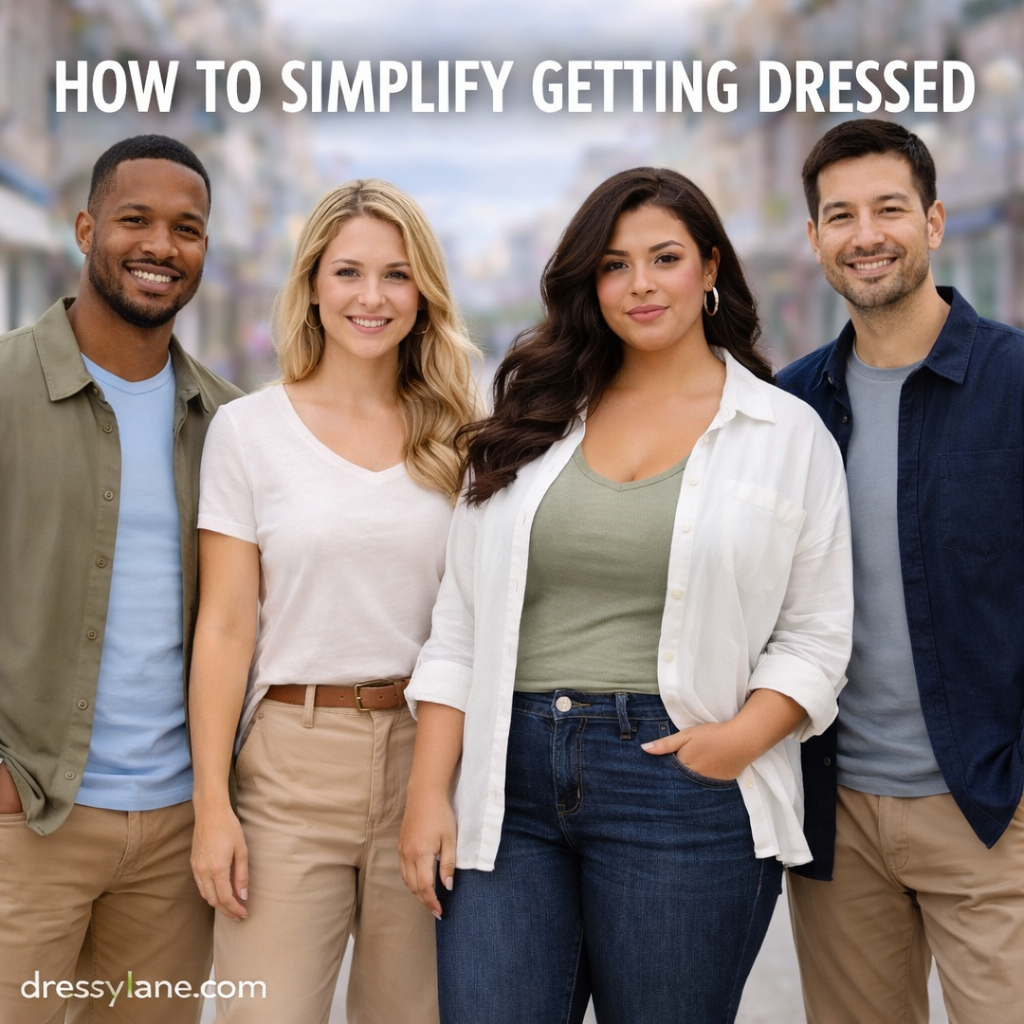
Weather-aware dressing doesn’t require analyzing every garment you own each morning.
Create a few reliable formulas.
For example:
Hot
Breathable top + lightweight bottom + ventilated shoes.
Mild
Base outfit + removable light layer.
Cool
Base outfit + insulating layer + jacket.
Cold
Base layer + insulation + protective outerwear.
Wet
Normal temperature-appropriate outfit + waterproof outer layer + practical footwear.
Once you know these formulas, you can swap individual garments without rebuilding the outfit concept.
Seasonal Practicality and Confidence
Feeling confident in an outfit is much easier when you’re physically comfortable.
It’s difficult to feel polished when you’re sweating through heavy clothing, shivering at dinner, worrying about rain ruining your shoes, or carrying an enormous coat you didn’t need.
Practicality isn’t separate from style.
A coordinated raincoat that keeps you dry, boots that let you walk confidently, or a cardigan you can remove when a restaurant gets warm can make an outfit work better than a trend-focused piece that doesn’t suit the conditions.
The most successful seasonal outfits look appropriate because they make sense for where you are and what you’re doing.
How to Look Polished in Any Season
Looking put together doesn’t require complicated styling.
Focus on:
- Clothes that fit properly
- Shoes in good condition
- Intentional proportions
- Coordinated colors
- Appropriate fabric weight
- Outerwear that works with the outfit
- Practical accessories
In summer, polished might mean pressed linen-blend trousers and a simple knit top.
In winter, it might mean dark jeans, clean boots, a fine-knit sweater, and a structured coat.
The individual garments change. The principle doesn’t.
Frequently Asked Questions
What should I wear when the forecast keeps changing?
Build around a comfortable base outfit and add one removable insulating layer plus weather protection if rain or wind is possible. Avoid relying on one heavy garment.
How do I dress for a cold morning and warm afternoon?
Dress primarily for the warmer part of the day, then add removable layers for the morning. A cardigan and lightweight jacket are easier to manage than a heavy winter coat.
What should I wear when seasons overlap?
Combine garments from both seasons. Wear summer basics with fall layers, or winter basics with lighter spring outerwear. You don’t need to switch your entire wardrobe at once.
How should I dress if I’m always cold?
Use thin insulating layers such as merino wool, thermal tops, wool socks, and lightweight vests. These add warmth without excessive bulk.
How should I dress if I overheat easily?
Start lighter and carry a removable layer. Breathable fabrics, openable jackets, cardigans, and looser silhouettes make temperature regulation easier.
What should I wear when the temperature changes rapidly?
Choose several light layers rather than one heavy layer. Make sure each layer is easy to remove and that your base outfit still looks complete on its own.
What should I wear for a long day with different temperatures?
Check the hourly forecast. Build your outfit around the warmest conditions you’ll encounter and carry enough layering for the coldest period.
How do I dress for lots of walking in changing weather?
Prioritize supportive footwear, breathable socks, flexible layers, and outerwear you can comfortably carry if removed.
What should I wear on a hot night?
Use the same breathable fabrics you’d choose during the day but in slightly dressier silhouettes: linen trousers, lightweight dresses, polos, breathable button-downs, skirts, loafers, sandals, or lightweight dress shoes.
How do I prepare for a cold evening after a warm day?
Bring a compact layer such as a cardigan, sweater, overshirt, blazer, or lightweight jacket. Check the expected temperature around the time you’ll actually be returning home.
How do I stay comfortable at seasonal events?
Consider both the dress code and the environment. Outdoor weddings, indoor parties, air-conditioned restaurants, heated venues, and evening receptions can require very different layers even during the same season.
Which fabrics work best year-round?
Medium-weight cotton, denim, merino wool, cotton twill, and some lightweight knits can work across multiple seasons. How you layer them matters more than assigning each fabric to one specific season.
Do I need separate wardrobes for all four seasons?
Usually not. Many everyday garments can work throughout much of the year. Change your outerwear, layers, footwear, and a smaller number of seasonal pieces instead.
Final Thoughts
Dressing for different weather conditions year-round becomes much easier when you stop trying to find a separate outfit formula for every possible temperature.
Instead, pay attention to the conditions that actually affect your comfort:
temperature, temperature range, humidity, precipitation, wind, sun exposure, activity level, and how much time you’ll spend outside.
Then adjust four things: fabric, layers, footwear, and outerwear.
Hot weather calls for ventilation and lightweight materials. Cold weather requires insulation. Rain and wind require protection. Transitional and unpredictable conditions call for layers you can easily add or remove.
And when the weather changes throughout the day, flexibility usually matters more than trying to predict the perfect outfit.
You also don’t need a huge wardrobe to make this work. A thoughtful collection of shirts, trousers, jeans, dresses, knitwear, jackets, coats, and versatile shoes can cover a surprising range of conditions simply by changing how the pieces are combined.
That’s ultimately the goal of weather-aware dressing: not owning something for every forecast, but knowing how to use what you own when the forecast changes.