
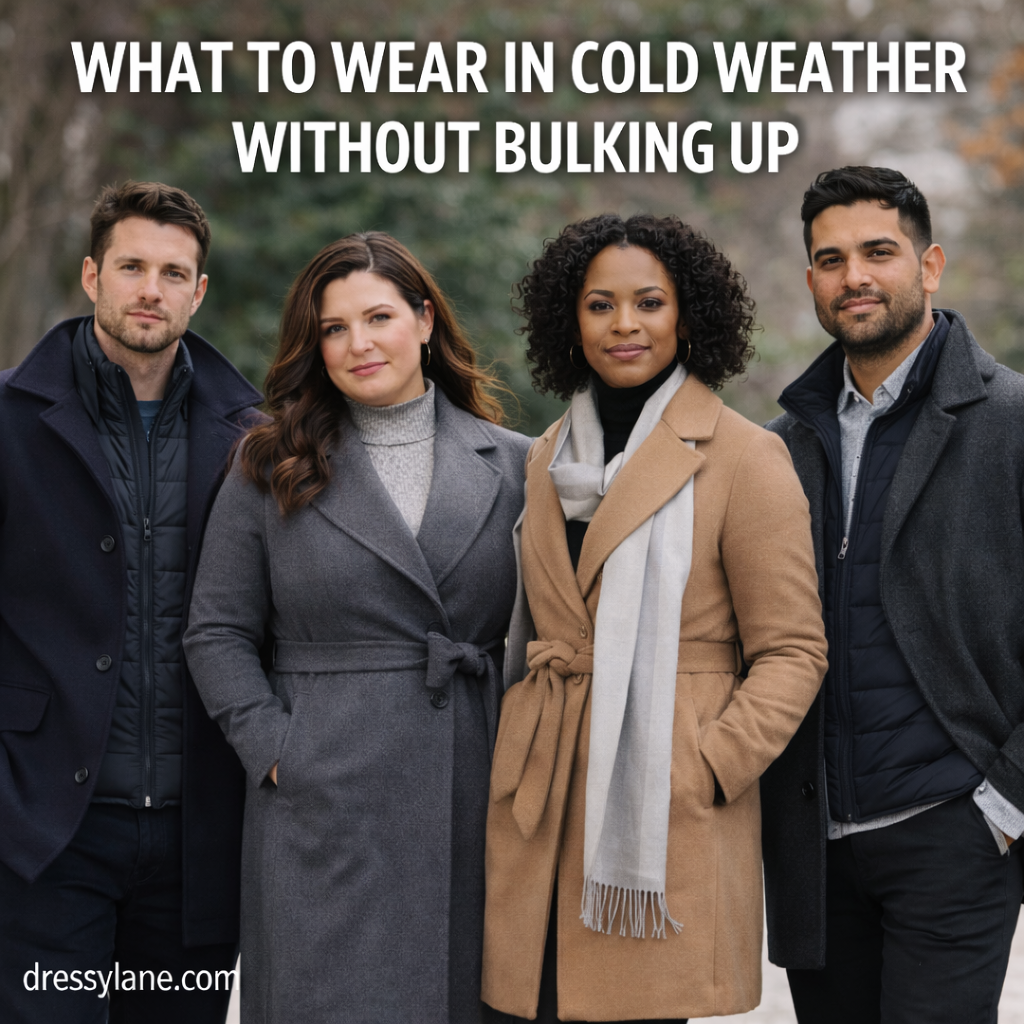
Cold-weather outfits often become bulky for a simple reason: every layer is trying to provide warmth on its own. A thick shirt goes under a chunky sweater, which goes under a heavily padded coat, and suddenly you can barely move your arms.
Staying warm without looking or feeling bulky is more about giving each layer a specific job.
A close-fitting base layer manages moisture and adds warmth. A sweater or other mid-layer provides insulation. Your coat protects you from cold air, wind, and precipitation. When those pieces work together, you usually don’t need three oversized layers competing for space.
The result isn’t necessarily an ultra-slim outfit—it is a warm outfit without unnecessary volume.
Start With the Layer Nobody Sees
If you’re trying to reduce bulk, start underneath your regular clothes.
A thin merino or technical thermal top can fit underneath a button-down, sweater, or blouse without changing the silhouette very much.
Look for base layers that sit close to the body without restricting movement. Merino wool is particularly useful because it can provide warmth at relatively low fabric weights. Synthetic thermal fabrics can also work well, especially when moisture management is important.
I’d avoid using a regular thick cotton T-shirt as a cold-weather base layer when you’re going to be active outdoors. Cotton can absorb moisture and remain damp, which isn’t particularly helpful when you’re trying to stay warm.
A proper base layer should almost disappear underneath the rest of your outfit.
Choose One Good Mid-Layer Instead of Two Mediocre Ones
This is where a lot of unnecessary bulk enters an outfit.
You probably don’t need a shirt, cardigan, chunky sweater, and coat simultaneously for ordinary winter conditions.
A fine-gauge merino sweater, cashmere blend, compact fleece, or other efficient insulating layer can provide warmth without occupying nearly as much room as an oversized cable-knit sweater.
For example:
Thermal base + merino crewneck + coat
will usually create a cleaner silhouette than:
T-shirt + thick hoodie + chunky cardigan + coat.
The second combination also makes it much harder for the coat to sit properly across the shoulders and sleeves.
One of my most practical rules is to try the coat on over the sweater you actually intend to wear. A beautifully fitted coat isn’t useful if the sleeves become painfully tight as soon as you add winter knitwear.
Your Coat Should Block the Weather
Outerwear is where I’d prioritize performance rather than simply choosing the thinnest possible garment.
A very slim coat isn’t helpful if cold wind passes straight through it.
Look for tightly woven wool or wool-blend coats, wind-resistant shells, or insulated coats that provide useful warmth without excessive decorative padding.
Length matters too. A coat that reaches the mid-thigh or knee covers more of your body than a waist-length jacket, which can sometimes let you stay comfortable without adding another heavy layer underneath.
I’d rather wear a reasonably warm knee-length coat over a fine-gauge sweater than stack multiple sweaters underneath a lightweight jacket just to preserve a slimmer appearance.
In genuinely severe cold, warmth takes priority. A puffer or properly insulated parka may simply be the right tool for the weather.
What Women Can Wear Without Adding Too Much Volume
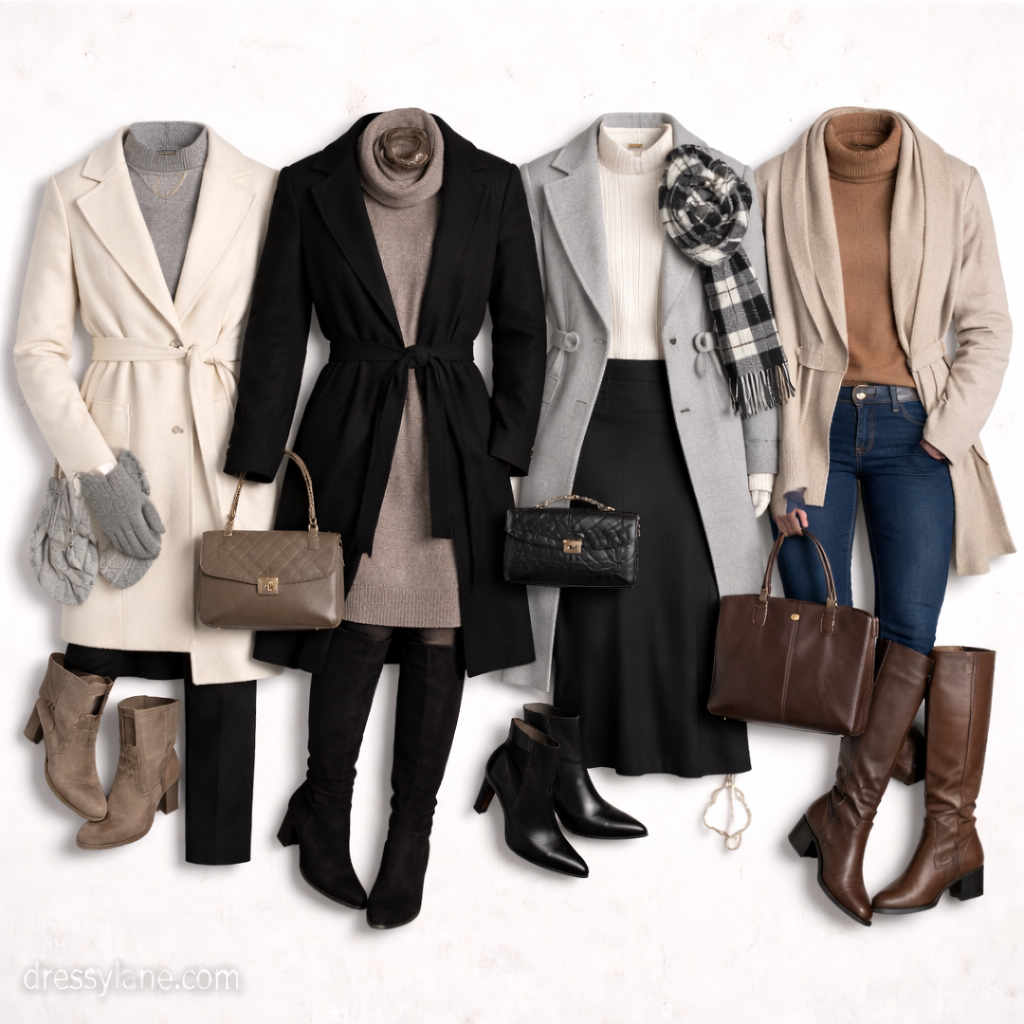
For women, a streamlined cold-weather outfit might start with a fitted thermal top underneath a fine merino sweater.
Add straight-leg trousers or jeans, ankle boots, and a knee-length wool coat.
Another option is:
Thermal top + midi skirt + thermal tights + knee-high boots + tailored coat.
Thermal tights are especially useful because they add warmth without requiring bulky pants or several layers around the legs.
If you prefer dresses, a knit midi dress can work with thermal tights and boots underneath a long coat. Look for a knit with enough structure to skim the body rather than a very thick, heavily textured yarn.
I’d also be careful with oversized sweaters underneath fitted coats. They often bunch around the upper arms and shoulders, making both pieces look worse.
If you love oversized knitwear, let the sweater be the main visible layer on milder days rather than forcing it underneath narrow outerwear.
What Men Can Wear Without Looking Over-Layered
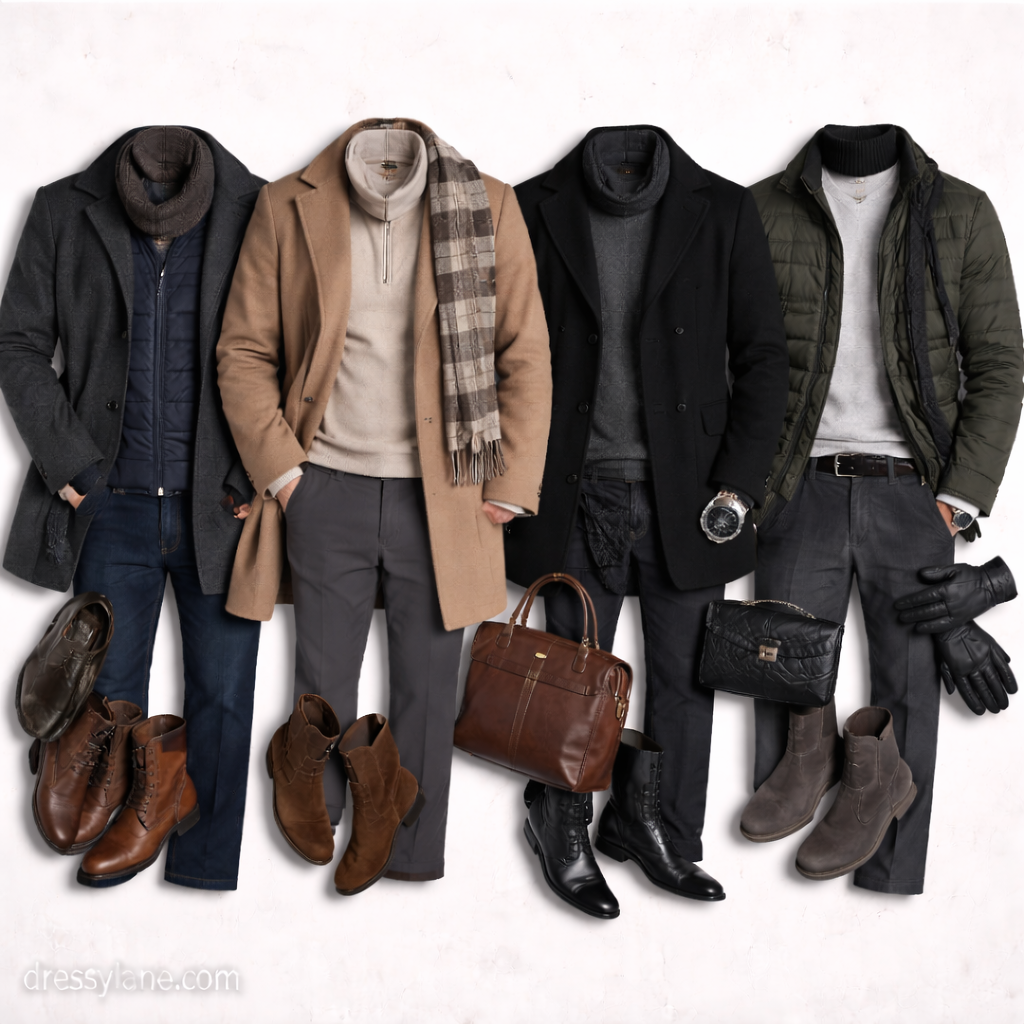
For men, fine-gauge knitwear is one of the easiest ways to reduce winter bulk.
Try:
Thermal undershirt + merino crewneck + wool trousers + overcoat.
For something more casual:
Base layer + Oxford shirt or lightweight flannel + straight jeans + field coat.
A thin merino sweater can also fit comfortably underneath a blazer or structured coat without creating the stuffed-sleeve effect that often happens with hoodies and thick sweatshirts.
If you’re wearing a suit or tailored trousers, a long wool overcoat provides more coverage without disrupting the lines of the clothing underneath.
I’d skip the thick hoodie-under-tailored-coat combination when the goal is a streamlined outfit. The hood creates extra volume around the collar, while thick sweatshirt sleeves often bunch underneath narrower coat sleeves.
Don’t Automatically Choose Slim Pants
Avoiding bulk doesn’t mean every piece should be tight.
In fact, extremely slim trousers can make winter layering more difficult.
Straight-leg jeans, tailored trousers, and gently tapered chinos leave enough room for movement and can accommodate a thin thermal layer underneath when necessary.
For women, straight or slightly wide-leg trousers can also balance the visual weight of a substantial winter coat better than extremely narrow pants.
The goal is a clean line—not the smallest possible silhouette.
Use Accessories Where They Actually Add Warmth
Accessories can sometimes reduce the amount of clothing you need elsewhere.
A wool or cashmere scarf protects the neck and helps prevent cold air from entering the top of a coat. It doesn’t need to be enormous to work.
Likewise, lined leather gloves can provide warmth without the visual volume of thick knitted mittens.
A close-fitting merino beanie or another warm hat can make a significant difference when you’re outside for an extended period.
This is one place where I’d prioritize function over trying to make every accessory look minimal. If it’s genuinely freezing, wear the warmer hat.
Boots Can Add Warmth Without Extra Clothing
Cold feet can make an otherwise adequate outfit feel insufficient.
Choose boots with enough room for an appropriate sock rather than sizing them so closely that thicker socks make the footwear tight.
Merino-blend socks can provide warmth without requiring extremely thick layers.
For women, streamlined knee-high boots can provide additional lower-leg coverage underneath skirts and dresses. For men, Chelsea or lace-up boots work easily with jeans and trousers.
If you’re dealing with snow or ice, however, traction and weather resistance should come before creating the sleekest possible silhouette.
Color Can Make Layers Look More Cohesive
You don’t have to wear black from head to toe to make winter layers look streamlined.
Keeping neighboring layers relatively close in tone can make the transitions less visually abrupt.
For example:
Charcoal trousers + gray sweater + black coat
or:
Cream knit + camel coat + brown trousers.
Navy, charcoal, chocolate, camel, olive, cream, and black are particularly easy to combine this way.
I wouldn’t rely on color as a substitute for proper fit, though. An oversized coat and bulky sweater won’t suddenly look streamlined simply because they’re both black.
Pay Attention to Where Bulk Accumulates
The problem is often not the total number of layers but where those layers stack up.
The upper arms, shoulders, waist, and neckline are common trouble spots.
A chunky sweater with dropped shoulders underneath a narrow coat sleeve will bunch. A thick scarf wrapped five times around the neck can overwhelm an otherwise clean coat. A long sweater underneath a fitted jacket can collect awkwardly around the waist.
When trying on a cold-weather outfit, move around in it.
Reach forward. Sit down. Bend your elbows. Zip the coat completely.
If the layers shift, bunch, or restrict movement indoors, they’ll probably become even more annoying once you’ve been wearing them for an hour.
Don’t Sacrifice Warmth Just to Look Slimmer
There is a limit to how streamlined cold-weather clothing can reasonably be.
If you’re standing outside in freezing temperatures, dealing with strong wind, or spending hours in snow, proper insulation matters more than maintaining a narrow silhouette.
That’s when an insulated parka, puffer jacket, heavier gloves, or substantial winter boots become practical rather than excessive.
The better goal is to remove unnecessary bulk—not necessary insulation.
For ordinary cold-weather dressing, efficient base layers and well-chosen outerwear can keep the outfit relatively clean. For genuinely severe conditions, dress for safety and warmth first.
Final Thoughts
Knowing what to wear in cold weather without bulking up isn’t about finding impossibly thin clothing that somehow keeps you warm.
It’s about making each layer earn its place.
Start with a close-fitting merino or technical base layer, add one efficient insulating layer such as a fine-gauge sweater, and finish with outerwear that actually blocks the weather. Use scarves, gloves, socks, and boots to protect exposed areas rather than adding another sweater every time you feel cold.
Most importantly, make sure the pieces physically work together. Your sweater should fit comfortably underneath your coat, your boots should accommodate winter socks, and you should still be able to move normally once everything is on.
A streamlined winter outfit should feel efficient—not squeezed into place.