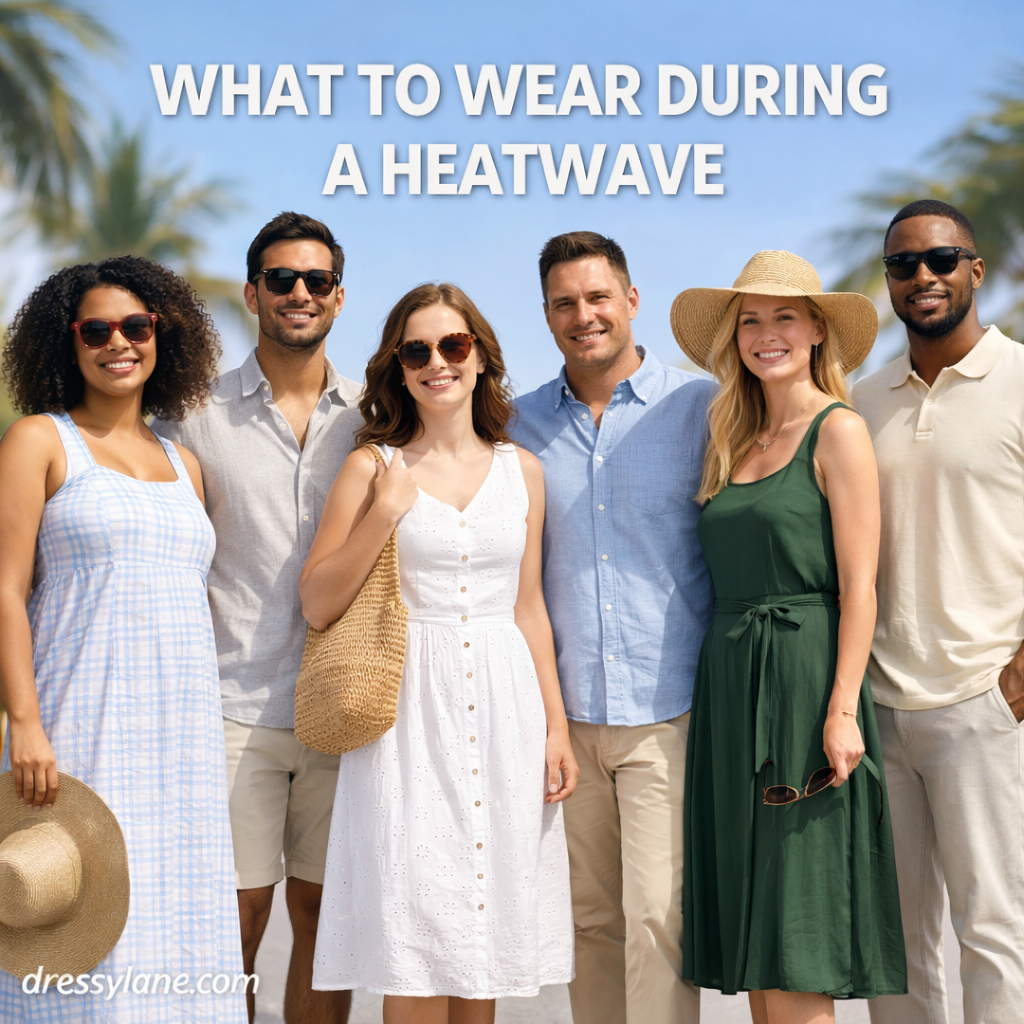
Once temperatures move from ordinary summer heat into a genuine heatwave, the priorities change. The fitted jeans, layered outfit, or heavy cotton T-shirt that felt fine at 80°F can become miserable when it’s 95°F and humid.
Knowing what to wear during a heatwave comes down to reducing unnecessary insulation, creating airflow around the body, and protecting yourself from direct sun. That usually means loose silhouettes, lightweight fabrics, comfortable footwear, and fewer layers.
This is also one of those situations where practicality should win. If an outfit requires constant adjusting or already feels warm before you’ve left the house, it’s probably not the outfit I’d choose for an extremely hot day.
Start With Fabric Weight and Airflow
The word “breathable” gets attached to almost everything, but the actual construction of a garment matters.
Lightweight linen is excellent because its relatively open structure allows air to circulate. Cotton voile and lightweight cotton poplin can also work well, particularly in loose shirts and dresses.
Other useful options include:
- Linen and linen blends
- Lightweight cotton
- Tencel or lyocell
- Modal
- Lightweight chambray
- Purpose-built moisture-wicking fabrics
Don’t automatically reject a garment because it contains synthetic fibers. Some technical synthetics are specifically designed to move moisture and dry quickly, which can be useful in extreme heat.
At the same time, a thick polyester blouse or heavily lined dress may trap considerably more heat.
The same principle applies to natural fibers. A heavy cotton sweatshirt is still a heavy garment even though it’s made from cotton.
Weight, weave, fit, and construction matter as much as the fiber name on the label.
Loose Usually Beats Tight
In very hot weather, I prefer clothes that sit slightly away from the body.
That doesn’t mean everything has to be dramatically oversized. A straight or relaxed silhouette is often enough to improve airflow.
Think wide-leg linen trousers instead of rigid skinny jeans, a relaxed camp-collar shirt instead of a tight polo, or an A-line cotton dress instead of a bodycon dress.
This becomes even more noticeable in humid weather. Once you start sweating, tightly fitted fabric tends to stay pressed against your skin.
I’d also skip heavy shapewear on exceptionally hot days unless you specifically need it for an outfit. Adding another close-fitting layer underneath your clothes can make an otherwise breathable outfit surprisingly uncomfortable.
What Women Can Wear During a Heatwave
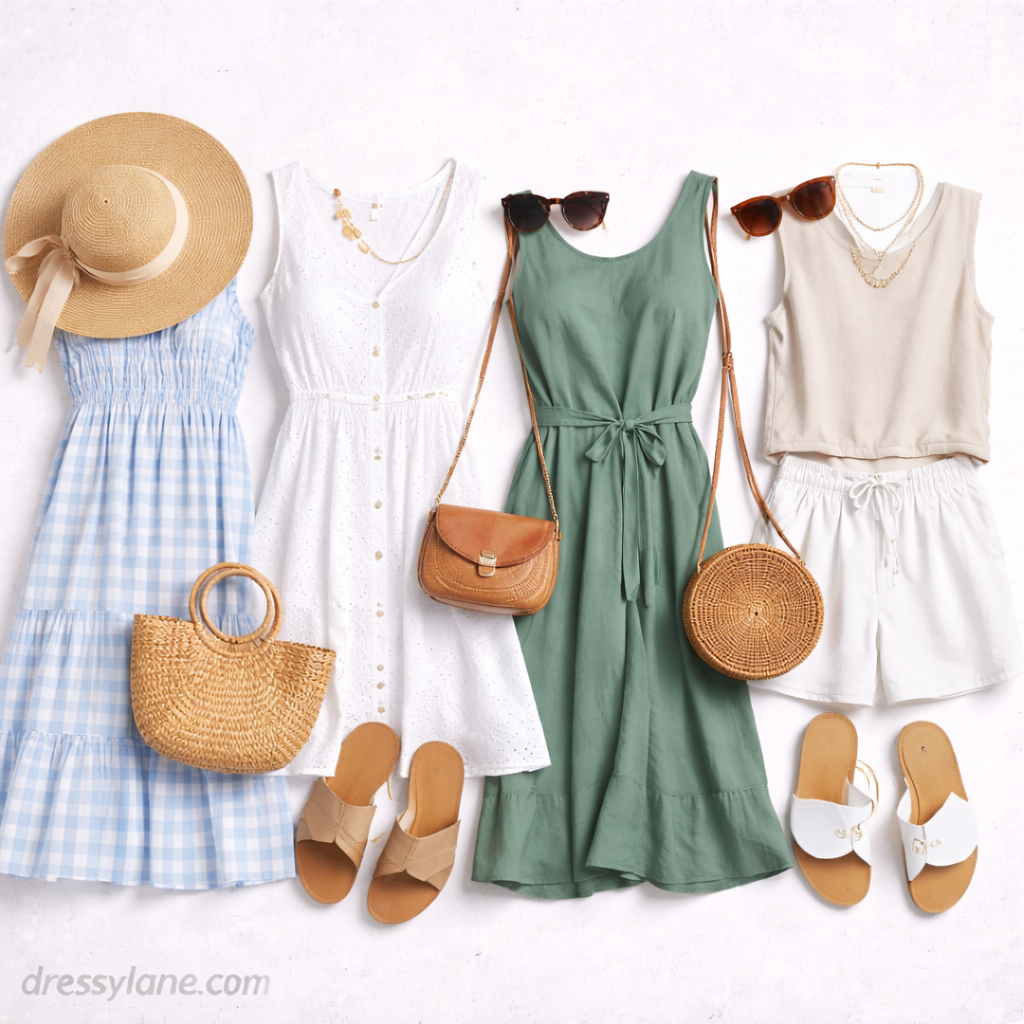
A loose dress is probably one of the simplest heatwave outfits for women.
Look for a cotton poplin, linen-blend, Tencel, or lightweight jersey midi dress with enough room through the body for air to move. Sleeveless and short-sleeve styles work well, but the fabric and cut are more important than sleeve length alone.
For separates, try:
- Linen tank + wide-leg trousers + flat sandals
- Loose cotton T-shirt + lightweight shorts + sneakers
- Sleeveless blouse + midi skirt + sandals
- Linen button-down + tank + relaxed shorts
- Cotton shirt dress + supportive sandals
Wide-leg trousers are particularly useful when you want coverage without wearing heavy pants. Linen blends and lightweight Tencel can feel considerably better than rigid denim.
One detail I always check on summer dresses is the lining. A beautifully lightweight dress can become surprisingly hot if the manufacturer has put a thick polyester lining underneath it.
What Men Can Wear During a Heatwave
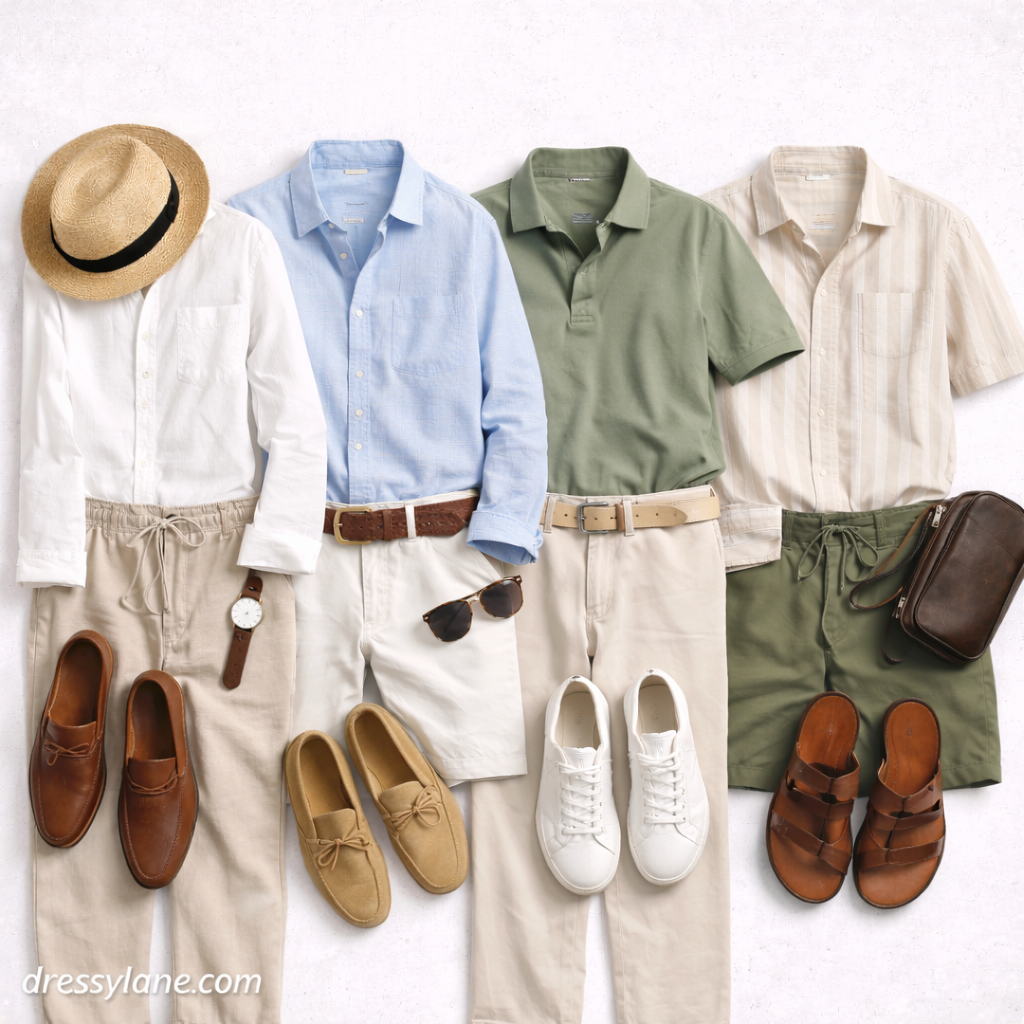
For men, a linen or linen-cotton shirt with lightweight trousers is one of the most useful combinations when you need to look reasonably polished.
For casual days, a relaxed cotton T-shirt with tailored shorts and breathable sneakers works well.
Other combinations include:
- Linen shirt + lightweight trousers + loafers
- Cotton T-shirt + shorts + sneakers
- Camp-collar shirt + linen-blend trousers + sandals
- Lightweight polo + relaxed chinos + loafers
Pay particular attention to trouser fit.
Very slim chinos can become uncomfortable quickly because there’s little space for air to circulate. A straight or gently tapered cut in lightweight cotton twill, linen blend, or a breathable technical fabric is usually easier to wear.
I’d also avoid wearing an undershirt automatically. If you use one for sweat management, choose a thin moisture-managing version. A thick cotton T-shirt underneath another shirt simply adds insulation.
Dresses, Shorts, or Trousers?
There’s no single coolest option.
Shorts expose more skin, but loose trousers can protect your legs from direct sunlight while still allowing airflow. Likewise, a flowing midi dress may feel cooler than a fitted top and shorts.
Where you’ll spend the day matters.
If you’re moving between air-conditioned buildings, lightweight trousers may be more comfortable overall. For a shaded casual afternoon, shorts might make more sense. If you’re spending significant time in direct sun, additional lightweight coverage can be useful.
Rather than automatically choosing the garment with the least fabric, consider how loose it is, how breathable the fabric is, and how much sun exposure you’ll have.
Light Colors Help—But They’re Not the Whole Story
White, cream, beige, pale blue, and other lighter colors can absorb less solar radiation than darker clothing under some conditions, making them sensible choices in direct sunlight.
But color shouldn’t override everything else.
A loose black linen shirt may still be more comfortable than a pale shirt made from thick, tightly woven fabric. Indoors or in the shade, differences in fit and construction can become much more noticeable than color alone.
So there’s no need to eliminate every dark item from your wardrobe during a heatwave.
If you’ll be outside in strong sun for a long period, however, lightweight clothing that provides useful coverage and sun protection deserves priority over creating a particular color palette.
Don’t Forget Sun Coverage
Extreme heat can create a temptation to wear as little as possible, but exposed skin isn’t always more comfortable in direct sun.
A loose, long-sleeve linen or lightweight technical shirt can provide coverage while still allowing airflow. A breathable wide-brimmed hat is useful when you’ll be outside for an extended period.
Sunglasses should provide UV protection rather than being chosen purely as an accessory.
Clothing also isn’t a replacement for appropriate sunscreen on exposed skin.
For extended outdoor activity, purpose-built sun-protective clothing with a stated UPF rating can be worth considering.
Shoes Matter More When Your Feet Are Hot
Feet can swell during hot weather, so shoes that already fit tightly may become uncomfortable as the day progresses.
Flat sandals, supportive walking sandals, breathable sneakers, and loafers can all work depending on the setting.
For a long walking day, I’d choose a broken-in supportive sandal or lightweight sneaker over a delicate flat simply because it looks more summery.
If you’re wearing closed shoes, lightweight moisture-managing socks can make a noticeable difference.
This isn’t the day to break in a new pair of shoes.
Air Conditioning Creates Its Own Problem
A 95°F sidewalk followed by a heavily air-conditioned restaurant or office is one of the stranger parts of heatwave dressing.
You may still need a layer indoors.
Instead of wearing it outside, carry something extremely light: a fine cotton cardigan, thin overshirt, or lightweight wrap.
Choose something that folds easily into your bag. A structured jacket that you have to carry over your arm for the entire day becomes annoying very quickly in extreme heat.
A Few Things I’d Skip
During a heatwave, I’d generally leave these in the closet:
- Heavy or rigid denim
- Thick, lined jackets
- Chunky knitwear
- Tight leather pants
- Heavy shapewear
- Bulky accessories
- Shoes that already fit snugly
- Multiple decorative layers
I’d also avoid an outfit that only works if every piece stays perfectly arranged. Heat and sweat have a way of making fussy clothes even fussier.
Simple outfits tend to perform better.
Dress for Humidity Differently
Dry heat and humid heat aren’t identical.
When humidity is high, sweat evaporates less effectively, which can make the same temperature feel much more uncomfortable. This is when loose silhouettes and moisture-managing fabrics become particularly valuable.
Choose garments that don’t cling and that can dry reasonably quickly.
If you know you sweat heavily, colors and patterns that make moisture less visually obvious can also be practical. That’s a perfectly legitimate consideration when choosing what to wear.
Clothing Helps, but Heat Safety Comes First
During extreme heat, clothing is only part of staying comfortable and safe.
Drink fluids regularly, seek shade or air conditioning when possible, and reduce strenuous outdoor activity during the hottest part of the day. Pay attention to local heat advisories, particularly when temperatures become unusually high for your area.
No outfit can make dangerous heat harmless.
If you begin feeling ill in extreme heat, getting somewhere cooler is more important than trying to push through because you’re dressed appropriately.
Final Thoughts
What to wear during a heatwave is less about creating a perfect summer outfit and more about removing everything that makes extreme heat harder to tolerate.
Choose lightweight linen, cotton, Tencel, modal, or appropriate moisture-managing fabrics. Give your body some room instead of relying on tight silhouettes, and consider lightweight coverage when you’ll be exposed to direct sun.
For women, that might mean a loose cotton midi dress or linen trousers with a sleeveless top. For men, it could be a linen shirt with relaxed trousers or a lightweight T-shirt with tailored shorts.
And when the weather becomes genuinely extreme, prioritize comfort and heat safety over normal style rules. The best heatwave outfit is the one you can largely forget about once you’re wearing it.