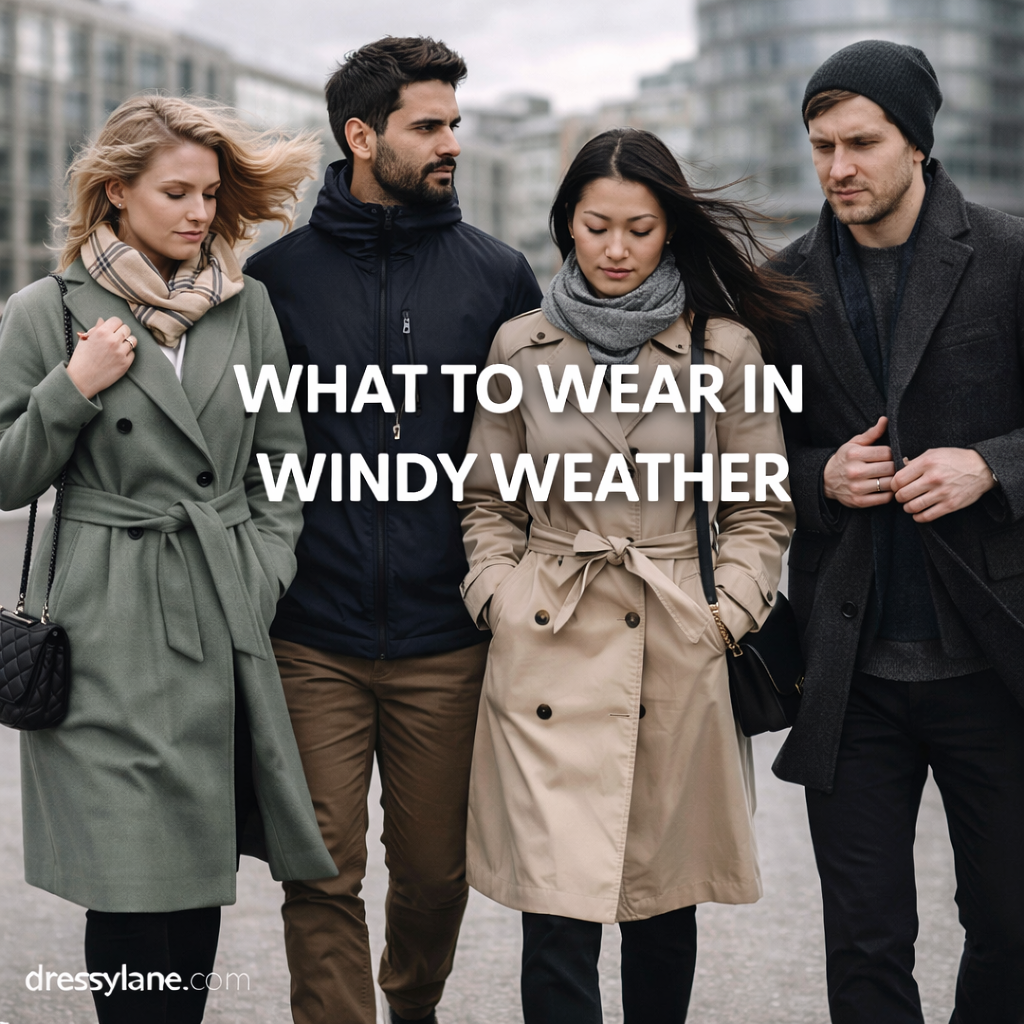
Windy weather is deceptive. A 60°F day can look perfectly comfortable from indoors, but once a steady breeze starts cutting through a loose sweater or lightweight shirt, the outfit you chose can suddenly feel inadequate.
Wind also creates problems that have nothing to do with temperature. Skirts lift, wide hems whip around your legs, scarves refuse to stay put, and lightweight jackets can flap open every few seconds.
Knowing what to wear in windy weather comes down to two things: blocking enough airflow to stay comfortable and choosing clothes that stay where you put them.
Start With the Outer Layer
On a windy day, I’d choose the jacket before building the rest of the outfit.
A thick sweater isn’t necessarily enough. An open-knit wool sweater can be quite warm on a calm day but allow cold air straight through once the wind picks up. Put a tightly woven shell or jacket over that same sweater and it becomes considerably more effective.
Good options include:
- Cotton-twill jackets
- Denim jackets
- Tightly woven trench coats
- Field jackets with secure closures
- Wool-blend coats
- Lightweight wind-resistant shells
Look at the closures as well. Zippers, snaps, and buttons that extend high enough to protect your chest are much more useful in strong wind than an open-front jacket.
I particularly like jackets with adjustable cuffs on windy days. It’s a small detail, but closing the gap around your wrists keeps cold air from constantly traveling up your sleeves.
Fabric Weight Isn’t the Whole Story
It’s tempting to assume heavier automatically means better in the wind, but the weave of the fabric matters too.
Denim and cotton twill work well because they’re relatively dense. Wool can provide excellent warmth, especially when used in a tightly woven coat. Technical softshell fabrics can be even more effective when actual wind resistance is the priority.
On the other hand, loose knits allow air to pass through easily.
Very thin linen, chiffon, lightweight rayon, and delicate silk can also become annoying in gusty conditions because they move constantly. That doesn’t mean you can never wear them, but I’d keep them underneath a more substantial outer layer rather than making them the exposed part of the outfit.
What Women Should Wear in Windy Weather
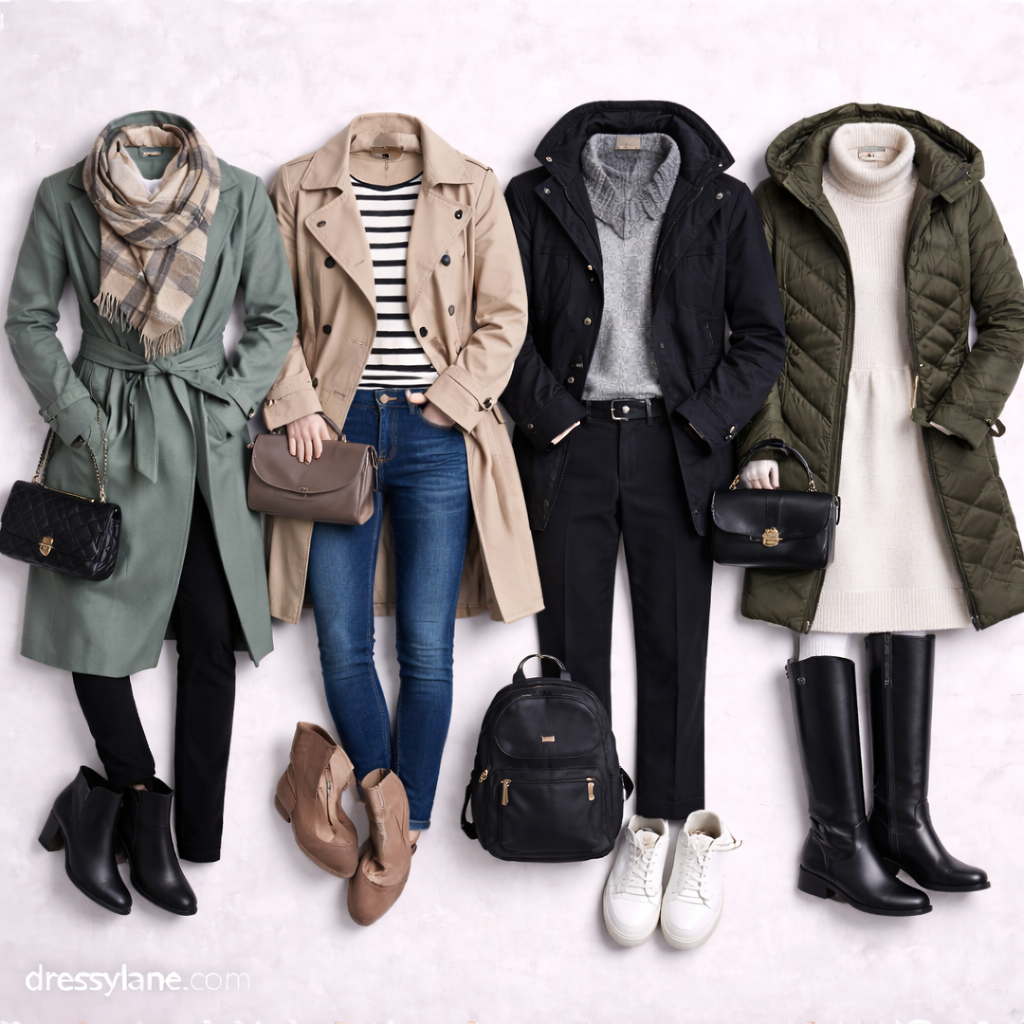
For women, windy-weather dressing is partly about preventing clothes from becoming a distraction.
Straight-leg jeans, ankle-length trousers, and heavier wide-leg pants are easy choices because they stay relatively stable. If you prefer skirts, a denim, ponte, wool-blend, or lined midi skirt usually behaves better than a very lightweight pleated or chiffon style.
Skirt shape matters too. A narrow A-line or straight midi is much easier to manage than a full circle skirt with several feet of fabric for the wind to catch.
For dresses, look for heavier jersey, ponte, denim, substantial cotton, or lined styles. Tights underneath provide additional warmth in cooler weather and can make skirts and dresses feel more secure.
I’d actually avoid a wrap dress on a seriously windy day unless it has a hidden snap or another reliable closure. The combination of a wrap front and gusting wind creates exactly the kind of outfit problem you don’t want to spend the day thinking about.
On top, try a fitted knit under a trench, cropped jacket, or structured coat. A crossbody bag is especially practical because you aren’t trying to hold a tote, your coat, and a runaway scarf at the same time.
What Men Should Wear in Windy Weather
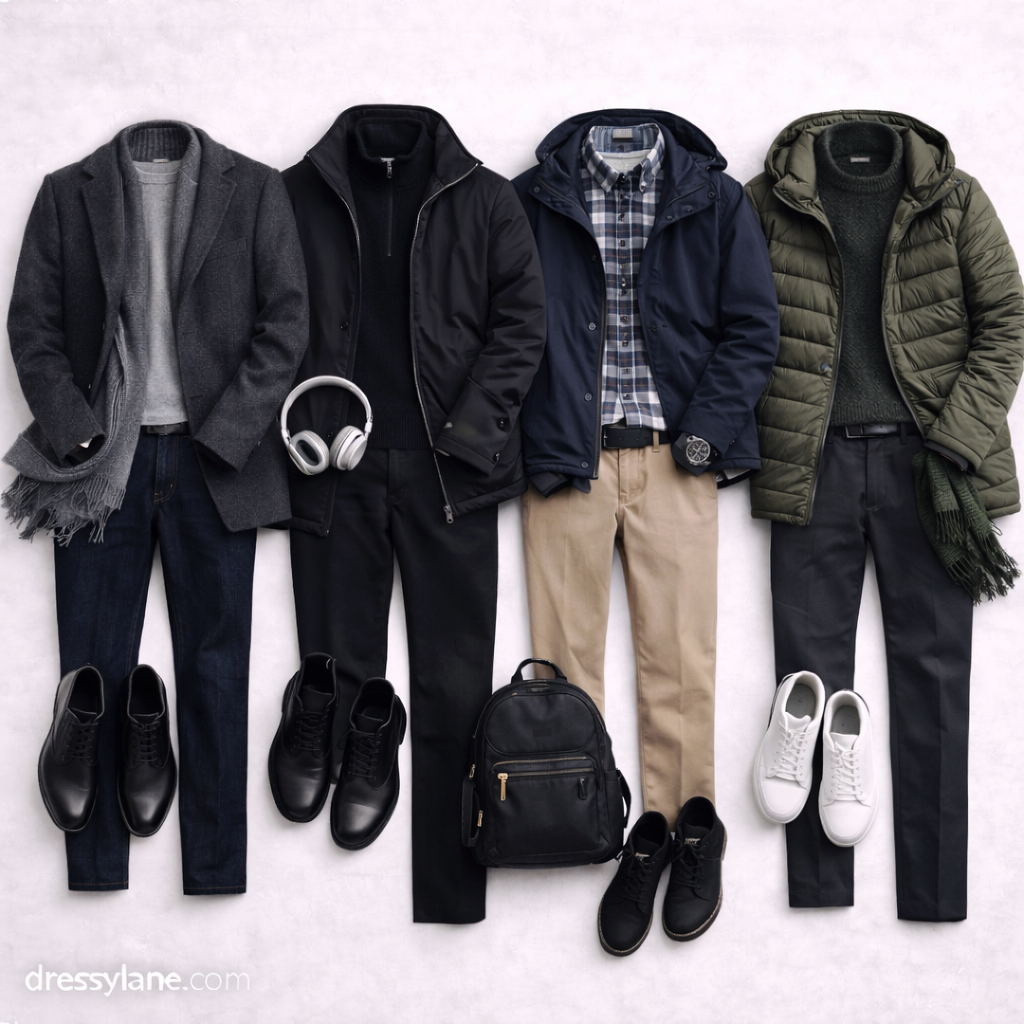
For men, a simple combination of trousers, a knit or button-down, and a wind-resistant outer layer handles most windy days.
Medium-weight chinos, denim, corduroy, and wool trousers provide more protection than very thin summer pants. In mild weather, a tightly woven overshirt or field jacket may be enough.
When it’s colder, layer a fine-gauge merino or lambswool sweater underneath a coat rather than relying on an extremely thick sweater by itself.
Bomber jackets can also work particularly well because the ribbed cuffs and waistband help prevent wind from entering around the edges. Field jackets offer similar protection when they have adjustable cuffs and a high-closing front.
For dressier outfits, a wool overcoat works well, but make sure you can actually close it. A beautiful coat that only looks right hanging open becomes much less practical when you’re walking several blocks into a headwind.
Adjust the Formula for the Season
Wind doesn’t require the same outfit in July that it does in January.
In spring, a cotton-twill jacket, trench, denim jacket, or light wind-resistant shell is often enough. Keep a lightweight knit underneath if temperatures are changing throughout the day.
In summer, the problem may be controlling loose fabric rather than staying warm. Choose slightly more substantial cotton shirts and shorts, skirts, or trousers that aren’t excessively billowy. A packable windbreaker can be useful near the coast or anywhere evenings turn breezy.
In fall, denim, corduroy, wool blends, and medium-weight knits come into their own. This is often ideal weather for a field jacket or trench over a sweater.
In winter, prioritize actual wind protection. An insulated coat with a dense outer shell, closeable cuffs, gloves, and a scarf tucked inside the coat will do far more than piling on sweaters underneath a coat that lets wind through.
Secure the Small Things
Accessories are often what become most irritating when the wind picks up.
Instead of letting a long scarf hang loose, tuck the ends inside your coat. Choose a beanie or another close-fitting hat rather than a wide-brim hat on genuinely gusty days.
Crossbody bags are easier to manage than open totes, particularly when you’re walking. If you do carry a tote, a zippered top is useful so papers and other lightweight items aren’t exposed.
Footwear depends more on temperature and precipitation than wind itself, but closed shoes or boots usually make sense in cooler windy conditions.
Check the Outfit Before You Leave
There’s a simple test I use for windy-day clothing: if something already needs adjusting while you’re standing indoors, the wind will make it worse.
A scarf that keeps slipping, a skirt that rotates around your waist, a jacket that won’t stay closed, or a hat that barely fits isn’t likely to become easier outside.
You don’t need to eliminate every loose silhouette. Just make sure the parts exposed to the wind have enough weight, structure, or secure closures to behave predictably.
Final Thoughts
Knowing what to wear in windy weather isn’t simply about adding heavier clothing. A dense outer layer, secure closures, and fabrics that don’t flap or shift can matter more than piling on extra layers.
Build the outfit around the conditions: a wind-resistant jacket over breathable layers for mild weather, heavier trousers and knitwear as temperatures fall, and properly insulated outerwear when cold and wind arrive together.
And when the forecast calls for strong gusts, practicality wins. Save the loose scarf, wide-brim hat, and floaty wrap skirt for a calmer day. You’ll spend far less time adjusting your clothes and far more time forgetting about what you’re wearing.