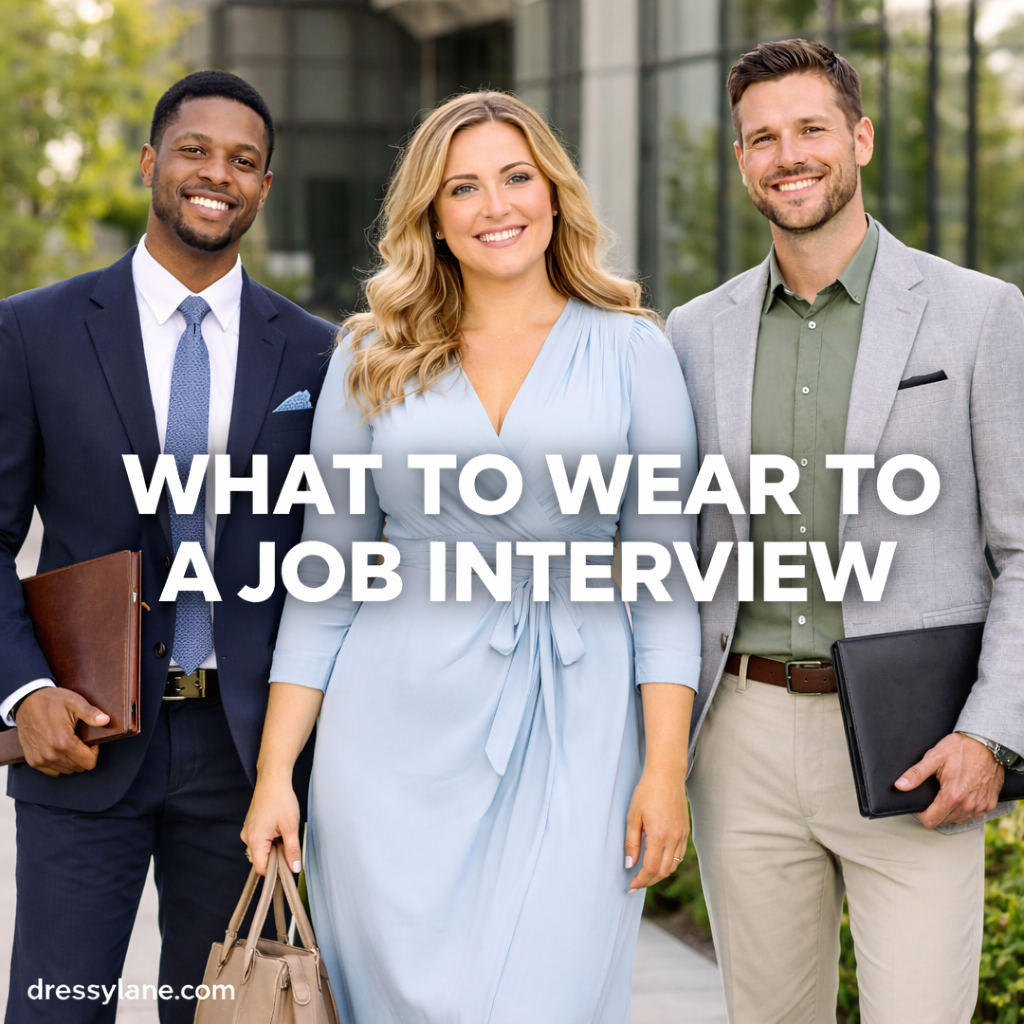
Deciding what to wear to a job interview can be tricky, especially when you don’t know how formally the company dresses. A navy suit might be appropriate for a financial analyst position, while the same outfit could feel unnecessarily formal at a small design studio.
The safest approach is to research the workplace, choose an outfit that suits the role, and make sure everything fits comfortably. You don’t need an expensive wardrobe or brand-new clothes to look prepared.
Here’s how to put together an interview outfit for different industries, whether you’re meeting in person or speaking over video.
Start by Checking the Company’s Dress Code
Before choosing your outfit, look at the company’s website, careers page, or employee photographs on LinkedIn.
Pay attention to what people wear in office photographs rather than promotional images. A company might describe its culture as relaxed while still expecting business professional attire for client-facing positions.
As a general starting point:
- Corporate and finance: A matching suit or similarly formal business attire.
- Business casual offices: Tailored trousers, a collared shirt or blouse, and an optional blazer.
- Creative and technology companies: Polished separates with some room for personal style.
- Trades and hands-on roles: Clean, practical clothing appropriate for the workplace and any scheduled site visit.
If you’re still unsure, contact the recruiter and ask whether there’s a recommended dress code.
I’d rather ask a quick question beforehand than spend the morning wondering whether jeans are appropriate.
What Women Should Wear to a Job Interview
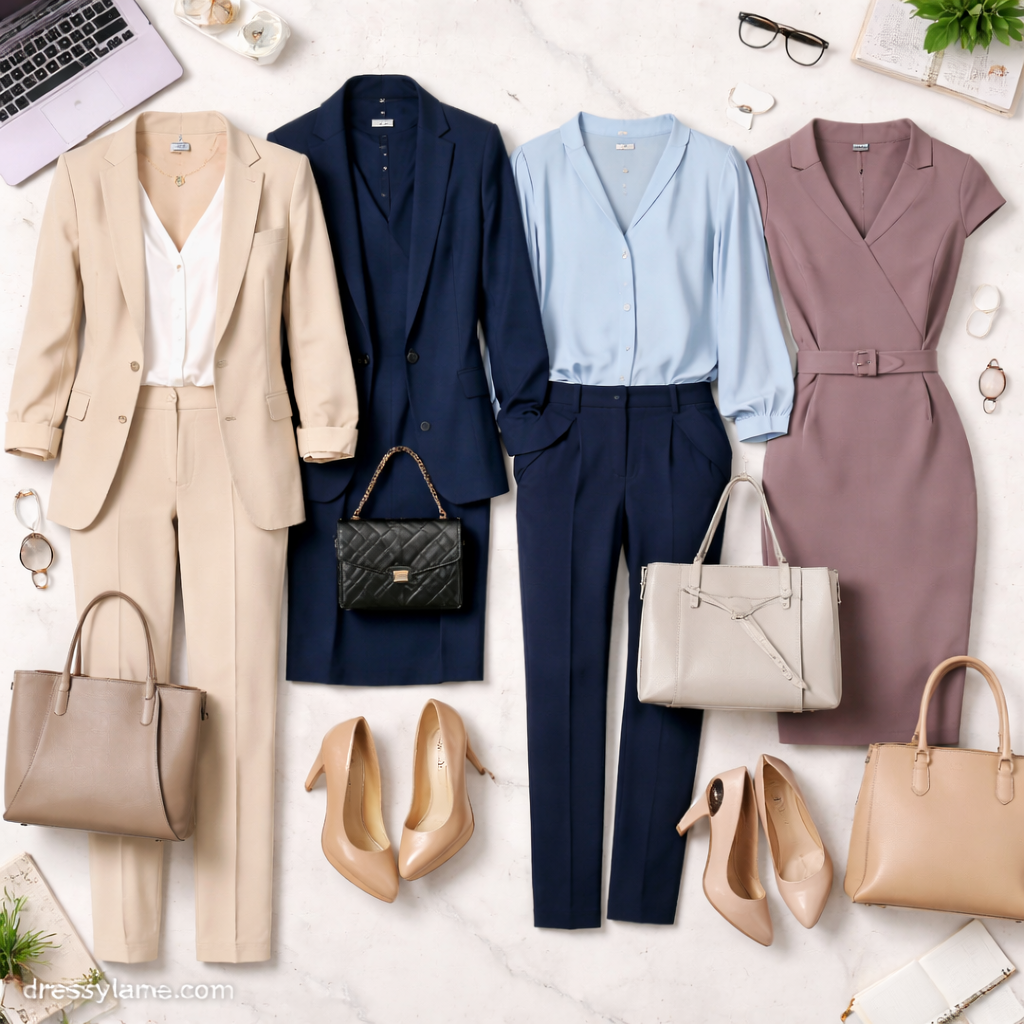
For most office-based interviews, tailored trousers with a blouse and blazer are a dependable combination.
Try navy straight-leg trousers, a cream cotton-poplin blouse, a single-breasted blazer, and black leather loafers. The outfit works for many business environments without requiring a matching suit.
Other options include:
- A charcoal pantsuit with a pale blue blouse for a formal corporate interview.
- A knee-length or midi sheath dress with a structured jacket.
- Black tailored trousers with a fine-gauge knit and pointed-toe flats for a business-casual office.
- A midi skirt with a tucked-in blouse and low block heels.
Choose fabrics that hold their shape. Wool-blend trousers, substantial cotton, and matte crepe generally look neater after sitting than lightweight linen.
Check the fit while seated
One detail I’d never skip is sitting down in the complete outfit before interview day.
A skirt that looks perfectly comfortable while standing may ride up considerably when seated. A blouse might gap between buttons, or a blazer may pull across the shoulders.
Make sure you can sit, stand, and move naturally without constantly adjusting anything.
For shoes, choose leather loafers, polished flats, or low heels you’ve already worn. There’s no advantage to wearing uncomfortable heels simply because you’re attending an interview.
Finish with a structured bag that comfortably holds your résumé, notebook, and other essentials.
What Men Should Wear to a Job Interview
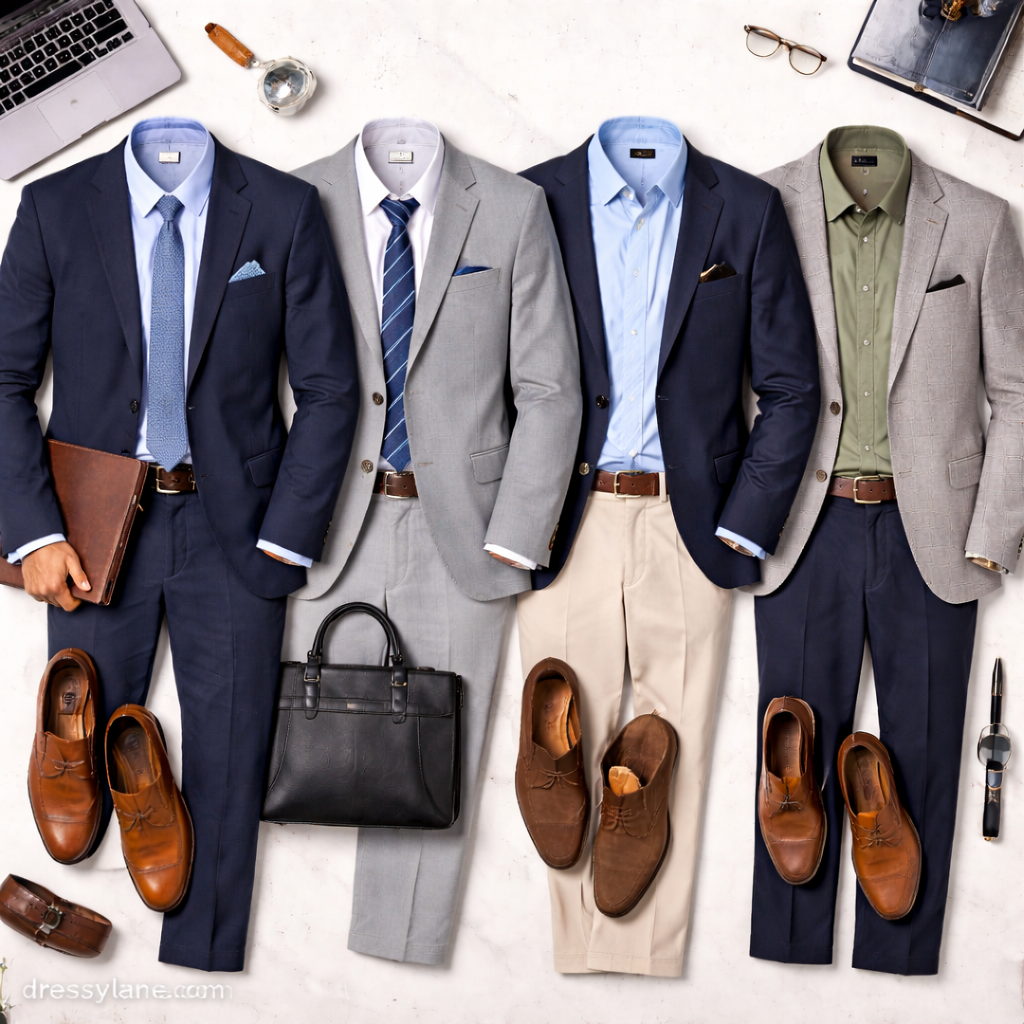
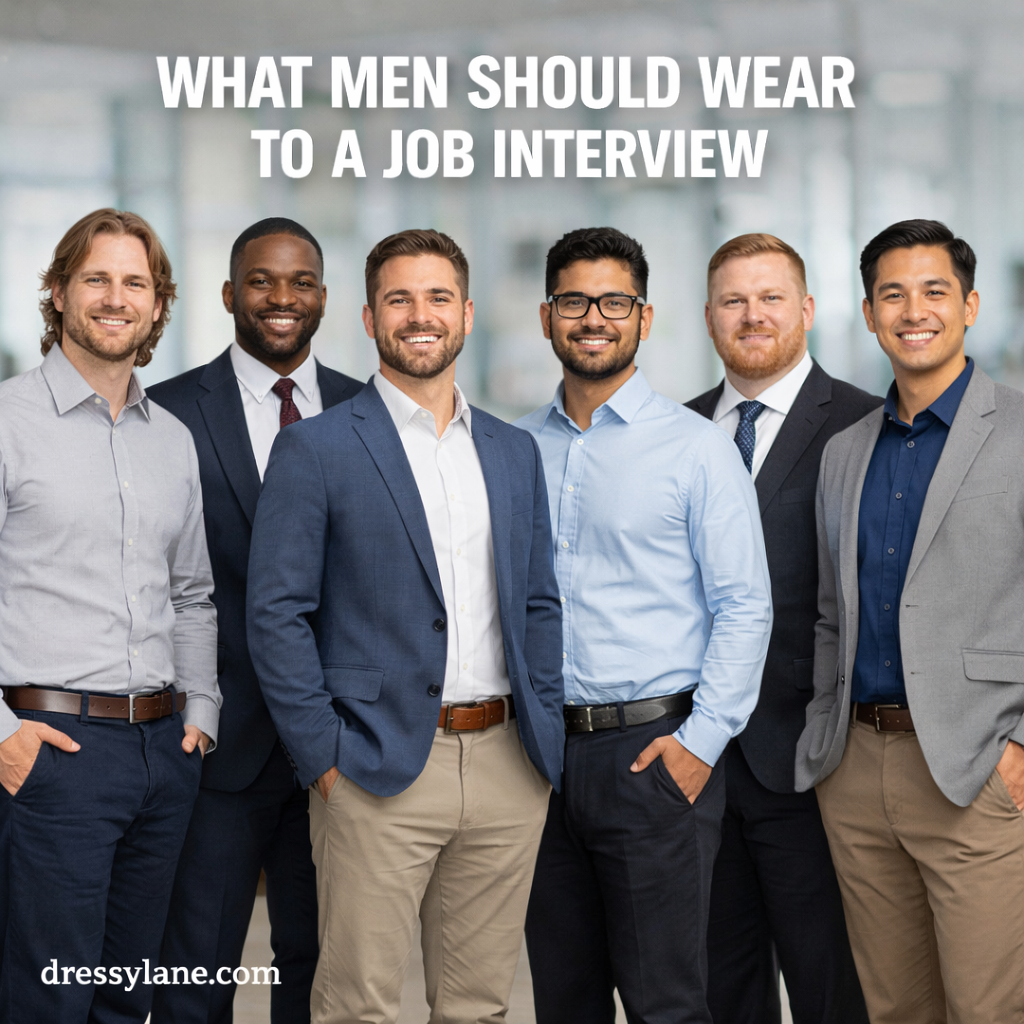
Men’s interview clothing should reflect the company’s level of formality.
For a traditional corporate position, a navy or charcoal two-piece suit is a reliable choice. Pair it with a white cotton dress shirt, a conservative tie, and black or dark brown leather shoes.
For a business-casual workplace, try charcoal trousers, a pale blue Oxford shirt, a navy blazer, and brown loafers.
At a more relaxed technology company, well-fitting chinos with a button-down shirt and an unstructured jacket may be appropriate.
Fit matters more than the price tag
Check that your jacket sits smoothly across the shoulders and doesn’t pull when buttoned.
Your trousers should fall neatly over your shoes rather than bunching heavily around the ankles. Shirt cuffs should extend slightly beyond the jacket sleeves.
If you’re wearing a tie, choose a solid color or subtle pattern. Navy, burgundy, and muted geometric designs are easy to coordinate.
I’d skip buying a cheap suit at the last minute if you already own a well-fitting blazer and dress trousers that suit the company’s dress code. Properly fitted separates can look much better than a matching suit that’s too large.
Make sure your shoes are clean and your belt coordinates with them.
How to Dress for Different Interview Settings
The interview location can change what makes an outfit practical.
Corporate and professional interviews
For positions in finance, law, consulting, or traditional corporate environments, business professional attire is often the safest choice.
A matching suit in navy or charcoal, a simple shirt or blouse, and polished dress shoes create a dependable combination.
Creative and technology interviews
These workplaces vary considerably.
A design agency may welcome dark jeans with a blazer and loafers, while a large technology company’s corporate department might expect tailored trousers and a collared shirt.
Unless you’ve confirmed that jeans are acceptable, I’d choose chinos or tailored trousers for a first interview.
Trades and hands-on positions
A full suit isn’t always practical for an interview involving a workshop, warehouse, or construction site.
Clean chinos or work trousers with a collared shirt and appropriate closed-toe footwear may be more suitable.
If the interview includes a site tour, ask whether safety shoes or other protective equipment are required.
Virtual interviews
For a video interview, focus on clothing that looks clear on camera.
A solid navy shirt, cream blouse, or structured blazer usually works well against a simple background.
Avoid tiny checks and closely spaced stripes, which can create distracting visual effects on video.
Dress appropriately below the waist, too. You may need to stand up unexpectedly to retrieve a document or adjust your equipment.
Choose Colors and Fabrics That Work Together
You don’t have to wear black to look professional.
Navy, charcoal, gray, cream, and pale blue are useful interview colors because they’re easy to coordinate.
A navy blazer with gray trousers and a white shirt is a classic example. For a slightly softer combination, try camel trousers with a cream blouse and dark brown loafers.
Choose fabrics based on the weather and how long you’ll be wearing them.
Lightweight wool and wool blends work well for suits, while cotton poplin provides a crisp finish for shirts. A little stretch can improve comfort in tailored trousers, provided the fabric retains its shape.
Avoid clothing that wrinkles excessively during your commute or becomes uncomfortable after an hour of sitting.
The Interview Outfit Check I’d Do the Night Before
Don’t wait until the morning of your interview to discover that your shirt needs ironing or your shoes are uncomfortable.
Lay out the complete outfit, including socks, belt, shoes, and outerwear.
Check for wrinkles, loose threads, missing buttons, and visible lint. Dark suits are particularly good at collecting pet hair.
Try everything on together and sit down for a few minutes.
If you’re driving a long distance, consider removing your blazer during the commute and putting it on before entering the building. This can help prevent creasing across the back.
Keep fragrance minimal or skip it entirely, particularly if the interview takes place in a small meeting room.
Common Job Interview Outfit Mistakes
One of the biggest mistakes is choosing an outfit that looks impressive but feels uncomfortable.
Brand-new shoes, restrictive trousers, and shirts that constantly need adjusting can become distracting during a lengthy interview.
Other things worth avoiding include heavily distressed denim, wrinkled clothing, oversized logos, and athletic wear unless the role or employer specifically calls for them.
Don’t assume that expensive clothing automatically looks better. A clean, pressed shirt and properly fitted trousers can make a more polished impression than a designer suit with poor tailoring.
And remember that personal style doesn’t have to disappear. A muted green blouse, burgundy tie, or interesting pair of loafers can add character while keeping the outfit appropriate.
Final Thoughts
Knowing what to wear to a job interview starts with understanding the company and the position you’re applying for.
Choose clothing that fits the workplace, pay attention to tailoring and fabric, and wear shoes you can comfortably walk in.
Prepare your outfit the night before so you aren’t dealing with wrinkles, missing buttons, or last-minute wardrobe changes.
Once the interview begins, your clothing should feel comfortable enough that you can forget about it and concentrate on the conversation.