Formal events have a way of making even confident dressers second-guess themselves.
Is this dress formal enough? Do you actually need a suit? Are flats acceptable? Does “formal” mean floor-length? What if the event is outdoors, during the day, or in 90-degree weather? And what exactly are you supposed to do when the invitation says “semi-formal”?
The easiest way to stop overthinking formalwear is to stop treating every formal event as if it requires an entirely new set of rules.
Most formal outfits can be figured out by answering four questions:
- What does the invitation say?
- When and where is the event?
- What level of polish does the occasion call for?
- What can you comfortably wear for several hours?
Once you know those answers, the rest is mostly refinement.
This guide covers everything from black-tie weddings and daytime ceremonies to semi-formal events, comfortable formalwear, extreme weather, dressing on a budget, and maintaining your personal style.
Formal Dressing at a Glance
If you need an answer quickly, use this as your starting point.
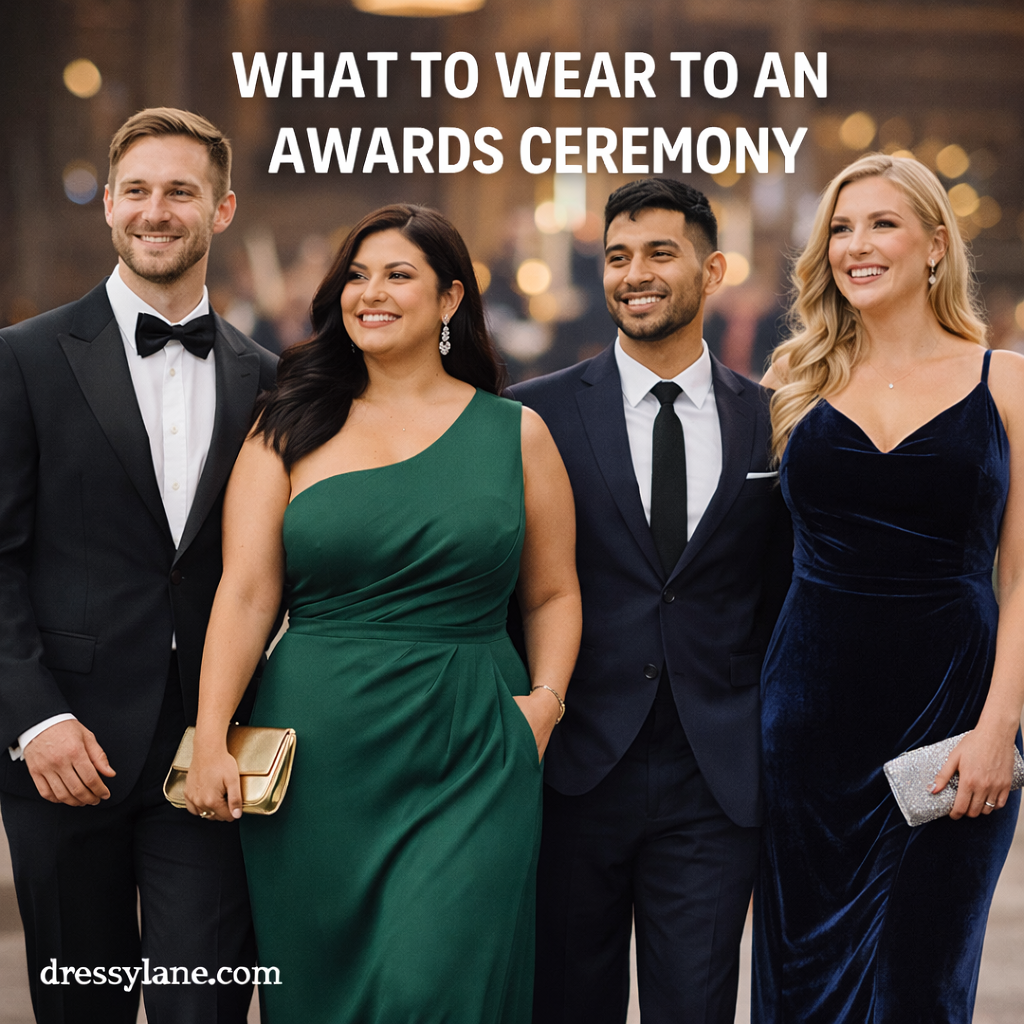
Black Tie
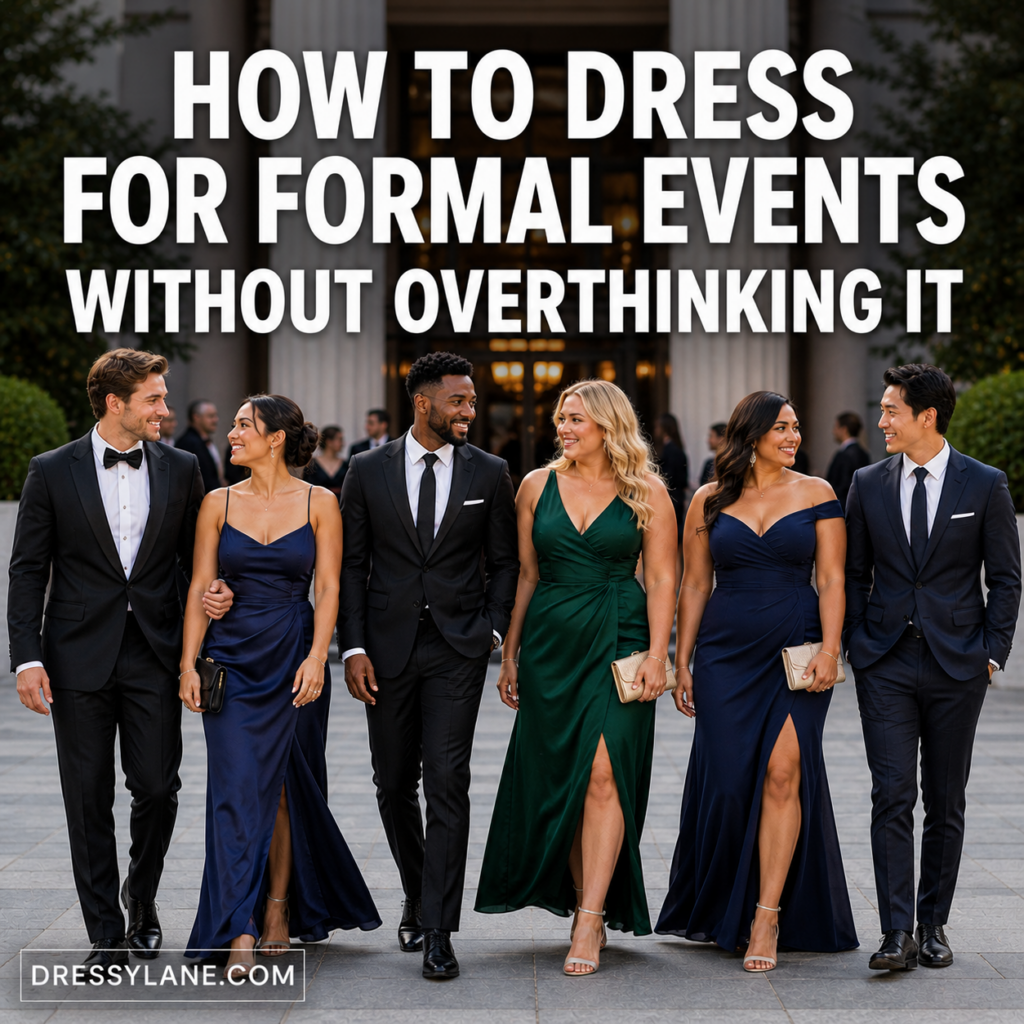
Think evening gowns, sophisticated floor-length dresses, elegant formal separates where appropriate, tuxedos, and similarly elevated eveningwear.
Fabrics such as silk, satin, velvet, chiffon, crepe, and fine wool generally work better than everyday cotton, denim, or casual knits.
Formal or Black-Tie Optional
There is more flexibility here.
Women might choose a floor-length gown, sophisticated midi dress, dressy jumpsuit, or polished formal separates.
Men can generally wear a dark suit with a dress shirt and tie, while a tuxedo may also be appropriate depending on the event.
Cocktail
A polished midi or knee-length dress, tailored jumpsuit, dressy separates, or a dark suit are dependable choices.
Cocktail attire should look noticeably more elevated than what you would wear to dinner on an ordinary weekend.
Semi-Formal
Semi-formal sits below cocktail or formal attire but above everyday smart-casual clothing.
Think midi dresses, polished knee-length dresses, tailored trousers with an elevated blouse, jumpsuits, suits, blazers with dress trousers, and refined shoes.
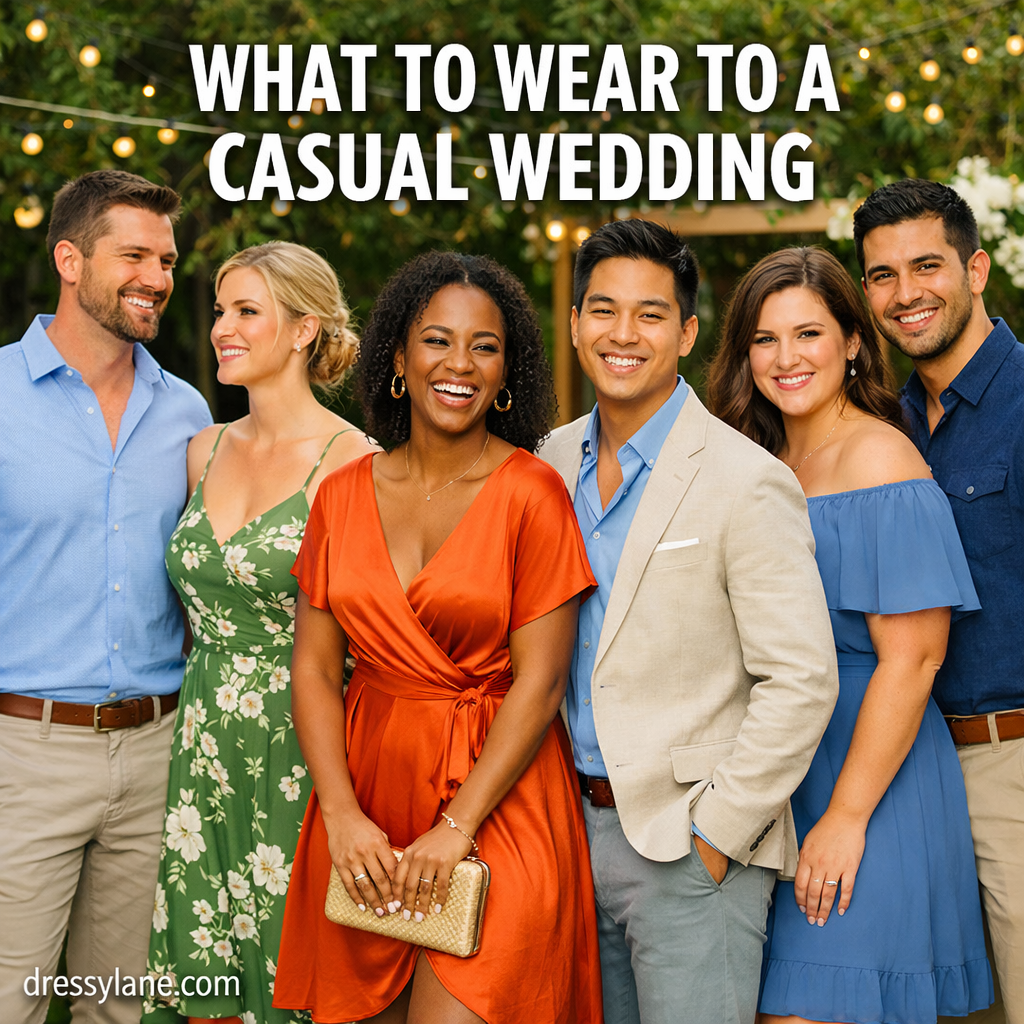
Wedding invitations can use these terms somewhat differently, so see our full guide to wedding guest dress codes when the invitation provides a specific dress code.
Start With the Dress Code—Then Look at the Context
The invitation should always be your first clue, but it isn’t your only clue.
“Formal” at an evening ballroom wedding is different from formal attire for a daytime garden ceremony. A charity gala at a luxury hotel may call for more traditional eveningwear than an upscale anniversary dinner at a contemporary restaurant.
After reading the dress code, consider:
- The type of event
- Venue
- Start time
- Season
- Weather
- Indoor versus outdoor setting
- Cultural or religious expectations
These details help you interpret the dress code rather than replace it.
If you’re attending several kinds of social or professional events, our complete guide to dressing for different occasions provides a broader framework.
The Simplest Formula for a Formal Outfit
When you are staring at a closet full of possibilities, reduce the decision to three parts:
One appropriate base outfit + one polished pair of shoes + restrained accessories.
For example:
- Navy crepe midi dress + pointed-toe flats + small gold earrings
- Black satin jumpsuit + low block heels + a structured clutch
- Charcoal wool suit + white dress shirt + black leather Oxfords
- Midnight-blue tuxedo + white shirt + black formal shoes
- Emerald floor-length dress + simple pumps + delicate jewelry
You don’t need five statement pieces competing for attention.
A useful styling rule is to decide what the main element of the outfit is. If you’re wearing a dramatic velvet dinner jacket, keep the shirt and accessories restrained. If your dress has intricate beading or a bold neckline, you probably don’t need equally dramatic jewelry.
A practical styling tip: get dressed completely before deciding that an outfit needs “something else.” Many formal outfits become over-accessorized because each piece is evaluated separately. Once the shoes, clothing, bag, jewelry, and outer layer are all on, you may discover that the outfit already looks finished.
How to Dress Respectfully at Formal Events
Being well dressed isn’t only about looking stylish. Formalwear should also acknowledge the occasion.
At weddings, religious ceremonies, memorials, award ceremonies, galas, and formal family celebrations, the goal is generally to look polished without making yourself the center of attention.
Consider the host and venue
A formal event at a church, synagogue, mosque, temple, or culturally significant venue may have expectations regarding shoulders, hemlines, head coverings, footwear, or other aspects of dress.
When you’re unfamiliar with the customs, check the invitation or venue guidance rather than guessing.
Don’t deliberately compete with the event
At weddings, avoid clothing that could reasonably be mistaken for bridal attire unless the couple specifically requests white or a similar color.
At ceremonies honoring another person, extremely attention-grabbing clothing may technically meet the dress code while still feeling inappropriate for the occasion.
When uncertain, move slightly more polished
If you’re deciding between a casual option and a more refined one, the refined option is usually safer.
That doesn’t mean you need to dress extravagantly. Good tailoring, clean shoes, pressed clothing, and thoughtful grooming often communicate respect better than an expensive or flashy outfit.
How to Dress for Daytime Formal Events
Daytime formality tends to feel lighter than evening formality.
For a formal daytime wedding, luncheon, graduation celebration, baptism, garden party, or similar event, consider colors and fabrics that work naturally in daylight.
Women might wear:
- A structured midi dress in crepe
- A floral chiffon dress
- A tailored jumpsuit
- A silk or satin midi skirt with an elegant blouse
- A polished pantsuit in navy, taupe, soft blue, or another appropriate color
Men might choose:
- Navy or medium-gray suiting
- A crisp dress shirt
- A tie when the dress code calls for one
- Leather loafers, derbies, or Oxfords
- A lighter suit in linen-wool or tropical wool for warm-weather events
Daytime doesn’t automatically mean casual. The distinction is more about visual weight.
A pale blue crepe midi dress can look beautifully formal at a 1 p.m. ceremony without the dramatic feel of black velvet or heavily embellished eveningwear.
For events connected to a morning wedding, see our guide to what to wear to a wedding brunch.
How to Dress for Evening Formal Events
Evening events generally support richer colors, heavier fabrics, sharper tailoring, and more dramatic details.
Good evening fabrics include:
- Satin
- Silk
- Velvet
- Crepe
- Chiffon
- Fine wool
- Jacquard
- Brocade
Black, navy, burgundy, forest green, chocolate brown, and jewel tones are dependable choices, although formal eveningwear certainly isn’t limited to dark colors.
For women, an evening formal outfit might be a floor-length satin gown, an elegant crepe column dress, a sophisticated jumpsuit, or dressy separates.
For men, a dark navy or charcoal suit works for many formal occasions below black tie. A true black-tie event traditionally calls for a tuxedo rather than an ordinary business suit.
Evening is also a natural time for slightly stronger accessories: a metallic clutch, polished cuff links, a silk pocket square, statement earrings, or a dressier shoe.
The important word is slightly. You still don’t need every formal element at once.
How to Dress for Semi-Formal Events With Confidence
“Semi-formal” causes confusion because it sounds more casual than it actually is.
Think of it as polished occasionwear without the full ceremony of formal or black-tie dressing.
For women, reliable options include:
- Midi dresses
- Knee-length cocktail dresses
- Tailored jumpsuits
- Dressy trouser-and-blouse combinations
- Elegant skirts with polished tops
For men:
- A suit
- Dress trousers with a tailored blazer
- A collared dress shirt
- Leather dress shoes or polished loafers
Depending on the event, a tie may or may not be necessary.
Avoid swinging too far toward casual clothing. Jeans, athletic shoes, T-shirts, hoodies, casual shorts, and everyday sundresses generally won’t meet a semi-formal dress code.
At the same time, you usually don’t need a tuxedo or elaborate evening gown.
How to Dress Formally Without Feeling Overdressed
Feeling overdressed usually comes from confusing polish with drama.
You can dress appropriately for a formal event without wearing sequins, towering heels, a bow tie, elaborate jewelry, or a floor-length gown unless the dress code actually calls for those things.
If you’re worried about looking overdressed, choose pieces with clean lines and restrained details.
For example, instead of a heavily embellished cocktail dress, choose a simple navy crepe midi dress. Instead of a high-shine three-piece suit, wear a well-tailored dark suit with a crisp shirt.
Texture can create sophistication without spectacle. Silk, velvet, satin, fine wool, and quality crepe look elevated even in very simple silhouettes.
And remember: being appropriately dressed for the stated dress code isn’t the same as being overdressed.
How to Dress for Formal Events Comfortably
You shouldn’t have to spend an entire event waiting for the moment you can change clothes.
Comfort starts with fit.
A jacket shouldn’t pull when you sit. A waistband shouldn’t require you to hold your breath. A dress shouldn’t need constant adjusting. Shoes shouldn’t become painful after ten minutes of standing.
Choose fabrics that move
Crepe, silk blends, wool with a small amount of stretch, soft chiffon, and fluid jersey can provide movement while still looking refined.
Be cautious with fabrics that are beautiful but uncomfortable for the specific event. Heavy velvet can be miserable at a humid outdoor wedding, while an unlined linen suit may feel too light for a cold evening ceremony.
Wear shoes you can actually walk in
Heels are not a requirement for looking formal.
Pointed-toe flats, dressy slingbacks, loafers, elegant low heels, block heels, and polished leather dress shoes can all work.
If heels aren’t practical or simply aren’t your style, see our dedicated guide to dressing for formal events without heels.
Sit down before leaving home
This sounds almost too simple, but it catches a surprising number of problems.
Sit, stand, bend, walk, and raise your arms while wearing the complete outfit. Something that looks perfect in front of a mirror may behave very differently at a dinner table or on a dance floor.
How to Keep Your Personal Style at a Formal Event
A dress code tells you the level of formality. It doesn’t require you to abandon your personality.
If your everyday wardrobe is minimalist, choose formal pieces with simple lines and limited embellishment.
If you love color, wear a cobalt suit, burgundy gown, emerald jumpsuit, or colorful accessories when appropriate.
If your style is vintage-inspired, consider a tea-length silhouette, velvet dinner jacket, pleated trousers, or classic accessories.
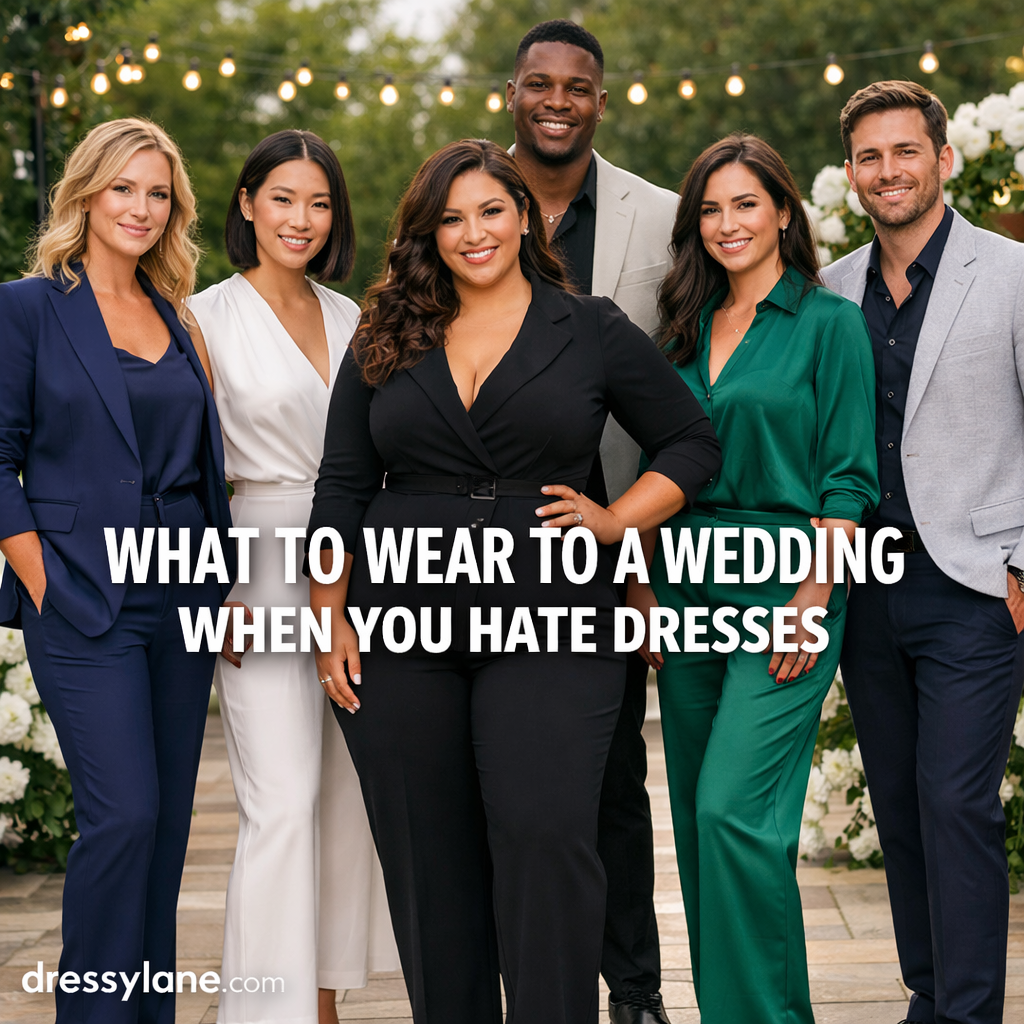
If you don’t like dresses, don’t force yourself into one simply because you’re attending a wedding. Tailored jumpsuits, elegant pantsuits, dressy separates, and other polished alternatives can be entirely appropriate.
Our guide to what to wear to a wedding when you hate dresses goes deeper into those alternatives.
The same applies to suits. Depending on the stated dress code, men can sometimes build a polished outfit around tailored trousers, a dress shirt, a blazer, or other elevated separates. See how to dress for formal events without a suit for more options.
The key is translating your style into a more polished version rather than replacing it with someone else’s.
How to Dress for Formal Events at Any Age
There is no age at which you suddenly have to stop wearing certain colors, silhouettes, or stylish formal clothing.
What often changes over time is what you personally value in an outfit.
Someone may prefer more support, softer fabrics, different sleeve lengths, lower heels, easier tailoring, or clothing that can be worn repeatedly. Those are practical preferences—not universal age rules.
Instead of asking, “Am I too old for this?” ask:
- Does it fit properly?
- Is it appropriate for this particular event?
- Can I comfortably move and sit in it?
- Do I like how I look in it?
A beautifully fitted emerald jumpsuit can work at 30 or 70. The same is true of a navy suit, silk blouse, patterned midi dress, or velvet jacket.
Fit, proportion, quality, and context matter far more than arbitrary age-based fashion rules.
How to Dress for Formal Events in Hot, Cold, or Wet Weather
Weather can turn an otherwise perfect formal outfit into a miserable one.
Hot weather
Look for breathable or lightweight fabrics such as:
- Linen blends
- Tropical wool
- Lightweight silk
- Chiffon
- Cotton-silk blends
- Lightweight crepe
Choose less complicated layers and avoid heavy synthetic fabrics when you’ll spend significant time outside.
For men, an unlined or partially lined jacket in tropical wool or a linen-wool blend can feel significantly better than heavy suiting.
Cold weather
Formal outerwear matters because your winter coat may be visible for a large portion of the event.
Consider:
- Wool overcoats
- Dress coats
- Elegant wraps
- Shawls
- Tights with appropriate dresses
- Closed-toe shoes or dress boots where suitable
Velvet, heavier crepe, wool suiting, and jacquard also work naturally in colder seasons.
Rain
Rain changes footwear and hemline decisions.
A floor-skimming gown and delicate suede shoes can become impractical quickly if you need to cross wet pavement or grass.
Consider a midi length, stable footwear, a proper coat, and an umbrella large enough to actually protect your clothing.
If the forecast looks questionable, read our guide to what to wear to a wedding when it’s raining.
How to Dress Formally on a Budget
Formalwear becomes expensive when every invitation is treated as a reason to buy an entirely new outfit.
It doesn’t have to be.
Start by building around one or two versatile pieces.
For example, a simple navy midi dress can look different with metallic shoes and statement earrings for one event, then a wrap and understated jewelry for another.
A charcoal or navy suit can work across weddings, dinners, ceremonies, holiday events, and professional occasions simply by changing the shirt, tie, pocket square, or shoes.
Spend where it makes a visible difference
Alterations are often more valuable than extra accessories.
An inexpensive suit with properly adjusted sleeves and trouser length can look more polished than a costly suit that fits poorly.
The same applies to dresses. Adjusting straps, hems, waists, or sleeves can transform how a relatively affordable garment looks.
You can also:
- Rent formalwear for occasional black-tie events
- Shop consignment or resale
- Borrow rarely used accessories
- Rewear neutral shoes
- Choose jewelry that works with several outfits
- Buy formal pieces off-season
Repeating an outfit is not a formalwear failure.
If you’re attending weddings with overlapping guest lists, use our tips for dressing for a wedding as a repeat guest.
What Modern Formal Dressing Looks Like
Formalwear has become more flexible, but “modern” doesn’t mean the dress code has disappeared.
Today’s formal wardrobe can include pieces that previous generations might not have considered traditional eveningwear:
- Tailored jumpsuits
- Women’s tuxedos
- Matching separates
- Minimalist column dresses
- Loafers and refined flats
- Relaxed tailoring
- Dressy trouser outfits
- Contemporary collarless jackets
The important distinction is between modern and casual.
A beautifully tailored wide-leg trouser with a silk blouse and structured jacket may feel modern while still looking polished. Jeans with a fashionable top may be stylish, but they generally aren’t formalwear.
Focus on fabric, fit, construction, and overall polish rather than whether an outfit matches an old-fashioned picture of formal dressing.
How to Choose Accessories Without Overthinking Them
Accessories should finish the outfit rather than rescue it.
A simple formula works well:
Choose one primary accessory, then keep the others quieter.
If you’re wearing large statement earrings, you may not need a dramatic necklace.
If your tie or pocket square has a bold pattern, the rest of the outfit can remain restrained.
For bags, small shoulder bags, structured clutches, and compact evening bags generally look more polished than large everyday totes.
With shoes, prioritize condition as much as style. Clean, polished shoes instantly improve an outfit.
And don’t underestimate practical accessories. A wrap for an air-conditioned ballroom or compact umbrella for an outdoor ceremony can be far more useful than another piece of jewelry.
A Formal Outfit Doesn’t Have to Mean a Dress or Suit
One of the easiest ways to overthink formal dressing is to assume there is only one acceptable uniform.
There isn’t.
Depending on the event and dress code, women can wear elegant jumpsuits, tuxedos, pantsuits, dressy skirts, or sophisticated trouser combinations.
Men may have alternatives to a full matching suit at certain cocktail and semi-formal events, such as tailored trousers with a blazer and dress shirt.
The flexibility becomes narrower as formality increases. A creative semi-formal celebration allows much more experimentation than a traditional black-tie gala.
Use the stated dress code as your boundary and express your preferences inside it.
What Not to Wear to a Formal Event
You don’t need an enormous list of prohibitions. Most mistakes fall into a few categories.
Avoid clothing that is:
- Noticeably more casual than the stated dress code
- Dirty, wrinkled, damaged, or poorly maintained
- So uncomfortable that you can’t enjoy the event
- Inappropriate for important cultural or religious expectations
- Impractical for the venue or weather
- So elaborate that it distracts from the purpose of the occasion
For weddings specifically, pay attention to any requests from the couple regarding colors, themes, footwear, or venue considerations.
And don’t confuse expensive with appropriate. A $1,000 designer sneaker is still a sneaker if the event specifically requires traditional black-tie footwear.
The Five-Minute Formal Outfit Check
Before you leave, ask yourself:
- Does my outfit match the stated dress code?
- Does it make sense for the time, venue, and weather?
- Can I comfortably sit, walk, eat, and socialize in it?
- Is everything clean, pressed, polished, and in good condition?
- Do I feel like myself wearing it?
If the answer to all five is yes, stop adjusting the outfit.
You are done.
That last step matters. There is a point where more styling doesn’t improve an outfit—it simply gives you more opportunities to doubt a perfectly good choice.
Formal Event FAQ
Do I have to wear a floor-length dress to a formal event?
Not necessarily. Floor-length gowns are especially appropriate for black-tie events, but many events labeled “formal” or “black-tie optional” allow sophisticated midi dresses, dressy jumpsuits, and other elevated options.
Check the exact dress code and type of event.
Can I wear flats to a formal event?
Yes. Dressy pointed-toe flats, slingbacks, embellished flats, and other refined flat shoes can work beautifully with formal clothing.
The shoe should look intentional and coordinate with the level of formality rather than resembling casual everyday footwear.
For more examples, see how to dress for formal events without heels.
Can I dress formally without wearing a suit?
Sometimes.
For semi-formal and certain cocktail events, tailored trousers, a dress shirt, and a polished blazer may be enough. The more formal the event becomes, however, the less flexibility you generally have.
Black tie has much clearer traditional expectations.
See our guide to formal dressing without a suit for a closer look.
What should I wear to a daytime formal event?
Choose polished clothing with a slightly lighter visual feel: a crepe or chiffon midi dress, tailored jumpsuit, lighter-colored suit, or fine-wool separates are good examples.
You can still wear dark colors during the day; they’re simply not your only option.
What should I wear to an evening formal event?
Evening events are well suited to richer fabrics and colors. Satin, silk, velvet, crepe, dark wool, jewel tones, black, navy, and burgundy all work well.
For black tie, traditional eveningwear such as a tuxedo or floor-length gown remains a reliable choice.
How can I look formal without looking overdressed?
Prioritize clean silhouettes, good tailoring, sophisticated fabrics, and restrained accessories.
A simple dress in beautiful crepe or a perfectly fitted dark suit can look extremely polished without feeling showy.
What can I wear if I hate dresses?
Try a tailored jumpsuit, women’s tuxedo, pantsuit, or elegant separates. The right choice depends on the dress code, but a dress is not automatically required.
Our guide to wedding outfits for people who hate dresses has more ideas.
How do I make formalwear comfortable?
Prioritize correct sizing, breathable fabrics, shoes you have already tested, and clothing that allows you to sit and move normally.
Try the entire outfit at home rather than discovering comfort problems after arriving.
What should I wear to a formal outdoor event in extreme heat?
Choose lightweight, breathable fabrics and reduce unnecessary layers. Chiffon, lightweight silk, tropical wool, linen blends, and lightweight crepe are useful options.
Consider sun exposure, grass, and walking distance when choosing footwear.
What should I wear if rain is expected?
Choose shoes that can handle damp surfaces, avoid excessively long hems if you’ll be outside, and bring suitable outerwear and an umbrella.
For weddings, see our complete guide to what to wear when it’s raining.
Is it okay to repeat a formal outfit?
Absolutely. Changing shoes, jewelry, a tie, pocket square, wrap, bag, or other accessories can give a familiar outfit a different feel.
A well-chosen formal wardrobe should be reusable.
What’s the difference between formal and semi-formal?
Formal attire is more elevated. Depending on the event, it may include gowns, sophisticated evening dresses, dark suits, or tuxedos.
Semi-formal attire allows more flexibility—midi dresses, jumpsuits, suits, dress trousers, blazers, and other polished occasionwear are common.
When an invitation uses a specific wedding dress code, check our wedding guest dress code guide before choosing your outfit.
Final Thoughts
The secret to dressing for formal events without overthinking them is realizing that you don’t need to create the perfect outfit. You need an outfit that makes sense for the occasion.
Start with the dress code. Consider the venue, time of day, season, and weather. Choose clothing that fits properly and feels comfortable. Then add just enough detail to make the outfit feel finished.
You don’t have to wear heels if you hate heels. You don’t have to wear a dress if dresses aren’t your style. You don’t need to buy a new outfit for every wedding, and getting older doesn’t mean giving up colors or silhouettes you enjoy.
Formal dressing works best when you respect the occasion without disappearing inside someone else’s idea of what “dressed up” is supposed to look like.
When you’re unsure, keep the formula simple: appropriate dress code, good fit, polished shoes, restrained accessories, and clothing you can comfortably wear for the entire event.
Once those pieces are in place, there’s usually nothing left to overthink.