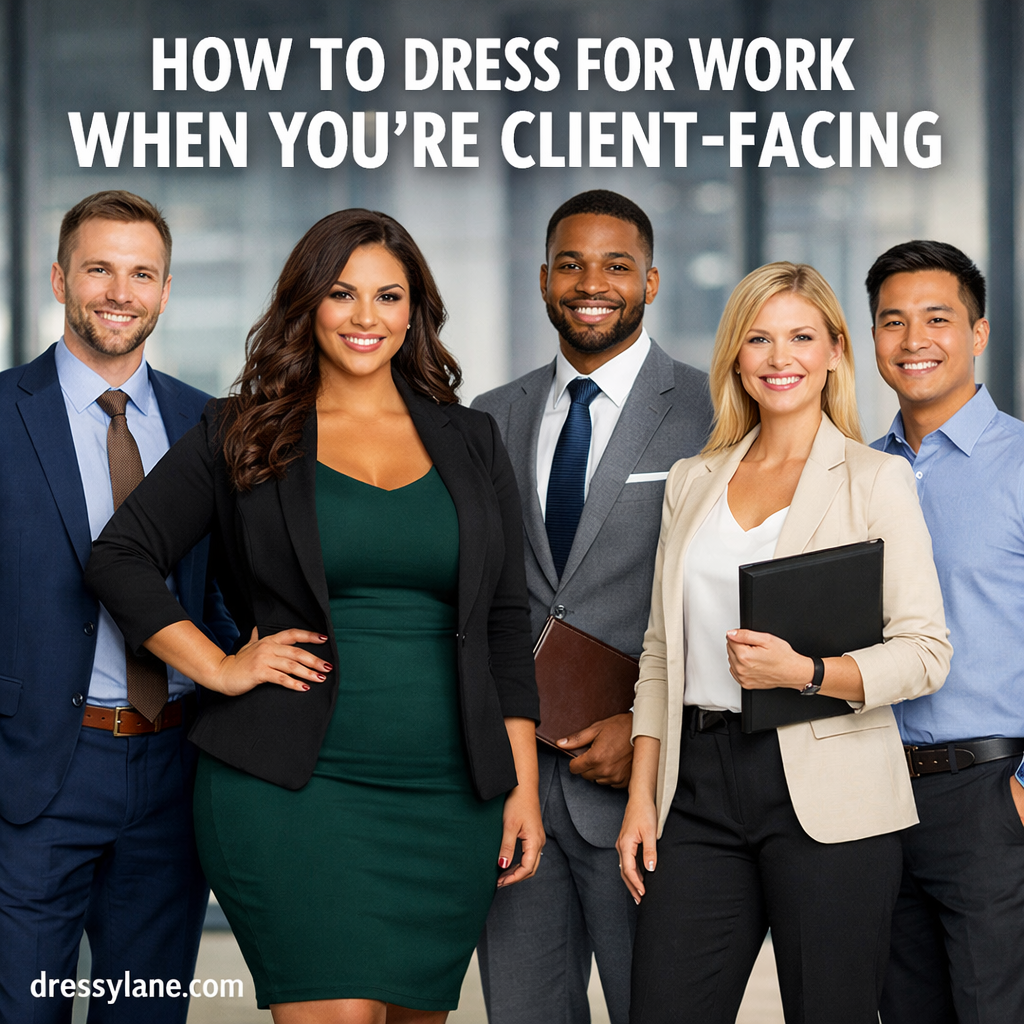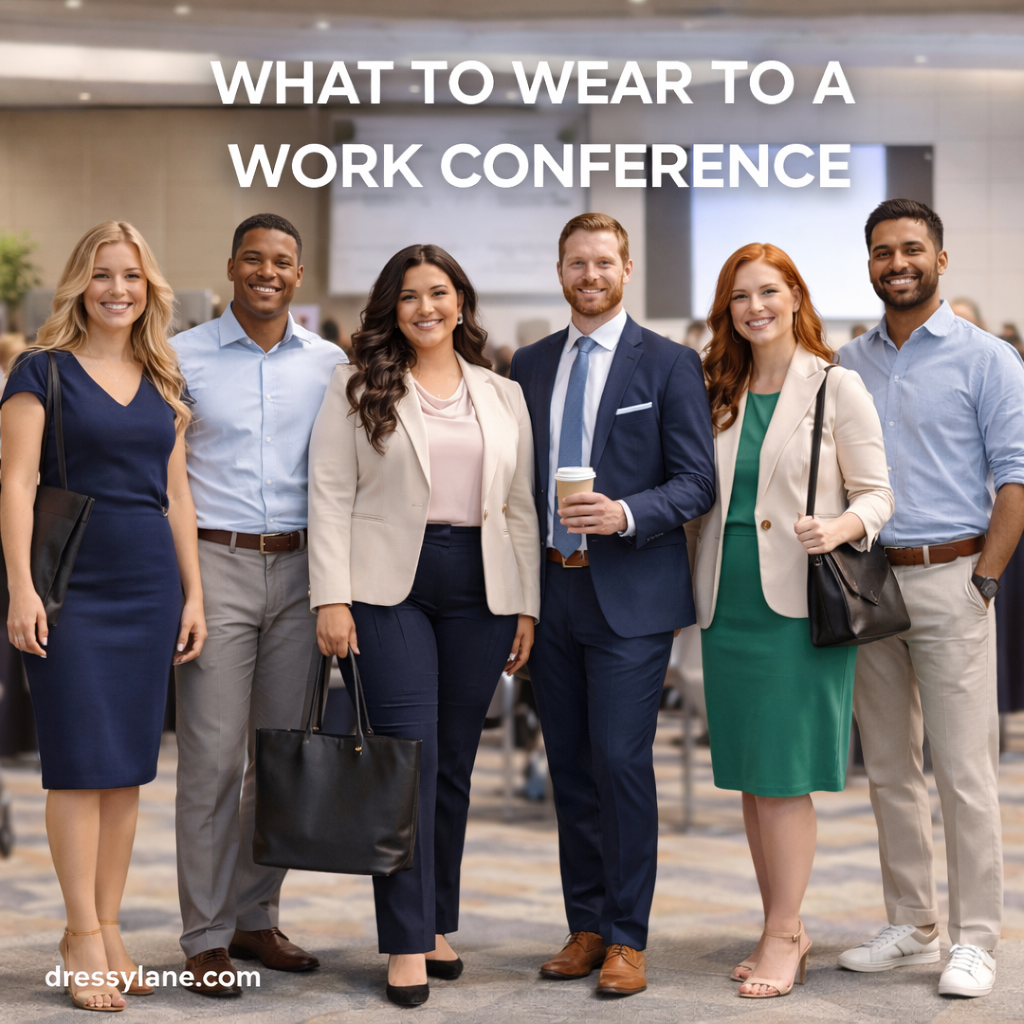
A networking event might involve standing in a hotel ballroom for two hours, chatting with people at a conference reception, or meeting local professionals at a casual restaurant. Each setting calls for a slightly different outfit.
The challenge is looking appropriate without feeling overdressed, underdressed, or uncomfortable halfway through the event.
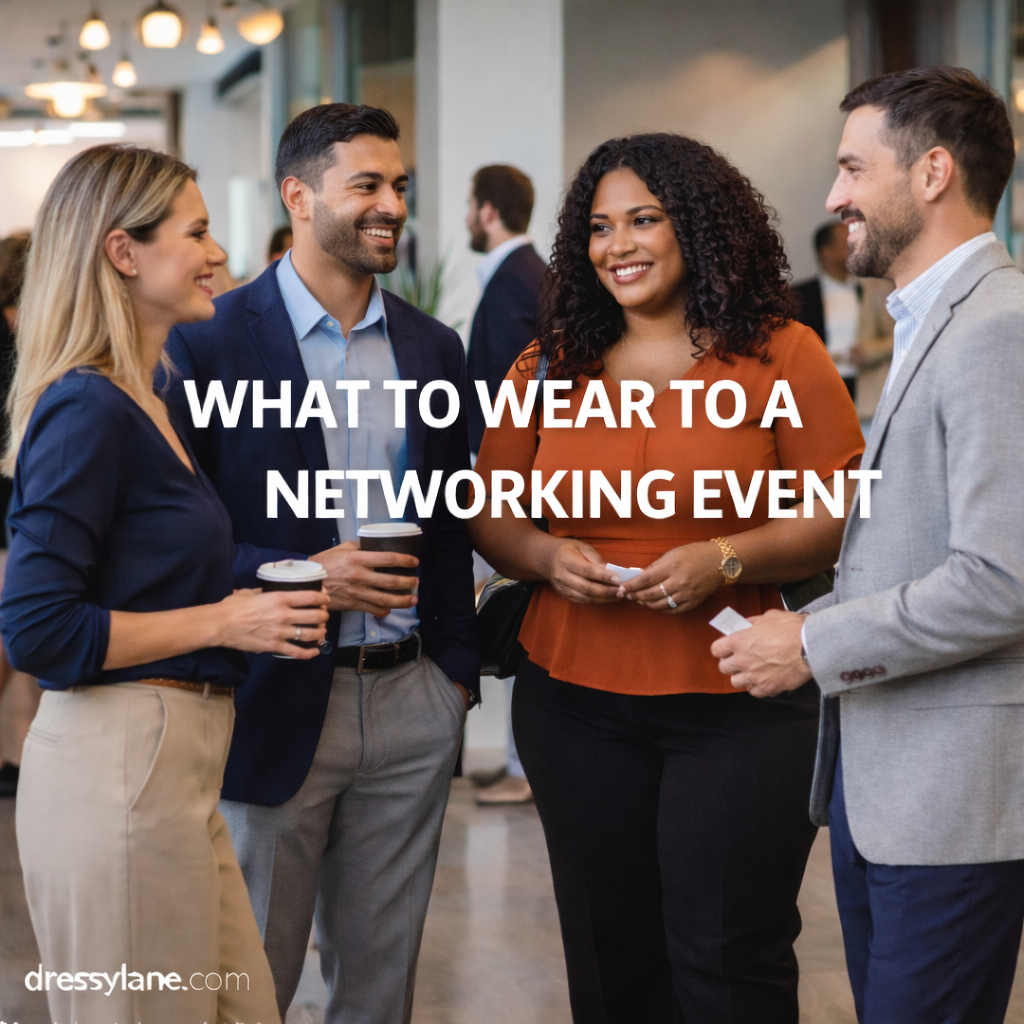
For most networking events without a specified dress code, polished business casual is a practical starting point. Think tailored trousers, a refined shirt or knit top, comfortable shoes, and a jacket you can remove if the room gets warm.
Here’s what to wear to a networking event, with outfit ideas for women and men and practical details that matter when you’ll be standing, walking, and meeting people.
Check the Event Details Before Choosing an Outfit
The invitation often tells you more than you might expect.
A networking reception at a downtown hotel may call for a blazer or tailored dress, while an informal meetup at a coworking space might be better suited to chinos and a knit polo.
Look for a stated dress code, photographs from previous events, or details about the venue.
If you’re attending directly after a conference, your daytime business casual outfit may already be appropriate.
It’s also worth considering what you’ll actually be doing. A seated industry dinner is different from a reception where you’ll spend most of the evening standing with a drink in one hand.
My recommendation is to dress for the venue and activity first, then adjust for your industry. A beautifully tailored outfit isn’t particularly useful if the shoes become painful after twenty minutes.
Understanding Networking Event Dress Codes
Most networking events fall somewhere between business formal and smart casual.
Business Formal
A formal corporate reception, executive event, or industry awards gathering may call for a suit, tailored dress, or coordinated jacket and trousers.
Navy, charcoal, and other classic colors are dependable choices.
Check whether the invitation specifies business formal, cocktail attire, or another dress code. Those terms aren’t interchangeable.
Business Casual
This is a useful default when the invitation doesn’t provide much guidance.
For women, tailored trousers with a blouse or a midi dress with a blazer work well.
For men, chinos or wool-blend trousers with an Oxford shirt and an optional sport coat are versatile choices.
Casual or Creative Networking
A startup meetup or creative-industry gathering may allow dark denim, relaxed tailoring, and clean sneakers.
You can introduce more personality through color, texture, or accessories without wearing something completely different from your usual style.
If you’re uncertain, I’d choose tailored trousers over jeans for the first event. You can always dress more casually once you understand the atmosphere.
What Women Should Wear to a Networking Event
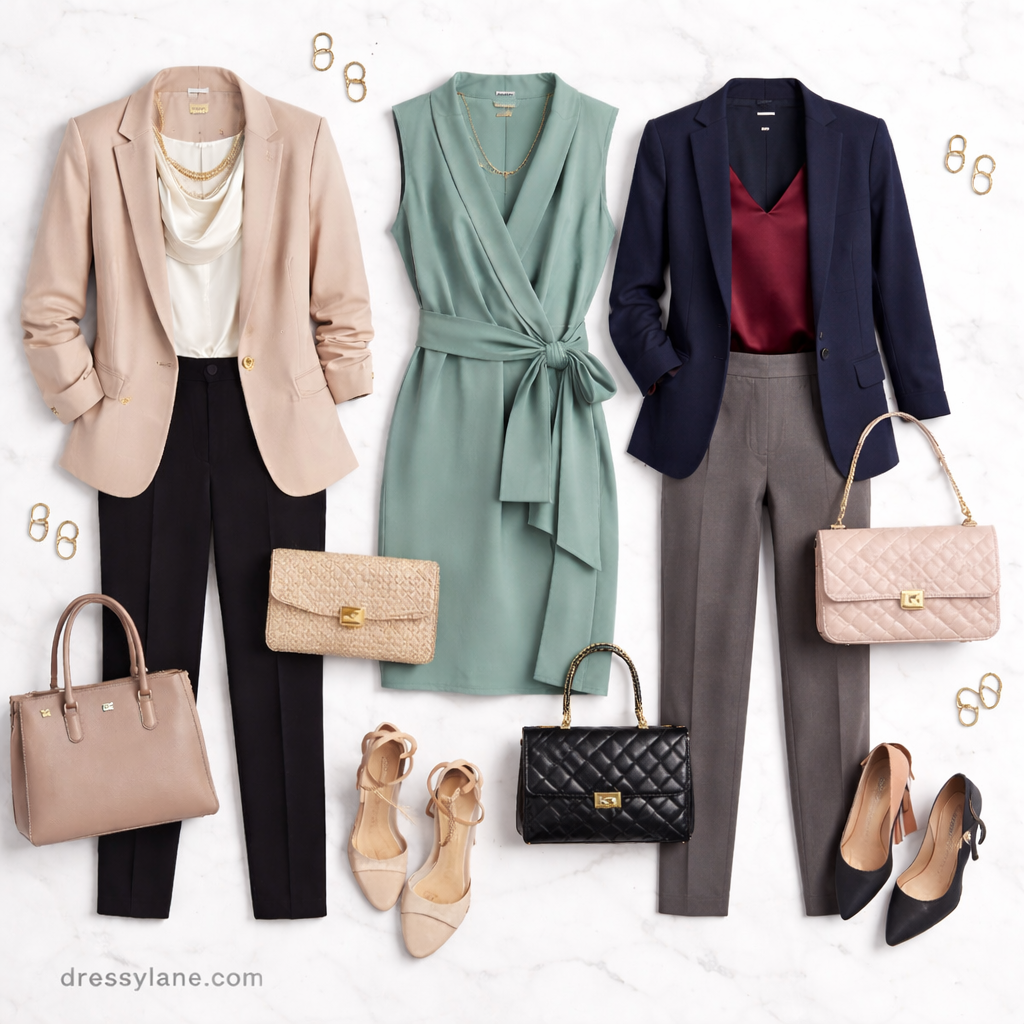
A good networking outfit should look polished while allowing you to move comfortably through a crowded room.
Tailored separates are particularly useful because they can be adjusted for different venues.
A Reliable Business Casual Outfit
Try this combination:
- Charcoal straight-leg trousers.
- A cream blouse or fine-gauge merino sweater.
- A navy single-breasted blazer.
- Leather loafers or low block heels.
- A small crossbody bag or structured handbag.
The blazer adds polish, while the simple pieces underneath keep the outfit from feeling overly formal.
I’d choose trousers with a comfortable waistband and enough room through the hips and thighs. Networking events often involve more standing and walking than a normal office day, but you may also need to sit for a presentation.
Dresses and Skirts
A midi dress in substantial jersey or crepe is another practical choice.
A navy midi dress with a cropped jacket and leather flats works for many professional receptions.
You could also wear a bias-cut midi skirt with a fine-knit top and blazer.
Avoid anything that requires frequent adjustments, such as slipping straps, a skirt that rides up when walking, or a neckline that won’t stay in place.
For More Formal Events
Choose a tailored pantsuit, a simple sheath or midi dress with a jacket, or refined separates in wool crepe.
Keep the outfit appropriate to the stated dress code rather than assuming every evening event requires partywear.
A muted burgundy blouse or textured jacket can add interest without making the outfit feel overly elaborate.
What Men Should Wear to a Networking Event
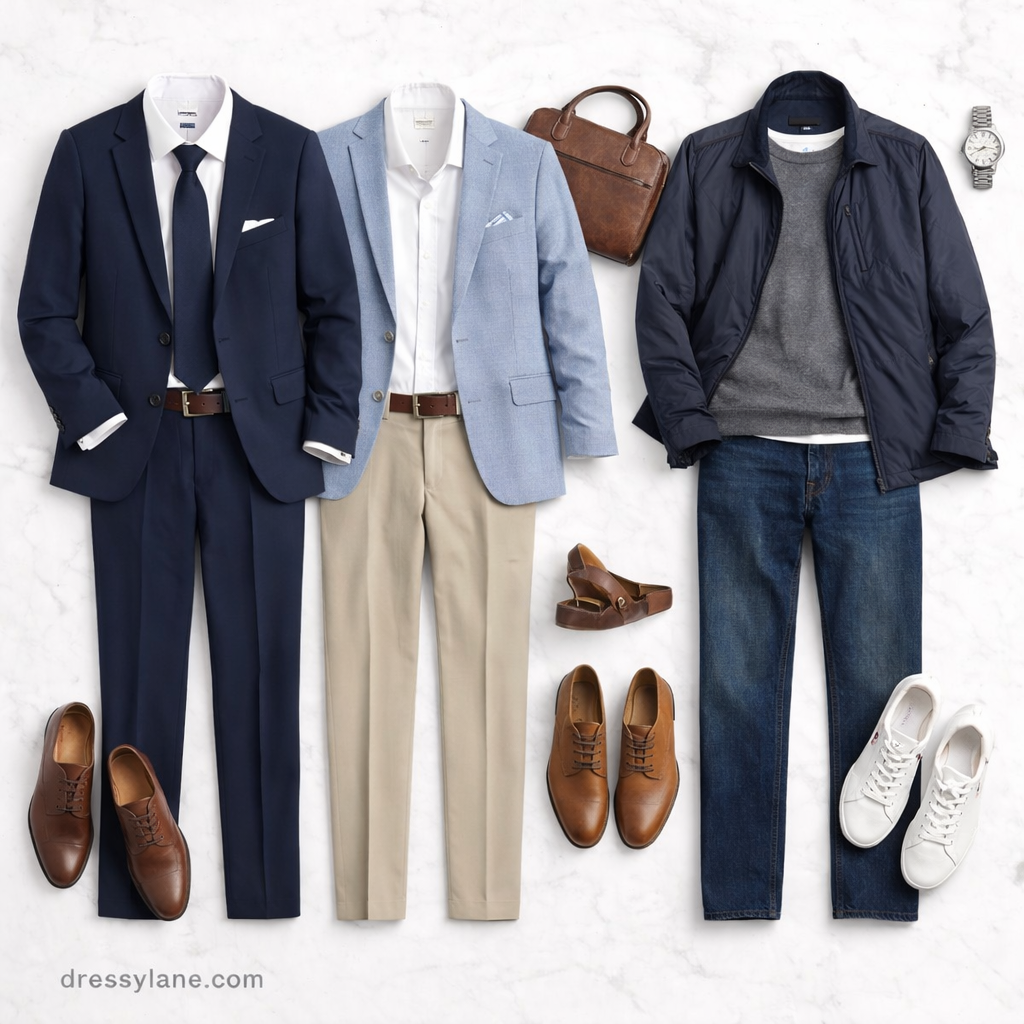
For men, the easiest approach is to build around a collared shirt, well-fitting trousers, and shoes that suit the venue.
A blazer is useful because it can make an otherwise simple outfit look more formal.
A Reliable Business Casual Outfit
Consider wearing:
- Navy chinos or charcoal wool-blend trousers.
- A pale blue Oxford shirt.
- An unstructured navy or gray blazer.
- Brown leather loafers or Derby shoes.
- A coordinating belt.
An Oxford shirt is particularly versatile because its textured cotton fabric feels less formal than a crisp business shirt but still looks appropriate for professional settings.
If the event is relatively casual, you can remove the blazer.
For Formal Networking Events
A navy or charcoal suit with a white or pale blue dress shirt is a dependable option.
Wear polished leather shoes and add a tie if the invitation or industry expectations call for one.
I’d avoid wearing a tie automatically to every networking event. At a relaxed professional meetup, a blazer and open-collar shirt may be a better match for the setting.
For Casual Industry Meetups
Dark, clean denim or tailored chinos can work with a fine-knit polo, Oxford shirt, or lightweight sweater.
Minimalist leather sneakers may be appropriate if the venue and dress code are relaxed.
Skip heavily distressed jeans, graphic T-shirts, and worn athletic shoes unless you’re certain they fit the event.
Adjust Your Outfit for the Industry
Industry expectations can help you decide how much formality to add.
At a corporate finance reception, a suit or polished tailored separates may be appropriate.
At a technology meetup, chinos, knitwear, and clean sneakers might be common.
Creative-industry events often allow more room for unusual colors, interesting silhouettes, or distinctive accessories.
However, don’t assume everyone in a particular industry dresses the same way.
A technology conference’s investor reception may be more formal than its daytime workshops. A media-industry awards event may have a completely different dress code from a casual agency meetup.
When possible, look at photographs from the specific event rather than relying on broad assumptions about the industry.
Choose Shoes for Standing, Not Just for Photographs
Footwear is one of the most important parts of a networking outfit.
You may spend an hour standing in a registration line, walking between groups, or moving around a large conference venue.
For women, leather loafers, comfortable flats, and low block heels are useful options.
For men, well-fitting loafers, Derby shoes, or appropriate minimalist sneakers can work depending on the dress code.
I’d skip brand-new shoes for an event where you’ll be standing for several hours. Even a pair that feels comfortable in the store can cause problems once you’ve worn it for an entire evening.
If you prefer heels, choose a pair you’ve already worn comfortably rather than experimenting with a higher heel for the occasion.
Keep Accessories Practical
Networking events often involve handshakes, name badges, business cards, drinks, and phones.
Your accessories shouldn’t make those activities harder.
A small crossbody bag can be more practical than a large tote that keeps slipping off your shoulder.
For men, a slim wallet or cardholder avoids bulky pockets.
If you’re wearing a blazer, check where the event’s name badge will sit. A large necklace, elaborate scarf, or heavily textured lapel can interfere with it.
I’d also avoid strong fragrance. You’ll likely be speaking to people at close range, sometimes in a crowded indoor space.
A simple watch, understated jewelry, or a distinctive but restrained accessory is enough to add personality.
Dress for the Temperature and Length of the Event
A crowded networking reception can become surprisingly warm, even when it’s cold outside.
Choose breathable fabrics such as cotton poplin, lightweight wool, and fine-gauge merino.
A blazer over a shirt or knit top is more adaptable than a thick sweater you can’t comfortably remove.
In summer, an unlined jacket and lightweight trousers may be more comfortable than a fully lined suit.
In winter, wear a proper coat for the journey but make sure the outfit underneath works on its own.
If you’re attending after a full workday, check your clothing before leaving the office. A quick lint removal, a change of shoes, or a fresh shirt can make more difference than adding another accessory.
Common Networking Outfit Mistakes to Avoid
The goal isn’t to create the most memorable outfit in the room. It’s to wear something appropriate that lets you concentrate on meeting people.
Watch out for a few common mistakes:
- Ignoring the invitation: Follow a stated dress code rather than assuming business casual is always sufficient.
- Wearing uncomfortable shoes: Choose footwear you can stand and walk in for several hours.
- Dressing too casually without checking: Distressed denim and athletic clothing may be out of place at a formal reception.
- Wearing clothes that need constant adjustment: Tight waistbands, slipping straps, and restrictive jackets can become distracting.
- Carrying too much: A heavy bag makes it harder to move around and greet people.
Before leaving, put on the complete outfit and walk around for a few minutes. Sit down, reach for your phone, and check that your shoes and clothing remain comfortable.
It’s a simple way to catch problems before you’re stuck wearing the outfit all evening.
Final Thoughts
Knowing what to wear to a networking event starts with understanding the venue, dress code, and activities involved.
For most events without specific instructions, polished business casual is a dependable choice. Tailored trousers, a refined top or collared shirt, an optional blazer, and comfortable shoes provide a flexible starting point.
Adjust the formality for your industry and the occasion, but don’t sacrifice comfort simply to look more dressed up.
When your outfit fits properly and suits the event, you can spend less time thinking about your clothes and more time focusing on the conversations you came to have.