Business casual sounds straightforward until you’re standing in front of your closet wondering whether a polo is too relaxed, jeans are acceptable, or a blazer makes you look overdressed.
The confusion comes from the fact that business casual isn’t identical in every workplace. A law firm’s interpretation may involve dress trousers and button-down shirts, while a technology company might allow chinos, knit polos, and clean sneakers.
The easiest way to get it right is to start with a dependable combination: tailored trousers or chinos, a collared shirt, and well-maintained shoes. From there, adjust the formality to suit your office.
This guide explains business casual outfits for men, including the clothing worth owning, practical outfit combinations, and the details that separate a polished look from an overly casual one.
What Does Business Casual Mean for Men?
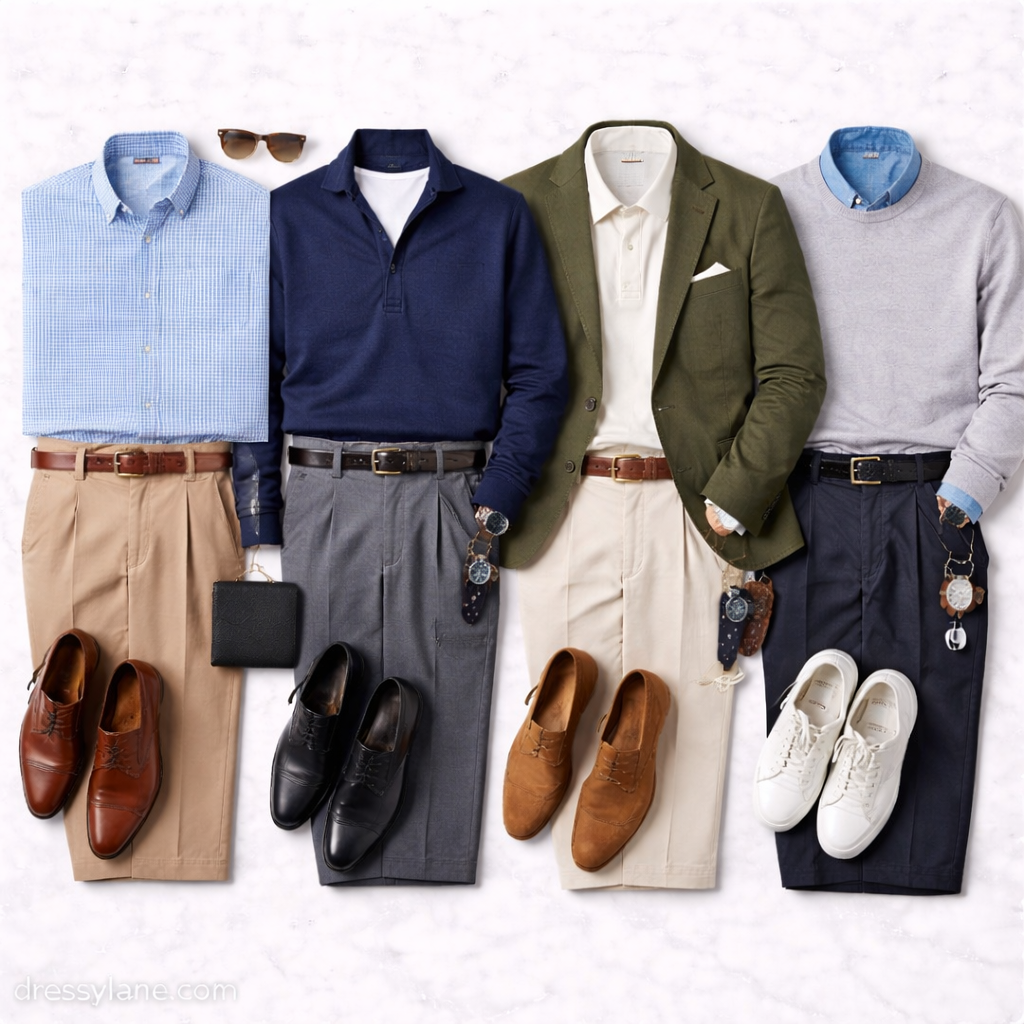
Business casual sits between traditional business attire and everyday casual clothing.
You generally don’t need a matching suit or tie, but you should still look appropriately dressed for a professional environment.
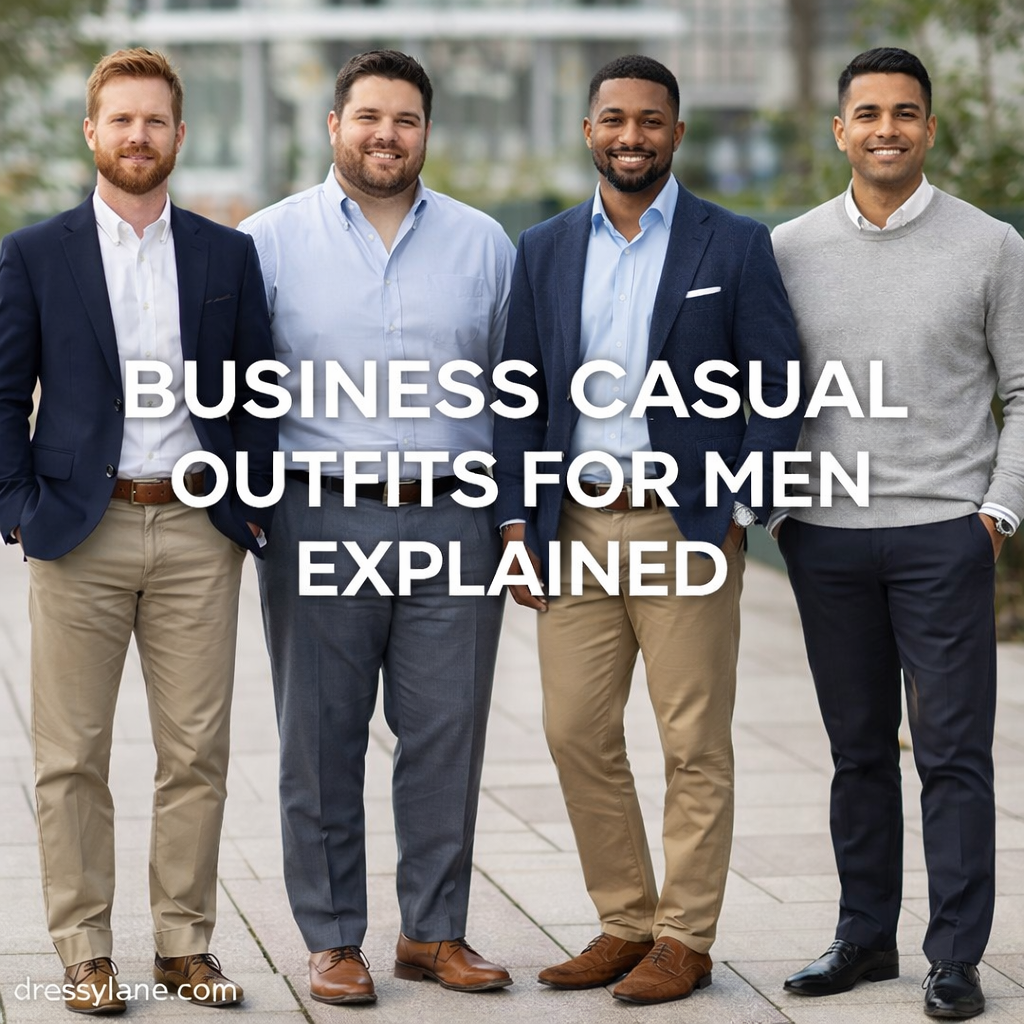
A pale blue Oxford shirt, charcoal chinos, and brown leather loafers are a good example.
The shirt provides structure, the chinos are less formal than suit trousers, and the loafers finish the outfit without making it look overly dressed up.
Business casual commonly includes collared shirts, chinos, tailored trousers, knitwear, and leather shoes. Blazers are optional in many offices.
Jeans, sneakers, and T-shirts depend on the workplace. Some companies permit them, while others expect more traditional clothing.
My recommendation is to establish your office’s everyday standard before buying anything new. If everyone wears chinos and Oxford shirts, you probably don’t need three blazers or a collection of formal dress shoes.
Start With Two Pairs of Versatile Trousers
Trousers are one of the easiest ways to make a business casual outfit look intentional.
For a small work wardrobe, I’d start with navy chinos and charcoal wool-blend trousers.
Navy chinos work with white, pale blue, cream, olive, and gray tops. Charcoal trousers offer a slightly more formal alternative for meetings or client-facing days.
Chinos vs. Dress Trousers
Chinos are typically made from cotton twill and have a more relaxed appearance than traditional dress pants.
Choose a straight or gently tapered fit with enough room through the thighs to sit comfortably.
Avoid extremely skinny cuts that pull across the knees or oversized styles that bunch around your shoes.
Dress trousers in lightweight wool or a wool blend are useful when your office leans more formal.
A pair with a clean front and minimal break at the shoe can work with an Oxford shirt, knit polo, or blazer.
If your trousers are too long, getting them hemmed is often more worthwhile than replacing them with a more expensive pair.
Choose Shirts That Work Without a Tie
A good business casual shirt should look complete on its own.
You shouldn’t need a tie or jacket to make it feel appropriate for work.
Oxford Shirts
An Oxford cloth button-down is one of the most versatile business casual shirts.
Its textured cotton fabric feels less formal than a smooth dress shirt, while the button-down collar maintains a neat appearance.
Start with white or pale blue. A subtle stripe is a useful third option.
Make sure the shoulder seams sit near your natural shoulders and the buttons don’t pull across your chest when you sit.
Polo Shirts
Polos can work well in business casual offices, particularly during warmer weather.
I’d choose a fine-knit cotton polo or a substantial cotton piqué style with a collar that holds its shape.
A navy knit polo tucked into stone chinos with brown loafers looks considerably more polished than a faded athletic polo worn with loose pants.
Avoid oversized logos, stretched collars, and thin fabric that clings excessively.
Can You Wear a T-Shirt?
A plain T-shirt may be acceptable in a relaxed office, especially beneath a blazer or structured overshirt.
However, I wouldn’t make it the default for an unfamiliar business casual workplace.
An Oxford shirt or knit polo provides a more adaptable starting point.
Business Casual Shoes for Men
Shoes can change how formal an outfit appears.
Navy chinos and a pale blue shirt look relatively relaxed with minimalist sneakers but more traditional with brown leather Derby shoes.
For most business casual wardrobes, two dependable pairs are enough.
- Leather loafers: Versatile with chinos and tailored trousers, particularly in brown or dark brown.
- Derby shoes: A useful choice for offices that lean toward traditional business attire.
Suede loafers or Chelsea boots can provide additional variety if they suit your workplace.
Oxford shoes are also appropriate, although highly polished black Oxfords may feel more formal than necessary with casual chinos.
Clean leather sneakers can work where permitted, but don’t assume they’re acceptable simply because the office calls its dress code business casual.
I’d prioritize comfortable shoes you can wear for a full workday rather than buying a formal pair that spends most of its time under your desk.
When Should You Wear a Blazer?
A blazer is useful, but it isn’t mandatory for every business casual outfit.
An unstructured navy blazer is a particularly versatile option because it works with gray trousers, stone chinos, and dark denim where jeans are allowed.
Look for lightweight wool, cotton, or a linen blend with minimal shoulder padding.
An unstructured jacket generally feels less rigid than a traditional suit jacket and is easier to wear over an Oxford shirt or fine-knit polo.
One detail worth remembering: a suit jacket isn’t always interchangeable with a blazer.
A jacket made from smooth, shiny suit fabric may look mismatched when paired with textured chinos, particularly if the original suit trousers have a noticeably different finish.
If you rarely need a jacket, keep one versatile blazer for presentations, client meetings, or days when you want to look slightly more formal.
Three Business Casual Outfit Ideas for Men
You don’t need dozens of combinations to create a practical work wardrobe.
These three outfits cover different levels of formality.
1. Everyday Business Casual
Pale blue Oxford shirt, navy chinos, brown leather loafers, and a matching belt.
This is a dependable choice for an ordinary office day.
The colors coordinate easily, and you can add a navy or gray sweater when the office gets cold.
2. Relaxed Summer Business Casual
Cream knit polo, stone chinos, and brown suede loafers.
Choose a polo with a structured collar and chinos in a breathable cotton twill.
For a warmer climate, lightweight wool trousers can also be comfortable, depending on the fabric’s weight and construction.
I’d skip a heavy, fully lined blazer in hot weather unless your workplace requires one.
3. More Polished Business Casual
White button-down shirt, charcoal wool-blend trousers, navy unstructured blazer, and dark brown Derby shoes.
This combination works well for a presentation, client visit, or office where the dress code is closer to business professional.
A tie can be added if the occasion requires it, but the outfit looks complete without one.
Layering Without Looking Overdressed
Layering is useful when your commute is warm but the office air conditioning runs all day.
A fine-gauge merino crew-neck sweater over an Oxford shirt provides warmth without the bulk of a thick sweatshirt.
A cardigan is another practical option, especially if you want something easy to remove at your desk.
For a more polished appearance, choose a lightweight blazer over a shirt or knit polo.
Keep the layers relatively thin so the shoulders and sleeves don’t feel restrictive.
I’d avoid combining a thick sweater, fitted shirt, and slim blazer. Even if each piece fits individually, the complete outfit can become uncomfortable.
Are Jeans Business Casual?
Sometimes, but not everywhere.
In a relaxed technology or creative office, dark indigo jeans with a clean finish may be acceptable.
Pair them with an Oxford shirt, unstructured blazer, and leather shoes to maintain a professional appearance.
Avoid ripped knees, heavy fading, frayed hems, and overly baggy fits.
If you’re starting a new job and haven’t confirmed the dress code, wear chinos or tailored trousers on your first day.
You can introduce denim once you’ve established that it’s appropriate.
Common Business Casual Mistakes to Avoid
A few small details can make an otherwise good outfit look less polished.
- Trousers that bunch at the ankles: Have them hemmed to suit the shoes you wear most often.
- Shirts that pull across the chest: Try a different cut rather than simply sizing up and ending up with excessively long sleeves.
- Worn-out shoes: Clean leather, maintained soles, and tidy laces make a noticeable difference.
- Overly formal combinations: A matching suit and tie may be unnecessary in a relaxed business casual office.
- Assuming casual means athletic clothing: Joggers, gym sneakers, graphic T-shirts, and hoodies aren’t standard business casual items unless your workplace explicitly allows them.
You also don’t need to match every accessory perfectly.
A brown belt and brown shoes should generally coordinate, but they don’t need to be precisely the same shade.
Clean clothing, appropriate fit, and a consistent level of formality matter more than rigid styling rules.
How to Adapt Business Casual to Your Workplace
The same outfit won’t suit every professional environment.
In a traditional office, start with dress trousers, button-down shirts, and leather shoes.
In a more relaxed workplace, chinos, knit polos, and unstructured jackets may be enough.
For client-facing roles, consider the expectations of the people you’re meeting rather than relying solely on what coworkers wear at their desks.
If you’re uncertain, ask your manager or observe how colleagues in similar roles dress during ordinary workdays.
I’d build your wardrobe gradually instead of buying an entire collection based on assumptions about the dress code.
Final Thoughts
Business casual outfits for men don’t need to be complicated.
Start with well-fitting chinos or tailored trousers, a few versatile collared shirts, comfortable leather shoes, and an optional blazer.
Choose coordinating colors, pay attention to fabric and fit, and adjust the formality to match your workplace.
A pale blue Oxford shirt, navy chinos, and brown loafers might not be an exciting outfit, but it’s a reliable foundation that you can repeat and adapt.
Once you understand what your office expects, building a business casual wardrobe becomes much easier—and you won’t need to rethink your outfit every morning.