Wedding invitations have a talent for making simple words surprisingly confusing.
“Black tie” sounds straightforward until you wonder whether a midi dress is formal enough. “Cocktail attire” leaves plenty of room for interpretation. And “dressy casual” can somehow create more questions than no dress code at all.
The good news is that wedding guest attire becomes much easier once you understand the basic hierarchy.
From most to least formal, you’ll generally see:
- White tie
- Black tie
- Black-tie optional or formal
- Cocktail attire
- Semi-formal
- Dressy casual
- Casual
But the wording on the invitation is only your starting point. The venue, time of day, season, culture, weather, and specific wedding events all help determine what makes sense.
This guide explains the major wedding dress codes and then covers the situations that create the most uncertainty—from wearing black or white to sneakers, destination weddings, cultural ceremonies, pregnancy, plus-one invitations, wedding weekends, and building an outfit without buying anything new.
Wedding Dress Codes at a Glance
If you need to choose an outfit quickly, start here.
| Dress Code | Women | Men |
|---|---|---|
| White Tie | Full-length formal evening gown | Tailcoat with traditional white-tie accessories |
| Black Tie | Floor-length gown or appropriately elevated formal eveningwear | Tuxedo |
| Black-Tie Optional / Formal | Gown, sophisticated midi or formal jumpsuit | Tuxedo or dark formal suit |
| Cocktail | Cocktail or midi dress, jumpsuit, polished separates | Dark or seasonally appropriate suit |
| Semi-Formal | Midi or knee-length dress, jumpsuit, dressy separates | Suit or tailored trousers and jacket |
| Dressy Casual | Refined dress, skirt and blouse, jumpsuit, tailored trousers | Dress trousers or chinos with a button-down and optional jacket |
| Casual | Sundress, polished separates, relaxed jumpsuit | Chinos or trousers with a collared shirt |
These are starting points rather than rigid uniforms. A beach wedding, cathedral ceremony, vineyard reception, and downtown hotel wedding can all interpret the same level of formality slightly differently.
White Tie Weddings
White tie is the highest level of traditional Western evening dress and is uncommon for most weddings.
If an invitation genuinely specifies white tie, take it literally.
Women traditionally wear full-length evening gowns, usually with appropriately formal shoes, jewelry, and evening accessories.
Men traditionally wear:
- Black evening tailcoat
- Matching formal trousers
- White wing-collar shirt
- White bow tie
- White waistcoat
- Black formal shoes
A normal dark business suit isn’t equivalent to white tie.
Because genuine white-tie weddings are relatively rare, don’t assume that’s what the couple means simply because the venue is luxurious. Follow the wording on the invitation.
Black Tie Weddings
Black tie is considerably more common, especially for evening weddings.
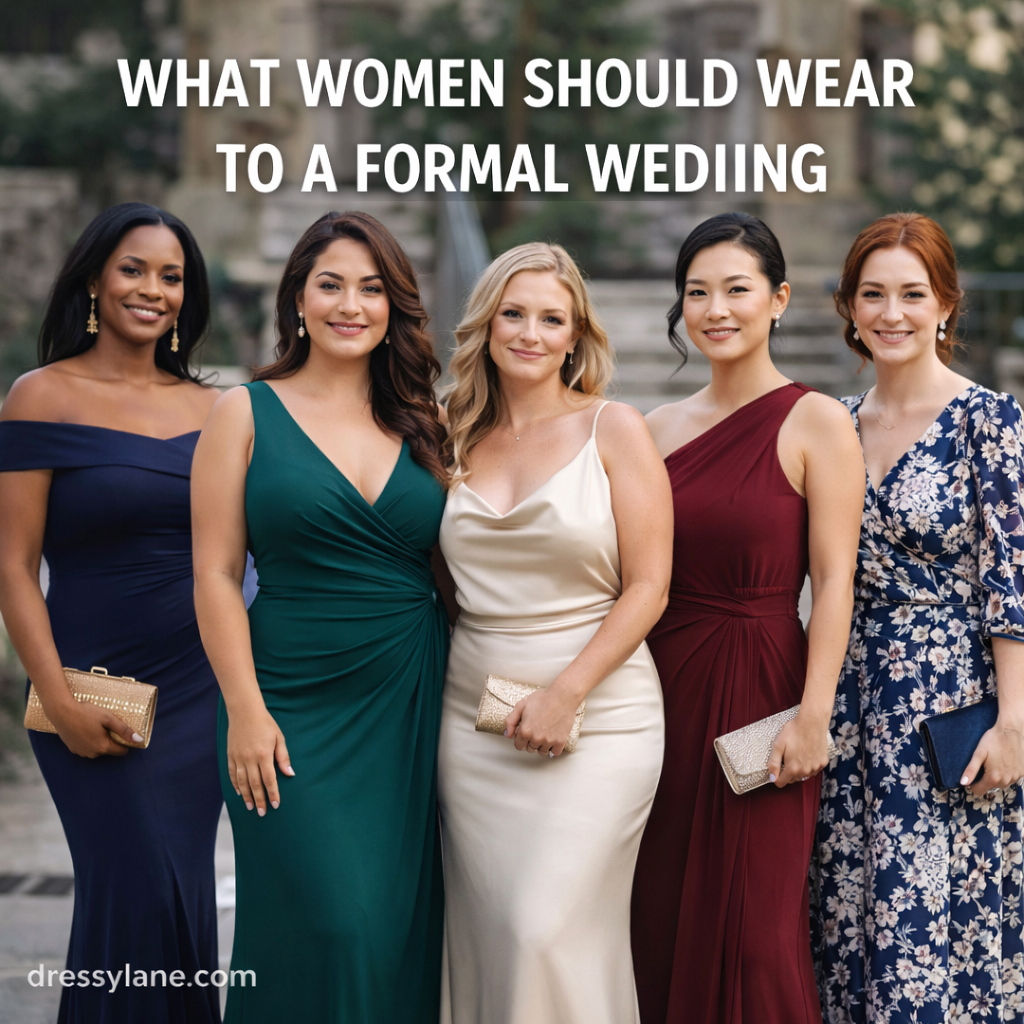
For women, a floor-length gown is the safest traditional option. Depending on the wedding, an exceptionally polished formal midi dress, sophisticated evening jumpsuit, or similarly elevated alternative may also work.
Look for fabrics that have an evening quality, such as:
- Silk
- Satin
- Crepe
- Chiffon
- Velvet
- Organza
For men, black tie traditionally means a tuxedo rather than a standard business suit.
That usually includes a dinner jacket, matching trousers, formal shirt, bow tie, and polished formal shoes.
You don’t need to make black tie more complicated than it is. A simple navy, burgundy, emerald, or black gown with understated jewelry can look more appropriate than a shorter dress overloaded with embellishment.
Black-Tie Optional and Formal Weddings
“Black-tie optional” gives guests more flexibility while maintaining a high level of formality.
Men can wear a tuxedo, but a well-tailored dark suit with a dress shirt, conservative tie, and polished leather shoes is also generally appropriate.
Women can consider:
- Floor-length gowns
- Sophisticated midi dresses
- Formal jumpsuits
- Elegant pantsuits
- Refined evening separates
“Formal attire” often occupies similar territory, although expectations can vary somewhat depending on the couple and venue.
If the wedding is at an upscale hotel at 7 p.m., lean toward the more formal end. For an afternoon formal garden wedding, lighter colors and less dramatic styling can make sense.
For a broader approach to this level of dressing, see our guide to dressing for formal events without overthinking it.
Cocktail Attire Weddings
Cocktail attire is one of the most common wedding dress codes—and one of the easiest to get right.
Think polished and celebratory without full evening formality.
Women might wear:
- Midi dresses
- Knee-length cocktail dresses
- Satin or crepe jumpsuits
- Dressy skirts with refined tops
- Tailored pantsuits
Men can generally choose a suit with a dress shirt and dress shoes. Navy and charcoal are reliable year-round, while lighter gray, blue, or seasonally appropriate suiting can work for daytime and warm-weather weddings.
You can have more fun with color, prints, and accessories at a cocktail wedding than at a traditional black-tie event.
Just don’t interpret “cocktail” as “night out.” Clubwear and wedding guest attire aren’t automatically interchangeable.
Semi-Formal Weddings
Semi-formal sits below cocktail attire but still requires noticeably more polish than everyday clothing.
Women might choose a midi dress, knee-length dress, dressy jumpsuit, tailored trousers with an elegant blouse, or a polished skirt-and-top combination.
Men might wear a suit or tailored trousers with a blazer and dress shirt. Whether a tie is necessary depends on the invitation, time, and setting.
Time of day can be especially useful here.
A daytime semi-formal wedding might suit a floral crepe midi dress or medium-gray suit. An evening version might call for a darker dress, richer fabric, or navy suit.
Semi-formal does not normally mean jeans and a nice shirt.
Dressy Casual Weddings
Dressy casual is where you can relax the tailoring while still looking intentional.
Women can consider:
- Midi or knee-length dresses
- Refined sundresses
- Jumpsuits
- Tailored trousers and a blouse
- Skirts with polished tops
Men might choose chinos or dress trousers with a button-down shirt, loafers, and an optional blazer.
The venue matters considerably.
Dressy casual at a winery might mean a printed midi dress and block heels. At a coastal restaurant, a linen-blend jumpsuit and polished flats could make more sense.
The goal is to look like you dressed specifically for the wedding—not like you stopped by on your way home from an ordinary Saturday.
Casual, Beach, and Outdoor Weddings
A casual wedding still deserves more thought than an ordinary casual outfit.
A polished sundress, linen-blend dress, jumpsuit, skirt-and-blouse combination, chinos, lightweight trousers, or collared shirt can all work depending on the venue.
For beach weddings, breathable fabrics such as linen, cotton voile, lightweight crepe, silk blends, and tropical wool can make the day considerably more comfortable.
Footwear needs special attention outdoors.
Thin stilettos are frustrating on sand, gravel, and grass. Block heels, wedges, flats, loafers, or other stable dress shoes are usually much more practical.
What If the Invitation Doesn’t Give a Dress Code?
First, look for clues.
Consider:
- Venue
- Ceremony time
- Reception time
- Wedding website
- Invitation design and wording
- Season
- Indoor versus outdoor setting
A 6 p.m. wedding followed by dinner in a luxury hotel ballroom generally suggests more formality than a noon ceremony at a public garden followed by lunch.
If you’re still uncertain and know the couple well, asking is perfectly reasonable.
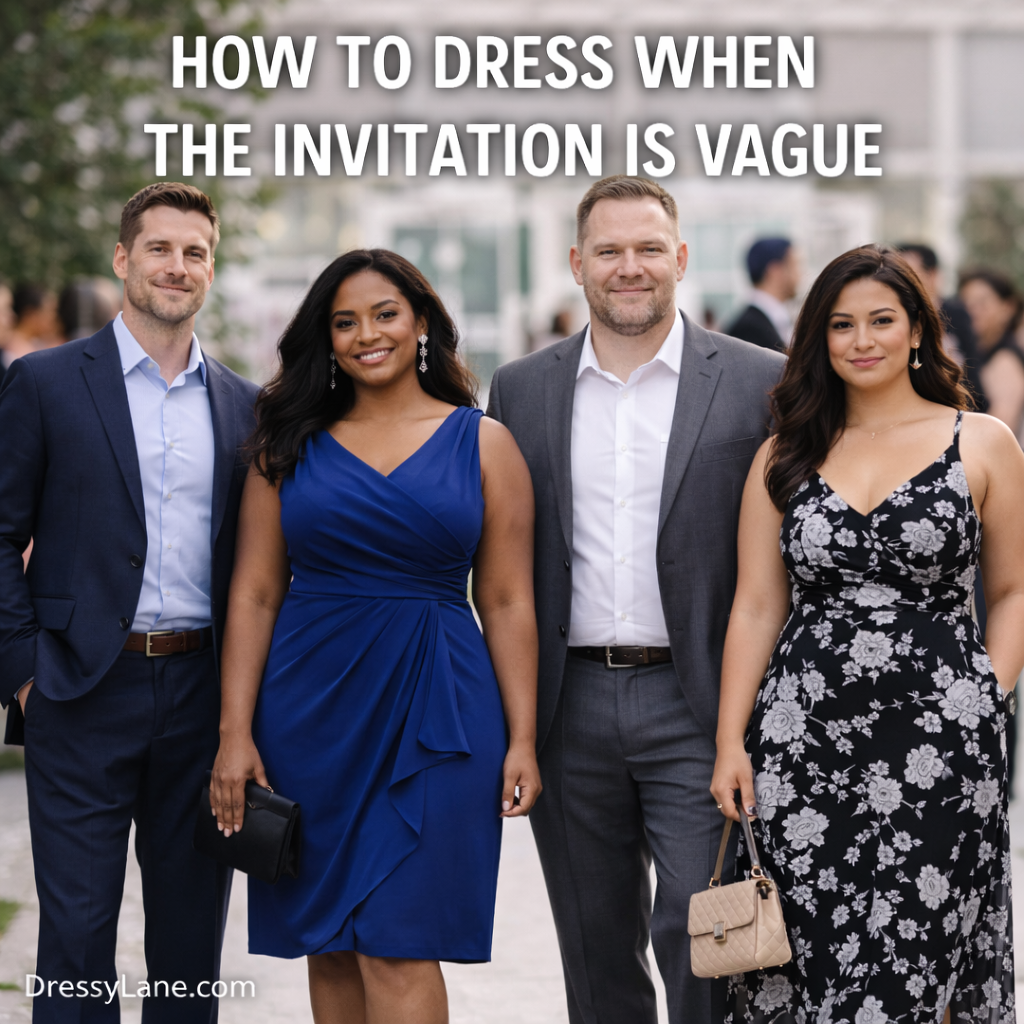
Otherwise, cocktail or polished semi-formal attire is often a useful middle ground for a conventional wedding with no stated dress code.
A practical rule I’ve found useful is this: when you’re stuck between two outfits, choose the one that’s slightly more polished but less theatrical. Being a little dressier than necessary is usually easier to carry than looking noticeably underdressed.
What If a Wedding Has Mixed Dress Codes?
Some invitations intentionally blur categories with descriptions such as:
- “Formal garden party”
- “Festive cocktail”
- “Beach formal”
- “Creative black tie”
- “Elevated casual”
Treat the established dress-code word as the foundation and the modifier as styling direction.
For example, beach formal doesn’t mean flip-flops and swimwear. It means formal or elevated clothing adapted to sand, heat, wind, and the coastal setting.
“Festive cocktail” still means cocktail-level clothing, but you have more permission to use color, texture, prints, or playful accessories.
Don’t let a creative modifier erase the underlying level of formality.
Can You Wear Black to a Wedding?
In most contemporary Western weddings, yes.
Black is especially natural for evening, cocktail, formal, and black-tie weddings.
The easiest way to keep black from feeling overly somber is through fabric and styling.
A black satin midi dress with gold earrings, a black crepe jumpsuit with metallic accessories, or a black suit with a colorful tie can look celebratory rather than funereal.
Cultural expectations vary, however. At some weddings, particular colors carry meanings that aren’t obvious to outsiders.
When cultural traditions are involved, follow guidance from the couple rather than assuming universal color rules.
Can You Wear White to a Wedding?
Unless the couple specifically requests it, the safest approach is to avoid an outfit that reads predominantly bridal white, ivory, or cream.
That doesn’t mean a tiny amount of white somewhere in a print automatically makes an outfit inappropriate.
The useful question is:
Could someone reasonably look at the entire outfit and describe it as a white dress or bridal-looking outfit?
A navy floral dress containing small white flowers is very different from an ivory lace midi dress.
If you have to spend twenty minutes convincing yourself that something isn’t technically white, choose something else. There are too many other colors available for this to be worth worrying about.
Can You Wear Jeans to a Wedding?
Usually not unless the invitation or setting clearly supports them.
Jeans are generally too casual for:
- Black tie
- Formal
- Cocktail
- Semi-formal
Even at a casual wedding, chinos, linen trousers, tailored pants, a dress, skirt, or jumpsuit will usually look more intentional.
There are exceptions. A genuinely casual ranch wedding, for example, might specifically encourage denim and boots.
The invitation and couple’s guidance take priority over generic rules.
Are Sneakers Ever Appropriate for a Wedding?
Sometimes—but they need to match the dress code.
Clean, minimalist leather sneakers may work at certain casual, contemporary, or intentionally relaxed weddings. Athletic running shoes generally look too casual unless there’s a practical or medical reason for wearing them.
Sneakers become much harder to justify as the dress code moves toward cocktail, formal, or black tie.
Fortunately, comfortable formal footwear doesn’t require high heels.
Women can consider:
- Pointed flats
- Dressy loafers
- Slingback flats
- Low block heels
- Refined ballet flats
Men can consider loafers, derbies, Oxfords, or other polished leather shoes.
For more options, see how to dress for formal events without heels.
What Shoes Are Best for Wedding Guests?
Choose shoes based on dress code + terrain + time spent standing.
For indoor formal weddings, pumps, formal flats, loafers, Oxfords, derbies, and other dress shoes are dependable.
For grass or gardens, avoid very thin heels.
For beaches, choose footwear that won’t sink into sand.
And break in new shoes before the wedding.
Few styling mistakes matter less after two hours than whether your shoes were theoretically perfect. If you’re limping before dinner, they were the wrong shoes.
How to Build a Wedding Outfit From Clothes You Already Own
Before shopping, look for one suitable anchor piece.
That could be:
- Navy midi dress
- Dark suit
- Tailored jumpsuit
- Pleated midi skirt
- Dress trousers
- Blazer
- Silk blouse
- Simple cocktail dress
Then build around it.
A plain navy dress can become wedding-ready with metallic flats, earrings, and a small evening bag.
A familiar navy suit can feel different with a pale blue shirt and patterned tie instead of your usual work combination.
This approach works especially well for cocktail, semi-formal, and dressy-casual weddings.
You Don’t Need to Buy a New Wedding Outfit
Buying new clothing for every wedding gets expensive quickly.
Instead, change the styling.
A dress you’ve already worn can look different with:
- Different shoes
- A new wrap
- Different jewelry
- A belt
- A different bag
- Hair worn differently
Men can change shirts, ties, pocket squares, shoes, or even wear familiar suit separates differently where appropriate.
If you’re likely to see many of the same people, our guide to dressing for a wedding as a repeat guest has additional ideas.
And remember: other guests are probably thinking about their own outfits far more than they’re cataloging yours.
What If You Don’t Own Formalwear?
Don’t panic-buy something you’ll never wear again.
For a single black-tie event, renting can make sense.
For cocktail or semi-formal weddings, look for versatile pieces you can reuse: a navy suit, dark tailored trousers, a simple midi dress, an elegant jumpsuit, or polished dress shoes.
You also don’t necessarily need a traditional dress or suit for every dress code.
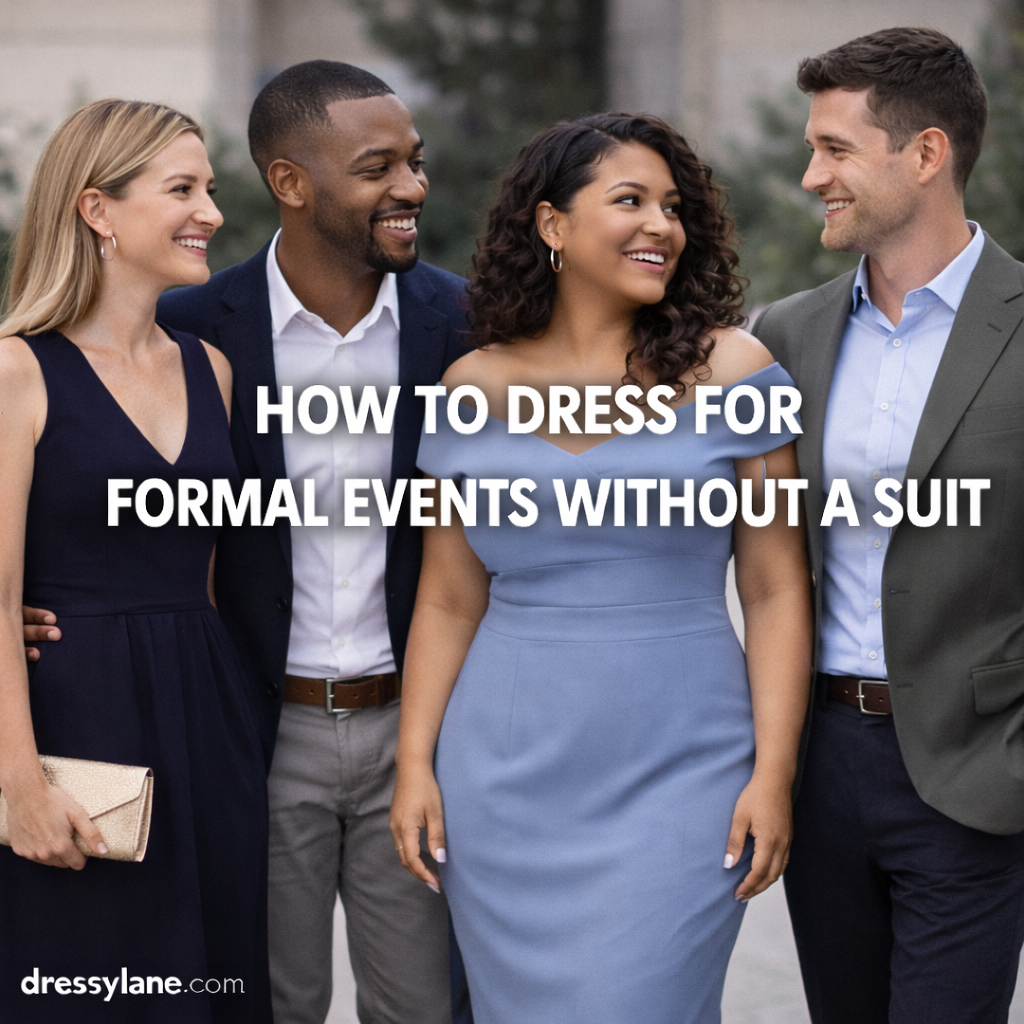
See our guides to what to wear when you hate dresses and dressing formally without a suit for alternatives.
How to Create a Minimal Wedding Guest Look
Minimal doesn’t mean underdressed.
Start with a simple silhouette in a strong fabric.
Think:
- Navy crepe midi dress
- Black satin jumpsuit
- Forest-green column dress
- Charcoal suit with a white shirt
- Wide-leg trousers with a silk blouse
Then use one or two finishing details rather than many.
Simple gold earrings and a small clutch may be enough. A crisp suit may only need polished shoes and a restrained tie.
When the clothing fits beautifully, you need surprisingly little decoration.
What to Wear When Comfort Is Your Priority
Wedding outfits have to work for hours—not just for photographs.
Look for breathable fabrics, forgiving tailoring, and shoes you can walk and stand in.
Useful options include:
- Crepe
- Chiffon
- Silk blends
- Tropical wool
- Linen blends
- Stretch wool
- Fluid jersey when sufficiently elevated
Before committing to an outfit, sit down in it.
Then walk, bend, raise your arms, and test the shoes.
A garment that needs to be tugged into position every five minutes isn’t comfortable enough for an eight-hour wedding day.
What to Wear to a Wedding When You’re Pregnant
Comfort, temperature regulation, and room for your body to change are particularly important.
Depending on the dress code, good options can include:
- Empire-waist dresses
- Wrap-style dresses
- Stretch-crepe dresses
- Flowing maxi dresses
- Formal maternity jumpsuits
- Soft tailored separates
Avoid buying too early if your size is changing quickly.
Shoes also deserve extra consideration. Elegant flats, supportive block heels, or other stable dress shoes can be more practical than high stilettos.
The dress code still applies, but you should interpret it in a way that accommodates comfort and mobility.
What to Wear as a Plus-One
Being a plus-one doesn’t require disappearing into the background, but it does make following the dress code especially useful.
Ask the person who invited you for:
- Dress code
- Venue
- Ceremony type
- Any cultural expectations
- Wedding colors if relevant
When information is limited, a polished, understated outfit is the safest route.
Cocktail attire is easier to adjust up or down than something extremely casual or highly dramatic.
Dressing Respectfully for Traditional and Cultural Weddings
This is one area where generic Western wedding rules aren’t enough.
Traditional weddings may have expectations involving:
- Color
- Modesty
- Head coverings
- Footwear
- Religious spaces
- Traditional garments
- Multiple outfit changes
For example, colors that are perfectly ordinary at one wedding may carry ceremonial, bridal, mourning, or religious significance in another tradition.
Don’t rely on stereotypes or assume every family follows the same customs.
Check the wedding website, invitation, or information supplied by the couple. If you’re close enough to ask, a simple question about appropriate attire is respectful.
If guests are encouraged to wear traditional clothing, follow any guidance provided about what is appropriate for non-members of that culture rather than treating ceremonial clothing as a costume.
What to Wear to a Wedding Abroad
A destination wedding requires you to consider both the dress code and local conditions.
Research:
- Climate
- Humidity
- Religious or cultural expectations
- Walking surfaces
- Transportation
- Venue
- Local norms
A formal wedding in a hot Mediterranean destination might call for lightweight silk, linen blends, or tropical wool rather than the heavy fabrics you’d wear to a winter ballroom wedding.
If you’re entering religious sites, you may also need more coverage than the reception itself requires.
How to Pack Wedding Clothes When You’re Traveling
Whenever possible, build your wedding outfit around pieces that pack easily and can serve more than one purpose.
Crepe, knit suiting, some synthetic blends, and textured fabrics often hide travel wrinkles better than crisp linen or easily crushed cotton.
Carry essential wedding clothing in your cabin luggage when flying if possible—especially anything difficult to replace, such as a tailored outfit, special shoes, or ceremony-specific clothing.
Bring a small emergency kit with items such as:
- Fashion tape
- Safety pins
- Stain-removal wipe
- Blister bandages
- Lint roller
- Wrinkle-release spray where practical
You don’t need an entire second formal outfit, but having a backup shirt, blouse, or accessory can be useful.
Weddings With Multiple Locations
A ceremony and reception aren’t always held in the same environment.
You might move from:
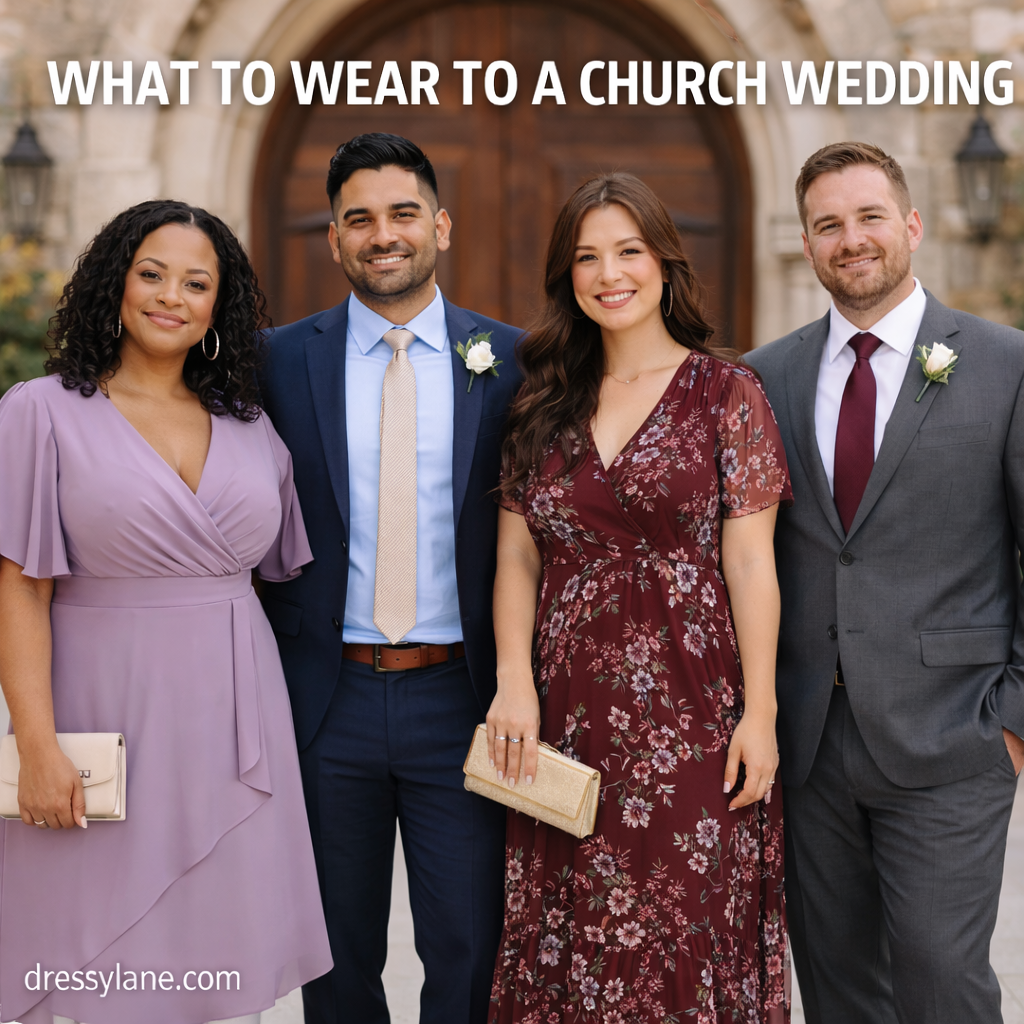
- Church to hotel
- Beach to restaurant
- Garden to ballroom
- Courthouse to rooftop
- Outdoor ceremony to indoor reception
Choose the outfit for the highest level of formality while adapting the practical pieces.
For example, wear elegant block heels for a lawn ceremony rather than stilettos, then change shoes before an indoor reception if you want.
Outerwear, wraps, and layers can also bridge environments without requiring a complete outfit change.
How to Dress for a Wedding Weekend or Multiple Events
Destination and weekend weddings may include a welcome party, rehearsal dinner, ceremony, reception, after-party, and farewell brunch.
You usually shouldn’t wear the same level of formality to every event.
A typical progression might look like:
Welcome drinks: dressy casual
Rehearsal dinner: cocktail or semi-formal
Wedding ceremony/reception: stated wedding dress code
After-party: wedding outfit or a comfortable change
Farewell brunch: polished casual
The couple may specify something different, so always follow their guidance first.
For the final event of the weekend, see our guide to what to wear to a wedding brunch.
What to Wear to a Rehearsal Dinner
If you’re invited to the rehearsal dinner, check whether the couple provides a separate dress code.
These dinners range from backyard barbecues to formal restaurant events.
Without specific instructions, let the venue guide you.
A restaurant rehearsal dinner might call for a midi dress, jumpsuit, sport coat, or tailored trousers. A casual outdoor gathering might suit a sundress, chinos, or smart separates.
Avoid assuming the rehearsal dinner has the same dress code as the wedding itself.
What to Wear If You’re Attending the Reception Only
Dress for the reception’s stated dress code—not for the portion of the wedding you missed.
If the reception is black tie, arriving after the ceremony doesn’t turn it into cocktail attire.
For a reception-only invitation without a clear dress code, use the venue and start time as clues. Evening receptions generally skew more polished than daytime celebrations.
Weather Can Override a Perfect Outfit
A technically appropriate outfit isn’t very useful if it can’t survive the actual conditions.
For heat, prioritize lightweight fabrics and breathable construction.
For cold weather, think about your coat as part of the outfit rather than an afterthought.
For rain, pay particular attention to hems and footwear. Suede shoes and floor-length fabric dragging through wet pavement can turn into problems quickly.
If the forecast looks wet, see our guide to what to wear to a wedding when it’s raining.
Common Wedding Guest Outfit Mistakes
Most mistakes aren’t about breaking an obscure fashion rule. They’re about ignoring context.
Common problems include:
- Dressing well below the stated level of formality
- Wearing something predominantly bridal white without being asked
- Assuming “casual” means everyday errands clothing
- Ignoring cultural or religious expectations
- Choosing shoes that don’t work for the venue
- Wearing an outfit you can’t comfortably sit or move in
- Buying something new simply because you feel obligated to
- Making a creative dress-code interpretation more important than the actual dress code
You don’t need to be the best-dressed guest.
You just need to look like you understood the invitation.
Wedding Guest Dress Code FAQ
Is it better to be overdressed or underdressed?
If you’re choosing between two reasonable options, the slightly more polished one is usually safer. But don’t jump multiple dress-code levels—a tuxedo at a casual backyard wedding can be just as awkward as jeans at a formal reception.
Can women wear pants to a wedding?
Yes. Depending on the dress code, tailored pantsuits, formal jumpsuits, wide-leg trousers with elevated tops, and women’s tuxedos can all be appropriate.
Do women have to wear heels?
No. Elegant flats, slingbacks, loafers, and low dress shoes can all work. The level of polish matters more than heel height.
Do men always need a suit?
No. Dressy-casual and some semi-formal weddings allow more flexibility. Formality narrows those options considerably, however, and traditional black tie calls for a tuxedo.
Can I wear the same outfit to several weddings?
Yes. Change accessories or styling if you’d like variety, but there’s no requirement to buy a new outfit for every wedding.
Can I wear sneakers?
Possibly at casual or explicitly relaxed weddings. Traditional cocktail, formal, and black-tie weddings generally call for dressier footwear.
Can I wear black?
Usually, yes, particularly at contemporary Western weddings. Cultural traditions may differ.
Can I wear a dress with some white in it?
A print containing a little white is different from wearing a predominantly white or bridal-looking outfit. When the overall garment reads as white, choose another option unless the couple has requested white.
What if I’m still unsure about the dress code?
Use the venue, time, season, wedding website, and invitation wording for clues. When appropriate, ask the couple or someone close to the wedding.
For a broader decision-making framework, see how to dress for different occasions.
Final Thoughts
Wedding dress codes are much easier to understand when you stop treating every invitation as a completely new fashion problem.
Start with the basic hierarchy:
White tie → black tie → formal/black-tie optional → cocktail → semi-formal → dressy casual → casual.
Then adjust for the venue, time of day, season, weather, culture, and specific events you’re attending.
You don’t automatically need a new outfit. You don’t need heels to look formal. Women don’t have to wear dresses, and not every wedding requires men to wear a full suit. Rewearing clothes is perfectly reasonable, and comfort should be considered before—not after—you arrive.
At the same time, flexibility shouldn’t become an excuse to ignore the invitation. A wedding is one of those occasions where dressing appropriately is partly about showing consideration for someone else’s event.
When you’re uncertain, choose something polished, comfortable, and slightly restrained rather than trying to make the most memorable outfit in the room.
That’s usually the simplest way to get wedding guest dressing right.