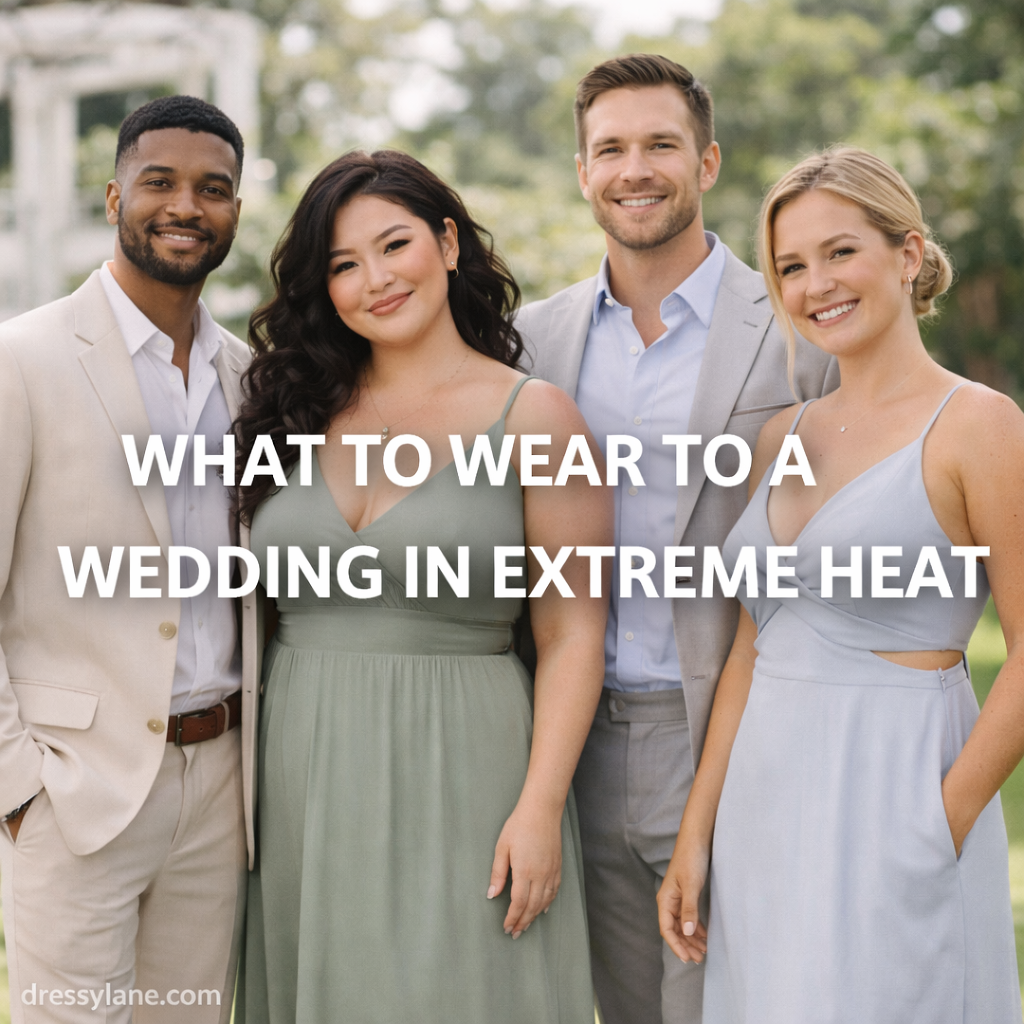
A wedding in 95-degree weather presents a different challenge than an ordinary summer celebration. Between an outdoor ceremony, direct sunlight, and a crowded reception, even a beautiful outfit can become uncomfortable within the first hour.
The solution isn’t simply wearing less clothing. A loose, breathable outfit can actually feel cooler than a tight, revealing one, especially when you’re standing in direct sunlight.
Whether you’re attending a beach wedding, a garden ceremony, or a formal celebration in a hot climate, here’s how to dress appropriately without spending the entire event worrying about sweat, wrinkles, or overheating.
Check the Venue Before Choosing Your Outfit
Before deciding what to wear to a wedding in extreme heat, find out how much time you’ll actually spend outdoors.
A 4 p.m. garden ceremony followed by an air-conditioned ballroom reception requires a different approach than a destination wedding where both the ceremony and dinner take place outside.
Consider three things:
- Sun exposure: Will you be sitting in direct sunlight for an hour?
- Humidity: Dry desert heat and humid coastal weather affect how comfortable fabrics feel.
- Dress code: A casual beach wedding allows more flexibility than a formal country club ceremony.
I’d prioritize the ceremony conditions when planning your outfit. You can always add a lightweight jacket inside, but there’s very little you can do about an overly heavy suit once you’re seated outside in the afternoon sun.
The Fabrics That Actually Make a Difference
Fabric is where I’d start shopping, before even considering color or silhouette.
A loose-fitting garment won’t necessarily keep you cool if it’s made from a thick, poorly ventilated material.
Here are the fabrics worth looking for:
| Fabric | Why it works |
|---|---|
| Lightweight linen | Breathable and comfortable in dry heat, although it wrinkles easily. |
| Cotton poplin | Crisp, relatively lightweight, and suitable for structured daytime dresses and shirts. |
| Cotton-linen blends | Offer some of linen’s breathability with potentially fewer wrinkles, depending on the blend. |
| Tropical wool | A lightweight, often open-weave option for formal men’s suits. |
| Lightweight silk | Can feel comfortable in a loose silhouette, although it may show perspiration. |
| Viscose or rayon | Can drape beautifully, but breathability varies by weave and garment construction. |
One detail I’d always check is the lining.
A lightweight linen dress with a thick polyester lining can feel surprisingly hot. The same applies to an otherwise breathable suit with a fully lined jacket.
Look at the garment’s construction, not just the fabric listed on the tag.
What to Wear to a Wedding in Extreme Heat for Men
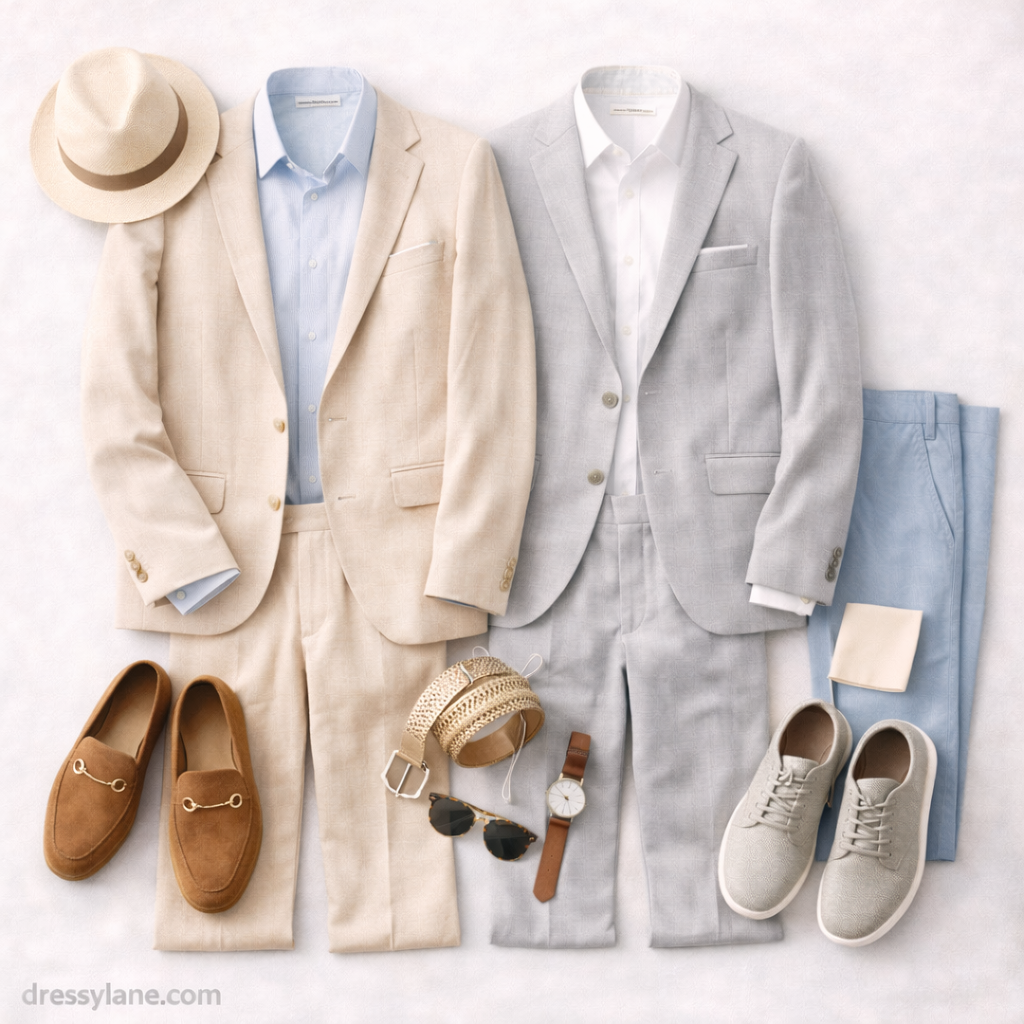
Men’s wedding attire can be particularly challenging in high temperatures, especially when the invitation requires a suit.
The goal is to reduce unnecessary layers and choose tailoring that allows some airflow without looking sloppy.
Choose a Lightweight, Partially Lined Suit
For a formal daytime wedding, consider a light gray tropical wool suit or a tan linen-blend suit.
I’d choose an unstructured or half-lined jacket over a heavily padded, fully lined one. Less internal construction generally means less material trapping heat against your body.
A practical outfit combination would be:
- Light gray tropical wool suit.
- White lightweight cotton dress shirt.
- Brown suede loafers.
- A lightweight tie if the dress code requires one.
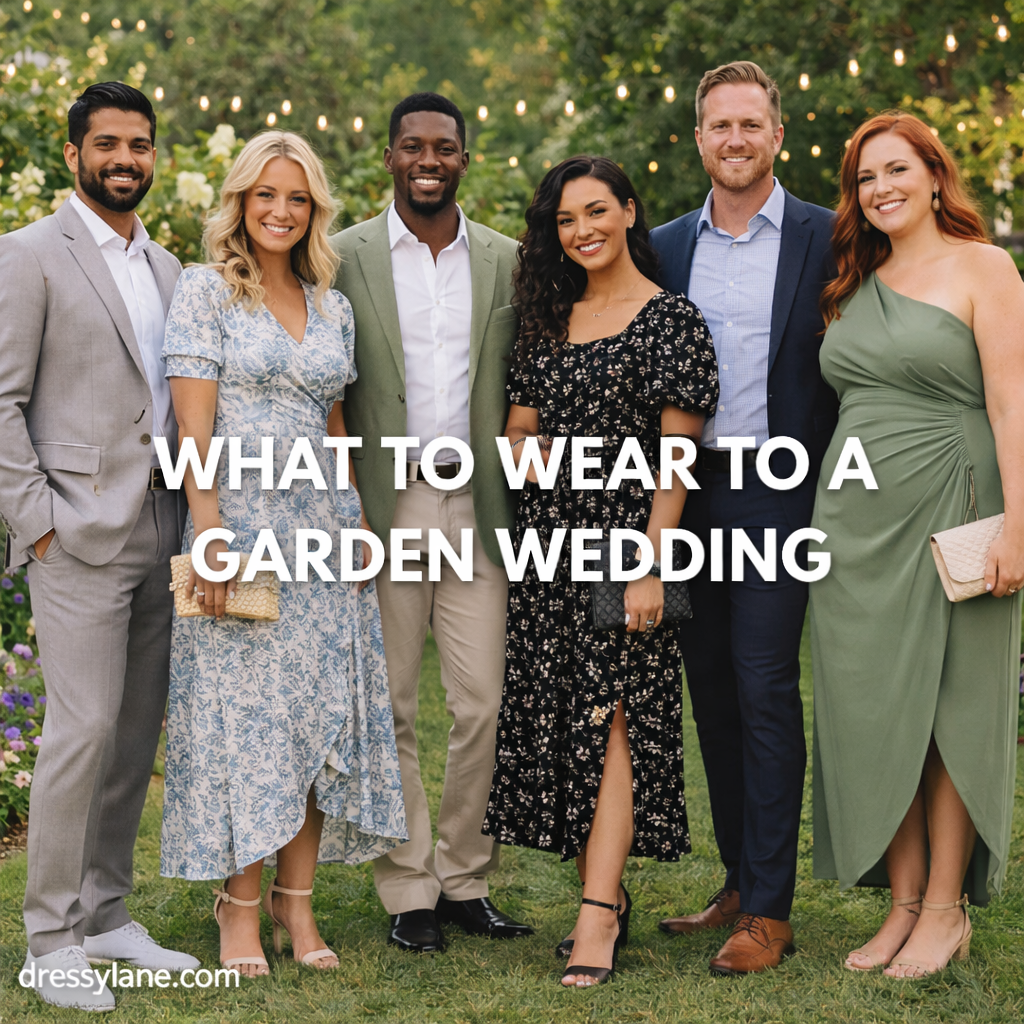
For a semi-formal garden wedding, beige linen-blend trousers with a coordinating jacket can also work.
I’d avoid a thick, dark wool business suit for an outdoor afternoon ceremony unless the dress code specifically calls for it.
If black tie is required, follow the invitation rather than substituting a casual linen suit. Look for lightweight formal tailoring and plan to spend time in shaded or air-conditioned areas.
Don’t Overlook the Dress Shirt
Your shirt sits directly against your skin, so it matters just as much as the suit.
A lightweight cotton poplin shirt is a reliable choice. Cotton-linen blends can also work for less formal celebrations.
Avoid thick Oxford cloth and heavy, non-breathable stretch fabrics.
One thing I’d reconsider is wearing a tight shirt simply because it looks sharper in the fitting room. A shirt that pulls across your chest or clings to your back will become noticeably less comfortable once you start sweating.
Choose a neat fit with enough room to move.
Trousers and Shoes Matter Too
Lightweight trousers with a straight or gently tapered leg usually feel more comfortable than extremely slim styles.
For shoes, leather or suede loafers can work well at semi-formal weddings, while lightweight dress shoes are appropriate for more formal occasions.
Wear thin dress socks or properly fitted no-show socks with loafers when appropriate. Going completely sockless in leather shoes during extreme heat can lead to uncomfortable friction.
What to Wear to a Wedding in Extreme Heat for Women
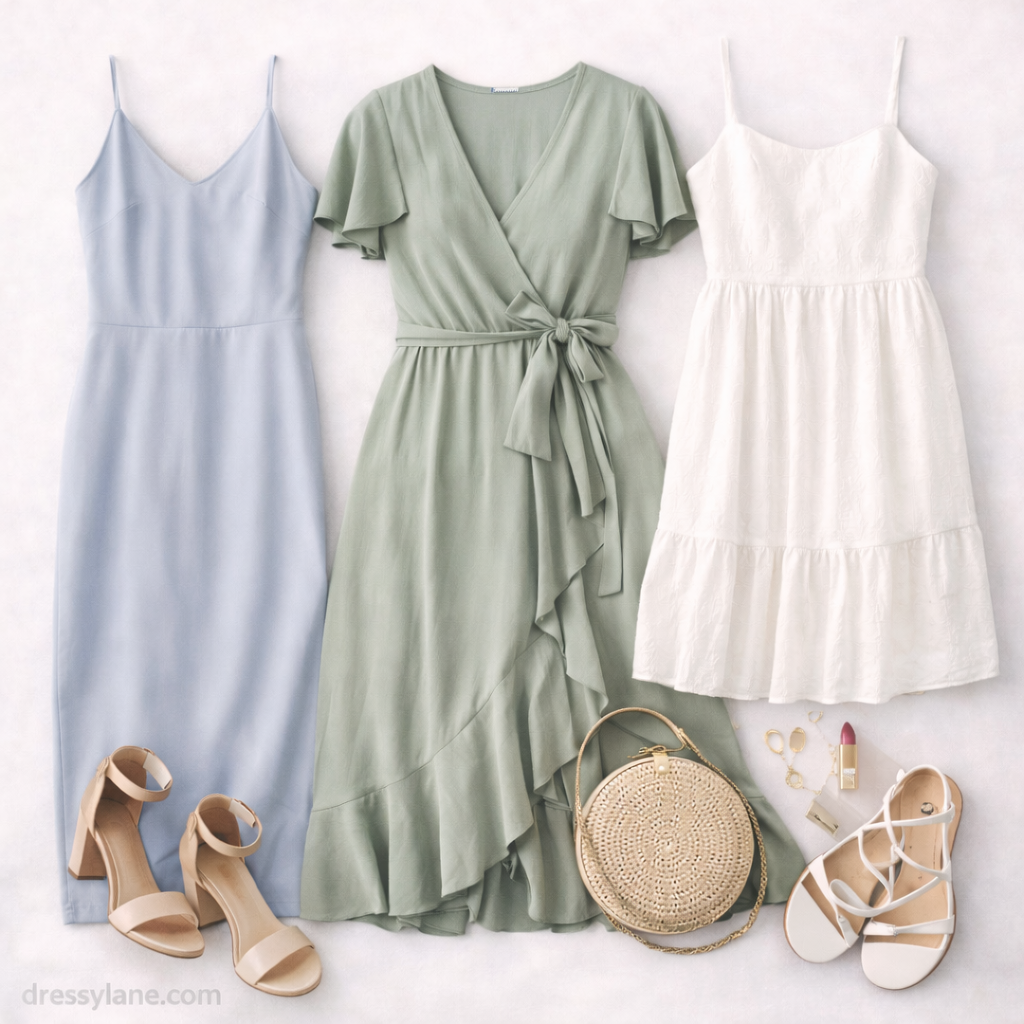
For women, the most useful outfit combines a breathable fabric with a silhouette that doesn’t cling to the body.
I’d prioritize movement and comfort over choosing the shortest possible dress.
A Flowy Midi Dress Is Often the Easiest Choice
For an outdoor summer wedding, consider a cotton-poplin midi dress with an A-line skirt, a defined waist, and wider shoulder straps.
A sage green dress paired with tan block-heel sandals and small gold earrings would feel appropriate for a garden ceremony without requiring heavy accessories.
Other options include:
- A lightweight linen-blend wrap dress.
- A loose, softly pleated midi dress.
- A sleeveless A-line dress in breathable cotton.
- A flowing maxi dress with a side slit and lightweight lining.
I’d actually skip a tight satin slip dress for a very hot outdoor ceremony, particularly if the fabric is prone to showing perspiration.
Satin can look beautiful in photographs, but a clingy cut combined with heat and humidity isn’t always practical.
A slightly structured cotton dress or flowing crepe alternative may be easier to wear for several hours.
What About Jumpsuits and Pantsuits?
You don’t have to wear a dress to stay cool.
A sleeveless wide-leg jumpsuit in lightweight linen or a breathable cotton blend can be an excellent alternative for a semi-formal wedding.
For a more structured look, try fluid wide-leg trousers with a sleeveless blouse and a matching lightweight blazer.
The blazer can be removed when appropriate during the reception.
I’d avoid a fully lined, close-fitting pantsuit for a ceremony in direct sunlight. Even if the outer fabric feels lightweight, the extra layers can make the outfit uncomfortable.
Choose Shoes for the Actual Venue
A beautiful pair of stilettos won’t help much if you’re walking across hot grass or uneven stone.
For outdoor weddings, consider:
- Low block-heel sandals.
- Dressy flat sandals.
- Open-toe heels with secure straps.
- Lightweight slingbacks.
Block heels are particularly useful for garden ceremonies because they are less likely to sink into grass.
Avoid shoes that already feel tight when you try them on. Feet can swell in hot weather, making narrow straps and restrictive toe boxes uncomfortable later in the day.
Do Light Colors Really Help?
Light-colored clothing generally absorbs less sunlight than comparable dark clothing, but color isn’t the only factor affecting comfort.
Fabric weight, weave, fit, and ventilation can matter just as much.
For a daytime outdoor wedding, consider light blue, sage, dusty rose, tan, or pale gray.
However, avoid assuming that every pale outfit is appropriate.
An entirely white or ivory dress, jumpsuit, or suit that could resemble bridal attire is generally worth avoiding unless the couple has specifically approved it.
And don’t rule out darker colors completely. A loose navy linen dress may feel more comfortable than a pale dress made from thick synthetic fabric.
Plan for the Air-Conditioning Problem
One easily overlooked detail is the transition from outdoor heat to an aggressively air-conditioned reception venue.
You might spend an hour sweating through a ceremony and then feel cold during dinner.
For women, a lightweight wrap or fine-knit cardigan can be useful. For men, a breathable blazer provides an easy layer if the dress code permits removing it during the outdoor portion.
Choose something you can carry without needing an oversized bag.
I’d avoid bringing a thick shawl or heavy jacket simply because the reception is indoors. A lightweight layer is usually enough.
Hair, Grooming, and Small Comfort Essentials
Your outfit is only part of staying comfortable.
For women with longer hair, an updo, low bun, or secured braid can help keep hair off the neck during an outdoor ceremony.
For makeup, consider lightweight products and bring blotting papers rather than repeatedly adding powder over perspiration.
Men may find a small, clean handkerchief useful, especially during outdoor photographs.
A few practical essentials include:
- A small handkerchief or blotting papers.
- Sunscreen suitable for your skin and the event.
- A compact fan if permitted.
- Water before and throughout the event.
If the heat is extreme, seek shade and take advantage of indoor breaks. Clothing choices can improve comfort, but they cannot prevent heat-related illness.
Common Mistakes That Make Hot Weddings Worse
The biggest mistake is dressing for how an outfit looks in an air-conditioned fitting room rather than how it will feel outside.
Other issues worth avoiding include wearing thick polyester linings, choosing restrictive tailoring, forgetting to check whether a dress is transparent in sunlight, and selecting shoes without considering the terrain.
I’d also avoid trying an entirely new outfit for the first time on the wedding day.
Wear it around the house, sit down, walk, and check how it moves. If the waistband feels restrictive after ten minutes, it probably won’t improve during a long outdoor reception.
Final Thoughts
Dressing for a wedding in extreme heat requires a little more planning than choosing a typical summer wedding outfit.
For men, lightweight tropical wool or linen-blend tailoring, breathable shirts, and comfortable dress shoes are practical starting points. For women, flowing midi dresses, lightweight jumpsuits, and breathable separates offer plenty of options without sacrificing formality.
Pay particular attention to linings, fit, and the amount of time you’ll spend outdoors.
The outfit I’d choose isn’t necessarily the lightest or shortest one available. It’s the one that looks appropriate for the wedding, allows air to circulate, and stays comfortable from the ceremony through the reception.
When temperatures become dangerously high, prioritize shade, hydration, and cooling breaks over maintaining a particular look.