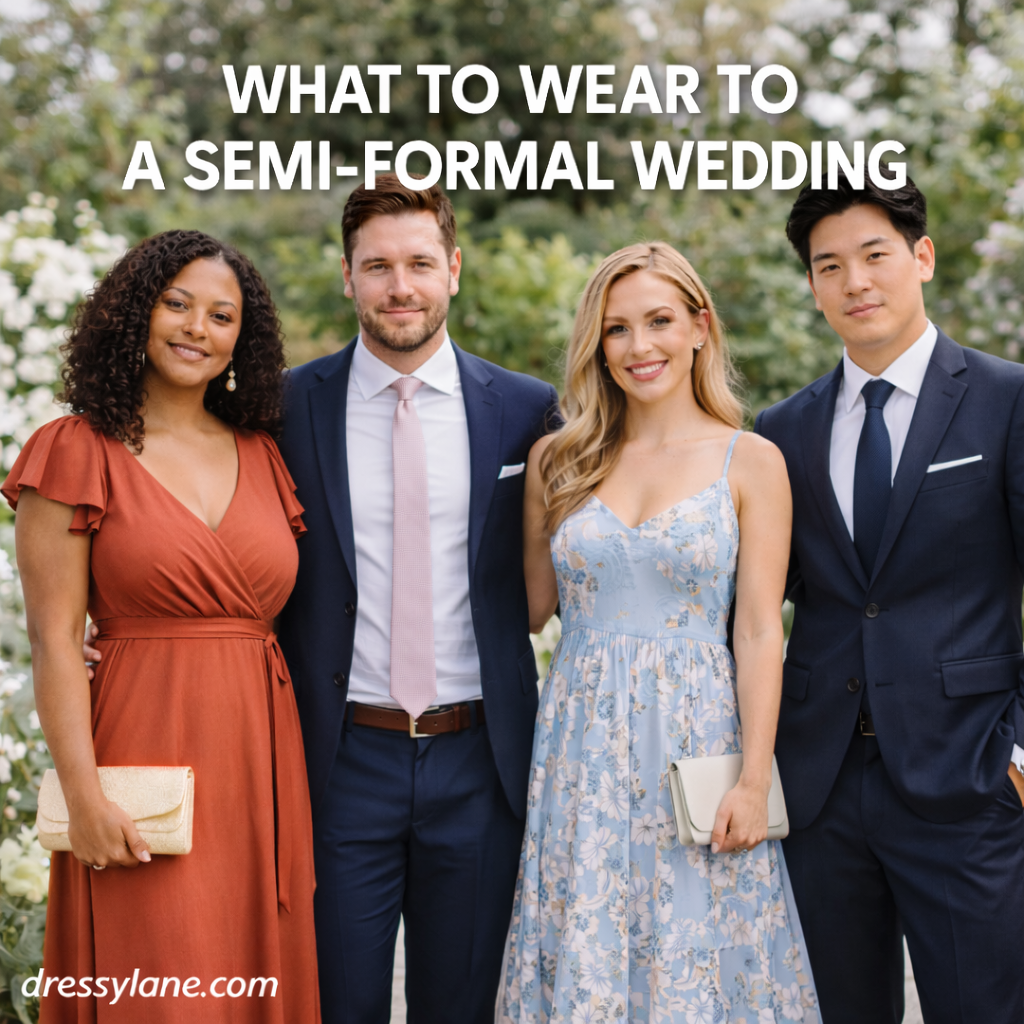
Semi-formal wedding attire can be surprisingly tricky. You’re expected to look dressed up, but a floor-length evening gown or tuxedo may feel excessive. On the other hand, the outfit you’d wear to a casual dinner probably won’t be quite enough.
The easiest approach is to start with one polished piece, such as a tailored suit or an elegant midi dress, and build the rest of your outfit around it.
Here’s what to wear to a semi-formal wedding, including specific outfit combinations, footwear choices, and a few details that can make the difference between looking appropriately dressed and missing the mark.
What Does Semi-Formal Mean for a Wedding?
Semi-formal sits between dressy casual and formal attire. For most weddings, that means a knee-length or midi dress, a dressy jumpsuit, or a well-tailored suit.
You generally don’t need a tuxedo, elaborate evening gown, or heavily embellished accessories.
However, semi-formal isn’t the same as casual. A cotton sundress with everyday sandals or an untucked button-down with chinos may look too relaxed, particularly for an indoor evening reception.
The time and location matter, too. A semi-formal ceremony at a vineyard in June will naturally call for different fabrics and colors than a November wedding at a downtown hotel.
What Women Should Wear to a Semi-Formal Wedding
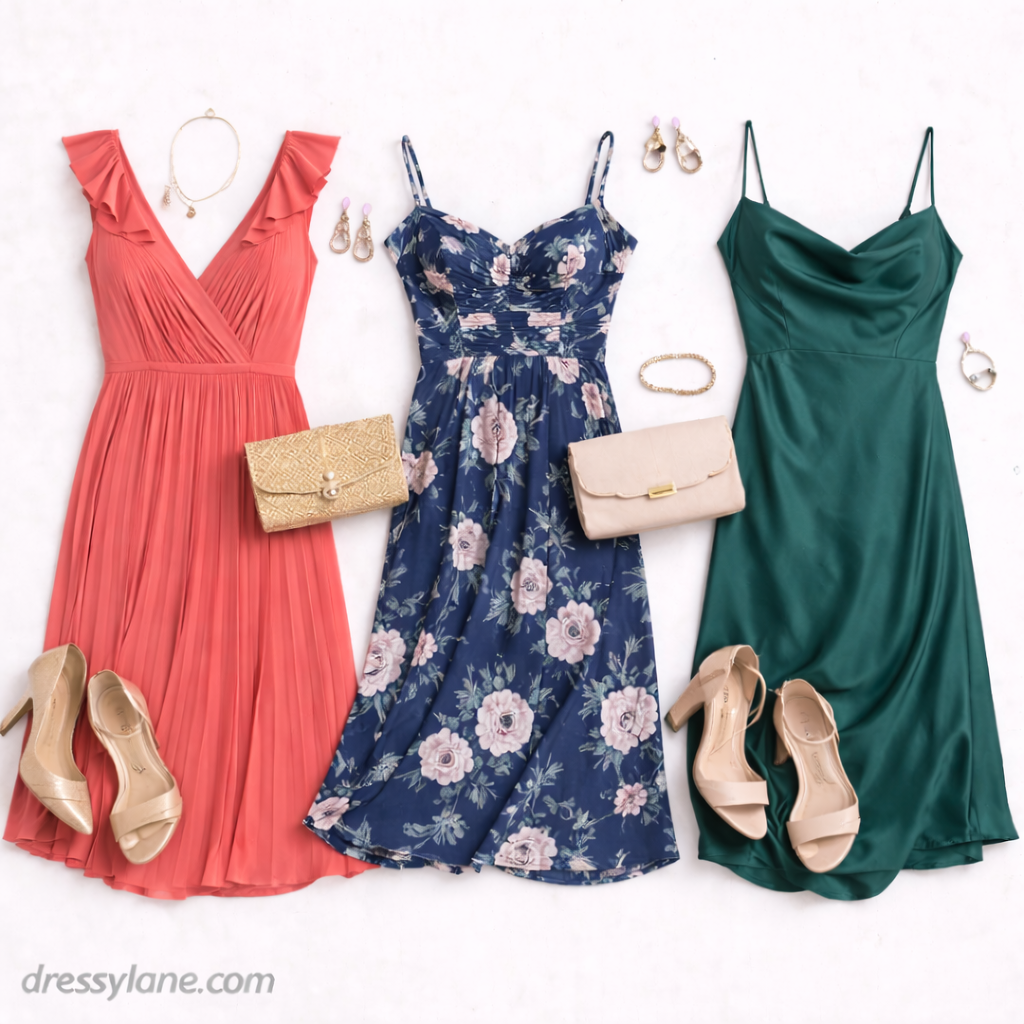
A midi dress is one of the most dependable choices for this dress code. It feels appropriate for an afternoon ceremony and can easily transition into an evening reception.
Look for dresses with intentional details, such as a defined waist, soft pleating, an elegant neckline, or a structured bodice.
A few outfit combinations that work particularly well include:
- A navy crepe midi dress with nude or metallic block heels and a small clutch.
- An emerald green wrap dress with delicate gold jewelry and pointed-toe pumps.
- A dusty rose chiffon dress with a pleated skirt and strappy sandals.
- A burgundy satin slip dress with a tailored jacket for an evening wedding.
I’d choose a simple, well-fitting midi dress over an elaborate dress with excessive sequins or embellishments. At a semi-formal wedding, good fabric and a flattering silhouette usually make a stronger impression than extra decoration.
What If You Don’t Want to Wear a Dress?
A tailored jumpsuit is an excellent alternative, especially one with wide legs, a defined waist, and a structured neckline.
Choose crepe or another substantial dressy fabric rather than thin, stretchy jersey. A black wide-leg jumpsuit with metallic heels and a compact evening bag, for example, can look appropriate for an evening reception.
A coordinated trouser suit also works. Try a softly tailored blazer and matching trousers in navy, muted blue, or deep green, paired with a silk camisole.
The important detail is that the outfit should feel intentional rather than like everyday office clothing.
What Men Should Wear to a Semi-Formal Wedding
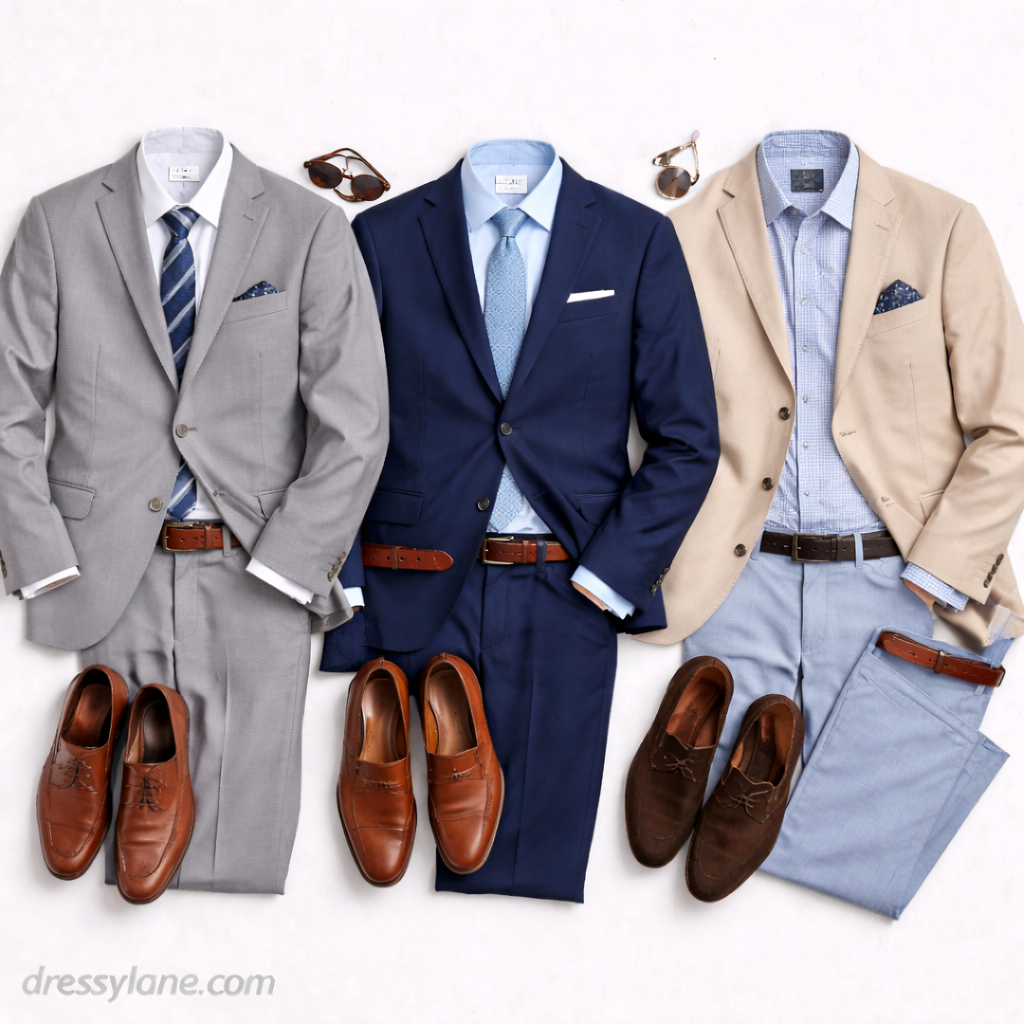
For men, a suit is the most reliable option. Navy and medium gray are particularly versatile because they work for both daytime and evening weddings.
A navy suit with a white dress shirt, brown leather Oxfords, and a coordinating belt is a combination that’s difficult to get wrong.
Other appropriate combinations include:
- A medium-gray suit with a pale blue shirt and burgundy tie.
- A charcoal suit with a white shirt and black leather Derby shoes.
- A lightweight navy wool suit with brown loafers for a summer ceremony.
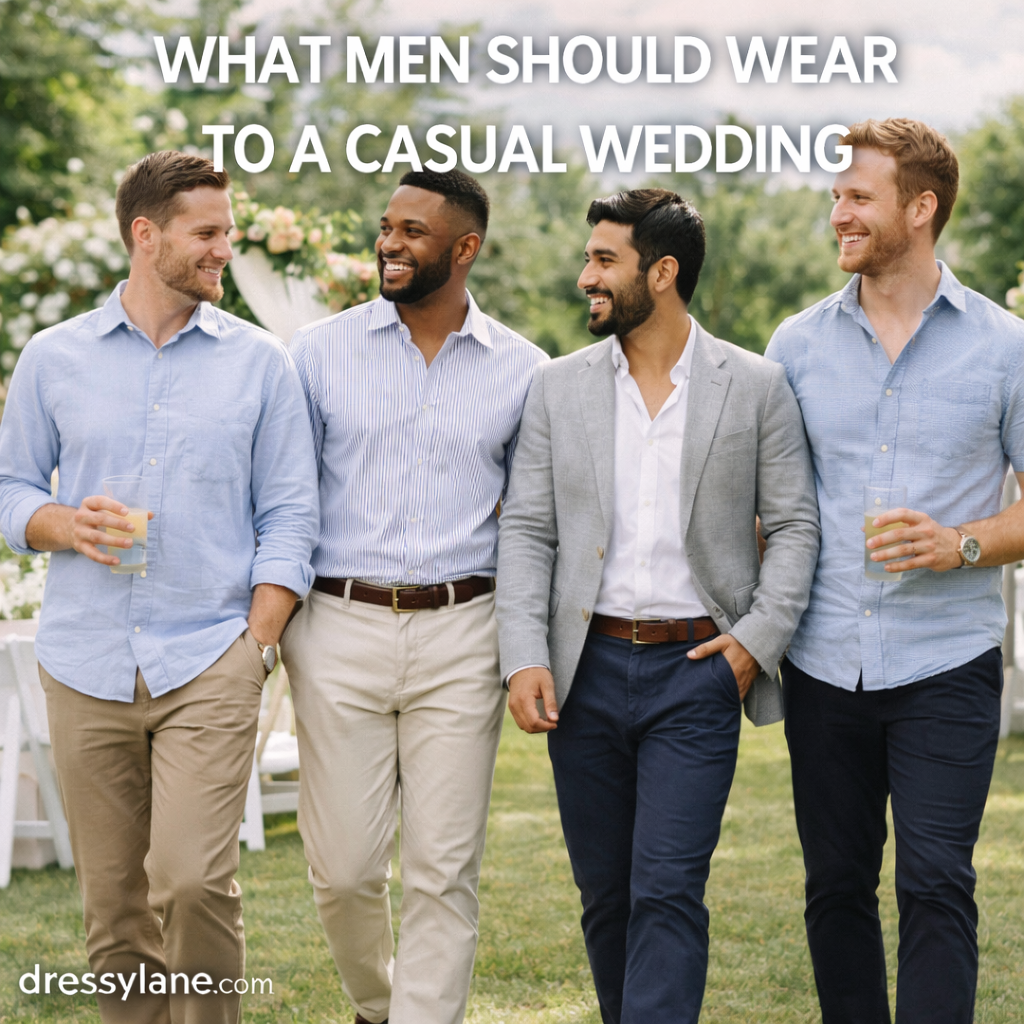
A blazer with tailored dress trousers can also work for a more relaxed interpretation of semi-formal, particularly at a daytime outdoor wedding. However, a matching suit is the safer choice when the invitation gives no additional guidance.
Do You Need to Wear a Tie?
A tie isn’t always mandatory for semi-formal attire, but it can make a noticeable difference.
My recommendation is to wear one to the ceremony if you’re unsure. You can always remove it during the reception if the atmosphere becomes more relaxed.
Choose a solid silk tie or a subtle pattern rather than a novelty print. A pocket square is optional, and it doesn’t need to match your tie exactly.
For footwear, stick with polished Oxfords, Derbies, monk straps, or refined leather loafers. Avoid athletic sneakers, distressed leather, and casual canvas shoes.
Let the Time and Venue Guide Your Outfit
The same dress code can look slightly different depending on where and when the wedding takes place.
Daytime and Outdoor Weddings
Lighter colors and breathable fabrics feel natural for afternoon ceremonies.
Women might choose a floral chiffon midi dress or a pastel crepe dress with block-heel sandals. Men can wear a medium-blue or light-gray suit in tropical wool.
For garden ceremonies, avoid thin stilettos that sink into grass. A two-inch block heel or dressy flat is much easier to manage on uneven ground.
Evening Weddings
Evening celebrations generally allow for deeper colors and slightly dressier fabrics.
A satin midi dress in emerald, navy, or burgundy works beautifully with metallic heels and a small evening bag.
Men can choose charcoal or navy tailoring with a crisp white shirt and darker leather shoes.
You don’t need to move into black-tie territory simply because the reception starts after sunset. A well-fitted suit or elegant cocktail-length dress is usually sufficient.
The Fabrics That Make an Outfit Look Semi-Formal
Fabric choice can determine whether an otherwise suitable outfit looks polished or too casual.
For women, crepe, chiffon, satin, and silk blends are reliable options. A dress with a proper lining and enough structure to hold its shape often looks more refined than a thin, unlined garment.
For men, lightweight wool is especially versatile. It drapes neatly, resists excessive wrinkling, and works across several seasons.
Linen can be appropriate for a warm outdoor wedding, but I’d avoid a heavily wrinkled linen suit for an indoor evening ceremony. A linen-wool blend offers a neater alternative.
What Not to Wear to a Semi-Formal Wedding
The most common mistakes happen at both ends of the dress code.
Avoid showing up in jeans, shorts, T-shirts, casual sundresses, flip-flops, or athletic sneakers unless the couple has specifically requested them.
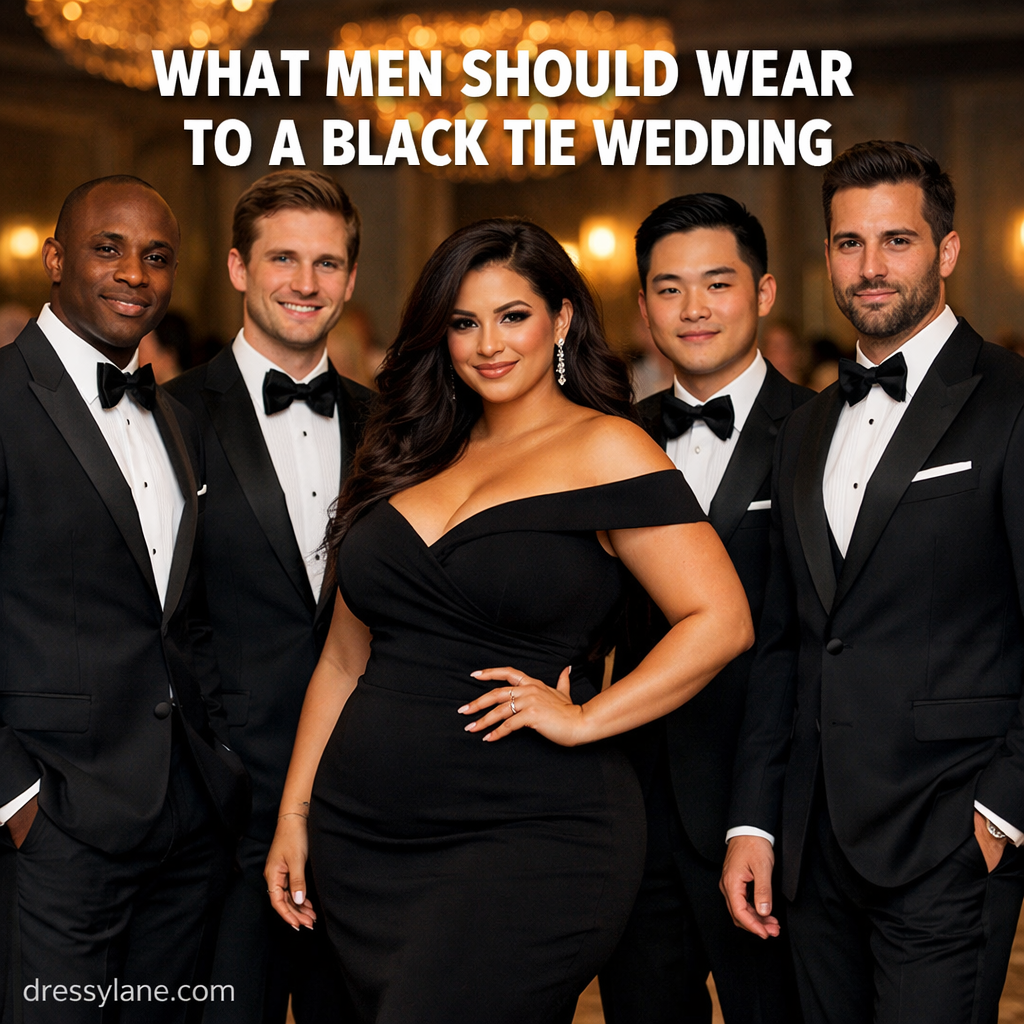
At the opposite extreme, tuxedos, dramatic ball gowns, and heavily embellished evening dresses are generally unnecessary.
Women should also avoid white, ivory, or outfits that could be mistaken for bridal attire unless the couple explicitly permits them.
One detail worth checking before leaving home is the condition of your shoes. Scuffed dress shoes or visibly worn heels can make an otherwise polished outfit look unfinished.
Is Semi-Formal the Same as Cocktail Attire?
Not exactly. The two dress codes overlap, but cocktail attire generally suggests a slightly dressier look.
For women, both can include elegant midi dresses, although cocktail attire may favor more refined fabrics and evening-oriented styling.
For men, a dark suit and tie is a dependable cocktail choice, while semi-formal can allow a little more flexibility with lighter suits or tailored separates.
Dressy casual is usually a step below semi-formal.
If an invitation specifically says semi-formal, follow that wording rather than assuming the couple intended a different dress code.
Final Thoughts
For a semi-formal wedding, the simplest starting point is an elegant midi dress, dressy jumpsuit, or well-tailored suit.
Choose fabrics that hold their shape, shoes that suit the venue, and accessories that complement rather than overwhelm the outfit.
When you’re deciding between two options, I’d generally choose the slightly dressier one, provided it doesn’t cross into formal or black-tie territory. It’s much easier to remove a tie or simplify your accessories than to make an overly casual outfit look wedding-ready once you’ve arrived.