A beach wedding might look relaxed in photos, but getting dressed for one takes a little planning. Sand makes certain shoes impossible, ocean breezes can turn a lightweight dress into a wardrobe problem, and an afternoon ceremony can feel very different from a sunset reception.
The goal is to look appropriately dressed for the occasion without spending the entire event adjusting your outfit or overheating.
Whether the invitation calls for beach casual, semi-formal, or formal attire, here’s how to put together an outfit that works for both the wedding and the setting.
Start With the Dress Code, Not the Beach
The biggest mistake guests make is assuming that a beach wedding automatically means casual clothing.
A ceremony at a beachfront resort might require cocktail attire, while a small gathering directly on the sand could call for something much more relaxed.
Here’s how to interpret common dress codes:
- Beach casual: Sundresses, relaxed midi dresses, linen shirts, and tailored chinos.
- Semi-formal: Dressier midi or maxi dresses, lightweight suits, and polished separates.
- Tropical formal: Elegant gowns or refined cocktail dresses, tailored suits, and dressier accessories in fabrics suited to warm weather.
- Beach cocktail: Elevated midi dresses, dressy jumpsuits, and lightweight suits.
- Formal: Floor-length dresses or formal suits, with the exact level of formality guided by the invitation.
If no dress code is listed, a polished midi dress or lightweight suit is generally a sensible starting point. Check the venue, too. A ceremony on open sand calls for different footwear than a reception on a paved oceanfront terrace.
What Women Should Wear to a Beach Wedding
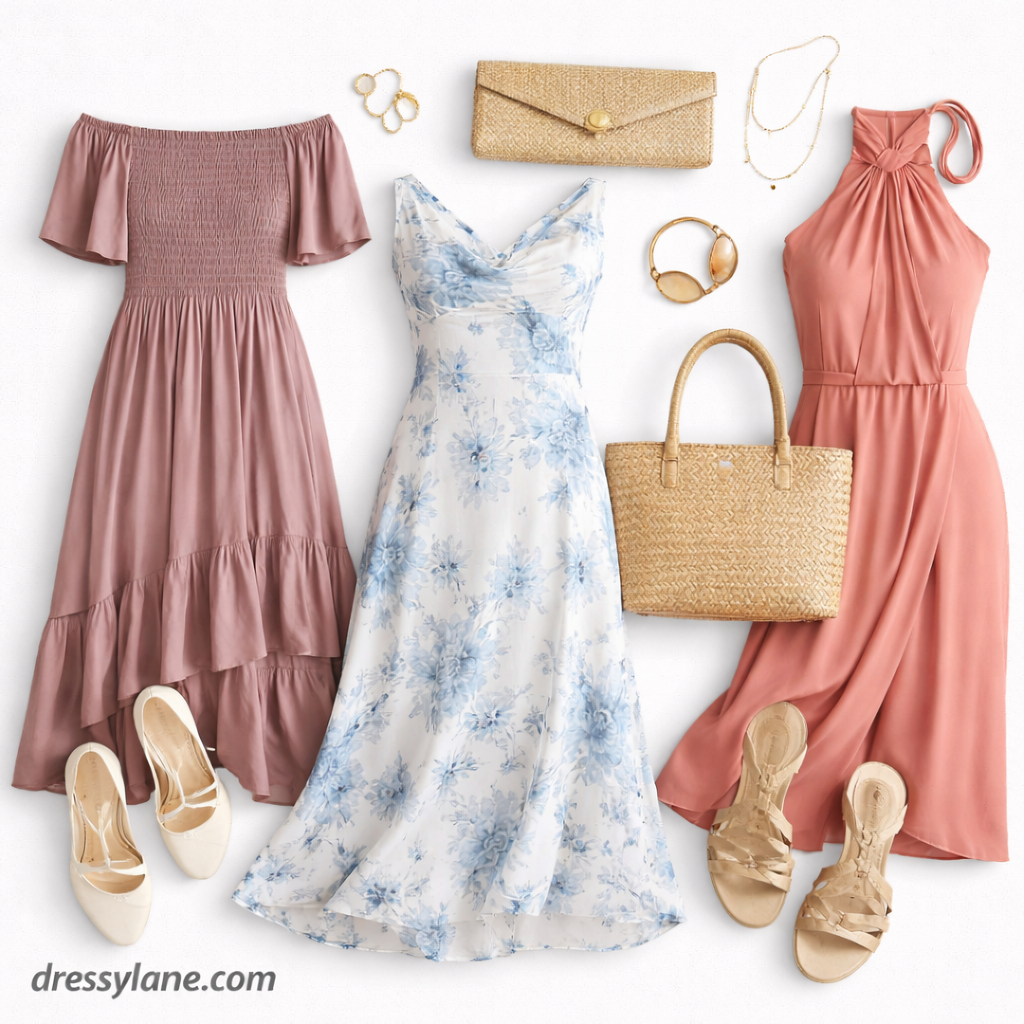
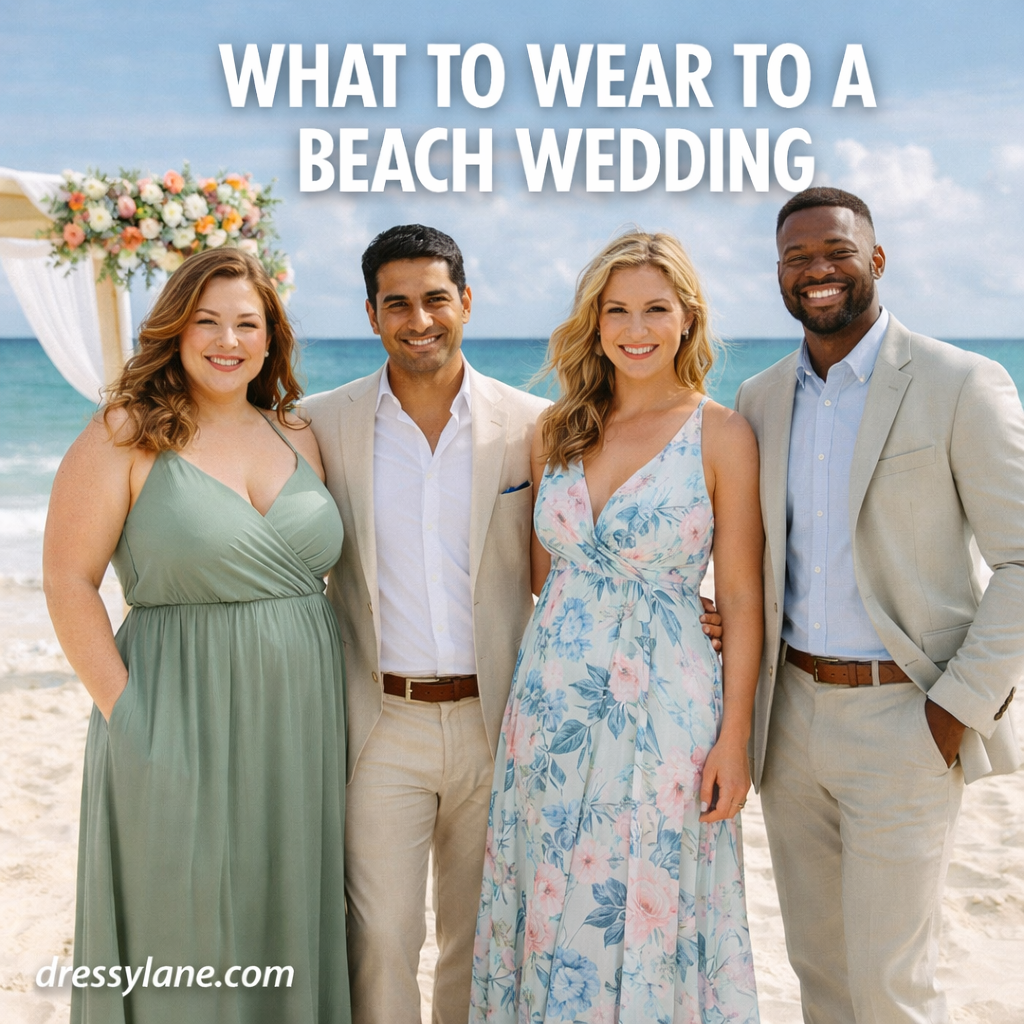
For most beach weddings, I’d choose a flowing midi dress over a floor-length maxi. It’s easier to walk in, less likely to drag through damp sand, and still looks elegant enough for a semi-formal celebration.
A calf-length wrap dress in sage green, a soft blue pleated midi, or a floral A-line dress with a defined waist are all practical options.
For a more formal ceremony, a floor-length chiffon gown or a fluid silk dress can work beautifully. Just make sure the hem clears the ground when you’re wearing your actual shoes.
Fabrics That Work in the Heat
Fabric makes a noticeable difference when you’re sitting through a ceremony in direct sunlight.
Look for:
- Chiffon: Lightweight and flowing, particularly good for maxi dresses.
- Cotton voile: Airy and comfortable for daytime or casual weddings.
- Silk crepe: An elegant option that drapes without excessive volume.
- Linen blends: Great for relaxed dresses and tailored separates, especially when blended to reduce wrinkling.
Lightweight satin can also look beautiful, but I’d avoid thin, clingy polyester satin for a hot afternoon ceremony. It can feel uncomfortable against the skin and may show perspiration.
Check the lining before buying a dress. A breathable outer fabric won’t help much if it’s lined with thick, non-breathable material.
Colors and Prints
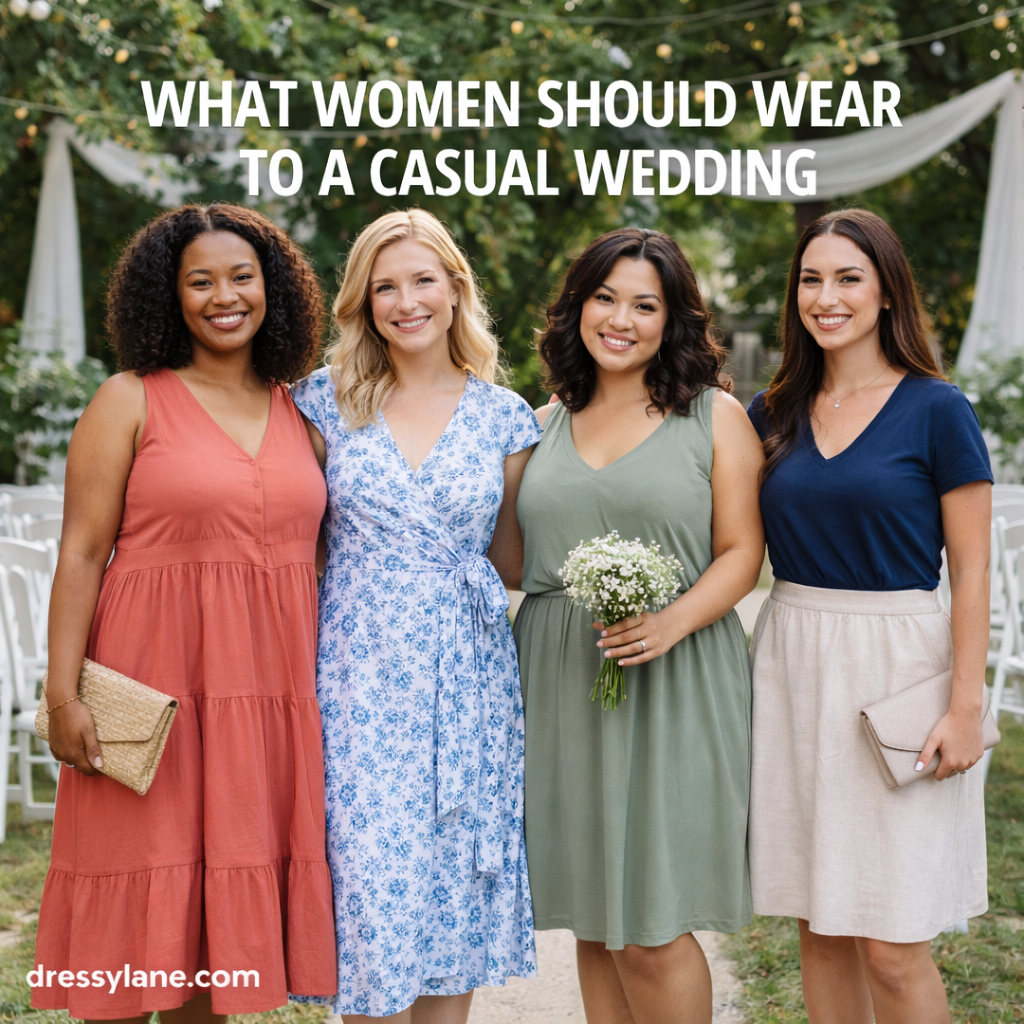
Soft blues, sage, dusty rose, terracotta, and muted florals suit a coastal setting without looking overly themed.
You don’t have to wear pastels, though. Navy, emerald, and deeper jewel tones can look particularly striking at sunset or evening weddings.
Avoid white, ivory, and very pale champagne unless the couple specifically requests them. These shades can photograph surprisingly close to bridal white in bright sunlight.
For prints, smaller florals and understated botanical patterns are easy choices. Save oversized tropical prints for weddings with a clearly relaxed or tropical dress code.
The Shoes I’d Actually Recommend for Sand
This is where I’d prioritize practicality over appearance.
Even a low, narrow heel can sink into soft sand, making the walk to your seat awkward. A beautiful pair of stilettos isn’t worth carrying across the beach for half the ceremony.
For women, dressy flat sandals are the most reliable option. Metallic leather sandals with slim straps can look just as polished as heels when paired with an elegant midi dress.
Wedges and block heels are reasonable alternatives if the ceremony takes place on firm ground or a walkway, but they’re less dependable on loose sand.
For men, loafers or lightweight leather shoes work well when there’s a solid walking surface. If the ceremony is directly on the beach, check whether dress sandals or barefoot attire are acceptable.
One practical tip: bring a small bag for your shoes if guests are expected to walk barefoot to the ceremony. You won’t want to carry sandy footwear in your hands during the reception.
What Men Should Wear to a Beach Wedding
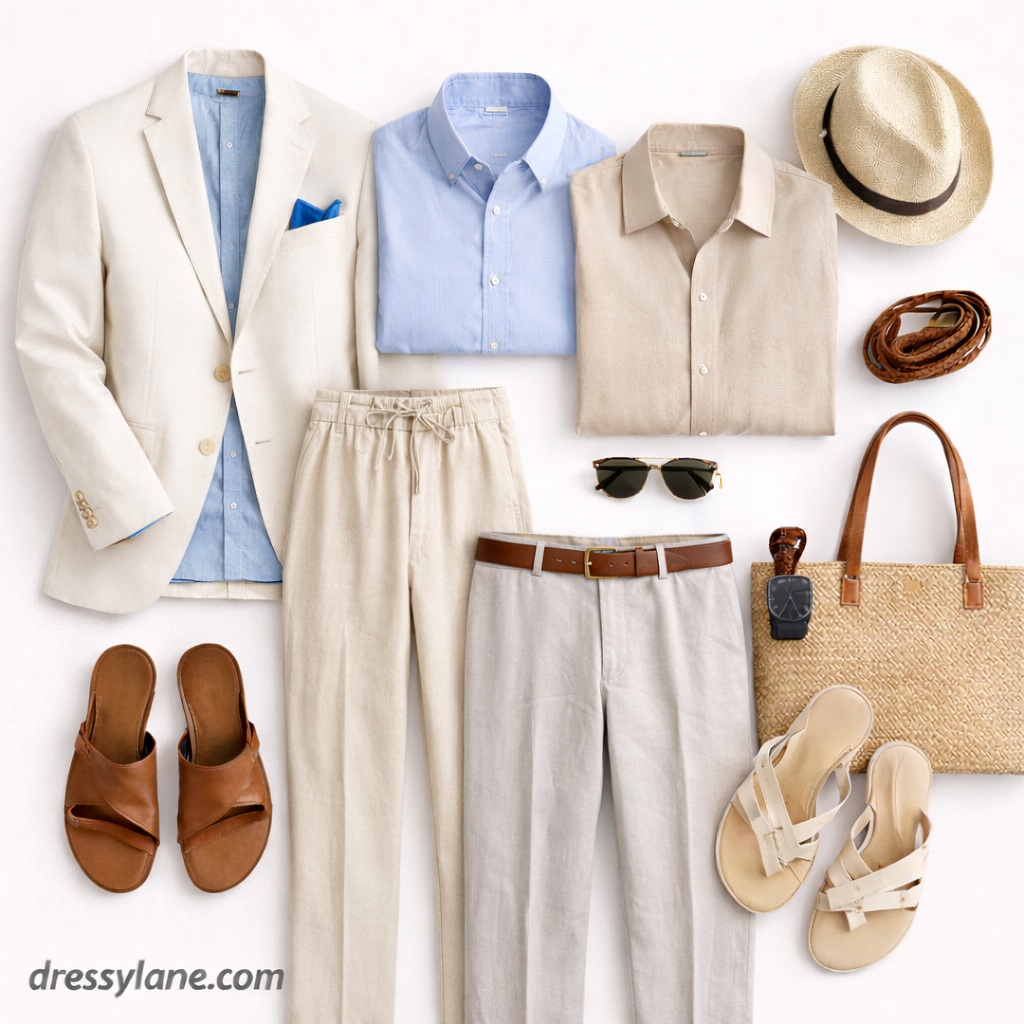
A lightweight suit is one of the easiest ways to look appropriately dressed without feeling overdressed.
For a semi-formal wedding, consider a sand-colored linen-blend suit with a pale blue cotton shirt and brown loafers. It’s polished without looking like traditional office attire.
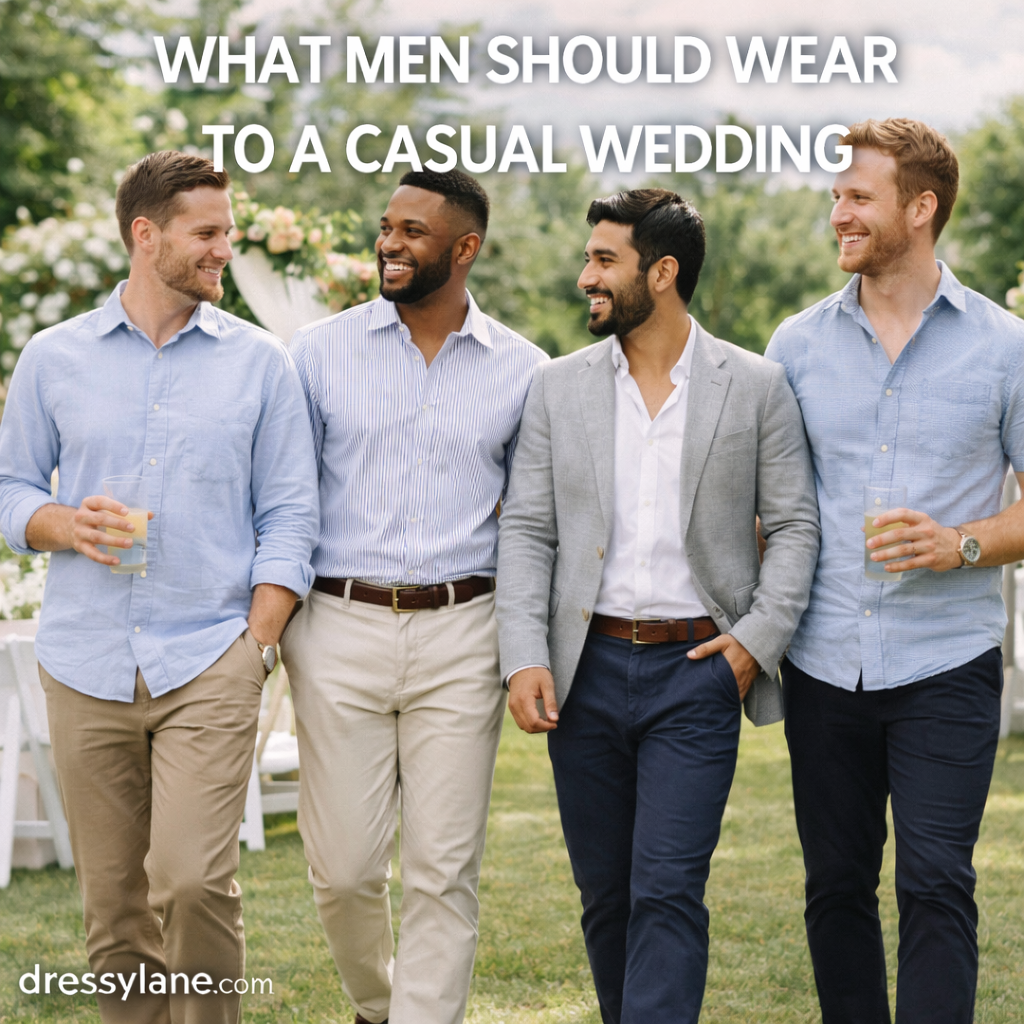
For a more relaxed ceremony, tailored stone chinos and a long-sleeved linen shirt with the sleeves neatly rolled can work well.
The important detail is fit. Linen naturally wrinkles, but a properly fitted shirt and trousers will still look intentional.
Choosing the Right Fabrics and Colors
Linen and lightweight cotton are particularly useful for warm-weather weddings.
An unstructured blazer is worth considering because it provides a tailored appearance without the stiffness of a heavily padded jacket.
Good color combinations include:
- Beige suit with a white or pale blue shirt.
- Light gray trousers with a navy linen blazer.
- Stone chinos with a muted sage button-down.
- Soft blue suit with a white dress shirt.
A tie is often optional at semi-formal beach weddings, but don’t assume that applies to formal events. Follow the invitation.
I’d also skip shorts unless the couple explicitly specifies them. Even expensive tailored shorts can look too casual at a wedding where everyone else is wearing trousers.
Outfit Ideas Based on the Wedding’s Formality
If you’re still deciding what to wear, these combinations offer a useful starting point.
| Dress code | Women’s outfit | Men’s outfit |
|---|---|---|
| Beach casual | Cotton midi dress and flat sandals | Linen shirt, chinos, and loafers |
| Semi-formal | Chiffon midi dress and metallic sandals | Linen-blend suit and dress shirt |
| Beach cocktail | Elegant wrap dress or dressy jumpsuit | Lightweight suit with polished shoes |
| Formal | Floor-length gown and refined accessories | Formal suit, dress shirt, and appropriate tie |
Remember that the ceremony and reception may have different surfaces. If the ceremony is on sand but dinner is indoors, choose an outfit that works for both, or bring a change of shoes.
Don’t Forget the Wind, Sun, and Evening Temperature
Beach wedding outfits need to survive more than a few photographs.
A loose wrap dress can blow open in a strong breeze, while an unlined skirt might become more revealing in direct sunlight. A discreet safety pin, secure fastening, or lightweight slip can prevent an uncomfortable surprise.
For accessories, choose pieces that stay put. Small hoops, studs, and simple necklaces are easier to manage than long earrings or scarves that constantly blow around.
A small crossbody bag or clutch with a secure closure is more practical than an open tote.
For daytime ceremonies, apply sunscreen before getting dressed and allow it to absorb to avoid transferring it onto delicate fabrics.
And don’t underestimate the temperature after sunset. A lightweight shawl, fine-knit cardigan, or unstructured blazer can make an outdoor reception much more comfortable.
Common Beach Wedding Outfit Mistakes
A few choices are worth avoiding, even when they look good in the mirror.
- Dragging hems: Long dresses can collect sand and moisture, especially near the shoreline.
- Heavy fabrics: Thick polyester, velvet, and traditional heavyweight suiting can become uncomfortable in direct sun.
- Unstable footwear: Stilettos and narrow heels are difficult to walk in on sand.
- Overly casual clothing: Flip-flops, denim shorts, and beach cover-ups aren’t appropriate unless the invitation specifically allows them.
- Ignoring the wind: Loose necklines, unsecured wrap dresses, and wide-brimmed hats can become difficult to manage.
Try your complete outfit on before the wedding, including shoes and accessories. Walk around, sit down, and check how the fabric moves. It’s a simple way to catch problems before you’re standing on a windy beach with nowhere to change.
Final Thoughts
The easiest beach wedding outfit is one that respects the dress code while accounting for the actual setting.
For women, a well-fitting midi dress in a breathable fabric paired with dressy flat sandals is a versatile choice for many beach ceremonies. For men, a lightweight suit or tailored trousers with a linen shirt offers a similarly polished approach.
Before making your final decision, check whether the ceremony is directly on the sand, what time it begins, and whether the reception moves indoors.
Those three details will tell you more about what to wear than the word “beach” on the invitation ever could.