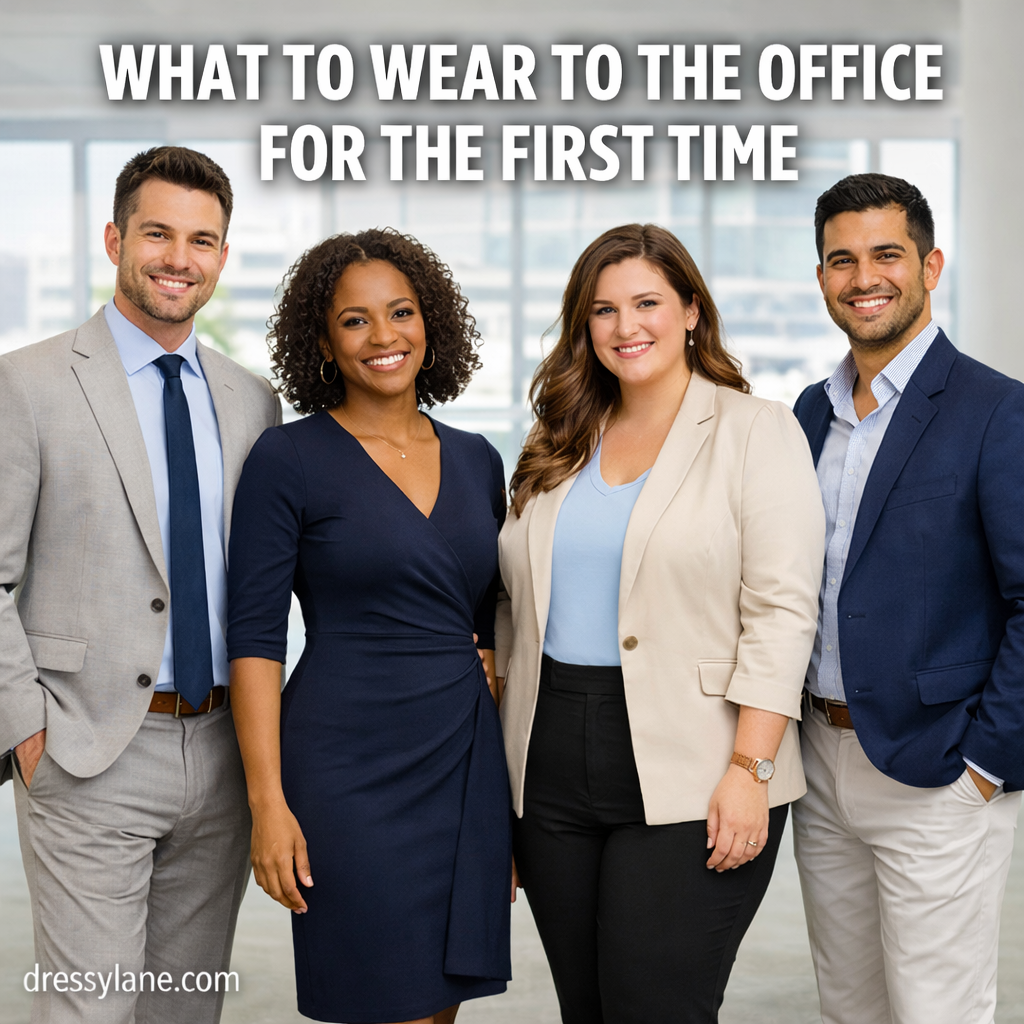
Your first day at a new office usually involves more than sitting at a desk. You might meet your manager, tour the building, attend orientation, and spend time getting to know your coworkers. Your outfit needs to feel appropriate for all of it.
The tricky part is that you may not know how everyone dresses yet. A suit could feel excessive at a relaxed technology company, while jeans might be too casual for a traditional financial office.
For most workplaces, well-fitting trousers, a pressed shirt or blouse, and a versatile jacket are a dependable starting point. You can adjust the formality once you’ve seen what people actually wear.
Find Out the Dress Code Before Your First Day
If your offer letter or onboarding materials don’t mention clothing, it’s perfectly reasonable to ask your recruiter or HR contact.
A simple question such as “Is there a dress code I should follow for my first day?” can save you from guessing.
You can also look at employee photographs on the company’s website or LinkedIn page, although promotional photos don’t always reflect everyday office attire.
Generally, office dress codes fall into three categories:
- Business formal: Matching suits, dress shirts, tailored dresses, and polished dress shoes.
- Business casual: Chinos, tailored trousers, blouses, button-down shirts, and optional blazers.
- Smart casual: Dark jeans where permitted, knitwear, relaxed jackets, and clean sneakers.
I’d recommend starting slightly more polished than the average employee if you’re uncertain, but not dramatically more formal.
For example, chinos and an Oxford shirt make more sense at a casual startup than arriving in a three-piece suit.
What Women Should Wear to the Office for the First Time
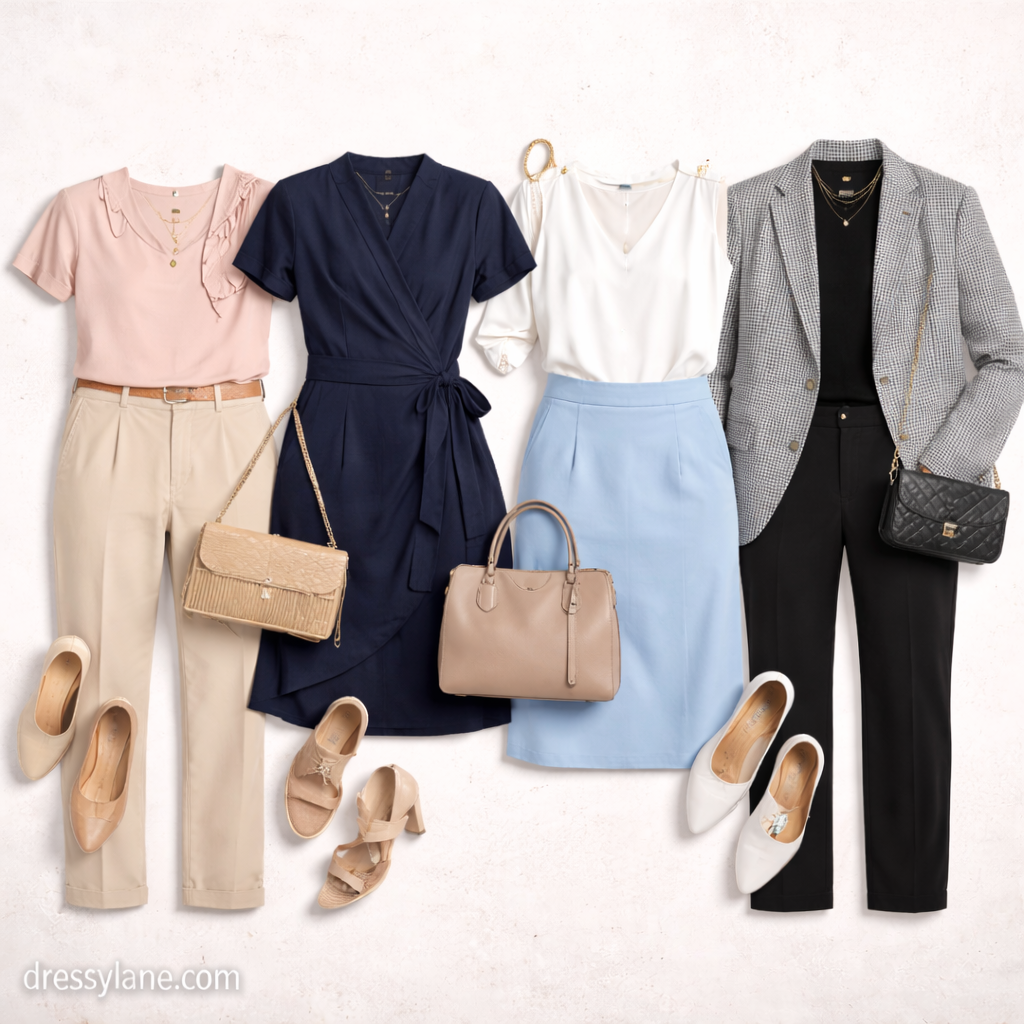
For women, tailored trousers and a simple blouse offer an easy starting point because they can be dressed up or down.
Try navy straight-leg trousers with a cream cotton-poplin blouse, a lightweight blazer, and black leather loafers.
If the office turns out to be relaxed, you can remove the blazer. If it’s more formal, the complete outfit still works.
Other first-day combinations include:
- Charcoal trousers with a pale blue blouse and low block heels.
- A knee-length or midi sheath dress with a structured jacket.
- A midi skirt with a fine-gauge knit and pointed-toe flats.
- Black tailored trousers with a simple top and single-breasted blazer.
Choose fabrics that maintain their shape throughout the day. Wool-blend trousers, substantial cotton, and matte crepe are practical options.
Don’t overlook comfort
Your first day may involve walking around the building, standing during introductions, or sitting through several hours of onboarding.
I’d skip brand-new heels, even if they look perfect with your outfit. Leather loafers, comfortable flats, or low block heels you’ve already worn are more dependable.
Try sitting down in your complete outfit before leaving home. Check whether your skirt rides up, your blouse gaps between buttons, or your trousers feel restrictive.
A structured tote that fits your laptop, notebook, and personal essentials is useful, but avoid carrying an unnecessarily heavy bag.
What Men Should Wear to the Office for the First Time
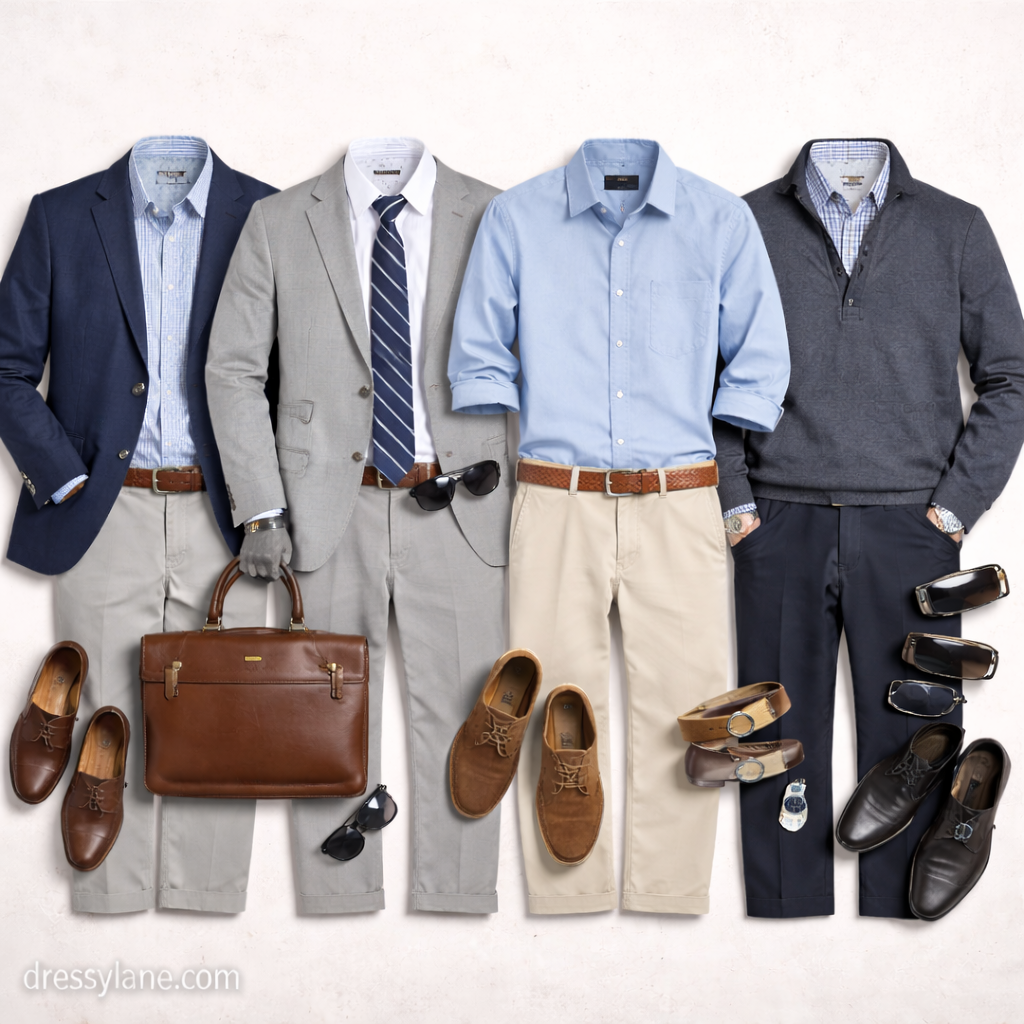
Men can build a versatile first-day outfit around chinos or dress trousers and a button-down shirt.
For a business-casual office, try charcoal chinos, a pale blue Oxford shirt, brown leather loafers, and a navy blazer.
It’s a combination that looks professional without requiring a matching suit.
Other options include:
- Navy trousers with a white dress shirt and black Derby shoes.
- Gray chinos with a fine-gauge sweater layered over a collared shirt.
- A charcoal suit with a white shirt for a formal corporate office.
- Dark jeans with a button-down and clean leather sneakers if the company explicitly allows casual clothing.
Pay attention to trouser length and shirt fit. Your trousers should fall neatly over your shoes, and your shirt shouldn’t pull across the chest when seated.
I’d avoid buying an entirely new suit unless the dress code requires one. A well-fitting shirt, trousers, and blazer can cover many first-day situations.
Finish with a simple belt and clean shoes.
Dress for What You’ll Actually Be Doing
Your first-day schedule can influence what you should wear.
If you’re attending orientation in a conference room, business-casual clothing may be perfectly suitable.
If your role involves meeting clients or executives, a matching suit or more structured outfit could be appropriate.
For jobs that include warehouse tours, laboratories, or other specialized environments, ask whether closed-toe shoes or protective equipment are required.
Don’t assume that ordinary office shoes will be suitable for every part of the workplace.
If you have a long commute, consider carrying your blazer rather than wearing it in the car. This can help prevent creases across the back and elbows.
What to Wear in Hot or Cold Weather
Your first-day outfit should account for both the weather outside and the temperature inside the office.
During summer, lightweight cotton shirts, tropical wool trousers, and linen-blend separates can help you stay comfortable.
I’d avoid wearing an entirely linen outfit on your first day if you have a long commute. Linen wrinkles easily, and you may arrive looking considerably less polished than when you left home.
In colder weather, layer a fine-gauge merino sweater under a blazer or wear a tailored wool coat over your outfit.
Choose layers that are easy to remove. Office air conditioning can be surprisingly cold even during warm months.
What I’d Avoid Wearing on Day One
Until you understand the company’s culture, it’s sensible to hold off on clothing that might be too casual for the environment.
That includes distressed jeans, graphic T-shirts, athletic shorts, and worn-out sneakers.
However, clean sneakers or dark jeans may be perfectly acceptable if the company has confirmed a casual dress code.
I’d also avoid an outfit that requires constant adjusting. A shirt that won’t stay tucked in or trousers that feel tight when seated can become frustrating during a long orientation session.
Keep fragrance light or skip it entirely, especially if you’ll be sharing a small office or conference room.
You don’t need expensive clothing. Proper fit, clean shoes, and a pressed shirt often make a greater difference than designer labels.
Prepare Your Outfit the Night Before
The evening before your first day, lay out everything you plan to wear, including shoes, socks, accessories, and outerwear.
Check for wrinkles, loose buttons, stains, and visible lint.
Try the complete outfit on rather than assuming individual pieces will work together.
Make sure your bag is ready with any documents requested by HR, your identification, notebook, and other essentials.
One practical tip: check your route and parking arrangements before choosing your shoes. A ten-minute walk from a parking garage can make uncomfortable footwear a poor choice.
Having everything prepared means one less decision to make on an already busy morning.
Adjust Your Style After the First Week
You don’t need to figure out your entire office wardrobe on day one.
Once you’ve spent several days at work, you’ll have a better understanding of how colleagues dress for regular office days, meetings, and presentations.
If everyone wears jeans and sneakers, you may be able to introduce more relaxed pieces. If jackets and dress shoes are standard, you can gradually build a wardrobe around those expectations.
Pay attention to what people wear for different responsibilities rather than copying one coworker’s style.
The goal is to develop a wardrobe that suits your job while still feeling like your own.
Final Thoughts
Knowing what to wear to the office for the first time is mostly about preparing for an environment you haven’t experienced yet.
Research the dress code, choose comfortable and well-fitting clothing, and start with versatile pieces that can handle different situations.
You don’t need a perfect outfit or an entirely new wardrobe. A pressed shirt, tailored trousers, comfortable shoes, and an appropriate jacket can take you through most first-day office situations.
Once you’ve settled in, you’ll have plenty of time to adjust your style to the workplace and make it your own.