Getting dressed for a social event sounds simple until the invitation gives you almost no useful information.
“Come by around seven.”
“Casual birthday thing.”
“We’re having people over.”
“Drinks afterward.”
Now you have to figure out whether jeans are fine, whether everyone else will be dressed up, whether you need heels or a jacket, and how to avoid looking like you tried much harder—or much less—than everyone else.
Fortunately, most social-event dressing becomes easier when you stop searching for one perfect outfit and instead consider a few practical factors: the occasion, venue, crowd, weather, length of the event, and expected level of formality.
This guide covers everything from casual backyard gatherings and birthday parties to dressier celebrations, unfamiliar crowds, last-minute invitations, long events, changing plans, and those occasions when you simply want to be comfortable without looking underdressed.
Understanding What Makes an Outfit Appropriate for a Social Event
Before choosing individual clothes, figure out what kind of event you are actually dressing for.
Consider five things:
- Occasion: birthday, dinner, house party, anniversary, holiday gathering, cocktail party, barbecue
- Venue: someone’s home, restaurant, backyard, hotel, rooftop, bar, event space
- Time: afternoon events generally tolerate more casual clothing than evening events
- Crowd: relaxed, fashionable, professional, traditional, mixed
- Activity: sitting for dinner, standing and mingling, dancing, walking outdoors, or moving between locations
An outfit that works perfectly for an afternoon backyard birthday may feel too casual at an evening restaurant celebration.
Similarly, a cocktail dress or tailored suit might look unnecessarily formal at a neighborhood barbecue.
If you’re trying to judge the overall level of dressiness, our guide to what makes an outfit appropriate for a party goes deeper into these signals.
A Simple Rule When the Dress Code Is Unclear
Aim for the polished middle.
For women, that might mean:
- Dark straight-leg jeans + a silk or satin blouse + loafers
- Tailored trousers + a fitted knit top + simple jewelry
- A midi dress + flats or low heels
- A skirt + fine-knit sweater + ankle boots
For men:
- Dark jeans or chinos + an Oxford shirt
- Tailored trousers + a polo or knit shirt
- Chinos + button-down shirt + loafers
- Dark trousers + crewneck sweater + leather shoes
These combinations are adaptable because they sit between extremely casual and obviously formal.
How to Dress for Casual Social Events
Casual does not necessarily mean whatever you happened to wear around the house.
For a casual birthday, friend’s gathering, barbecue, game night, or informal dinner, look for clothes that feel relaxed but intentional.
Casual Party Outfits for Women
Try combinations such as:
- Straight-leg jeans, fitted tee, cardigan, and leather sneakers
- Wide-leg trousers, tank top, and flat sandals
- Midi skirt, simple knit top, and loafers
- Casual cotton or linen dress with flats
- Dark denim, blouse, and ankle boots
Casual Party Outfits for Men
Reliable options include:
- Chinos, polo shirt, and clean sneakers
- Dark jeans, Oxford shirt, and loafers
- Casual trousers, knit polo, and leather sneakers
- Jeans, crewneck sweater, and boots
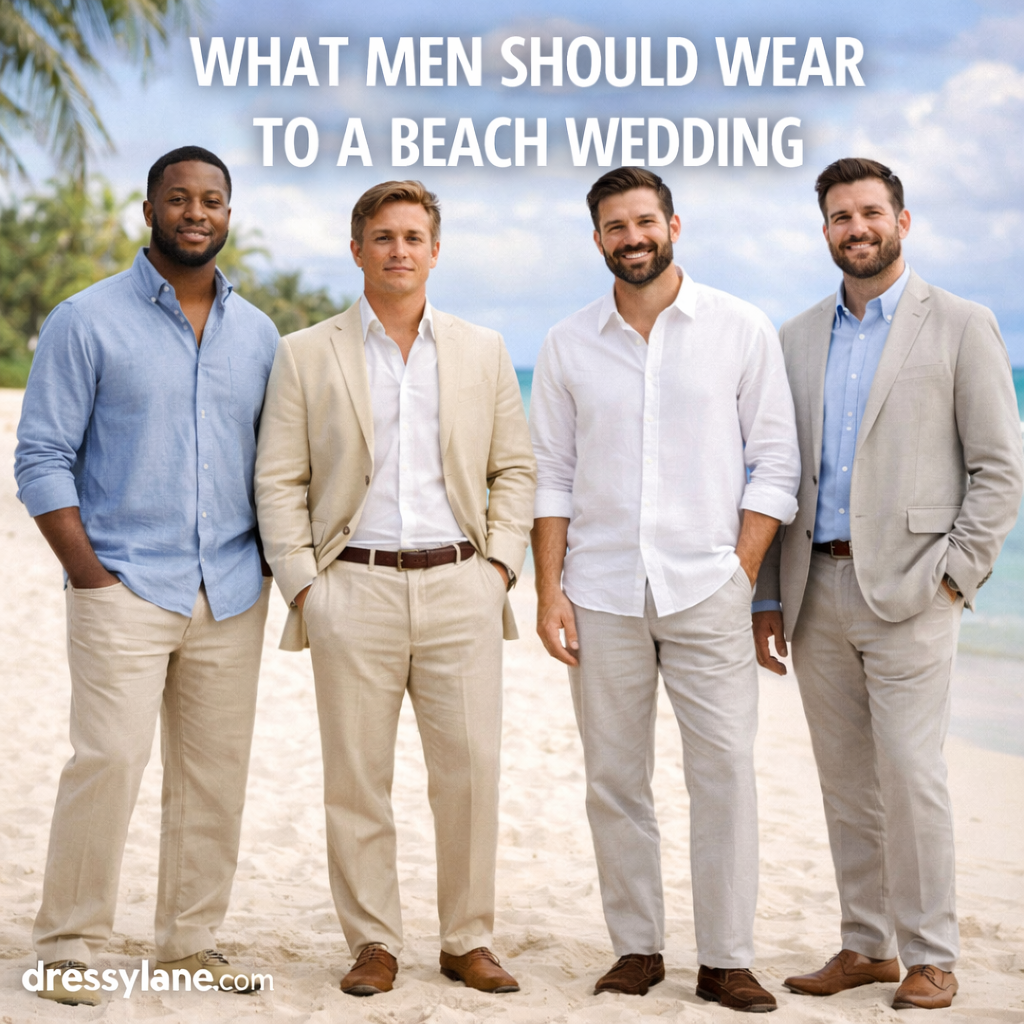
- Linen trousers and a short-sleeve button-down in warm weather
The difference between everyday casual and social-event casual is often small. Cleaner shoes, better-fitting trousers, a tucked shirt, or one deliberate accessory can be enough.
For more seasonal examples, see how to dress for casual social events in any season.
How to Dress for Low-Key Social Gatherings
Some gatherings are even more relaxed: watching a game at someone’s house, meeting a few friends for pizza, casual drinks, or spending an afternoon in someone’s backyard.
You don’t need to manufacture formality that isn’t there.
Instead, upgrade your normal clothes slightly.
If you normally wear leggings and a sweatshirt, consider dark jeans and a soft knit.
If you normally wear athletic shorts and a graphic tee, try chinos and a plain cotton T-shirt.
The outfit should still feel like you—just the version that knew other people were going to see you.
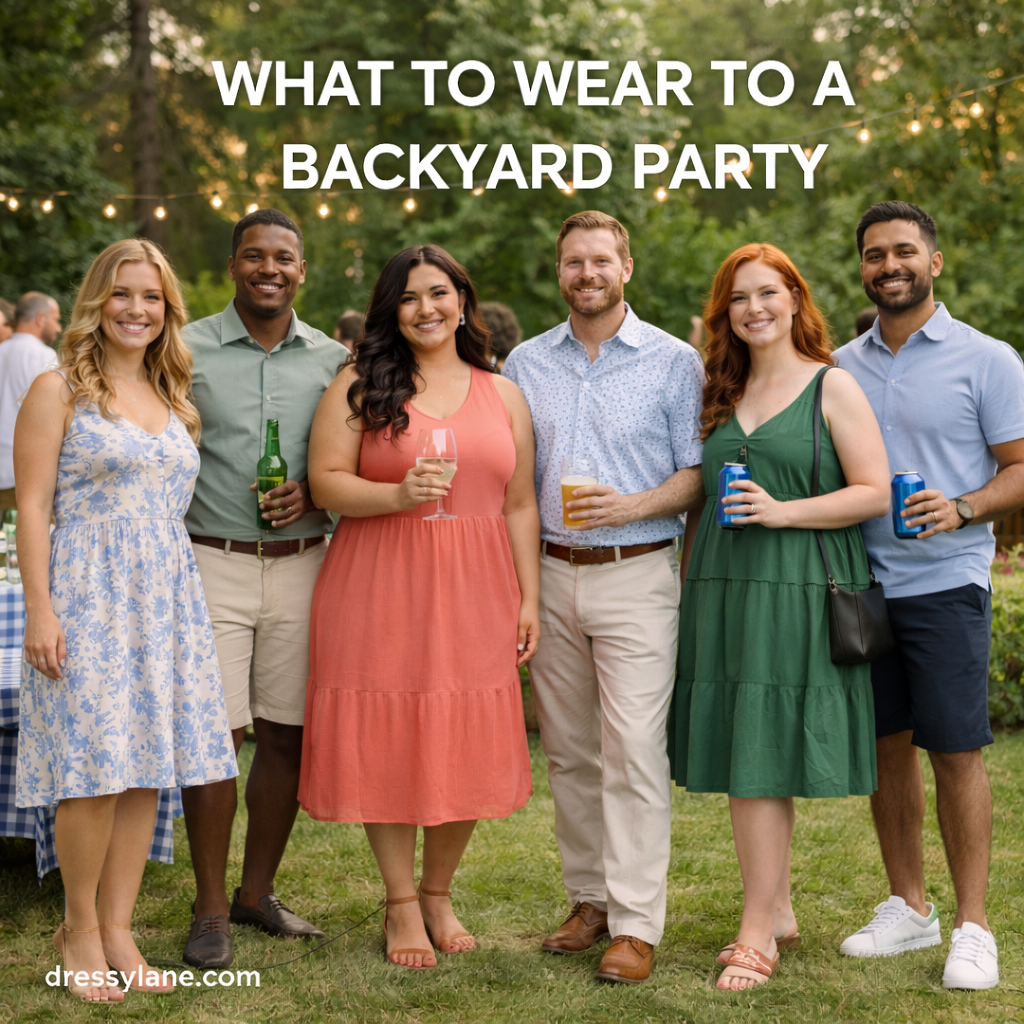
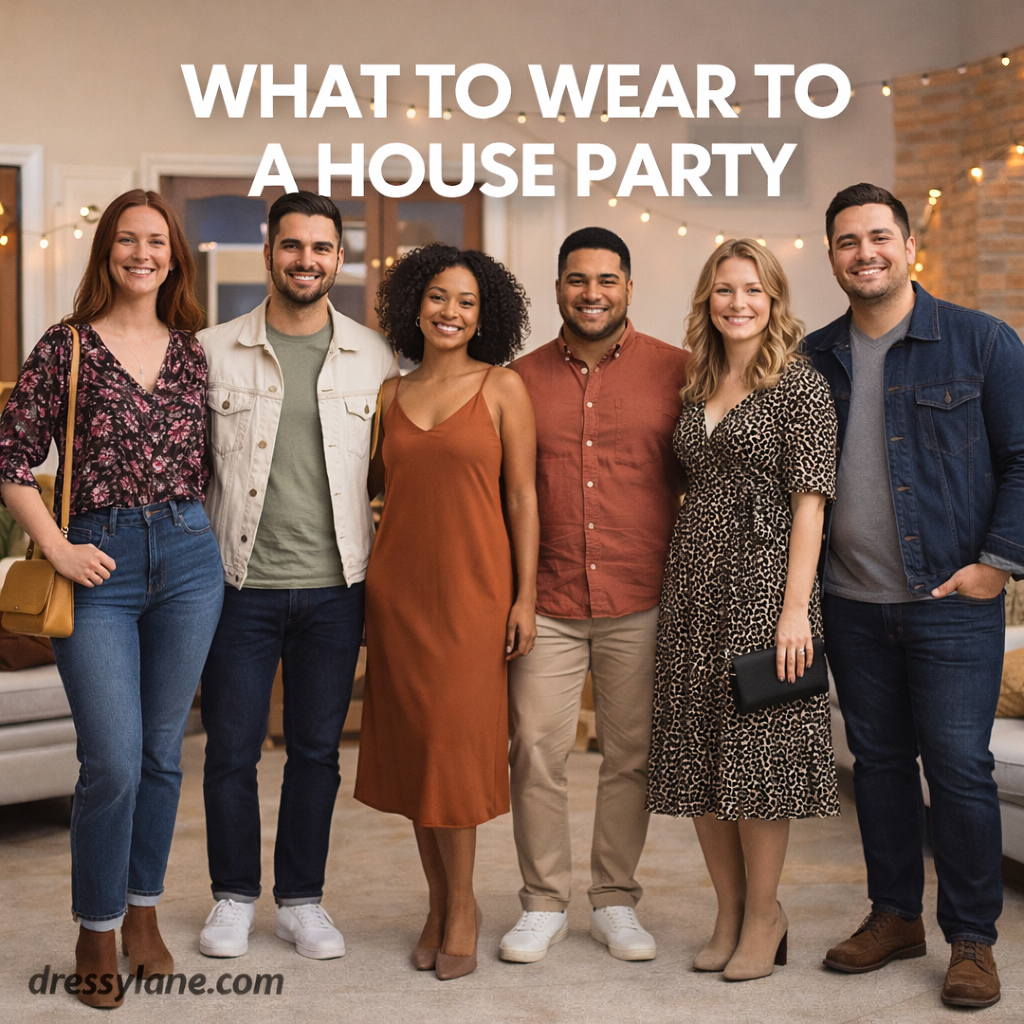
For outdoor gatherings specifically, see our guide to what to wear to a backyard party.
How to Dress for a Dressier Crowd
Sometimes the event itself sounds casual, but you know the people attending tend to dress well.
This is where smart casual becomes especially useful.
Women can consider:
- Satin blouse + trousers
- Midi dress + understated jewelry
- Dark jeans + blazer + loafers
- Skirt + fitted knit + ankle boots
Men can consider:
- Chinos + Oxford shirt + loafers
- Tailored trousers + knit polo
- Dark denim + blazer + leather shoes
- Dress trousers + open-collar button-down
Instead of jumping directly into formalwear, improve the fabric, fit, and finishing details.
Wool trousers generally look dressier than cotton joggers. A silk blouse reads differently from a jersey T-shirt. Leather loafers elevate an outfit more than running shoes.
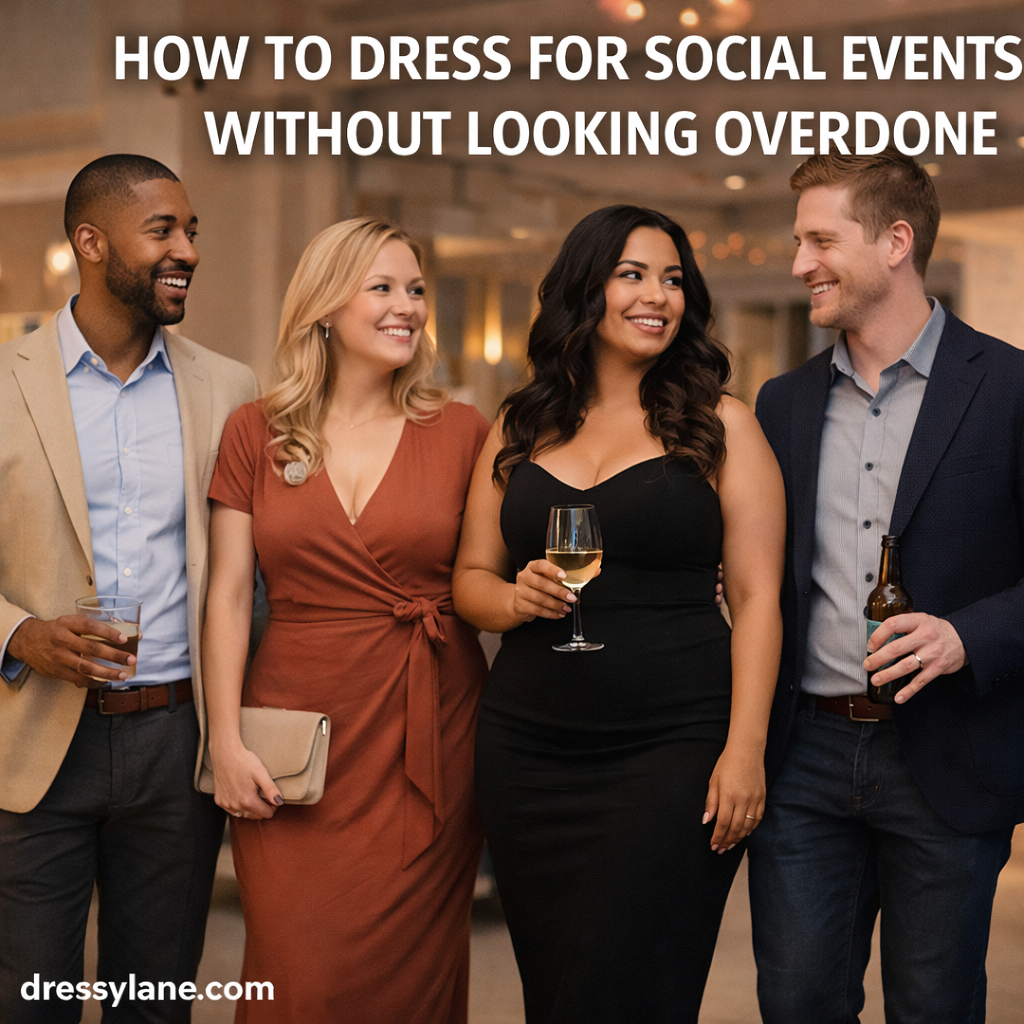
If you’re worried about going too far in the opposite direction, read how to dress for social events without looking overdone.
How to Avoid Looking Underdressed
When you’re uncertain, add one element that can raise the formality of your outfit.
A blazer is particularly useful because you can remove it.
Other easy upgrades include:
- Leather shoes instead of athletic sneakers
- Tailored trousers instead of distressed jeans
- A blouse instead of a T-shirt
- Fine-gauge knitwear instead of a hoodie
- Structured handbag instead of a casual tote
- Simple jewelry
- Belt that coordinates with the outfit
You don’t necessarily need an entirely dressier outfit.
Often, changing one or two pieces is enough.
How to Dress for Social Events Without Looking Overdone
Overdressing can feel just as awkward as underdressing.
The easiest solution is to have one focal point rather than several competing ones.
If you’re wearing a statement dress, keep your jewelry and shoes simpler.
If you’re wearing bold jewelry, consider a quieter neckline.
If you’re wearing a blazer and tailored trousers to a casual gathering, an open collar or simple knit underneath can keep the outfit relaxed.
The goal isn’t to remove personality. It’s to give the outfit somewhere to rest visually.
What to Wear to Birthday Parties
Birthday parties vary enormously.
A child’s afternoon birthday, dinner at an upscale restaurant, backyard barbecue, and 30th-birthday cocktail party obviously shouldn’t produce identical outfits.
Use the venue as your strongest clue.
For casual daytime birthdays, denim, chinos, casual dresses, skirts, polos, and clean sneakers can work well.
For restaurant or evening birthdays, move toward trousers, dresses, blouses, collared shirts, loafers, boots, or dressier shoes.
Our dedicated what to wear to a birthday party guide covers these variations in more detail.
How to Dress Comfortably for Long Parties
A great party outfit stops being great if you want to take it off after 45 minutes.
For weddings, milestone birthdays, holiday gatherings, festivals, reunions, and other events that may last several hours, evaluate your outfit for hour four, not just the first photograph.
Choose fabrics that move and breathe, including:
- Cotton
- Linen
- Merino wool
- Tencel or lyocell
- Viscose blends
- Stretch wool
- Knits with a small amount of elastane
Be careful with stiff waistbands, scratchy sequins, tight collars, restrictive jackets, and shoes you haven’t worn before.
A Practical Styling Test
Before committing to an outfit, sit in it for ten minutes.
Then walk, bend down, raise your arms, and sit again.
This catches surprisingly common problems: waistbands that dig in, shirts that constantly untuck, skirts that ride up, jackets that restrict movement, and shoes that pinch once your feet begin to swell.
That’s one of the most useful habits I’ve found for event dressing: test the outfit for what you’ll actually be doing, not just how it looks standing in front of a mirror.
How to Dress for an All-Day Social Event
Events that run from afternoon into evening require more flexibility.
Layering is your friend.
A woman might wear:
Midi dress + light cardigan or blazer + comfortable flats
A man might wear:
Chinos + button-down shirt + lightweight jacket + loafers
Choose pieces that still work when a layer comes off.
Also consider bringing:
- Light jacket
- Sunglasses
- Compact umbrella
- Small bag
- Comfortable backup shoes when appropriate
Your afternoon outfit should be able to transition into evening without requiring a complete wardrobe change.
What to Wear When Comfort Is the Priority
Comfort doesn’t require sweatpants.
The trick is choosing comfortable versions of polished garments.
Instead of rigid trousers, try stretch wool or ponte pants.
Instead of a bodycon dress, choose a knit or wrap-style midi dress.
Instead of a stiff dress shirt, choose washed Oxford cotton or a soft knit polo.
Instead of narrow formal shoes, choose loafers, ballet flats, low block heels, leather sneakers, or supportive boots.
Pay particular attention to waistbands, armholes, shoe width, and temperature.
Those are often what determine whether an outfit remains comfortable after several hours.
How to Dress for a Party Without Heels
Heels are optional for most social occasions.
Women can build polished outfits around:
- Ballet flats
- Pointed flats
- Loafers
- Slingback flats
- Low block heels
- Dressy flat sandals
- Ankle boots
- Minimal leather sneakers for casual events
A pointed toe, polished leather finish, metallic detail, or streamlined silhouette can make a flat shoe feel noticeably dressier.
The hem matters too. Full-length trousers that were altered around heels may drag when worn with flats, while ankle-length trousers pair naturally with loafers or ballet flats.
How to Dress for a Party Without a Suit
Men rarely need a full suit unless the invitation, venue, or occasion calls for one.
A strong alternative is:
Tailored trousers + collared shirt + leather shoes
You can also try:
- Chinos + knit polo + loafers
- Dark trousers + Oxford shirt + blazer
- Dark jeans + button-down + Chelsea boots
- Wool trousers + crewneck sweater + loafers
Texture helps an outfit feel intentional without making it formal. Consider merino wool, brushed cotton, linen, suede, or textured knitwear.
For more men’s outfit combinations, see what men should wear to a party.
How to Dress for Parties in Hot Weather
Hot-weather events require breathable fabrics and fewer layers.
Look for:
- Linen
- Cotton poplin
- Seersucker
- Chambray
- Lightweight Tencel
- Linen-cotton blends
Women might choose a linen midi dress, cotton skirt and tank, or wide-leg trousers with a sleeveless blouse.
Men might choose linen trousers, chinos, polos, or lightweight short-sleeve button-down shirts.
Avoid relying entirely on heavy polyester when you’ll be outdoors for hours.
Our hot-weather party dressing guide covers warm-weather outfit planning in greater detail.
How to Dress for Parties in Cold Weather
Cold weather makes layering more important than simply choosing a heavier outfit.
Start with your indoor outfit and build outward.
Women might combine:
- Midi dress + tights + boots + wool coat
- Trousers + fine-knit sweater + coat
- Skirt + merino sweater + knee-high boots
Men might wear:
- Wool trousers + Oxford shirt + overcoat
- Chinos + merino sweater + boots
- Dark jeans + collared shirt + wool jacket
Merino wool is especially useful because it provides warmth without the bulk of a heavy sweatshirt.
Don’t forget the transition between transportation, outdoors, and the venue. A beautiful indoor outfit isn’t much help if you’re miserable walking six blocks from parking.
How to Dress When Plans Might Change
Some nights begin with dinner and end somewhere completely different.
When plans are uncertain, avoid clothing that only works in one setting.
Good transitional pieces include:
- Dark denim
- Tailored trousers
- Midi dresses
- Blazers
- Knit polos
- Oxford shirts
- Loafers
- Ankle boots
- Simple leather sneakers
A jacket or blazer is particularly valuable because adding or removing it can shift the tone of the outfit quickly.
What to Wear When You Don’t Know the Host or Crowd
An unfamiliar crowd creates a different challenge because you don’t know what everyone else’s version of “casual” means.
Look for clues in:
- Invitation wording
- Venue
- Time
- Event photographs if publicly available
- Mutual friends
- Occasion
If you’re still uncertain, choose polished basics rather than anything extremely casual or formal.
Dark jeans or trousers, a good shirt or blouse, simple dress, polished shoes, and restrained accessories provide plenty of flexibility.
What to Wear When You’re Not Sure About the Dress Code
If an invitation says nothing about clothing, don’t immediately assume formal.
Instead, consider the venue and occasion together.
A Saturday afternoon at someone’s house usually points toward casual.
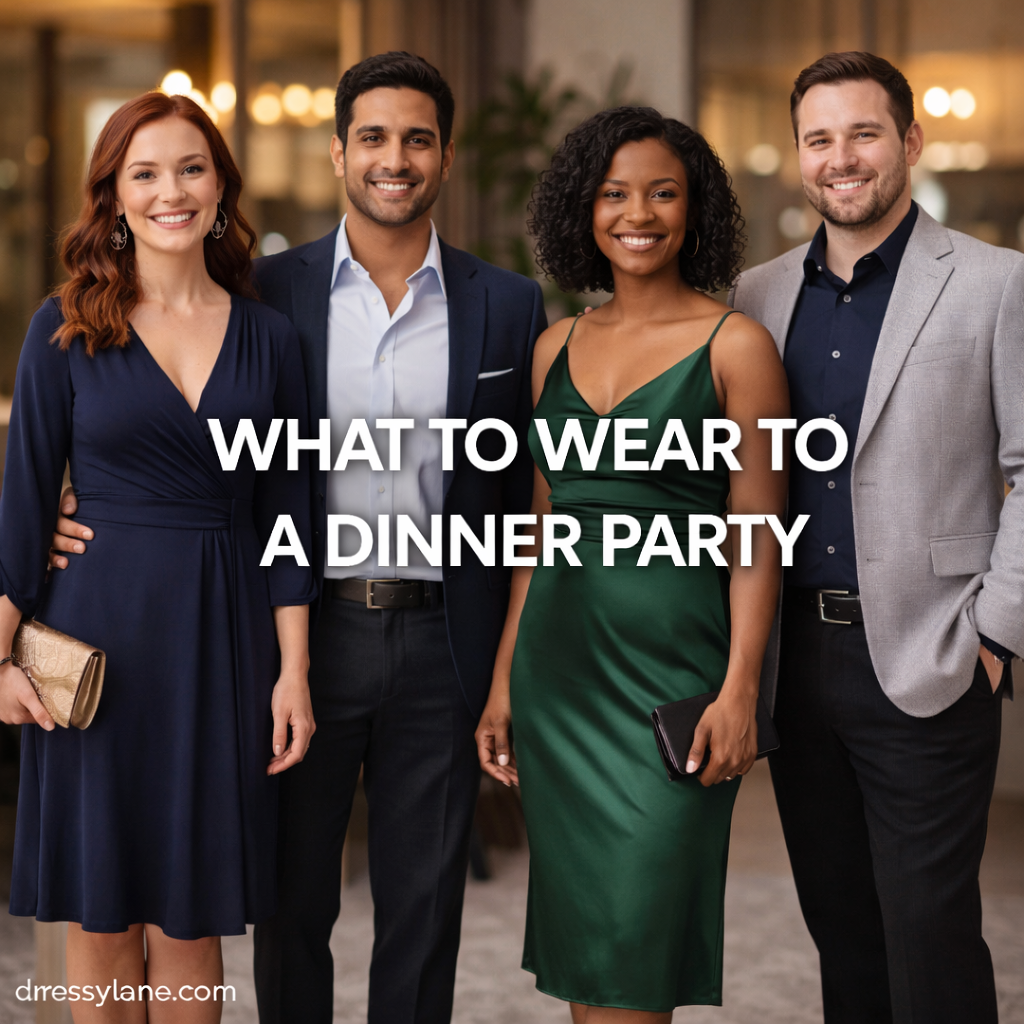
Dinner at a higher-end restaurant suggests smart casual or dressier clothing.
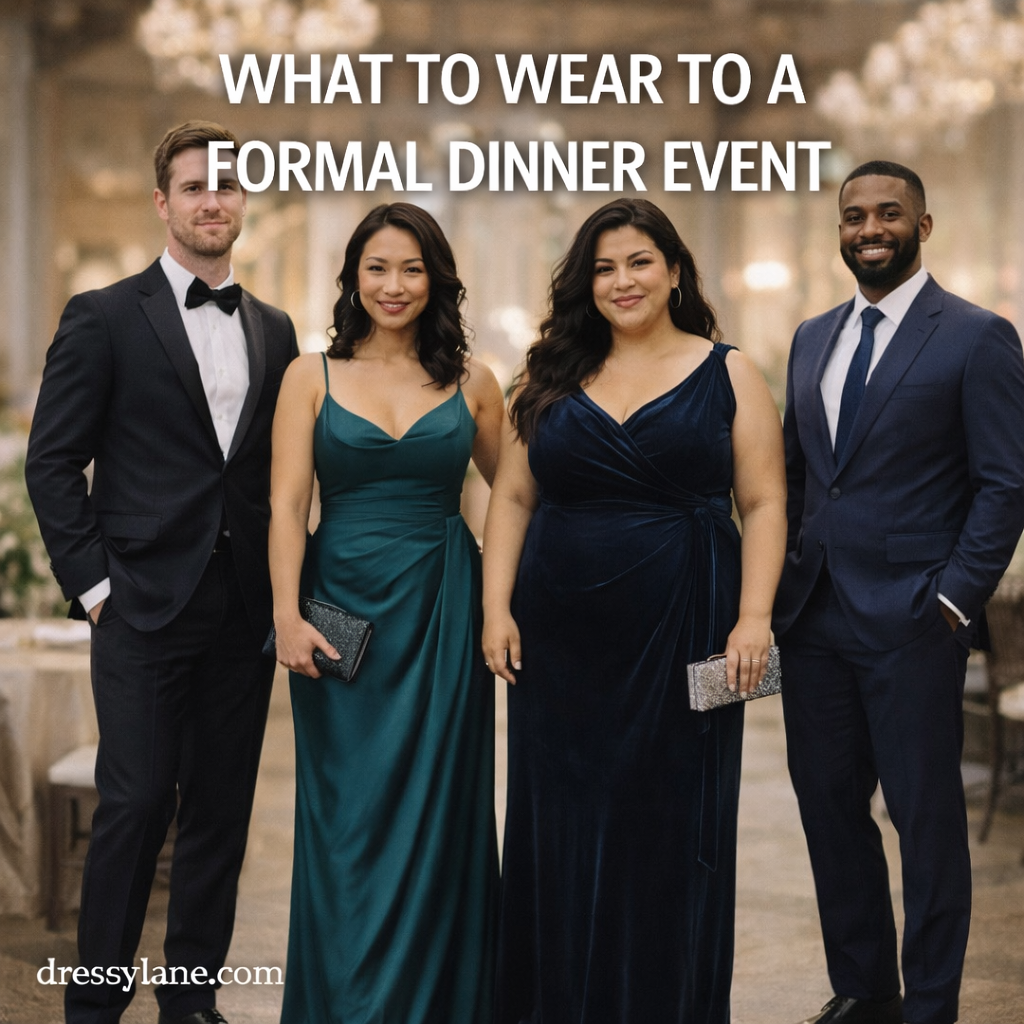
An evening event in a hotel ballroom suggests another level entirely.
For a broader explanation of how clothing changes between settings, see how to dress for different occasions.
How to Dress for a Party on Short Notice
When you’ve got 20 minutes, don’t attempt an elaborate outfit you’ve never worn before.
Use a dependable base.
For women:
Dark trousers + blouse + flats + earrings
or
Simple dress + jacket + comfortable shoes
For men:
Chinos + button-down + loafers
or
Dark jeans + knit polo + clean leather sneakers
Then spend your remaining time on grooming and making sure everything is clean, wrinkle-free, and properly fitted.
A clothes steamer is often more useful at this point than another accessory.
What to Wear Without Buying Anything New
Most social events do not require a new outfit.
Start with the most versatile pieces already in your wardrobe.
Pull out:
- Your best-fitting dark jeans
- Neutral trousers
- Simple dress
- Blazer
- Button-down shirt
- Knit top
- Loafers
- Flats
- Boots
- Clean minimalist sneakers
Then create a combination you haven’t worn recently.
Changing accessories, layering, footwear, or proportions can make familiar clothes feel different.
For example, the same black midi dress can look quite different with flat sandals in summer, ankle boots and a cardigan in fall, or loafers and a blazer for a dressier gathering.
How to Dress With Minimal Pieces
You don’t need six layers and ten accessories.
A good event outfit can be three pieces.
For example:
Women: trousers + knit top + loafers
Men: chinos + Oxford shirt + leather sneakers
Build around one strong base and add only what contributes something useful.
This approach is especially effective if you dislike complicated outfits or spend too much time second-guessing yourself.
How to Dress When You Want Simplicity
Use a simple outfit formula instead of starting from scratch every time.
Women’s Formula
Base + polished layer + intentional shoe
Examples:
- Jeans + blouse + loafers
- Midi dress + cardigan + flats
- Trousers + knit top + ankle boots
Men’s Formula
Trousers + good top + clean shoe
Examples:
- Chinos + polo + loafers
- Dark jeans + Oxford shirt + boots
- Wool trousers + sweater + leather sneakers
Once you know two or three formulas that suit you, social-event dressing becomes dramatically faster.
How to Dress When You’re Low Energy or Tired
This is when outfit formulas become particularly useful.
Don’t choose the outfit that requires shapewear, complicated layering, constant adjustment, or shoes you can barely tolerate.
Choose familiar clothes.
A soft knit dress, trousers with stretch, relaxed button-down, fine-gauge sweater, loafers, flats, or clean sneakers can still look completely appropriate.
Comfort also reduces the amount of attention you have to spend thinking about your clothes once you arrive.
How to Dress Without Overthinking
Set a time limit.
Choose:
- One bottom or dress.
- One top if needed.
- One pair of shoes.
- One optional layer.
- One or two accessories.
Then stop.
Constantly swapping pieces often doesn’t improve the outfit—it just makes it harder to decide.
When two options are equally appropriate, choose the one you feel more comfortable wearing.
How to Feel More Confident at Social Events
Confidence usually comes less from wearing an impressive outfit and more from removing sources of self-consciousness.
Wear clothing that:
- Fits correctly
- Doesn’t require constant adjustment
- Works with your normal posture and movement
- Feels appropriate for the setting
- Still feels recognizably like your personal style
If you never wear bright prints, a party isn’t automatically the time to force yourself into one.
If you live in flats, you don’t suddenly need four-inch heels.
If you rarely wear suits, a blazer with trousers may feel much more natural.
The best event outfit lets you stop thinking about your clothes once you’re there.
How to Dress Confidently at Any Age
There is no universal age at which you have to stop wearing denim, dresses, sneakers, prints, leather jackets, skirts, or fashionable clothing.
A more useful question is whether the individual garment works for your body, lifestyle, comfort level, and occasion.
Fit and proportion matter much more than arbitrary age rules.
Someone in their 60s can look excellent in dark jeans, a silk blouse, and loafers. Someone in their 20s can look equally good in tailored trousers and a classic wool coat.
Use age as context for your preferences—not as a list of clothing restrictions.
Building a Small Social-Event Wardrobe
If you attend parties regularly, a few versatile pieces can cover most situations.
Consider keeping:
- Dark jeans
- Neutral tailored trousers
- Simple dress or skirt
- Oxford or button-down shirt
- Fine-knit sweater
- Blouse
- Polo or knit polo
- Blazer or structured jacket
- Loafers or flats
- Clean leather sneakers
- Boots
- Weather-appropriate outerwear
You don’t need all of these.
Choose the pieces that correspond with your lifestyle.
Someone who mostly attends backyard gatherings needs a different wardrobe from someone who regularly attends restaurant dinners and professional cocktail events.
Quick FAQ: Dressing for Parties and Social Events
What should I wear when I have no idea what everyone else is wearing?
Choose smart-casual basics: dark jeans or trousers, a blouse, collared shirt or fine knit, and polished shoes. This gives you room on either side of the formality scale without looking extreme.
How can I avoid looking underdressed?
Upgrade one or two visible elements. Swap athletic shoes for loafers, a T-shirt for a blouse or collared shirt, or casual pants for dark denim or trousers.
What if everyone else dresses more casually than I expected?
If you’re wearing removable layers, take off the blazer or jacket. Rolling shirt sleeves, opening a collar, or simplifying accessories can also make an outfit feel more relaxed.
What if the crowd is dressier than expected?
This is why adaptable pieces help. A blazer, jewelry, belt, structured outer layer, or polished footwear can elevate otherwise simple clothing.
What should I wear if I hate heels?
Wear flats. Loafers, ballet flats, slingbacks, ankle boots, dressy sandals, and low block heels can all work depending on the event. You don’t need high heels to look appropriately dressed.
What should men wear if they hate suits?
For most casual and smart-casual social events, try tailored trousers or chinos with a collared shirt, knit polo, sweater, loafers, boots, or clean leather sneakers. Add a blazer only when extra polish is useful.
What should I wear when I’m tired or low energy?
Choose a proven outfit formula using comfortable pieces you’ve already worn successfully. Avoid anything that requires constant adjusting or uncomfortable shoes.
What should I wear to a long party?
Prioritize breathable fabrics, comfortable footwear, non-restrictive waistbands, and removable layers. Think about how the clothes will feel several hours into the event.
What should I wear when plans might change?
Dark jeans, tailored trousers, midi dresses, button-down shirts, blazers, loafers, and ankle boots transition well between restaurants, homes, bars, and other social settings.
Can I wear sneakers to a party?
Often, yes. Clean, streamlined sneakers work well for casual gatherings, backyard parties, and many smart-casual settings. Athletic running shoes generally make an outfit look more casual.
Do I need to buy a new outfit for a party?
Usually not. Start with your best-fitting basics and change the combination, shoes, accessories, or layering. Most people get more value from versatile clothes they can restyle than from buying an event-specific outfit every time.
What should I wear when I don’t know the host?
Stay near the middle of the formality spectrum. Avoid extremely casual clothes, highly formal outfits, or anything particularly attention-grabbing unless the invitation suggests otherwise.
How do I dress comfortably without looking too casual?
Choose polished garments made from comfortable materials: stretch-wool trousers, ponte pants, knit dresses, merino sweaters, cotton Oxford shirts, knit polos, loafers, or flats. Comfort is largely about fabric and construction rather than how casual the garment looks.
Final Thoughts
Dressing for parties and social events becomes much easier once you stop treating every invitation as a completely new fashion problem.
Start with the occasion and venue. Then consider the crowd, weather, length of the event, and what you’ll actually be doing.
When you’re unsure, the polished middle is usually the most flexible place to be: clean lines, comfortable fabrics, good fit, practical shoes, and one layer you can add or remove.
You also don’t need heels, a suit, complicated accessories, or a brand-new outfit to look appropriately dressed.
More importantly, don’t build an outfit that only looks good while you’re standing still in front of a mirror. Sit in it. Walk in it. Think about the temperature. Think about hour four.
A successful party outfit should help you feel prepared when you arrive—and then let you forget about your clothes and enjoy the event.