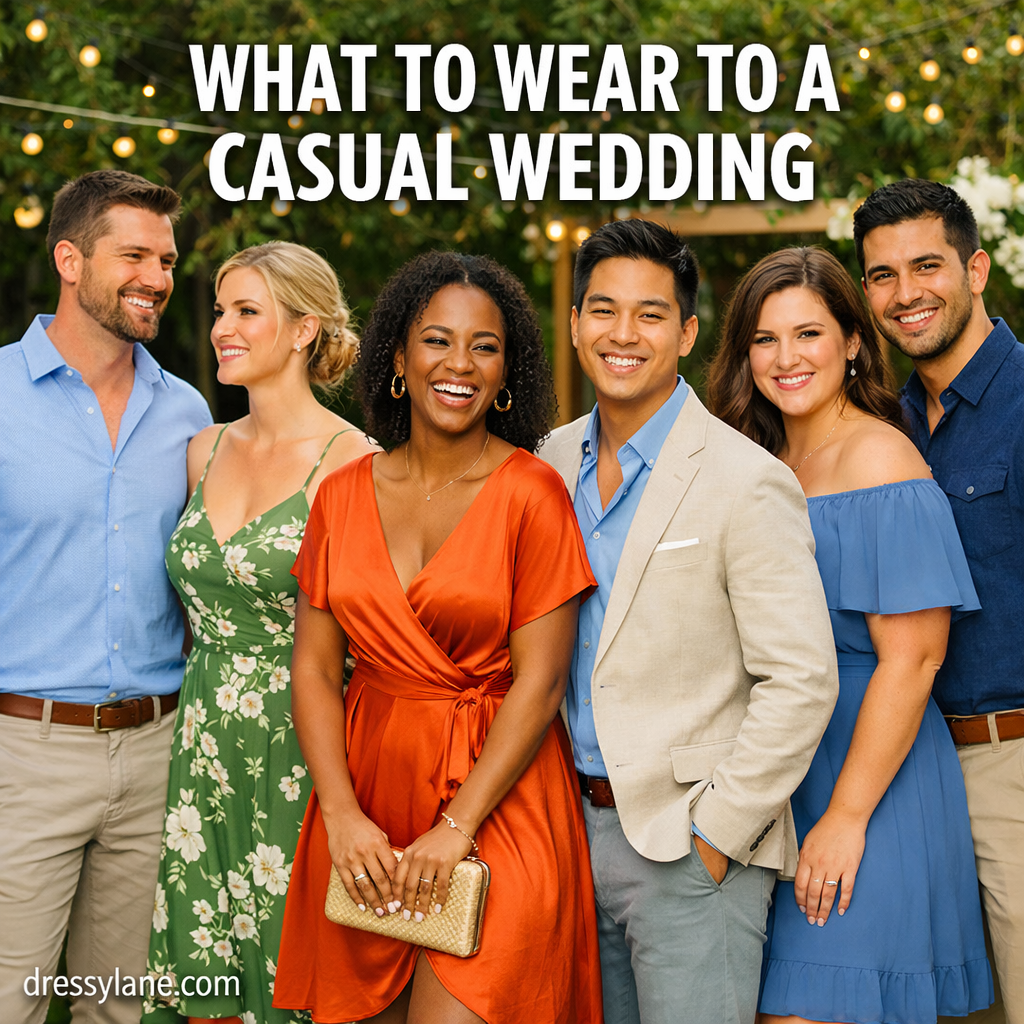
A casual wedding gives you more freedom with your outfit, but it doesn’t mean showing up in whatever you’d wear on a normal Saturday.
Think of a backyard ceremony with folding chairs, a garden reception under string lights, or a small wedding at a neighborhood restaurant. You probably don’t need a formal gown or a three-piece suit, but jeans and a T-shirt may still feel out of place.
The easiest approach is to start with an outfit you’d wear to a nice dinner, then adjust it for the venue, weather, and couple’s dress code.
Here’s what works for women and men, along with the details that can make an otherwise good outfit feel too casual.
What Does Casual Wedding Attire Actually Mean?
Casual wedding attire usually means polished everyday pieces styled for a special occasion.
For women, that might be a floral midi dress, a tailored jumpsuit, or wide-leg trousers with a dressy blouse. For men, chinos and a button-down shirt are often enough, with an optional blazer depending on the setting.
The important distinction is between casual and everyday clothing.
A cotton poplin midi dress with a defined waist can look perfectly appropriate. A faded jersey T-shirt dress probably won’t, even if both are technically dresses.
Likewise, tailored chinos and a neatly pressed linen shirt look intentional, while cargo shorts and an untucked graphic T-shirt usually don’t.
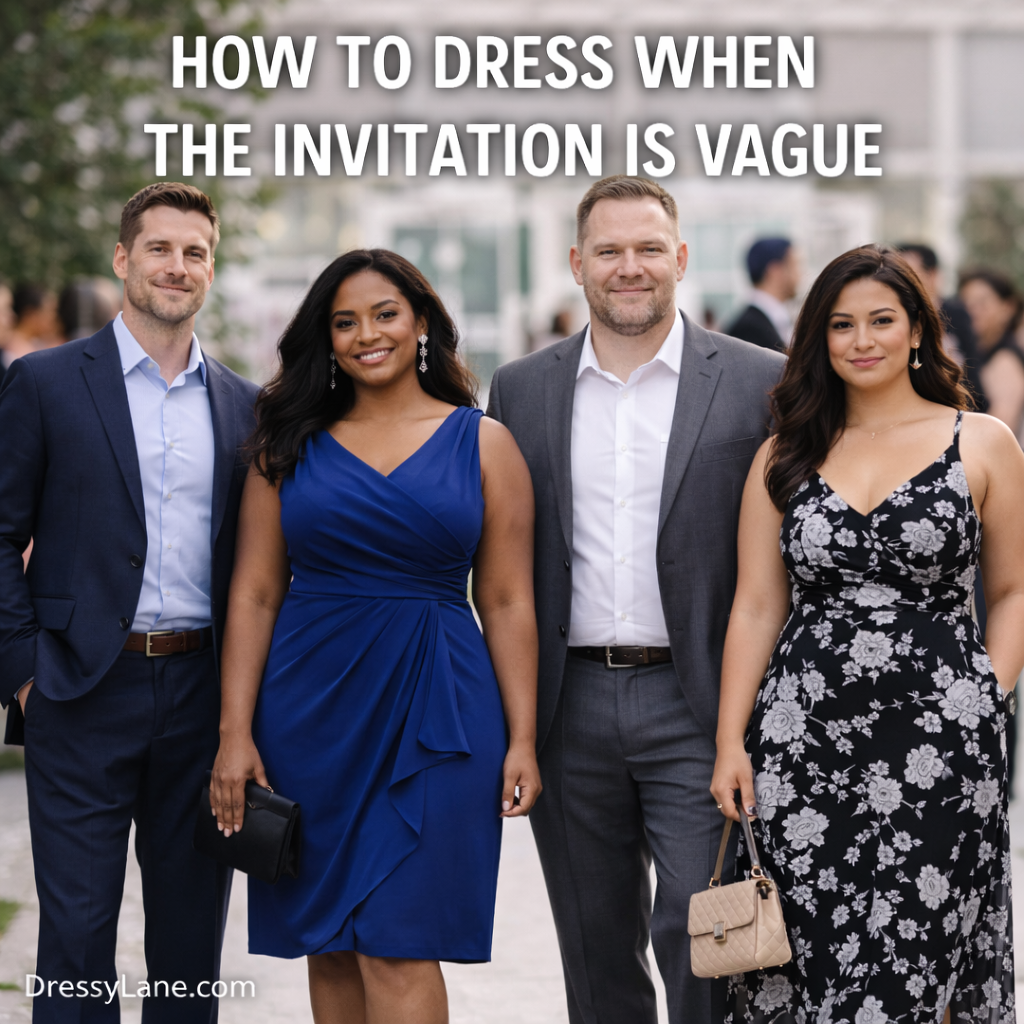
If the invitation says “dressy casual,” move slightly closer to semi-formal attire. A more structured dress, tailored trousers, or a sport coat would be appropriate.
Check the Venue Before Choosing Your Outfit
The location can tell you almost as much as the dress code.
A casual wedding at a beachfront restaurant may call for linen and sandals, while a backyard wedding in October could require closed-toe shoes and an extra layer.
Consider these details before getting dressed:
- Outdoor ceremony: Choose shoes that work on grass, gravel, or uneven ground.
- Indoor restaurant: A slightly dressier outfit may feel more appropriate.
- Afternoon wedding: Cotton dresses, lighter colors, and relaxed tailoring usually fit the setting.
- Evening reception: Darker colors, refined fabrics, and a blazer or dressier accessories can work well.
I’d also check whether the ceremony and reception are at different locations. An outfit that works on a paved patio might become uncomfortable when you have to walk across a lawn.
What Women Should Wear to a Casual Wedding
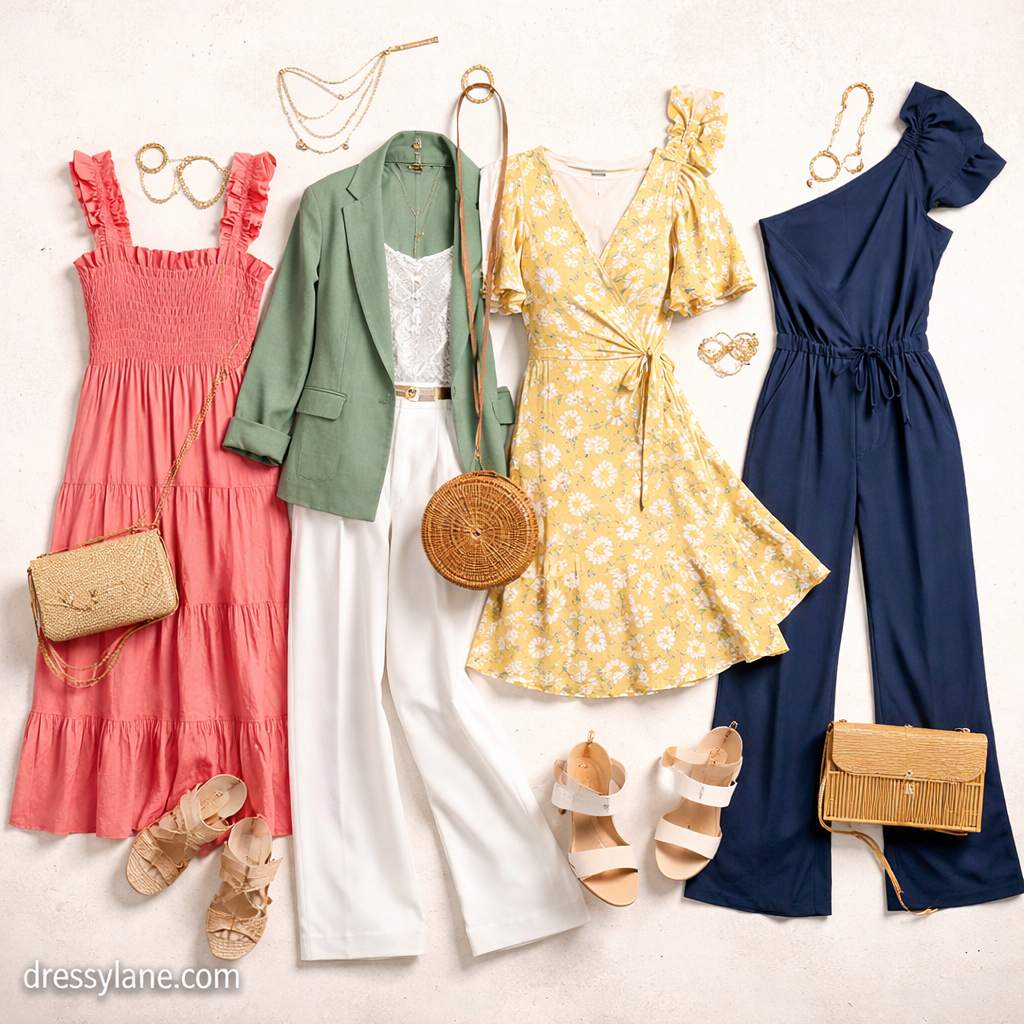
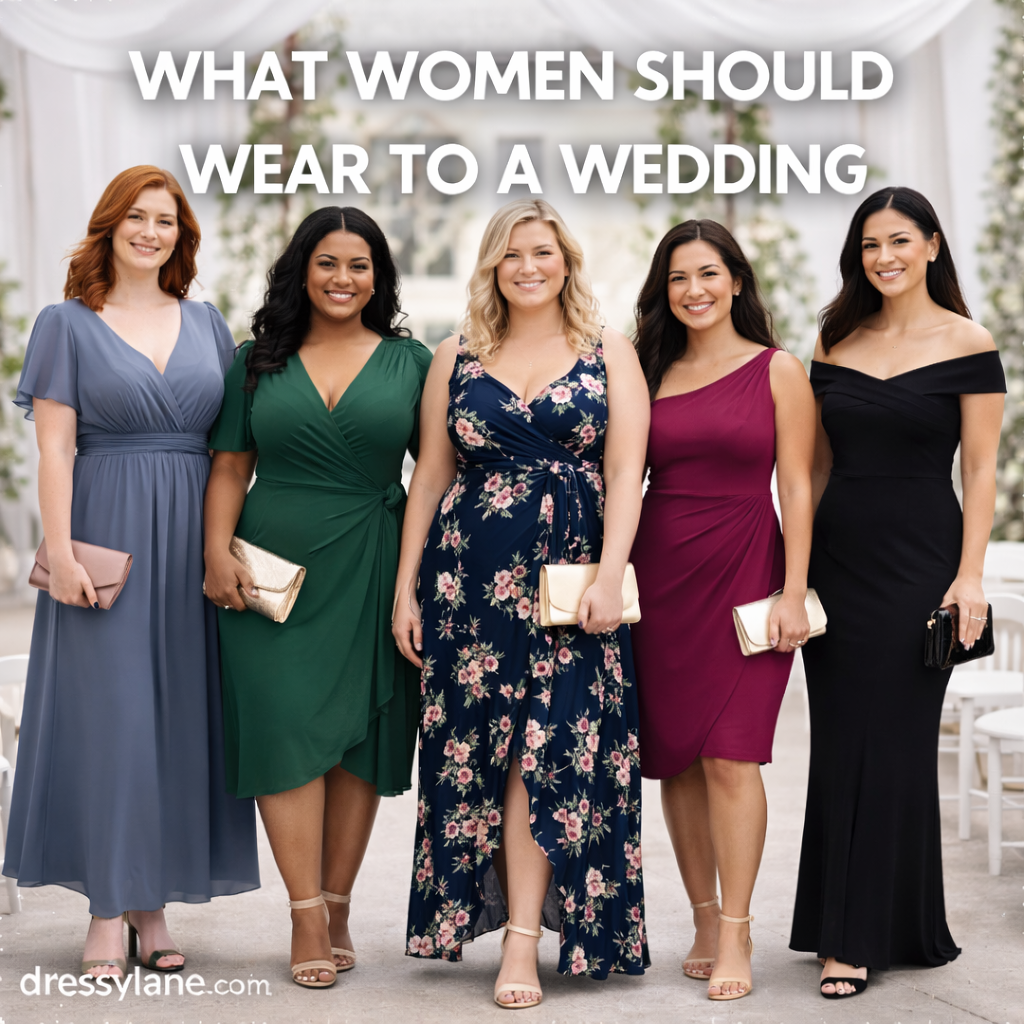
For most casual weddings, I’d start with a midi dress. It’s an easy length to style, works across different venues, and doesn’t require the careful hemming that a floor-length dress often does.
A sage green cotton poplin dress with a fitted bodice, a navy wrap dress, or a floral midi with a softly gathered skirt would all be good choices.
The dress should feel a little more considered than your usual weekend clothing without looking like formal eveningwear.
Dresses That Work Particularly Well
Look for silhouettes that offer some structure while remaining comfortable.
Good options include:
- A-line midi dresses in cotton poplin or lightweight crepe.
- Knee-length wrap dresses with secure closures.
- Floral dresses with a defined waist and modest volume.
- Simple slip dresses in substantial satin or silk, styled with dressy accessories.
One detail I’d pay attention to is the fabric.
A lightweight cotton dress can look lovely for an afternoon garden wedding, but thin jersey often reads too much like everyday clothing.
If you’re choosing a slip dress, avoid anything overly clingy or unlined. A slightly heavier satin with a clean neckline tends to look more polished.
Also, steer clear of white, ivory, or dresses that could be mistaken for bridal attire unless the couple specifically requests those colors.
You Don’t Have to Wear a Dress
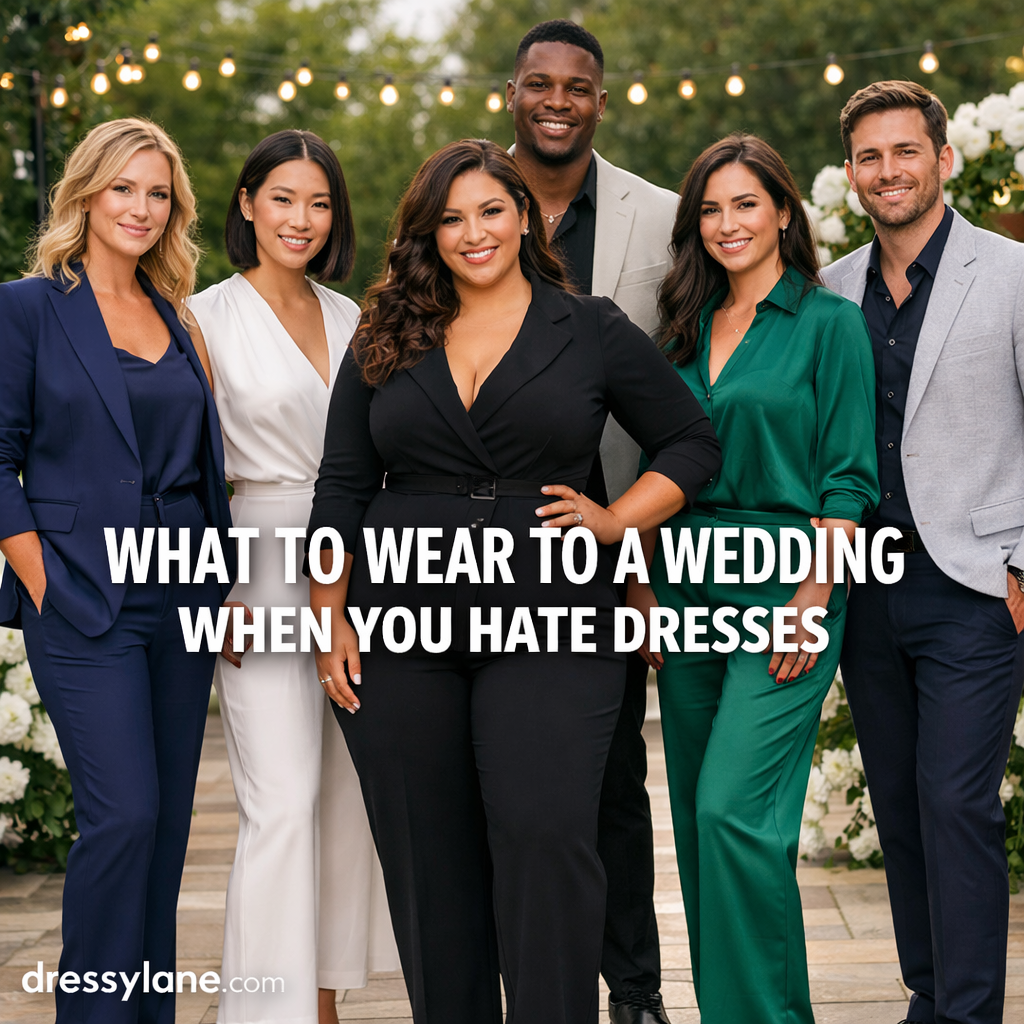
A tailored jumpsuit is an excellent alternative, particularly for weddings where you’ll be moving between indoor and outdoor spaces.
Choose one with full-length wide-leg trousers, a defined waist, and a structured neckline.
Another combination I like is high-waisted navy trousers with an ivory silk or crepe blouse. Add a slim belt, pointed-toe flats, and small gold earrings, and the outfit feels wedding-appropriate without being overly formal.
A coordinated linen-blend suit can also work for a summer wedding, especially in muted colors such as sage, dusty blue, or terracotta.
The trick with separates is making sure they look like a complete outfit rather than pieces you happened to wear to the office.
Shoes Can Make or Break a Casual Wedding Outfit
You don’t need high heels for a casual wedding.
In fact, I’d skip stilettos entirely if the ceremony is on grass. Even a beautiful pair becomes frustrating when the heels keep sinking into the ground.
For women, reliable choices include dressy flat sandals, ballet flats, low block heels, and wedges.
A simple leather sandal with a small metallic buckle can make a cotton midi dress feel more appropriate for a wedding without sacrificing comfort.
For men, loafers, suede derbies, and polished leather shoes work well.
Clean leather sneakers may be acceptable at an explicitly relaxed wedding, but I wouldn’t make them the default choice.
Avoid athletic running shoes, beach flip-flops, and visibly worn footwear unless the couple has clearly indicated that the celebration is extremely informal.
What Men Should Wear to a Casual Wedding
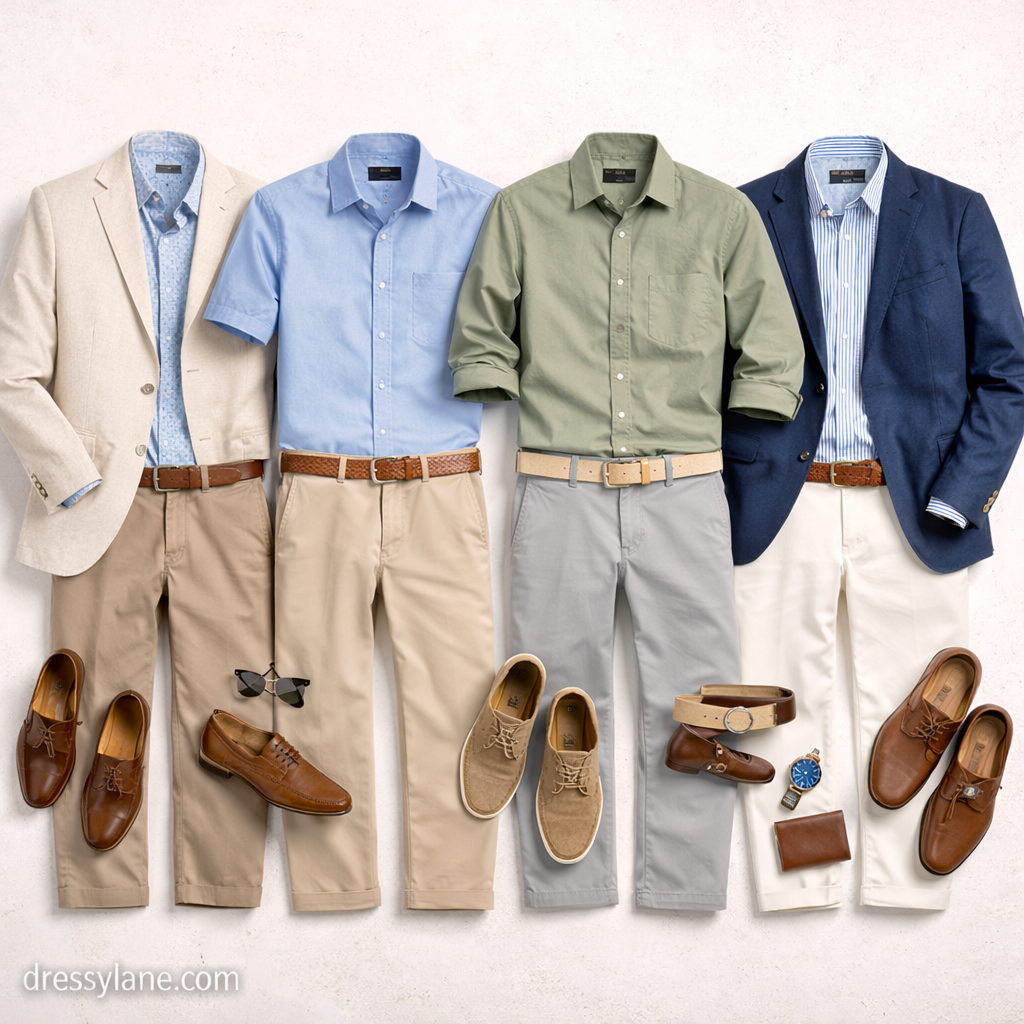
Men can usually leave the tuxedo and formal suit at home.
A dependable casual wedding outfit is a pair of tailored chinos, a long-sleeved button-down shirt, and loafers.
For example, stone-colored chinos with a pale blue Oxford shirt and brown suede loafers would work for many afternoon weddings.
The fit matters more than adding extra accessories. Trousers should sit neatly at the waist, and the shirt shouldn’t bunch excessively around the midsection.
Shirts, Trousers, and Optional Layers
Choose breathable, well-fitting pieces that look neat without being stiff.
Good combinations include:
- Navy chinos with a white cotton button-down.
- Beige linen-blend trousers with a pale blue shirt.
- Charcoal trousers with a muted olive button-down.
- Stone chinos, a white shirt, and an unstructured navy blazer.
Long sleeves are generally a safer choice than short sleeves, although a well-fitted short-sleeved button-down can work for a very relaxed summer wedding.
I’d avoid wearing shorts unless the invitation specifically permits them. Even tailored shorts can look out of place when the other guests are wearing full-length trousers.
A lightweight sport coat is useful for an evening reception or a dressy-casual invitation. You can always remove it if the atmosphere is more relaxed than expected.
A tie is usually unnecessary unless the invitation or venue suggests a dressier approach.
What to Wear to Different Casual Wedding Venues
Rather than treating every casual wedding the same, adjust a few details to suit the location.
| Venue | Women’s outfit | Men’s outfit |
|---|---|---|
| Beach | Lightweight midi dress and flat sandals | Linen shirt, tailored trousers, and appropriate loafers or dress sandals |
| Garden | Floral wrap dress and block heels | Chinos, button-down shirt, and loafers |
| Backyard | Cotton midi dress or tailored jumpsuit | Chinos and a neatly pressed shirt |
| Barn | Midi dress with closed-toe flats | Tailored trousers, button-down, and suede shoes |
| Casual restaurant | Crepe dress or polished separates | Chinos or dress trousers with an optional blazer |
For barn and garden weddings, check whether you’ll be walking on gravel, dirt, or grass. Closed-toe flats or low block heels may be more practical than delicate sandals.
Adjusting Your Outfit for the Season
Casual wedding attire changes slightly with the weather, but you don’t need an entirely different wardrobe for every season.
For spring and summer, cotton poplin, linen blends, and lightweight crepe are comfortable choices. A floral midi dress or pale blue linen shirt feels natural at an afternoon ceremony.
For fall, consider richer colors such as olive, rust, navy, and burgundy. A long-sleeved wrap dress with closed-toe shoes or chinos with a textured sport coat works well.
Winter weddings call for more substantial fabrics. A long-sleeved crepe dress, tailored wool-blend trousers, or a fine-knit layer under a blazer can provide warmth without looking bulky.
If the reception continues outdoors after sunset, bring an appropriate jacket or wrap. Even a warm afternoon can turn chilly once you’re sitting outside for dinner.
Common Casual Wedding Outfit Mistakes
The biggest mistake is taking the word “casual” too literally.
A few things I’d avoid:
- Jeans without permission: Dark denim may look neat, but chinos or tailored trousers are a safer choice.
- Everyday T-shirts: Even a plain, expensive T-shirt can feel too informal.
- Overly formal outfits: A sequined evening gown or tuxedo may look out of place at a relaxed backyard ceremony.
- Impractical shoes: Thin heels and unstable sandals can become uncomfortable on uneven ground.
- Wrinkled clothing: Linen naturally creases, but a shirt that looks like it came straight from a suitcase is another matter.
Try on the complete outfit before the wedding, including your shoes and outer layer.
If you’re unsure whether an outfit is appropriate, I’d rather add one polished element, such as a structured bag, dressier shoes, or a blazer, than replace the entire look with something much more formal.
Final Thoughts
Casual wedding attire should feel relaxed, but still look like you’ve made an effort for the occasion.
For women, a well-fitting midi dress, tailored jumpsuit, or coordinated separates will work for many casual celebrations. For men, chinos with a button-down shirt and polished shoes are a dependable starting point.
The venue is what should guide your final adjustments. Choose breathable fabrics for a summer garden ceremony, practical footwear for outdoor locations, and an extra layer for evening receptions.
You don’t need an elaborate outfit. A few well-chosen pieces that fit properly and suit the setting are usually all it takes to look appropriately dressed.