A casual interview presents an interesting wardrobe challenge. You don’t want to arrive at a relaxed tech office wearing a three-piece suit, but showing up in the same jeans and T-shirt you’d wear on the weekend might feel too informal.
The solution is to dress slightly more polished than the company’s everyday standard without abandoning your personal style.
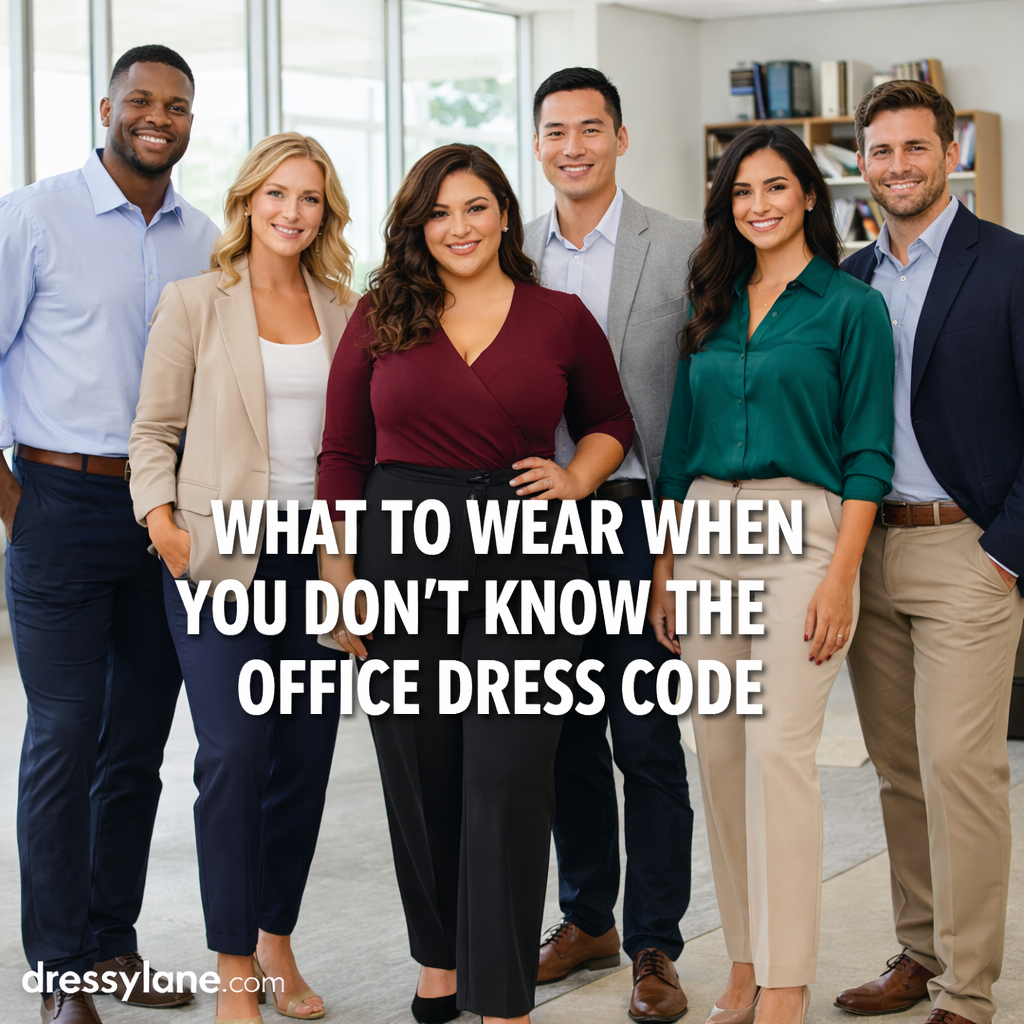
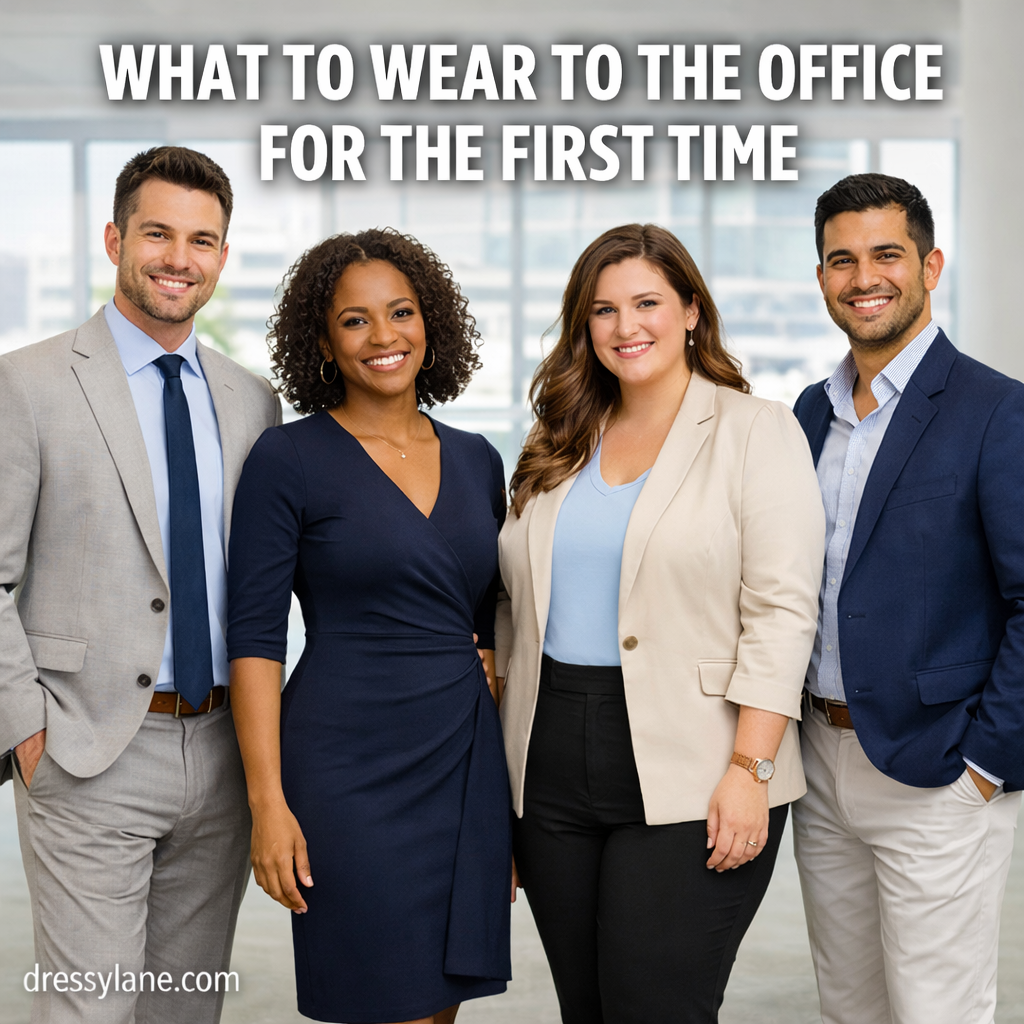
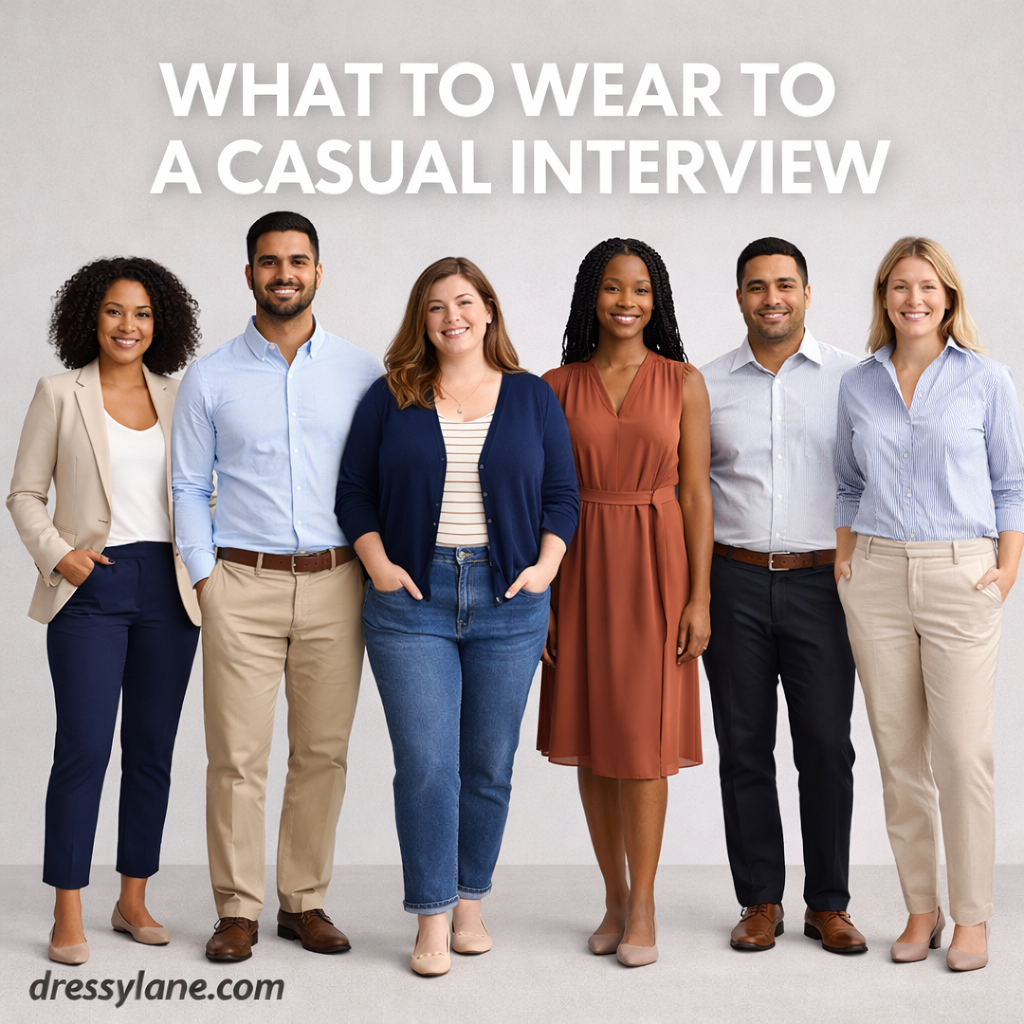
For most casual office interviews, that means well-fitting chinos or tailored trousers, a button-down shirt or blouse, and comfortable, polished shoes. A blazer is optional, depending on the workplace.
Here’s how to put together a casual interview outfit that feels appropriate without looking like you’re trying too hard.
What Does a Casual Interview Actually Mean?
A casual interview usually refers to an interview at a workplace with a relaxed dress code.
You might encounter this at a startup, creative agency, technology company, or small business where employees regularly wear jeans and sneakers.
However, the word “casual” can also describe the interview format rather than the dress code. A recruiter might invite you for an informal coffee chat even though the company expects business professional clothing.
If the expectations aren’t clear, it’s perfectly reasonable to ask your recruiter what people typically wear to the office.
You can also check the company’s website and employee photos for clues.
My recommendation: Don’t automatically wear jeans just because the company describes itself as casual. Chinos or tailored trousers are almost as comfortable and give you more flexibility if the interview turns out to be slightly more formal than expected.
What Women Should Wear to a Casual Interview
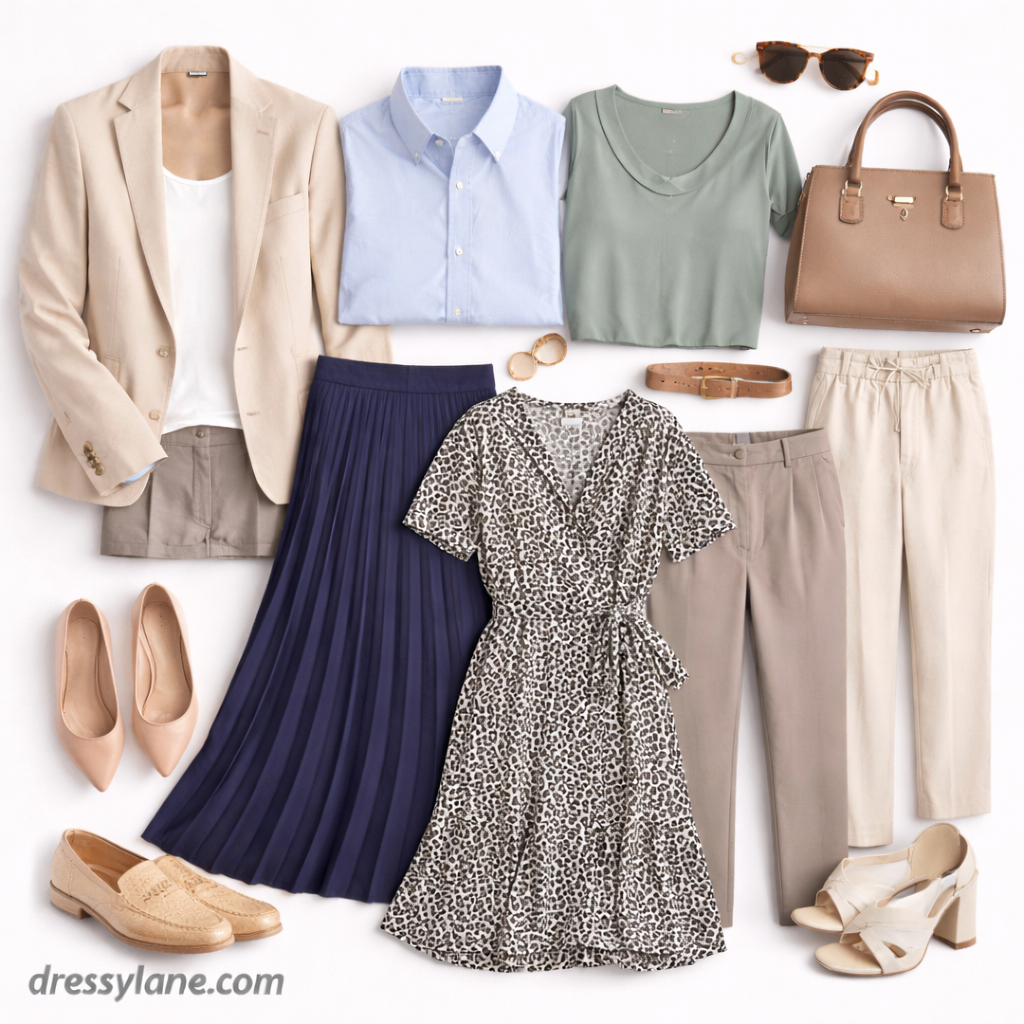
For women, a relaxed interview outfit works particularly well when it combines one structured piece with something softer.
Think tailored trousers with a lightweight sweater or a simple dress with a relaxed blazer.
You don’t need a matching suit, and there’s no reason to wear heels unless you prefer them.
Three Outfit Combinations That Work
1. Tailored trousers and a knit top
Pair black or navy straight-leg trousers with a cream fine-gauge sweater and leather loafers.
This combination looks professional without the formality of a traditional blouse and suit jacket.
Choose trousers made from a substantial cotton blend or lightweight wool rather than thin, clingy jersey.
2. Blouse, dark jeans, and a blazer
If the company clearly allows denim, dark indigo straight-leg jeans can work with a tucked-in cotton blouse and an unstructured blazer.
Finish with loafers or polished ankle boots.
Avoid distressed denim, heavy fading, or overly baggy silhouettes unless you’re confident they suit the workplace.
3. Simple dress and flats
A knee-length or midi A-line dress in navy, olive, or burgundy is another practical option.
Look for a fabric with enough weight to hold its shape, such as ponte knit or a structured cotton blend.
Add a cardigan or lightweight blazer if you want an extra layer.
Shoes and Accessories
Leather loafers, ballet flats, low block heels, and clean ankle boots all work well.
I’d skip brand-new heels for an interview, especially if you haven’t visited the office before. You might need to walk across a large building, climb stairs, or stand while meeting several people.
A small structured handbag or tote is useful for carrying your phone, notebook, and résumé.
Choose accessories that feel like you rather than following an unnecessarily strict rule about wearing minimal jewelry.
What Men Should Wear to a Casual Interview
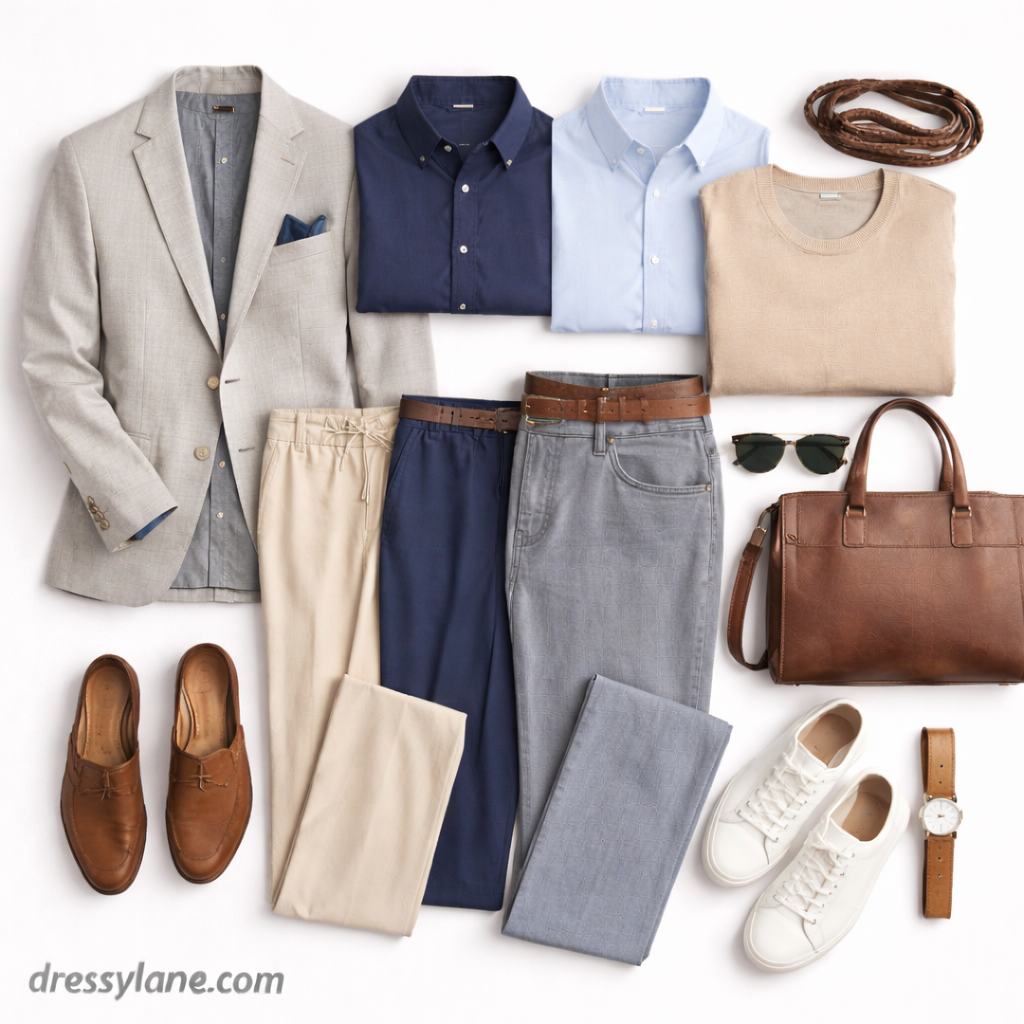
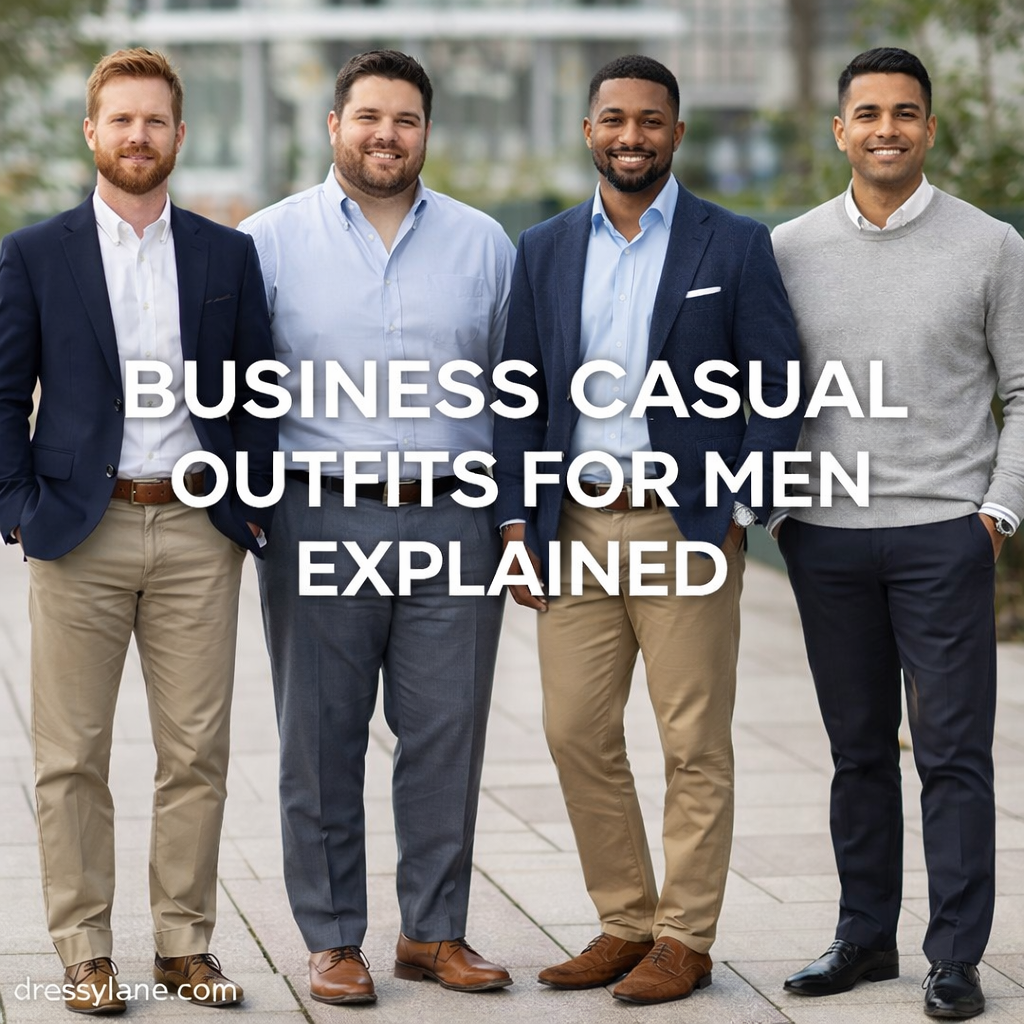
For men, chinos and an Oxford shirt are a dependable starting point.
The combination is relaxed enough for a casual office but still looks appropriate for meeting a hiring manager.
A navy pair of chinos, light blue cotton Oxford shirt, and brown leather loafers is an easy outfit to put together.
You can add a blazer if the company appears more formal or leave it off for a relaxed workplace.
Three Outfit Options
1. Chinos and a button-down shirt
Stone or navy chinos paired with a white or pale blue Oxford shirt work in most casual office environments.
Wear the shirt tucked in for a neater appearance, particularly if you’re adding a belt.
2. Dress trousers and a lightweight sweater
Charcoal wool-blend trousers with a fine-knit crewneck sweater offer an alternative to a traditional collared shirt.
A white shirt underneath can add structure if needed.
3. Dark jeans and an unstructured blazer
For a clearly casual company, dark straight-leg jeans, a plain button-down shirt, and a navy blazer can look appropriate.
An unstructured blazer is useful because it doesn’t have the stiff shoulders or heavy construction of a formal suit jacket.
Choosing the Right Shoes
Loafers, Derby shoes, and Chelsea boots are reliable choices.
Minimalist leather sneakers may also work if the company has a genuinely relaxed dress code.
I’d avoid running shoes, even if they’re clean. Their athletic shape can make an otherwise polished outfit look more like weekend clothing.
How Casual Is Too Casual?
The biggest mistake is assuming that a casual workplace has no expectations about interview clothing.
Consider the difference between two outfits.
A pair of dark jeans, a pressed Oxford shirt, and leather loafers looks intentional. The same jeans with a faded graphic T-shirt and worn running shoes creates a noticeably more relaxed impression.
Neither outfit is inherently wrong for everyday life, but the first is easier to adapt to an interview.
Unless the employer has given specific instructions, I’d generally avoid:
- Distressed jeans or clothing with visible wear.
- Gym shorts, joggers, and athletic leggings.
- Flip-flops or heavily worn sneakers.
- Shirts with large slogans or graphics.
- Clothing that requires frequent adjusting.
A plain, substantial cotton T-shirt under a blazer may be perfectly appropriate for certain creative workplaces. The key is understanding the company rather than treating every casual interview the same way.
Dress for the Actual Interview Setting
The location can influence your outfit just as much as the company’s industry.
Interview at a Casual Office
Chinos or tailored trousers with a polished top are a practical choice.
If employees regularly wear sneakers and jeans, you can relax the outfit slightly while keeping everything clean and well-fitting.
Coffee Shop Interview
A café interview usually calls for a less formal approach than a corporate boardroom.
Dark jeans or chinos, a button-down shirt or blouse, and a lightweight jacket can work well.
Avoid bringing an unnecessarily bulky bag or wearing something that feels uncomfortable while seated at a small table.
Video Interview
For a remote interview, focus on how your outfit appears on camera.
Solid colors such as navy, muted blue, burgundy, and cream generally create a clean appearance.
Very fine stripes and small checks can sometimes produce distracting visual effects on video.
Wear a complete outfit rather than dressing professionally only from the waist up. You may need to stand unexpectedly to adjust your camera or retrieve something.
Check the Fit Before Interview Day
A casual outfit doesn’t need to be expensive, but it should fit comfortably.
Try everything on the evening before your interview.
Sit down, stand up, and reach forward. Make sure your shirt doesn’t pull across the buttons and your trousers aren’t restrictive when seated.
Check your clothing in natural light for wrinkles, lint, and unexpected transparency.
One detail I’d pay particular attention to is the neckline of your top when sitting. A shirt that looks perfectly positioned while standing may shift when you lean forward across a meeting table.
It’s much easier to discover these issues at home than during the interview.
Grooming and Finishing Details
You don’t need an elaborate grooming routine to look prepared.
Make sure your clothes are clean, your shoes are in good condition, and your hair is styled in a way that feels comfortable.
Makeup is optional, and facial hair doesn’t need to be removed to look professional.
Avoid applying strong fragrance immediately before the interview, particularly if you’ll be meeting in a small room.
Bring a clean copy of your résumé if appropriate, along with a notebook and pen. A simple tote, briefcase, or portfolio can keep everything organized.
Final Thoughts
Knowing what to wear to a casual interview comes down to understanding the workplace and choosing an outfit that feels slightly more polished than everyday casual clothing.
For most relaxed office interviews, chinos or tailored trousers, a button-down shirt or blouse, and comfortable leather shoes provide a versatile foundation.
Jeans and sneakers can work when the company’s dress code clearly supports them, but there’s no need to make that assumption before you’ve visited the workplace.
Choose clothes that fit properly, prepare your outfit the night before, and avoid anything you’ll spend the interview adjusting.
The right outfit should feel comfortable enough that, once the conversation begins, you barely have to think about it.