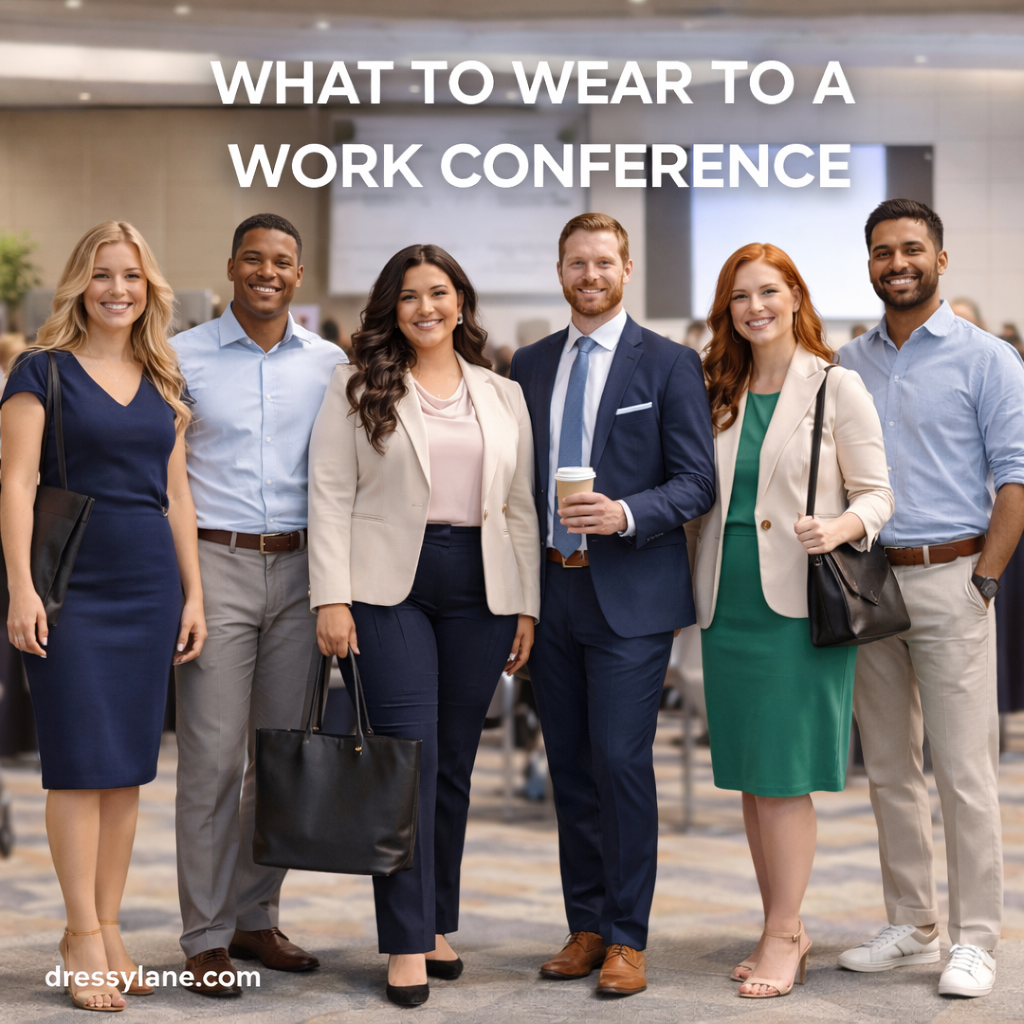
A work conference can mean eight hours of presentations, a long walk across a convention center, and an evening networking event before you finally get back to your hotel.
Your outfit needs to handle all of it.
For most conferences, polished business casual is a practical starting point. Think tailored trousers, breathable shirts, lightweight blazers, and shoes you can comfortably walk in. More formal industries may call for suits, while technology and creative conferences often allow jeans and sneakers.
The trick is dressing for the entire schedule, not just the first session of the morning.
Check the Conference Schedule Before Planning Your Outfit
Before packing, look at the event website, dress code, and daily agenda.
A financial services conference held at a luxury hotel may lean toward business professional attire. A technology conference at a convention center could be considerably more casual.
Pay particular attention to whether you’re attending as a guest, speaker, exhibitor, or company representative.
If you’re presenting onstage or meeting prospective clients, a blazer or coordinated suit may be appropriate even when other attendees dress casually.
I’d also check the evening schedule. A conference that includes a formal awards dinner requires different planning from one that ends with drinks at a neighborhood restaurant.
When the dress code isn’t specified, tailored trousers, a collared shirt or blouse, and a lightweight jacket provide a flexible starting point.
What Women Should Wear to a Work Conference
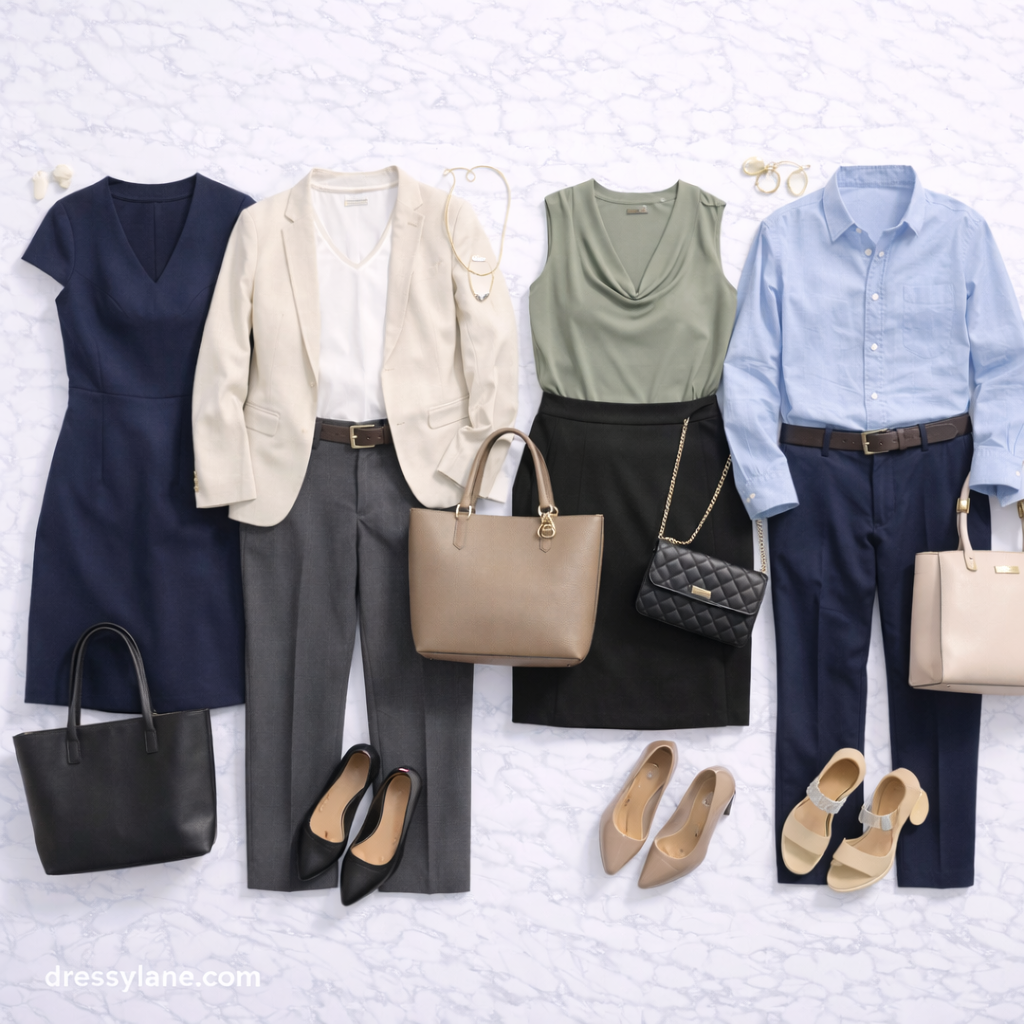
For women, a pair of well-fitting trousers is one of the most useful pieces to pack.
Navy straight-leg trousers with a cream blouse, relaxed blazer, and leather loafers create a professional outfit that works for presentations and networking.
Other combinations worth considering include:
- Charcoal wide-leg trousers with a fine-gauge knit and pointed-toe flats.
- A midi shirt dress with a leather belt and low block heels.
- A coordinated pantsuit with a lightweight blouse for formal conferences.
- A structured midi skirt with a cotton-poplin shirt and loafers.
Choose fabrics that can survive several hours of sitting. Wool-blend trousers and matte crepe tend to hold their shape better than lightweight linen.
I’d avoid wearing a dress that requires constant adjusting when seated. Conference sessions can last an hour or longer, and you don’t want to spend that time worrying about your hemline.
Shoes matter more than you think
A conference isn’t the place to break in a new pair of heels.
You might walk from your hotel to the venue, cross several exhibition halls, and stand through a networking reception.
Leather loafers, cushioned flats, and low block heels are practical choices.
If the dress code allows sneakers, a clean, minimalist pair can work well with tailored trousers and a blazer.
Carry a medium-sized tote that fits your phone, notebook, charger, and water bottle without becoming too heavy.
What Men Should Wear to a Work Conference
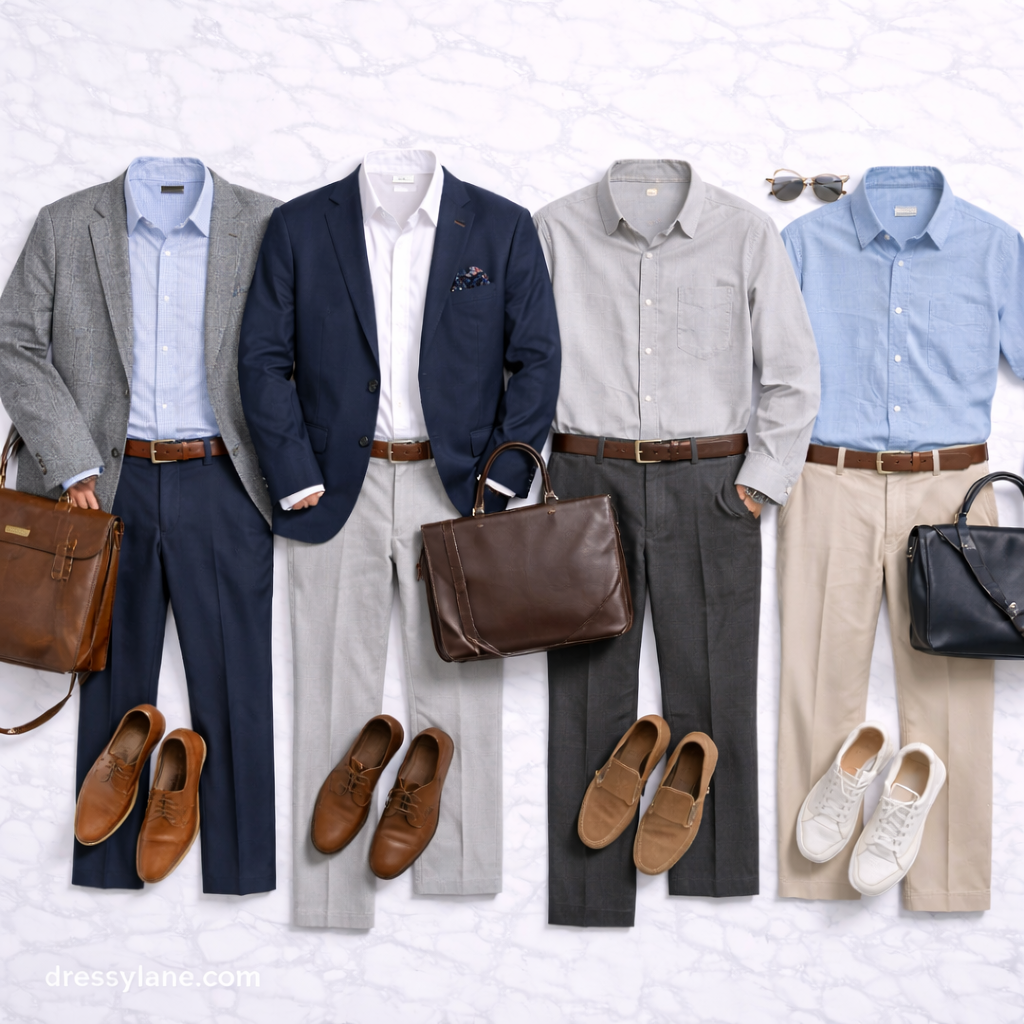
Men can build a versatile conference wardrobe around chinos, tailored trousers, and button-down shirts.
For a business-casual event, try charcoal trousers, a pale blue Oxford shirt, a navy unstructured blazer, and brown leather loafers.
The jacket provides structure for meetings but can be removed during long sessions.
Other outfit combinations include:
- Navy chinos with a white button-down and brown Derby shoes.
- Gray wool-blend trousers with a fine-gauge merino sweater and loafers.
- A charcoal suit with a light blue dress shirt for formal industry events.
- Dark, clean jeans with a knit polo and minimalist sneakers for a casual technology conference.
Pay attention to fabric weight. A heavy wool suit can become uncomfortable when you’re moving between crowded exhibition halls.
For warmer venues, lightweight wool or cotton-blend trousers are useful alternatives.
I’d skip a three-piece suit unless the conference specifically calls for formal business attire. Extra layers can become uncomfortable during a long day, particularly when the venue is crowded.
Plan for Cold Conference Rooms
One of the most frustrating parts of conference dressing is the temperature difference between locations.
You might walk through warm weather outside, enter a freezing hotel ballroom, and then spend an hour in a crowded exhibition hall.
Bring a layer you can easily remove.
For women, a lightweight blazer, fine-knit cardigan, or structured jacket works well. Men can use an unstructured blazer or lightweight merino sweater.
Avoid bulky layers that are difficult to carry once removed.
A jacket that folds neatly over your arm or fits inside your bag is much more useful than a heavy coat you have to carry all afternoon.
How to Dress for a Multi-Day Conference
If you’re attending a three-day conference, you don’t need three completely different outfits.
Build your packing list around a small group of coordinating pieces.
For example, navy and charcoal trousers can be rotated with white, pale blue, and cream tops. Add one blazer that works with both pairs of trousers.
A practical three-day wardrobe might include:
- Two pairs of trousers or one pair of trousers and a dress.
- Three shirts, blouses, or knit tops.
- One versatile blazer or structured jacket.
- Two pairs of comfortable shoes.
- A few simple accessories.
Choose colors that work together so you can change combinations without packing extra clothing.
I’d also bring one spare shirt or blouse. Coffee spills, unexpected heat, and long travel days can make a backup surprisingly useful.
Hang your clothes as soon as you arrive at the hotel rather than leaving everything folded in your suitcase.
What to Wear to Evening Networking Events
Conference networking often continues after the final presentation.
For a casual reception, your daytime outfit may already be appropriate. You can remove your blazer, change your accessories, or swap your shoes if you’ve brought a second pair.
For a more formal dinner, women might choose a tailored midi dress or coordinated suit. Men can wear a dark suit or blazer with dress trousers, depending on the invitation.
Check whether the evening event specifies cocktail attire, business attire, or another dress code.
I wouldn’t pack an entirely separate evening wardrobe unless the schedule actually requires one. A versatile blazer or dress can often handle both daytime sessions and an informal evening reception.
What Not to Wear to a Work Conference
The biggest conference outfit mistake is choosing clothing based entirely on appearance without considering the schedule.
Uncomfortable shoes, restrictive trousers, and heavy jackets can become frustrating after several hours.
Avoid heavily wrinkled clothing, worn-out footwear, and oversized bags that become difficult to carry through crowded spaces.
Strong fragrance is also worth skipping. Conference attendees often sit close together in enclosed meeting rooms.
If you’re unsure whether jeans are appropriate, check event photographs from previous years or choose chinos or tailored trousers instead.
The Conference Outfit Check I’d Do Before Leaving
Try on your complete outfit before packing, including your shoes and outer layer.
Sit down for a few minutes to check whether your trousers feel restrictive or your shirt pulls across the shoulders.
Make sure your shoes are already broken in and your bag isn’t unnecessarily heavy.
Keep a lint roller, stain-removal wipe, and spare pair of socks or hosiery in your luggage if they’re useful for your wardrobe.
One final recommendation: don’t pack shoes you can only tolerate for an hour. Conference days are unpredictable, and comfortable footwear gives you one less thing to think about.
Final Thoughts
Knowing what to wear to a work conference comes down to understanding the event, checking the schedule, and preparing for long days.
Choose breathable fabrics, well-fitting clothing, comfortable shoes, and layers that can handle changing temperatures.
A small collection of coordinating outfits will usually serve you better than an overpacked suitcase full of pieces that only work once.
When your clothing is comfortable and appropriate for the setting, you can concentrate on the presentations, conversations, and opportunities that brought you to the conference in the first place.