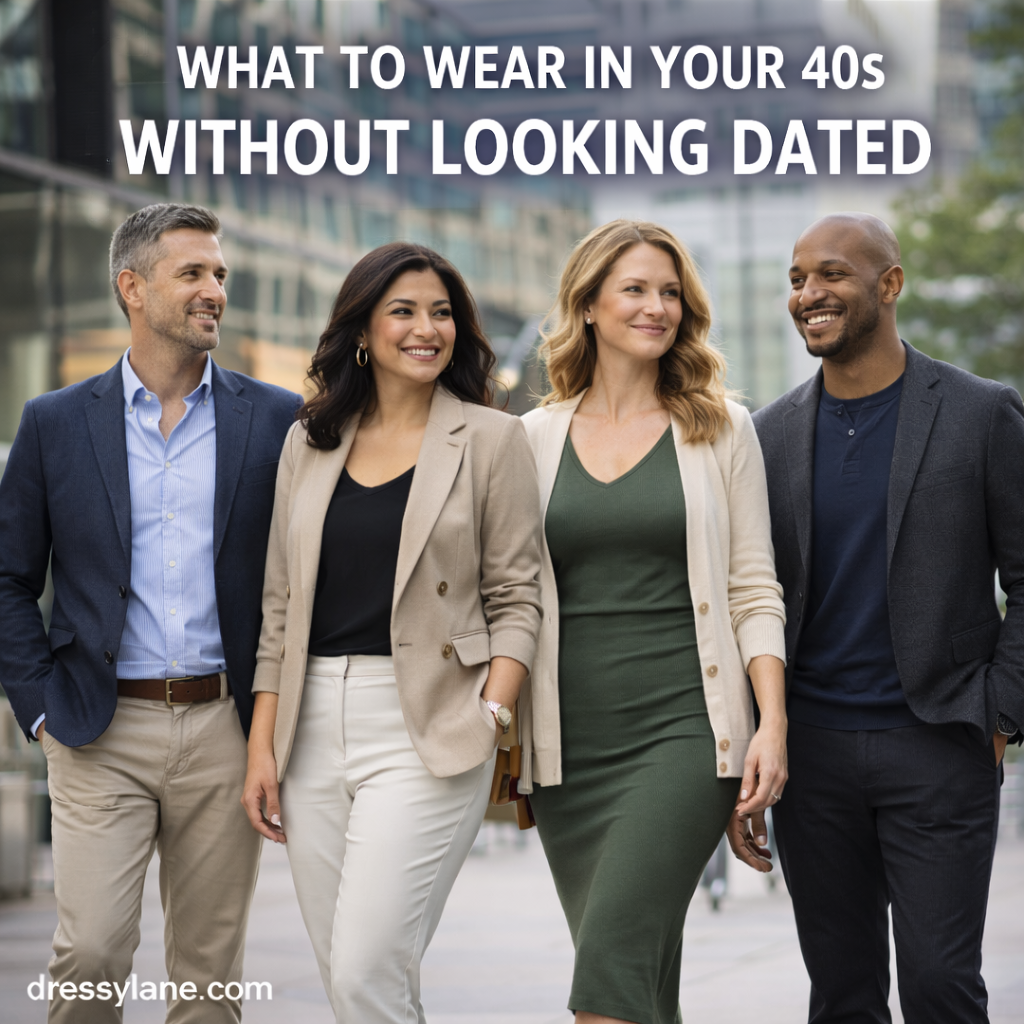
Looking current in your 40s doesn’t require dressing younger, replacing your wardrobe every season, or giving up clothes you’ve worn for years.
In fact, some of the best pieces in a wardrobe may be older.
What can make an outfit look dated is usually more specific: a trouser shape that hasn’t been reconsidered in years, a jacket that’s noticeably too long or short for everything you wear it with, shoes that are worn beyond repair, or several once-trendy details appearing together.
The goal isn’t to erase signs of a particular decade. It’s to make sure your clothes still look like choices you’re making now.
Don’t Confuse “Timeless” With “Never Updating Anything”
A navy blazer can be timeless. So can jeans, loafers, a white shirt, a trench coat, or a black dress.
But the way those pieces are cut and styled changes.
Take a blazer. One version might be sharply fitted at the waist with narrow lapels and cropped sleeves. Another might have a straighter body, slightly stronger shoulder, and enough room for knitwear underneath.
Both are blazers. Neither is automatically right or wrong.
This is why I’d review the shape of older wardrobe staples before replacing them simply because of age.
Put the garment on with clothes you currently wear.
Does the blazer still work with your trousers?
Does the jean rise sit where you want it?
Does the coat accommodate your sweaters?
Does the shoe shape make sense with your current trouser hems?
Sometimes an old favorite works perfectly. Keep it.
Update Proportions Before You Update Your Entire Wardrobe
Proportion is one of the fastest ways to make familiar clothes feel current.
If your trousers have become wider, you might prefer them with a shorter jacket, tucked shirt, or knit that finishes around the waistband.
If you’re wearing straight jeans, a slightly roomier shirt or jacket can balance them differently than the very fitted tops you may have worn with skinny denim.
For women, that could mean wide-leg trousers with a fitted ribbed knit and loafers.
For men, straight trousers with a knit polo and unstructured jacket can achieve the same balance.
I wouldn’t follow a rigid rule such as “wide bottoms require fitted tops.” Oversized pieces can work together beautifully.
The useful question is whether you can still see some structure in the outfit—or whether everything is simply competing for volume.
What Women Can Wear in Their 40s
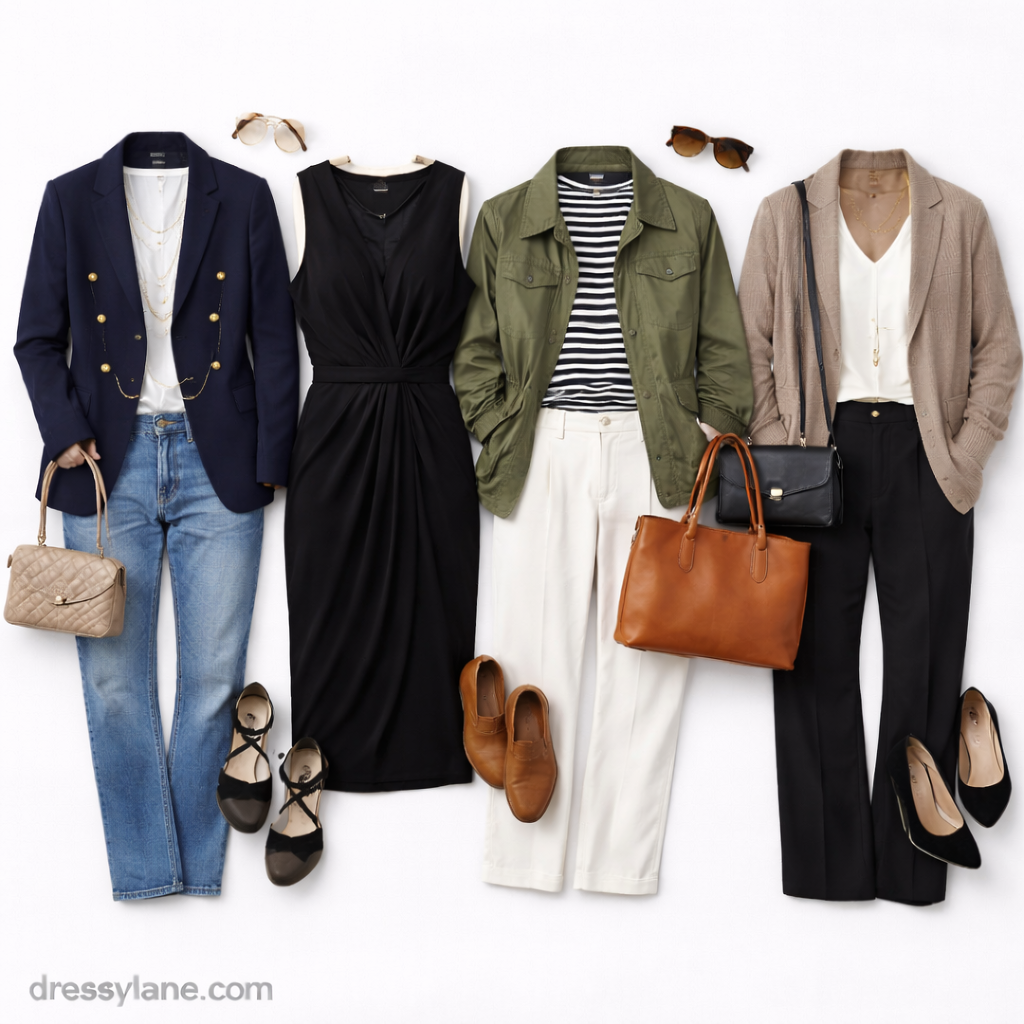
There isn’t a special category of clothing women need to enter at 40.
Jeans still work. Short skirts can still work. Sneakers work. Color works. Trends work.
The difference is knowing which versions genuinely suit your wardrobe.
A practical everyday rotation might include:
- Straight or wide-leg jeans
- Tailored trousers
- Cotton poplin shirts
- Fine-gauge knitwear
- Substantial T-shirts
- Midi dresses
- Blazers or casual jackets
- Loafers, flats, boots, sneakers, or heels
For an everyday outfit, try straight jeans with a cotton shirt, loafers, and a relaxed blazer.
For work, wide-leg wool-blend trousers with a fitted knit and low slingbacks create a clean silhouette without feeling overly corporate.
For dinner, a simple midi dress with ankle boots or a leather jacket can be easier than buying something specifically labeled “evening.”
The point isn’t that these garments are age-appropriate. They’re simply useful.
Don’t Automatically Abandon the Clothes You Already Like
One piece of advice I’d ignore is that women should stop wearing certain silhouettes after a particular age.
If you genuinely prefer skinny jeans, you don’t need to throw them away because wider denim is currently more visible.
Instead, reconsider how you’re styling them.
A slim jean with a substantial loafer, contemporary boot, oversized cotton shirt, or relaxed wool coat may feel completely different from wearing the same jeans with every other element you paired with them ten years ago.
Sometimes the garment isn’t dated. The entire old outfit formula is.
What Men Can Wear in Their 40s
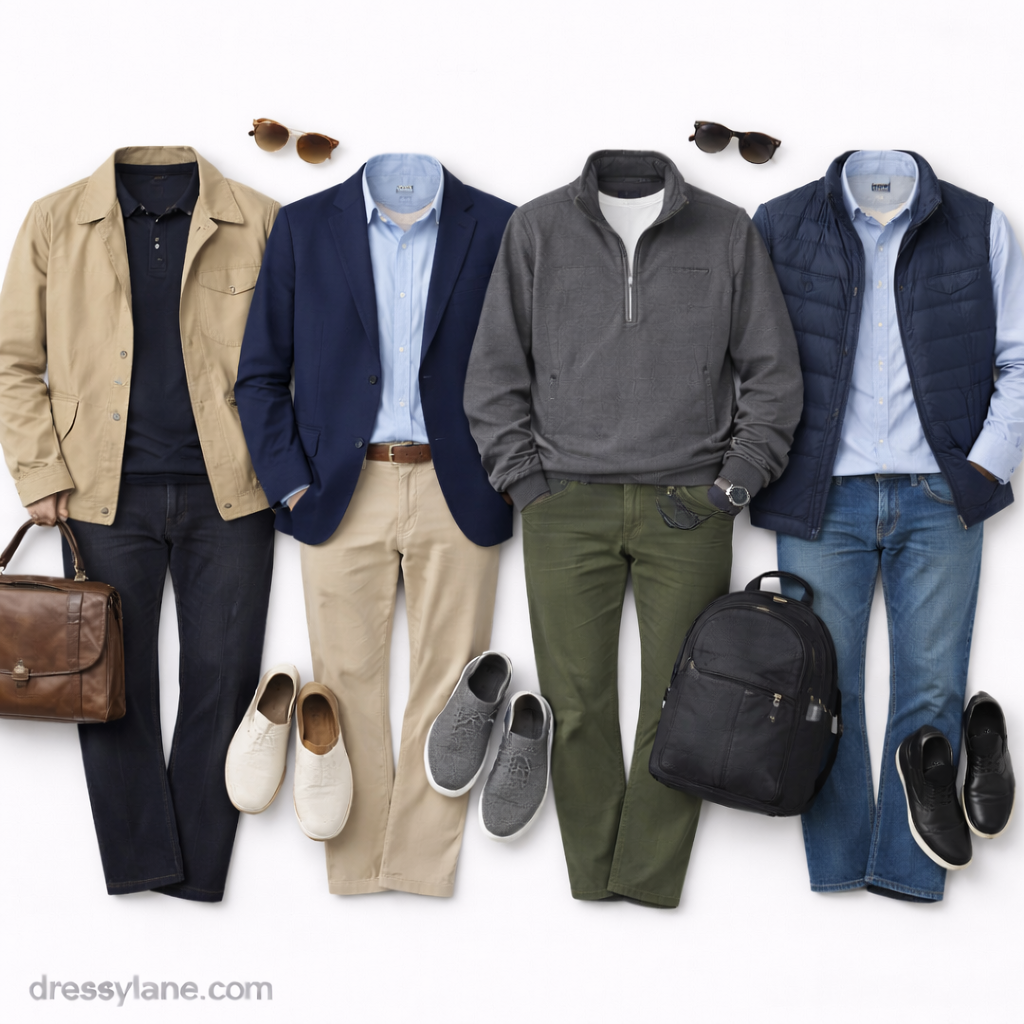
For men, looking current often comes down to fit, trouser shape, footwear, and fabric.
You don’t need complicated outfits.
Straight jeans, a heavyweight T-shirt, suede jacket, and clean sneakers can look excellent. So can chinos with an Oxford shirt and loafers.
For slightly dressier situations, try wool trousers with a knit polo and unstructured blazer.
Useful pieces might include:
- Straight or gently tapered jeans
- Chinos or wool trousers
- Oxford and poplin shirts
- Knit polos
- Merino or cotton sweaters
- Overshirts
- Unstructured jackets
- Leather or suede footwear
I’d pay particular attention to trousers.
Extremely low rises, excessive fabric pooling around the ankle, or very tight trousers paired with equally tight shirts can make an outfit feel connected to a specific past trend cycle.
But the solution isn’t automatically “wear baggy clothes.”
A clean straight leg or moderate taper is often enough.
Footwear Can Date an Outfit Faster Than the Shirt
If you want to update your wardrobe without replacing everything, look at your shoes.
Shoes interact directly with current trouser and jean shapes, so a change in footwear can alter the whole silhouette.
For example, wider trousers may sit more naturally over a substantial loafer, boot, or sneaker than a very narrow shoe.
Cropped trousers expose more of the footwear, making its shape especially noticeable.
That doesn’t mean you need whatever shoe is currently trending.
Instead, check condition and proportion.
Are the toes badly scuffed? Are the soles collapsing? Does the shoe look unusually narrow or bulky compared with the trousers you’re wearing now?
I’d replace genuinely worn-out footwear before replacing perfectly good clothing simply because it’s several years old.
Use Trends as Updates, Not Instructions
Trends can be useful because they expose you to different proportions, colors, fabrics, and styling ideas.
You just don’t need all of them.
If wider trousers appeal to you, try them.
If you like burgundy, incorporate a burgundy knit or shoe. If loafers suddenly make sense for your wardrobe, wear them. If you dislike a popular silhouette, skip it.
A good way to experiment is to introduce one unfamiliar element into clothes you already understand.
For example:
Straight jeans + familiar knit + new shoe shape.
Existing trousers + familiar loafers + roomier shirt.
Favorite dress + different jacket.
That lets you see whether you actually enjoy a trend before rebuilding your wardrobe around it.
Don’t Let “Classic” Become a Costume
There is nothing wrong with classic style.
But piling every traditionally polished element into one outfit can sometimes make everyday clothing feel more formal than intended.
You don’t necessarily need tailored trousers, button-down shirt, blazer, leather belt, structured handbag, watch, and polished loafers all at once.
Break it up.
Wear tailored trousers with a T-shirt and sneakers.
Put an Oxford shirt under a casual jacket.
Wear a blazer with jeans.
Pair a midi skirt with a simple knit instead of a blouse.
Mixing polished and relaxed pieces is often what makes familiar clothing feel current.
Prints Don’t Have an Expiration Date
“Busy prints are dated” is too broad to be useful.
A floral, stripe, geometric print, paisley, or check can look current or dated depending on the garment, colors, cut, and styling.
If you love a patterned blouse you’ve owned for years, try it with clean straight trousers rather than automatically replacing it.
If the pattern feels overwhelming, separate it from other decorative elements.
You may discover the print wasn’t the problem at all.
The same applies to logos. A logo isn’t inherently unstylish, and logo-free clothing isn’t automatically sophisticated.
Context matters more than arbitrary rules.
Color Doesn’t Have to Become More Conservative
You don’t need to move toward an exclusively neutral wardrobe in your 40s.
Navy, charcoal, cream, camel, white, black, olive, and brown are useful because they’re easy to combine—not because they’re more appropriate for adults.
Keep color if you enjoy it.
A red knit with charcoal trousers, forest-green jacket with jeans, cobalt shirt under a navy blazer, or burgundy dress with brown boots can all look polished.
If you’re unsure about a strong color, surround it with pieces you already know how to wear.
That’s easier than trying to build an entirely colorful outfit at once.
Clothes Should Work With Your Current Body
Bodies change.
That isn’t a styling failure.
If clothes you once loved now pull across the shoulders, dig into the waist, or sit differently through the hips, assess the garment rather than blaming yourself.
Try another size, rise, fabric, or cut.
Alterations can also solve surprisingly specific problems: trouser hems, jacket sleeves, waist suppression, and shirt length can sometimes be adjusted without replacing the entire garment.
I’d rather have five pairs of trousers that fit your body today than fifteen that you’re keeping in the hope they’ll eventually fit the way they once did.
Dressing for Real Life Keeps Style From Feeling Forced
Your wardrobe should reflect what you actually do.
If you spend most of your week in a casual workplace, you may get more use from excellent jeans, knitwear, overshirts, trousers, and comfortable shoes than traditional business clothing.
If you attend frequent meetings, jackets and smarter shoes may deserve more attention.
If you travel often, wrinkle resistance and layering become important.
If weekends involve walking, don’t build your casual wardrobe around shoes you can’t comfortably walk in.
Age doesn’t determine those priorities. Lifestyle does.
A Better Way to Find What’s Making an Outfit Feel Dated
If an outfit feels off, don’t immediately replace it.
Change one element at a time.
Try the same jeans with different shoes.
Try the jacket with different trousers.
Swap the fitted top for a relaxed shirt.
Change the hem.
Remove an accessory.
Take a photo in natural light and look at the overall silhouette rather than focusing on individual garments.
This is something I’d actually do before shopping.
Often, you’ll discover that one piece is causing the outfit to feel anchored to an older styling formula—and everything else is perfectly usable.
Final Thoughts
Knowing what to wear in your 40s without looking dated isn’t about memorizing which clothes you’re supposedly too old to wear.
It’s about keeping your wardrobe connected to your current life and current preferences.
Pay attention to proportion. Check whether your shoes still work with your trouser shapes. Update the way you combine familiar pieces. Keep older clothes that still fit and look good, and experiment with newer silhouettes when they genuinely appeal to you.
Most importantly, don’t confuse looking current with looking younger.
The goal isn’t to convince anyone you’re in a different decade of life. It’s to make your clothes look like they belong to the person you are now—not simply the person who originally bought them.