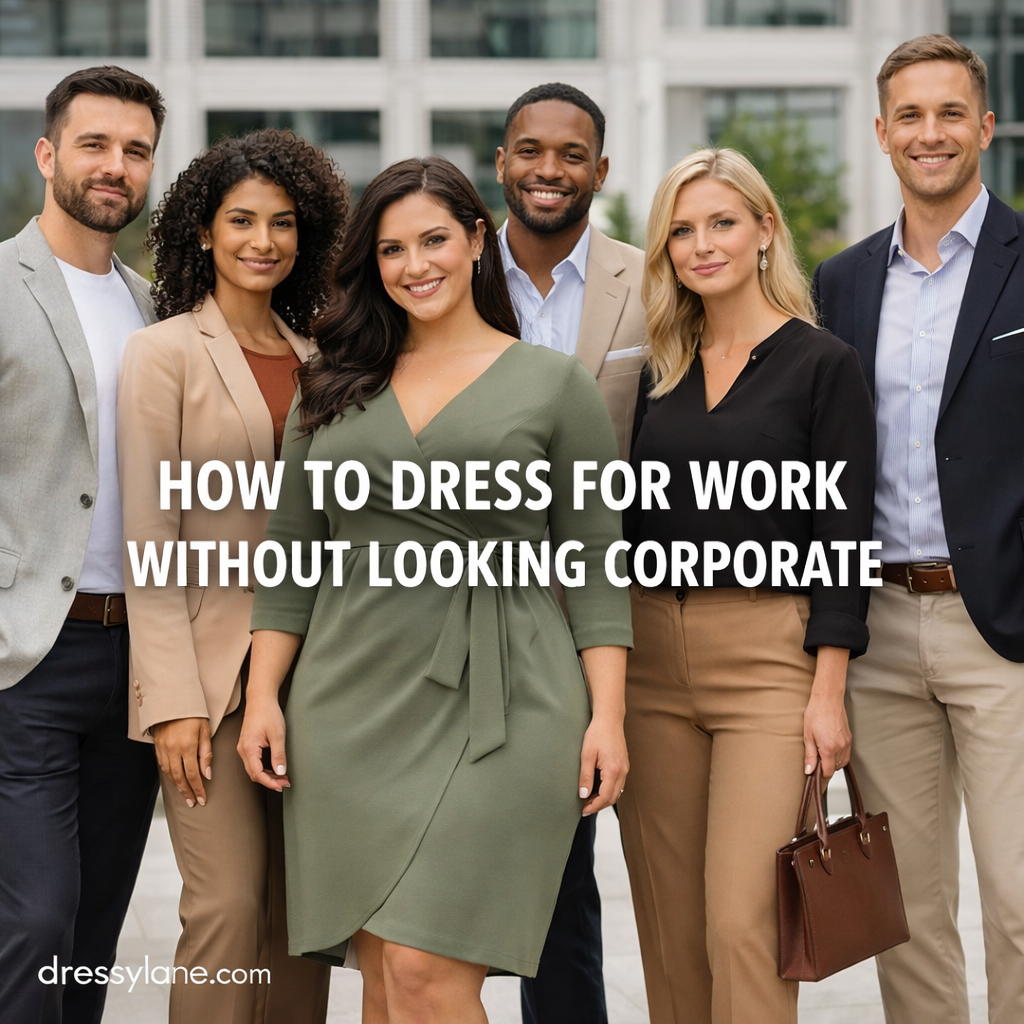
You can look professional at work without dressing like you’re heading into a boardroom every morning. A matching suit, crisp white shirt, and polished dress shoes might be appropriate in some offices, but they aren’t the only way to look put-together.
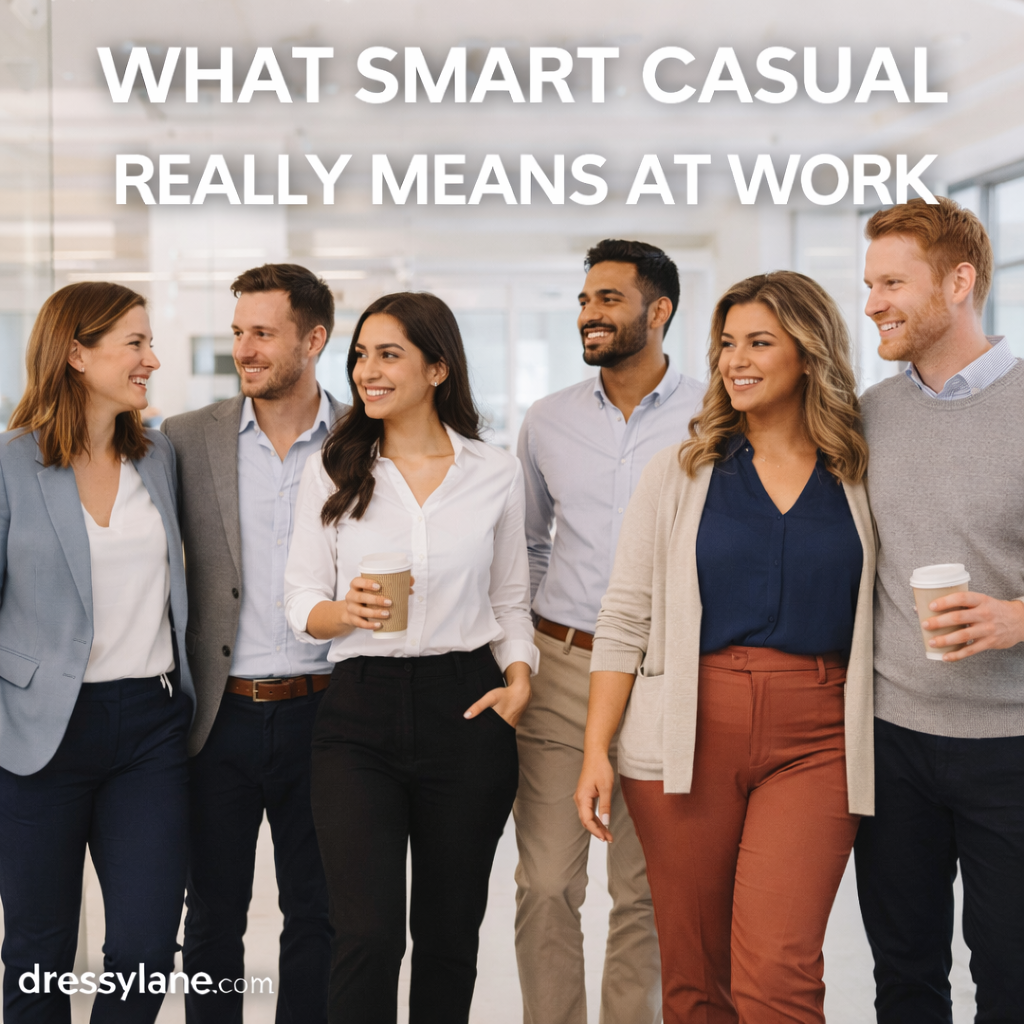
If you work in a creative agency, technology company, or business casual office, you may have more freedom to wear relaxed tailoring, interesting textures, and clothing that reflects your personal style.
The trick is knowing which traditional corporate pieces to replace and what to wear instead.
A pair of olive trousers, a fine-knit sweater, and leather loafers, for example, can look just as intentional as a conventional business outfit without feeling nearly as formal.
Here’s how to dress for work without looking corporate while keeping your outfits appropriate for your workplace.
What Makes an Outfit Look Too Corporate?
Sometimes it’s not a particular item that makes an outfit look corporate. It’s how several formal pieces are combined.
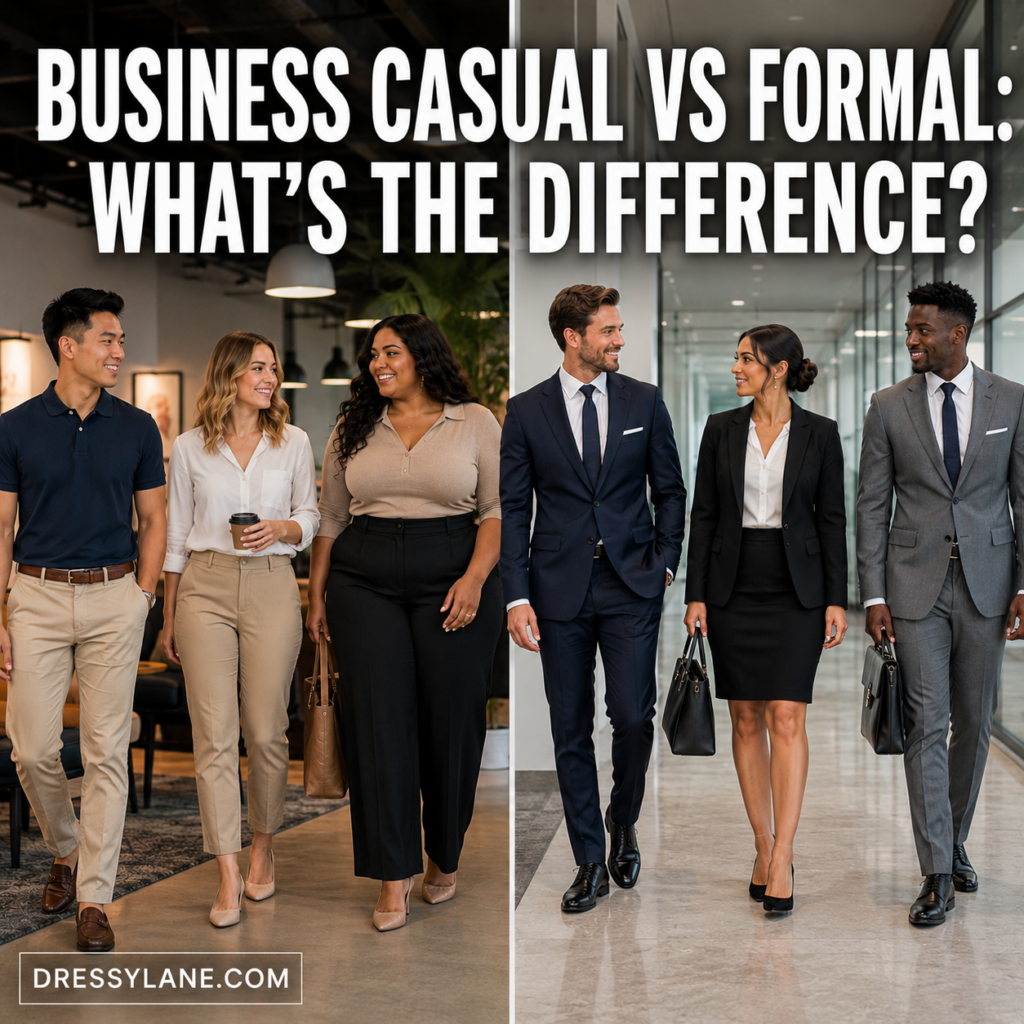
A navy blazer, matching trousers, white dress shirt, black belt, and polished Oxford shoes create a traditional business look.
There’s nothing wrong with that combination, but it may feel unnecessarily formal in an office where most employees wear chinos, knitwear, and casual jackets.
To make the outfit more relaxed, you don’t need to replace everything.
Keep the navy blazer, but wear it with stone-colored trousers, a fine-gauge knit, and brown suede loafers.
The result is still professional, but the contrast between the pieces makes it feel less like a uniform.
My recommendation is to change one or two elements rather than trying to make every item casual. Relaxed trousers with a structured jacket often work better than combining an oversized shirt, baggy pants, and casual sneakers all at once.
Start With Relaxed Tailoring
Traditional corporate clothing often relies on sharp shoulders, matching suits, and precisely pressed trousers.
A non-corporate work wardrobe can use tailoring in a softer way.
Look for unstructured blazers with minimal shoulder padding, straight-leg trousers, and jackets made from matte cotton or lightweight wool blends.
For example, a softly tailored charcoal blazer worn over a cream knit top looks less formal than the same jacket paired with a stiff dress shirt and matching trousers.
Trouser fit matters, too.
A straight or gently tapered leg usually provides a relaxed silhouette without looking sloppy. Wide-leg trousers can also work beautifully when the waistband fits properly and the hem falls neatly over your shoes.
I’d avoid buying an extremely oversized blazer simply because relaxed tailoring is fashionable. If the shoulders extend too far beyond your natural frame and the sleeves cover your hands, the jacket may look borrowed rather than intentionally styled.
Choose a relaxed cut that still fits through the shoulders and allows you to move comfortably.
How to Dress for Work Without Looking Corporate: Women
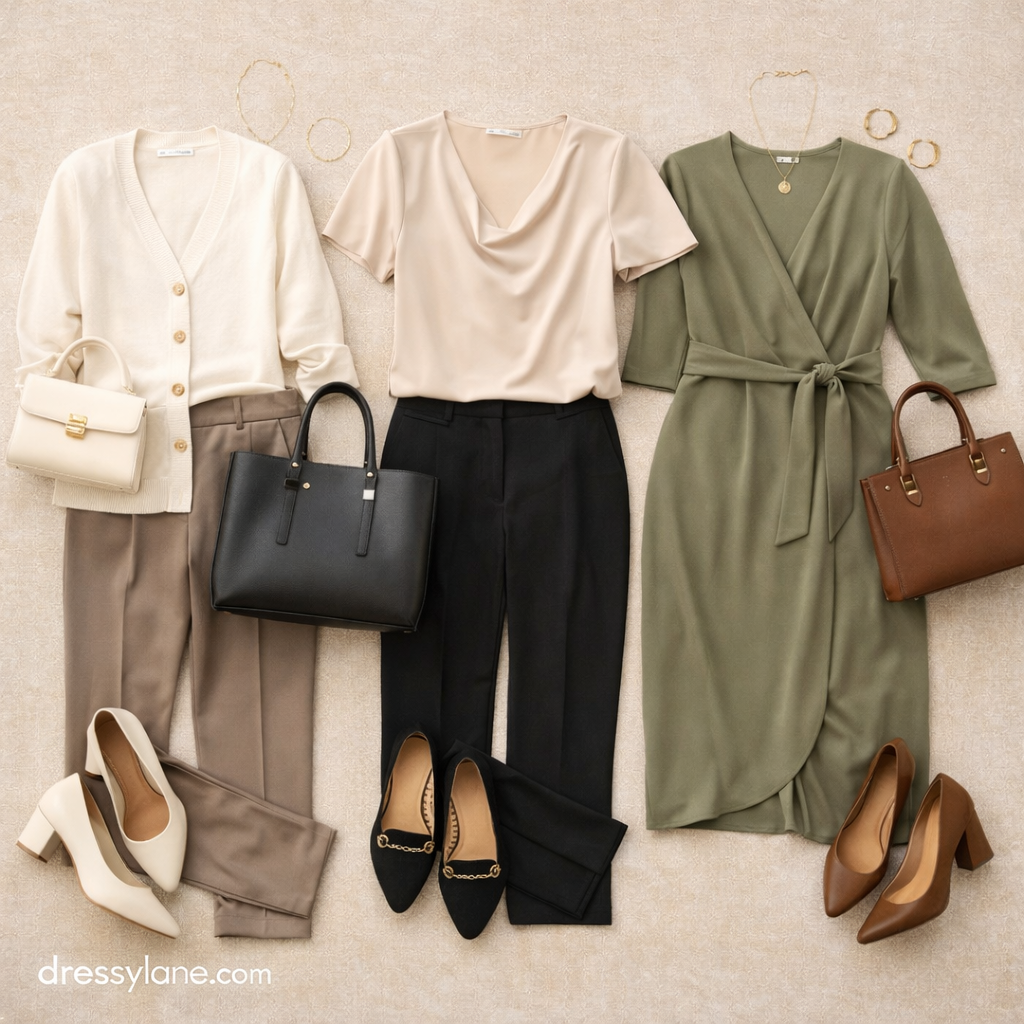
Women’s workwear doesn’t have to revolve around matching pantsuits, pencil skirts, and traditional blouses.
A few modern silhouettes can make your outfits feel more personal while maintaining a professional appearance.
Replace the Traditional Blouse
If crisp button-down shirts feel too formal, try a fine-gauge merino sweater, structured cotton T-shirt, or soft blouse with a simple neckline.
A cream knit top tucked into olive straight-leg trousers, for example, creates a clean outfit without looking like conventional corporate attire.
For layering, choose an unstructured blazer or cropped jacket rather than a heavily padded suit jacket.
Avoid extremely thin jersey tops if you want a polished finish. A substantial cotton knit tends to hold its shape better and looks more intentional beneath a jacket.
Choose Trousers and Skirts With Softer Silhouettes
Instead of relying on sharply creased suit trousers, consider:
- Relaxed straight-leg trousers in charcoal or taupe.
- Wide-leg pants in a matte wool blend.
- Ankle-length cotton trousers with a clean hem.
- A simple A-line or bias-cut midi skirt.
A bias-cut midi skirt paired with a fine-knit sweater and leather loafers is a particularly useful combination for business casual offices.
It feels less structured than a pencil skirt and matching blazer but still looks appropriate for meetings.
Try Dresses That Don’t Feel Like Corporate Uniforms
A dress can be one of the easiest ways to avoid traditional office separates.
Look for shirt dresses in cotton poplin, midi dresses in substantial jersey, or simple knit dresses with a relaxed but defined shape.
A dark olive shirt dress with a leather belt and brown ankle boots is a good example.
For a slightly more polished appearance, add a cropped jacket or lightweight cardigan.
I’d skip overly stiff sheath dresses if your goal is to move away from corporate styling. A softly structured midi dress usually offers more versatility for everyday wear.
How to Dress for Work Without Looking Corporate: Men
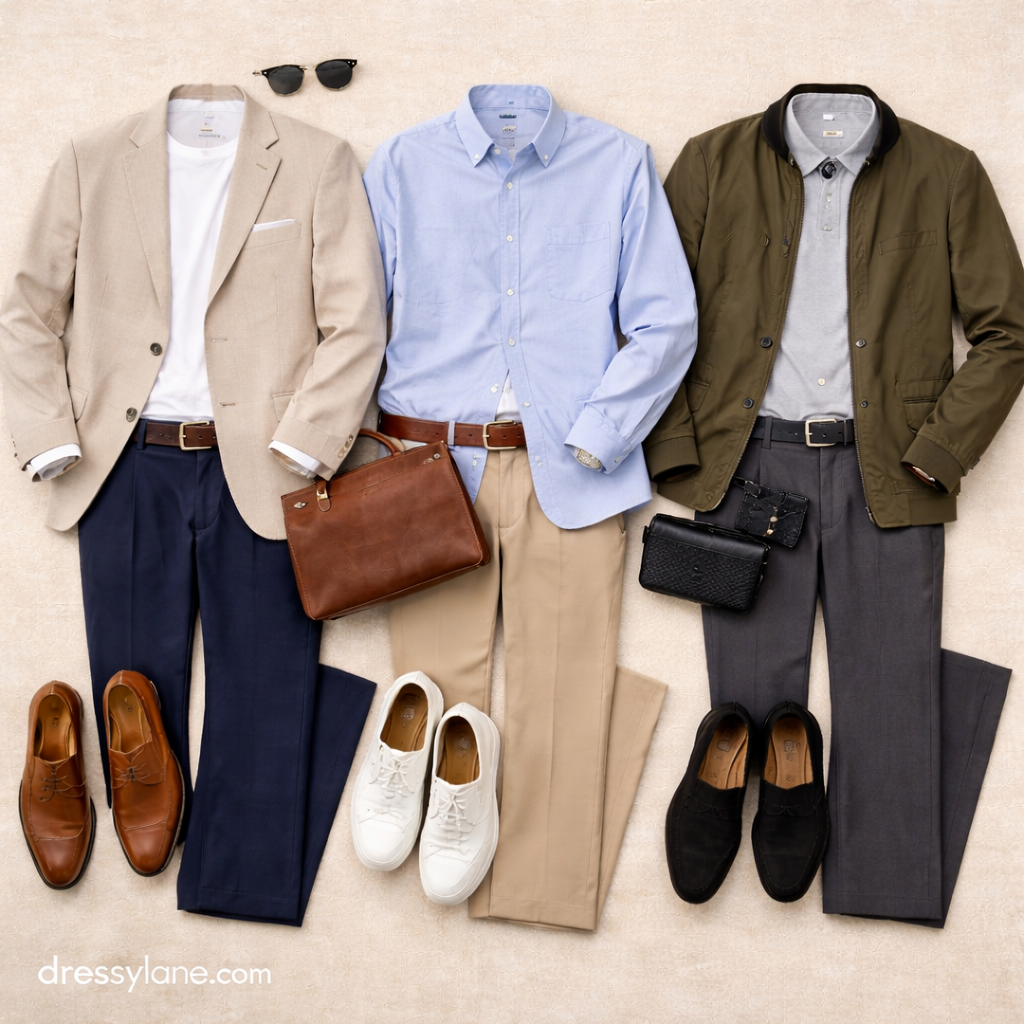
For men, moving away from corporate clothing often means replacing traditional dress shirts, matching suits, and formal shoes with softer alternatives.
You can still wear a blazer or tailored trousers. The difference is in the fabric, fit, and combination.
Swap the Suit Jacket for an Unstructured Blazer
An unstructured blazer is one of the most useful pieces for a non-corporate work wardrobe.
Look for jackets made from cotton twill, lightweight wool, or linen blends with minimal shoulder padding.
A navy unstructured blazer worn with stone chinos and a fine-knit polo looks polished without resembling a traditional suit.
If your workplace is more casual, a clean overshirt or structured chore jacket can work as an alternative.
Choose one in a solid color with minimal hardware rather than a heavily distressed or utility-focused design.
Wear Shirts That Feel Less Formal
You don’t need a crisp white dress shirt every day.
Consider these alternatives:
- Cotton Oxford shirts with a relaxed button-down collar.
- Fine-knit polos in navy, cream, or olive.
- Lightweight merino crew-neck sweaters.
- Casual cotton shirts with subtle texture.
A dark brown knit polo with charcoal trousers and suede loafers is an easy combination that feels more contemporary than a shirt-and-tie outfit.
I’d avoid pairing a traditional silk tie with an otherwise relaxed outfit unless there’s a specific reason to wear one. It can make the look feel unnecessarily formal.
Choose Trousers That Aren’t Suit Pants
Chinos and softly tailored trousers are useful alternatives to matching suit trousers.
Look for cotton twill with a small amount of stretch or lightweight wool trousers with a straight or gently tapered leg.
Olive chinos, a cream sweater, and brown leather loafers create a coordinated outfit without relying on traditional corporate colors.
If your office allows jeans, dark indigo denim with a clean finish can also work.
Avoid heavily faded denim, excessive distressing, and trousers that bunch around your shoes.
Use Color to Move Away From the Corporate Look
You don’t need to abandon navy, gray, or black, but relying exclusively on those colors can make your wardrobe feel repetitive.
Introduce softer, earthier shades such as olive, taupe, stone, chocolate brown, cream, and muted burgundy.
For example, replace a black blazer and black trousers with a chocolate brown jacket, cream knit, and charcoal pants.
The outfit remains coordinated but feels less like traditional business attire.
Texture also helps. A matte cotton jacket, ribbed merino sweater, or brushed wool trousers adds visual interest without requiring bold prints.
I wouldn’t avoid black entirely. Black trousers with an olive knit and tan loafers can look modern and relaxed. It’s the overall combination that determines how corporate an outfit feels.
Shoes and Accessories Can Change the Entire Outfit
Footwear is often what pushes an outfit toward either traditional business attire or a more relaxed professional look.
For women, leather loafers, pointed-toe flats, low block heels, and simple ankle boots are versatile choices.
For men, suede derbies, leather loafers, and understated Chelsea boots can replace highly polished Oxford shoes.
Clean, minimalist leather sneakers may also work if your workplace permits them.
Consider the difference between charcoal trousers worn with glossy black dress shoes and the same trousers paired with brown suede loafers. The second combination immediately feels softer.
Accessories should follow the same approach.
Choose a simple leather tote, understated watch, or practical crossbody bag rather than assuming every professional outfit requires a formal briefcase or structured handbag.
Personal accessories can add character, provided they don’t interfere with your work or conflict with workplace requirements.
Three Easy Non-Corporate Outfit Formulas
If you’re unsure how to combine relaxed and professional pieces, start with one of these outfit formulas.
1. The relaxed blazer outfit
An unstructured blazer, fine-knit top, straight-leg trousers, and leather loafers.
This works well for business casual offices and meetings that don’t require a full suit.
2. The polished knit outfit
A merino sweater or knit polo, tailored chinos or wide-leg trousers, and clean leather shoes.
It’s a practical choice for everyday office work when a jacket isn’t necessary.
3. The modern casual outfit
A substantial cotton shirt, dark clean denim or cotton trousers, a structured overshirt, and minimalist footwear.
This combination suits more relaxed workplaces, particularly creative and technology offices where denim is permitted.
Each formula can be adjusted through color and fabric without changing the overall silhouette.
Common Mistakes That Make Non-Corporate Outfits Look Too Casual
Moving away from traditional business clothing doesn’t mean ignoring your workplace’s dress code.
A few details can make the difference between relaxed professionalism and an outfit that looks better suited to the weekend.
- Too many oversized pieces: Balance relaxed trousers with a more defined top or an oversized shirt with straight-leg pants.
- Worn footwear: Clean shoes and well-maintained soles help casual outfits look intentional.
- Thin or stretched-out fabrics: Choose knitwear and cotton tops that maintain their shape.
- Excessively distressed clothing: Ripped jeans, frayed hems, and heavily faded garments may be inappropriate in many offices.
- Ignoring the occasion: Keep a blazer or more formal outfit available for important meetings, presentations, or client visits.
One practical approach is to prepare a slightly more polished version of your everyday outfit rather than maintaining two completely separate wardrobes.
For example, the same knit top and trousers you wear on a regular workday can be paired with a blazer and leather shoes when you need to look more formal.
Final Thoughts
Dressing for work without looking corporate doesn’t require abandoning professional clothing altogether.
It’s about choosing softer tailoring, comfortable fabrics, modern silhouettes, and combinations that feel less rigid than traditional business attire.
Start by replacing the pieces that make your outfits feel overly formal. Swap a structured suit jacket for an unstructured blazer, try knitwear instead of a stiff dress shirt, or introduce relaxed trousers in olive, stone, or charcoal.
You can maintain a professional appearance while dressing in a way that feels more natural to your personality and workplace.
The goal is a wardrobe that looks intentional without making you feel as though you’re wearing a corporate uniform every morning.