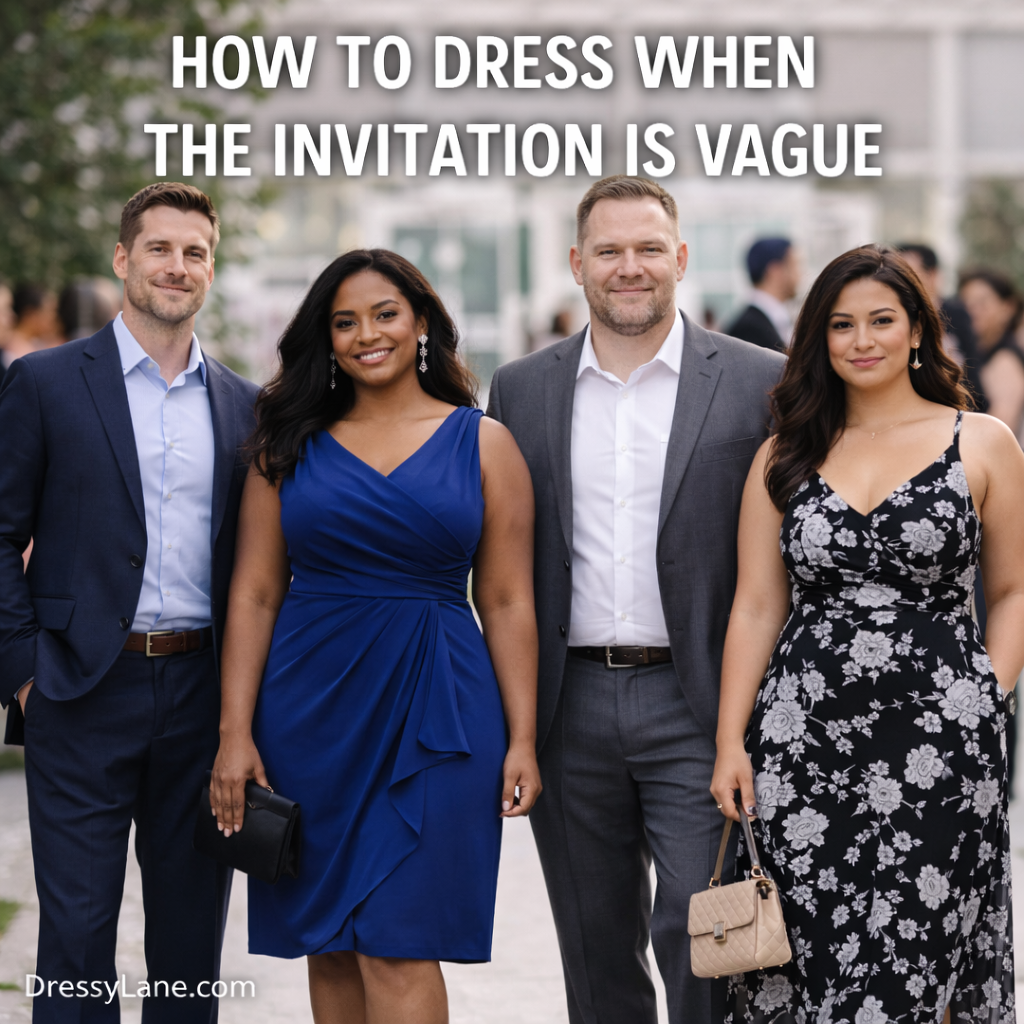
Few things create outfit uncertainty faster than an invitation that tells you everything except what to wear.
You know the wedding starts at 5:30. You know it’s at a nice hotel. You know there’s dinner afterward. But there’s no mention of cocktail attire, semi-formal, or even “dressy casual.”
Or perhaps the invitation uses a phrase like “celebration attire” or “dress to impress,” which sounds helpful until you actually open your closet.
When the invitation is vague, don’t try to decode a dress code that isn’t there. Look at the event itself. The venue, starting time, type of celebration, and even whether dinner is seated or casual can tell you much more than an ambiguous phrase.
Read the Invitation for Clues Beyond the Dress Code
Before deciding what to wear, gather the information you already have.
Start with the venue. An evening reception in a downtown hotel ballroom suggests a different outfit from an afternoon wedding in someone’s backyard, even if neither invitation specifies attire.
Then consider the time. Evening events generally support darker colors, dressier fabrics, jackets, and more polished shoes. Daytime events often work better with lighter colors, softer tailoring, and less formal accessories.
The event itself matters too. A wedding ceremony followed by a plated dinner deserves more polish than an open-house anniversary party with drinks and appetizers.
Season and setting can narrow things down further. Linen and lightweight wool make sense at a warm-weather winery. Velvet or a heavier crepe dress would feel more natural at an evening winter celebration.
None of these clues creates an official dress code, but together they usually give you a useful range.
Aim for the Middle, Not the Maximum
When people are worried about being underdressed, they sometimes jump directly to their most formal option. I wouldn’t.
If an invitation is truly vague, the most useful outfit is one that sits comfortably in the middle and can be adjusted slightly.
For men, that might be a navy suit with a white or pale-blue shirt and polished loafers. Bring a tie rather than assuming you need to wear it.
For women, a knee- or midi-length dress in crepe, matte satin, or a substantial knit gives you similar flexibility. Add a low heel or refined flat and simple jewelry rather than immediately reaching for your most formal accessories.
I’d especially avoid wearing something that only makes sense if the event turns out to be very formal. A floor-length evening gown or tuxedo is difficult to tone down once you’re standing in a room full of people wearing cocktail dresses and open-collar shirts.
The middle ground gives you options.
What Men Can Wear When the Invitation Is Vague
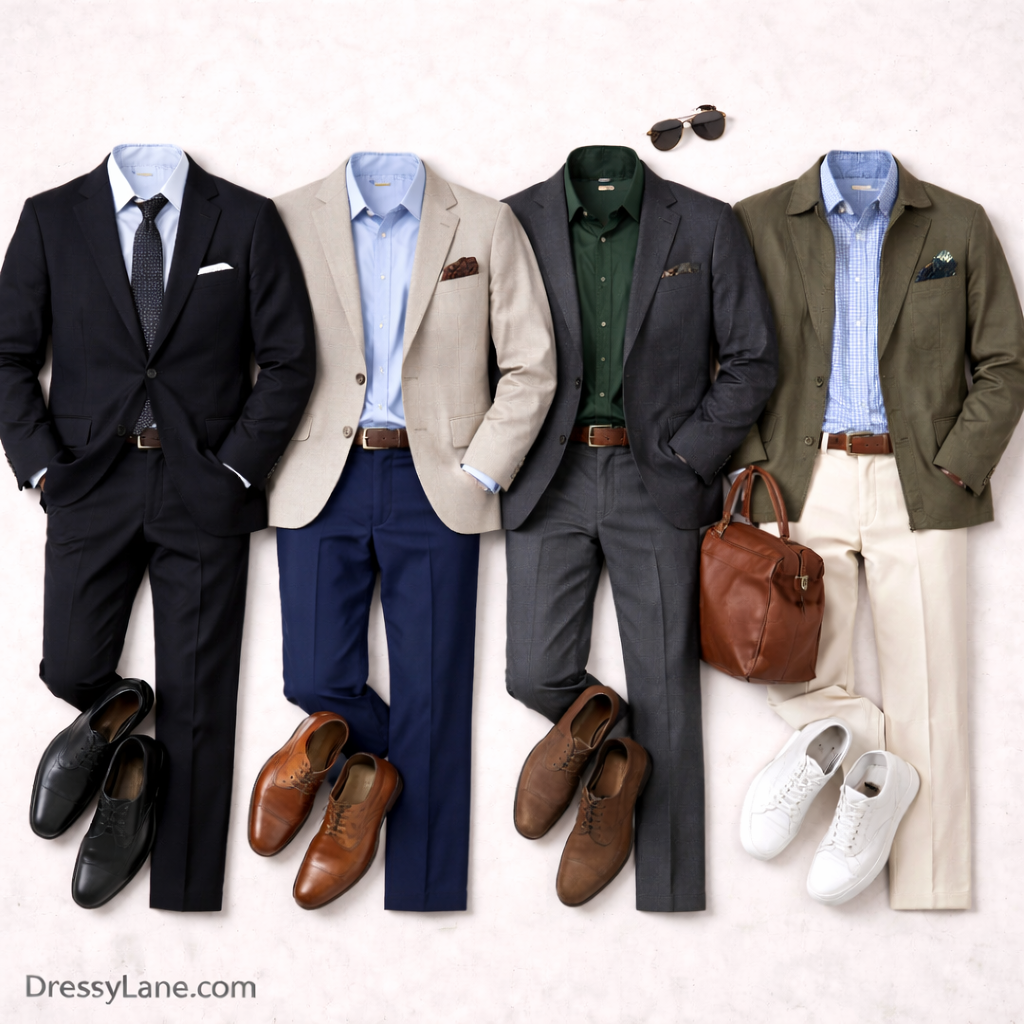
For many weddings, dinners, receptions, and milestone celebrations without a stated dress code, a navy or charcoal suit is one of the most adaptable choices a man can own.
The reason isn’t that a suit is always required. It’s that you can change how one reads.
A navy suit with a white dress shirt, silk tie, and polished leather Oxfords looks appropriately formal. Remove the tie and switch to loafers, and the same suit becomes noticeably more relaxed.
Depending on the venue, you could also wear:
- A navy blazer with medium-gray wool trousers and loafers
- A lightweight wool suit with an open-collar shirt
- Dress trousers with a textured sport coat
- Chinos with an Oxford shirt and blazer for a clearly more relaxed setting
I’d generally skip jeans and athletic sneakers for a vague wedding or evening celebration unless something else about the invitation clearly points toward casual attire. They’re easy to wear if you’re told an event is casual; they’re harder to defend when everyone else arrives in jackets.
Also pay attention to the shirt. A crisp Oxford-cloth or poplin shirt usually gives you more flexibility than a highly formal French-cuff shirt.
What Women Can Wear When the Invitation Is Vague
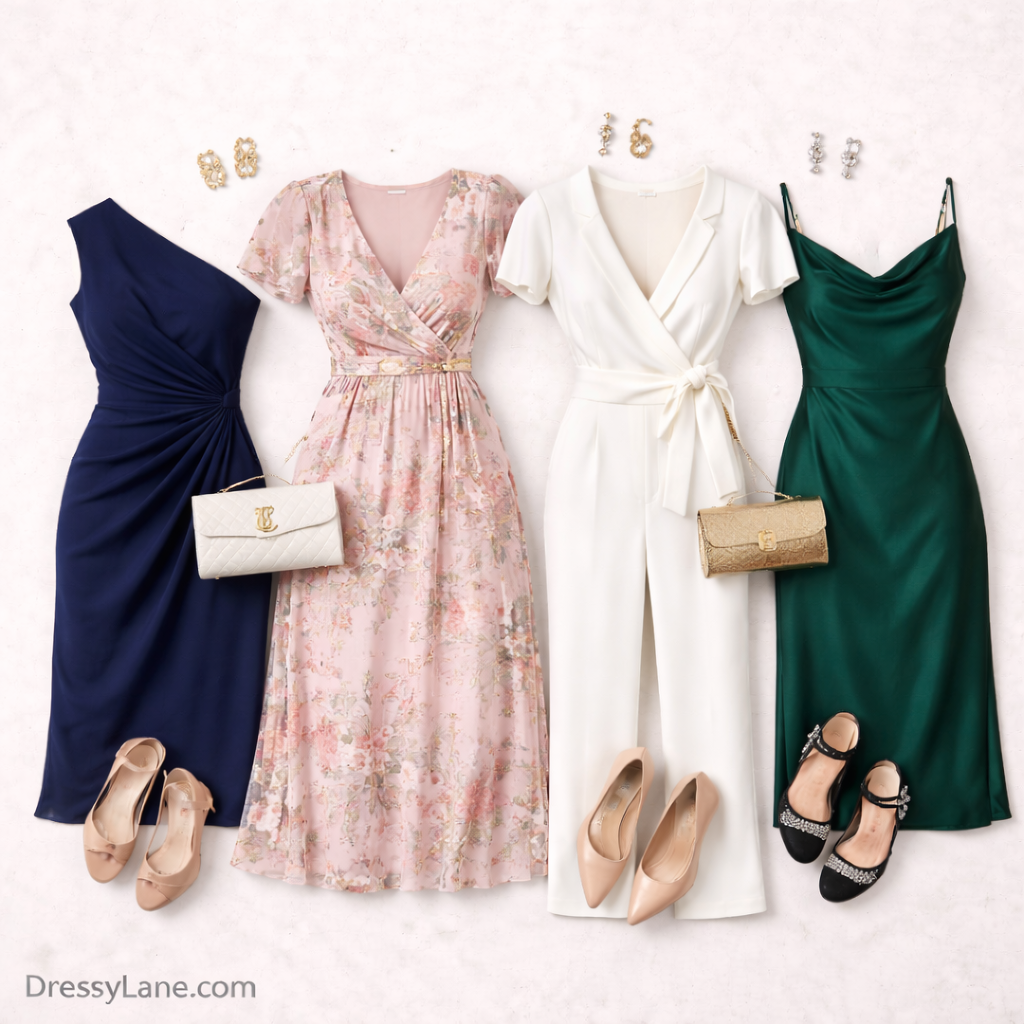
For women, I think the sweet spot is often a dress or jumpsuit that could reasonably work at both a nice dinner and a wedding reception.
A midi dress is especially useful because the length doesn’t force the outfit toward either extreme. Look for fabrics with some substance—crepe, ponte, linen blends, matte satin, or a quality knit—rather than thin cotton jersey that can read very casual.
A few reliable options include:
- A solid-color midi dress with low heels or refined flats
- A wrap-style dress in crepe or a substantial knit
- A tailored jumpsuit with simple jewelry
- Wide-leg trousers with a silk or crepe blouse
- A coordinated blouse-and-skirt combination with understated shoes
If I’m uncertain about formality, I’d rather make a relatively simple dress look slightly more elegant with accessories than start with a highly embellished dress and try to tone it down.
Shoes make that adjustment easy. A block heel, slingback, pointed flat, or simple heeled sandal can sit comfortably between everyday and formal. The same principle applies to bags and jewelry: polished doesn’t have to mean sparkly.
Let the Venue Break the Tie
When you’re stuck between two outfits, look up the venue.
A historic hotel ballroom with chandeliers, white tablecloths, and a formal reception space gives you permission to choose the dressier option.
A garden, winery, beachside venue, converted barn, or private home often allows softer tailoring and more relaxed fabrics.
For example, if you’re deciding between a structured navy cocktail dress and a floral crepe midi dress for a 3 p.m. garden wedding, I’d probably choose the midi. For a 7 p.m. anniversary dinner in an upscale hotel, the navy dress becomes the more natural choice.
The venue won’t tell you everything, but it can often settle a close decision.
Make One Part of the Outfit Adjustable
This is my favorite practical trick for vague invitations.
Don’t build an outfit that only works at one level of formality.
For men, bring a tie and wear a jacket that can comfortably come off later. For women, choose an outfit that works with or without a dressier layer, jewelry, or heel.
Even something as simple as carrying understated earrings in your bag or bringing a blazer can help.
Once you arrive, you’ll usually understand the tone of the room within about 30 seconds.
When It’s Better to Ask the Host
Sometimes there simply aren’t enough clues.
If you’re close to the host, asking isn’t rude. Keep the question specific rather than asking, “What should I wear?”
Ask something like whether people are generally wearing suits or whether a jacket without a tie would be appropriate. For women, you might ask whether the event is closer to cocktail attire or a casual dress.
A specific question is much easier for a host to answer.
This is particularly worthwhile when there’s a large gap between your possible choices—for example, when you’re deciding between jeans and a suit rather than between a suit with or without a tie.
A Few Things I’d Avoid
I wouldn’t automatically assume “no dress code” means casual. The absence of instructions may simply mean the host expects the venue and occasion to make the level of formality obvious.
I’d also avoid trying to compensate for uncertainty with attention-grabbing clothing. A vague invitation isn’t the best occasion to experiment with a dramatic new silhouette, unusually bold accessories, or shoes you haven’t worn before.
And don’t forget practical considerations. An elegant pair of stilettos isn’t particularly useful for a ceremony on grass, just as a heavy wool suit isn’t a smart choice for an outdoor August reception.
Appropriate clothing has to work for the actual event, not just look right in a mirror.
Final Thoughts
When an invitation is vague, don’t search for a hidden dress code. Use the information you actually have.
Consider the event, venue, starting time, season, and how the celebration is being hosted. Then choose an outfit somewhere in the polished middle: refined enough to respect the occasion, but adaptable enough that you won’t feel conspicuous if other guests are slightly more casual.
For men, that often means a suit or blazer combination that works with or without a tie. For women, a midi dress, tailored jumpsuit, or polished separates can cover a surprisingly wide range of occasions.
And if you’re still deciding between two outfits, choose the one that’s easier to adjust.
A tie can come off. A blazer can be removed. Jewelry can stay in your bag. That’s much easier than trying to make a tuxedo or evening gown look casual after you’ve already arrived.