A formal wedding is an occasion to dress up, but choosing the right outfit isn’t always as straightforward as picking the fanciest dress in your closet. A satin midi dress might be perfect for an afternoon ceremony at an elegant hotel, while an evening reception in a grand ballroom may call for a floor-length gown.
The invitation is your starting point. From there, consider the venue, time of day, and season before deciding on your dress, shoes, and accessories.
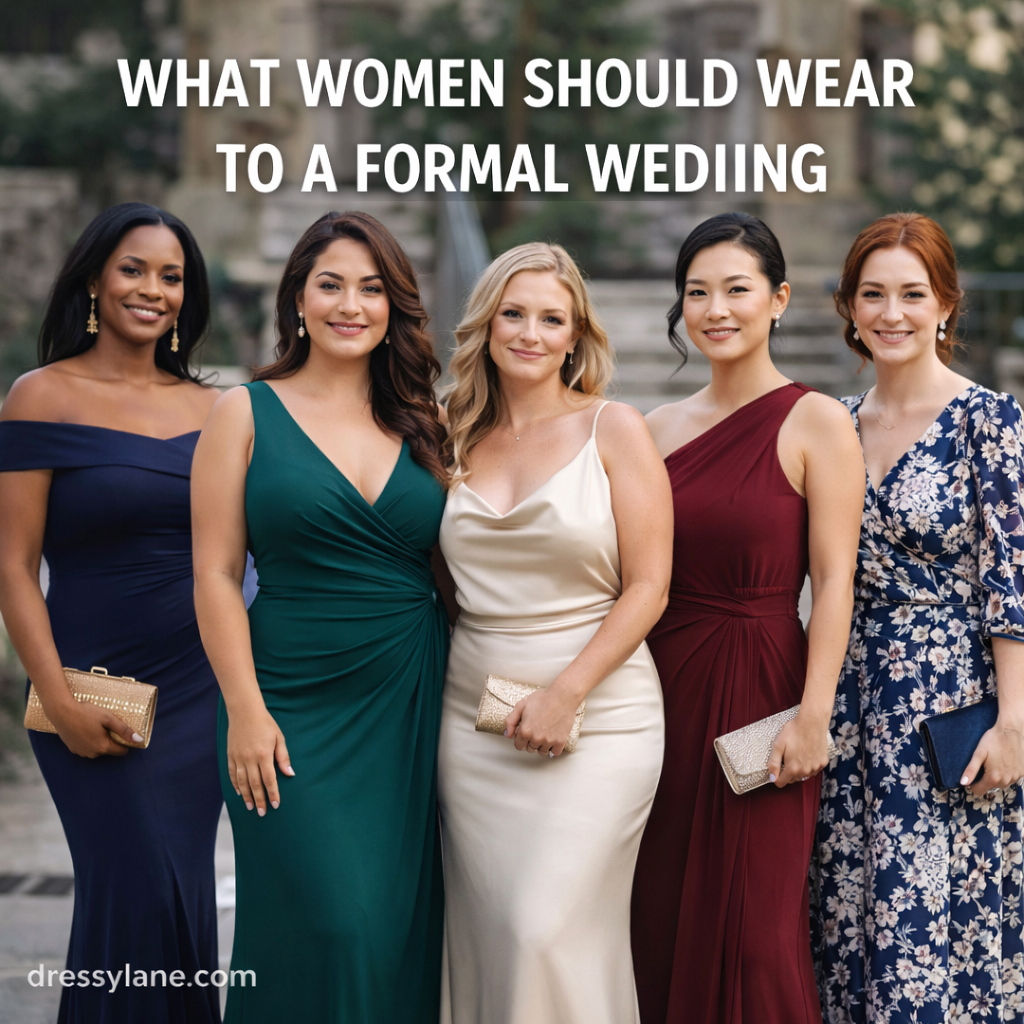
For most formal weddings, a floor-length gown or an elegant midi dress in silk, satin, chiffon, or crepe is a dependable choice. The details determine whether the finished outfit feels appropriately formal or more suited to a cocktail party.
What Does Formal Wedding Attire Actually Mean?
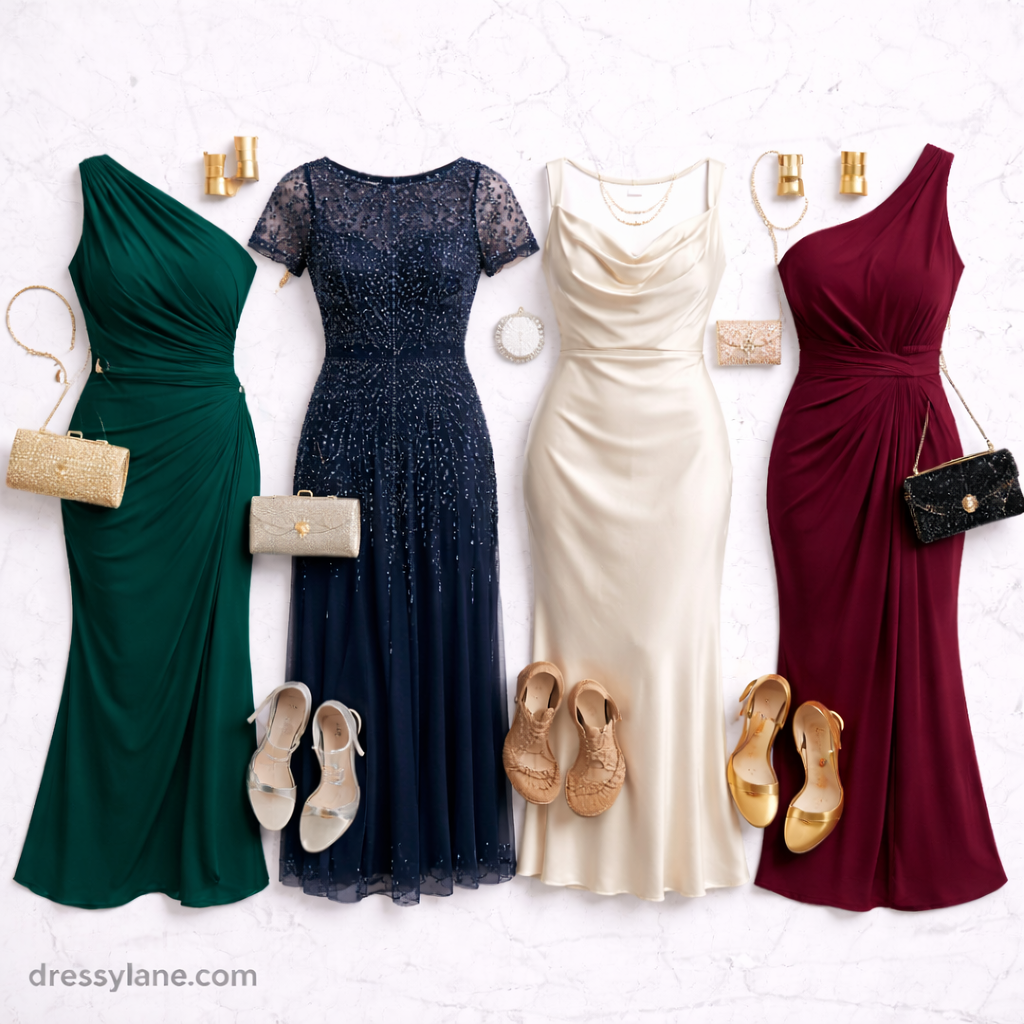
Formal wedding attire generally sits between cocktail and black tie, although the expectations can overlap.
For women, a floor-length evening gown is a reliable option, particularly for evening celebrations. An elegant midi dress can also work when the invitation specifies formal attire rather than black tie.
If the invitation says “black tie optional,” a floor-length gown is a particularly dependable choice, though an exceptionally dressy cocktail dress may also be appropriate.
The venue provides useful context. A formal afternoon wedding at a historic estate may accommodate a sophisticated floral midi dress, while a Saturday evening reception at a luxury hotel often calls for something more substantial.
When the wording is unclear, check the couple’s wedding website before purchasing a new outfit.
Start With the Dress: Length, Silhouette, and Fit
The easiest way to approach formal wedding attire is to choose a dress with a refined silhouette and let the fabric provide much of the elegance.
Floor-Length Gowns
A floor-length gown is especially appropriate for evening formal weddings.
Look for an A-line silhouette in silk chiffon, a softly draped column dress in crepe, or a bias-cut satin gown that follows the body without clinging excessively.
A navy crepe column gown with a modest neckline, silver earrings, and black evening shoes is a classic combination that doesn’t require elaborate styling.
Pay attention to the hem. A gown should skim the top of your shoes rather than drag several inches behind you.
I’d skip dresses with dramatic trains for most weddings. They’re difficult to manage in crowded reception spaces, and you’ll spend much of the evening gathering excess fabric when walking between tables.
Elegant Midi Dresses
A midi dress can be appropriate for a formal wedding when the fabric and construction feel sufficiently dressy.
Choose a structured crepe dress with a defined waist, a silk satin midi with a graceful drape, or a chiffon design with a properly lined skirt.
A simple cotton sundress, even one with a midi hemline, generally won’t have the same level of formality.
For an afternoon wedding, a deep rose satin midi dress with delicate gold jewelry and nude or metallic heels can work beautifully.
For evening celebrations, darker colors and more substantial fabrics often create a dressier appearance.
What About Cocktail Dresses?
A sophisticated cocktail dress can work for some formal weddings, particularly when the invitation or venue suggests flexibility.
Choose a knee-length or longer design with refined tailoring rather than a very short party dress.
If you’re deciding between a simple cocktail dress and a floor-length gown for a formal evening wedding, I’d generally choose the gown. It removes much of the uncertainty about whether you’re dressed appropriately.
Fabric Makes a Bigger Difference Than Embellishment
You don’t need sequins, crystals, or elaborate embroidery to look formal.
In fact, a beautifully cut dress in substantial silk crepe can look more sophisticated than a heavily embellished gown with poor construction.
Some particularly useful fabrics include:
- Silk satin: Smooth and fluid, ideal for bias-cut dresses and softly draped gowns.
- Crepe: Offers a clean, structured appearance and works well for column and A-line silhouettes.
- Chiffon: Lightweight and airy, particularly suitable for flowing skirts and warmer-weather weddings.
- Velvet: A rich option for fall and winter evening celebrations.
Pay attention to the lining, especially with satin and chiffon. Thin, unlined fabric can reveal seams or undergarments under bright lighting.
One detail I’d check before buying a satin dress is how it looks when seated. Some lightweight satins crease noticeably across the hips and lap, while a heavier satin or crepe may hold its shape better throughout a long reception.
Choosing the Right Color
Formal weddings allow plenty of color, from classic navy and emerald to softer shades such as dusty blue and mauve.
For an evening wedding, burgundy, forest green, deep plum, and midnight blue are particularly dependable choices.
Spring and summer celebrations can accommodate lighter shades, including lavender, sage, and muted rose, especially when the dress itself has a formal silhouette.
Black is also widely accepted at formal weddings. A black silk gown with metallic accessories can feel elegant and celebratory rather than somber.
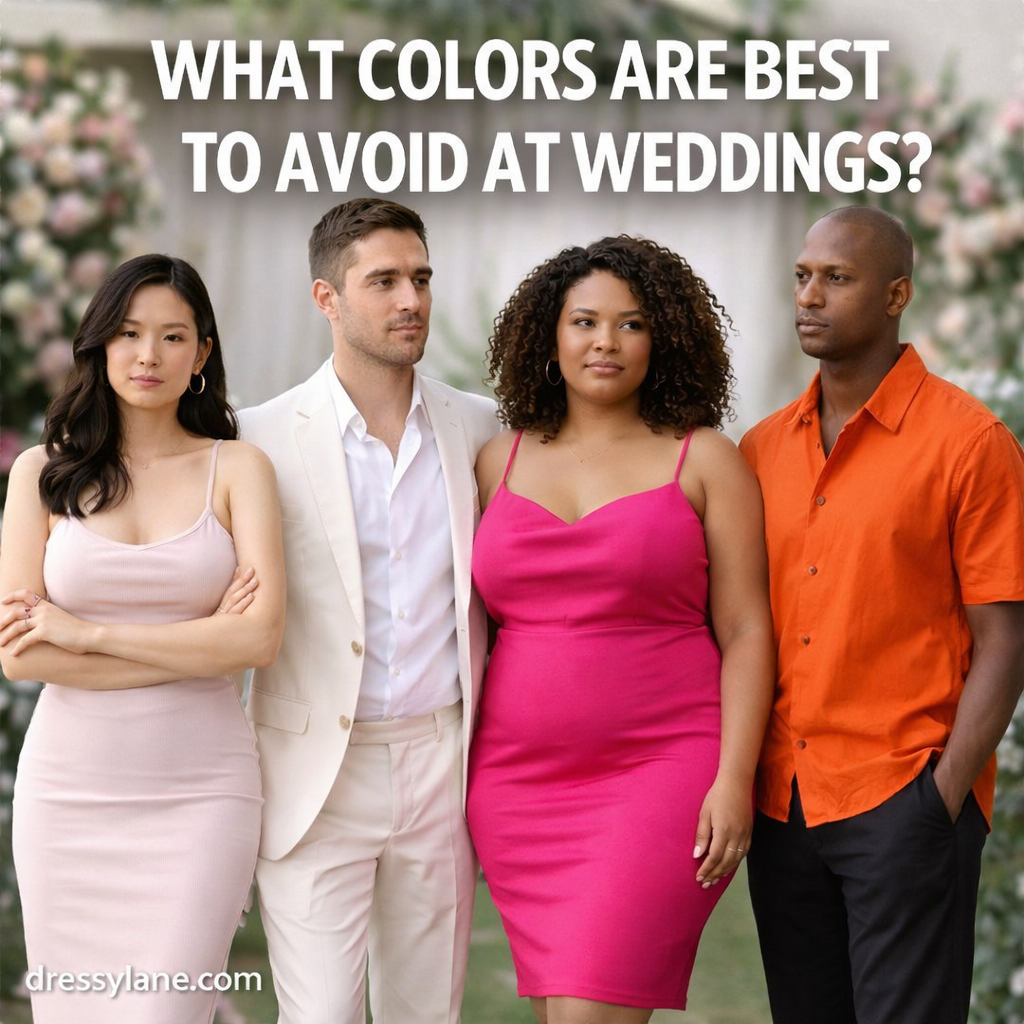
I’d avoid white, ivory, and bridal-looking cream unless the couple specifically requests those colors.
Champagne and very pale metallic shades require a little more judgment. Under certain lighting, they can photograph almost white, particularly when combined with lace or bridal-style embellishment.
If you’re uncertain, choose a more clearly differentiated color.
Shoes: Formal Doesn’t Have to Mean Uncomfortable
A formal dress deserves appropriate footwear, but there’s no requirement to wear towering stilettos.
Elegant pointed-toe pumps, refined slingbacks, delicate heeled sandals, and dressy flats can all work, depending on the gown and venue.
For a floor-length dress, choose your shoes before having the hem altered. Even a difference of an inch in heel height can change how the dress falls.
I’d recommend a mid-height heel or a well-made formal flat if you expect to spend several hours standing and dancing.
For outdoor ceremonies, a block heel may be more practical than a narrow stiletto that sinks into grass.
Avoid casual cork wedges, athletic sneakers, and everyday sandals unless the couple has specifically allowed more relaxed footwear.
Accessories Should Work With the Dress
Formal accessories don’t need to be elaborate. They simply need to feel consistent with the outfit.
If your dress has a high neckline or detailed shoulders, consider statement earrings and skip the necklace.
For a simple strapless or square-neck gown, a delicate necklace can add interest without overwhelming the silhouette.
A small satin clutch, structured evening bag, or understated metallic minaudière is more appropriate than a large everyday handbag.
My recommendation: Choose one accessory to be the focal point. If you’re wearing dramatic earrings, keep the necklace minimal or leave it out entirely.
A simple gown with carefully chosen accessories often looks more refined than an outfit where every element is competing for attention.
Don’t Forget About Outerwear
Formal weddings frequently involve moving between different temperatures, particularly when the ceremony and reception take place in separate locations.
For a winter wedding, a tailored wool coat in black, charcoal, or camel is a practical choice for arrival and departure.
A silk wrap, dressy shawl, or refined cropped jacket can provide coverage during the event itself.
I’d avoid relying on an oversized casual cardigan. Even if the dress underneath is beautiful, an everyday knit can change the appearance of the entire outfit.
For a sleeveless gown, check whether the ceremony takes place in a religious venue with specific clothing expectations. A lightweight wrap is useful when additional coverage is requested.
Hair and Makeup That Last Through the Reception
Formal wedding styling should complement your outfit and remain comfortable throughout the event.
A low chignon, polished ponytail, or softly styled waves can all work with an evening gown.
If your dress has an interesting neckline or detailed back, an updo can help keep those features visible.
For makeup, consider the lighting and weather. A long-wearing foundation, setting powder, and a lip color you can easily reapply are particularly useful for ceremonies that transition into evening receptions.
There’s no need to wear dramatic makeup simply because the dress code is formal. A polished, understated look can be equally appropriate.
Three Formal Wedding Outfits That Work
An Evening Ballroom Wedding
Choose an emerald green crepe column gown, black pointed-toe pumps, a small black satin clutch, and gold drop earrings.
Keep the neckline and jewelry simple so the color and silhouette remain the focus.
A Spring Formal Wedding
Try a dusty blue chiffon gown with a softly gathered waist, silver slingback heels, and a compact metallic evening bag.
A lightweight wrap provides extra coverage for an outdoor ceremony or cooler evening.
A Winter Hotel Wedding
A burgundy velvet gown with long sleeves, black formal shoes, and understated gold jewelry creates a rich, seasonally appropriate outfit.
Add a tailored wool coat for traveling to and from the venue.
What to Avoid at a Formal Wedding
The most common mistake is choosing an outfit based entirely on how attractive it looks rather than whether it suits the dress code.
A short bodycon dress might be perfect for a night out, but it can feel out of place at a traditional formal wedding.
Similarly, a cotton sundress, casual jersey maxi dress, or linen day dress generally won’t provide the level of formality expected.
Avoid anything that requires constant adjustment. If you’re repeatedly pulling up the neckline, fixing a slit, or managing an excessively long hem, the dress may become uncomfortable long before the reception ends.
Try on your complete outfit before the wedding, including shoes and undergarments. Sit down, walk around, and check the fit in natural light.
These small checks can prevent uncomfortable surprises on the day.
The Bottom Line
For a formal wedding, a floor-length gown or sophisticated midi dress in silk, satin, chiffon, velvet, or crepe is a reliable starting point.
Choose a silhouette that fits comfortably, coordinate your accessories with the dress, and select shoes that work for both the venue and the length of the event.
If you’re investing in a new outfit, I’d prioritize a beautifully fitted gown in a versatile color over something heavily embellished that you’ll struggle to wear again.
A simple navy crepe gown, for example, can be restyled with different jewelry and shoes for future formal occasions.
The aim is to arrive appropriately dressed and feel comfortable enough to enjoy the celebration without having to think about your outfit all evening.