
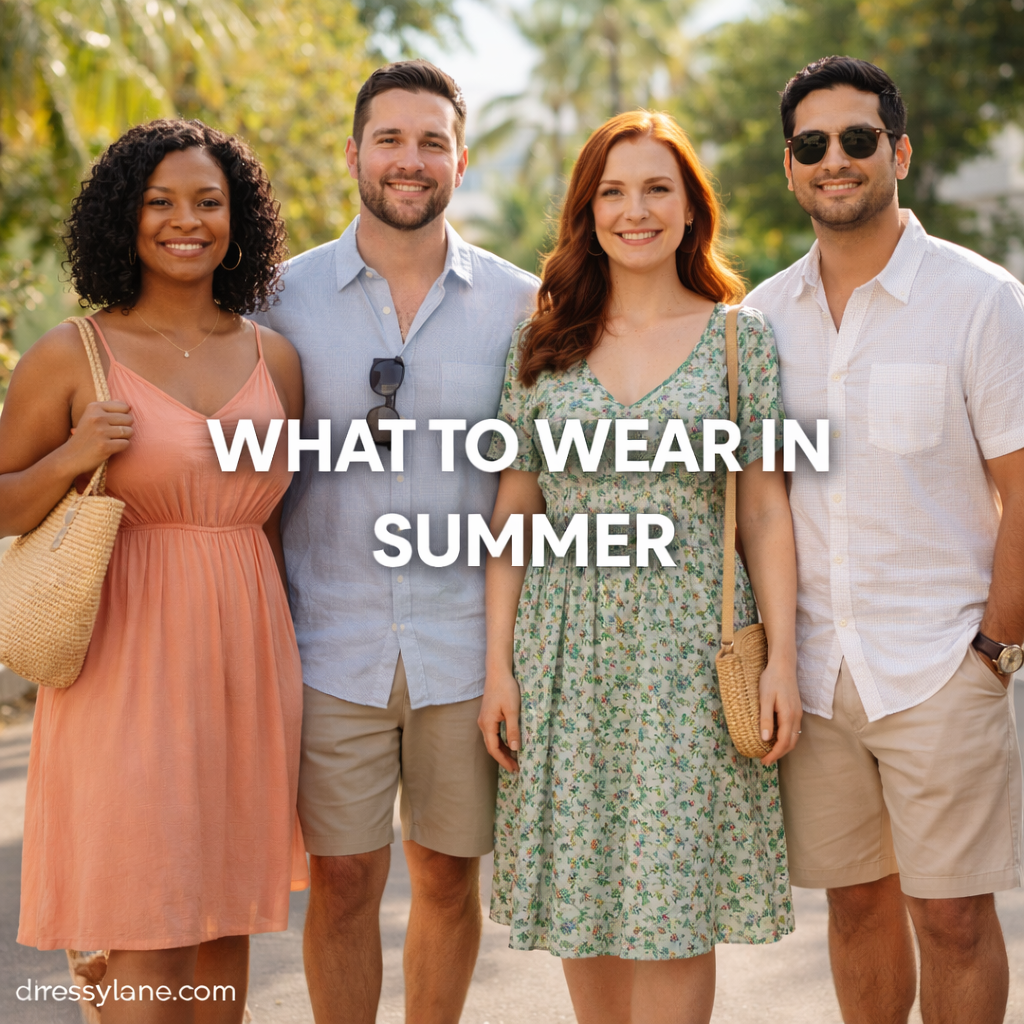
Summer dressing gets easier once you stop thinking that staying cool simply means wearing less clothing. A fitted tank and rigid denim shorts can feel surprisingly uncomfortable on a hot afternoon, while a loose linen shirt and lightweight trousers may feel much better despite covering more skin.
The difference comes down to fabric weight, airflow, fit, and what you’re actually doing that day.
A summer outfit for an air-conditioned office has different requirements from one for sightseeing in direct sun. The most useful summer wardrobe gives you enough options to handle both without requiring dozens of seasonal pieces.
Start With Fabric Before Color
Fabric is one of the first things I’d check when choosing clothes for hot weather.
Linen is an obvious summer choice because its structure allows plenty of airflow. Lightweight cotton poplin, cotton voile, chambray, Tencel or lyocell, and linen-cotton blends are also useful.
For dressier clothing, tropical-weight wool can be surprisingly practical. Its open weave makes it much more suitable for warm weather than the heavy wool people often picture.
Good summer fabrics include:
- Linen and linen blends
- Lightweight cotton
- Cotton poplin and voile
- Tencel or lyocell
- Lightweight chambray
- Tropical-weight wool
- Purpose-built moisture-wicking fabrics
I wouldn’t automatically avoid everything containing polyester or nylon. Some technical fabrics are specifically designed to move moisture and dry quickly.
The better test is how heavy, breathable, and clingy the garment feels.
A thick cotton shirt can still be hot, while a lightweight performance shirt may be perfectly comfortable.
Give Your Clothes a Little Room
Summer isn’t the ideal time for every piece to fit as closely as possible.
Straight-leg trousers, relaxed shirts, A-line dresses, wide-leg pants, and slightly looser T-shirts allow more air to circulate around the body.
You don’t have to wear dramatically oversized clothing. Even an extra inch or two of ease through the torso or legs can make a difference.
For example:
Fitted tank + wide-leg linen trousers
works because one piece stays close to the body while the other provides movement.
For men:
Relaxed linen shirt + straight lightweight trousers
creates a clean silhouette without fabric clinging to the body.
I’d generally avoid combining a tight top with tight pants during very hot weather. Even breathable fabrics become less comfortable when they’re constantly pressed against your skin.
What Women Can Wear in Summer
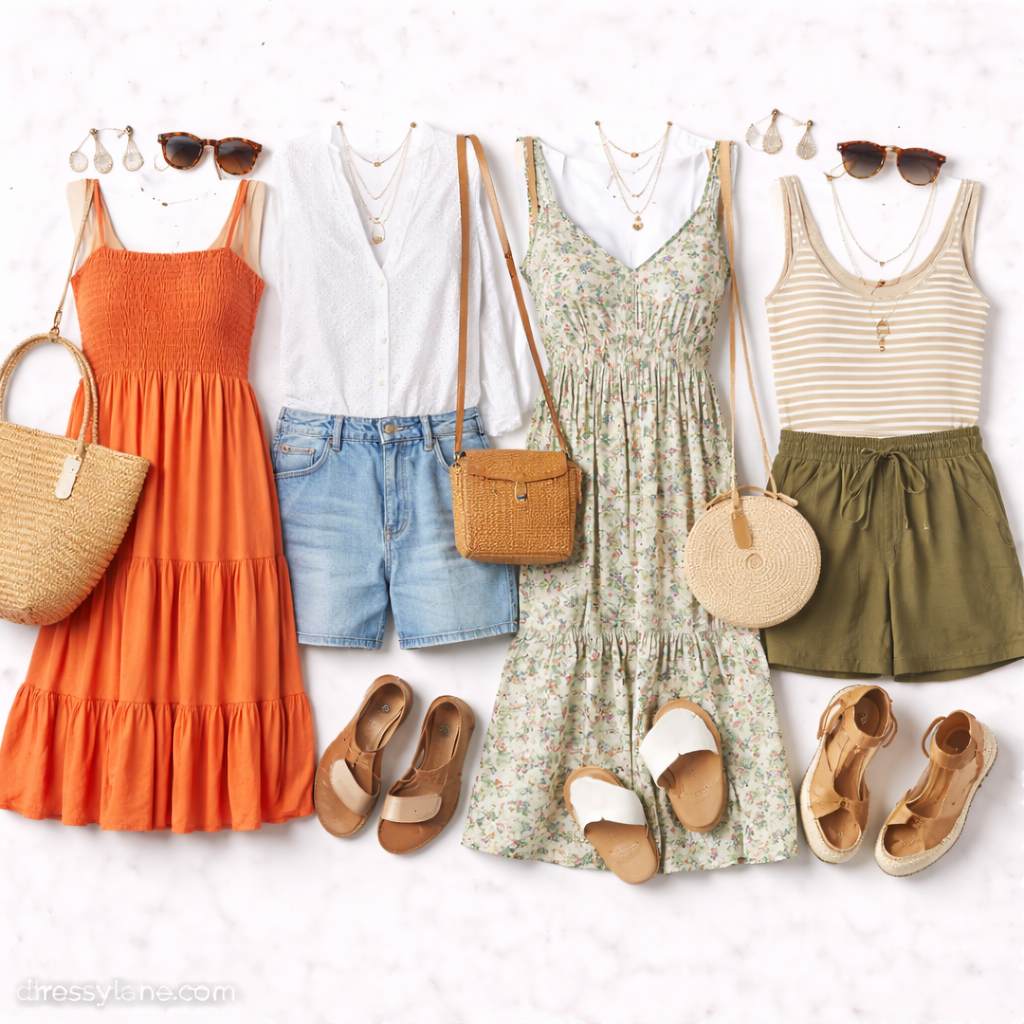
For women, a breathable midi dress is one of the easiest summer outfits.
Look for cotton poplin, linen blends, Tencel, or lightweight jersey in a silhouette that skims rather than hugs the body.
Other useful combinations include:
- Cotton tank + wide-leg linen trousers + sandals
- White T-shirt + relaxed shorts + leather sneakers
- Midi skirt + fitted sleeveless top + flats
- Shirt dress + sandals + crossbody bag
- Lightweight trousers + sleeveless blouse + loafers
One detail I always recommend checking is the lining.
A dress can have a beautifully lightweight outer fabric and still feel terrible in July because there’s a thick polyester lining underneath. Look inside the garment before deciding whether it’s actually suitable for summer.
For work, lightweight trousers with a sleeveless blouse and an unlined blazer or cardigan kept nearby can handle the transition from a hot commute to a cold office.
What Men Can Wear in Summer
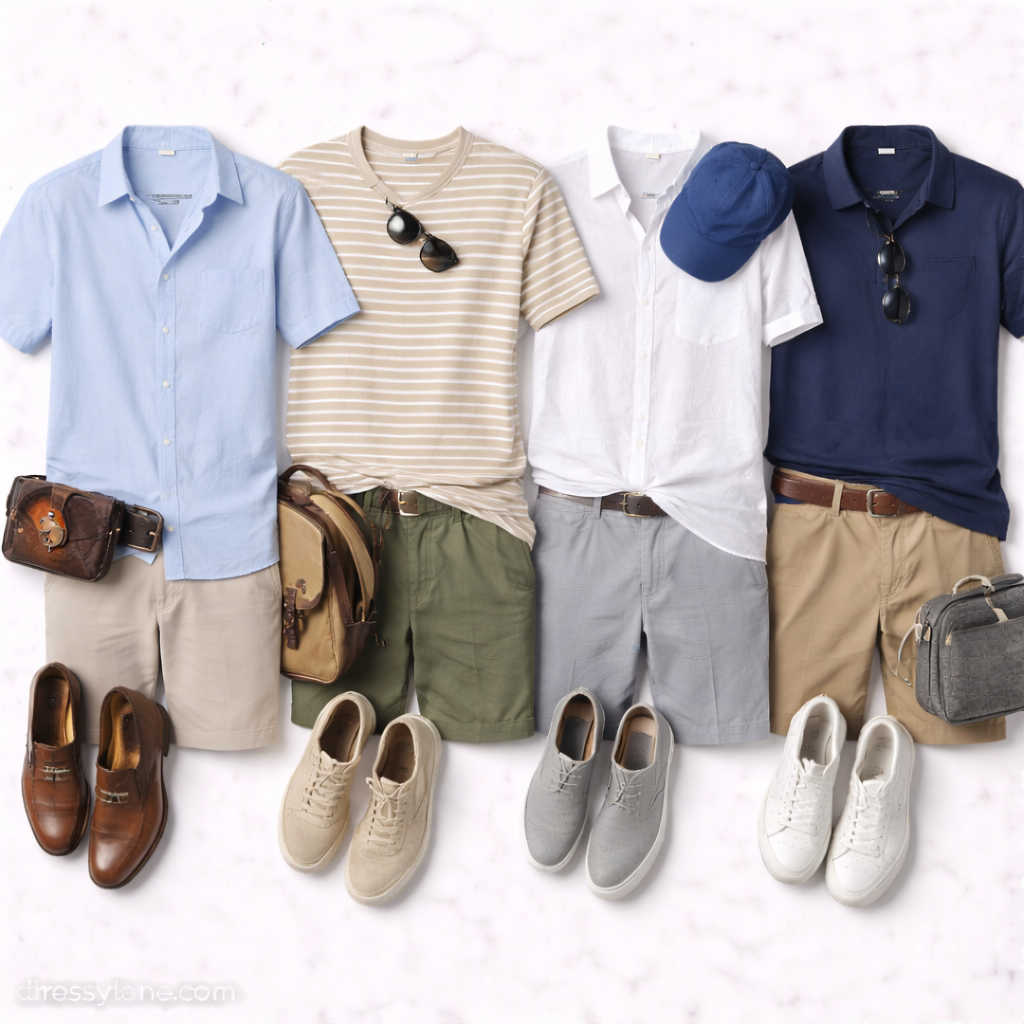
Men can build a large part of a summer wardrobe around a few breathable shirts, lightweight trousers, shorts, and versatile shoes.
A linen or linen-cotton button-down works with tailored shorts during the day and lightweight trousers for dinner.
Other combinations include:
- Cotton T-shirt + chino shorts + sneakers
- Camp-collar shirt + lightweight trousers + loafers
- Knit polo + chinos + suede loafers
- Linen shirt + straight-leg trousers + leather sneakers
- Polo + tailored shorts + casual shoes
Camp-collar shirts are especially useful because the open neckline creates airflow and naturally looks appropriate in warm weather.
I’d also choose straight or gently tapered summer trousers over extremely slim chinos. A little extra space through the thigh and calf becomes noticeable once you’ve been walking outside for an hour.
Shorts Aren’t Your Only Hot-Weather Option
It’s easy to assume that shorts are automatically the coolest choice.
They can be, but lightweight trousers and long skirts deserve a place in a summer wardrobe too.
Loose linen trousers provide airflow while protecting the legs from direct sun. A flowing midi skirt can feel more comfortable than fitted denim shorts. Lightweight trousers are also useful for restaurants, workplaces, travel days, and other settings where shorts may feel too casual.
This is why I’d choose based on the fabric and silhouette, not simply how much skin the garment exposes.
Light Colors Help, but You Can Still Wear Dark Clothes
White, cream, stone, tan, pale blue, and other lighter colors naturally work well in summer and can be useful in direct sunlight.
That doesn’t mean black and navy have to disappear until fall.
A loose black linen dress or navy linen shirt can still be perfectly practical in warm weather. Fabric weight, weave, fit, sun exposure, and airflow all influence comfort.
Rather than rebuilding your wardrobe around pastels, try mixing lighter colors into clothes you already wear.
For example:
Navy trousers + white shirt + brown loafers
or:
Black midi dress + tan sandals + natural canvas bag.
Both look seasonally appropriate without relying on an entirely pale palette.
Summer Shoes Should Match How Much You’ll Walk
Sandals make sense in summer, but they’re not automatically the most comfortable option.
For a long sightseeing day, I’d take a supportive lightweight sneaker or well-broken-in walking sandal over a delicate flat or brand-new pair of strappy sandals.
Women can rotate between flat sandals, loafers, breathable sneakers, espadrilles, and low heels depending on the setting.
Men can use leather sneakers, loafers, casual Derby shoes, sandals, and lightweight slip-ons.
If you’re wearing closed shoes, lightweight or moisture-managing socks can make a noticeable difference.
Hot weather is also a bad time to discover that a new shoe rubs your heel.
Dress for Sun as Well as Temperature
When you’ll be outside for a long period, exposed skin isn’t necessarily the coolest or most practical option.
A loose long-sleeve linen shirt can provide useful coverage while still allowing airflow. Lightweight clothing designed with a stated UPF rating can also be useful for extended outdoor activities.
A breathable hat and UV-protective sunglasses make sense when you’re spending hours outside.
Of course, clothing doesn’t replace appropriate sunscreen on exposed skin.
For outdoor summer days, I’d rather wear a slightly more covered but airy outfit than spend the entire afternoon trying to avoid direct sun.
Keep Summer Layers Purposeful
Summer layering mostly exists because indoor and outdoor temperatures can be dramatically different.
You might walk through 90°F heat and then spend two hours inside a restaurant or office with aggressive air conditioning.
Instead of wearing the extra layer outside, carry a fine cardigan, lightweight overshirt, or unlined blazer.
Choose something you can fold or carry easily.
A heavy jacket hanging over your arm all afternoon defeats the purpose.
For evening plans, a lightweight linen or cotton jacket may also be enough once temperatures begin to fall.
When the Weather Becomes Extremely Hot or Humid
Normal summer dressing has its limits.
During a heatwave or very humid weather, simplify the outfit further. Prioritize loose silhouettes, fabrics that handle moisture well, supportive footwear, and sun protection.
Skip unnecessary layers and heavy accessories.
I’d also put aside rigid denim, thick lined garments, heavy shapewear, and anything that already feels slightly uncomfortable indoors. Heat tends to magnify small fit problems.
When temperatures become extreme, comfort and heat safety matter more than following normal style rules.
Final Thoughts
Knowing what to wear in summer isn’t about replacing your wardrobe with shorts, sandals, and pastel colors.
Start with fabrics that make sense for warm weather: linen, lightweight cotton, poplin, Tencel, chambray, tropical-weight wool, and appropriate performance fabrics. Choose silhouettes with enough room for air to circulate, and think about how much walking, sun exposure, and air conditioning your day will involve.
Women can rely on breathable dresses, skirts, relaxed trousers, and simple tops. Men can build around linen shirts, polos, lightweight trousers, shorts, and relaxed T-shirts.
Most importantly, judge summer clothing by how it feels after you’ve been outside for an hour—not by how cool it looks when you’re standing in front of the mirror.