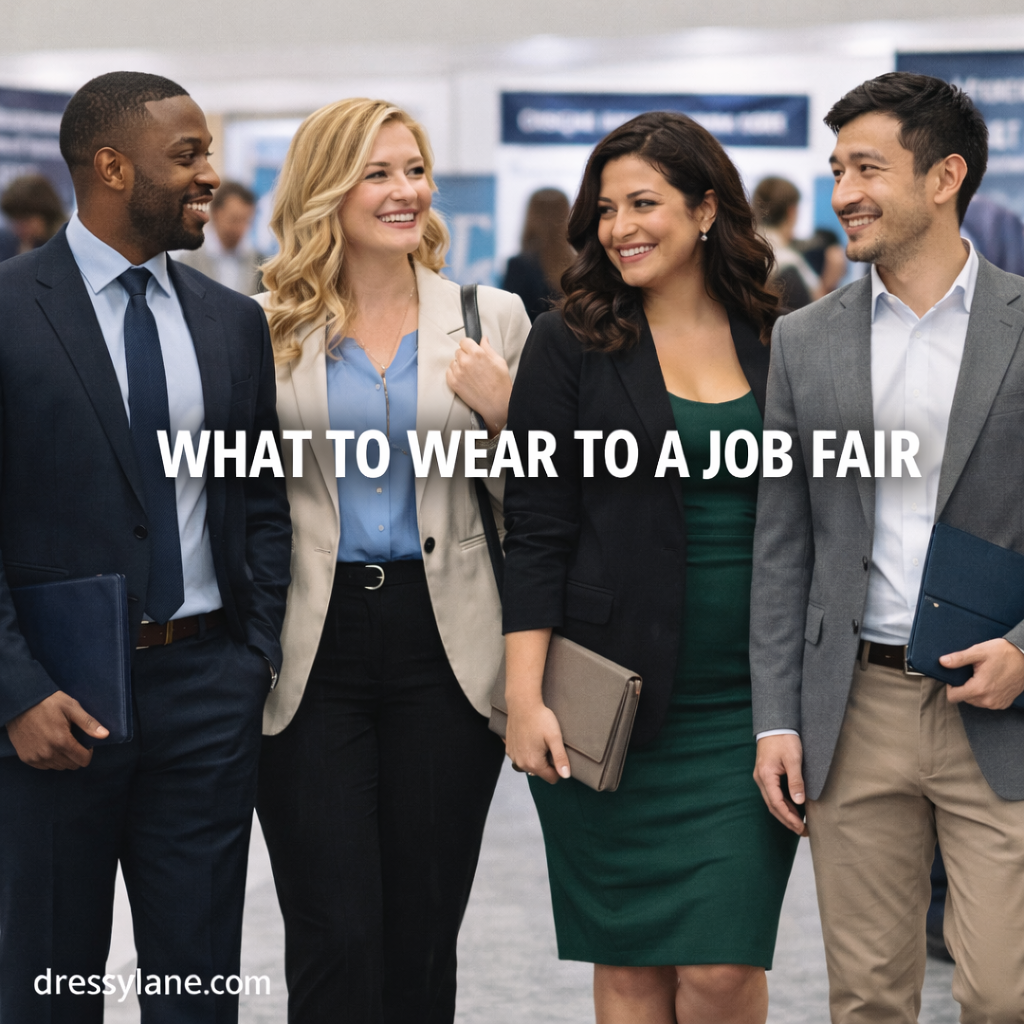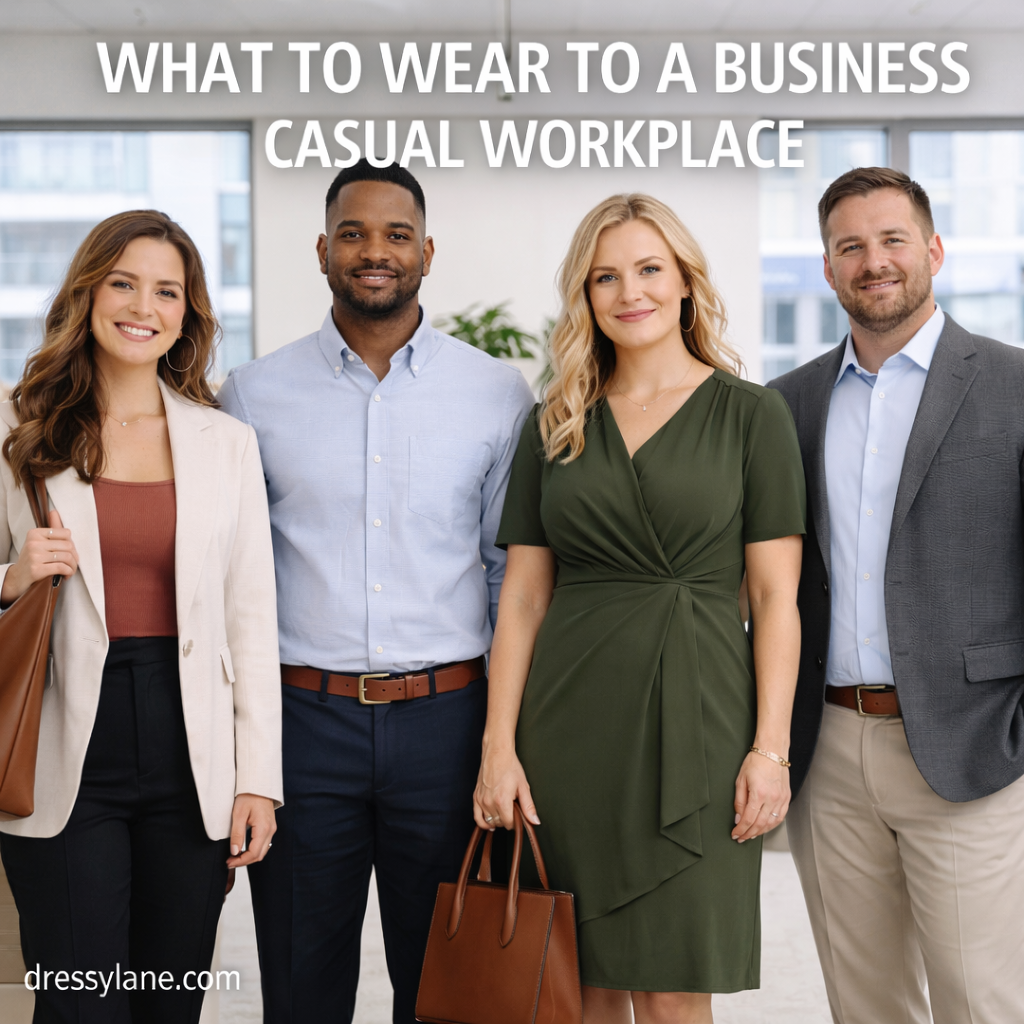
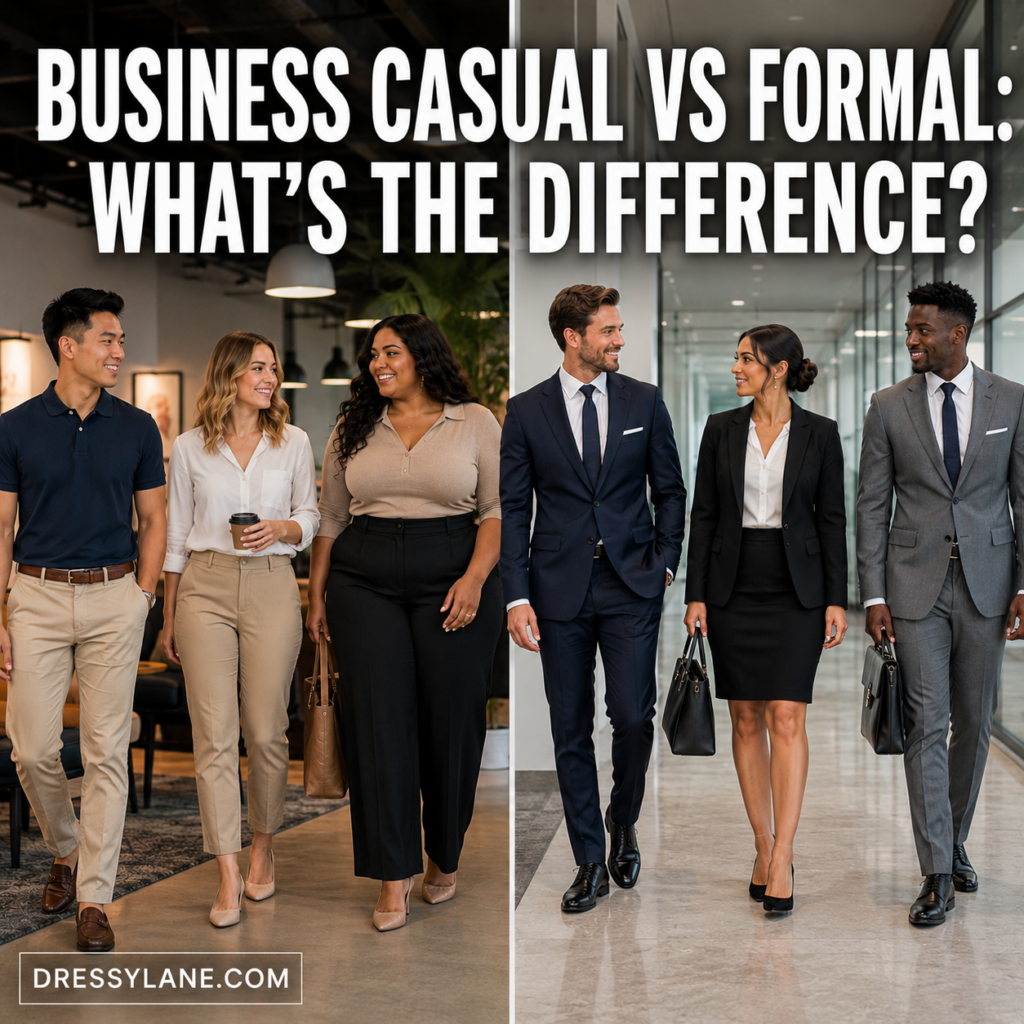
Knowing the difference between business casual and formal attire can save you a surprising amount of second-guessing. Both dress codes are meant to look professional, but they communicate different levels of polish, structure, and formality.
Business casual gives you more freedom with fabrics, colors, separates, and footwear. Formal business attire is more coordinated and structured, with tailored clothing and fewer casual elements.
The confusing part is everything in between. A blazer can work for either dress code. So can trousers, loafers, a button-down shirt, or a simple dress. The difference often comes down to how the pieces are combined, how structured they are, and where you’re wearing them.
This guide breaks down business casual vs. formal attire for women and men, including specific outfit examples, fabrics, shoes, workplace situations, client meetings, interviews, business dinners, networking events, and seasonal considerations.
Business Casual vs. Formal at a Glance
The easiest way to understand the difference is to think of professional clothing as a spectrum rather than two completely separate wardrobes.
Business casual sits in the middle. It is polished enough for work but doesn’t usually require a matching suit.
Business formal sits toward the more traditional end of professional dress. Tailoring, coordination, conservative colors, and dressier shoes become more important.
Here is a quick comparison:
| Business Casual | Business Formal |
|---|---|
| Tailored separates | Matching or highly coordinated tailoring |
| Chinos or dress trousers | Suit trousers |
| Blouses, knit tops, polos, button-downs | Dress shirts and refined blouses |
| Cardigans and optional blazers | Blazers or suit jackets are often expected |
| Loafers, flats, ankle boots, dress shoes | Oxfords, derbies, pumps, refined dress shoes |
| More freedom with color and texture | Usually restrained colors and patterns |
| Comfortable but polished | Structured and highly polished |
| Common for everyday office wear | Common for important or traditional professional situations |
Neither category means you have to dress without personality. The question is simply how much flexibility the situation allows.
What Is Business Casual?
Business casual is professional clothing with some of the formality removed.
Instead of wearing a complete suit, you might combine tailored trousers with a knit polo, blouse, Oxford shirt, cardigan, or unstructured blazer. Instead of highly polished dress shoes, you might wear loafers, flats, leather sneakers in a particularly casual office, or a clean ankle boot.
The key word is still business.
Business casual generally doesn’t mean whatever you would normally wear on your day off. Clothing should still look intentional, clean, well-fitting, and appropriate for interacting with coworkers or clients.
Typical Business Casual Pieces
Common options include:
- Wool-blend or cotton trousers
- Chinos
- Midi skirts
- Simple knee-length or midi dresses
- Oxford cloth shirts
- Poplin button-downs
- Blouses
- Fine-gauge merino or cotton sweaters
- Knit polos
- Cardigans
- Unstructured blazers
- Loafers
- Ballet flats
- Low block heels
- Leather ankle boots
- Minimal leather sneakers, where workplace culture allows them
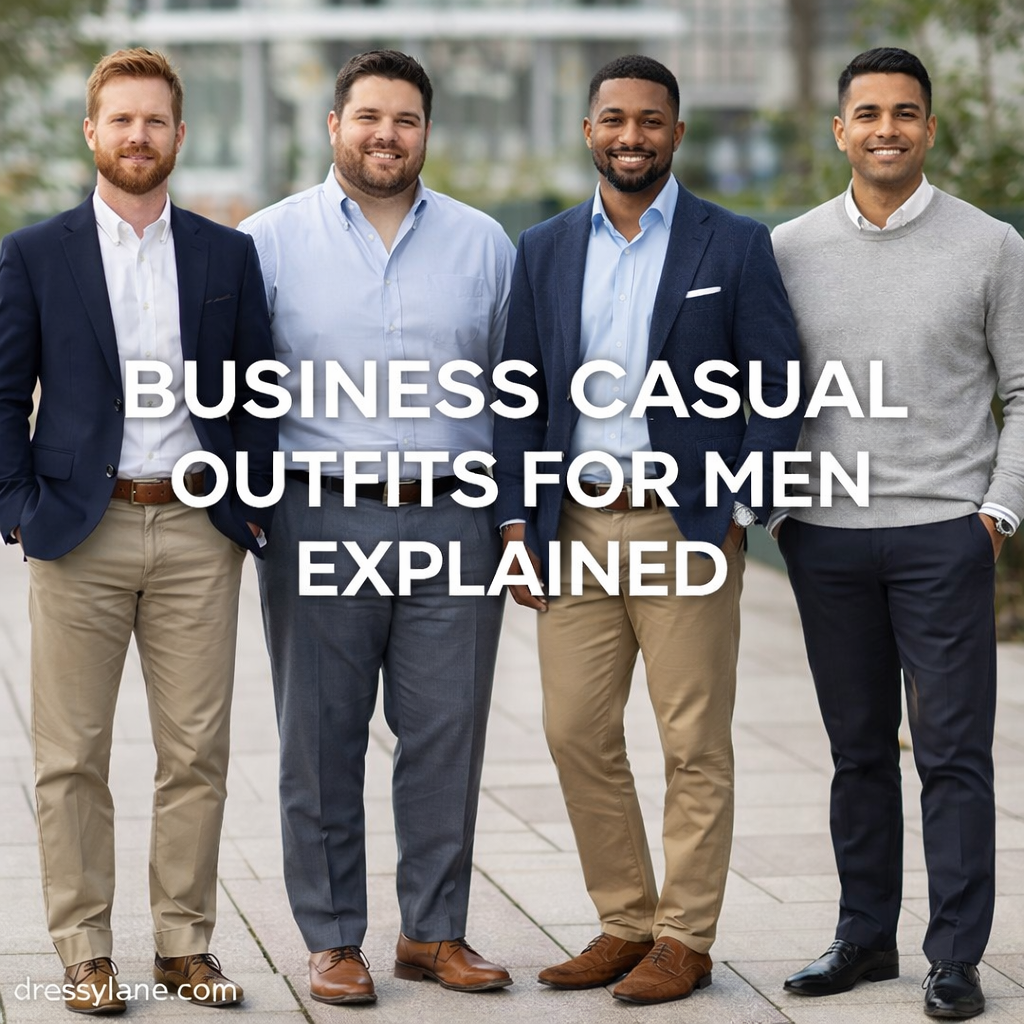
A pair of navy chinos, an Oxford shirt, brown leather loafers, and a lightweight merino sweater is a straightforward men’s business casual outfit.
For women, straight-leg trousers with a silk, viscose, or crepe blouse and loafers creates the same level of formality.
Neither outfit requires a suit, but both clearly look work-appropriate.
What Is Business Formal Attire?
Business formal attire is more structured, coordinated, and conservative than business casual.
This doesn’t necessarily mean black-tie clothing or evening formalwear. In a workplace context, “formal” generally refers to traditional professional attire.
Think:
- Matching suits
- Tailored jackets
- Dress trousers
- Conservative dresses
- Crisp dress shirts
- Refined blouses
- Ties when appropriate
- Leather dress shoes
- Pumps or similarly polished footwear
Fabric also matters.
Worsteds, wool blends, gabardine, crepe, twill, fine cotton poplin, silk, and similarly refined fabrics tend to look more formal than denim, chunky knits, jersey, linen blends, or heavily textured casual fabrics.
A navy wool suit with a white dress shirt and Oxford shoes is clearly formal business attire.
A structured navy sheath dress with a tailored blazer and simple pumps achieves a similar effect.
The Biggest Differences Between Business Casual and Formal Attire
There isn’t one item that magically separates the two categories. Instead, several details work together.
Structure
Formal clothing tends to have more structure.
A tailored blazer with defined shoulders, lined construction, and matching trousers reads more formally than a soft cotton blazer worn with chinos.
Business casual allows relaxed silhouettes as long as they still look intentional.
Matching Pieces
A matching suit immediately increases formality.
Business casual commonly relies on separates instead:
- Gray trousers with a navy blazer
- Chinos with a sport coat
- A skirt with a cardigan
- Tailored trousers with a blouse
The pieces coordinate without necessarily matching.
Fabric
Fabric can change the formality of an otherwise similar garment.
For example:
More formal:
- Worsted wool
- Wool crepe
- Gabardine
- Fine cotton poplin
- Silk
- Refined twill
More casual:
- Corduroy
- Denim
- Linen
- Chambray
- Chunky cotton
- Jersey
- Heavy knits
A crisp white poplin shirt will usually look more formal than a chambray shirt even if both have essentially the same shape.
Shoes
Shoes are one of the quickest ways to move an outfit up or down the formality scale.
Business casual allows considerably more flexibility, including loafers, flats, Chelsea boots, ankle boots, and sometimes minimalist sneakers.
Formal professional outfits generally work better with polished leather footwear such as Oxfords, derbies, loafers, pumps, slingbacks, or other refined closed-toe styles.
Color and Pattern
Business casual allows more experimentation.
Olive trousers, burgundy loafers, patterned blouses, textured sweaters, or checked sport coats can all work.
Formal business wardrobes usually rely more heavily on:
- Navy
- Charcoal
- Black
- Medium gray
- White
- Cream
- Pale blue
Patterns tend to be quieter: pinstripes, subtle checks, small geometric prints, or understated textures.
Business Casual vs. Formal for Women
Women’s workplace clothing often has fewer rigid rules than traditional menswear, but that flexibility can make dress codes harder to interpret.
Women’s Business Casual
A business casual wardrobe might include:
- Straight-leg trousers
- Wide-leg tailored pants
- Midi skirts
- Pencil skirts
- Shirt dresses
- Wrap dresses with appropriate coverage
- Blouses
- Fine-knit sweaters
- Cardigans
- Blazers
- Loafers
- Flats
- Low heels
- Sleek ankle boots
You don’t need to combine every polished item at once.
For example:
Tailored trousers + fine-knit sweater + loafers
is comfortably business casual.
So is:
Midi skirt + blouse + cardigan + flats.
A blazer can be added when you want more authority or structure without moving all the way into formal business attire.
Women’s Business Formal
Formal professional clothing usually becomes more coordinated.
Examples include:
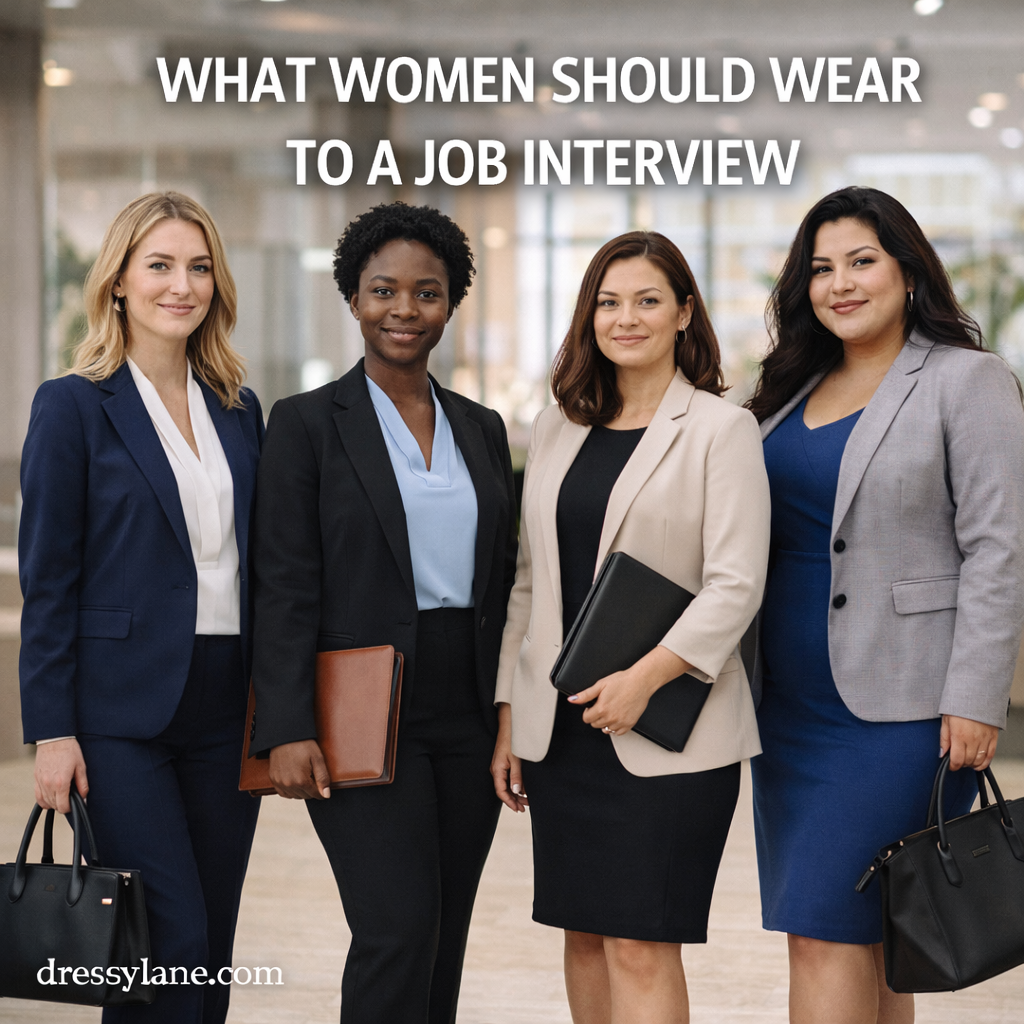
Navy pantsuit + silk or crepe blouse + pumps
Charcoal skirt suit + simple blouse + closed-toe heels
Structured midi or sheath dress + tailored blazer + refined flats or pumps
Keep accessories intentional rather than distracting. A leather tote, understated earrings, simple necklace, belt, or classic watch is usually enough.
Formal does not require high heels. A polished loafer, slingback, low block heel, or refined flat can be equally appropriate depending on the workplace.
Business Casual vs. Formal for Men
Traditional menswear provides a relatively clear progression from casual to formal.
Men’s Business Casual
Reliable combinations include:
Chinos + Oxford shirt + loafers
Wool trousers + knit polo + leather shoes
Dress trousers + button-down shirt + sport coat
Chinos + merino sweater + collared shirt + loafers
A tie usually isn’t necessary.
A blazer or sport coat is optional in many offices but useful when you need to look slightly more polished.
Men’s Business Formal
The suit becomes the foundation.
Common choices include:
- Navy suit
- Charcoal suit
- Medium-gray suit
- White or pale-blue dress shirt
- Conservative tie
- Leather Oxford or derby shoes
- Matching leather belt
- Simple dress watch
Dark navy and charcoal are especially versatile because they work for interviews, presentations, client meetings, conferences, and many other professional occasions.
Fit matters more than having an expensive label. A reasonably priced suit with properly adjusted sleeves and trouser length will generally look sharper than an expensive suit with poor proportions.
The “One-Level-Up” Rule
One of the most useful ways to navigate uncertain professional dress codes is to dress approximately one level more polished than the everyday baseline when the occasion matters.
Suppose everyone normally wears chinos and polos.
For an important presentation, you might add tailored trousers and a blazer.
If everyone normally wears trousers and blazers, an important meeting might call for a suit.
This is different from dramatically overdressing. You’re simply adding enough structure to acknowledge that the occasion carries more weight.
In practice, I’ve found that the most useful wardrobe pieces are the ones that can move between levels. A navy blazer, gray trousers, simple leather shoes, or structured neutral dress can make an ordinary outfit look significantly more professional without forcing you to maintain two completely separate wardrobes.
When Business Casual Is Usually Appropriate
Business casual is common for everyday work in offices where traditional suits are no longer expected.
You may encounter it in:
- Technology companies
- Marketing agencies
- Universities
- Administrative offices
- Creative businesses
- Smaller professional firms
- Casual corporate departments
- Internal meetings
- Coworking environments
But don’t assume that an entire industry follows one dress code.
A software engineer working internally may wear jeans and sneakers, while someone selling enterprise software to financial institutions may regularly wear a blazer and tailored trousers.
Your role and audience matter almost as much as your employer.
For a broader look at adapting clothing to different professional cultures, see How to Dress Professionally for Different Work Environments.
When Formal Business Attire Makes More Sense
Formal attire becomes more appropriate as the stakes, tradition, or visibility of the situation increase.
You may want formal business clothing for:
- Executive meetings
- Important presentations
- Certain job interviews
- Promotion interviews
- Formal corporate environments
- High-level client meetings
- Legal or financial settings
- Conferences with formal programming
- Ceremonial professional events
Don’t automatically assume every interview requires a full suit, however. A startup interview and a law-firm interview may have very different expectations.
The goal is to understand the environment and dress appropriately within it.
What to Wear When You’re Client-Facing
Client-facing work deserves special attention because you are dressing for two cultures at once: your workplace and your client’s.
A graphic designer may normally wear jeans and a sweater around the studio. If that designer is presenting a major branding proposal to executives, tailored trousers, a button-down or blouse, and a blazer may make more sense.
Likewise, an employee at a casual technology company may dress differently when visiting a conservative banking client.
A useful principle is to consider the client’s expectations as well as your employer’s dress code.
That doesn’t necessarily mean copying the client’s clothing. It means avoiding such a large formality gap that your outfit becomes distracting.
For more specific examples, see How to Dress for Work When You’re Client-Facing.
Business Casual vs. Formal for a Promotion Interview
A promotion interview is unusual because you’re interviewing inside an environment you already know.
You may already know that nobody wears suits.
That doesn’t mean you should dress exactly as you would on an ordinary Tuesday.
Instead, move your normal work wardrobe slightly upward.
If your everyday outfit is:
Chinos + polo
try:
Dress trousers + button-down + blazer.
If your everyday outfit is:
Trousers + sweater + flats
try:
Tailored trousers + blouse + structured blazer + polished loafers or pumps.
The subtle increase in formality recognizes the importance of the conversation without making you look disconnected from the company’s culture.
See How to Dress for a Promotion Interview for a more detailed breakdown.
What About Business Dinners?
A business dinner introduces another wrinkle: you need to look professional without appearing as though you came dressed for a boardroom at 8 p.m.
The restaurant, attendees, and purpose of the dinner should guide you.
For many professional dinners, elevated business casual works well:
- Tailored trousers and a blazer
- Midi dress and refined shoes
- Sport coat with an open-collar dress shirt
- Blouse with tailored trousers and understated jewelry
If senior executives, important clients, or a particularly formal venue are involved, lean toward business formal.
Avoid clothing that suddenly becomes much more revealing or nightlife-oriented simply because the meeting occurs after work.
Our What to Wear to a Business Dinner guide covers the situation in more detail.
What to Wear to a Networking Event
Networking events often sit directly between business casual and formal.
You want to look approachable but credible.
A full corporate suit may be unnecessary at a casual industry mixer, while jeans and a T-shirt may feel too relaxed at a professional association reception.
A strong middle-ground outfit could be:
Women: tailored trousers + blouse + blazer + loafers
Men: chinos or wool trousers + button-down + sport coat + loafers
At more formal conferences or corporate receptions, move closer to business formal.
You can find additional examples in What to Wear to a Networking Event.
How Seasonal Weather Changes Business Dress
Professional doesn’t have to mean uncomfortable.
Summer
Look for breathable materials such as:
- Tropical-weight wool
- Cotton poplin
- Linen blends
- Lightweight crepe
- Seersucker in less conservative offices
Pure linen wrinkles quickly, so a linen-cotton or linen-viscose blend can be easier for professional settings.
Winter
Useful materials include:
- Merino wool
- Wool flannel
- Cashmere blends
- Ponte knit
- Tweed
- Heavier wool suiting
Layering is especially effective.
A merino sweater underneath a blazer can look professional while being far more practical than relying on a heavy coat indoors.
For climate-specific outfit strategies, see How to Dress for Seasonal Comfort at Work.
What If You Hate Traditional Office Clothes?
You don’t have to love suits to dress professionally.
The mistake is assuming your only choices are “corporate uniform” or casual weekend clothes.
If stiff tailoring bothers you, try:
- Unstructured blazers
- Stretch wool trousers
- Ponte trousers
- Knit jackets
- Fine-gauge sweaters
- Loafers with cushioned soles
- Shirt dresses
- Wide-leg trousers
- Soft-collar shirts
- Knit polos
Look for pieces that behave like professional clothing without feeling overly formal.
For example, a knit blazer can provide the visual structure of a jacket while feeling closer to a cardigan.
If comfort is a major concern, How to Dress for Work When You Hate Office Clothes explores this approach further.
Can Jeans Ever Be Business Casual?
Sometimes.
Dark, clean denim can qualify as business casual in workplaces where jeans are already accepted.
Choose:
- Dark indigo
- Black
- Straight or tailored cuts
- Minimal fading
- No distressing
Pair jeans with more polished pieces, such as a blazer, Oxford shirt, blouse, knit polo, or leather loafers.
Avoid assuming that “business casual” automatically includes denim, though. Traditional corporate environments may still consider all jeans casual.
When you don’t know the workplace culture, trousers or chinos are the safer starting point.
Can Sneakers Be Business Casual?
In some modern offices, yes.
Minimal leather sneakers in white, black, brown, navy, or another neutral color can work with tailored casual clothing.
Running shoes, gym trainers, heavily branded sneakers, and visibly worn athletic shoes are harder to integrate into professional outfits.
Again, workplace culture matters.
A minimalist sneaker with ankle-length trousers and a blazer may be completely normal at a creative agency and noticeably casual at a traditional accounting firm.
How to Build One Wardrobe for Both Dress Codes
You don’t need two entirely separate wardrobes.
Instead, create a core collection of pieces that can move between levels of formality.
Useful crossover pieces include:
- Navy blazer
- Charcoal or gray trousers
- Black trousers
- White button-down
- Pale-blue shirt
- Neutral blouse
- Fine-knit sweater
- Simple midi dress
- Dark chinos
- Leather loafers
- Refined flats
- Oxford or derby shoes
- Structured leather bag or briefcase
Then change the supporting pieces.
For example:
Business casual:
Gray trousers + merino sweater + loafers
More polished business casual:
Gray trousers + button-down + blazer + loafers
Business formal:
Matching gray suit + dress shirt or blouse + formal shoes
This approach is cheaper, easier, and much more realistic than building a separate wardrobe for every possible dress code.
How to Decide What to Wear When the Dress Code Isn’t Clear
When an invitation or workplace gives you little guidance, investigate before guessing.
Consider:
- Where are you going?
A law office and design studio may interpret “professional” differently. - Who will be there?
Meeting coworkers is different from presenting to senior leadership or a new client. - What are you doing?
Sitting at your desk requires less formality than interviewing, presenting, or representing your company externally. - What do people normally wear there?
Company websites, employee photos, LinkedIn posts, event photographs, and recruiter guidance can provide clues. - How important is the occasion?
Higher-stakes situations generally justify moving slightly more formal.
When the answer remains unclear, choose a polished outfit that can be adjusted.
A blazer is particularly useful because you can wear it when you arrive and remove it if the room is noticeably more casual.
For situations beyond the workplace, How to Dress for Different Occasions: Complete Guide provides a broader framework.
Common Business Casual Mistakes
Business casual tends to cause more confusion than formal clothing because its boundaries are less defined.
Common mistakes include:
- Treating “casual” as the important half of the phrase
- Wearing visibly worn athletic shoes
- Choosing distressed or heavily faded denim
- Wearing shirts with large graphics or slogans
- Wearing wrinkled clothing
- Choosing clothing that is too tight, sheer, short, or revealing for the workplace
- Assuming every office accepts sneakers or jeans
- Ignoring grooming and shoe condition
You don’t need expensive clothing to avoid these problems.
Clean shoes, wrinkle-free clothing, appropriate proportions, and a coherent outfit make an enormous difference.
Common Formal Attire Mistakes
Formal business dressing can go wrong in the opposite direction.
Watch for:
- Poorly fitting suits
- Jackets with excessively long sleeves
- Trousers pooling heavily over shoes
- Overly flashy accessories
- Eveningwear mistaken for business formal
- Extremely high heels that are difficult to walk in
- Novelty ties or distracting prints
- Wearing black-tie elements to ordinary business events
- Looking dramatically more formal than the occasion requires
Formal business attire should look polished, not theatrical.
Business Casual vs. Smart Casual vs. Business Formal
These terms sometimes overlap, but they aren’t identical.
Smart Casual
Smart casual sits below business casual in many environments.
It might include:
- Dark jeans
- Chinos
- Casual dresses
- Polos
- Sweaters
- Clean sneakers
- Casual loafers
Business Casual
Business casual adds more professional structure:
- Tailored trousers
- Blouses
- Collared shirts
- Fine knits
- Blazers
- Professional skirts and dresses
- Polished shoes
Business Formal
Business formal adds another level:
- Matching suits
- Structured dresses and jackets
- Dress shirts
- Conservative blouses
- Ties where appropriate
- Formal leather footwear
The boundaries aren’t universal, but thinking in terms of a progression helps:
Smart casual → Business casual → Business formal
A Simple Rule for Getting Professional Dress Right
Instead of asking, “Is this item business casual?” look at your entire outfit.
A polo can look very casual with shorts and running shoes.
The same polo tucked into tailored wool trousers with leather loafers can look perfectly appropriate in many business casual offices.
A blazer doesn’t automatically make something formal either.
What matters is the combined effect of:
- Fit
- Fabric
- Structure
- Footwear
- Grooming
- Accessories
- Color
- Context
That’s why professional dress codes rarely work as a simple list of allowed and forbidden garments.
The better question is:
Does this complete outfit match the level of professionalism expected in this particular situation?
Frequently Asked Questions
Is business casual more formal than smart casual?
Usually, yes. Smart casual often allows jeans, sneakers, and more relaxed pieces, while business casual typically introduces tailored trousers, collared shirts, blouses, skirts, dresses, and more polished footwear.
Do I need a blazer for business casual?
Not necessarily. A blouse with tailored trousers or an Oxford shirt with chinos can be business casual without a blazer. Adding one is an easy way to make the outfit more polished.
Do I need a suit for business formal?
A matching suit is one of the clearest interpretations of business formal, particularly for men. Women have somewhat more flexibility and may also wear a structured professional dress with a tailored jacket or similarly polished separates, depending on the setting.
Can I wear jeans for business casual?
Possibly, if your workplace accepts them. Choose dark, clean, non-distressed denim and pair it with more polished pieces. When you don’t know the dress code, choose trousers or chinos instead.
Are sneakers business casual?
Minimal, clean sneakers can work in some modern offices. Traditional professional environments may still consider them too casual, so loafers, flats, derbies, Oxfords, or similar shoes are safer when you’re uncertain.
What should I wear to an interview if the company is business casual?
You generally don’t need to dress several levels above the company’s culture. Aim for a polished version of its normal dress code. Tailored trousers, a button-down or blouse, a blazer, and polished shoes are a versatile starting point.
Should I dress formally when meeting clients?
It depends on your industry and the client. Client-facing situations often justify moving one level more polished than your everyday office clothing, particularly for first meetings and presentations.
Is a tie required for business formal?
In traditional men’s business formal attire, a tie is commonly expected. Some contemporary workplaces have relaxed this standard, so the organization’s culture and occasion still matter.
What should I wear if the invitation just says “business attire”?
When no further guidance is available, lean toward the more polished end of business clothing. A suit or tailored jacket with dress trousers, a professional dress, or comparable structured clothing is safer than interpreting “business attire” as casual office wear.
Is it better to be overdressed or underdressed?
If you’re genuinely uncertain, being slightly more polished is usually easier to manage than arriving noticeably underdressed. The key word is slightly. A blazer, refined shoes, or more structured trousers can raise an outfit one level without making you look as though you’re attending an entirely different event.
Final Thoughts
The difference between business casual and formal attire isn’t simply whether you’re wearing a blazer or a particular type of shoe.
It’s primarily about structure, coordination, fabric, footwear, and context.
Business casual gives you more flexibility. Tailored separates, sweaters, blouses, chinos, polos, loafers, and understated dresses can all fit comfortably within the category.
Business formal narrows those choices. Matching tailoring, structured jackets, refined fabrics, conservative colors, and polished footwear become more important.
Most importantly, professional dress isn’t static. What works for an ordinary day at your desk may not be what you choose for a promotion interview, client presentation, networking reception, or important business dinner.
Build your wardrobe around versatile pieces, pay attention to the environment you’re entering, and adjust your level of formality rather than reinventing your style every time the dress code changes.