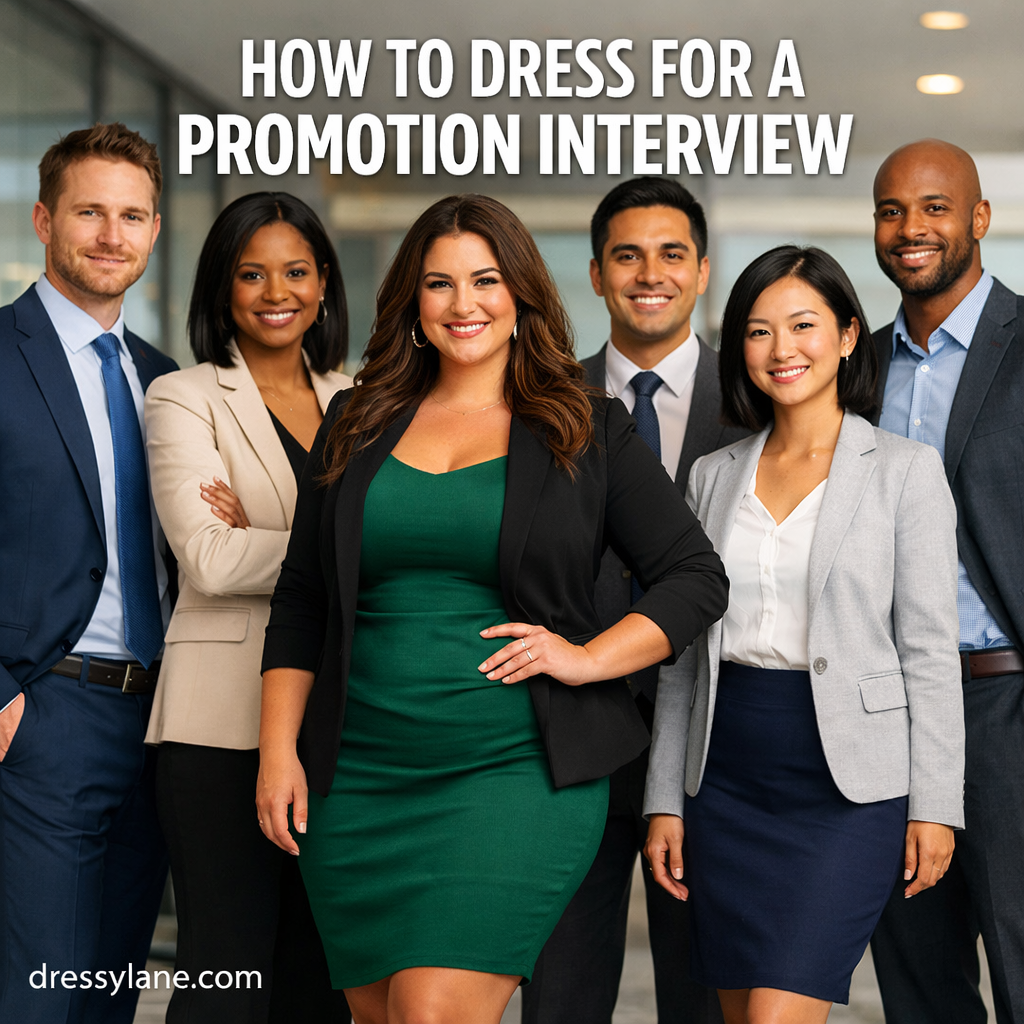
A promotion interview comes with an unusual wardrobe challenge: the people interviewing you already know how you dress. Showing up in a completely different style can feel just as awkward as arriving in your usual Friday casual outfit.
The goal is to look like a more polished version of yourself, not someone who has suddenly adopted an entirely new corporate wardrobe.
If you normally wear chinos and an Oxford shirt, adding a tailored blazer might be enough. If your office is more formal, a well-fitted suit or structured dress may be appropriate.
The right promotion interview outfit should reflect the position you’re pursuing, fit your company’s culture, and feel comfortable enough that you can concentrate on discussing your qualifications.
Start by Looking at How People in the New Role Dress
Before choosing an outfit, think about the responsibilities that come with the promotion.
Moving from an individual contributor position into management might mean attending leadership meetings, presenting departmental results, or representing your company to clients.
Those responsibilities may come with different expectations around clothing.
Pay attention to what people in similar positions actually wear. Do department managers typically wear blazers? Are senior employees comfortable in dark jeans and knitwear? Does leadership dress more formally when meeting external partners?
Use those observations as a reference rather than copying someone’s outfit exactly.
For example, if you’re interviewing for a team lead position at a technology company where managers wear business casual clothing, a navy blazer, tailored trousers, and loafers could be a sensible choice.
A three-piece suit might feel unnecessarily formal in that same environment.
My recommendation is to dress one step above your usual work outfit, but not several steps above the company’s established dress code. You want the change to look natural rather than theatrical.
What Makes an Outfit Appropriate for a Promotion Interview?
You don’t necessarily need to buy anything new. Start with your existing wardrobe and identify the pieces that look particularly sharp.
A few details make the biggest difference.
Choose Clothing That Holds Its Shape
Wool-blend trousers, structured cotton shirts, ponte-knit dresses, and lined blazers are useful choices because they tend to maintain a neat silhouette.
Avoid thin fabrics that cling, become transparent under bright office lighting, or wrinkle heavily after sitting.
If your interview takes place after several hours of work, this becomes especially important.
Check the Fit While Sitting
An outfit can look excellent in the mirror but become uncomfortable once you’re seated across from a panel of interviewers.
Button your blazer, sit down, cross your legs, and reach forward as though you’re placing a notebook on a conference table.
Your clothing shouldn’t pull excessively, restrict movement, or require constant adjustment.
Trouser hems should fall neatly over your shoes, and shirt buttons shouldn’t gape across the chest.
Keep Colors Coordinated
Navy, charcoal, black, cream, and soft blue are dependable foundations.
You can introduce personality through a burgundy blouse, muted green sweater, patterned tie, or understated accessory.
There’s no need to eliminate color completely. The important thing is that the outfit looks coordinated rather than assembled from unrelated pieces.
How to Dress for a Promotion Interview: Women
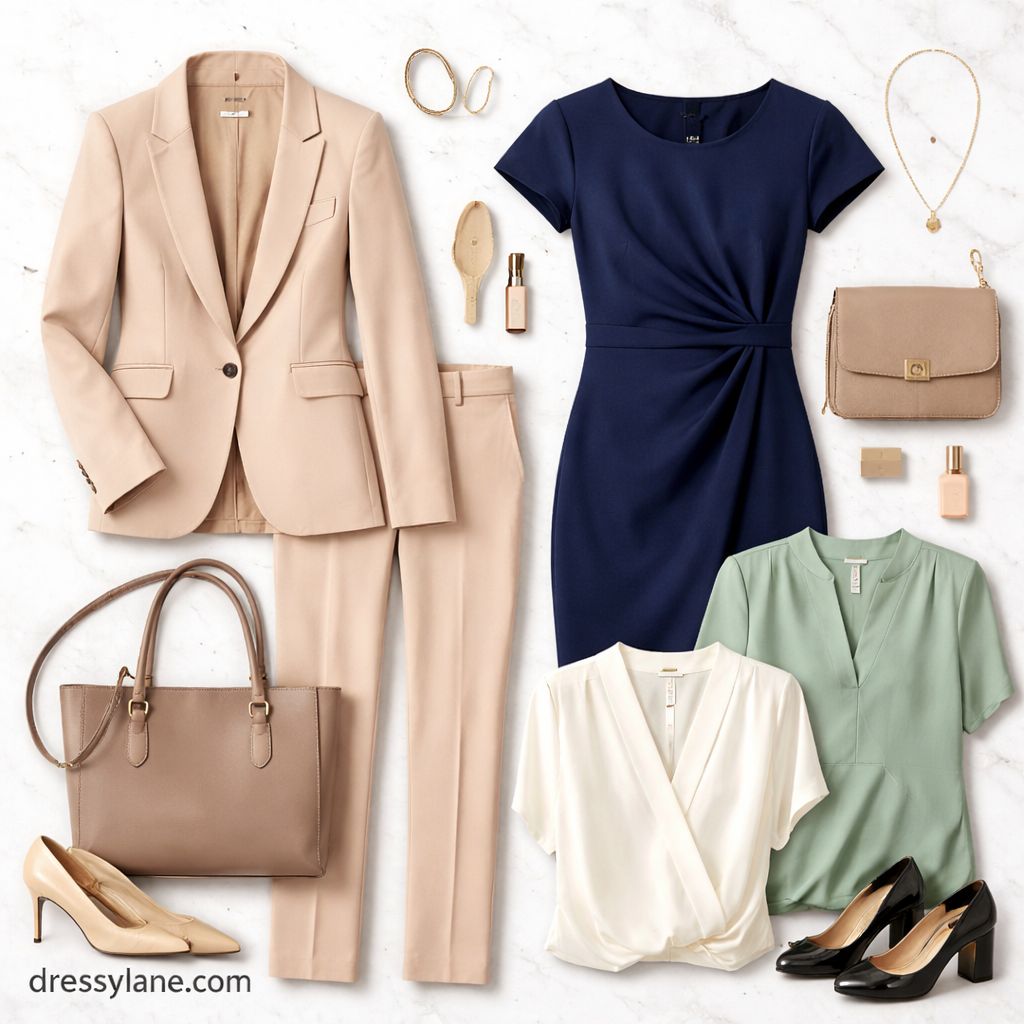
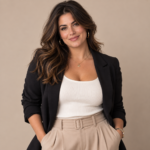
For women, a promotion interview is a good opportunity to use tailored pieces that feel professional without being overly formal.
The most practical outfit depends on your company’s dress code and the position you’re pursuing.
For a Corporate or Management Promotion
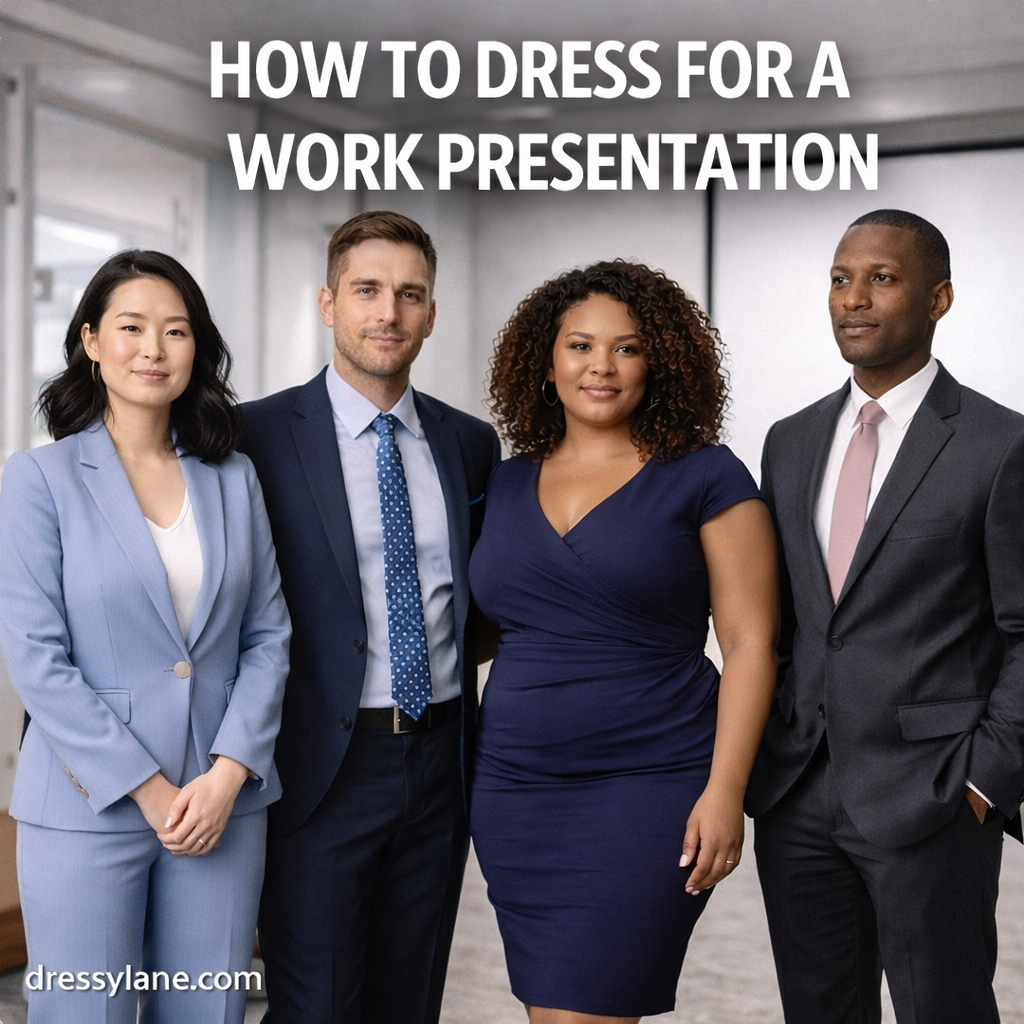
A tailored pantsuit is a reliable option, particularly in finance, consulting, or traditional corporate offices.
Consider a charcoal single-breasted blazer with matching straight-leg trousers, a cream blouse, and black leather loafers or low block heels.
A structured sheath dress with a coordinating blazer also works well.
Look for dresses that allow you to sit comfortably without pulling across the hips or riding up excessively.
If you prefer separates, a blazer paired with tailored trousers creates a similar level of formality without requiring a matching suit.
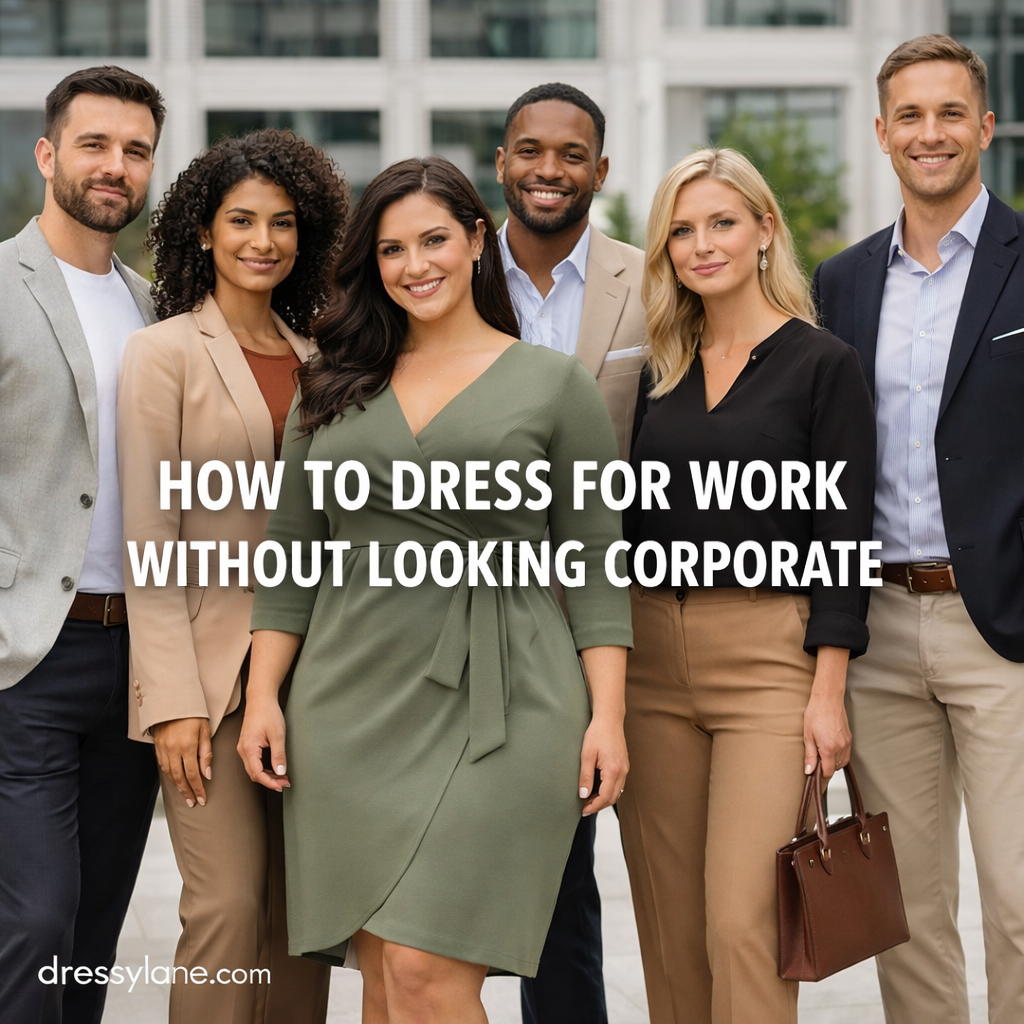
For a Business Casual Workplace
You can look polished without wearing a complete suit.
Try one of these combinations:
- Navy blazer, ivory fine-knit top, charcoal trousers, and leather loafers.
- Structured midi dress, cropped blazer, and low block heels.
- Cream blouse, tailored wide-leg trousers, and pointed-toe flats.
For wide-leg trousers, pay attention to the hem. The fabric should fall cleanly rather than dragging along the floor.
I’d also avoid wearing a brand-new pair of heels for a promotion interview. Even if they look perfect with your outfit, uncomfortable shoes can become an unnecessary distraction when you’re already managing interview nerves.
Choose footwear you’ve worn comfortably through a full workday.
Accessories and Grooming
A structured tote or medium-sized handbag is useful if you’re bringing a notebook, printed materials, or a portfolio.
Keep jewelry practical, particularly if you tend to gesture while speaking. Earrings or bracelets that constantly move or make noise can become distracting.
Hair should be styled in a way that feels comfortable and doesn’t require frequent adjustment. Makeup, if worn, is a personal choice rather than a requirement for looking professional.
How to Dress for a Promotion Interview: Men
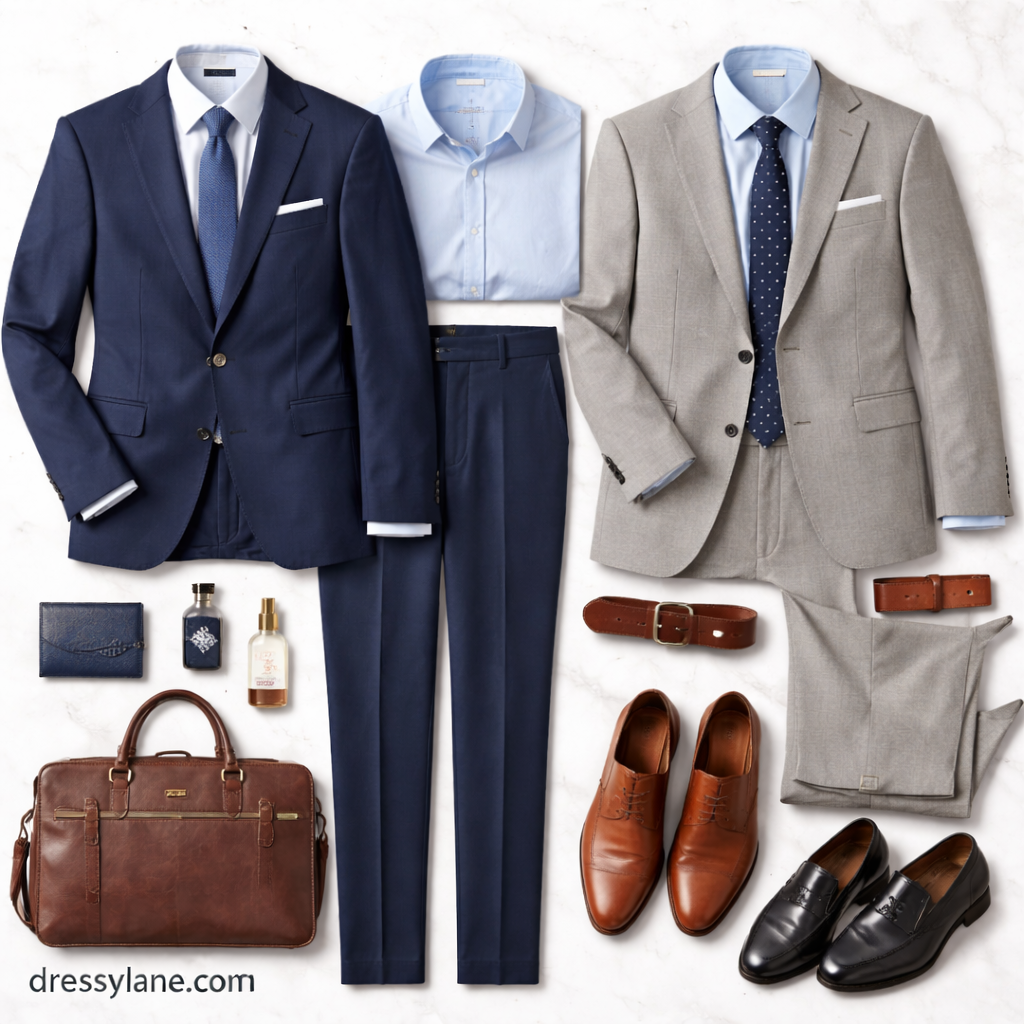
Men’s promotion interview outfits generally work best when built around familiar business clothing with slightly more attention to tailoring and finishing details.
For Formal Corporate Environments
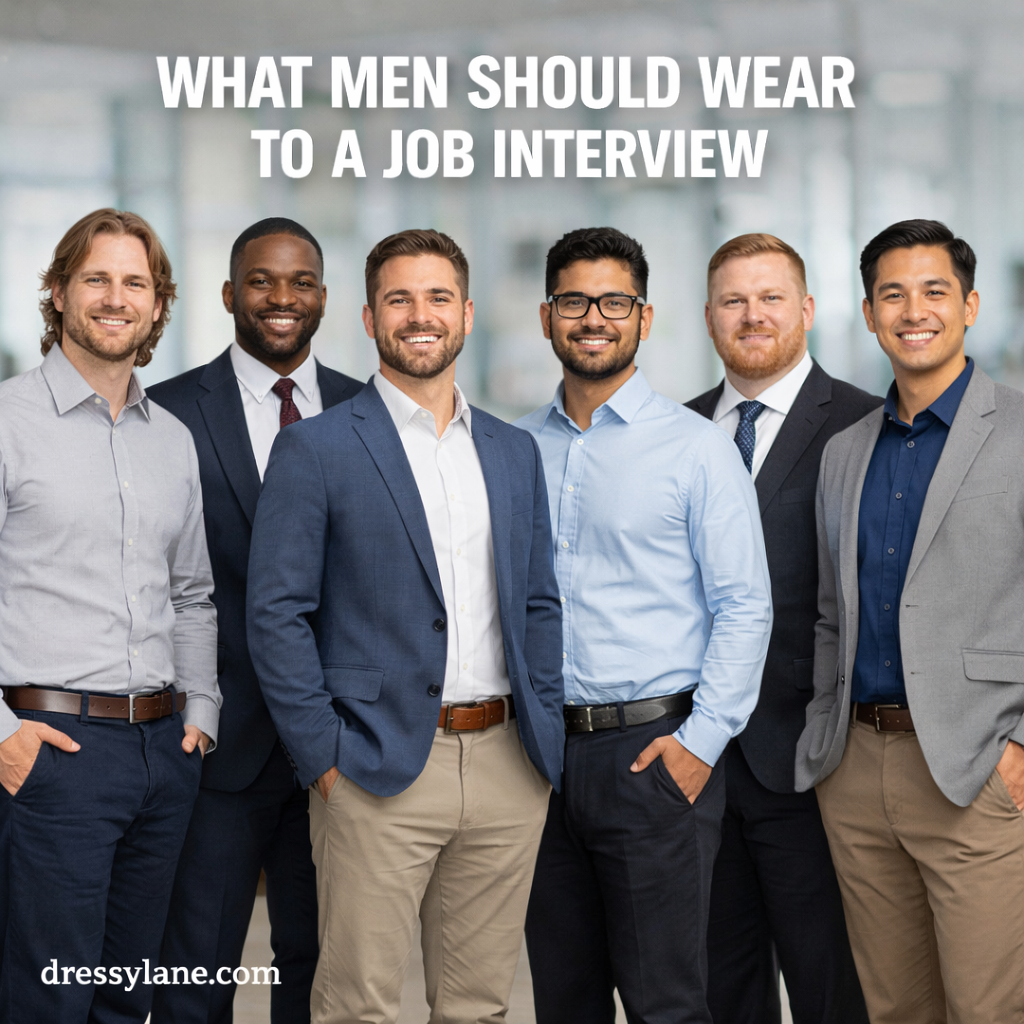
If you’re pursuing a management position in a traditional office, a navy or charcoal suit is a dependable starting point.
Pair it with a white or pale blue dress shirt, polished leather shoes, and a conservative tie if that’s consistent with the workplace.
Choose a suit jacket that sits cleanly across your shoulders without pulling when buttoned.
The trousers should have a neat break over your shoes rather than bunching heavily at the ankles.
If you already own a well-fitting navy suit, there’s little reason to purchase a new one solely for the interview.
Having the trousers pressed and checking the jacket for lint may be all the preparation you need.
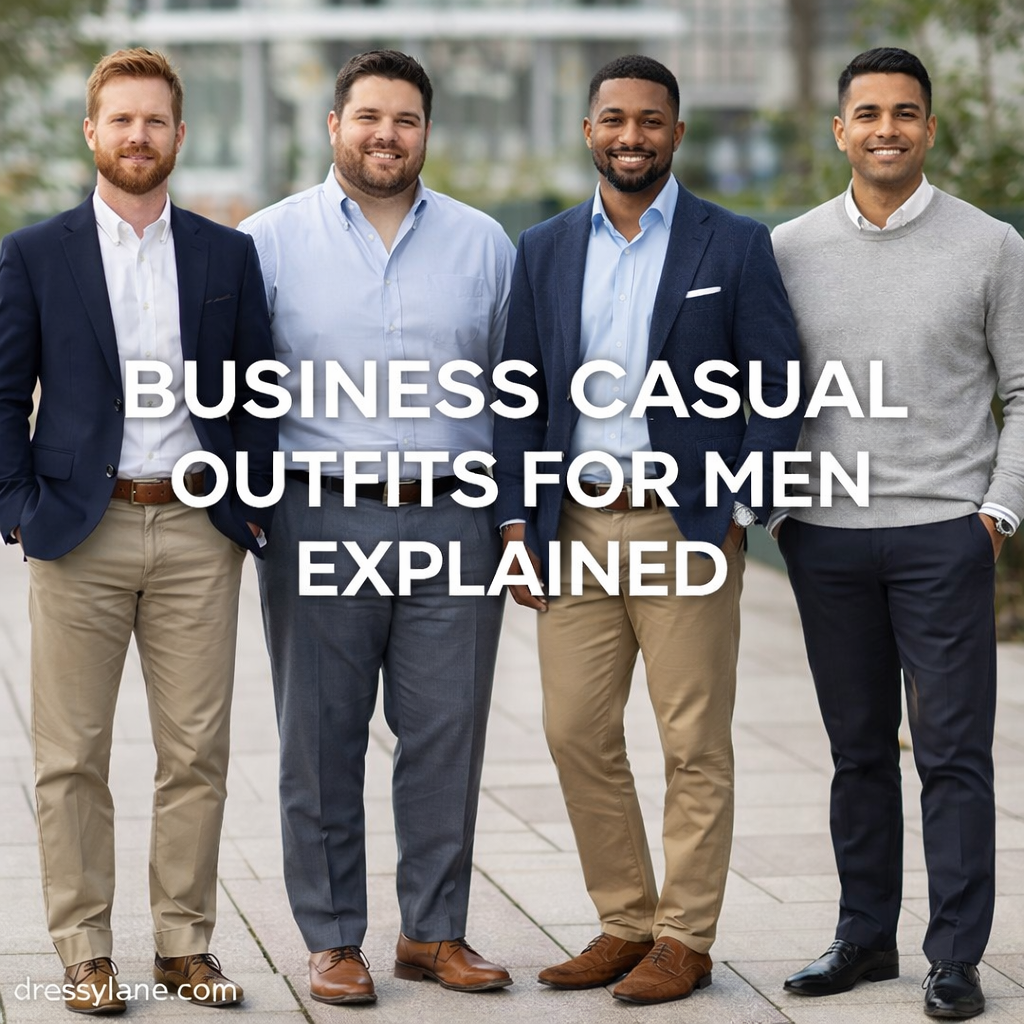
For Business Casual Environments
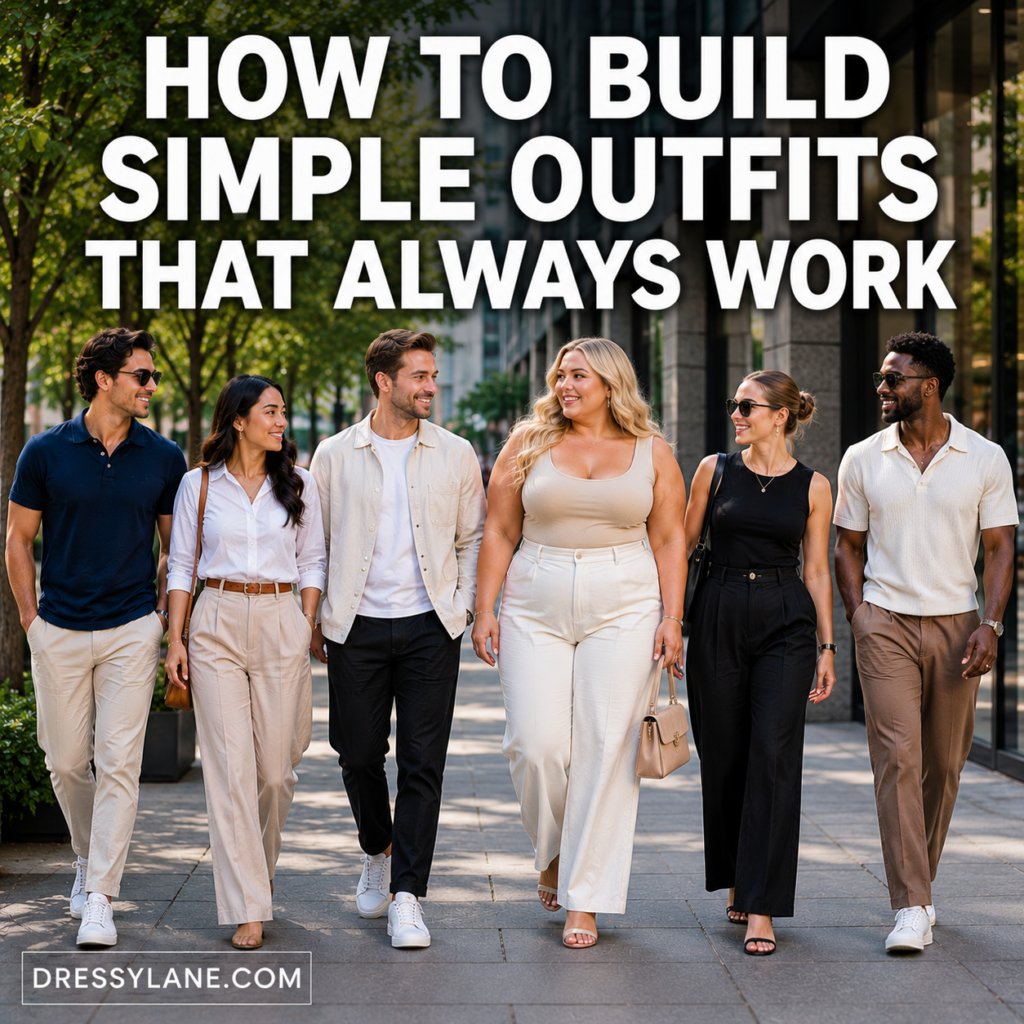
A blazer and tailored trousers can create a polished appearance without looking overly formal.
One reliable combination is a light blue Oxford shirt, navy blazer, gray wool-blend trousers, and brown leather loafers.
If your workplace is particularly relaxed, you could replace the blazer with a fine-gauge merino sweater over a collared shirt.
I’d skip the tie if nobody at your level or the level above routinely wears one, unless the interview invitation specifies business professional attire.
A tie can be appropriate, but adding one automatically doesn’t always make an outfit better suited to the workplace.
Finishing Details
Check that your shirt collar lies flat, your belt coordinates with your shoes, and your jacket sleeves don’t completely cover your shirt cuffs.
Clean shoes are particularly important. Even a well-tailored suit can look neglected when paired with heavily scuffed footwear.
Keep facial hair and hair tidy in a style you’re comfortable maintaining. Avoid applying strong cologne immediately before entering a small interview room.
What If Your Company Has a Casual Dress Code?
A promotion interview at a startup or creative agency may not require traditional business attire.
If everyone wears jeans, sneakers, and casual shirts, suddenly appearing in a formal suit could feel out of place.
Instead, improve the quality and fit of the pieces you already wear.
For example, replace faded jeans with dark, clean denim or tailored chinos. Swap a graphic T-shirt for a solid knit polo or Oxford shirt, and add a structured jacket if appropriate.
Women might choose tailored trousers with a fine-knit top and loafers rather than their usual jeans and casual sneakers.
Clean, minimalist leather sneakers may be acceptable in some workplaces, but avoid worn athletic shoes unless they’re genuinely consistent with the office environment.
The objective is to acknowledge the importance of the interview without dressing as though you’re attending an event at a completely different company.
The Outfit Mistakes I’d Avoid
The biggest promotion interview mistake isn’t necessarily dressing too casually. It’s choosing something that makes you uncomfortable or noticeably unlike yourself.
Be particularly careful with:
- Brand-new clothing: Wear the outfit beforehand to identify uncomfortable seams, tight waistbands, or restrictive sleeves.
- Overly formal combinations: A full suit may be unnecessary in an office where even senior management wears business casual clothing.
- Wrinkled fabrics: Steam your clothing the evening before, especially if you’re interviewing after a full morning at work.
- Uncomfortable footwear: Choose shoes that allow you to walk and sit comfortably.
- Distracting accessories: Avoid anything that requires constant adjustment or makes noise when you move.
Also, don’t feel obligated to purchase an expensive outfit for a promotion interview. A properly fitted blazer you already own is usually more useful than a costly new jacket with sleeves that are too long.
Prepare Your Outfit the Day Before
If your interview is scheduled during the workday, plan how your clothing will hold up before the meeting.
For an afternoon interview, consider wearing wrinkle-resistant trousers and keeping your blazer on a hanger until you need it.
If you’re commuting, check the weather and bring appropriate outerwear rather than risking a soaked suit or uncomfortable shoes.
The evening before, lay out your complete outfit, including your belt, socks, shoes, and accessories.
Try everything on together. Make sure your clothes are clean, your shoes are presentable, and nothing needs last-minute ironing.
This also gives you time to focus on the more important preparation: reviewing your accomplishments, identifying examples of leadership, and explaining how you’re ready for the responsibilities of the new position.
Final Thoughts
Dressing for a promotion interview is about making a thoughtful adjustment to your existing professional style.
You already understand your workplace, its culture, and the expectations of your current position. Use that knowledge to choose an outfit that reflects the responsibilities you’re hoping to take on.
A well-fitting blazer, pressed trousers, comfortable shoes, and carefully chosen accessories can make a meaningful difference without requiring an entirely new wardrobe.
Most importantly, choose something you can wear comfortably while discussing your achievements and future goals. Your clothing should support the conversation, not become another thing you have to think about during it.