You know the routine: you put on a pair of trousers, decide they don’t work with your shirt, change the shirt, then realize your shoes don’t match either. Suddenly, getting dressed has taken twenty minutes, and you’re still standing in front of your closet.
Dressing for work doesn’t need to involve that much decision-making.
You don’t need an enormous wardrobe or a new outfit for every day of the week. A handful of reliable combinations, comfortable fabrics, and a clear understanding of your office dress code can make mornings considerably easier.
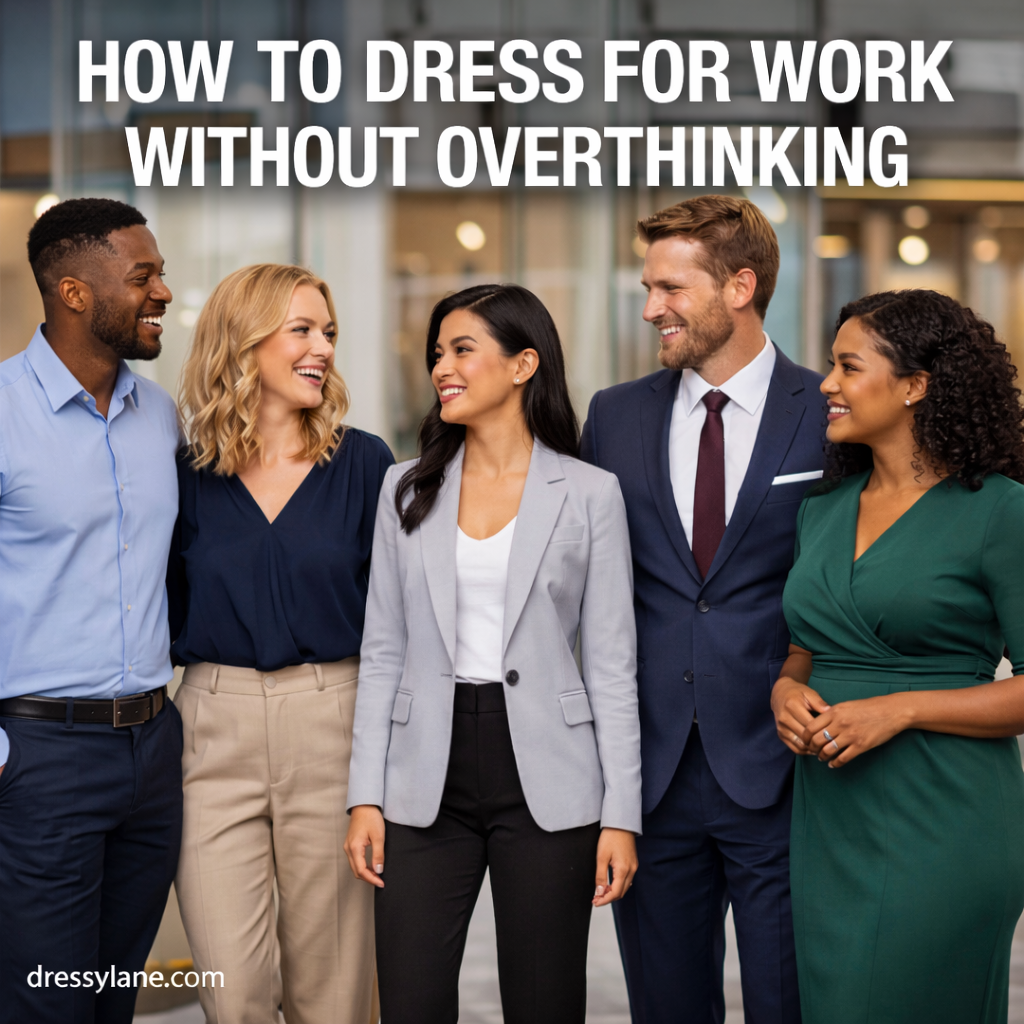
Here’s how to dress for work without overthinking every detail, whether your workplace is business casual, relatively formal, or somewhere in between.
Figure Out What Your Office Actually Expects
One reason people overthink work clothes is that they’re dressing for an imaginary standard rather than their actual workplace.
If your office allows chinos, knitwear, and clean sneakers, there’s probably no reason to wear a matching suit every day.
On the other hand, if you regularly meet clients in a traditional corporate environment, keeping a blazer or more formal outfit available makes sense.
Pay attention to what coworkers wear on ordinary workdays, not just during presentations or important meetings.
Look for patterns. Are most people wearing tailored trousers? Do managers wear jackets? Are jeans acceptable on regular weekdays?
Once you understand the dress code, you can stop reconsidering it every morning.
My recommendation is to establish one dependable everyday standard and one slightly more polished version for meetings. You don’t need a completely different wardrobe for every possible work situation.
Create Two or Three Outfit Formulas
An outfit formula is simply a combination of clothing you know works together.
Instead of choosing every item separately, you repeat the same basic silhouette while rotating colors and fabrics.
For example:
- Straight-leg trousers, a fine-knit sweater, and leather loafers.
- Chinos, an Oxford shirt, and an unstructured blazer.
- A midi dress, lightweight cardigan, and comfortable flats.
These combinations are easy to repeat without looking identical every day.
If charcoal trousers work particularly well with your cream sweater and brown loafers, keep that combination in mind. You can wear the same trousers with a pale blue shirt later in the week.
I’d avoid creating ten different outfit formulas. That defeats the purpose of simplifying your wardrobe.
Start with two combinations you genuinely enjoy wearing and build from there.
Choose Clothes That Don’t Need Constant Adjusting
An outfit that looks good in the mirror but feels uncomfortable at your desk isn’t a reliable work outfit.
Look for trousers with enough room through the hips and thighs to sit comfortably. Wool blends with a small amount of elastane, stretch chinos, and substantial ponte fabrics can provide flexibility without looking overly casual.
For tops, cotton poplin shirts, fine-gauge merino sweaters, and structured knitwear are useful because they maintain a neat appearance.
Pay attention to details such as waistbands, sleeve lengths, and trouser hems.
If you’re constantly pulling down your shirt, adjusting your skirt, or worrying about your shoes, you’ll keep thinking about your clothing throughout the day.
When trying something on, sit down and move around rather than judging the fit while standing still.
Comfortable clothing makes it much easier to settle on an outfit and move on with your morning.
How Men Can Dress for Work Without Overthinking
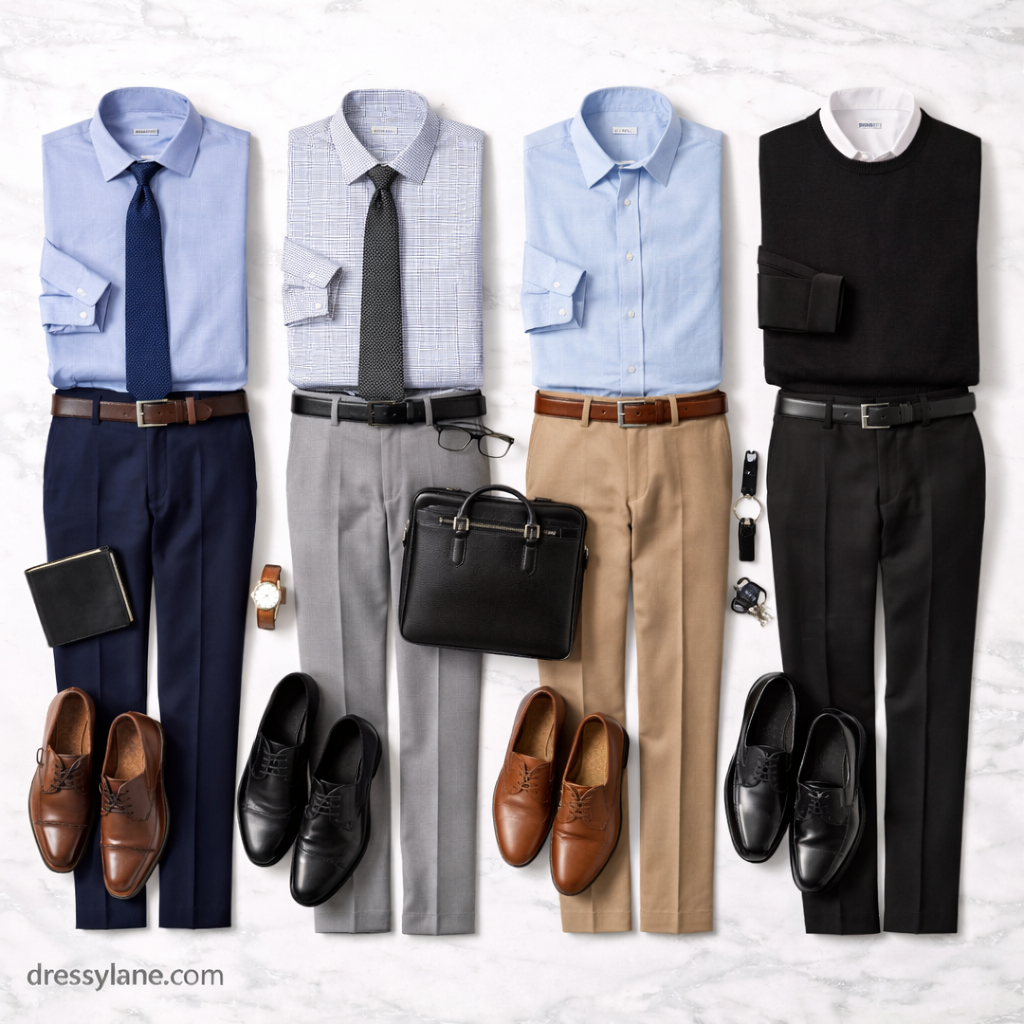
For men, a streamlined work wardrobe can revolve around a few interchangeable shirts, trousers, and shoes.
The key is choosing pieces that work together without requiring much coordination.
Build Around Reliable Basics
A practical business casual wardrobe might include:
- Two pairs of tailored chinos in navy and stone.
- One pair of charcoal wool-blend trousers.
- Three Oxford shirts in white, pale blue, and a subtle stripe.
- Two fine-gauge sweaters in navy and gray.
- One unstructured blazer.
- Brown leather loafers and black or dark brown dress shoes.
You don’t need to purchase everything at once. Start with what you already own and identify any obvious gaps.
A pale blue Oxford shirt, navy chinos, and brown loafers make a dependable everyday combination.
For a meeting, add the blazer.
Repeat the Same Silhouette
If straight-leg chinos and Oxford shirts fit you well, there’s no reason to experiment with completely different cuts every morning.
Buy similar styles in coordinating colors when replacements are needed.
I’d also skip complicated shirt-and-tie combinations unless your workplace requires them. In many business casual offices, a well-fitting shirt and tailored trousers are enough.
Keep your shoes clean, your shirts pressed, and your trousers properly hemmed. Those details often matter more than creating a different outfit every day.
How Women Can Dress for Work Without Overthinking
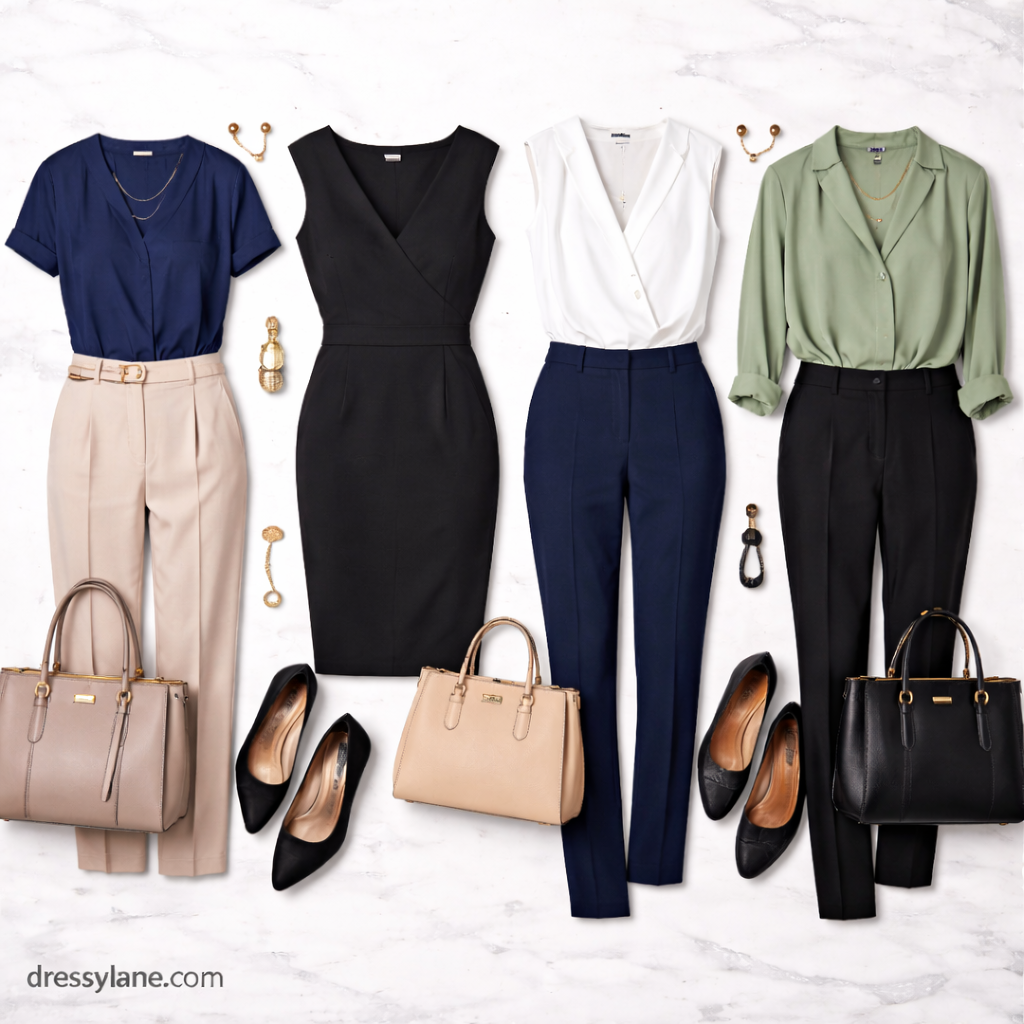
Women’s workwear offers plenty of options, but having too many unrelated pieces can make outfit planning unnecessarily complicated.
Instead of choosing between dresses, skirts, trousers, blouses, and jackets every morning, identify the silhouettes you find most comfortable.
Choose Two Dependable Outfit Templates
For example, you might rotate between:
- Straight-leg trousers, a fine-knit top, and leather loafers.
- A midi dress, cropped cardigan, and low block heels.
Both combinations work for many business casual environments and can be adjusted through color and fabric.
If you prefer trousers, there’s no need to force skirts into your wardrobe simply for variety.
Likewise, if a comfortable knit dress is your favorite work outfit, consider having two in different colors.
Make Your Pieces Interchangeable
A pair of charcoal trousers should ideally work with several tops you already own.
Try combining them with a cream merino sweater, a pale blue blouse, or a muted burgundy knit.
A navy blazer can then work with all three combinations.
For footwear, I’d prioritize two dependable pairs rather than collecting shoes that only work with one outfit.
Leather loafers and comfortable flats can cover many everyday office situations. If your workplace requires more formal footwear, keep a pair of low block heels or dress shoes available.
The goal is to eliminate the need to rebuild an entire outfit around a single item.
Limit Your Color Palette Without Making It Boring
A coordinated color palette makes getting dressed easier because most of your clothes already work together.
Start with two or three neutral colors, such as navy, charcoal, and cream.
Then introduce one or two accent colors you enjoy wearing, such as olive, burgundy, or muted blue.
For example, a wardrobe built around navy trousers, charcoal trousers, cream tops, and olive knitwear provides several combinations without much effort.
You don’t have to wear black and white every day to simplify your style.
I’d actually avoid buying a new color just because it looks attractive on the rack. If a bright orange blouse doesn’t work with your existing trousers, jackets, or shoes, it may create more outfit decisions rather than fewer.
Before buying something, think about at least two complete outfits you could make with it.
Stop Saving Your Best Clothes for Important Meetings
It’s easy to fall into the habit of wearing your least favorite clothes on ordinary workdays while saving your best-fitting pieces for presentations or client meetings.
But if you already own trousers that fit perfectly or a sweater that always looks good, wear them regularly.
You don’t need a special occasion to wear clothing you enjoy.
Keep one slightly more formal outfit ready for situations that genuinely require it, such as a client presentation or leadership meeting.
For example, your usual trousers and knit top can become meeting-ready with a structured blazer and polished shoes.
That small adjustment is often easier than putting together an entirely different outfit.
Prepare Three Outfits Before the Workweek Starts
You don’t need to plan every outfit for the entire month.
Instead, take ten minutes on Sunday evening to prepare three reliable combinations.
Check that the clothes are clean, the trousers don’t need hemming, and your shoes are ready to wear.
Hang complete outfits together if you have enough closet space.
I also recommend keeping one fallback outfit available for mornings when something goes wrong.
A pair of charcoal trousers, a cream sweater, and leather loafers can work as a dependable backup if your planned shirt is still in the laundry.
Check the weather and your calendar the night before, especially if you have an outdoor commute or an important meeting.
These small habits remove most of the decisions you’d otherwise make while rushing out the door.
Know When to Stop Adjusting Your Outfit
Sometimes overthinking has nothing to do with your wardrobe. You simply keep changing things because you’re unsure whether the outfit is good enough.
A practical way to stop is to check three things:
- Does the outfit meet your workplace’s dress code?
- Is everything clean, properly fitted, and comfortable?
- Are the shoes and outer layers appropriate for your day?
If all three are covered, there’s usually no reason to keep changing clothes.
You don’t need to add jewelry, switch shoes, or replace your shirt simply because the outfit feels too simple.
A navy sweater, gray trousers, and brown loafers may not be particularly exciting, but they can be a perfectly good work outfit.
Not every workday needs a memorable look.
Final Thoughts
Dressing for work without overthinking comes down to having fewer decisions to make, not necessarily fewer clothes.
Understand your office dress code, identify two or three outfit formulas, and build around pieces that fit comfortably and coordinate easily.
Wear your favorite work clothes regularly, keep a slightly more formal combination ready for meetings, and prepare a few outfits ahead of time.
Once you know what works, there’s no need to reinvent your style every morning.
A good work wardrobe should make getting dressed one of the easiest parts of your day.