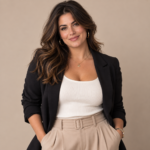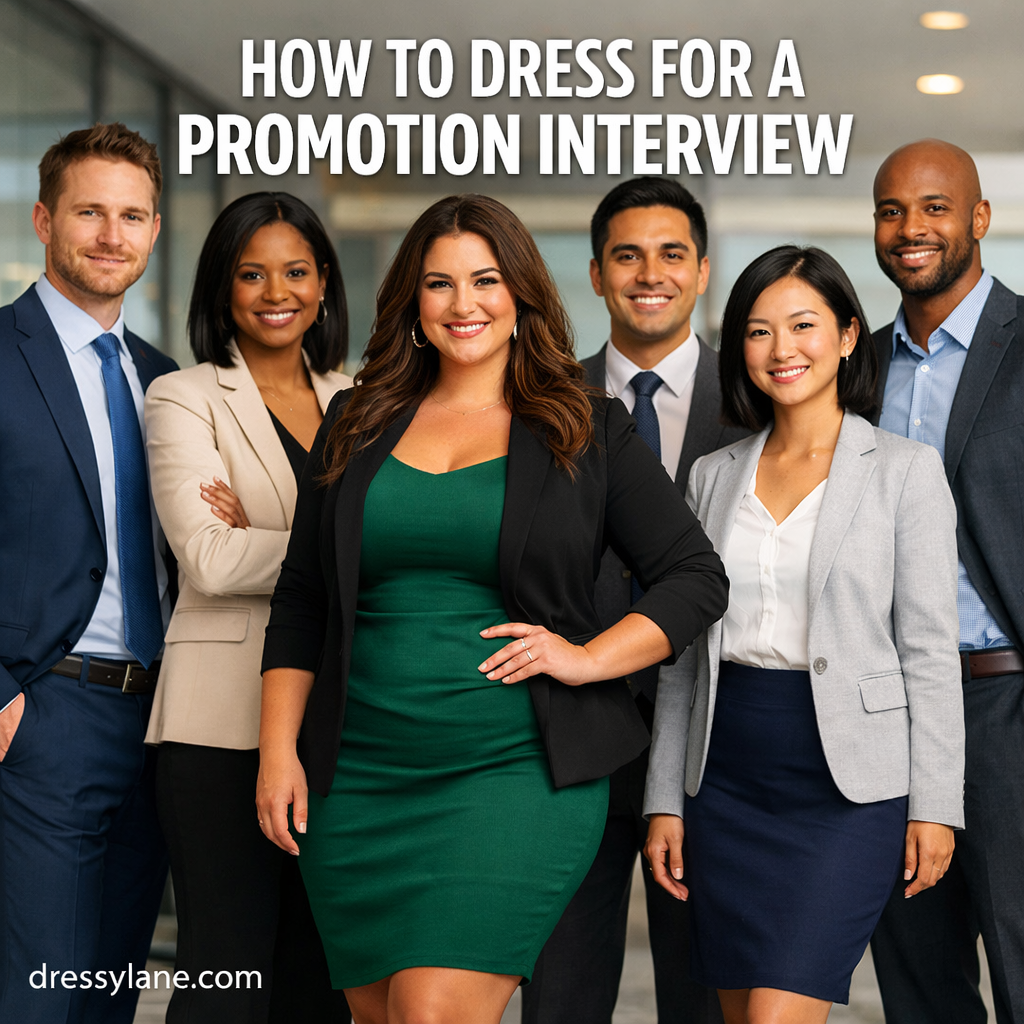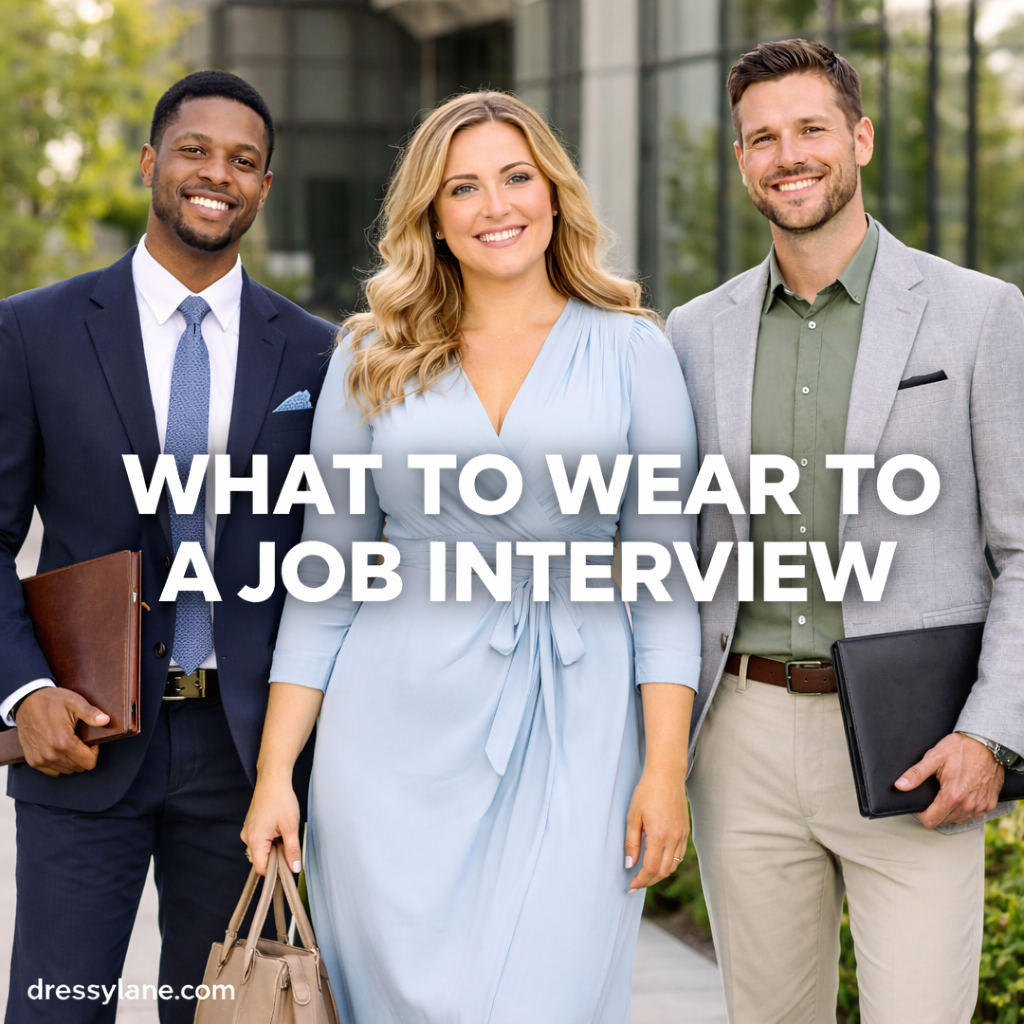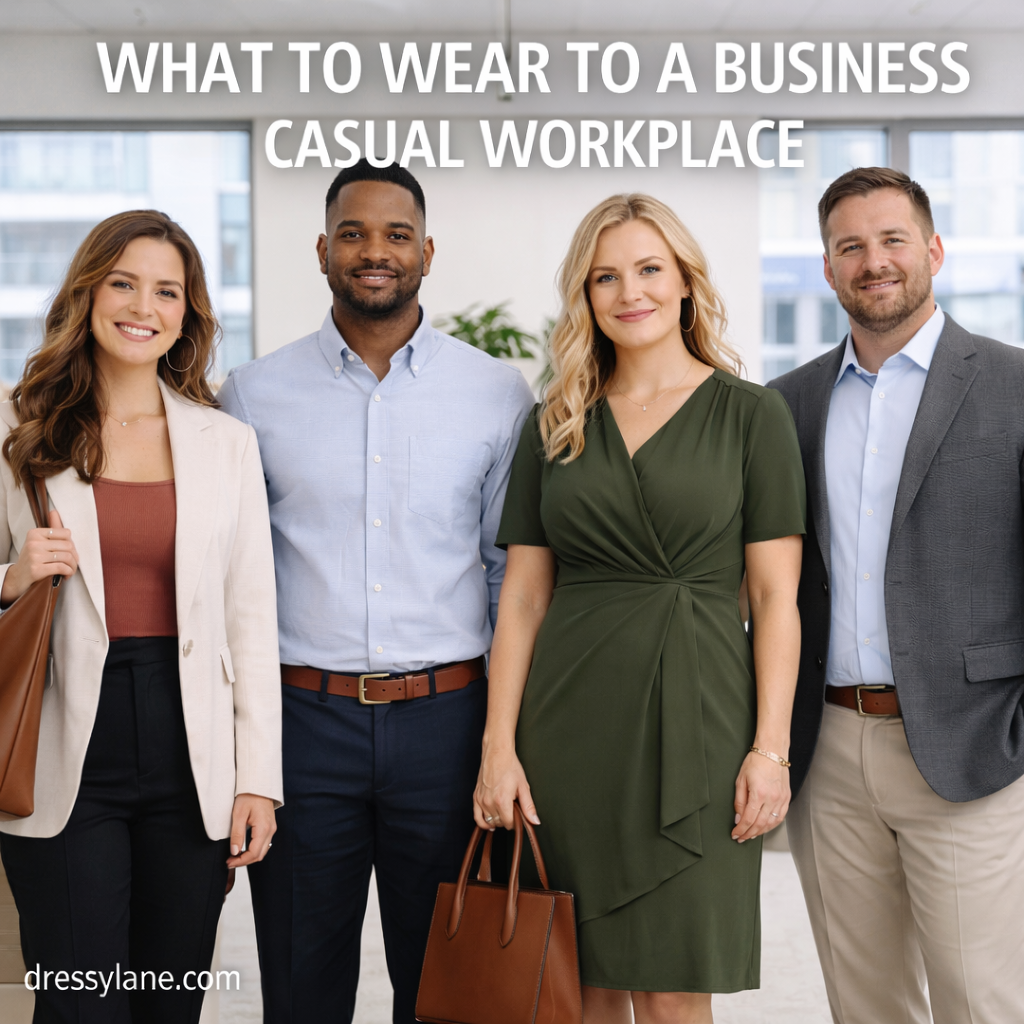
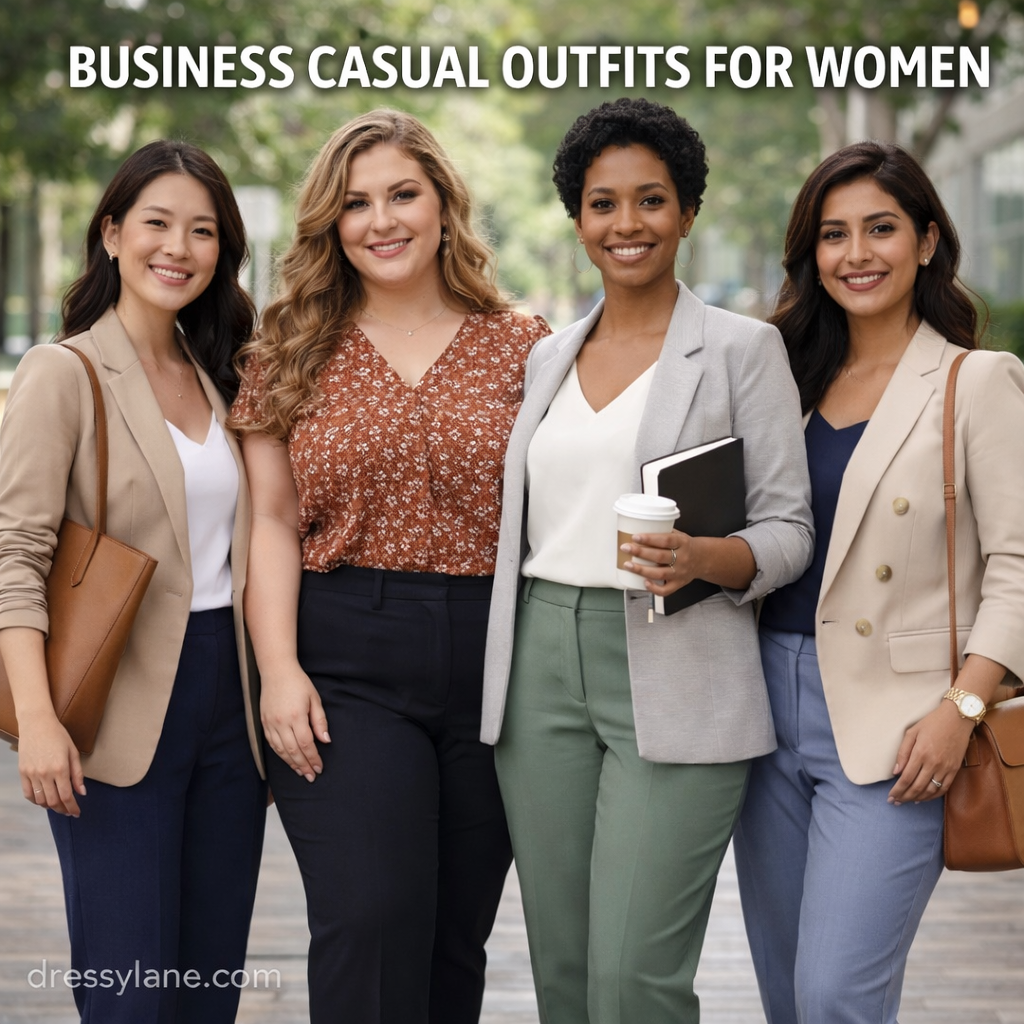
Business casual should make getting dressed for work easier, not leave you wondering whether your outfit is too formal or too relaxed. The right combination might be tailored trousers and a soft knit top, a midi skirt with a crisp blouse, or a blazer thrown over an otherwise simple outfit.
The key is choosing pieces that look professional but still feel comfortable after eight hours at your desk, a commute, and an afternoon meeting.
This guide covers business casual outfits for women, including wardrobe essentials, outfit combinations, fabrics, shoes, and styling details that make everyday workwear feel more put together.
What Business Casual Means for Women
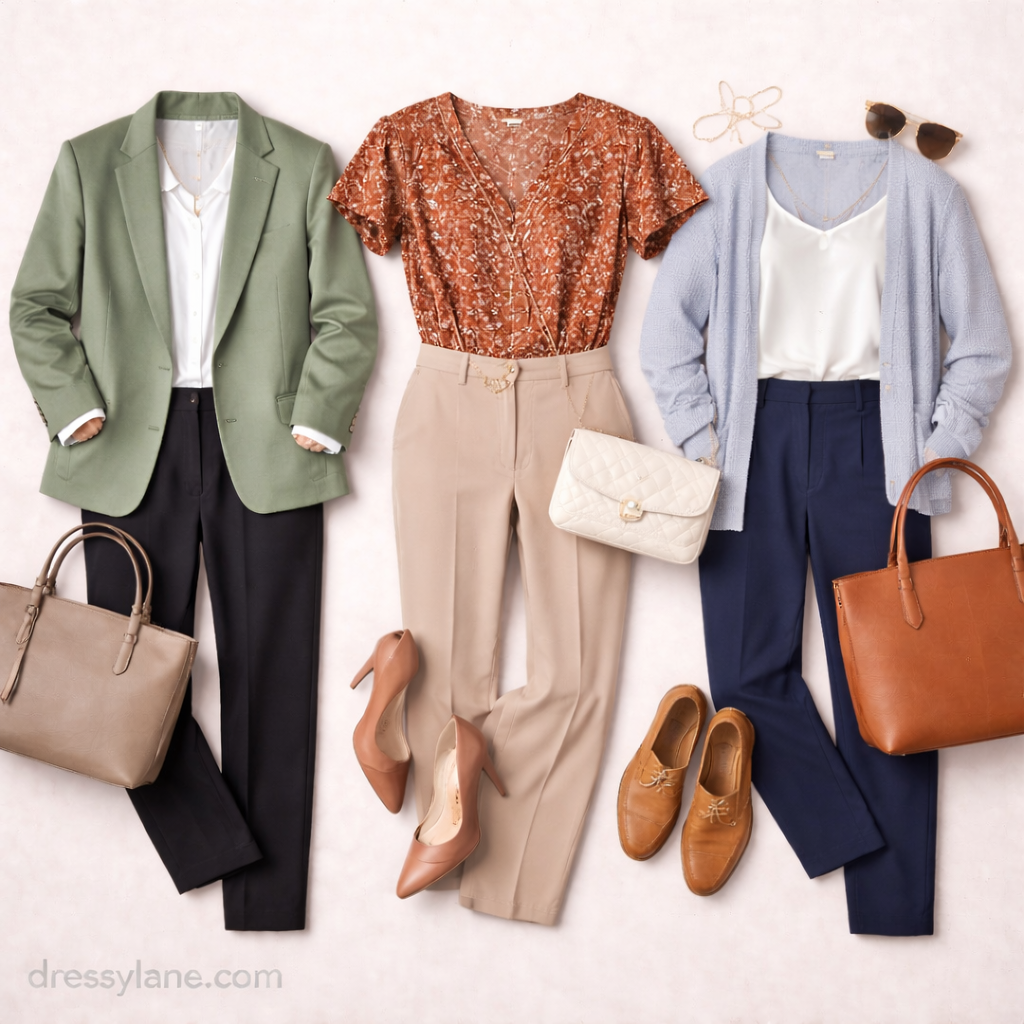
Business casual sits between traditional office attire and everyday clothing. You don’t need a matching suit, but your outfit should still look intentional.
A pair of navy ankle trousers, an ivory blouse, and leather loafers is a good example. Each piece is simple, but the tailored fit and coordinated colors make the combination office-ready.
Workplace expectations vary. A creative agency might welcome dark jeans and polished sneakers, while a corporate office may expect tailored pants and closed-toe dress shoes.
My recommendation: When starting a new job, dress slightly more polished during your first week. Once you’ve seen what colleagues wear on ordinary workdays, you can adjust without guessing.
Build Your Wardrobe Around a Few Reliable Staples
You don’t need a separate outfit for every day of the week. A small selection of versatile pieces can create plenty of combinations.
Start with:
- Two pairs of tailored trousers in black, navy, charcoal, or beige.
- Three blouses or knit tops in complementary colors.
- One structured blazer that fits comfortably through the shoulders.
- A midi skirt or simple work dress.
- Leather loafers, ballet flats, or low block heels.
Look for trousers with a straight or gently tapered leg rather than an overly tight fit. A mid-rise or high-rise waistband can also make tucked-in blouses easier to style.
Before buying another statement blouse, I’d prioritize getting one excellent pair of trousers. Pants that fit properly at the waist, hips, and hem make even an inexpensive knit top look more refined.
Business Casual Outfit Ideas for Women
These three combinations cover most everyday office situations without requiring an entirely different wardrobe.
1. Classic and Polished: Trousers and a Blouse
Pair charcoal straight-leg trousers with a cream blouse, a navy blazer, and black loafers.
This is a reliable choice for presentations, client meetings, or offices with traditional dress expectations.
Choose a blouse that drapes without pulling across the buttons. A partial tuck can define the waist without making the outfit feel overly formal.
2. Comfortable but Professional: Knitwear and Tailored Pants
Try black ponte trousers with a fine-gauge merino sweater, a lightweight cardigan, and pointed-toe flats.
Ponte is particularly useful for long workdays because its dense knit offers stretch while maintaining a relatively structured appearance.
I’d skip oversized, chunky sweaters for this combination. A thinner knit sits more neatly beneath a blazer and won’t add unnecessary bulk around the shoulders.
3. Feminine and Office-Ready: Midi Skirt and Blouse
Combine an A-line midi skirt with a tucked-in blouse, a narrow leather belt, and low block heels.
A skirt that falls around mid-calf works particularly well with a fitted or gently tailored top.
For a practical alternative to heels, switch to sleek loafers or ballet flats. The outfit still looks polished without sacrificing comfort during your commute.
Choose Fabrics That Hold Their Shape
Fabric makes a noticeable difference in how an outfit looks by midafternoon.
Cotton poplin is excellent for crisp shirts, although it may need ironing. Crepe trousers offer a smooth drape, while ponte provides stretch and structure.
Fine-gauge merino wool and cotton-blend knits work well for sweaters and cardigans without looking too casual.
If you commute or travel frequently, look for wrinkle-resistant blends. Test the fabric by gently squeezing a section in your hand before buying. If it creases immediately, consider how it will look after several hours of sitting.
Avoid thin, clingy jersey when you want a more structured office appearance.
Shoes That Actually Work for a Full Workday
The best business casual shoes are ones you can comfortably wear beyond the walk from your car to your desk.
Leather loafers are particularly versatile with trousers and midi skirts. Ballet flats and pointed-toe flats offer a softer alternative, while block heels provide additional height without relying on a narrow heel.
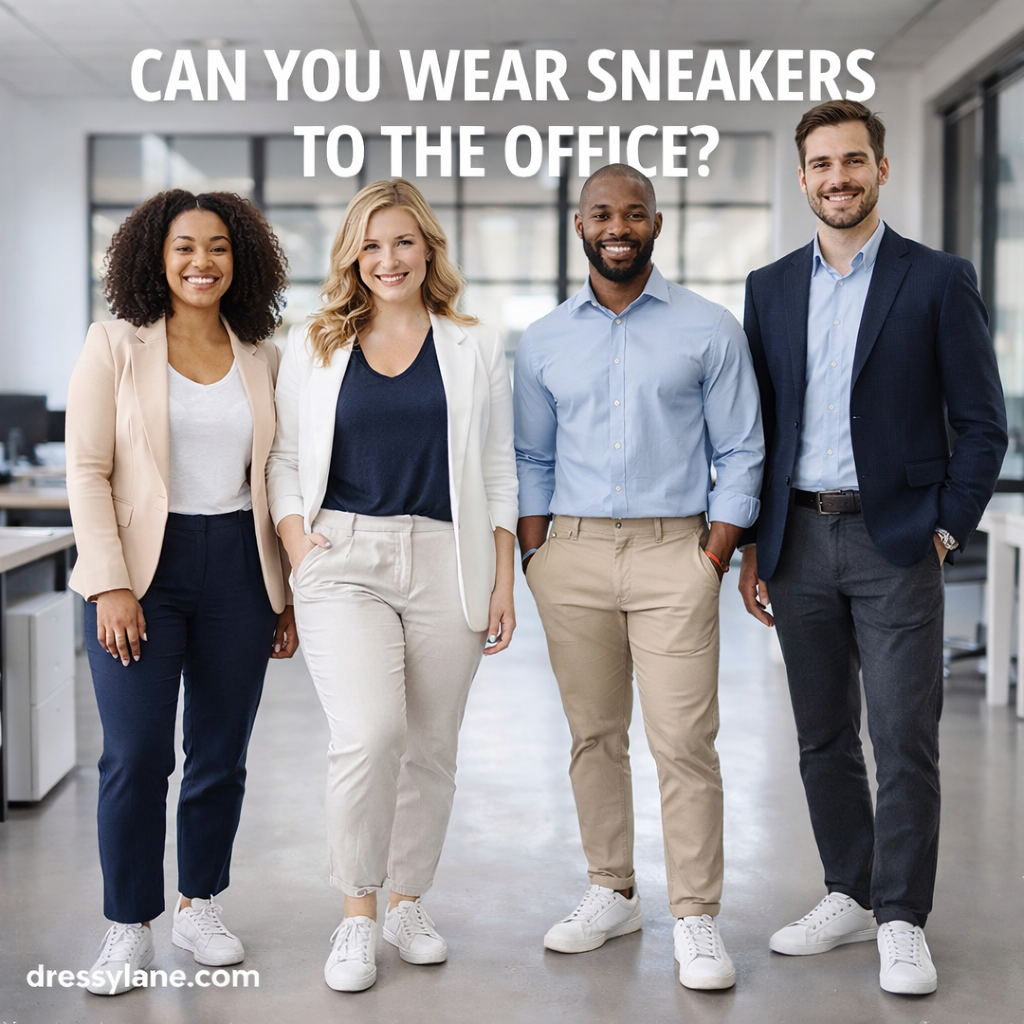
For workplaces that allow sneakers, choose a clean, minimal pair rather than running shoes.
One practical detail: Check where your trouser hem falls with the shoes you actually plan to wear. Pants tailored for heels may drag when paired with flats.
Layering Without Looking Overdressed
A blazer is one of the easiest ways to make a simple outfit feel more professional.
Choose a single-breasted style in navy, black, or taupe that fits comfortably over a blouse or thin sweater.
For less formal workplaces, a fine-knit cardigan can provide the same practical warmth with a softer appearance.
Keep a neutral blazer at the office if you regularly move between casual desk work and unexpected client meetings. It’s an easy way to adjust your outfit without changing clothes.
Colors, Patterns, and Accessories
A wardrobe built around two or three neutral colors makes mixing pieces considerably easier.
Black, navy, charcoal, cream, and camel are versatile starting points. Add personality through a burgundy blouse, sage-green cardigan, striped shirt, or subtle patterned skirt.
There’s no need to avoid bright colors entirely. A cobalt blouse can look perfectly professional when paired with charcoal trousers and simple shoes.
Accessories should complement the outfit. Small earrings, a leather belt, a structured tote, or a simple watch are often enough.
Common Business Casual Mistakes to Avoid
A few details can make otherwise suitable clothing feel out of place.
- Trousers that bunch excessively around the ankles or drag on the floor.
- Blouses that gape between buttons when sitting or moving.
- Wrinkled shirts or fabrics that become noticeably sheer under office lighting.
- Distressed denim in workplaces that expect tailored clothing.
- Shoes that are uncomfortable enough to affect how you walk.
Fit and condition matter more than price. A clean, well-fitting outfit usually looks more considered than expensive pieces that don’t fit properly.
Adjust Your Outfit to Your Workplace
A traditional corporate office may call for tailored trousers, blouses, and blazers. Creative workplaces often allow more flexibility with color, silhouettes, and footwear.
For hybrid schedules, comfortable trousers and polished knitwear can transition easily from video calls to in-person meetings.
When meeting clients, consider the setting and expected dress code rather than automatically reaching for your most formal outfit.
The goal is to look appropriate for the work you’re doing while still feeling like yourself.
Final Thoughts
Building business casual outfits for women becomes much simpler when you start with well-fitting trousers, versatile tops, comfortable shoes, and one dependable layering piece.
Focus on fabrics that hold their shape, pay attention to how clothes fit when you’re sitting and moving, and build combinations around your actual workday.
A few thoughtfully chosen pieces will serve you better than a crowded wardrobe full of outfits that only work in theory.