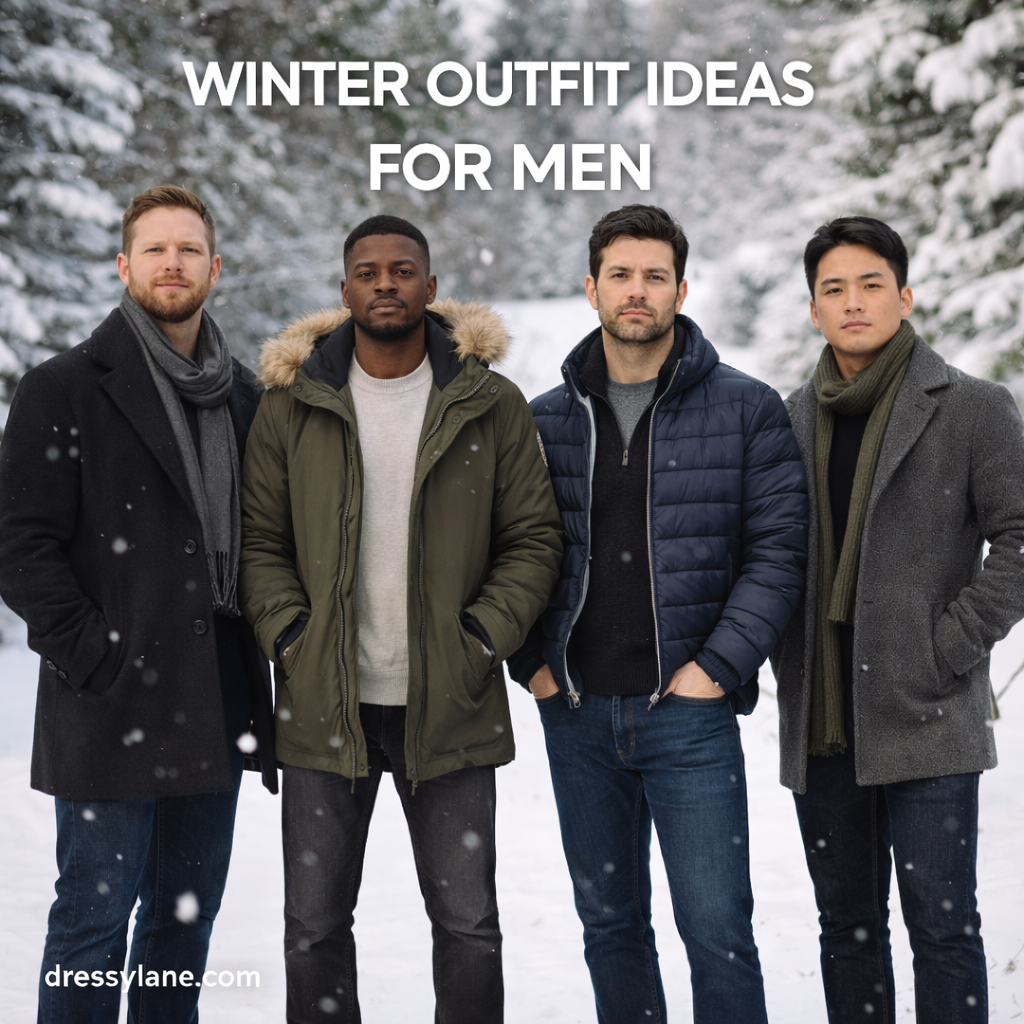
Winter is one of the better seasons for men’s style because clothes naturally have more texture and structure. Wool trousers, merino sweaters, suede boots, flannel shirts, and substantial coats can make a fairly simple outfit look considered without requiring much extra styling.
The challenge is getting those pieces to work together without becoming bulky.
A good winter outfit usually has one insulating layer, one useful outer layer, and trousers and shoes substantial enough to balance the heavier clothing on top. From there, you can adjust the formula for weekends, work, dinners, and colder weather.
Start With a Simple Winter Formula
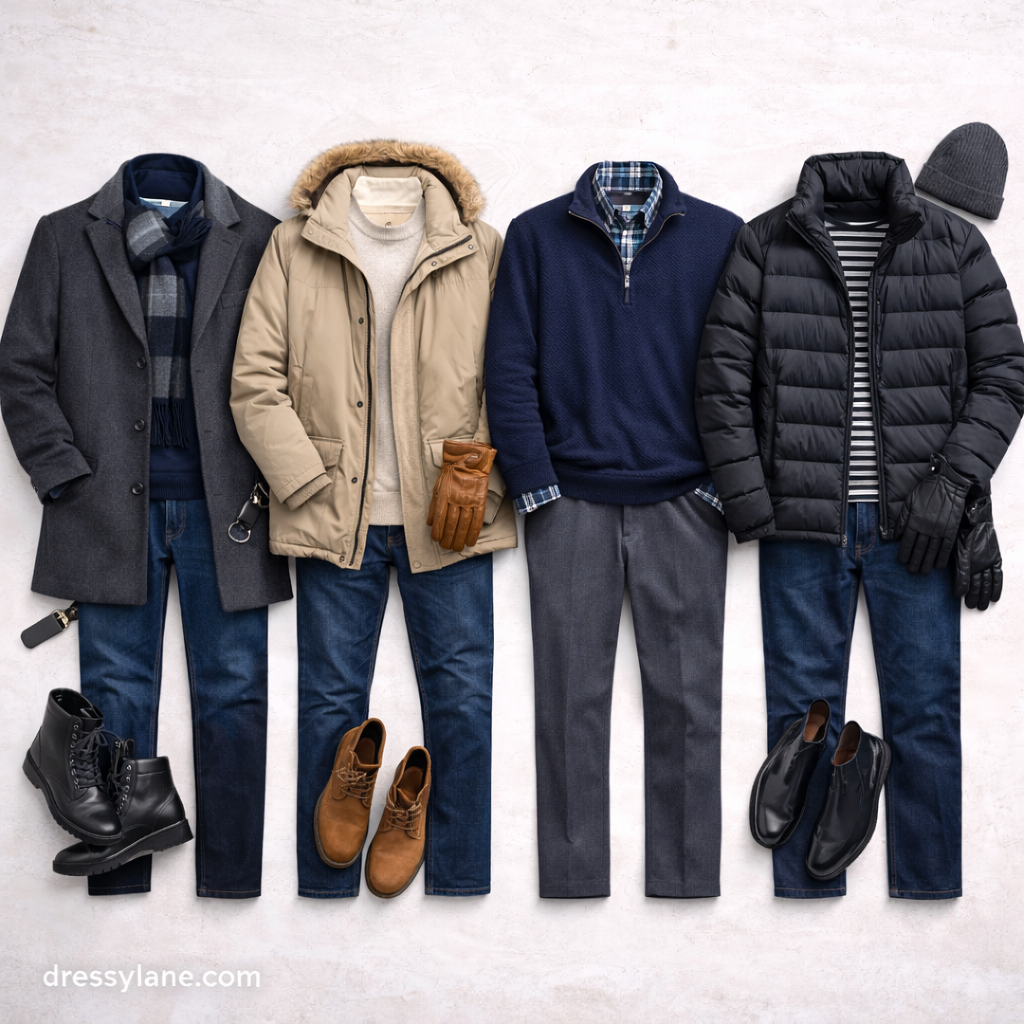
If you’re not sure what to wear, start here:
Crewneck sweater + straight-leg trousers or jeans + boots + winter coat.
For example:
Charcoal merino crewneck + dark indigo jeans + brown leather boots + camel wool coat.
Nothing about that combination is complicated, but the difference in texture between the wool, denim, and leather gives it enough visual interest.
For something more casual, swap the wool coat for a puffer or field jacket.
For something dressier, replace the jeans with gray wool trousers.
That’s a much more useful way to build a winter wardrobe than collecting several highly specific outfits that can’t be mixed together.
Use Knitwear Without Adding Too Much Bulk
Merino is one of my favorite starting points for men’s winter outfits because a relatively thin sweater can provide useful warmth while still fitting comfortably underneath a jacket.
Cashmere and cashmere blends can work similarly, while lambswool and heavier wool knits provide more texture and insulation.
Useful sweater styles include:
- Crewnecks
- Turtlenecks
- Quarter-zips
- Cardigans
- Fine-gauge V-necks
I’d generally choose fine- or medium-gauge knitwear if you regularly wear an overcoat or blazer.
Very chunky sweaters can look great on their own, but they become much harder to fit underneath structured outerwear. If the sleeves bunch inside your coat or the shoulders feel tight, the layers aren’t working together.
Casual Winter Outfit Ideas
For everyday winter dressing, dark denim, corduroy, flannel shirts, sweaters, and casual jackets give you plenty of combinations.
Try:
Dark jeans + gray crewneck sweater + olive field jacket + brown boots.
Or:
White T-shirt + navy cardigan + straight-leg jeans + leather sneakers + puffer jacket.
For a slightly more rugged combination:
Brushed flannel shirt + charcoal jeans + lace-up boots + insulated canvas jacket.
A hoodie can work too, particularly underneath a parka, puffer, or roomy workwear-style jacket.
I wouldn’t automatically put a thick hoodie under every winter coat, though. Under a tailored wool coat, the hood and heavy sleeves can create awkward bulk. A merino crewneck usually produces a cleaner result.
A Better Weekend Outfit Than Sweatpants and a Puffer
Comfort doesn’t have to mean defaulting to athletic clothes every weekend.
Try:
Heavyweight long-sleeve T-shirt + corduroy trousers + overshirt + casual boots.
Corduroy is particularly useful in winter because it has more visual texture than standard chinos but still works with sweaters, button-downs, sneakers, and boots.
Another easy combination is:
Thermal henley + straight jeans + wool overshirt + leather boots.
If you prefer joggers, choose a clean, tapered or straight pair in a substantial fabric and balance them with a structured jacket rather than adding an equally loose sweatshirt and oversized coat.
The outfit can stay comfortable without looking like something you only intended to wear at home.
Smart Casual Winter Outfits for Men
Winter smart casual is largely about combining one tailored piece with softer knitwear.
A reliable dinner or date outfit is:
Cream merino sweater + charcoal wool trousers + brown suede Chelsea boots + navy overcoat.
Another option:
Light blue Oxford shirt + dark green crewneck + navy trousers + brown leather boots.
For somewhere slightly more relaxed:
Knit polo + flannel trousers + loafers or Chelsea boots + wool coat.
Turtlenecks also work particularly well in winter because they can replace both the shirt and tie in some less formal situations.
A charcoal turtleneck with medium-gray trousers and a camel coat is simple, but the tonal variation keeps it from looking flat.
Winter Work Outfit Ideas
The difficulty with winter workwear is that you’re dressing for two environments: the commute and the heated office.
Build the indoor outfit first.
For business casual:
Oxford shirt + fine-gauge merino sweater + wool trousers + Derby shoes.
Then add an overcoat, scarf, gloves, and weather-appropriate boots if needed for the commute.
Another useful combination is:
White or pale blue shirt + navy trousers + gray quarter-zip + brown leather shoes.
If your workplace is more formal, winter is an ideal time for flannel trousers, textured wool suits, and heavier suit fabrics.
A navy or charcoal wool suit underneath a knee-length overcoat requires very little additional styling.
One practical point: your overcoat should comfortably cover a blazer or suit jacket. Try the two together before buying rather than assuming your normal jacket size will leave enough room.
Use Texture Instead of Complicated Layering
Winter clothes already provide plenty of visual interest.
Corduroy, brushed cotton, wool flannel, merino, suede, leather, and denim can make neutral outfits feel richer without adding extra pieces.
For example:
Navy merino sweater + gray flannel trousers + brown suede boots
has three noticeably different textures despite using a very restrained color palette.
That’s why I’d rather add texture than stack a shirt, sweater, vest, scarf, jacket, and coat just to make an outfit look layered.
Every layer should have a reason to be there.
Choose the Coat Around How You Actually Dress
A wool overcoat makes sense if you regularly wear trousers, knitwear, tailoring, or business clothes.
A puffer works naturally with jeans, sweaters, sneakers, and casual boots.
A parka makes sense when you genuinely need insulation and weather protection.
You don’t necessarily need all three.
If I were building a small men’s winter wardrobe, I’d rather have one versatile wool coat and one genuinely weather-capable casual coat than several jackets that all handle roughly the same conditions.
Colors such as navy, charcoal, olive, camel, and dark brown are easy to combine with the rest of a winter wardrobe.
Whatever you choose, test it over your thickest normal mid-layer.
Winter Trousers Deserve More Attention
Don’t let every winter outfit default to jeans.
Wool flannel trousers are particularly good with knitwear because their softer texture makes an outfit feel less formal than standard suit trousers.
Corduroy is another strong option.
Medium-weight chinos can work on milder days, while dark straight-leg denim remains an easy casual choice.
Try:
Brown corduroy trousers + cream sweater + navy coat
or:
Charcoal flannel trousers + burgundy knit + brown Chelsea boots.
I’d favor straight or gently tapered fits over extremely slim winter trousers. They balance heavier footwear and outerwear better and leave room for a thin thermal layer when temperatures drop.
The Right Winter Shoes Change the Outfit
Chelsea boots are useful because they can move between jeans and tailored trousers.
Lace-up leather boots lean more casual and work particularly well with denim, corduroy, and heavier chinos.
For milder dry days, leather sneakers and loafers can remain in rotation.
Pay attention to the sole, though.
A sleek boot with a nearly smooth outsole may be fine for a restaurant but a poor choice for a wet or icy commute. Rubber soles with some texture are much more practical once winter weather arrives.
If conditions are genuinely snowy, switch to proper weather-resistant boots rather than expecting your everyday leather shoes to do everything.
You Don’t Need an All-Dark Winter Wardrobe
Black, charcoal, navy, olive, brown, and burgundy naturally work well in winter, but lighter colors can keep outfits from becoming repetitive.
Cream knitwear is particularly easy to combine with dark denim, charcoal trousers, olive outerwear, or brown boots.
Camel outerwear also works with almost everything in a traditional men’s winter palette.
One combination I particularly like is:
Charcoal trousers + cream sweater + dark brown boots + camel coat.
It’s still unmistakably a winter outfit without relying entirely on black and navy.
A Small Winter Wardrobe Can Cover Most Situations
You don’t need a huge collection to create different winter outfits.
A practical starting rotation might include:
- Two or three sweaters in different weights
- Dark jeans
- Wool or flannel trousers
- Corduroy or heavier chinos
- A few Oxford or flannel shirts
- One versatile wool coat
- One weather-capable casual coat
- Leather boots
- Casual sneakers
- Scarf, gloves, and a warm hat
The important part is making sure these pieces physically layer together.
Your sweater should fit under your coat. Your trousers should work with your boots. Your overcoat should fit over your work jacket.
That compatibility matters more than having a large number of individual pieces.
Final Thoughts
The best winter outfit ideas for men aren’t especially complicated.
Start with good trousers or dark denim, add a merino sweater, Oxford, flannel shirt, or knit polo, then choose outerwear appropriate for the setting and weather. Use wool, corduroy, suede, leather, denim, and brushed cotton to add texture instead of relying on unnecessary layers.
For casual days, jeans or corduroy with knitwear and boots are hard to get wrong. For smart casual settings, combine wool trousers with a sweater and structured coat. For work, build the indoor outfit first and treat the coat, scarf, gloves, and weather-resistant footwear as your commuting layer.
Most importantly, make sure the clothes work together in real life. A winter outfit isn’t successful if the sweater doesn’t fit under the coat or the boots become useless as soon as the sidewalk gets wet. Style the outfit around the season you’re actually experiencing, not just the winter look you’re trying to create.