Spring is an awkward season to dress for in the best possible way. A morning can be cool enough for a jacket, lunchtime warm enough for a T-shirt, and the walk home unexpectedly windy or rainy.
That makes spring less about buying an entirely new wardrobe and more about choosing clothes that can adjust throughout the day.
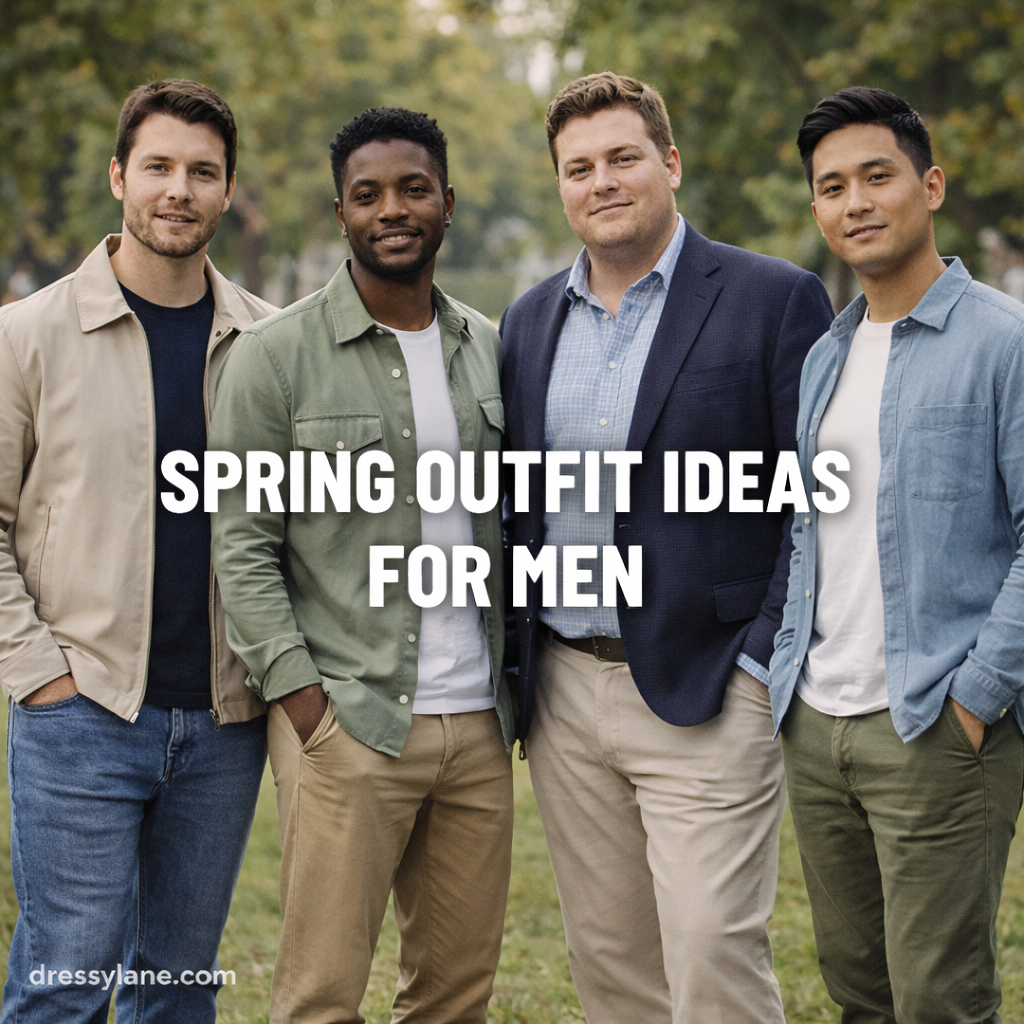
The most useful spring outfit ideas for men combine breathable fabrics, medium-weight pants, and one removable layer. Think a cotton T-shirt under an overshirt, an Oxford shirt with chinos, or a lightweight sweater underneath a field jacket.
The goal is to look put together without dressing as though summer has already arrived—or winter never left.
Start With the Simplest Spring Outfit
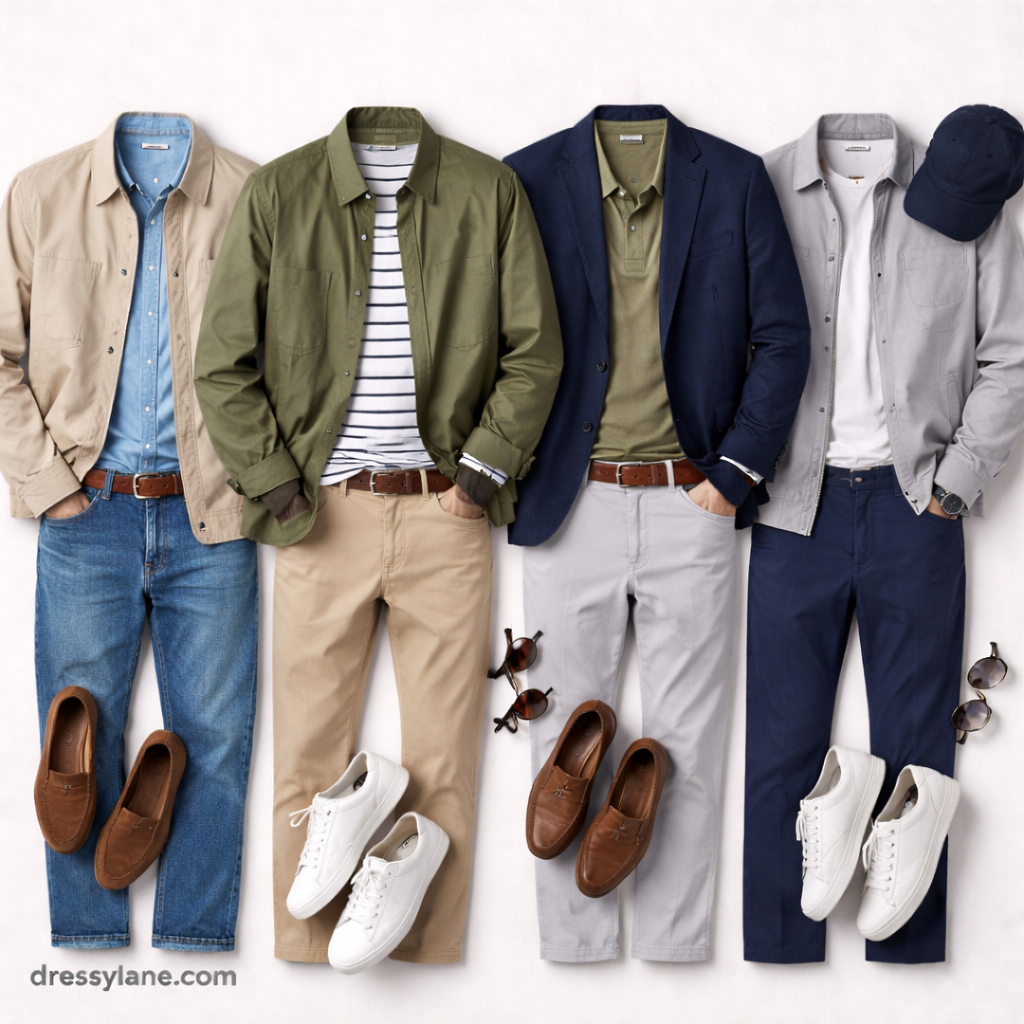
One of the easiest combinations is:
T-shirt + chinos + lightweight jacket + sneakers.
It works because every piece can handle a fairly wide temperature range.
Try a white or heather-gray cotton T-shirt with olive or khaki chinos, a navy bomber or cotton-twill jacket, and low-profile leather sneakers.
If the afternoon warms up, remove the jacket and the outfit still looks complete.
That’s something I look for with spring layering: the outfit underneath the jacket should be able to stand on its own. If removing your outer layer makes the outfit look unfinished, you’ve made the jacket too important.
Use Overshirts on In-Between Days
An overshirt is particularly useful when it’s too warm for a coat but too cool for a T-shirt alone.
Look for cotton twill, lightweight denim, canvas, or a cotton-linen blend. You want enough structure for it to behave like a jacket without the insulation of actual outerwear.
Wear one open over a plain T-shirt with straight-leg jeans or chinos.
Navy, olive, tan, stone, and medium blue are easy colors to work with because they’ll coordinate with most neutral pants.
I’d skip the extremely thick wool “shackets” once spring is underway. They’re useful during colder transitional weather, but many are essentially coats disguised as shirts and quickly become too warm.
Try an Oxford Shirt With Chinos
An Oxford cloth button-down and chinos are difficult to get wrong in spring.
A pale blue Oxford with tan chinos and brown loafers works for a casual office, lunch, or dinner. Roll the sleeves once or twice when it warms up rather than switching immediately to a short-sleeve shirt.
For something more casual, wear the Oxford open over a white T-shirt with olive chinos and sneakers.
Oxford cloth has enough texture to look substantial without feeling nearly as heavy as flannel, making it particularly useful during the transition out of winter.
Bring Out Lightweight Knitwear
Don’t pack away every sweater.
Fine-gauge merino, cotton crewnecks, and cotton-linen knits are excellent spring layers because they provide a little warmth without the bulk of winter knitwear.
Try a navy crewneck with a white T-shirt underneath, light gray trousers, and sneakers. Or wear a sage or stone sweater with dark denim and brown suede loafers.
A lightweight sweater also fits comfortably underneath a bomber, field jacket, or unstructured blazer when the morning is genuinely chilly.
Chunky cable knits are where I’d draw the line. Once temperatures regularly reach the 60s, they’re difficult to manage unless you stay cold all day.
Casual Spring Outfit Ideas for Men
For everyday dressing, spring outfits don’t need many moving parts.
Try these combinations:
- White T-shirt + olive chinos + denim jacket + leather sneakers
- Striped tee + dark jeans + tan overshirt + sneakers
- Polo + lightweight chinos + suede loafers
- Oxford shirt + straight-leg jeans + bomber jacket + sneakers
- Cotton crewneck + chinos + casual Derby shoes
These work because the pieces aren’t locked into a single season.
A denim jacket, for example, can handle a chilly April morning but doesn’t look strange carried over your arm when the afternoon warms up.
Smart-Casual Spring Outfits
Spring is also a good time to make smart-casual clothing slightly less structured.
Instead of a fully lined wool blazer, try an unstructured cotton or lightweight wool version with an Oxford shirt, chinos, and loafers.
Another reliable combination is:
Knit polo + tailored trousers + loafers.
A knit polo has more texture than a standard polo shirt but is still considerably lighter than wearing a sweater over another shirt.
For a dinner or date, try charcoal or navy trousers with a cream knit polo and brown suede loafers. Add a lightweight jacket if the evening will be cool.
Choose Pants by Fabric, Not Just Color
Spring doesn’t require you to abandon dark pants.
Dark indigo jeans, navy chinos, and charcoal trousers can all remain in rotation. The important difference is fabric weight.
Cotton twill chinos, lightweight wool trousers, and medium-weight denim are easier to wear through changing temperatures than thick winter flannel or heavily brushed fabrics.
I’d also avoid automatically cuffing every pair of pants to make them look “spring-like.” A clean trouser break or straight hem usually looks better unless the pants were designed to be worn cropped.
Lighten Your Colors Without Starting Over
Spring is a natural time to introduce lighter colors, but there’s no need to rebuild your wardrobe around pastels.
Keep navy, charcoal, denim, olive, and brown, then mix in cream, stone, light gray, pale blue, sage, or off-white.
For example:
Navy chinos + white Oxford + olive jacket already feels appropriate for spring.
So does:
Dark jeans + cream sweater + brown suede loafers.
I generally prefer adding one lighter color to an outfit rather than dressing head-to-toe in pale shades. It feels less forced and makes better use of clothes you already own.
Choose Shoes That Can Handle Spring Weather
Clean leather sneakers are probably the most versatile casual spring shoe. They work with jeans, chinos, and casual trousers and handle light moisture better than thin canvas sneakers.
Loafers are another strong option once temperatures become milder. Brown suede looks particularly good with spring colors, although smooth leather is easier to manage when rain is likely.
Casual Derby shoes work well for smarter outfits, while lightweight Chelsea or lace-up boots can remain useful during colder or wetter parts of early spring.
Before retiring boots entirely, look at the weather rather than the calendar. Spring can still produce plenty of cold, wet days.
Keep a Rain Layer in the Rotation
One spring purchase I’d prioritize over another shirt or sweater is a genuinely useful rain layer.
A lightweight trench, water-resistant field jacket, or simple shell can be worn over clothes you already own without adding much insulation.
That’s much more practical during a rainy 55°F morning than trying to make a heavy winter coat work simply because it’s water-resistant.
Shoes with some outsole traction are useful for the same reason. Wet pavement changes what counts as practical footwear.
Final Thoughts
The best spring outfit ideas for men are built around flexibility.
Start with combinations that work without outerwear—an Oxford and chinos, a T-shirt and jeans, or a lightweight sweater with trousers—then add a bomber, overshirt, field jacket, or unstructured blazer when the temperature calls for it.
Cotton twill, Oxford cloth, lightweight denim, fine merino, linen blends, and lighter wool all work particularly well during the season.
Most importantly, don’t dress for spring as though every day is warm and sunny. Dress for the temperature swing. A good spring outfit should be comfortable during a cool morning, easy to simplify during a warm afternoon, and simple to layer again when the temperature drops after sunset.