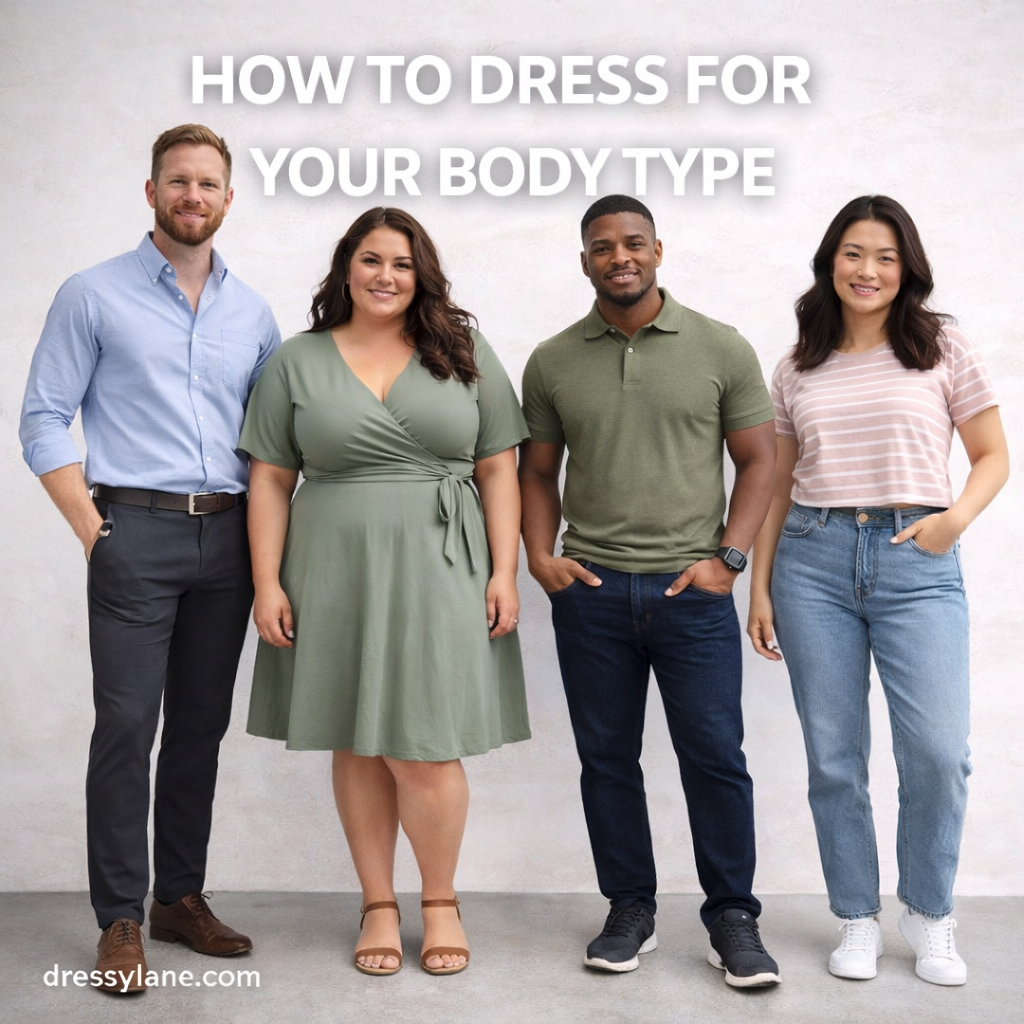
Learning how to dress for your body type isn’t about correcting your body or following a list of clothes you’re supposedly allowed to wear. It’s about understanding proportion, fit, shape, and fabric so you can make clothing work the way you want it to.
Two people who wear the same clothing size can have completely different proportions. One may have broader shoulders, another fuller hips. One may have a long torso and shorter legs, while another has the opposite proportions. Those differences affect how the same shirt, jacket, trousers, or dress hangs on each person.
Body-shape categories can provide a useful starting point, but they aren’t rules. Most people don’t fit perfectly into one category, and bodies naturally change with age and over time.
The better goal is to understand what your clothes are doing visually—and then decide what you want to emphasize, soften, lengthen, define, or simply leave alone.
What Dressing for Your Body Type Actually Means
Traditional body-type advice often treats styling as a process of making every body appear closer to one supposedly ideal silhouette.
That’s unnecessarily limiting.
A more useful approach is to ask:
- Where does this garment create structure?
- Where does it add volume?
- Where does it fall on my body?
- Does the waist sit where my waist actually is?
- Are the shoulders positioned correctly?
- Does the fabric skim, cling, or stand away from the body?
- Are the proportions doing what I want them to do?
- Can I comfortably sit, walk, reach, and move?
You can then decide what looks good to you.
Maybe you want to emphasize your waist. Maybe you prefer a straight silhouette. Maybe you like oversized clothing. Maybe you want your shoulders to appear broader.
All of those choices are legitimate.
If feeling physically comfortable in your clothes is the bigger challenge, our guide to how to dress to feel comfortable in your body goes deeper into that side of dressing.
Start With Fit Before Body Shape
Before worrying about whether you’re an hourglass, rectangle, triangle, or anything else, check whether your clothes actually fit.
Fit problems are frequently mistaken for body-type problems.
Check the Shoulders
On traditionally fitted shirts, blouses, jackets, and blazers, the shoulder seam should generally correspond reasonably closely with your natural shoulder.
A deliberately dropped-shoulder sweater is different—the oversized shape is part of the design.
Check the Chest or Bust
Buttons shouldn’t visibly strain when you’re standing normally.
If a shirt fits your shoulders but pulls across your chest or bust, try a different cut rather than automatically sizing up everywhere.
Check the Waist
A waistband should stay in place without painfully digging into your body.
Pay attention to rise as well as waist size.
Low-, mid-, and high-rise trousers position the waistband at different points on your torso. Someone who finds one rise uncomfortable may feel completely different in another.
Check the Hips and Seat
Look for excessive pulling, horizontal stress lines, sagging, or fabric collapsing beneath the seat.
A different cut may solve the problem better than a different size.
Check Length
Sleeve, jacket, shirt, skirt, and trouser lengths influence proportion dramatically.
A jacket ending at your widest point creates a different line from one ending above or below it.
Likewise, cropped, ankle-length, and full-length trousers each change how the legs appear.
How to Identify Your Body Shape
Body-shape systems are based primarily on relative proportions, not weight.
Stand naturally in relatively fitted clothing and compare your:
- Shoulders
- Chest or bust
- Waist
- Hips
You can also take measurements if you want a more objective reference.
Don’t worry if you seem to fall between categories. That’s normal.
Use the closest category as an experiment, not an identity.
How Women Can Dress for Different Body Shapes
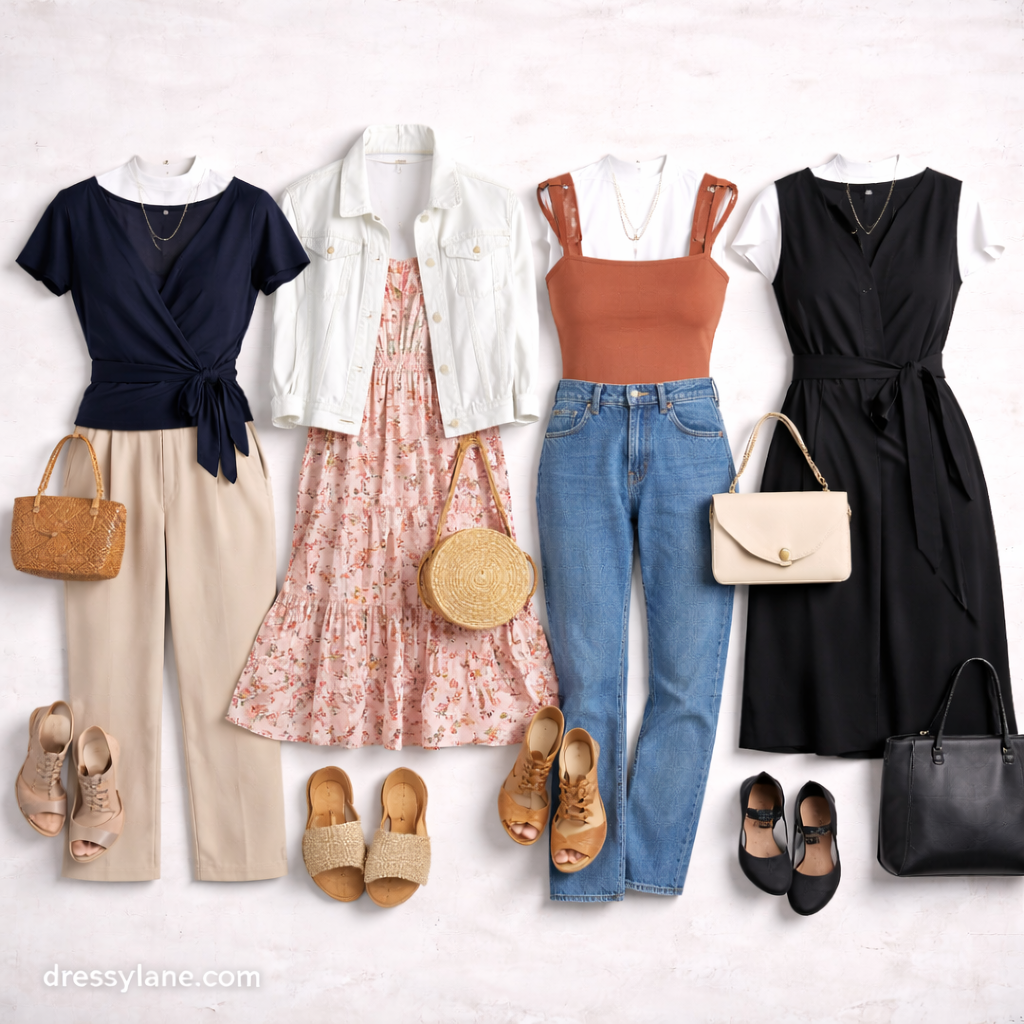
Women’s body-shape systems usually compare the shoulders or bust, waist, and hips.
Hourglass Shape
An hourglass figure typically has relatively balanced upper and lower proportions with noticeable waist definition.
If you want to emphasize those proportions, try:
- Wrap dresses
- Belted dresses
- High-rise trousers
- Fitted knitwear
- Tailored jackets
- Pencil or A-line skirts
Fabrics with enough drape to follow your shape—such as jersey, crepe, fine-gauge knits, and softer woven fabrics—can work particularly well.
You don’t have to emphasize your waist, however.
Straight-cut dresses, relaxed shirts, and oversized jackets can create a deliberately different silhouette if that’s what you prefer.
Pear or Triangle Shape
Pear or triangle shapes generally have hips that are wider than the shoulders.
If you’d like to create more visual balance between your upper and lower body, consider:
- Boat necks
- Square necklines
- Structured shoulders
- Interesting collars
- Cropped jackets
- Straight or wide-leg trousers
- A-line skirts
Color can also shift visual attention. A brighter or patterned top with a simpler bottom draws the eye upward.
That doesn’t mean pear shapes must wear dark bottoms. It’s simply one styling tool.
Apple or Round Shape
Apple or round shapes often have less waist definition, with more fullness through the torso.
If you prefer a longer, less interrupted line, try:
- Open jackets or cardigans
- V-neck or open-neck tops
- Straight-leg trousers
- Softly structured shirts
- Single-breasted jackets
- Dresses that skim rather than grip the torso
Fabric matters here.
A substantial ponte knit, medium-weight jersey, crepe, or structured cotton can skim the body differently from very thin stretch fabric.
Don’t assume oversized clothing will automatically be more flattering or comfortable. Excess fabric can sometimes create more volume than a garment that follows your shape gently.
Rectangle Shape
Rectangle shapes tend to have relatively similar shoulder, waist, and hip measurements.
If you want to create more visible curves or waist definition, experiment with:
- Belts
- Cropped jackets
- High-rise bottoms
- Pleated skirts
- Wrap tops
- Peplum shapes
- Layering
Texture can also create dimension. Ribbed knits, tweed, denim, corduroy, pleats, and substantial cotton all interact with the body differently.
If you prefer your naturally straighter silhouette, lean into it with long coats, column dresses, straight trousers, and clean minimalist lines.
Inverted Triangle Shape
Inverted triangle shapes have shoulders that are visually broader than the hips.
If you want more balance through the lower body, try:
- Straight or wide-leg trousers
- Pleated skirts
- A-line skirts
- Fuller-leg jeans
- Simpler shoulder construction
- Open necklines
Alternatively, structured jackets and sharper shoulders can deliberately emphasize an athletic upper body.
Again, the goal is choice—not correction.
How Men Can Dress for Different Body Types
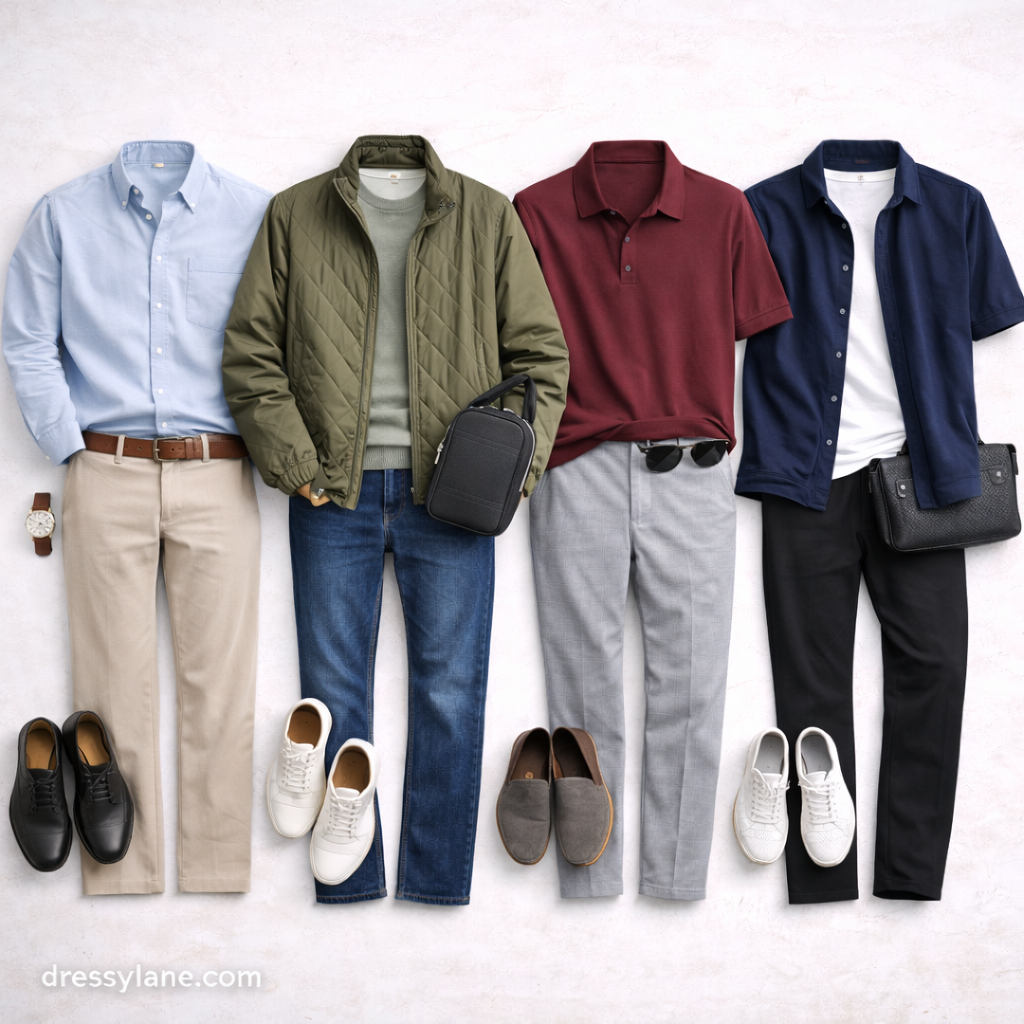
Men’s body-shape advice generally focuses on the relationship between the shoulders, chest, waist, and legs.
Athletic or Inverted Triangle Build
An athletic build commonly has broad shoulders and a narrower waist.
Look for shirts and jackets that accommodate your shoulders without leaving excessive fabric around your waist.
Useful options include:
- Tapered shirts
- Unstructured jackets
- Straight or tapered trousers
- Fine-gauge knitwear
- Polos with enough room through the chest
Be careful with extremely skinny trousers. When the upper body is substantially broader, very narrow trousers can exaggerate that difference more than you intended.
Slim or Rectangle Build
Slim builds often have relatively similar proportions through the shoulders, waist, and hips.
If you want to create more visual structure, use:
- Overshirts
- Chore jackets
- Bomber jackets
- Textured knitwear
- Oxford shirts
- Straight-leg trousers
- Layering
Fabrics such as denim, flannel, corduroy, tweed, Oxford cloth, and heavier cotton jersey can provide more visual substance than very thin fabrics.
Extremely skinny fits can sometimes make a slim frame appear even narrower.
Broad or Stockier Build
For broader builds, clean lines and proper sizing usually work better than attempting to hide the body underneath oversized clothing.
Consider:
- Straight-leg trousers
- Mid-rise trousers
- Open jackets
- Single-breasted tailoring
- Shirts that skim rather than grip the torso
- Medium-weight fabrics with some structure
Avoid automatically buying everything several sizes larger.
A shirt that fits the neck and torso correctly generally looks cleaner than one with shoulders hanging several inches beyond your natural shoulder line.
Triangle Build
Some men are wider through the waist or hips than through the shoulders.
If you’d like to visually strengthen the upper body, consider:
- Structured jackets
- Overshirts
- Collared shirts
- Subtle shoulder construction
- Dark straight-leg trousers
- Simple vertical layers
An open jacket over a contrasting shirt can also create strong vertical lines through the torso.
Proportion Matters More Than the Body-Type Label
This is where body-type advice becomes genuinely useful.
Instead of asking, “What am I allowed to wear?” ask:
What happens to my proportions when I wear this?
If You Want Your Legs to Look Longer
Experiment with:
- Higher rises
- Shorter or tucked tops
- Trousers and shoes with similar visual tones
- Full-length trousers
- Jackets ending higher on the hip
If You Want to Lengthen the Torso
Try:
- Mid- or lower-rise bottoms
- Untucked tops
- Longer jackets
- Vertical layers
If You Want More Waist Definition
Use:
- Belts
- Tucking
- Wrap garments
- Cropped jackets
- Tailored seams
If You Want Less Waist Definition
Try:
- Straight-cut shirts
- Relaxed jackets
- Column silhouettes
- Untucked tops
- Longer layers
None of these effects is inherently “better.” They simply create different proportions.
Fabric Changes How Clothes Sit on Your Body
Two garments with identical measurements can look completely different because of fabric.
Structured Fabrics
Denim, twill, poplin, canvas, tweed, and heavier wool generally hold their own shape more strongly.
Use them when you want definition or structure.
Draping Fabrics
Crepe, viscose, rayon, silk, and some jerseys tend to fall more closely around the body’s contours.
They can create softer lines and movement.
Stretch Fabrics
Elastane or spandex blended into cotton, denim, polyester, or other fibers can improve mobility.
But more stretch isn’t automatically better. Very thin, highly elastic fabrics may reveal more contour than you want and can lose shape over time.
Knits
Knits vary enormously.
A fine merino sweater behaves very differently from a chunky cable knit.
Use heavier knits when you want texture and volume and finer knits when you want less bulk beneath jackets or coats.
Use Color and Pattern as Styling Tools
The old rule that everyone should simply “wear dark colors to look thinner” is far too simplistic.
Color controls attention and contrast.
Bright colors, high contrast, large patterns, and strong details tend to attract attention.
Muted colors and low-contrast combinations tend to create a quieter visual effect.
You can use that deliberately.
If you love your shoulders, wear the interesting color there.
If you want your shoes to be the focus, keep the outfit simple and make the footwear distinctive.
Vertical stripes can reinforce vertical direction, while large horizontal patterns can visually widen an area—but garment fit, stripe width, contrast, and overall proportion also matter.
Treat these as effects rather than rules.
What to Do When Clothes Never Seem to Fit Right
If you constantly struggle with fit, your body probably isn’t the problem.
Ready-to-wear clothing is produced around standardized size patterns. Real bodies are not standardized.
You might consistently encounter:
- Waist gaps in jeans
- Shirts that fit the shoulders but not the bust or chest
- Trousers that fit the hips but not the waist
- Sleeves that are always too long
- Jackets that fit the torso but restrict the shoulders
- Dresses with waists that sit too high or low
- Trousers with an uncomfortable rise
Shop for the Hardest Area First
Choose a garment that fits the part that’s difficult or expensive to alter, then adjust easier areas if necessary.
For example, jacket shoulders are difficult to reconstruct. Sleeve length is comparatively straightforward to alter.
Trouser hems are usually easy to change. Completely rebuilding the rise is not.
Try Different Cuts, Not Just Different Sizes
If the same problem occurs repeatedly, changing size may never solve it.
Try:
- Curvy-fit jeans
- Athletic-fit trousers
- Tall or petite ranges
- Different rises
- Relaxed versus straight cuts
- Tapered versus traditional shirts
Sometimes the correct pattern matters more than the correct number on the tag.
How to Dress When Your Body Has Changed
Bodies change.
Weight changes. Muscle changes. Hormones, pregnancy, aging, injury, lifestyle, and medication can all affect proportions and clothing fit.
When your body changes significantly, don’t immediately replace your entire wardrobe.
Start with a small working wardrobe that fits now.
Choose:
- Two or three bottoms
- Several tops
- One or two layering pieces
- Comfortable shoes
- Appropriate underwear or foundation garments if you use them
Then live in those clothes for a while.
You’ll learn which silhouettes feel best before investing heavily.
And don’t keep forcing yourself into clothes that technically close but make you uncomfortable all day. A garment that fit three years ago isn’t a measurement of whether your current body is right or wrong.
How to Dress Well as You Age
Style doesn’t have an expiration date.
You don’t suddenly lose permission to wear denim, sneakers, bright colors, leather jackets, short hair, long hair, prints, or contemporary silhouettes because you reached a particular birthday.
What often changes is preference, lifestyle, fit, and priorities.
You may begin caring more about:
- Better fabrics
- Comfortable footwear
- Waistband comfort
- Layering
- Fabric weight
- Quality construction
- Clothes that move easily between situations
That’s refinement, not surrender.
A well-cut pair of jeans, merino sweater, leather sneakers, tailored trousers, linen shirt, simple dress, or structured jacket can work across decades.
How to Dress Youthfully Without Trying Too Hard
Looking current and trying to look younger are not the same thing.
The easiest way to keep your wardrobe feeling fresh is to update silhouette and styling, not chase every youth-oriented trend.
For example, you might update:
- Trouser shape
- Denim rise
- Eyewear
- Shoe shape
- Jacket proportions
- How you layer pieces
Keep the parts of your wardrobe that still work and introduce contemporary details selectively.
A classic Oxford shirt with modern straight trousers and clean sneakers can feel current without looking forced.
Likewise, a simple midi dress with a contemporary jacket or shoe can feel fresher than rebuilding your wardrobe around whatever is trending that month.
How to Refine Your Personal Style as You Get Older
Personal style often improves with age because you accumulate evidence about what you actually wear.
Look at your most-used clothes.
What do they have in common?
Perhaps you repeatedly choose:
- Straight-leg trousers
- Open necklines
- Navy and cream
- Soft tailoring
- Sneakers and loafers
- Minimal jewelry
- Relaxed linen
- Structured jackets
That’s useful information.
Build around those patterns instead of buying clothes for an imaginary version of yourself.
If you prefer a smaller, more deliberate wardrobe, our guide to minimalist style can help you narrow those preferences further.
And if fashion simply isn’t something you enjoy spending much time on, how to dress when you don’t like fashion provides a lower-maintenance approach.
Build Outfit Formulas Around Your Best Proportions
Once you’ve identified a few silhouettes you like, repeat them.
For example:
Women’s Outfit Formulas
High-rise straight trousers + tucked knit + cropped jacket
Dark jeans + blouse + long cardigan + loafers
Midi dress + waist-length jacket + flats
Men’s Outfit Formulas
Straight chinos + Oxford shirt + casual jacket
Dark jeans + fitted T-shirt + overshirt + sneakers
Tailored trousers + knit polo + loafers
You can change color, fabric, texture, and accessories while keeping the underlying proportions consistent.
Our guide to building simple outfits that always work expands on this system.
Adapt Your Best Silhouettes to the Occasion
Finding clothes that flatter your proportions is only half the job. They also need to make sense for where you’re going.
The same preferred silhouette can often be adapted.
Suppose a woman likes high-rise straight trousers and a defined waist.
For casual wear:
High-rise jeans + tucked cotton T-shirt + sneakers
For work:
Tailored trousers + tucked blouse + loafers
For dinner:
Fluid trousers + fitted knit top + dressier flats or heels
Likewise, a man who likes straight trousers and structured shoulders might move from an overshirt and sneakers during the day to a blazer and loafers for dinner.
Our complete guide to dressing for different occasions covers the formality side in more depth.
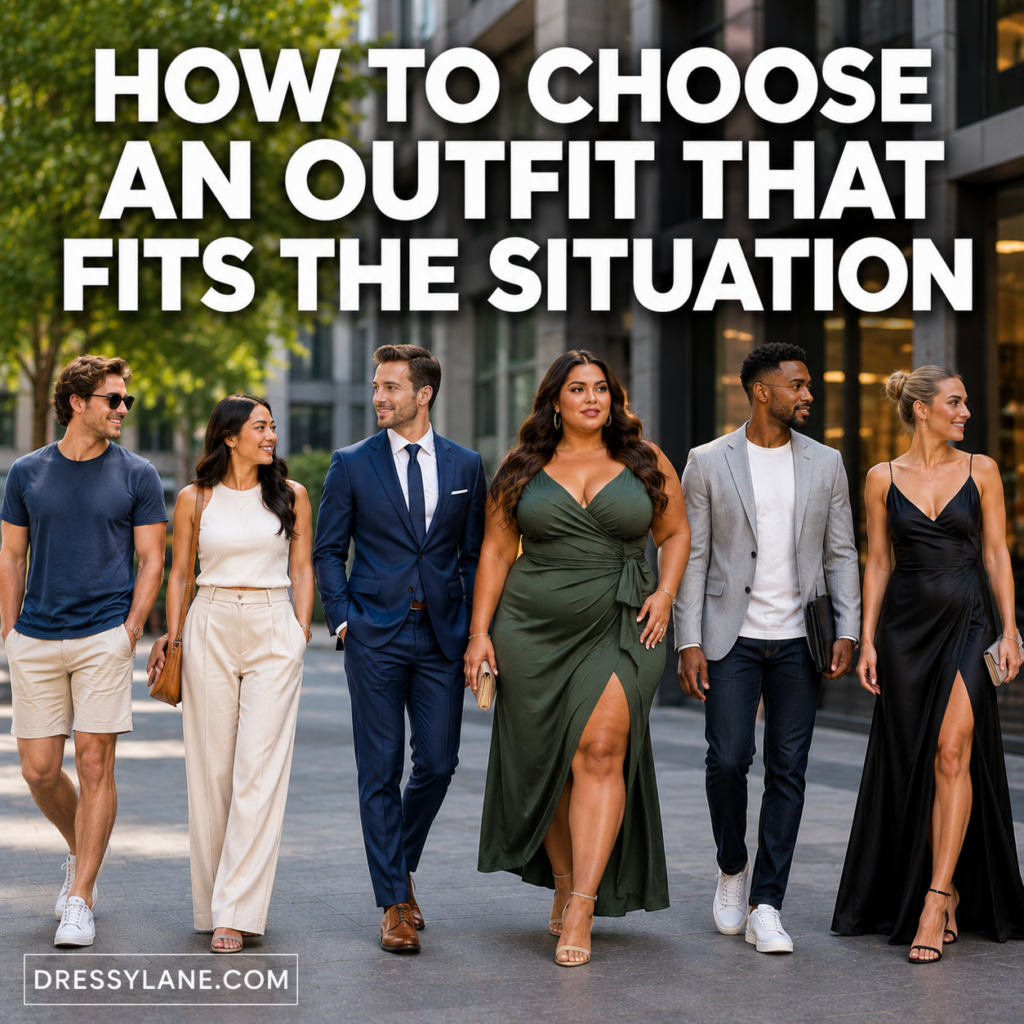
When the dress code itself is uncertain, see how to choose an outfit that fits the situation or our guide to dressing when the invitation is vague.
Don’t Confuse “Flattering” With “Formal”
A body-flattering outfit can still be inappropriate for the occasion.
You might look fantastic in a fitted cocktail dress, but that doesn’t make it right for a casual lunch.
Likewise, an expertly tailored suit may fit perfectly while being far too formal for a relaxed backyard gathering.
If you frequently worry about looking too dressed up, our guide to what to wear when you don’t want to overdress can help you find the middle ground.
For specific upscale dining situations, see how to dress for hotel dining.
Common Body-Type Styling Mistakes
Treating the Category as a Rulebook
Body shapes are descriptions, not restrictions.
Buying the Wrong Size to Change Your Silhouette
Sizing down doesn’t necessarily create definition, and sizing up doesn’t necessarily create flattering drape.
The garment’s cut matters.
Hiding Everything You Feel Self-Conscious About
Adding large amounts of fabric can sometimes draw more attention to an area rather than less.
Experiment with fit instead of assuming concealment is always the answer.
Ignoring Vertical Proportions
Two people with the same general body shape may need completely different styling because one has a long torso and the other has long legs.
Following Every “Flattering” Rule Simultaneously
If you add a belt, structured shoulders, strategic color blocking, a particular neckline, specific trousers, and prescribed shoes solely because a body-type chart told you to, you may end up feeling like you’re wearing a costume.
Use one or two ideas at a time and see whether you actually like the result.
A Practical Styling Rule Worth Remembering
When an outfit doesn’t look right, change the proportions before you change your body—or buy something new.
Try tucking the shirt.
Untuck it.
Roll the sleeves.
Change the jacket length.
Switch from skinny trousers to straight ones.
Try a higher or lower rise.
Change the shoe.
Remove the belt.
These tiny adjustments often fix the visual problem immediately.
That’s one of the most useful lessons you can develop from styling clothes in real life: sometimes the garment isn’t wrong; the point where it meets the next garment is wrong.
Frequently Asked Questions
What is the best way to determine my body type?
Compare your shoulders, chest or bust, waist, and hips. Measurements can help, but you don’t need to force yourself into an exact category. Use body types as broad proportion guides.
What if I’m between two body shapes?
That’s extremely common. Take useful styling ideas from both categories and focus on your actual proportions.
Should I avoid certain clothes because of my body type?
Not automatically. If you like how something looks and feels, you can wear it. Body-type recommendations explain visual effects; they aren’t rules about what you should or shouldn’t wear.
Why do clothes never seem to fit me correctly?
Ready-to-wear clothes are manufactured using standardized patterns, while human proportions vary enormously. Try different cuts, rises, petite/tall options, or tailoring rather than assuming you simply need another size.
How should I dress after my body changes?
Buy enough clothing to comfortably dress the body you have now, but avoid rebuilding everything immediately. Experiment with several silhouettes first and expand your wardrobe once you know what works.
How should I dress as I get older?
Focus on fit, comfort, quality, and the style you actually enjoy rather than arbitrary age rules. Update silhouettes and accessories selectively when you want your wardrobe to feel more current.
How can I look youthful without dressing too young?
Use contemporary cuts, footwear, eyewear, and styling alongside clothes you already know suit you. You don’t need to adopt every trend associated with younger shoppers.
Do dark colors make you look slimmer?
Dark, low-contrast colors can sometimes reduce visual emphasis, but fit, fabric, proportion, and garment construction usually matter more than color alone.
What’s more important: body type or fit?
Fit. A supposedly ideal garment for your body shape won’t look or feel right if the shoulders, waist, rise, length, or proportions are wrong.
Final Thoughts
Learning how to dress for your body type should give you more options, not fewer.
Body-shape categories can help you understand why certain silhouettes create different effects, but they aren’t instructions for fixing your body.
Start with fit.
Learn where your shoulders, waist, and hips naturally sit. Pay attention to your torso and leg proportions. Notice how different trouser rises, jacket lengths, necklines, fabrics, and shoe shapes affect the overall silhouette.
Then experiment.
If your body changes, let your wardrobe change with it. If you’re getting older, refine your style around what you’ve learned rather than abandoning clothes you enjoy. If standard sizing rarely fits, search for different cuts and use alterations strategically instead of blaming your body.
Most importantly, keep the advice that works and ignore the rules that don’t.
The best wardrobe isn’t the one that makes your body resemble a predetermined “ideal” shape. It’s the one where the clothes fit your body, your life, and the way you actually want to look.