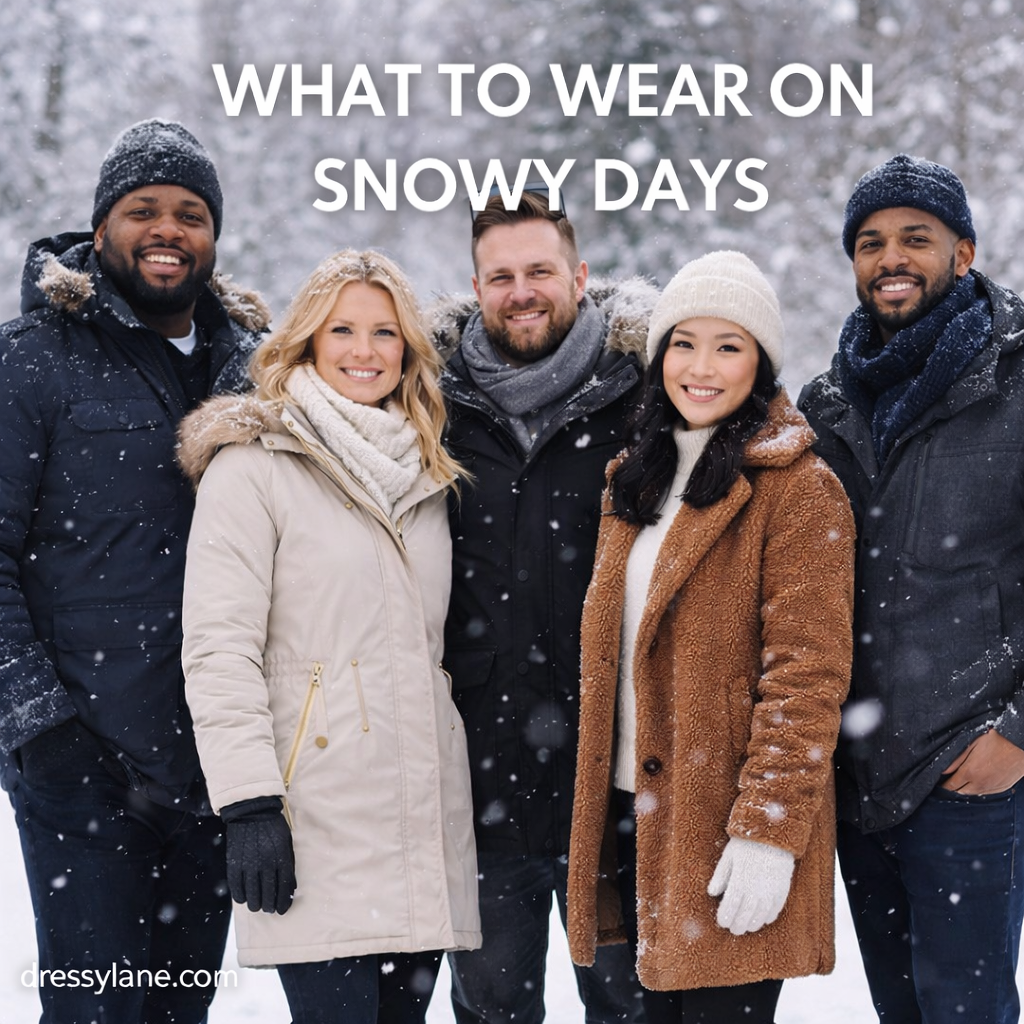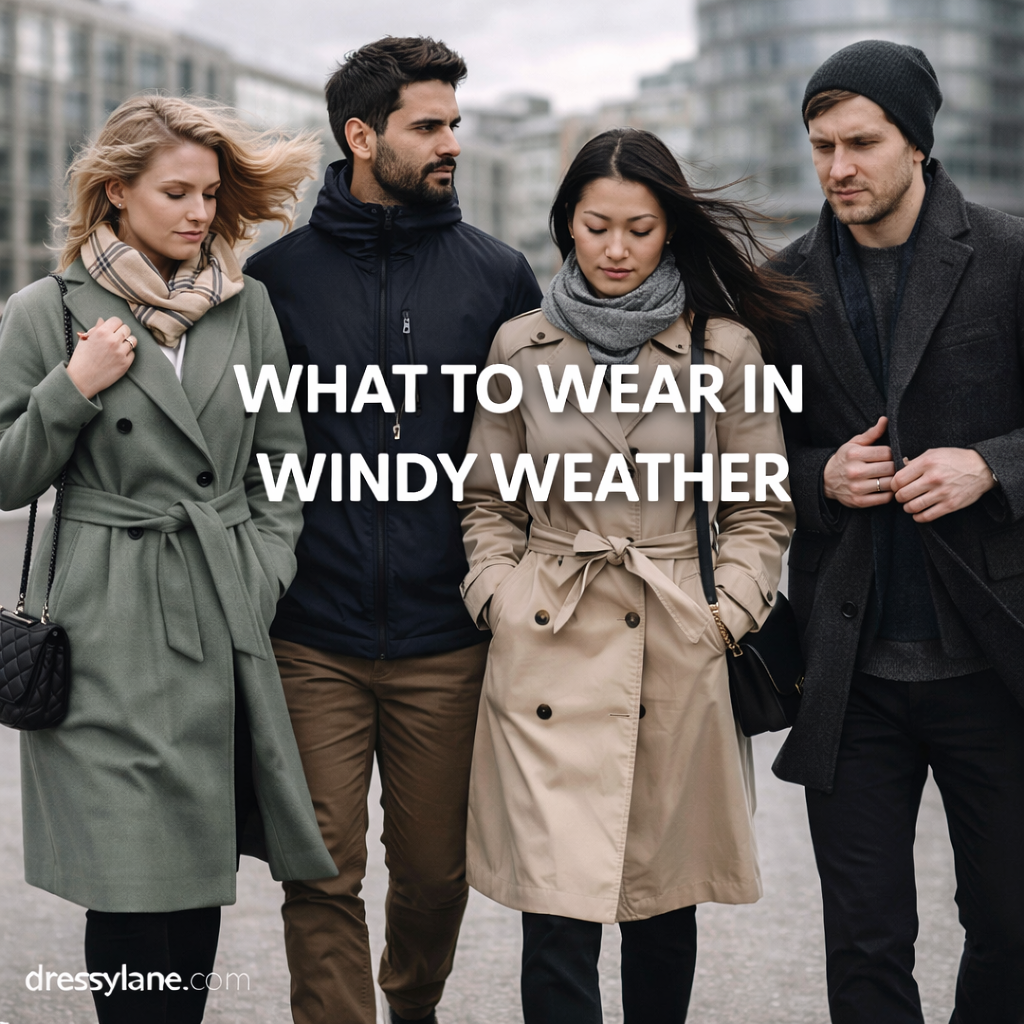

Winter dressing gets much easier once you stop expecting one heavy sweater or coat to do everything. The most comfortable winter outfits divide the job between several pieces: a base layer manages moisture, a mid-layer provides insulation, and the outer layer protects you from wind, rain, or snow.
That doesn’t mean you need five layers every day.
A 45°F commute calls for something very different from standing outside at 15°F in strong wind. Knowing what to wear in winter starts with the actual conditions—and how much time you’ll spend outside.
Build the Outfit From the Inside Out
For genuinely cold days, start with the layer closest to your skin.
A lightweight merino or synthetic thermal top can add warmth without dramatically changing how the rest of your clothes fit. If you’re spending substantial time outdoors, thermal bottoms can be useful underneath trousers as well.
Merino is particularly practical because it provides insulation without requiring a very thick fabric. Purpose-built synthetic base layers are another good option, especially for active days when moisture management matters.
I’d be more cautious about using a regular cotton T-shirt as your only base layer for prolonged cold-weather activity. Cotton absorbs moisture and can stay damp, which becomes uncomfortable when you’re outside in low temperatures.
For ordinary indoor-heavy days, however, you may not need a technical base layer at all.
Let One Mid-Layer Provide Most of the Insulation
Once you have the base right, add a sweater, fleece, or other insulating layer.
Useful options include:
- Fine- or medium-gauge merino sweaters
- Wool or wool-blend knitwear
- Cashmere and cashmere blends
- Lightweight fleece
- Compact insulated vests or jackets
You don’t automatically need several sweaters stacked together.
For everyday winter weather, something as simple as:
Long-sleeve base + merino sweater + winter coat
can provide plenty of flexibility.
One practical tip: try your winter coat over the sweater you actually intend to wear. A coat that fits perfectly over a T-shirt but pulls across the shoulders once you add knitwear isn’t large enough for its real job.
Choose the Coat for the Weather, Not Just the Outfit
Winter outerwear should protect you from the conditions you’re actually facing.
A knee-length wool or wool-blend coat works well for commuting, work, dinners, and ordinary cold weather. The additional length provides useful coverage without necessarily requiring a very bulky silhouette.
For colder or windier conditions, an insulated jacket or puffer may make more sense.
And when temperatures become genuinely severe, I’d choose the proper parka over trying to make a thin tailored coat work simply because it looks sleeker.
Wind resistance matters too. A thick sweater underneath an outer layer that allows cold air straight through can be less effective than a lighter insulating layer underneath a wind-resistant shell.
For wet climates, pay attention to water resistance as well as insulation.
What Women Can Wear in Winter

A reliable women’s winter outfit might be:
Thermal top + fine-gauge sweater + straight-leg trousers + ankle boots + long wool coat.
For something more casual, straight jeans can replace the trousers and a puffer can replace the coat.
Dresses and skirts can stay in rotation too.
Try a knit midi dress with thermal tights, knee-high boots, and a long coat. A wool-blend midi skirt can also work with a fitted sweater and warm tights.
Other practical combinations include:
- Turtleneck + wide-leg wool trousers + ankle boots + coat
- Straight jeans + merino sweater + puffer + weather-resistant boots
- Midi skirt + fine knit + thermal tights + knee-high boots
- Long-sleeve dress + tights + wool coat + boots
I’d avoid trying to force a very chunky oversized sweater underneath a narrow coat. It tends to bunch around the shoulders and upper arms.
If you love oversized knitwear, pair it with outerwear that has enough room to accommodate it—or save it for milder days when it can be the outer layer.
What Men Can Wear in Winter
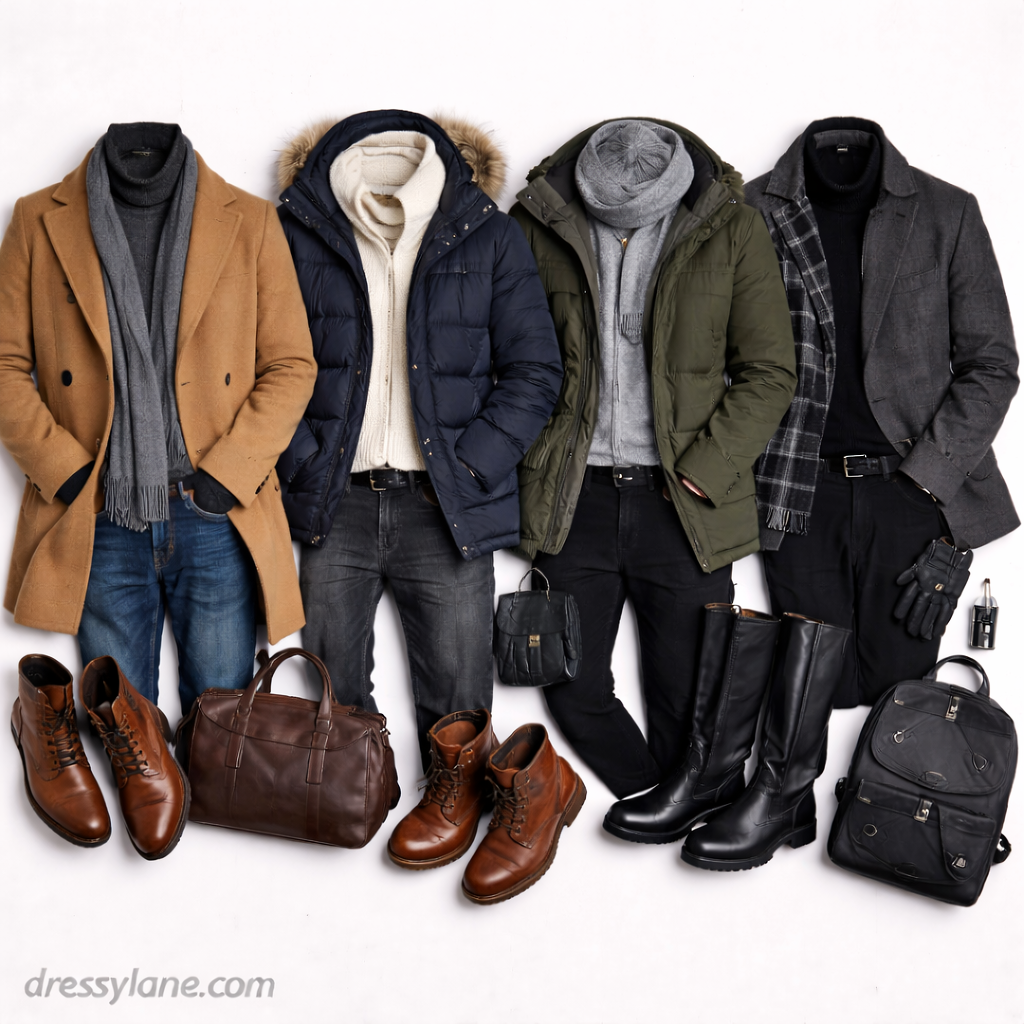
For men, fine-gauge knitwear is particularly useful because it layers easily underneath jackets and coats.
For work or a dressier setting, try:
Oxford shirt + merino crewneck + wool trousers + overcoat + leather boots.
For casual days:
Thermal top + sweater + dark jeans + insulated jacket + boots.
Other useful combinations include:
- Flannel shirt + straight jeans + field coat + boots
- Turtleneck + tailored trousers + wool overcoat
- Oxford + quarter-zip sweater + chinos + coat
- Merino crewneck + corduroy trousers + Chelsea boots + overcoat
A hoodie can work underneath a casual parka or roomy jacket, but I’d usually skip a thick hoodie under tailored outerwear. The hood creates bulk around the collar, and heavy sweatshirt sleeves often bunch inside narrower coat sleeves.
Don’t Forget About Your Legs
Winter styling advice tends to focus heavily on coats and sweaters while treating pants as an afterthought.
Fabric weight matters below the waist too.
Medium- or heavyweight denim, corduroy, wool trousers, brushed cotton, and lined pants can all provide more warmth than lightweight summer chinos.
In colder conditions, a thin thermal layer underneath regular trousers can be more effective than simply buying extremely thick pants.
Women can also use thermal tights underneath dresses and skirts.
I’d choose straight or relaxed trousers rather than sizing down for a very slim fit. A little room makes movement easier and leaves space for a base layer when you need one.
Winter Footwear Should Start With the Sole
A beautiful pair of boots isn’t particularly useful if the outsole becomes slippery as soon as the pavement is wet.
For ordinary winter weather, ankle boots, Chelsea boots, knee-high boots, and sturdy leather shoes can all work.
For snow, slush, or ice, prioritize:
- Useful outsole traction
- Water-resistant or waterproof construction
- Enough room for appropriate socks
- Insulation when conditions require it
Merino-blend socks can provide warmth without the extreme thickness of some traditional winter socks.
Make sure the boots still fit comfortably with them. Cramming thick socks into tight shoes can restrict circulation and leave your feet less comfortable rather than warmer.
Accessories Do Real Work in Winter
A scarf, gloves, and hat aren’t merely finishing touches.
A wool or cashmere-blend scarf helps close the gap around a coat collar where cold air can enter. Lined leather gloves provide a relatively streamlined option for everyday use, while insulated gloves or mittens make more sense in severe cold.
A close-fitting wool or merino beanie is easy to carry and adds meaningful warmth.
This is one area where I’d prioritize function over trying to keep everything visually minimal. If the weather calls for substantial gloves and a warm hat, wear them.
Winter Color Doesn’t Have to Mean All Black
Black, charcoal, navy, camel, chocolate brown, burgundy, olive, cream, and forest green all work naturally with winter fabrics.
But color is less important than texture.
A cream cable-knit sweater, charcoal wool trousers, and brown leather boots feel distinctly winter-appropriate because of the materials, not because every piece is dark.
You can also keep lighter colors in rotation. Cream trousers, pale gray knitwear, or a light camel coat can work throughout winter when the fabrics and construction make sense.
I prefer choosing colors that already work together rather than creating an entirely separate “winter palette.”
Dress Differently for Wet Cold and Dry Cold
Temperature alone doesn’t tell the whole story.
A windy, wet 40°F day can feel considerably more uncomfortable than a calm, dry day at the same temperature.
For rain and wet snow, prioritize an outer layer that keeps moisture from soaking into your insulating layers. Weather-resistant boots become especially important.
For dry but very cold conditions, insulation and wind protection may matter more.
Check more than the temperature before getting dressed. Wind, precipitation, how long you’ll be outside, and whether you’ll be walking or standing still all affect what you’ll need.
Plan for Overheated Indoor Spaces
Winter often involves moving between cold streets and buildings heated to 70°F or higher.
That’s another reason I prefer several purposeful layers over one extremely heavy outfit.
If you’re commuting to work, your sweater should still look appropriate once the coat comes off. If the building runs warm, you may want a shirt or lighter base underneath the sweater too.
Avoid creating an outfit where every layer has to remain on for the look to work.
A good winter outfit should become lighter in stages as you move indoors.
When Winter Gets Severe, Stop Worrying About Looking Sleek
There is a point where normal fashion advice stops being useful.
If you’re spending substantial time outside in freezing temperatures, strong wind, snow, or ice, proper cold-weather equipment matters more than maintaining a particular silhouette.
Wear the insulated parka. Wear the weatherproof boots. Use thermal layers, warm gloves, and a proper hat.
There’s nothing stylish about being inadequately dressed for dangerous conditions.
You can still pay attention to fit, color, and proportion, but warmth, traction, and weather protection come first.
Final Thoughts
Knowing what to wear in winter isn’t about finding one perfect coat or piling on as many layers as possible.
Build the outfit in stages: use a suitable base layer when conditions call for one, add an insulating sweater or fleece, and choose outerwear that protects you from the actual weather. Finish with footwear that provides enough warmth and traction for the conditions.
Women can keep trousers, jeans, skirts, and dresses in rotation by using knitwear, tights, boots, and appropriate outerwear. Men can build around wool trousers, denim, merino sweaters, flannel shirts, boots, and structured or insulated coats.
Most importantly, dress for the winter day you’re actually going to have. A short drive to a heated office and two hours standing outside in snow may happen during the same season, but they don’t require the same clothes.