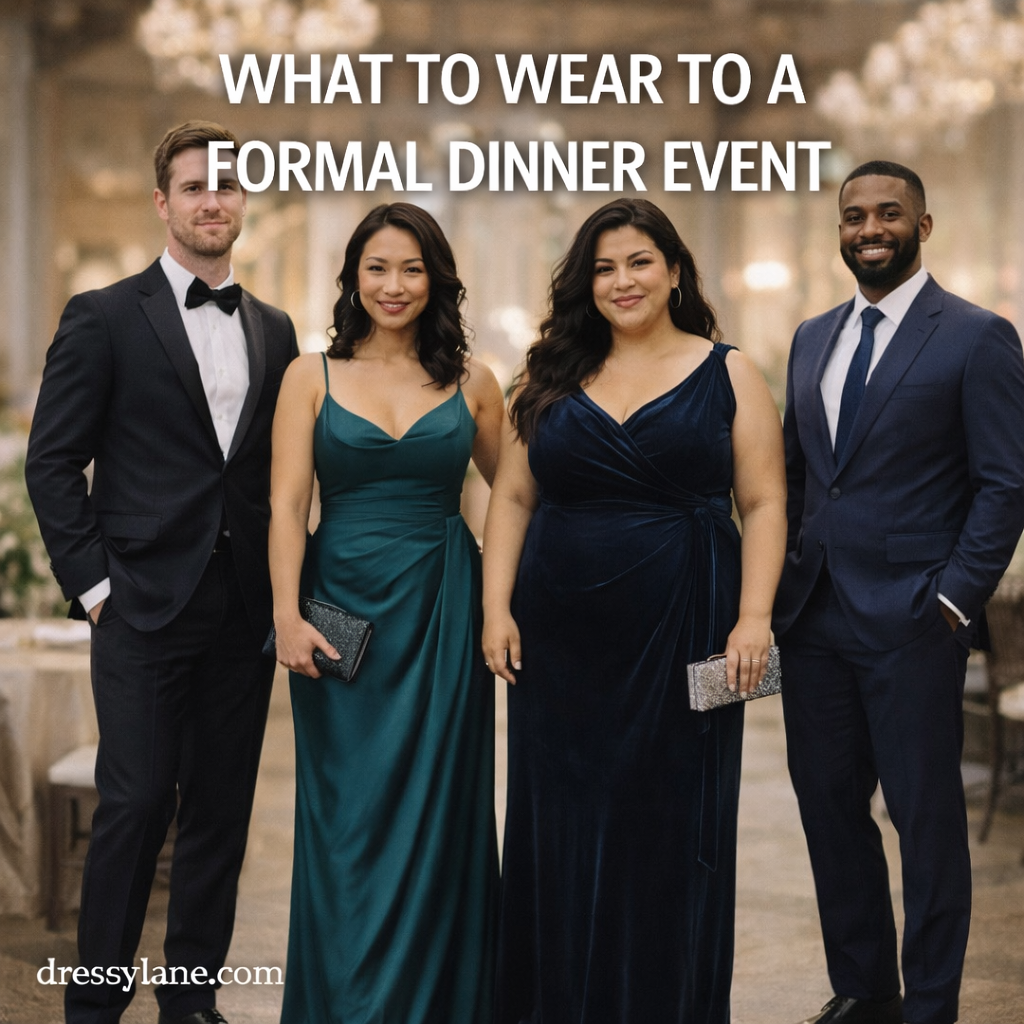

A black tie wedding calls for more than simply wearing your nicest outfit. For men, it generally means a tuxedo. For women, a floor-length evening gown is the traditional choice, although certain formal alternatives can work depending on the venue and invitation.
The challenge is getting the details right. A beautiful dress can look too casual if it’s made from everyday jersey, while an expensive black business suit still isn’t technically black tie.
Here’s how to interpret the dress code, choose an appropriate outfit, and avoid the small styling mistakes that can make formalwear feel out of place.
What Does Black Tie Actually Mean?
Black tie is a formal dress code traditionally associated with evening events. Although many black tie weddings take place after 6 p.m., the dress code on the invitation matters more than the ceremony’s start time.
For women, the standard is a floor-length evening gown. For men, it’s a tuxedo with a formal shirt, black bow tie, and appropriate dress shoes.
Black tie doesn’t mean everyone must wear black. Deep jewel tones, metallics, and other sophisticated colors are perfectly appropriate for women’s eveningwear.
It also doesn’t mean you need to spend a fortune. A well-fitted rented tuxedo or a simple, properly tailored gown can look more appropriate than an expensive outfit that doesn’t meet the dress code.
What Women Should Wear to a Black Tie Wedding
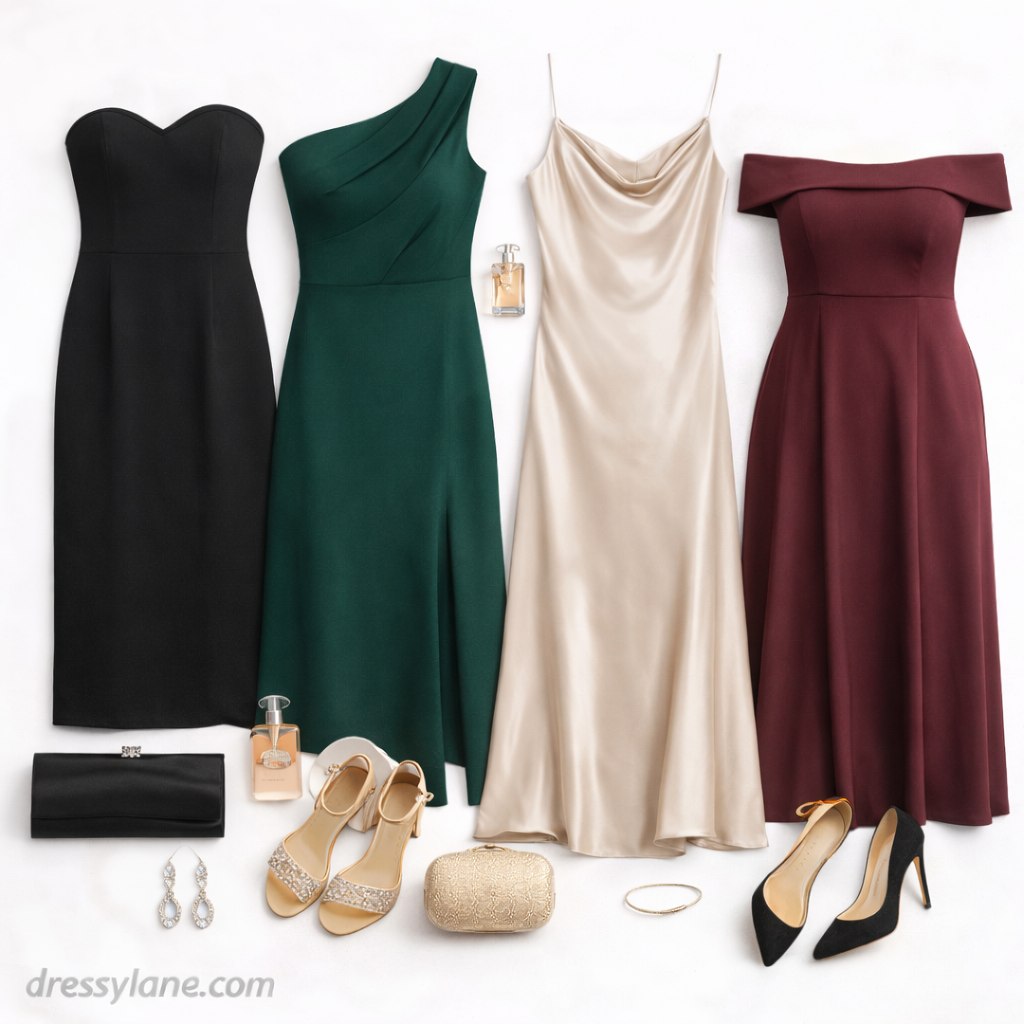
If you’re shopping for a black tie wedding, I’d start with a floor-length gown rather than trying to make a cocktail dress work.
A simple navy column gown in silk crepe, an emerald satin A-line dress, or a burgundy off-the-shoulder gown can all look elegant without feeling overly elaborate.
The key is choosing a dress that looks like eveningwear rather than an elevated version of something you’d wear to dinner.
Choosing the Right Dress Silhouette
Several silhouettes work particularly well:
- Column gowns: Straight, streamlined dresses that create a clean, elongated shape.
- A-line gowns: Fitted through the bodice with a skirt that gradually widens.
- Bias-cut gowns: Fluid dresses cut diagonally across the fabric for a soft, body-skimming drape.
- Off-the-shoulder gowns: A classic option for formal indoor receptions.
- One-shoulder gowns: A modern alternative that still feels appropriate for eveningwear.
A formal jumpsuit can also work at some contemporary black tie weddings, particularly when it features full-length wide-leg trousers and a structured bodice. However, a gown remains the more traditional choice.
Fabrics Matter More Than Embellishment
You don’t need sequins, beading, or dramatic cutouts to look appropriately dressed.
Silk crepe, silk satin, velvet, and substantial eveningwear fabrics often create a more polished appearance than heavily decorated dresses made from inexpensive, flimsy material.
Chiffon is another good option, especially when layered over a proper lining.
One thing I’d avoid is a thin, unlined satin slip dress that resembles a nightgown. If you love that silhouette, choose a heavier fabric with a beautiful drape and enough structure to hold its shape.
What Colors Are Appropriate?
Black is entirely acceptable for wedding guests unless the couple specifies otherwise.
Other excellent choices include navy, emerald, burgundy, deep plum, and midnight blue.
Champagne and pale metallics can work, but be careful with shades that photograph close to ivory or bridal white. When in doubt, choose a distinctly darker or more saturated color.
Bright colors and prints aren’t automatically inappropriate. A beautifully constructed fuchsia silk gown can be just as formal as a black one. The fabric, silhouette, and overall styling matter more than sticking to a narrow color palette.
The Accessories That Make a Gown Feel Black Tie
Accessories should look intentional, but they don’t need to be expensive.
For example, a simple black column gown can be styled with metallic evening sandals, small drop earrings, and a structured satin clutch.
I’d choose one focal point rather than stacking several statement accessories. If your gown has a heavily embellished neckline, skip the necklace and wear simple earrings instead.
For shoes, classic pumps, refined slingbacks, and delicate evening sandals are appropriate.
You don’t have to wear extremely high heels. A low-heeled satin pump can look perfectly formal, particularly if you’ll be standing through a long cocktail hour.
Avoid oversized everyday handbags. A small clutch or compact evening bag is a better match for formal attire.
What Men Should Wear to a Black Tie Wedding
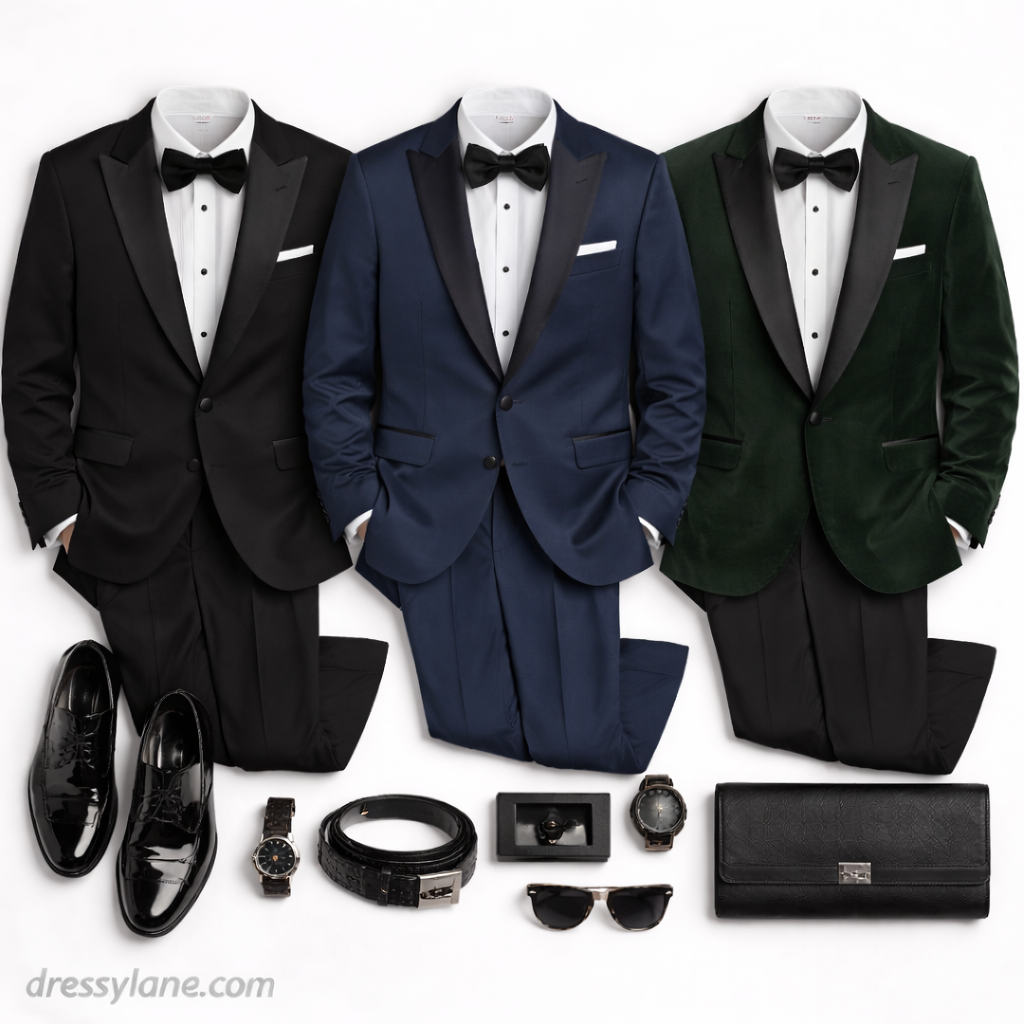
For men, the dress code is much more specific.
A traditional black tie outfit consists of a tuxedo, formal white shirt, black bow tie, and polished black dress shoes.
A standard black business suit isn’t the same thing, even when paired with a black tie.
The Classic Tuxedo
A reliable combination includes:
- Black tuxedo jacket with satin or grosgrain lapels.
- Matching formal trousers with a side stripe.
- White formal dress shirt.
- Black self-tie or neatly tied bow tie.
- Black patent leather or highly polished dress shoes.
- Black over-the-calf dress socks.
A waistcoat or cummerbund can complete a traditional single-breasted tuxedo, particularly when the jacket will be removed during the reception.
If you’re renting a tuxedo, pay close attention to the trouser length and jacket fit. Trousers pooling around the ankles and sleeves covering the hands can make an otherwise expensive outfit look poorly put together.
I’d prioritize proper tailoring over upgrading to a more elaborate jacket.
Can Men Wear Navy or Velvet?
A midnight-blue tuxedo is a traditional alternative to black and can look particularly elegant under evening lighting.
A velvet dinner jacket paired with formal black trousers is another option, especially for winter weddings or celebrations at grand hotels and historic venues.
However, a regular navy suit with a matching necktie is not equivalent to a midnight-blue tuxedo.
If the invitation simply says black tie and you’re uncertain, a classic black tuxedo is the most straightforward choice.
Dressing for the Season and Venue
The dress code stays the same throughout the year, but fabric weight and practical details can change.
For a summer wedding, women might choose a sleeveless silk crepe gown or a lightweight chiffon dress with a breathable lining.
Men should look for lightweight wool tuxedos rather than heavy, poorly ventilated fabrics.
For winter weddings, velvet gowns, long sleeves, and heavier satin are excellent options. A tailored evening coat or elegant wrap is more appropriate than throwing a casual puffer jacket over formalwear.
Outdoor venues require extra consideration.
If the ceremony takes place on a lawn, narrow stilettos can sink into the grass. A wider heel or appropriate heel protector can save you from spending the evening pulling your shoes out of the ground.
And if the reception is in a historic building with cobblestone paths, consider how easily you can walk in your chosen shoes before committing to them.
Black Tie vs. Black Tie Optional: Know the Difference
These dress codes are related, but they aren’t interchangeable.
| Dress code | Women’s attire | Men’s attire |
|---|---|---|
| Black tie | Floor-length evening gown; exceptionally formal alternatives may be appropriate | Tuxedo |
| Black tie optional | Evening gown or particularly formal cocktail dress | Tuxedo or dark formal suit |
| Formal | Floor-length gown, dressy cocktail dress, or formal jumpsuit | Dark suit or tuxedo, depending on the event |
If the invitation says black tie optional, men can wear a well-tailored dark suit with a dress shirt and conservative tie.
For women, a floor-length gown remains an excellent choice, but a sophisticated cocktail dress may also be appropriate.
Don’t interpret black tie optional as permission to wear business casual clothing. The event is still formal.
Common Black Tie Wedding Mistakes to Avoid
Even expensive outfits can miss the dress code when the details aren’t right.
Watch out for these common mistakes:
- Wearing a regular business suit to a strictly black tie wedding.
- Choosing a casual cotton sundress or everyday jersey maxi.
- Wearing white, ivory, or bridal-looking gowns without permission.
- Pairing formalwear with sneakers or visibly casual shoes.
- Choosing a gown that’s so long you repeatedly step on the hem.
- Wearing novelty bow ties or distracting accessories that clash with the formality of the event.
Also, don’t overlook alterations. A gown that fits properly through the bust and waist, with a hem adjusted to your shoes, will generally look more polished than a more expensive dress that hasn’t been fitted.
Try on the complete outfit at least a week before the wedding. Sit down, walk around, and make sure you can move comfortably without constantly adjusting the clothing.
Final Thoughts
For a black tie wedding, start with the traditional dress code and make personal styling choices from there.
Women can rarely go wrong with a well-fitted floor-length gown in silk crepe, satin, chiffon, or velvet. Men should plan on wearing a tuxedo unless the invitation specifically allows alternatives.
You don’t need an extravagant outfit to get black tie right. Proper fit, appropriate fabrics, polished shoes, and a few carefully chosen accessories will do far more than excessive embellishment.
The outfit should feel special enough for the occasion while allowing you to enjoy the ceremony, dinner, and dancing without worrying about what you’re wearing.