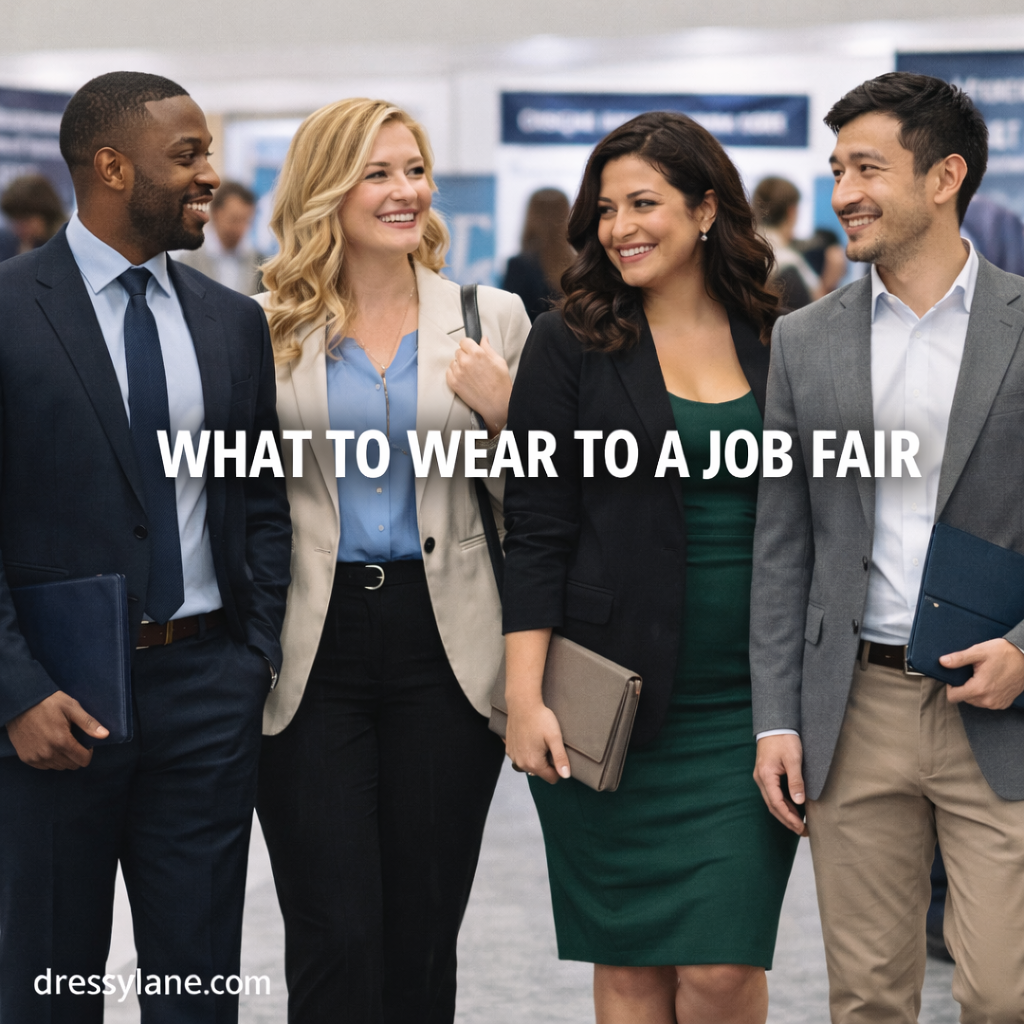
A job fair can mean several hours of walking between employer booths, standing in line, and introducing yourself to recruiters. Your outfit needs to look professional, but it also needs to stay comfortable from the first conversation to the last.
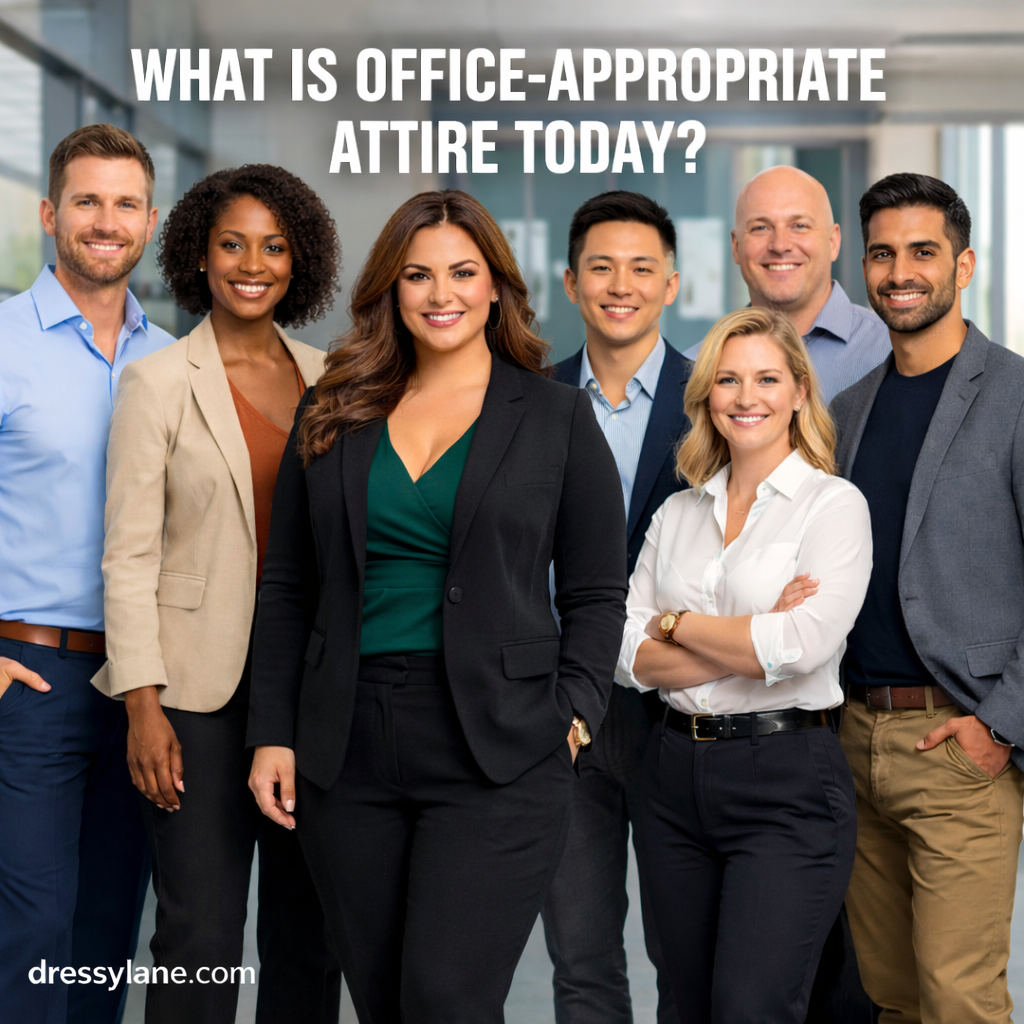
For most job fairs, business casual is a reliable starting point. Think tailored trousers, a pressed shirt or blouse, comfortable dress shoes, and a blazer if the event leans formal.
The right choice depends on the industries attending, the venue, and how much time you’ll spend on your feet.
Check the Job Fair Dress Code First
Before planning your outfit, look at the event’s website or registration details. Some university career fairs specifically recommend business professional attire, while community hiring events may encourage business casual.
The employers attending can also help guide your decision.
For a finance or law career fair, a navy or charcoal suit is a sensible choice. At a technology or creative industry event, tailored trousers with a blazer or polished knit may be perfectly appropriate.
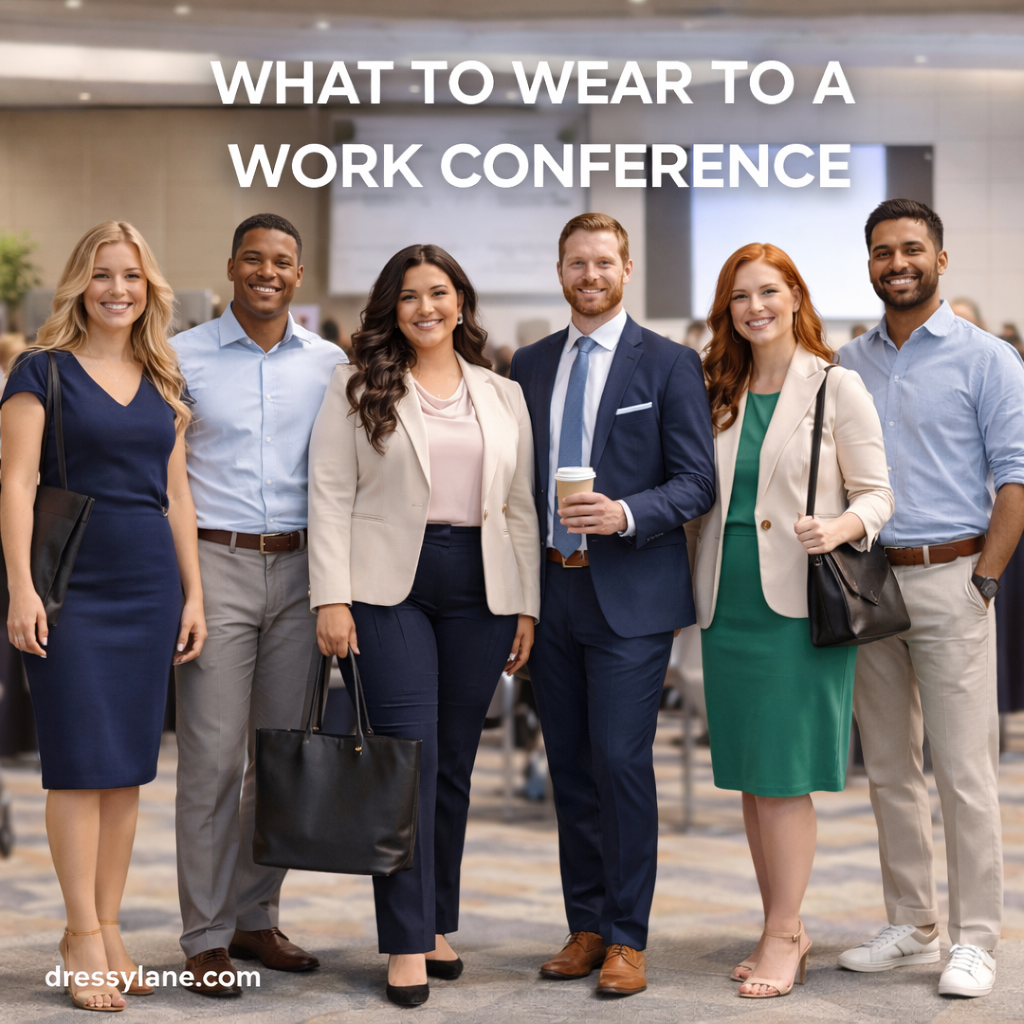
If you’re attending a general job fair with employers from several industries, I’d lean toward business casual with a structured jacket. You can remove the blazer if the atmosphere feels relaxed, but you’ll still have it available when approaching more formal employers.
What Women Should Wear to a Job Fair
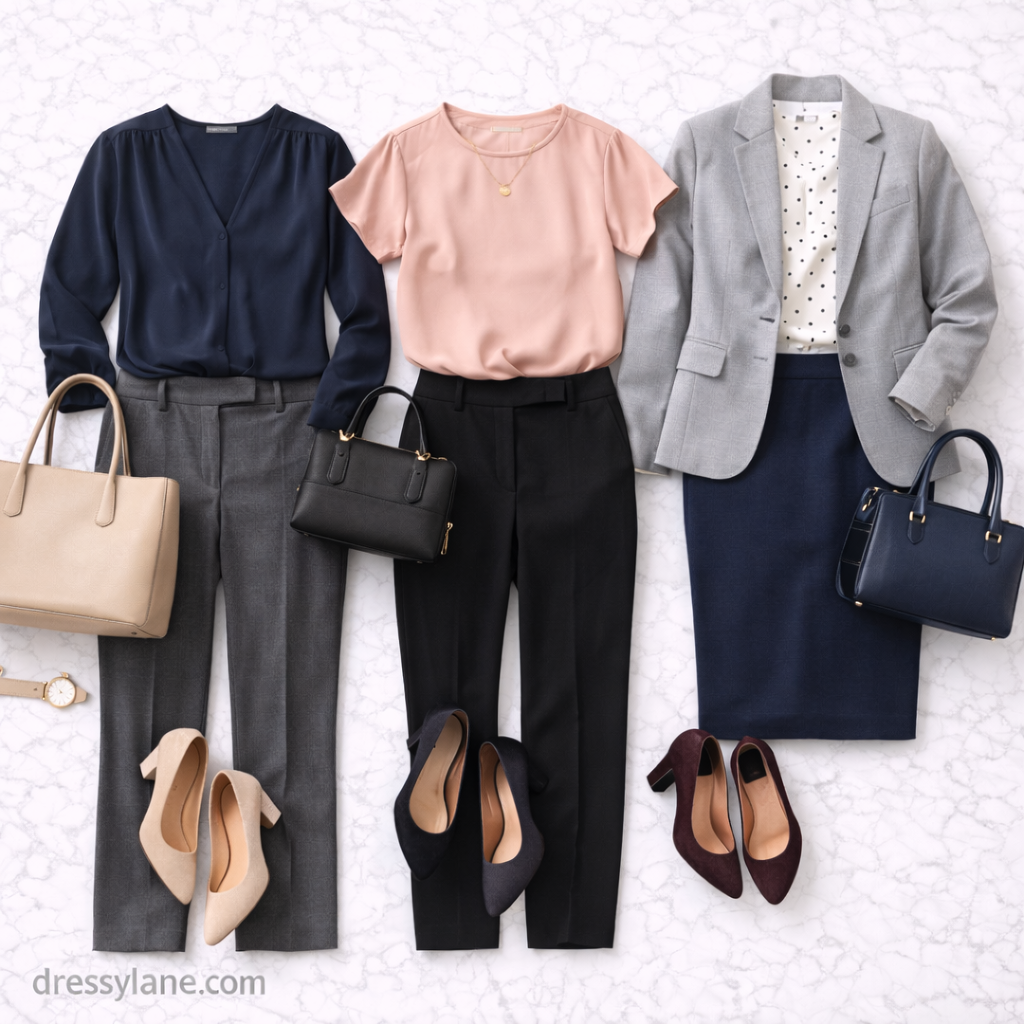
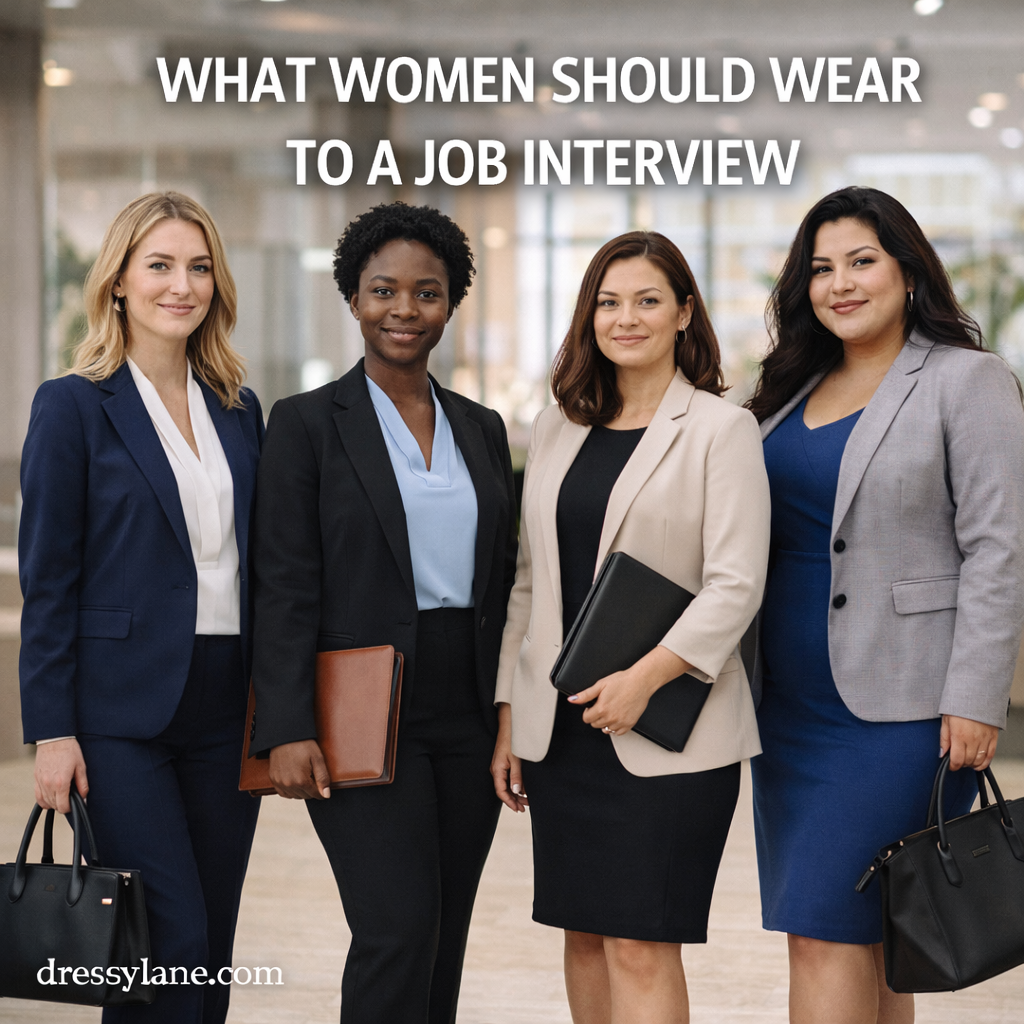
For women, tailored trousers and a blouse are among the easiest combinations to wear comfortably throughout a long event.
A pair of navy straight-leg trousers, a cream cotton-poplin blouse, and black leather loafers creates a professional outfit without requiring a full suit.
Other practical options include:
- Charcoal trousers with a pale blue blouse and single-breasted blazer.
- A knee-length or midi sheath dress with a lightweight jacket.
- A coordinated pantsuit for corporate or finance-focused fairs.
- A fine-gauge knit with tailored trousers and pointed-toe flats.
Choose fabrics that hold their shape. Wool-blend trousers and substantial cotton shirts tend to look neater after several hours than lightweight linen, which can crease considerably.
Choose shoes for standing, not just appearance
I’d skip brand-new heels for a job fair, even if they look perfect with your outfit.
You might spend 20 minutes waiting to speak with one recruiter before walking across a convention center to another booth. Uncomfortable shoes can quickly become a distraction.
Leather loafers, cushioned flats, or low block heels you’ve already worn are better choices.
Carry a medium-sized structured tote that holds your résumés, notebook, phone, and water bottle without becoming overly heavy.
What Men Should Wear to a Job Fair
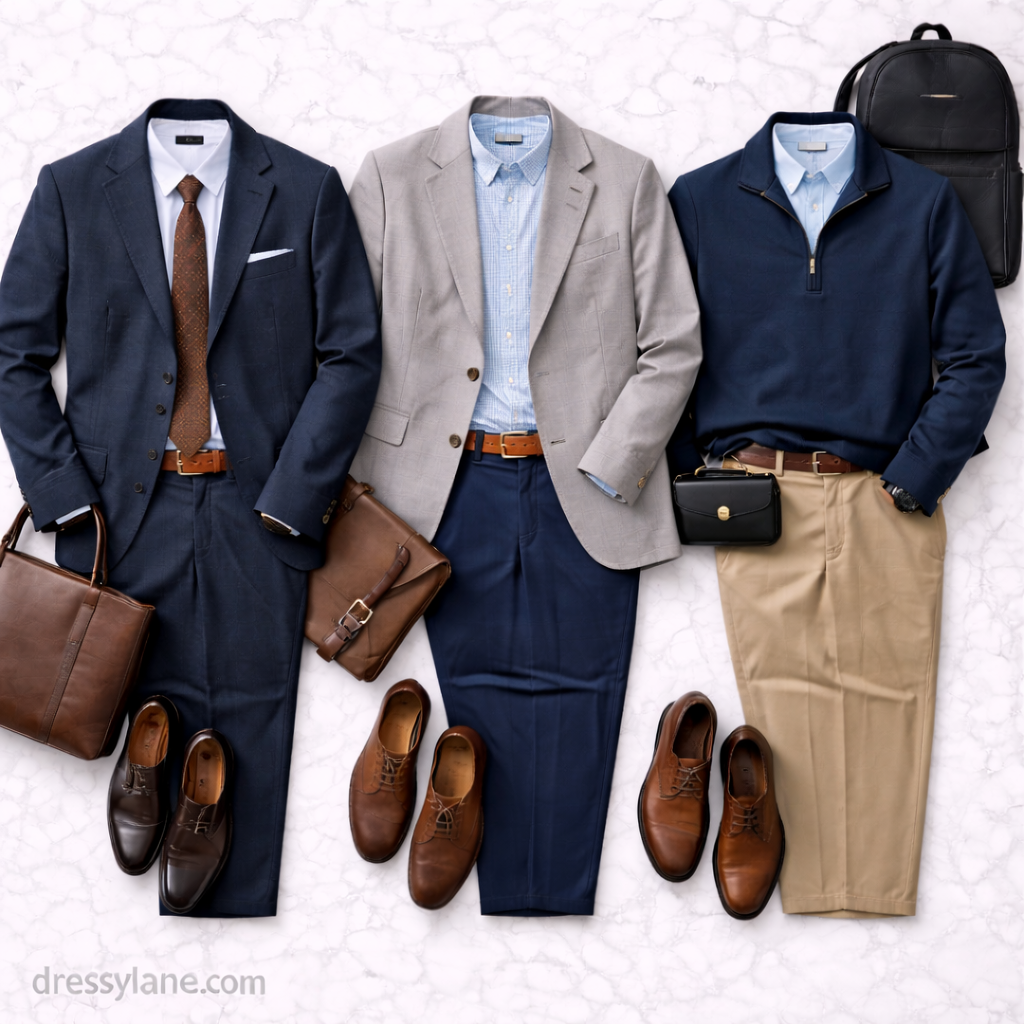
Men can build a dependable job fair outfit around a button-down shirt and tailored trousers.
For a general career fair, try a light blue Oxford shirt, charcoal chinos, a navy blazer, and brown leather loafers.
If the event is more formal, switch to a matching navy suit, white dress shirt, and conservative tie.
For a relaxed technology or creative industry fair, a fine-gauge sweater over a collared shirt with tailored trousers may work well.
Pay attention to fit. Your shirt should stay comfortably tucked in, trousers shouldn’t bunch around your shoes, and your blazer should allow you to move your arms naturally.
I’d avoid a heavy three-piece suit unless the event specifically calls for very formal attire. Convention centers can get warm, and spending several hours in unnecessary layers isn’t particularly comfortable.
A simple belt, clean shoes, and a professional-looking bag are enough to finish the outfit.
How to Dress for Different Industries
Not every employer expects the same level of formality.
Corporate, finance, and law: A matching suit is a dependable option. Choose navy, charcoal, or black with a simple shirt or blouse and polished dress shoes.
Technology and creative fields: Business casual often works well. A blazer with chinos, tailored trousers, or a structured dress offers a professional appearance without feeling overly corporate.
Healthcare and education: A pressed blouse or collared shirt with dress trousers and comfortable closed-toe shoes is a practical combination. Unless specifically instructed otherwise, avoid assuming that scrubs or other work uniforms are appropriate for a recruitment event.
When several industries are represented, choose an outfit suitable for the most formal employer you plan to approach.
Don’t Overlook the Practical Details
A job fair outfit has to do more than look good in the mirror.
You’ll likely be shaking hands, reaching into your bag for documents, sitting occasionally, and walking between booths.
Try on your complete outfit the day before. Sit down, stand up, and check whether your shirt pulls, your trousers feel restrictive, or your shoes rub against your heels.
If you’re wearing a blazer, make sure you can comfortably carry it when the venue gets warm.
Keep accessories manageable. Large bracelets that catch on your bag or jewelry that constantly needs adjusting can become annoying during repeated conversations.
What Not to Wear to a Job Fair
Unless the event specifically encourages casual clothing, leave distressed jeans, graphic T-shirts, athletic wear, and worn-out sneakers at home.
Avoid heavily wrinkled clothing, shoes with visible scuffs, and anything that requires frequent adjusting.
Strong fragrance is another thing I’d skip. Recruiters and attendees may be standing close together in a crowded indoor space, and some people are sensitive to perfume or cologne.
You don’t need expensive clothing. A pressed cotton shirt, well-fitting trousers, and clean loafers can look more polished than a costly suit that doesn’t fit properly.
What to Bring With Your Outfit
Your bag is part of your overall presentation, but practicality matters more than appearance alone.
A slim portfolio or structured tote works well for carrying printed résumés and other essentials.
Bring a pen, small notebook, and water bottle. Keep your phone and documents in separate compartments so you aren’t digging through your bag while a recruiter waits.
If you’re traveling in warm weather, consider carrying your blazer and putting it on shortly before entering the event. This can help prevent overheating and unnecessary creasing during the commute.
Final Thoughts
Knowing what to wear to a job fair comes down to matching the event’s expectations while preparing for several hours of movement and conversation.
Start with business casual unless the event recommends something more formal. Choose well-fitting clothing, comfortable dress shoes, and a bag that keeps your essentials organized.
Prepare your outfit the night before and make sure everything is clean, pressed, and comfortable.
Once you’re at the job fair, you should be able to focus on meeting employers and discussing opportunities rather than worrying about your clothes.