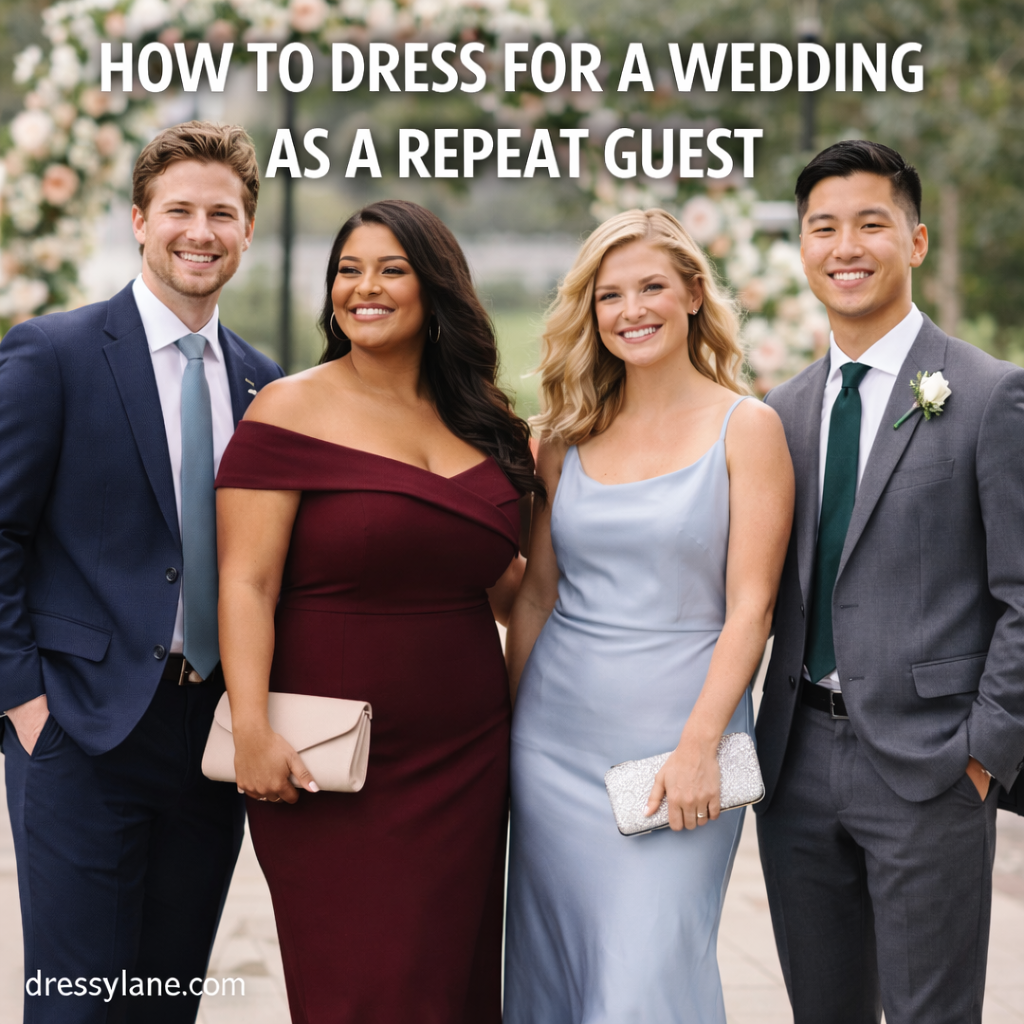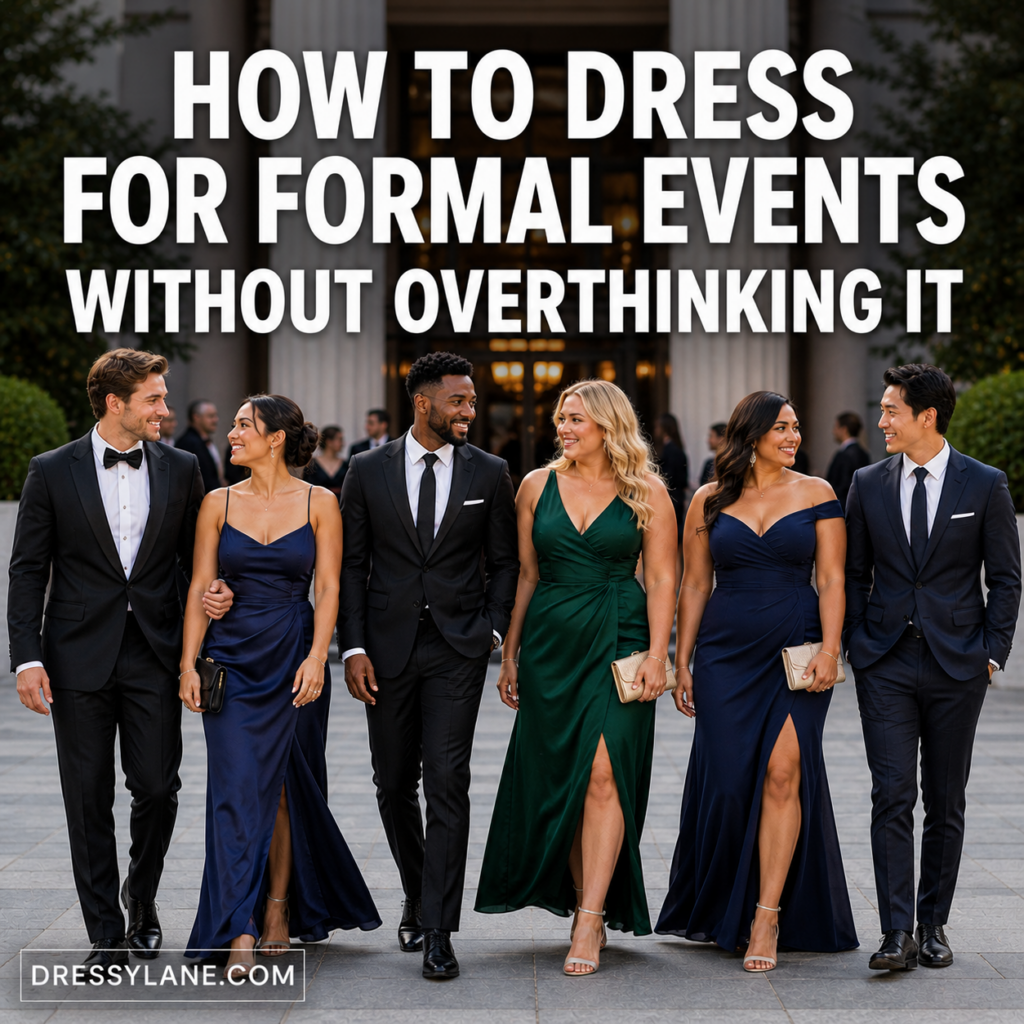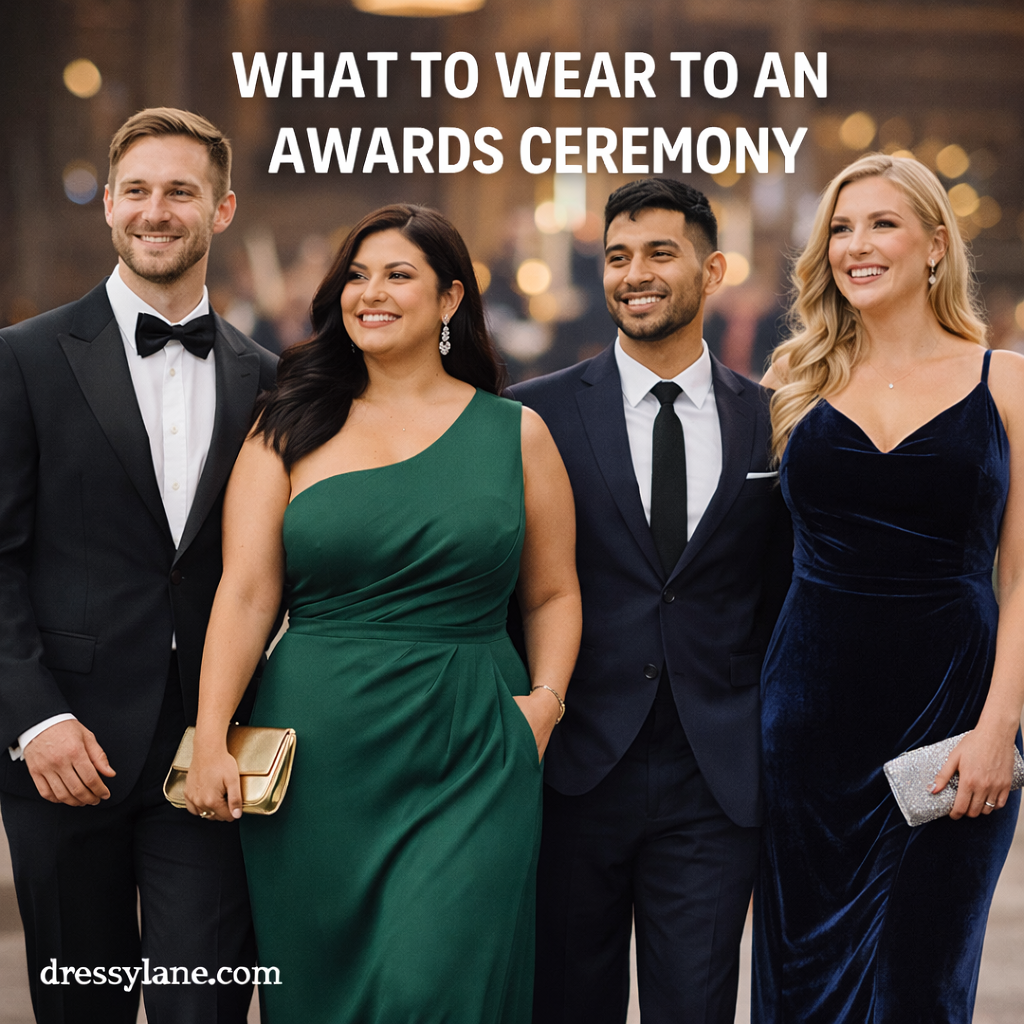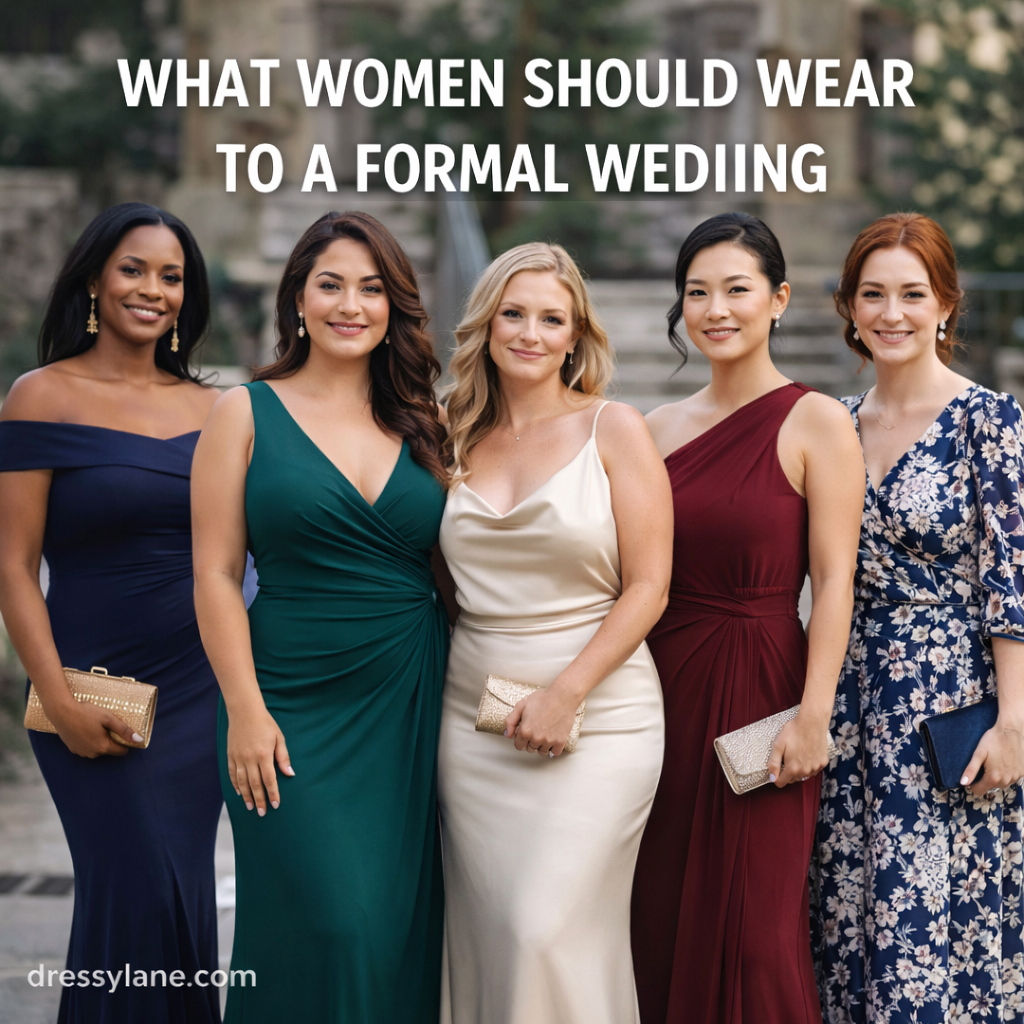
Figuring out what to wear to a wedding usually starts with one question: how dressed up are you expected to be?
A beach ceremony at two in the afternoon calls for a different outfit than an evening reception at a luxury hotel. Even a perfectly tailored navy suit can feel out of place if everyone else is wearing linen shirts and chinos.
The easiest approach is to check the invitation, consider the venue, and build your outfit around the dress code. Here’s what works for everything from casual celebrations to black-tie weddings, along with a few details that can make or break your look.
Start With the Wedding Dress Code
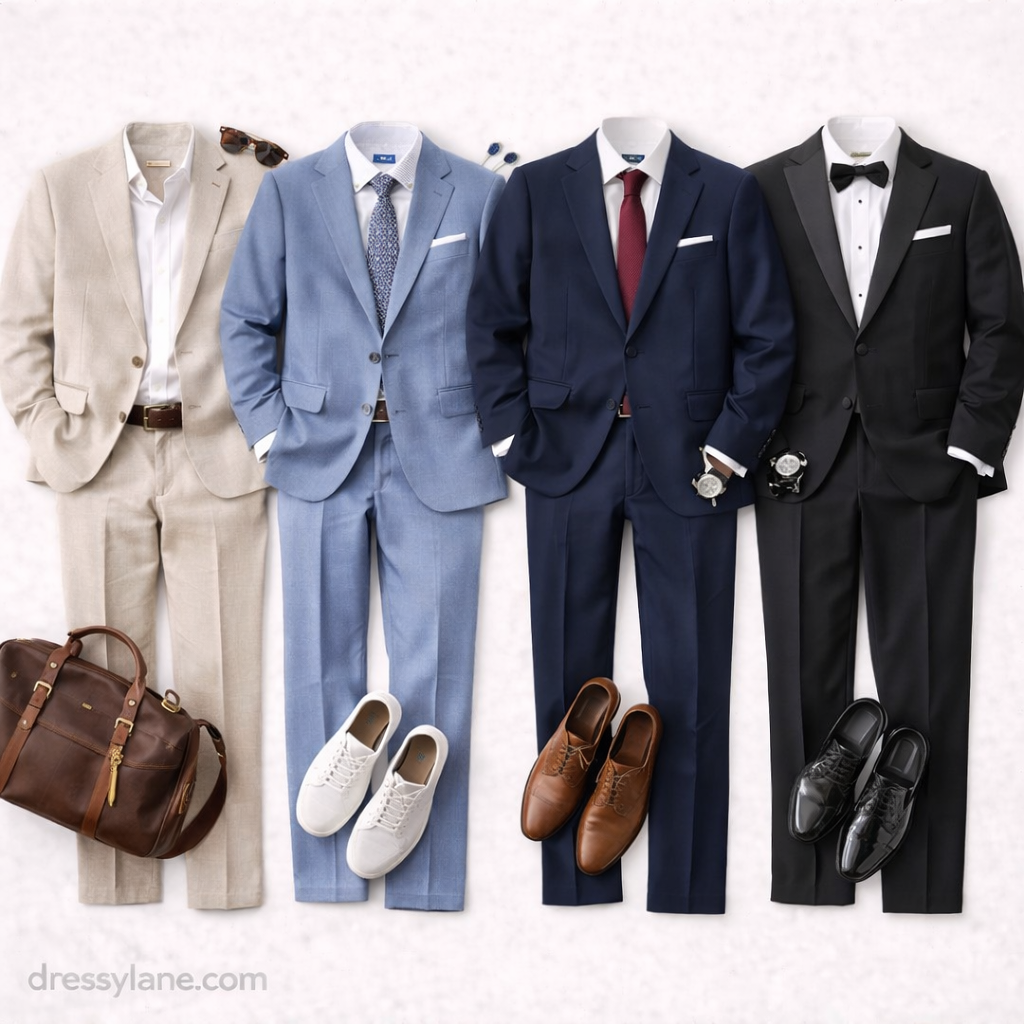
Before shopping for anything, read the invitation carefully. The dress code should determine your outfit, not the other way around.
Here’s a quick breakdown of what the most common wedding dress codes mean for men.
| Dress code | What to wear |
|---|---|
| Casual | Button-down shirt, chinos, loafers; optional blazer |
| Semi-formal | Suit or tailored separates, dress shirt, dress shoes |
| Cocktail | Well-fitted suit, dress shirt, tie optional depending on the event |
| Formal / Black tie optional | Dark suit and tie or tuxedo |
| Black tie | Tuxedo, white formal shirt, black bow tie, black formal shoes |
If no dress code is listed, don’t automatically assume the wedding is casual. Check the venue and time of day, or ask the couple for guidance.
For an evening wedding at a hotel or upscale restaurant, a navy or charcoal suit is usually a dependable starting point.
What to Wear to a Casual or Beach Wedding
Casual doesn’t mean showing up in whatever you’d wear on a normal Saturday.
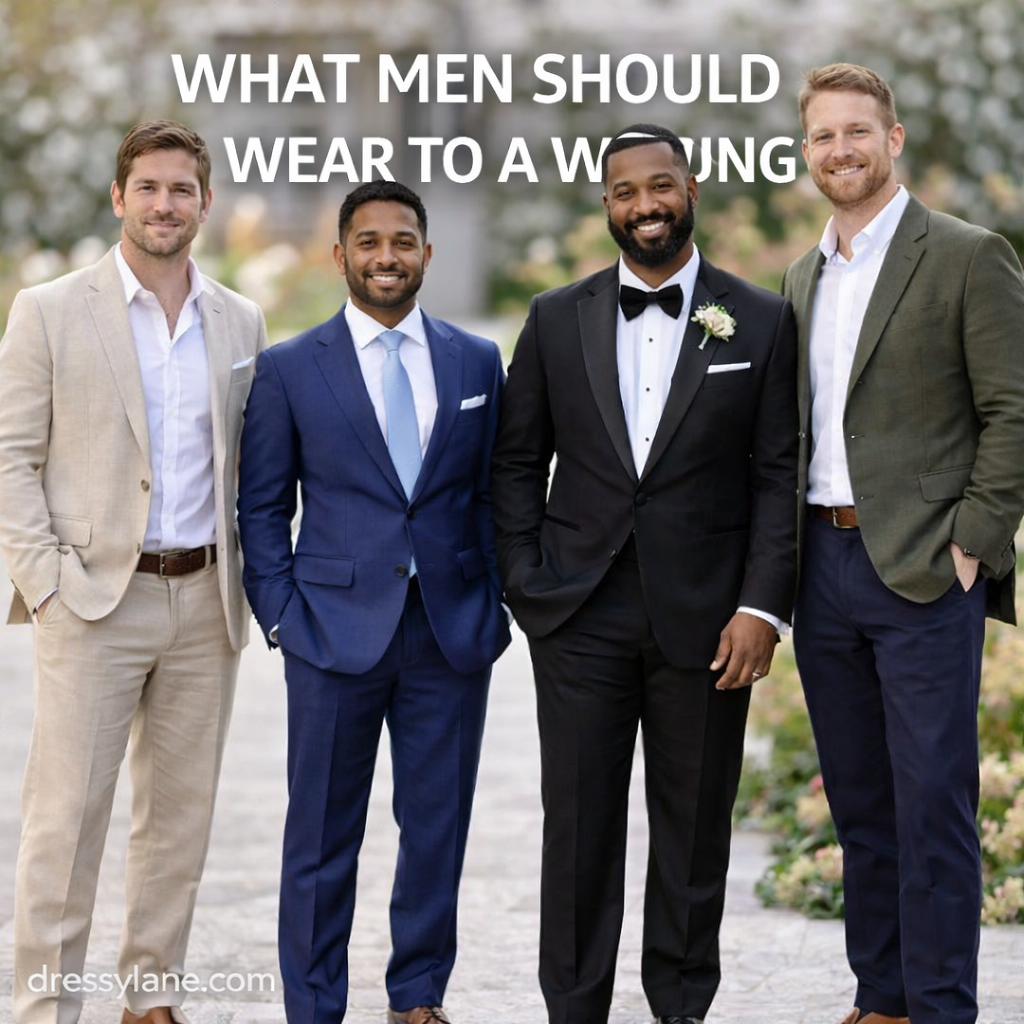
For a backyard or daytime garden wedding, try stone-colored chinos, a light blue Oxford shirt, and brown suede loafers. An unstructured navy blazer is an easy addition if the venue feels slightly dressier.
Beach weddings call for lighter fabrics. A sand-colored linen-blend suit with a white cotton-linen shirt looks appropriate without feeling stiff.
I’d avoid wearing a full linen outfit straight out of the suitcase. Linen wrinkles naturally, but deep packing creases across the jacket and trousers can make the outfit look neglected. Hang or steam everything before the ceremony.
Shorts, flip-flops, and sandals should only be considered when the couple specifically allows them.
What to Wear to a Semi-Formal or Cocktail Wedding
A tailored suit is the most reliable choice for semi-formal and cocktail weddings.
For an afternoon ceremony, consider a medium-gray or navy suit in lightweight worsted wool, paired with a white or pale blue dress shirt.
For an evening reception, darker colors tend to work particularly well. A charcoal suit, white shirt, burgundy tie, and dark brown or black leather oxfords create a polished combination without looking overly formal.
A tie is a useful addition when you’re uncertain about the dress code. You can remove it later if the reception becomes more relaxed.
My recommendation: If you attend weddings only occasionally, invest in a well-fitting navy suit before buying anything more specialized. You can change its appearance with different shirts, ties, and shoes, making it useful for several dress codes and other occasions.
Avoid overly tight jackets and cropped trousers that expose several inches of ankle. A classic, gently tapered silhouette tends to look more balanced in wedding photographs.
What to Wear to a Formal Wedding
Formal weddings generally call for a dark suit and tie, although some invitations may encourage tuxedos.
A charcoal or deep navy wool suit with a crisp white shirt is a dependable option. Add a silk tie, polished leather oxfords, and a simple white pocket square if you want a finishing detail.
Pay attention to the jacket’s construction. Structured shoulders, clean lapels, and trousers with a proper crease create a noticeably dressier appearance than an unstructured casual suit.
If the invitation says “black tie optional,” a dark suit and tie is acceptable, but a tuxedo is also appropriate.
When the wording is unclear, check the wedding website rather than assuming formal and black tie mean exactly the same thing.
What to Wear to a Black Tie Wedding
Black tie has a more specific set of expectations than ordinary formal attire.
For a traditional black tie wedding, wear a black or midnight blue tuxedo with satin or grosgrain lapels, matching tuxedo trousers, a white formal shirt, and a black bow tie.
Black patent leather oxfords or highly polished black calfskin oxfords complete the outfit.
A regular black business suit isn’t a substitute for a tuxedo when the invitation explicitly says black tie.
If you’re renting, arrange a fitting well before the wedding. Check the sleeve length, trouser break, and jacket fit while wearing your actual shirt and shoes.
A properly fitted rental will usually look better than an expensive tuxedo that’s too large through the shoulders or too long in the trousers.
Let the Season Influence Your Fabric Choices
The season affects comfort, but it shouldn’t override the dress code.
For spring and summer weddings, lightweight worsted wool, tropical wool, and linen blends are worth considering. Light gray, beige, and soft blue work particularly well for daytime events when the dress code allows them.
For fall and winter, midweight wool suits in navy, charcoal, and deep brown offer a richer appearance and more warmth.
One detail that’s easy to overlook is the temperature inside the venue. A summer wedding might have an outdoor ceremony followed by a heavily air-conditioned reception.
A lightweight jacket is useful in that situation, even if you don’t plan to wear it throughout the evening.
For winter weddings, choose a proper wool overcoat rather than throwing a casual puffer jacket over your suit for the journey between venues.
Shoes Can Make or Break the Outfit
Your shoes should match both the formality of your clothing and the setting.
Black leather oxfords are a natural choice for formal weddings, while dark brown derbies and loafers work well with navy suits and more relaxed outfits.
Suede loafers are particularly useful for daytime and garden weddings.
For an outdoor ceremony, check whether you’ll be walking across grass, gravel, or sand. Thin leather soles can be slippery on damp grass, so a discreet rubber sole may be the more practical choice.
I’d skip sneakers unless the couple explicitly encourages a relaxed dress code. Even clean white leather sneakers can look out of place alongside a tailored suit at a traditional wedding.
Make sure your shoes are polished and comfortable before the event. A wedding isn’t the ideal occasion to break in a stiff new pair.
Fit Matters More Than Expensive Labels
A moderately priced suit with proper alterations will often look better than an expensive suit worn straight off the rack.
Check three areas before the wedding:
- Shoulders: The jacket should follow your natural shoulder line without extending too far or pulling across the upper back.
- Sleeves: Around a quarter to half an inch of shirt cuff should show beneath the jacket.
- Trousers: The hem should rest neatly on your shoes without excessive bunching.
Try the complete outfit on at least a week before the wedding. Sit down, button the jacket, and walk around.
If the shirt pulls across your chest or the trousers feel restrictive when seated, address the issue before the event.
A Few Wedding Guest Mistakes to Avoid
Unless the invitation specifically allows them, leave distressed jeans, athletic sneakers, graphic T-shirts, and shorts at home.
Avoid loud novelty ties or heavily patterned suits that compete with the wedding party’s attire.
You don’t need to avoid white shirts or light-colored suits entirely. White dress shirts are standard wedding attire for men, and cream or beige suits can be appropriate for certain daytime celebrations. Just avoid deliberately copying a distinctive outfit the groom has requested for himself.
Finally, don’t forget the small details: remove temporary stitching from jacket vents, empty bulky items from your trouser pockets, and make sure your belt coordinates with your shoes when wearing one.
These adjustments take minutes but make the finished outfit look considerably cleaner.
The Bottom Line
If you’re unsure what to wear to a wedding, start with the invitation and work outward from there.
A button-down shirt and chinos may be perfect for a casual garden ceremony, while a navy suit handles many semi-formal and cocktail weddings. Formal celebrations call for a darker, dressier approach, and traditional black tie requires a tuxedo.
Once you’ve established the correct level of formality, concentrate on fabric, fit, and comfortable footwear.
You don’t need an elaborate outfit or a closet full of suits. You need clothes that suit the occasion, fit properly, and let you enjoy the wedding without spending the entire evening adjusting your jacket or worrying about your shoes.