Choosing what to wear to a job interview can be surprisingly difficult. A navy suit might be exactly right for a corporate finance role but feel out of place at a small design studio where everyone wears jeans and sneakers.
The goal isn’t to dress as formally as possible. It’s to choose an outfit that fits the company’s expectations, looks well maintained, and allows you to sit, walk, and speak comfortably.
Whether you’re interviewing for a traditional office position or a role at a relaxed startup, a few dependable clothing combinations can make the decision much easier.
Start With the Company’s Dress Code
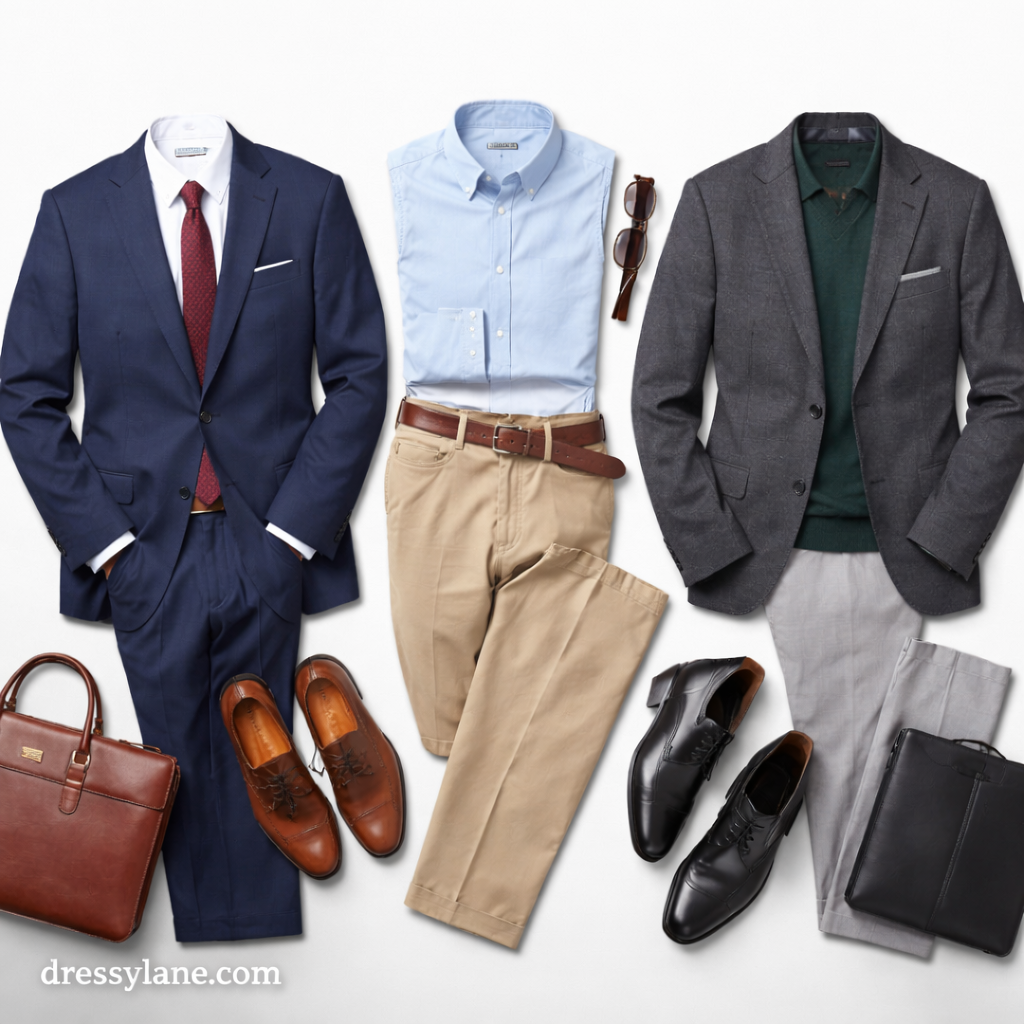
Before deciding between a suit and chinos, look into how the company typically dresses.
Check its careers page, employee photos, and any interview instructions you’ve received. If the dress code remains unclear, it’s perfectly reasonable to ask the recruiter.
Use the role and setting as additional clues:
| Interview Setting | Outfit to Consider |
|---|---|
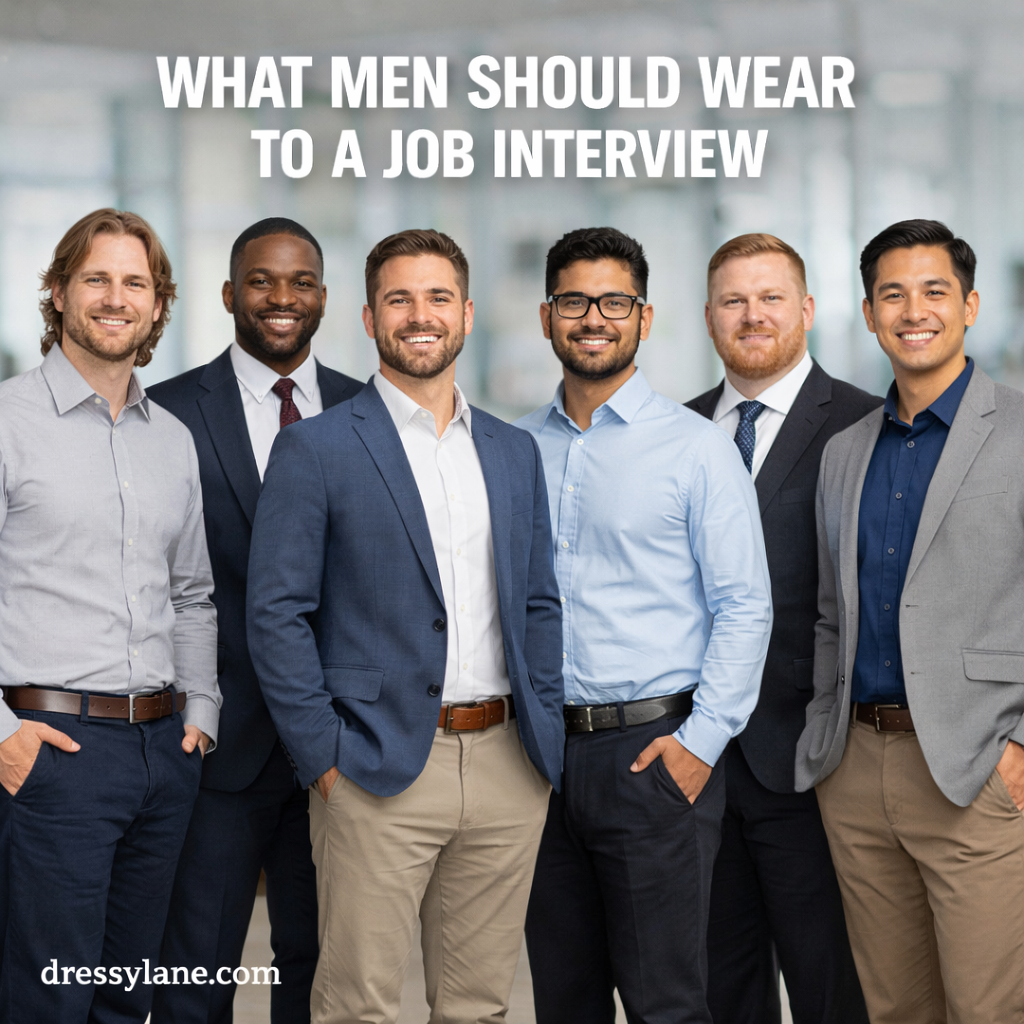
| Corporate finance, legal, or consulting | Navy or charcoal suit, dress shirt, tie, and leather dress shoes |
| Business casual office | Blazer, tailored trousers, Oxford shirt, and loafers |
| Tech or creative workplace | Chinos, button-down shirt, and leather shoes or Chelsea boots |
| Video interview | Collared shirt or fine-knit top, with a blazer if appropriate |
These are starting points rather than universal industry rules. Individual companies can have very different expectations.
I’d avoid relying entirely on employee photos, especially if they show people at social events or working from home. An office’s everyday dress code doesn’t necessarily tell you what it expects candidates to wear.
For Formal Interviews, Start With a Navy or Charcoal Suit
A well-fitting suit remains a dependable choice when interviewing at a company with traditional business attire.
Choose navy or charcoal in a matte wool or wool-blend fabric. Both colors are versatile and easy to coordinate with shirts, ties, and shoes.
A straightforward combination includes:
- Navy single-breasted suit.
- White or pale blue cotton dress shirt.
- Burgundy or navy tie with a subtle pattern.
- Dark brown or black leather Oxford shoes.
- Coordinating leather belt and dark dress socks.
The suit doesn’t need to be expensive, but it should fit properly.
The jacket should sit comfortably across your shoulders without pulling when buttoned. Your trousers should stay in place when you sit and fall neatly over your shoes.
My recommendation: If you own a slightly older suit that fits well and a newer one that pulls across the chest, wear the older suit. Proper fit makes a greater difference than whether the clothing follows the latest tailoring trend.
If the company explicitly requests business casual attire, however, you may not need a full suit.
What to Wear for a Business Casual Interview
For a business casual office, tailored separates offer a polished alternative to formal suiting.
Try charcoal wool-blend trousers with a pale blue Oxford shirt, a navy unstructured blazer, and brown leather loafers.
The blazer provides structure without making the outfit feel as formal as a matching suit.
Beige or navy cotton-twill chinos can also work, particularly in workplaces with a more relaxed dress code.
Choose a straight or gently tapered leg rather than extremely tight trousers. Make sure the hem doesn’t bunch excessively around your shoes.
A tie is usually optional in a business casual setting, although you should follow any guidance provided by the employer.
I’d skip jeans for an interview unless the company has specifically encouraged casual attire. Even if employees wear denim every day, tailored trousers are a simple way to look prepared without becoming overdressed.
Interview Outfits for Tech and Creative Roles
A startup or creative agency may have a relaxed everyday dress code, but that doesn’t mean you need to arrive in a T-shirt and running shoes.
A useful outfit is navy chinos, a white Oxford shirt, an olive cotton overshirt, and dark brown Chelsea boots.
For a slightly more formal version, replace the overshirt with an unstructured blazer.
A fine-gauge merino sweater over a collared shirt can also work well in cooler weather.
Keep the colors coordinated, but don’t feel restricted to black and gray. Olive, burgundy, cream, and muted blue can add personality without dominating the outfit.
Clean minimalist leather sneakers may be appropriate if the employer has confirmed a casual interview dress code. Otherwise, loafers or Chelsea boots are a more dependable choice.
Fit and Fabric Matter More Than Expensive Labels
An interview outfit should look good while you’re sitting across a desk, not just when you’re standing in front of a mirror.
Before the interview, button your jacket, sit down, and reach forward as though you’re shaking hands.
Check for these common problems:
- A shirt that pulls open between the buttons.
- A jacket that feels restrictive across the shoulders.
- Trousers that become uncomfortable when sitting.
- Sleeves that cover your hands.
- Trouser hems that drag on the floor.
Cotton poplin shirts offer a crisp appearance, while Oxford cloth has a slightly more relaxed texture.
For trousers, wool blends and cotton twill are useful because they generally hold their shape well.
If you tend to get warm under pressure, consider a breathable shirt and a lightweight jacket rather than heavy layers.
Choose Shoes You’ve Already Worn
Shoes are one area where I’d strongly recommend avoiding last-minute purchases.
A brand-new pair of leather Oxfords might look excellent, but stiff heels or tight toe boxes can become uncomfortable during the commute or while waiting for an interview.
For formal settings, black or dark brown Oxfords and derbies are dependable options.
For business casual interviews, leather loafers or Chelsea boots work well.
Clean your shoes the night before, check the soles, and make sure the laces are in good condition.
Wear dress socks long enough to keep your lower legs covered when your trousers rise as you sit.
Keep Grooming and Accessories Practical
Your clothing should be clean, pressed, and ready to wear before interview morning.
Check your shirt collar and cuffs for stains, remove lint from dark jackets, and make sure your facial hair and hairstyle are neat in a way that suits you.
Avoid heavy cologne, particularly when interviewing in a small meeting room.
For accessories, a simple watch and leather belt are usually sufficient.
Bring a slim portfolio or tidy bag for your résumé, notebook, and other materials. A backpack is fine when appropriate to the workplace, provided it’s clean and in good condition.
There’s no need to buy a briefcase solely for an interview.
What About Video Interviews?
Video interviews still require some thought about clothing, even if you’re attending from home.
A pale blue shirt with a navy blazer is a dependable combination for a business casual or corporate setting.
Check how the colors appear against your background. A black sweater may blend into a dark wall, while a bright white shirt can look washed out under strong lighting.
Avoid very fine stripes and tiny checks, which can create distracting effects on camera.
Wear appropriate trousers, too. You may need to stand unexpectedly to adjust equipment or retrieve something.
Test your outfit, camera angle, and lighting before the call rather than discovering problems when the interviewer joins.
Prepare Everything the Night Before
Once you’ve chosen your outfit, lay out every piece together.
Check that your shirt is pressed, your trousers are clean, and your shoes match the level of formality.
Try on the complete outfit rather than assuming individual pieces will work together.
If you’re traveling, consider whether your jacket will wrinkle during the commute. You can carry it on a hanger and put it on shortly before arriving.
Allow enough time to reach the interview without rushing, especially if you’re wearing formal clothing that you’re not accustomed to wearing.
Final Thoughts
Knowing what men should wear to a job interview starts with understanding the employer’s expectations.
A navy or charcoal suit is a dependable option for formal workplaces, while tailored trousers, an Oxford shirt, and a blazer work well for many business casual interviews. Creative and startup environments may allow more relaxed combinations, but it’s worth confirming before choosing jeans or sneakers.
If you’re deciding where to spend your effort, prioritize fit, clean shoes, and an outfit you’ve already worn comfortably.
You don’t need an expensive wardrobe or a completely new look. You need clothing that’s appropriate for the opportunity and comfortable enough that you can concentrate on the conversation rather than your outfit.