A church wedding calls for an outfit that suits both the ceremony and the celebration afterward. Depending on the denomination, venue, and couple’s preferences, that might mean a traditional suit and tie, a polished midi dress, or something more formal.
The tricky part is that church weddings don’t all follow the same dress code. A Saturday afternoon ceremony at a neighborhood church may be relatively relaxed, while a wedding at a cathedral could call for formal attire and specific clothing guidelines.
Before choosing your outfit, check the invitation and consider the ceremony location. Here’s how to dress appropriately without sacrificing your personal style or buying an entirely new wardrobe.
Does a Church Wedding Have a Specific Dress Code?
Not necessarily. The invitation should determine the overall formality, while the church’s guidelines may add specific requirements.
Some churches request covered shoulders, longer hemlines, or head coverings. Others have no particular clothing restrictions beyond the couple’s stated dress code.
A church ceremony doesn’t automatically require a suit or a modest dress, but it’s worth checking whether the venue has any specific expectations.
If the invitation doesn’t mention a dress code, a knee-length or midi dress, tailored separates, or a suit are sensible starting points.
For a more traditional ceremony, I’d choose an outfit with enough coverage that you won’t spend the service adjusting your neckline or worrying about how your dress looks when seated.
What Women Should Wear to a Church Wedding
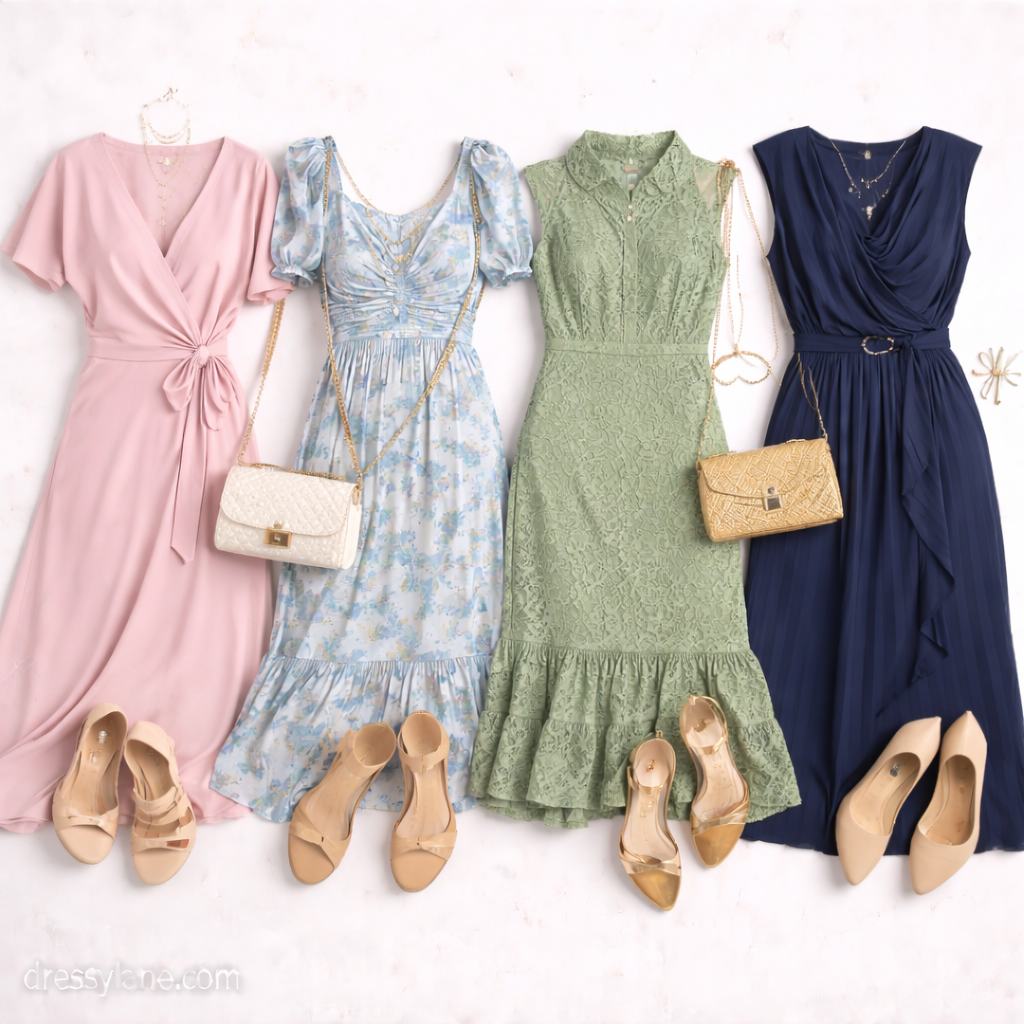
A midi dress is one of the most versatile choices for a church wedding. It provides a polished appearance, works across different levels of formality, and can easily transition from the ceremony to the reception.
For example, a dusty blue A-line midi dress in crepe, paired with nude block heels and a small structured handbag, would work beautifully for an afternoon ceremony.
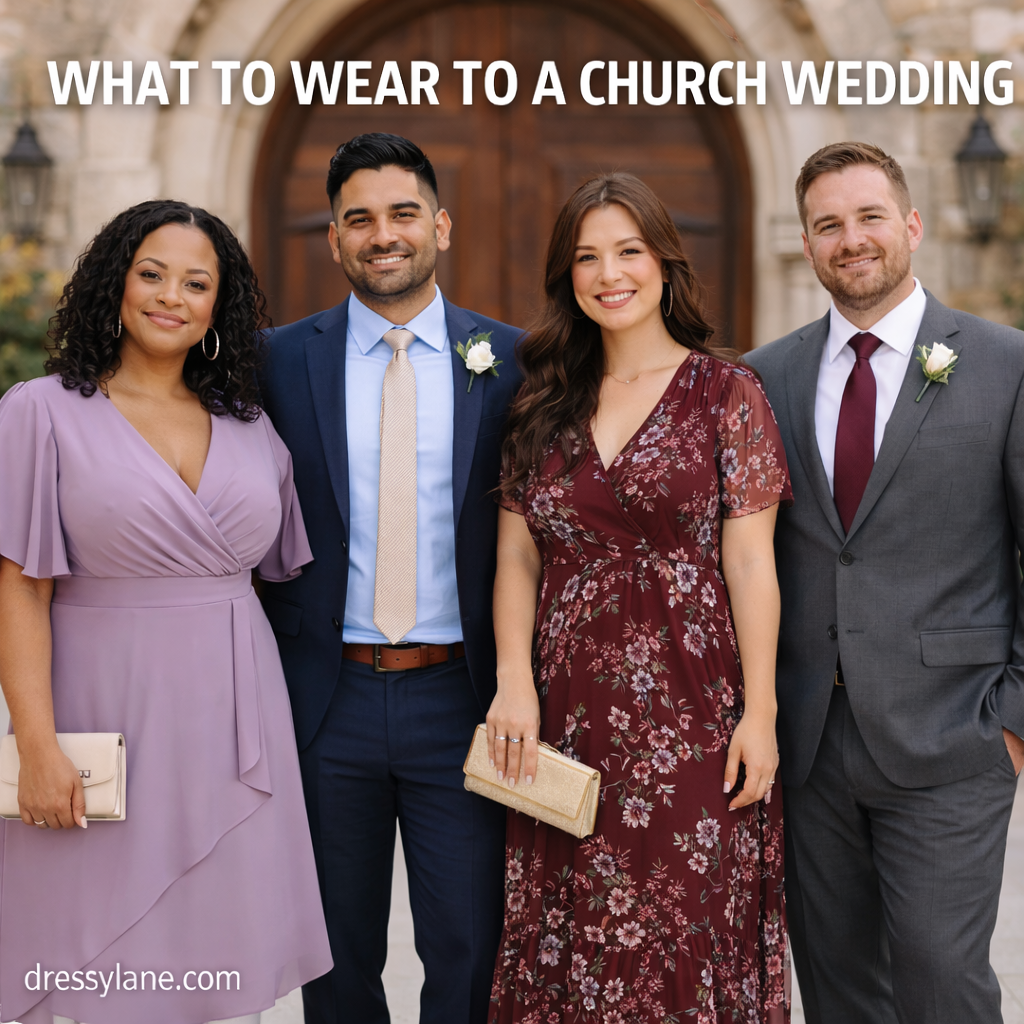
A burgundy wrap dress with a secure neckline or a sage green dress with three-quarter sleeves would be equally appropriate.
Choosing the Right Dress
Look for silhouettes that feel polished without being overly restrictive.
Good options include:
- A-line midi dresses: Fitted through the bodice with a skirt that allows comfortable movement.
- Wrap dresses: Flattering and versatile, particularly when the neckline and wrap closure stay secure.
- Fit-and-flare dresses: A classic choice for daytime or semi-formal ceremonies.
- Long-sleeved crepe dresses: Particularly useful for fall and winter weddings.
Fabric matters, too.
Crepe offers a smooth, structured appearance, while chiffon works well for softly flowing skirts. Cotton blends can be appropriate for less formal daytime weddings, provided the dress doesn’t resemble an everyday sundress.
I’d avoid very thin, unlined fabrics, especially in bright sunlight. A dress that looks opaque in your bedroom may become surprisingly sheer when standing near a large church window.
Do You Need to Cover Your Shoulders?
Only if the church or couple requires it, although bringing a layer is a practical option when you’re unfamiliar with the venue.
A cropped cardigan, lightweight blazer, or neatly draped shawl can provide coverage during the ceremony.
I’d choose a layer that actually complements the dress rather than bringing an unrelated cardigan at the last minute.
For example, a navy sleeveless midi dress with a matching cropped jacket looks intentional and can transition easily to a reception where the jacket is no longer needed.
One practical tip: if you’re relying on a shawl for shoulder coverage, make sure it stays in place when you stand, sit, and move. A lightweight jacket or cardigan is often easier to manage.
You Don’t Have to Wear a Dress
Tailored separates can be just as appropriate for a church wedding.
Wide-leg navy trousers with a silk-crepe blouse and a coordinating blazer create a polished outfit without feeling overly formal.
A knee-length skirt with a structured blouse is another option, particularly for daytime ceremonies.
For a contemporary wedding, a tailored jumpsuit with full-length trousers and an elegant neckline can also work, provided it meets any venue-specific guidelines.
I’d skip casual linen drawstring trousers or oversized, untucked shirts. Even when the wedding is relaxed, tailored pieces generally look more appropriate for the occasion.
What Men Should Wear to a Church Wedding
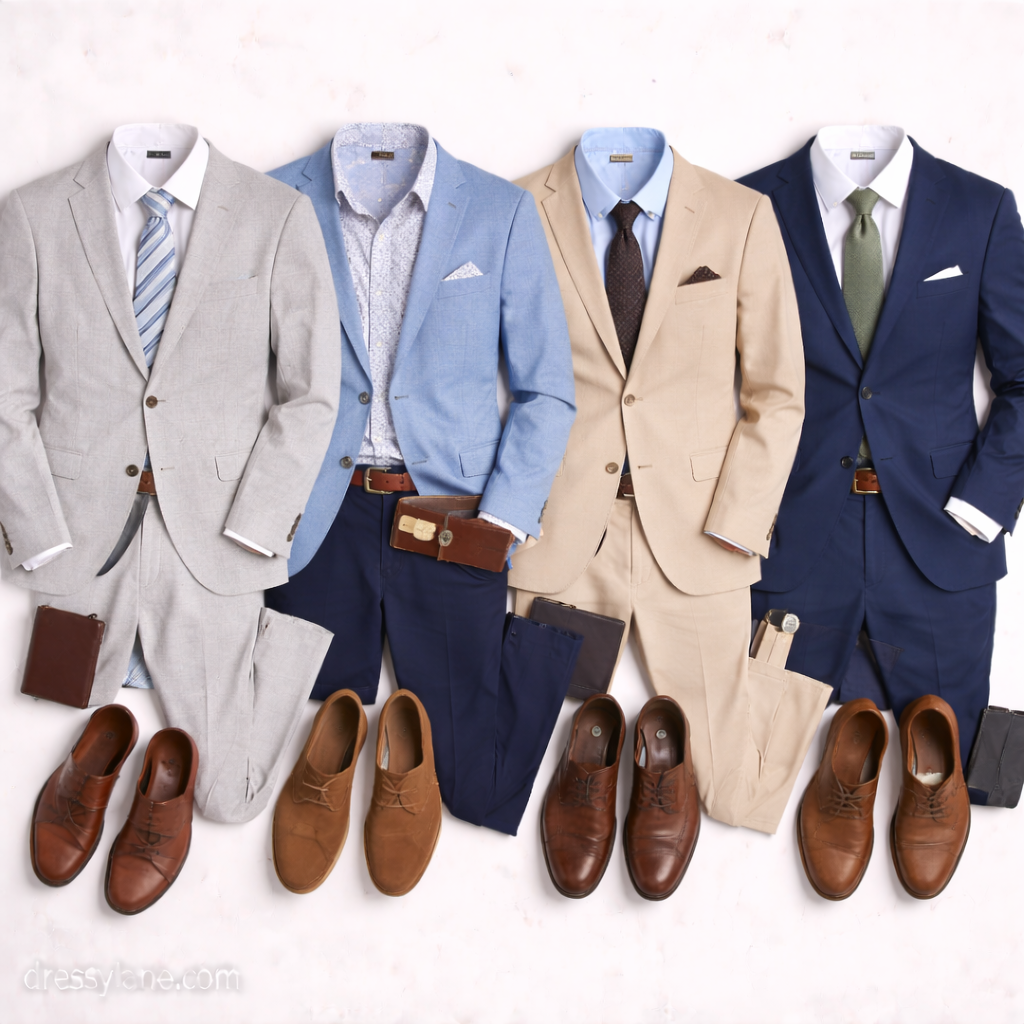
For men, a well-fitted suit is a dependable choice, especially when the invitation specifies semi-formal or formal attire.
A navy suit with a white dress shirt, burgundy tie, and brown Oxford shoes is appropriate for many daytime church weddings.
Charcoal and medium-gray suits are equally versatile.
For a more relaxed ceremony, tailored trousers with a sport coat may be sufficient, but check the invitation before leaving the suit at home.
Getting the Details Right
You don’t need an expensive suit, but the fit should be correct.
The jacket should sit comfortably across the shoulders, the sleeves should reveal a little shirt cuff, and the trousers shouldn’t bunch heavily around the shoes.
For shirts, white and pale blue are reliable choices. Subtle patterns can work for less formal weddings, but avoid anything that resembles a casual weekend shirt.
A tie is appropriate for many traditional ceremonies, although it isn’t universally required.
I’d bring one if the dress code is unclear and the setting appears formal. It’s easier to remove a tie at a relaxed reception than to wish you’d brought one for a dressier ceremony.
Finish with polished leather Oxfords, derbies, or appropriate loafers.
Choosing Colors for a Church Wedding
Navy, burgundy, sage green, dusty rose, and soft blue are excellent choices for wedding guests.
For spring and summer, lighter colors and subtle floral prints work well. In fall and winter, deeper tones such as forest green, plum, and charcoal feel natural.
White and ivory are generally best avoided for guests unless the couple specifically requests them.
Black is acceptable at many church weddings, particularly for evening or formal celebrations. If you’re concerned that an all-black outfit looks too somber, introduce color through a handbag, tie, jewelry, or other accessories.
Bright colors and prints aren’t automatically inappropriate, either. A well-cut cobalt blue midi dress can be perfectly suitable.
The important consideration is whether the overall outfit fits the dress code and any specific venue requirements.
Shoes and Accessories That Work for the Ceremony
Church ceremonies often involve periods of standing, sitting, and walking, sometimes on stone floors or steps.
For women, closed-toe pumps, low block heels, dressy flats, and refined slingbacks are practical choices.
You don’t need high heels. A pair of pointed-toe flats can look just as polished with a midi dress.
I’d avoid extremely high stilettos if the church has uneven stone paths or if you’ll be walking between buildings.
For men, polished leather dress shoes are appropriate for most formal and semi-formal ceremonies.
Keep accessories manageable. A small structured handbag, simple earrings, or a classic watch is usually enough.
If the church has specific head-covering customs, follow the guidance provided by the couple or venue rather than assuming a hat or veil is required.
Dressing for the Season
Church interiors can be surprisingly cool, even during summer.
For a spring or summer wedding, a lightweight crepe dress or cotton-blend outfit works well, but bring a cardigan or jacket if the building is air-conditioned.
Men can consider lightweight wool suits or breathable wool blends.
For fall and winter, long-sleeved dresses, velvet accents, and heavier crepe are useful choices. Men can opt for charcoal or navy wool suits with an appropriate overcoat.
I’d avoid relying on a bulky everyday jacket as part of your ceremony outfit. A tailored coat or coordinating layer will look more cohesive, particularly if you’ll be photographed outside the church.
What to Avoid at a Church Wedding
There isn’t one universal list of prohibited clothing, but a few choices are worth reconsidering.
- White or bridal-looking outfits: Leave these to the couple unless the invitation specifies otherwise.
- Very short hemlines: Consider how the dress looks when seated, not just when standing.
- Unsecured necklines: Choose clothing that stays comfortably in place throughout the ceremony.
- Casual denim or athletic wear: These are generally unsuitable unless explicitly permitted.
- Uncomfortable footwear: Remember that you may be standing for extended periods.
Also, avoid assuming that every church requires the same level of modesty. Catholic, Protestant, Orthodox, and other Christian communities can have different customs, and expectations may vary between individual congregations.
If you’re unfamiliar with the venue, check its website or ask the couple about any specific clothing requirements.
Final Thoughts
The easiest way to dress for a church wedding is to follow the invitation first, then account for any guidelines specific to the ceremony venue.
For women, a well-fitting midi dress, tailored jumpsuit, or polished separates are versatile options. For men, a suit or sport coat with tailored trousers provides a reliable starting point, depending on the dress code.
I’d prioritize an outfit that looks appropriate both standing and seated, with comfortable shoes and a coordinating layer if needed.
A little preparation goes a long way. Check the venue, try on your complete outfit beforehand, and choose something that lets you enjoy the ceremony and reception without constantly adjusting what you’re wearing.