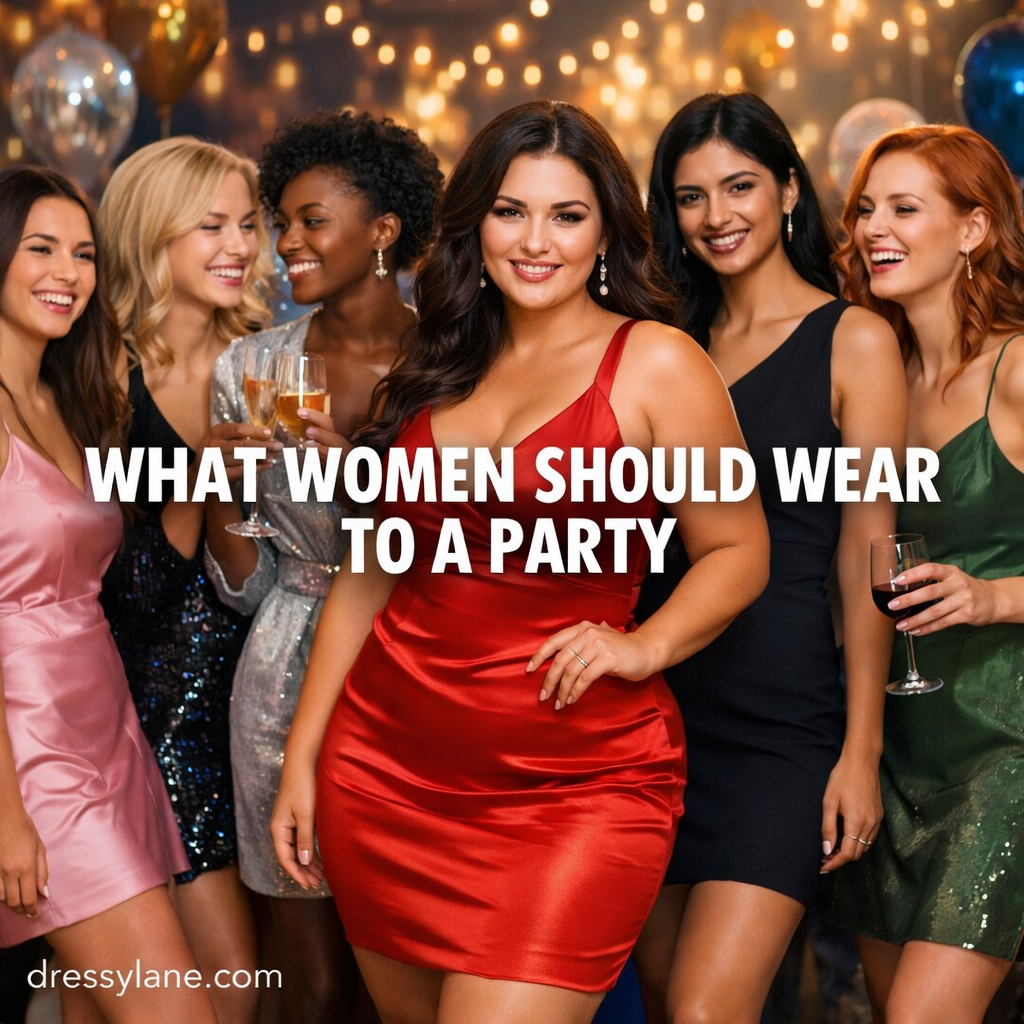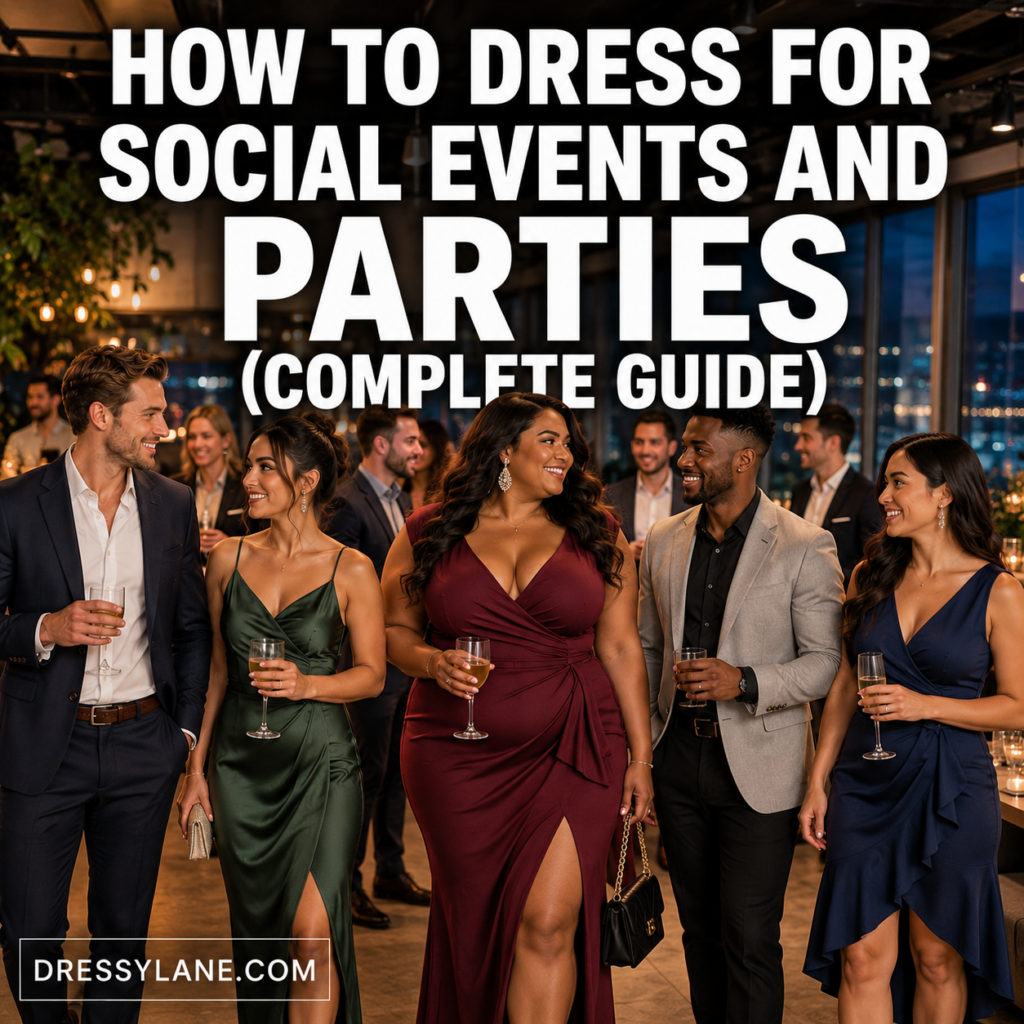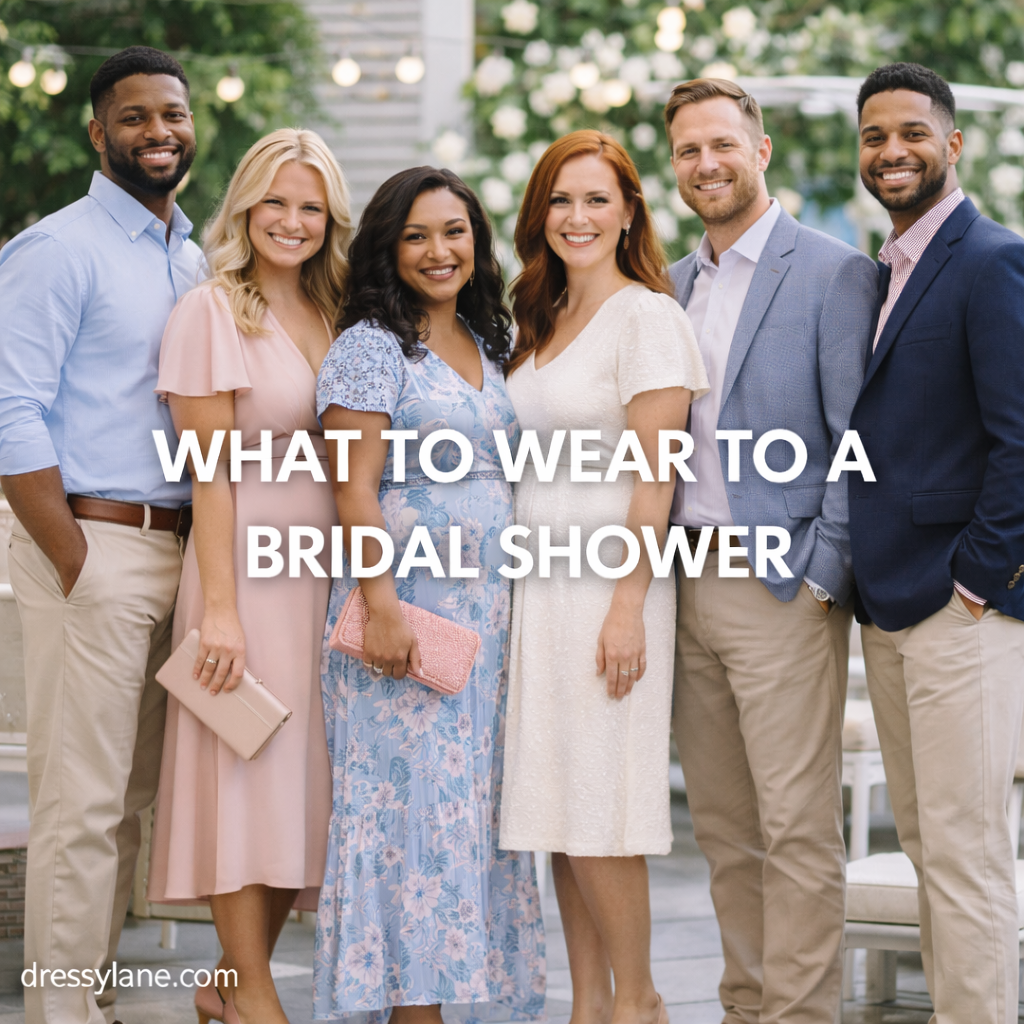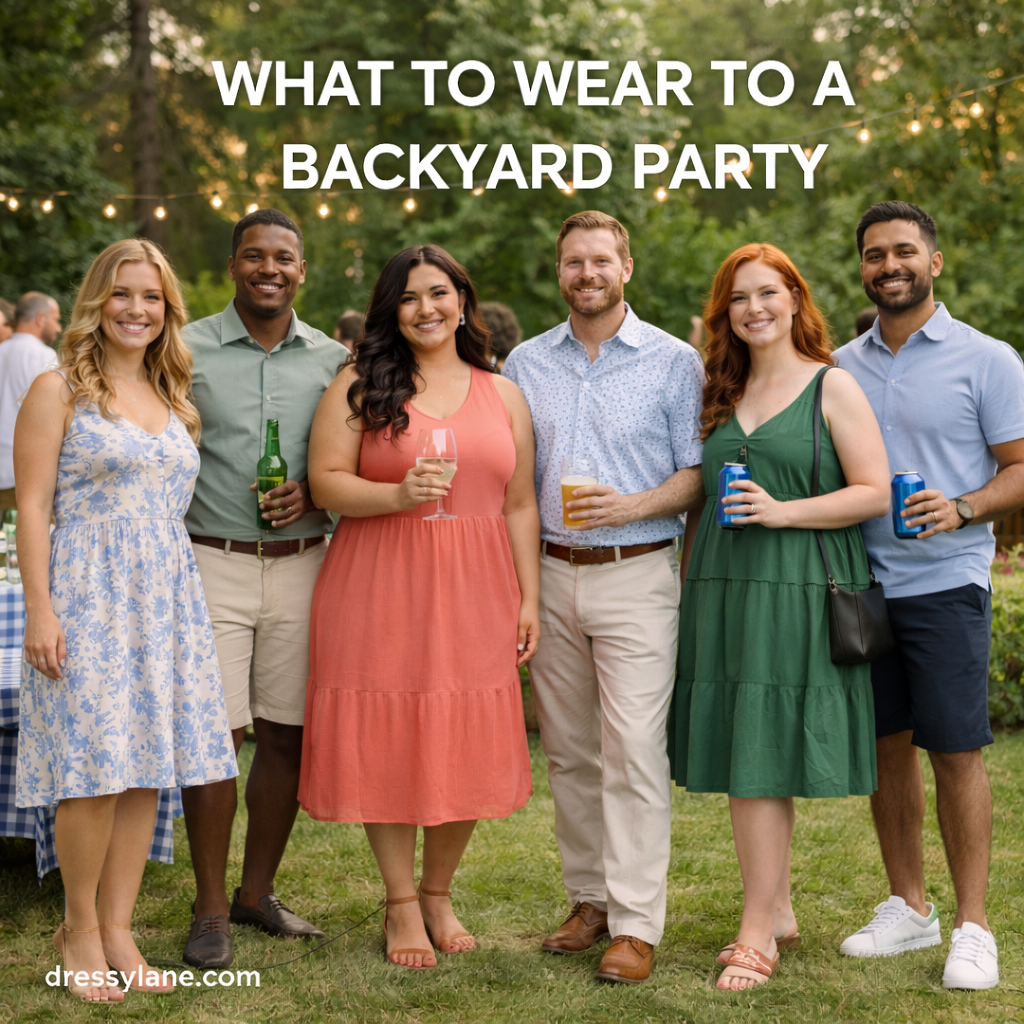
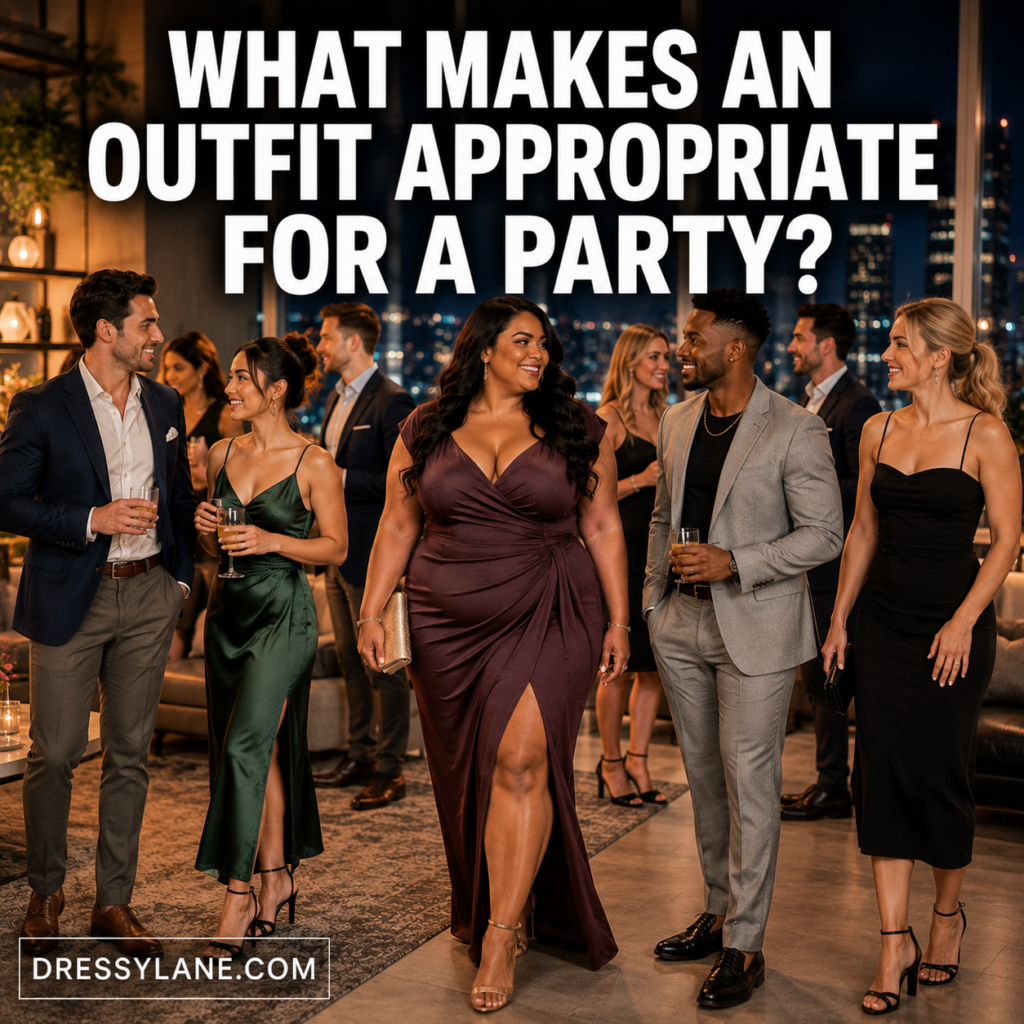
An appropriate party outfit is not necessarily the fanciest outfit in your closet. It is the one that makes sense for the occasion, dress code, venue, time of day, weather, activities, and people attending.
That distinction matters because “party” can describe almost anything: a backyard barbecue, child’s birthday, restaurant dinner, holiday gathering, rooftop celebration, cocktail reception, or formal anniversary party. An outfit that looks perfectly appropriate at one can feel noticeably out of place at another.
The good news is that you don’t need to memorize an endless collection of fashion rules. Once you know which clues to look for, you can usually determine how dressed up you need to be—and where you have room to express your own style.
This guide explains exactly what makes a party outfit appropriate, with practical examples for both women and men.
What Does “Appropriate” Actually Mean?
In party dressing, appropriate doesn’t mean boring, conservative, expensive, or fashionable.
It simply means your outfit fits the context.
A useful party outfit generally satisfies four requirements:
- It matches the expected level of formality.
- It works practically for the venue and activities.
- It respects any stated dress code or important cultural expectations.
- It is comfortable enough to wear for the duration of the event.
Personal style comes after those basics.
You can still wear bold colors, interesting silhouettes, jewelry, prints, vintage pieces, or trend-driven clothing. The question is whether those choices make sense in the environment you’re entering.
For a broader look at party dressing, including difficult situations where you aren’t sure what other guests will wear, see our complete guide to dressing for social events and parties.
1. Start With the Type of Party
The occasion itself is your first clue.
Compare these events:
- Afternoon backyard barbecue
- Child’s birthday party
- 40th-birthday dinner at a restaurant
- Housewarming party
- Holiday office party
- Cocktail reception
- Engagement celebration
- Anniversary dinner
- Graduation party
- Formal evening celebration
They are all parties, but they don’t call for the same clothes.
Casual Parties
Casual parties usually give you the most flexibility.
For women, appropriate options might include:
- Straight-leg jeans with a blouse
- Linen trousers with a fitted tank
- Cotton midi dress
- Casual skirt with a knit top
- Dark denim with loafers or clean sneakers
For men:
- Chinos with a polo
- Dark jeans with an Oxford shirt
- Linen trousers with a short-sleeve button-down
- Jeans with a crewneck sweater
- Chinos with a knit polo and leather sneakers
The clothes don’t need to be formal, but they should generally look clean, intentional, and appropriate for being around other people.
Dressier Parties
As the event becomes more structured, your clothing should usually become more polished.
Women might move toward:
- Midi or knee-length dresses
- Tailored trousers and a silk or satin blouse
- Dressier skirts
- Jumpsuits
- Refined flats or heels
Men might move toward:
- Wool trousers
- Dress shirts
- Knit polos
- Blazers
- Loafers or dress shoes
The key change is often not the type of garment but its fabric, construction, fit, and finish.
A pair of pressed wool trousers reads differently from cotton joggers even though both are technically pants.
2. Pay Attention to the Dress Code
If the invitation provides a dress code, start there.
Common dress codes include:
Casual
Relaxed everyday clothing is generally acceptable, although excessively worn athletic or lounge clothing may still feel out of place.
Think denim, chinos, cotton dresses, polos, sweaters, casual skirts, flats, boots, and clean sneakers.
Smart Casual
Smart casual sits between everyday clothing and traditional dresswear.
Think:
Women: tailored trousers + blouse + loafers
Men: chinos + Oxford shirt + leather shoes
Dark denim can sometimes work if the venue is relatively relaxed.
Cocktail Attire
Cocktail attire calls for more polish.
Women might wear a cocktail dress, midi dress, jumpsuit, or sophisticated separates.
Men commonly wear dress trousers with a dress shirt and jacket, or a suit depending on the occasion.
Semi-Formal
Semi-formal attire is dressier than cocktail or smart casual but below the most formal eveningwear.
Structured dresses, suits, polished footwear, and refined accessories become more appropriate.
Formal or Black Tie
Formal events require substantially dressier clothing.
Depending on the exact dress code, that can mean floor-length evening dresses, formal cocktail dresses, tuxedos, dark suits, dress shoes, and more refined accessories.
When a specific dress code is given, treating it as useful information rather than a suggestion eliminates much of the uncertainty.
3. Use the Venue as a Clue
The same birthday celebration can require very different outfits depending on where it happens.
Consider the difference between:
Backyard + 2 p.m. + barbecue
and
Upscale restaurant + 8 p.m. + reservation
The first might suit a cotton sundress and flat sandals or chinos and a polo.
The second might call for a midi dress and loafers or tailored trousers, a dress shirt, and leather shoes.
Outdoor Venues
Outdoor events require practical consideration.
Think about:
- Grass
- Gravel
- Sand
- Uneven pavement
- Sun exposure
- Temperature changes
- Wind
Stiletto heels that work beautifully in a restaurant may sink into a lawn.
Wide-leg trousers that skim the floor may be frustrating at a garden party.
For these settings, wedges, block heels, flats, loafers, boots, or clean sneakers may make more sense.
If that’s the type of gathering you’re attending, see our dedicated guide to what to wear to a backyard party.
Restaurants and Bars
Look at the character of the venue.
A neighborhood brewery and a hotel cocktail bar aren’t equivalent simply because both serve drinks.
Restaurant style, price point, location, and time of day can provide useful clues about how guests are likely to dress.
Private Homes
House parties tend to offer more flexibility, but consider what the host is actually planning.
Pizza and board games call for something different from a catered anniversary dinner held in someone’s home.
The building doesn’t determine the dress code—the event does.
4. Consider the Time of Day
Time is another useful signal.
Daytime parties often accommodate lighter colors, casual fabrics, relaxed footwear, and less formal silhouettes.
Evening events frequently shift toward darker colors, sharper tailoring, dressier fabrics, and more polished footwear.
For example:
Afternoon Birthday
A woman might wear:
Cotton midi dress + flat sandals
A man might wear:
Chinos + polo + clean sneakers
Evening Birthday Dinner
A woman might wear:
Satin blouse + tailored trousers + loafers
A man might wear:
Wool trousers + Oxford shirt + leather shoes
Neither rule is absolute. An evening backyard barbecue can still be casual, while a daytime wedding can be quite formal.
Think of time as one clue rather than the deciding factor.
For birthday-specific examples, see what to wear to a birthday party.
5. Dress for What You’ll Actually Be Doing
This is one of the most overlooked parts of party dressing.
Ask yourself:
Will I be sitting, standing, walking, dancing, eating, playing games, or moving between locations?
Your outfit should support the answer.
A fitted dress might feel comfortable during dinner but restrictive if you’ll dance afterward.
Brand-new leather shoes may look excellent but become painful during a four-hour cocktail reception.
A heavy blazer might work in an air-conditioned restaurant but become miserable at an outdoor summer party.
The Sit-and-Move Test
Before wearing an unfamiliar outfit to an event:
- Sit down in it.
- Walk around.
- Bend over.
- Raise your arms.
- Sit again.
- Keep the shoes on for at least 15 or 20 minutes.
This sounds basic, but it catches problems a mirror doesn’t.
I’ve found that some of the outfits that look best while standing perfectly still are the least successful party outfits. If you’re pulling down a skirt, adjusting a neckline, fixing your shirt, or thinking about your feet all evening, the outfit isn’t really working for you.
6. Fabric Can Change the Formality of an Outfit
Two garments with similar cuts can look completely different because of their fabric.
More Casual Fabrics
These often include:
- Jersey
- Denim
- Chambray
- Casual cotton
- Fleece
- Heavy canvas
More Polished Fabrics
Depending on the garment, these can include:
- Silk
- Satin
- Crepe
- Wool
- Fine-gauge merino
- Velvet
- Chiffon
- Structured linen
- Quality viscose blends
For example, a cotton T-shirt and silk blouse might have similarly simple shapes, but they don’t communicate the same level of formality.
Likewise, men’s drawstring cotton pants and tailored wool trousers can feel dramatically different despite both being straightforward trousers.
Fabric is therefore an easy way to increase or decrease the dressiness of an outfit without completely changing its silhouette.
7. Fit and Condition Matter More Than Price
Expensive clothing is not automatically more appropriate.
Fit and condition matter much more.
Look for:
- Clean clothing
- Appropriate fit through the shoulders and waist
- Trousers with the right hem length
- Shoes in reasonable condition
- Clothing without obvious stains
- Shirts that aren’t badly wrinkled
- Knitwear without excessive pilling
A reasonably priced Oxford shirt that fits correctly will usually look more polished than an expensive designer shirt that is two sizes too large.
The same applies to dresses, trousers, jackets, and shoes.
Before buying something new for a party, consider whether the clothes you already own simply need steaming, pressing, polishing, or minor tailoring.
8. Weather Is Part of Appropriateness
An outfit can technically match the dress code and still be wrong for the conditions.
Hot-Weather Parties
Choose breathable fabrics such as:
- Linen
- Cotton poplin
- Seersucker
- Lightweight chambray
- Tencel or lyocell
- Linen-cotton blends
For women, a linen dress, cotton midi skirt, or wide-leg lightweight trousers can work well.
For men, consider linen trousers, lightweight chinos, polos, or breathable button-down shirts.
Our guide to dressing for parties in hot weather covers this situation in more depth.
Cold-Weather Parties
Cold weather usually calls for strategic layering rather than simply wearing the thickest garment available.
Useful pieces include:
- Merino sweaters
- Wool trousers
- Tights
- Boots
- Blazers
- Wool coats
- Scarves
- Lightweight thermal base layers when necessary
Think about transportation too. Your outfit needs to work between the car, street, venue, and coat check—not just once you’re indoors.
For casual events throughout the year, see how to dress for casual social events in any season.
9. Understand the Purpose of the Party
Why are people gathering?
Purpose affects clothing more than many people realize.
Birthday Party
Usually allows personal style and celebratory clothing, with the venue determining much of the formality.
Holiday Party
Often gives you more room for richer textures, metallic details, velvet, satin, deeper colors, and dressier accessories.
Networking or Professional Social Event
The party may be social, but professional context still matters.
You might favor tailored trousers, dresses, collared shirts, blazers, loafers, or other polished pieces rather than extremely casual clothing.
Engagement or Anniversary Party
These celebrations may lean dressier, particularly when hosted at restaurants or event venues.
Backyard Gathering
Practicality matters more. Shoes, weather, and ease of movement become particularly important.
Appropriateness is therefore partly about understanding why everyone is there.
10. Think About the Crowd—Without Dressing for Other People’s Approval
Knowing something about the people attending can help you calibrate formality.
Some friend groups wear jeans to nearly everything.
Others turn an ordinary dinner into an opportunity to dress up.
Neither approach is inherently better.
If you know the group well, use that information.
If you don’t know the crowd, choose a middle-ground outfit that can move slightly more casual or dressy.
For women, this might be:
Dark trousers + fitted knit + loafers + simple jewelry
For men:
Chinos + Oxford shirt + leather shoes
Both are difficult to place at an extreme.
11. How to Avoid Looking Underdressed
Underdressing usually happens when one or more pieces are significantly more casual than the event.
Common examples include:
- Gym clothes at a dinner party
- Flip-flops at a cocktail reception
- Distressed denim at a semi-formal celebration
- Hoodies at a dressy restaurant event
- Running shoes with otherwise formal clothing
When you’re uncertain, upgrading just one or two elements can make a substantial difference.
Try:
T-shirt → knit polo or blouse
Joggers → chinos or trousers
Running shoes → loafers, flats, boots, or minimalist sneakers
Sweatshirt → fine-knit sweater
Casual jacket → blazer
You don’t necessarily need an entirely different wardrobe.
12. How to Avoid Looking Overdressed
Going too formal can also make an outfit feel mismatched.
A tuxedo at a neighborhood barbecue would obviously be excessive, but subtler versions happen frequently.
The solution is usually to limit the number of formal signals you’re combining.
For example, if a woman wears a satin midi skirt to a casual dinner, she might pair it with a simple knit top rather than an elaborate blouse, statement jewelry, and high heels.
A man wearing tailored trousers might pair them with a knit polo instead of adding a dress shirt, tie, waistcoat, and highly polished Oxfords.
Mixing one dressier element with more relaxed pieces often creates the right balance.
For more examples, see how to dress for social events without looking overdone.
13. Shoes Can Change the Entire Outfit
Shoes are one of the quickest ways to move an outfit up or down the formality scale.
Compare:
Running shoes → minimalist leather sneakers → loafers → dress shoes
or:
Casual sneakers → ballet flats → slingbacks → heels
The clothes above them could remain almost identical.
This doesn’t mean dressy shoes are always preferable.
A backyard party might make flats more appropriate than stilettos. A casual brewery gathering may make clean sneakers more appropriate than highly polished dress shoes.
Appropriate footwear considers both appearance and terrain.
14. Accessories Should Support the Outfit
Accessories can help a basic outfit look intentional without turning it into something complicated.
Women might add:
- Earrings
- Necklace
- Belt
- Structured handbag
- Scarf
Men might use:
- Belt
- Watch
- Simple jewelry
- Pocket square for dressier occasions
One or two deliberate details are often enough.
You don’t need to use every possible accessory simultaneously.
15. Men’s Party Outfits: A Simple Formality Ladder
Men who aren’t sure what to wear can think of party clothing as a ladder.
From more casual to dressier:
Jeans + T-shirt + sneakers
↓
Dark jeans + polo + clean sneakers
↓
Chinos + Oxford shirt + loafers
↓
Tailored trousers + dress shirt + leather shoes
↓
Tailored trousers + dress shirt + blazer
↓
Suit
↓
Formal eveningwear
You won’t need every level.
The useful part is understanding that you can move up or down gradually rather than jumping directly from jeans to a suit.
For more examples, see what men should wear to a party.
16. Women’s Party Outfits: A Simple Formality Ladder
Women have an equally broad range.
From more casual to dressier:
Jeans + simple top + sneakers
↓
Dark jeans + blouse + loafers
↓
Trousers + polished knit + flats
↓
Midi skirt or casual dress + dressier shoes
↓
Midi dress or jumpsuit + refined accessories
↓
Cocktail dress
↓
Formal eveningwear
Again, these aren’t rigid categories.
The purpose is to visualize how fabric, silhouette, footwear, and accessories gradually change the formality of an outfit.
17. Confidence Matters—but Context Still Comes First
You should feel good in what you’re wearing.
But “wear whatever makes you confident” isn’t quite enough as fashion advice.
You could feel fantastic in sweatpants, but that doesn’t make them suitable for a formal cocktail reception.
A better approach is:
Find something appropriate for the occasion that also feels like you.
If you dislike heels, wear elegant flats.
If you don’t enjoy suits, determine whether tailored trousers and a blazer satisfy the dress code.
If you don’t like bold party clothes, wear simple silhouettes in good fabrics.
If you love color, incorporate it into an outfit that still matches the occasion.
Personal style works best inside the practical boundaries of the event, rather than ignoring them.
A Quick Party Outfit Checklist
Before leaving, ask:
- What kind of party is this?
- Is there an actual dress code?
- How formal is the venue?
- Is it daytime or evening?
- Will I be indoors or outdoors?
- What’s the weather?
- What will I actually be doing?
- Can I comfortably wear these shoes for several hours?
- Does everything fit properly and look clean?
- Am I significantly more casual or formal than the event calls for?
If your outfit passes those questions, you’re probably in good shape.
For situations beyond parties, our complete guide to dressing for different occasions provides a broader framework.
Frequently Asked Questions
What should I wear to a party if there is no dress code?
Use the occasion, venue, time, and host as clues. When those don’t provide a clear answer, smart-casual clothing is usually the most adaptable starting point: dark jeans or trousers, a blouse, knit top or collared shirt, and polished shoes.
Is it better to be overdressed or underdressed?
Neither extreme is ideal. Aim for the level suggested by the event. If you’re genuinely uncertain, choose an outfit near the middle of the formality spectrum and use a removable layer such as a blazer to give yourself flexibility.
Can jeans be appropriate for a party?
Yes. Dark, clean, well-fitting jeans work for many casual parties, birthdays, house gatherings, and smart-casual events. Distressed or very casual denim may be less suitable as the event becomes dressier.
Can sneakers be appropriate for a party?
Yes, particularly at casual gatherings. Clean minimalist sneakers generally integrate into a polished outfit more easily than running or training shoes. For cocktail, semi-formal, or formal events, dressier footwear is usually more appropriate.
Do women have to wear heels to look dressed up?
No. Loafers, pointed flats, ballet flats, slingbacks, dressy sandals, ankle boots, and low block heels can all create a polished party outfit.
Do men need to wear a suit to a party?
Usually not unless the dress code or occasion calls for one. Chinos, tailored trousers, collared shirts, knit polos, blazers, loafers, and leather shoes cover a wide range of casual and smart-casual parties.
What colors are appropriate for parties?
Most colors can work. The bigger considerations are the occasion, season, fabric, and styling. Navy, black, charcoal, cream, brown, burgundy, olive, and jewel tones are versatile, but bright colors and prints can be equally appropriate when they fit the event.
How can I make a casual outfit look more appropriate for a party?
Upgrade one or two elements. Add a blazer, swap sneakers for loafers, replace a T-shirt with a blouse or collared shirt, choose dark denim instead of distressed jeans, or add a simple accessory.
How do I know if my outfit is too dressy?
Compare the outfit with the venue and event. If several elements—formal fabric, structured tailoring, elaborate accessories, and formal footwear—are all significantly dressier than the occasion, simplify one or two of them.
What is the safest outfit when I’m completely unsure?
For women, tailored trousers or dark jeans with a polished blouse or knit top and loafers or flats are highly adaptable.
For men, chinos or dark trousers with an Oxford shirt or knit polo and loafers or clean leather sneakers work in many situations.
Neither outfit is universally correct, but both occupy a useful middle ground.
Final Thoughts
What makes an outfit appropriate for a party isn’t one specific garment or fashion rule.
It’s the relationship between your clothes and the event.
Start with the type of party. Then consider the dress code, venue, time, weather, activities, and level of formality. After you’ve established those boundaries, bring in your personal style.
And don’t underestimate practical details. A beautifully coordinated outfit can still be the wrong choice if the shoes can’t handle the terrain, the fabric is unbearable in the weather, or you can’t comfortably sit down for dinner.
The most successful party outfits tend to do three things at once: they fit the occasion, they work for what you’ll actually be doing, and they feel natural enough that you can stop thinking about your clothes once the party begins.