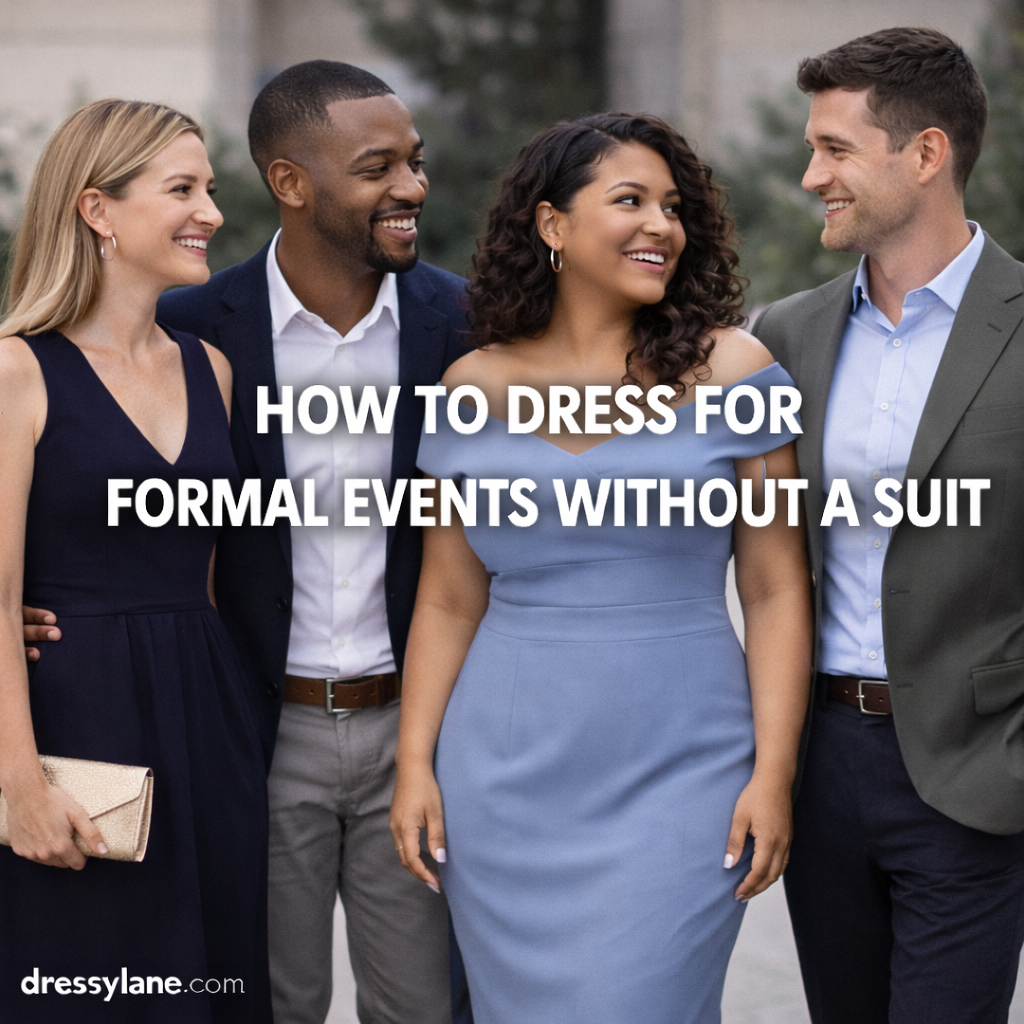
A traditional suit isn’t the only way to dress well for a formal occasion. A tailored blazer with contrasting trousers, a beautifully cut midi dress, or a structured jumpsuit can all create an elegant look without relying on a matching two-piece suit.
The important distinction is the dress code. A cocktail wedding offers more flexibility than a black-tie gala, and an evening reception at a hotel may call for something different from a garden celebration.
Here’s how to put together a suit-free formal outfit that looks considered rather than underdressed.
First, Check How Formal the Event Actually Is
Before deciding what to wear, read the invitation carefully.
Cocktail and semi-formal dress codes generally allow more freedom with separates, dresses, and tailored jumpsuits. A wedding described as formal may still call for a dark suit or similarly dressy alternative, depending on the couple’s expectations.
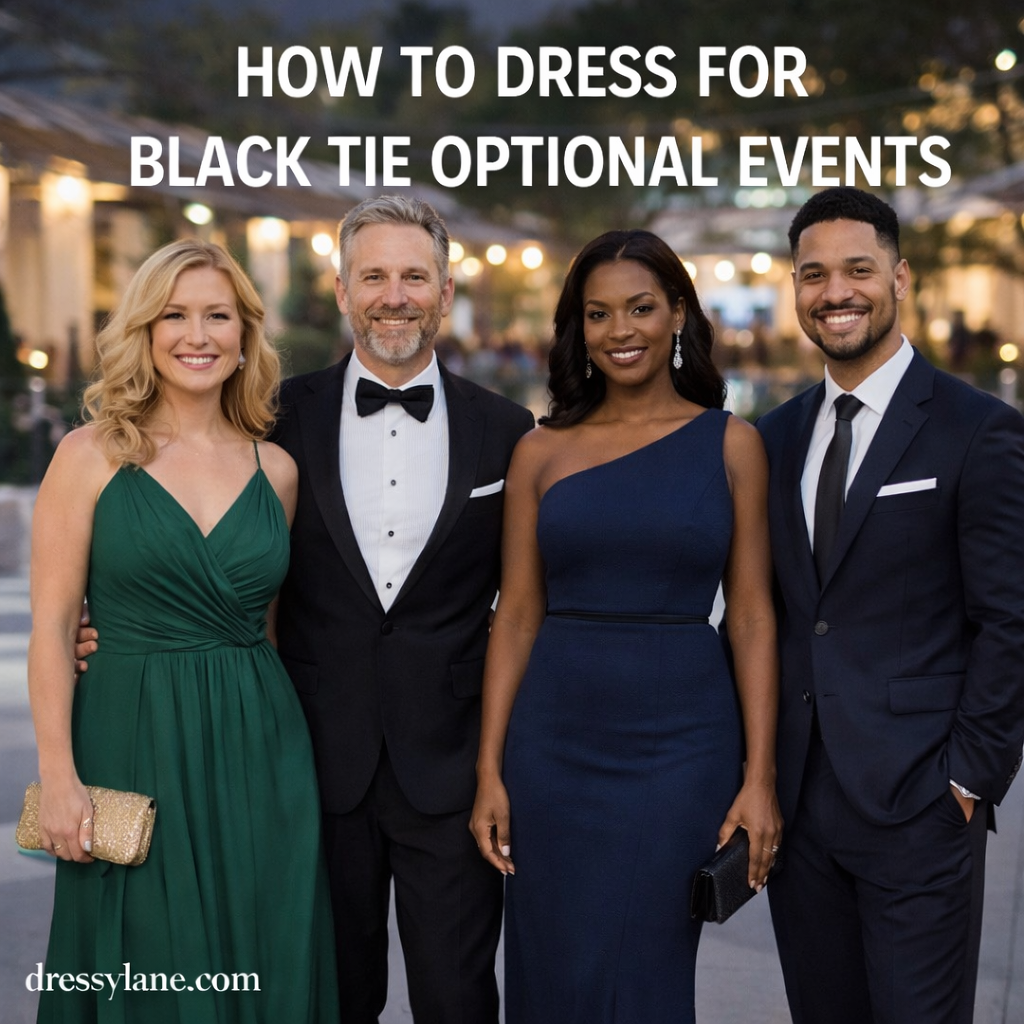
Black tie is different. A tuxedo or dinner jacket is traditionally expected for men, while floor-length gowns and certain sophisticated evening alternatives may be appropriate for women.
If you’re attending a wedding and the dress code is unclear, checking with the couple or wedding party is better than guessing.
My recommendation: Don’t try to make an ordinary office outfit work for a formal event simply by adding expensive-looking accessories. Start with pieces that already have an eveningwear quality.
Build Your Outfit Around One Strong Piece
The easiest way to dress formally without a suit is to choose one garment that establishes the outfit’s level of formality.
For men, that might be a midnight-blue velvet blazer worn with black wool trousers and a white dress shirt.
For women, it could be a silk-crepe midi dress, a wide-leg jumpsuit with a defined waist, or a satin maxi skirt paired with a structured evening top.
The remaining pieces should support that choice rather than compete with it.
Pay attention to proportions, too. A cropped jacket can work beautifully with high-waisted trousers, while a longer blazer often looks more balanced over straight-leg pants.
Fabric Makes the Difference
A suit-free outfit can look surprisingly casual when the fabric isn’t right.
Consider these materials when putting together a formal look:
- Wool and wool blends: Excellent for tailored trousers and structured jackets.
- Silk and satin: Add an eveningwear finish to dresses, skirts, and blouses.
- Crepe: Offers a smooth drape that works particularly well for jumpsuits and wide-leg trousers.
- Velvet: A strong choice for evening jackets and winter celebrations.
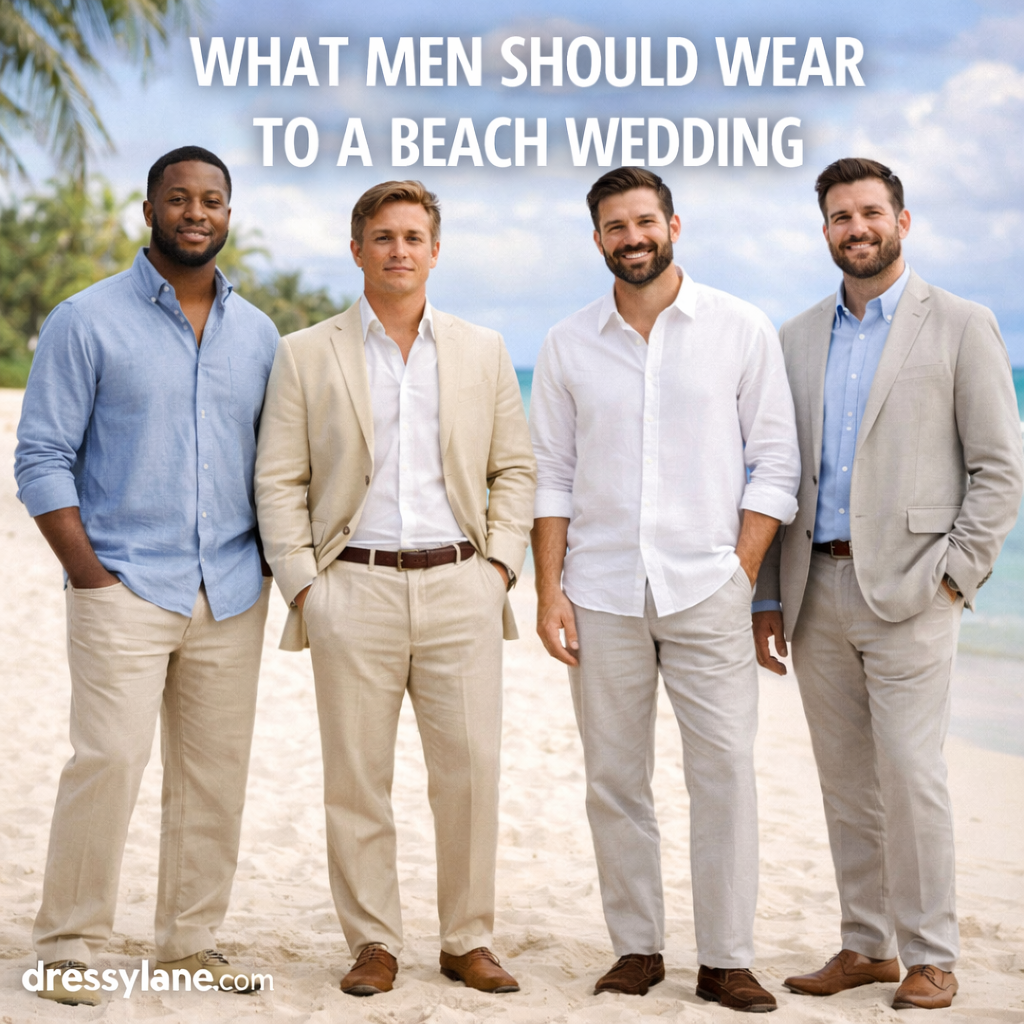
I’d avoid pairing a casual cotton blazer with everyday chinos for a genuinely formal wedding. Even when both pieces fit perfectly, the combination often reads more business casual than occasionwear.
A wool blazer and sharply pressed dress trousers will usually create a more appropriate result.
How to Dress for Formal Events Without a Suit as a Woman
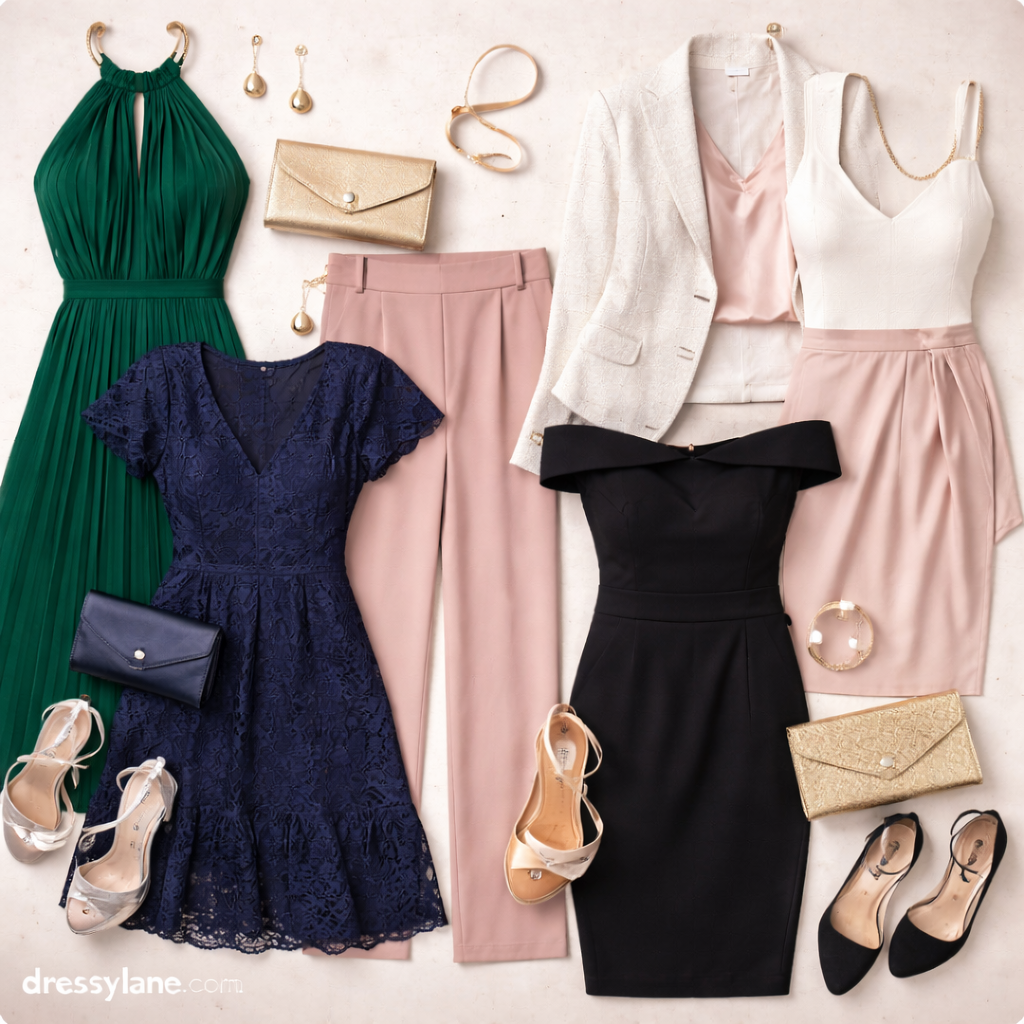
For women, the most useful alternatives are garments that provide the elegance of formalwear without requiring a matching jacket and trousers.
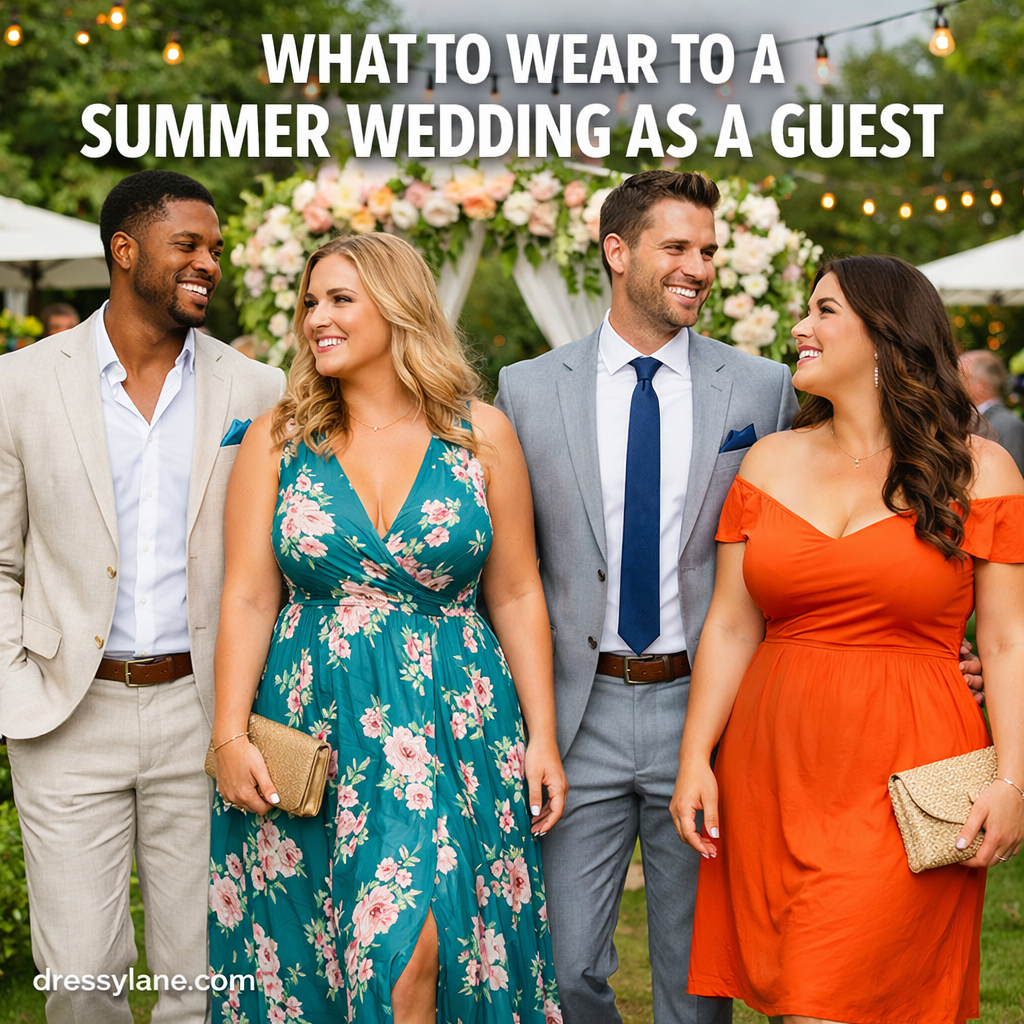
A structured midi dress in navy crepe is a versatile starting point. Pair it with pointed-toe flats, a small metallic clutch, and simple earrings for a wedding or evening reception.
If you prefer trousers, try high-waisted, wide-leg pants with a silk blouse or a fitted top featuring an interesting neckline. The contrast between fluid trousers and a more defined upper half creates a balanced silhouette.
A tailored jumpsuit is another excellent option, particularly one with a defined waist, full-length legs, and minimal hardware.
Avoid overly casual details such as exposed drawstrings, thin jersey fabric, or oversized patch pockets. These can make an otherwise elegant outfit feel more suitable for daytime.
For black-tie occasions, choose a gown or an eveningwear alternative that meets the host’s expectations rather than assuming any dressy jumpsuit will qualify.
How to Dress for Formal Events Without a Suit as a Man
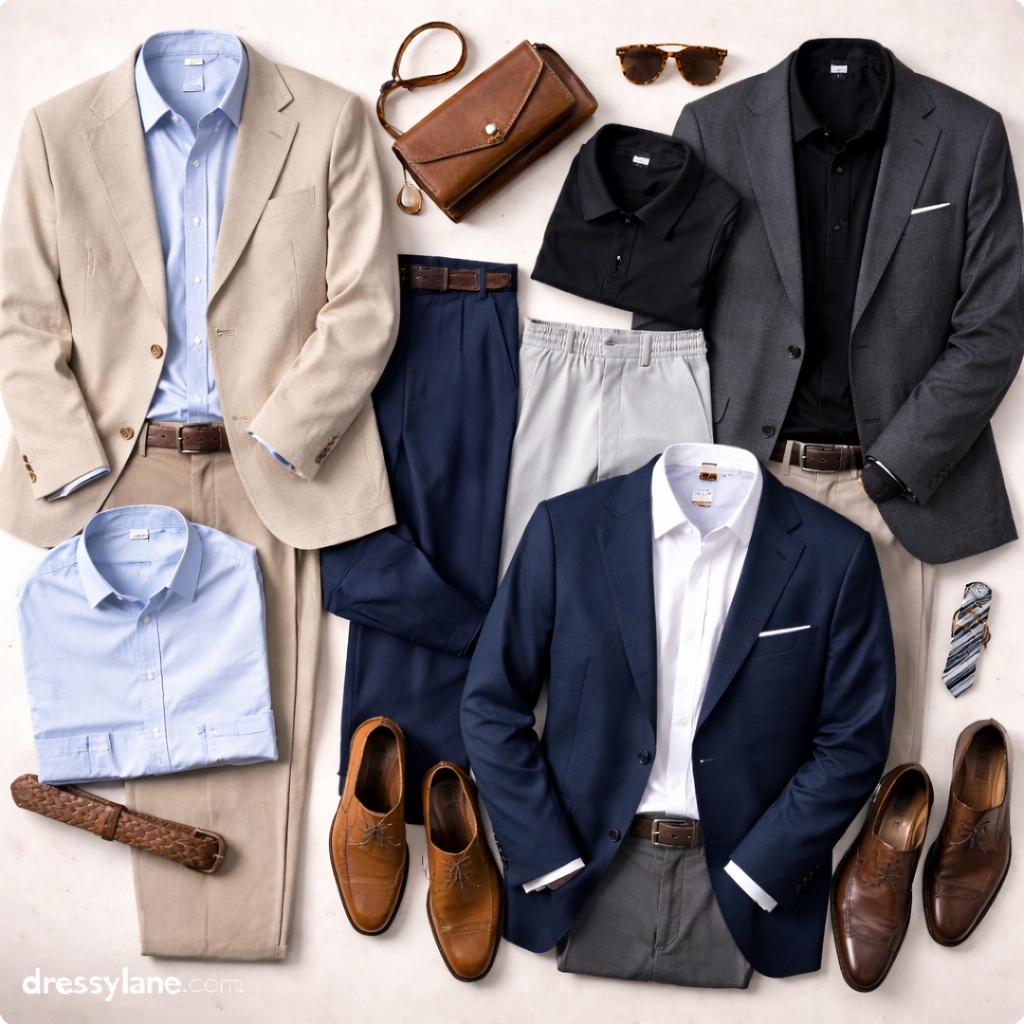
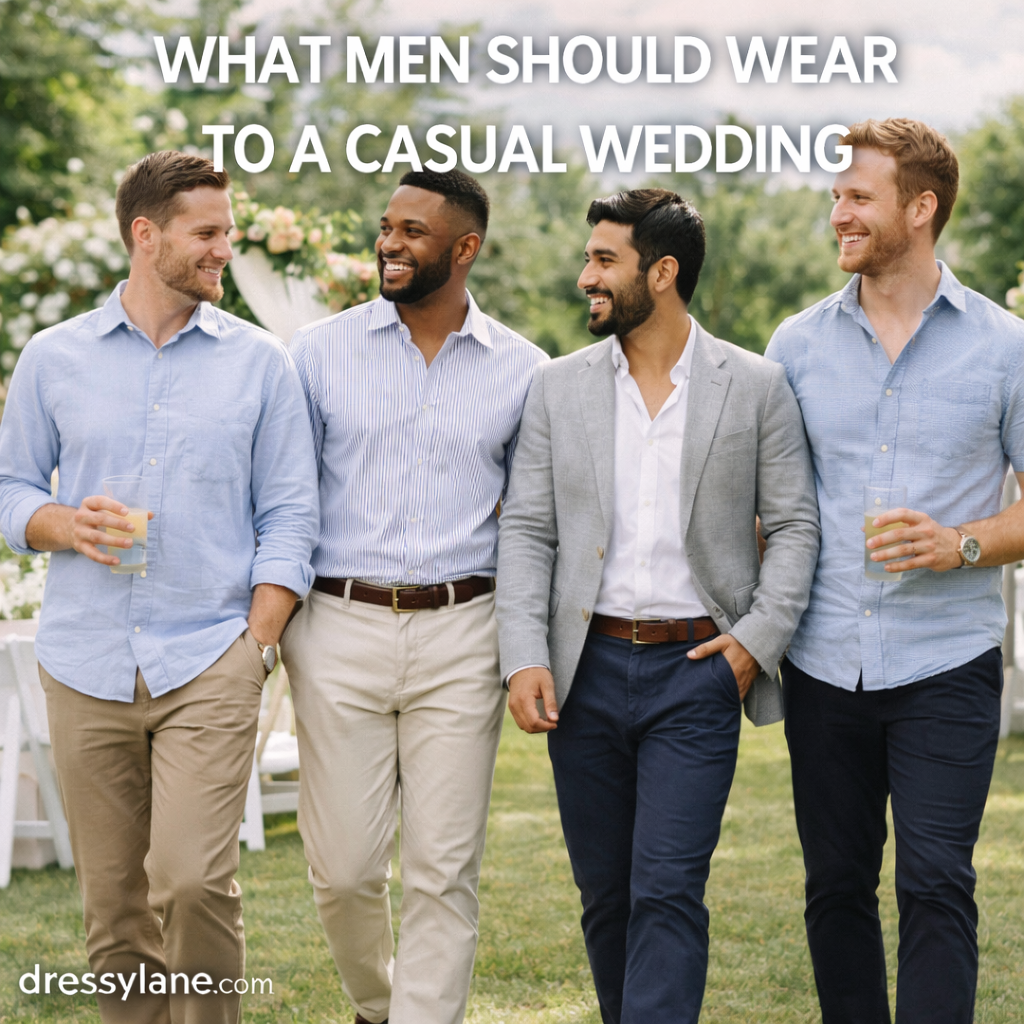
Men have fewer conventional formalwear alternatives, but a mismatched jacket and trouser combination can work well when the dress code allows it.
One combination I’d recommend for a cocktail wedding is:
- A dark navy tailored blazer
- Charcoal wool dress trousers
- A crisp white dress shirt
- Black leather Oxford shoes
- A simple leather belt that coordinates with the shoes
The contrast between the jacket and trousers should look deliberate. Navy and charcoal work particularly well because both colors are subdued without appearing to be a poorly matched suit.
For an evening celebration, a velvet dinner jacket with formal trousers can offer a more distinctive option, although it should still meet the stated dress code.
I would skip jeans entirely for a formal wedding, even dark, expensive ones. Their stitching, pockets, and denim texture make the outfit noticeably more casual.
A tie can help elevate the look, but it won’t compensate for trousers that are too casual or a jacket that fits poorly.
Don’t Let Your Shoes Undermine the Outfit
Footwear is often where a carefully assembled formal look falls apart.
For men, polished Oxfords, dressy Derbies, and certain refined leather loafers work with tailored separates. Black leather is particularly versatile for evening events.
For women, pointed-toe flats, elegant pumps, dressy slingbacks, and refined evening sandals can all work depending on the outfit and venue.
Consider the setting before choosing shoes. Thin heels can be impractical for a garden wedding, while heavy everyday boots may look out of place at an indoor evening reception.
Clean, well-maintained footwear matters more than an elaborate design.
Fit Matters More When Pieces Don’t Match
A matching suit naturally creates a continuous silhouette. With separates, each garment needs to work with the others.
Check that your jacket doesn’t pull across the shoulders, your trousers fall cleanly over your shoes, and your shirt or blouse stays neatly positioned when you sit.
For women wearing wide-leg trousers, the hem should complement the chosen footwear without dragging along the floor.
For men, trousers that bunch heavily at the ankles can make an otherwise sharp combination look untidy.
Even a small alteration to a trouser hem or jacket sleeve can noticeably improve the finished outfit.
Finish With Accessories, Not Excess
Accessories should make the outfit feel complete without overwhelming it.
A silk pocket square, understated watch, or carefully chosen tie can finish a man’s blazer-and-trouser combination.
For women, a structured clutch, elegant earrings, or a single statement bracelet may be all that’s needed.
I’d choose one standout accessory rather than several competing pieces. A satin dress with statement earrings, for example, rarely needs an equally dramatic necklace and embellished handbag.
The goal is to make the entire outfit look intentional.
Final Thoughts
Dressing for formal events without a suit is entirely possible, provided the outfit respects the occasion.
For men, tailored separates in complementary colors offer a practical alternative when the dress code permits. For women, structured dresses, elegant jumpsuits, and refined skirt or trouser combinations provide plenty of flexibility.
Start with the dress code, invest your attention in fabric and fit, and choose footwear that belongs with the rest of the outfit.
A well-considered combination of separates will always look more polished than an outfit assembled from unrelated dressy pieces.