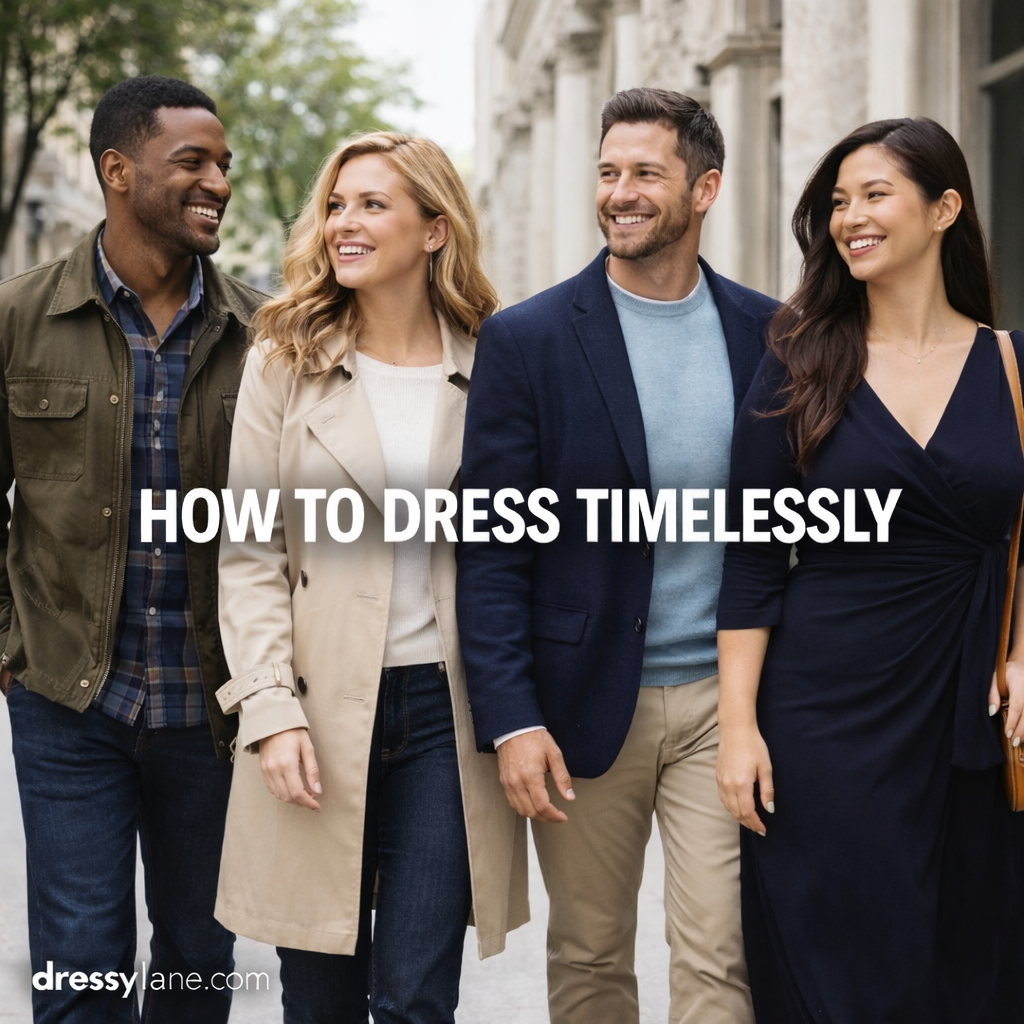
Timeless style is often described as wearing classic clothes in neutral colors, but that definition is too narrow.
Dressing timelessly is really about building a wardrobe that can evolve without needing to be replaced every time trends change. Your clothes fit well, work for your actual life, combine easily, and still feel like you several years after you bought them.
That might include a navy blazer and white shirt, but it could just as easily include dark jeans, colorful knitwear, linen trousers, a favorite leather jacket, or a printed dress you have worn for years.
The goal is not to make your wardrobe look frozen in time. It is to separate lasting personal style from short-lived fashion cycles.
This guide covers how to dress timelessly for both women and men, how to choose fabrics and silhouettes that last, how to dress without following trends, what to do when your personal style starts changing, and how to update your wardrobe as your body, career, lifestyle, and priorities change.
What Does Timeless Style Really Mean?
A timeless wardrobe has staying power.
Its core pieces tend to have:
- Recognizable, uncomplicated silhouettes
- Colors that combine easily
- Fabrics appropriate for repeated wear
- Good fit
- Limited reliance on logos or novelty details
- Enough versatility for several outfits
- A genuine connection to your personal taste
But timeless does not mean everything has to be plain.
A striped Breton-style top can be timeless. So can a floral midi dress, checked blazer, burgundy sweater, denim jacket, or patterned scarf.
The better question is:
Would I still want to wear this if nobody were telling me it was fashionable?
That question is much more useful than trying to predict whether an item will technically be “in style” five years from now.
Start With Fit Before Trying to Look Timeless
A classic garment that fits poorly does not suddenly look refined because it is classic.
Fit comes first.
Check jackets and shirts
Look at:
- Shoulder placement
- Sleeve length
- Chest or bust fit
- Collar position
- Button pulling
- Range of movement
A blazer should allow you to move your arms without excessive pulling through the shoulders. A button-down shirt should not gape across the chest or create unnecessary fabric around the waist.
Check trousers and jeans
Pay attention to:
- Waist
- Rise
- Hip and thigh room
- Leg shape
- Hem length
Straight-leg trousers are often considered timeless because their proportions are relatively moderate, but that does not mean everyone needs to wear them.
If a wider or more tapered silhouette suits your body and existing wardrobe better, use that instead.
Timeless dressing should accommodate the person wearing the clothes.
Build Around Classic Silhouettes, Not a Costume
There are certain garments that repeatedly return because they are useful rather than because fashion magazines have declared them essential.
Examples include:
For women
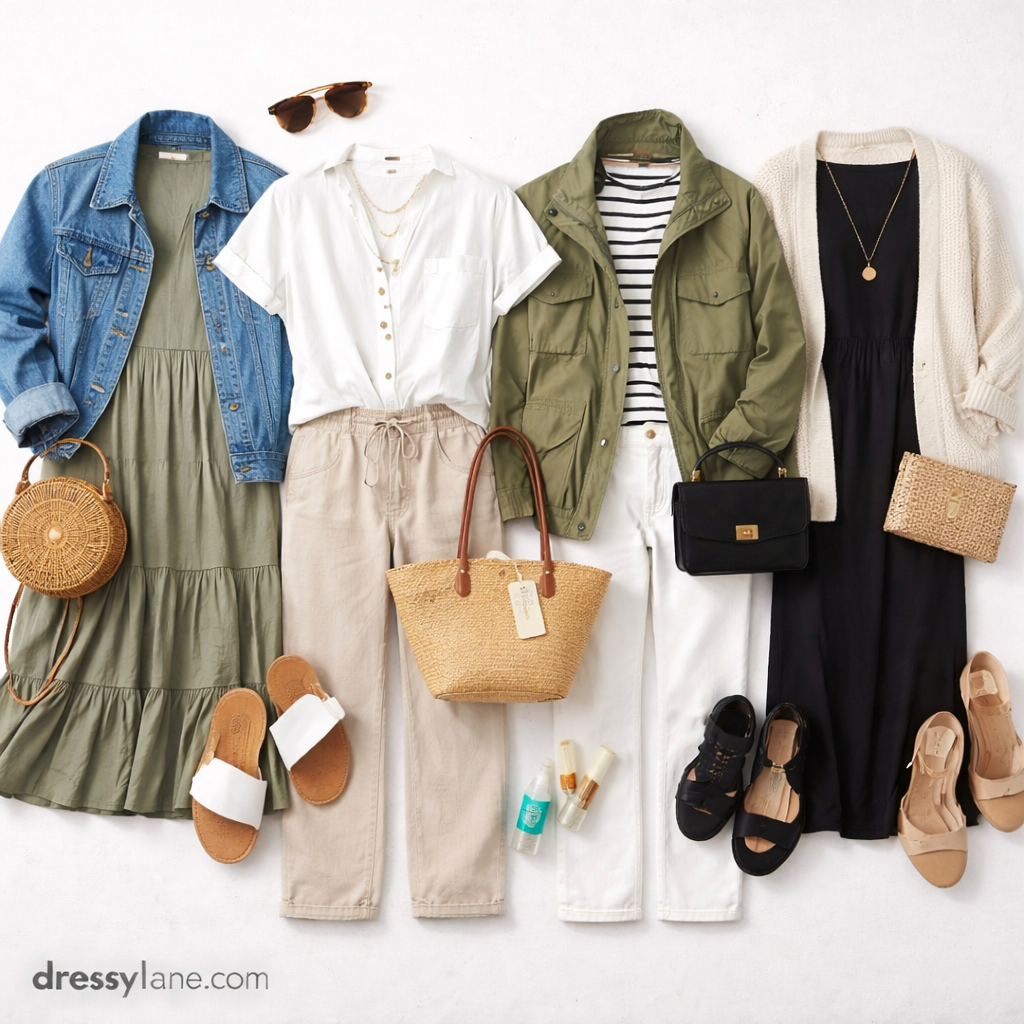
- Straight or gently wide-leg trousers
- Dark jeans
- Simple midi dresses
- A-line or straight skirts
- Button-down shirts
- Fine-knit sweaters
- Cardigans
- Blazers
- Trench or wool coats
- Loafers
- Simple boots
- Clean sneakers
For men
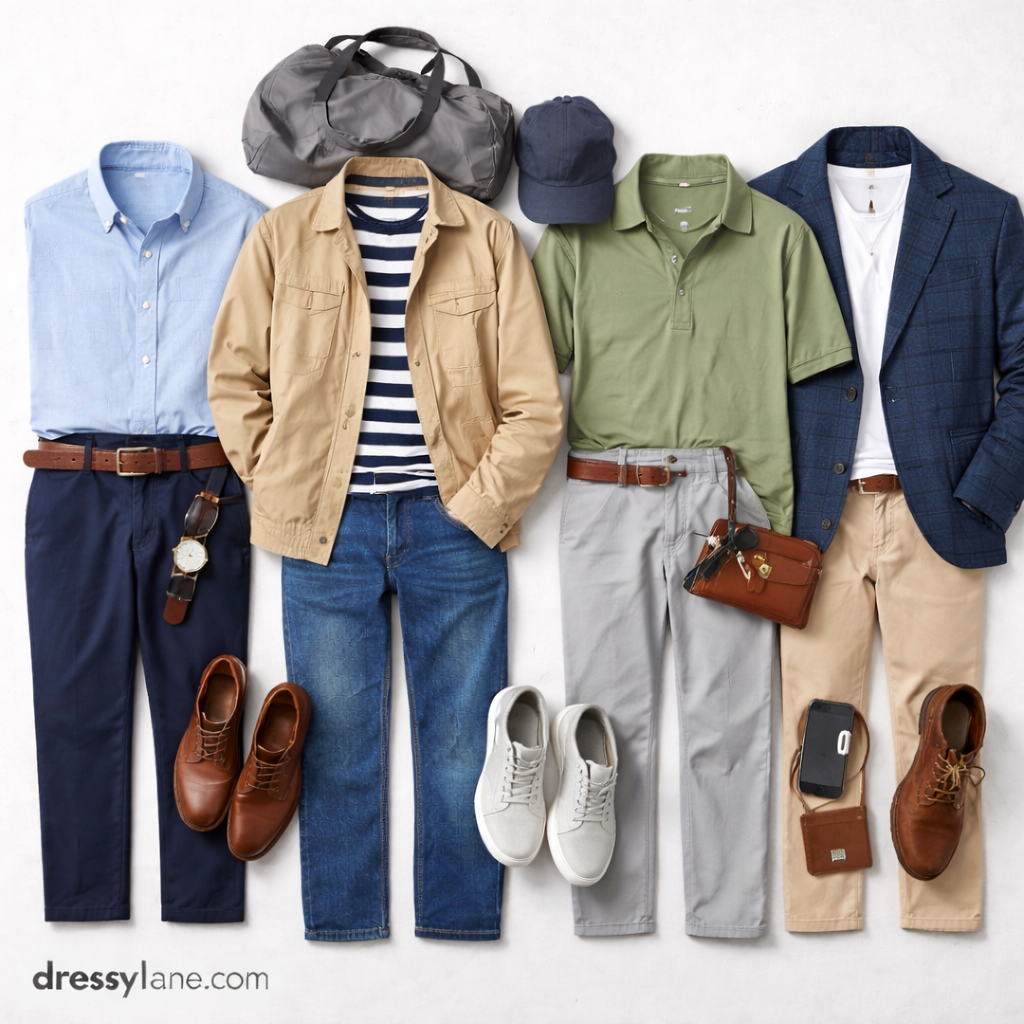
- Straight or gently tapered trousers
- Dark denim
- Oxford shirts
- Polos
- Crew-neck sweaters
- Cardigans
- Chinos
- Blazers
- Casual jackets
- Wool coats
- Loafers
- Leather shoes
- Minimal sneakers
You do not need all of these.
A timeless wardrobe should be selected according to your lifestyle, not copied from somebody else’s “wardrobe essentials” checklist.
Someone working remotely in a warm climate may have little use for multiple wool blazers. Someone working in a traditional office might rely on them constantly.
Use Neutrals as a Foundation, Not a Rule
Neutral colors are useful because they make combinations easier.
Common wardrobe neutrals include:
- Black
- Navy
- Charcoal
- Gray
- White
- Cream
- Beige
- Camel
- Brown
- Olive
But a timeless wardrobe does not need to be beige from top to bottom.
Choose two or three useful base colors, then add colors you genuinely enjoy.
For example:
Navy + cream + camel + burgundy
or:
Black + gray + white + forest green
or:
Brown + cream + olive + rust
A smaller color family means your trousers, jackets, shoes, shirts, and knitwear naturally produce more combinations.
This approach overlaps naturally with dressing for minimalist style, although timeless and minimalist wardrobes are not necessarily the same thing.
Choose Fabrics That Can Age Well
A garment cannot become a long-term wardrobe favorite if the fabric deteriorates quickly or is unpleasant to wear.
Useful materials include:
Cotton
Look for cotton in:
- T-shirts
- Oxford shirts
- Poplin shirts
- Chinos
- Casual dresses
- Knitwear
Fabric weight and construction matter as much as fiber content. A substantial cotton T-shirt generally behaves differently from a very thin one.
Wool
Wool works especially well for:
- Trousers
- Coats
- Blazers
- Sweaters
- Skirts
Fine merino wool is particularly versatile because it can provide warmth without excessive bulk.
Linen
Linen is excellent for warm-weather wardrobes.
Try:
- Linen shirts
- Dresses
- Trousers
- Skirts
- Lightweight jackets
Expect wrinkles. They are part of linen’s character rather than necessarily a sign that the garment looks untidy.
Denim
A good pair of jeans can remain useful for years.
Dark or medium washes without excessive distressing are particularly versatile, although the best cut depends on your preferences.
Cashmere
Good cashmere can provide excellent warmth relative to its weight, but it requires appropriate care and is not mandatory for a timeless wardrobe.
Blends
Do not reject a garment simply because it contains synthetic fibers.
A small amount of elastane can improve movement in trousers. Nylon may improve durability in knitwear. Polyester or viscose blends can serve practical purposes depending on the garment.
Judge the entire fabric rather than assuming “natural” automatically means high quality.
Quality Is About Construction, Not Just Price
A higher price does not guarantee a better garment.
Before buying, inspect the piece.
Look at:
- Stitching
- Seams
- Buttons
- Zippers
- Lining
- Fabric opacity
- Pattern alignment
- Hem construction
- Whether the garment twists when hanging
Feel the fabric and try the garment on.
Does it recover after being stretched slightly? Does the zipper move smoothly? Do the buttons feel secure? Does the fabric feel appropriate for the intended use?
You do not need luxury clothing to dress timelessly.
The objective is to buy fewer pieces that earn their place through repeated wear.
How to Dress Without Following Trends
You can enjoy clothes without keeping track of every trend cycle.
In fact, ignoring most trends can make developing personal style easier.
Start with proportions you already know
If you consistently feel good in straight trousers, crew-neck tops, and shorter jackets, make those proportions part of your foundation.
If you prefer wide-leg trousers and longer coats, build around those instead.
When fashion swings toward an extreme silhouette, you do not have to follow it.
Treat trends as optional additions
Suppose a particular color becomes fashionable and you genuinely love it.
Wear it.
You might choose a sweater, scarf, shirt, or bag rather than rebuilding your wardrobe around the trend.
The same principle works with silhouettes.
Experiment where you are curious, but do not mistake novelty for necessity.
Avoid buying something solely because it is “in”
Before purchasing a trend-driven item, imagine seeing it in a shop with no advertising, social media posts, influencers, or trend reports around it.
Would you still want it?
If not, leave it.
If keeping up with fashion has never interested you in the first place, our guide to how to dress when you don’t like fashion offers an even simpler approach.
How to Dress in a Way That Feels Like You
Timeless style becomes much easier once you stop trying to build the theoretically perfect wardrobe.
Pay attention to your repeat behavior.
What do you actually wear?
Perhaps you repeatedly choose:
- Rolled sleeves
- Dark denim
- Loafers
- Silver jewelry
- Blue shirts
- Midi dresses
- Crew-neck sweaters
- Leather jackets
- Wide-leg trousers
Those repetitions are clues to your personal style.
Make a “wear again” list
Instead of creating a list of clothes you think you need, make a list of outfits you would happily wear again tomorrow.
For example:
Women: dark straight-leg jeans + cream knit + loafers + trench coat.
Men: navy chinos + pale blue Oxford shirt + brown suede shoes + lightweight jacket.
Then ask what makes those combinations work.
Is it the color palette? The proportions? The lack of fuss? The shoes? The fabric?
Build around those answers.
You are more likely to develop a timeless wardrobe by repeating what genuinely works than by following somebody else’s list of classic pieces.
How to Dress When Your Style Is Changing
Personal style is not supposed to remain identical forever.
You may reach a point where clothes you once loved no longer feel right.
This can happen after:
- Changing careers
- Moving to another climate
- Working remotely
- Becoming a parent
- Changes in your body
- Changes in your social life
- Getting older
- Developing different tastes
- Simply becoming tired of an old aesthetic
Do not panic and replace your entire wardrobe.
Identify what has actually changed
Maybe you still like your clothes but need more comfort.
Maybe you still like tailored clothing but your workplace has become casual.
Maybe you once wore mostly black and now want more color.
Those are specific problems with specific solutions.
Change one category at a time
Start with whatever you wear most.
That might be trousers.
Try different rises, cuts, fabrics, and leg shapes while continuing to wear your existing tops and jackets.
Once you understand what works, move to another category.
This gradual approach allows your style to evolve without creating a closet full of expensive experiments.
How to Update Your Style as Life Changes
Sometimes your taste has not changed much, but your circumstances have.
Your wardrobe needs to follow your life.
A new job
A more formal workplace might require trousers, shirts, knitwear, dresses, blazers, or smarter shoes.
A more casual workplace may make traditional business clothing less useful.
Do not rebuild everything before you understand the environment. Start with a small group of adaptable outfits and adjust after seeing what people actually wear.
Working from home
You may need fewer formal outfits but still benefit from presentable, comfortable clothing that separates work time from lounging.
Think knit trousers, polos, soft shirts, cardigans, clean T-shirts, and comfortable layers.
Moving somewhere warmer
Heavy knitwear and coats may become less important.
Replace some of that function with linen, cotton poplin, lightweight chinos, breathable dresses, unstructured jackets, and lighter footwear.
Moving somewhere colder
Add functionality rather than simply buying thicker versions of everything.
Base layers, merino sweaters, wool trousers, weather-resistant shoes, scarves, and proper outerwear can extend much of your existing wardrobe.
Your body changes
Buy clothes for the body you have now.
Do not make everyday comfort dependent on fitting into an old size.
A different rise, shoulder construction, trouser cut, dress silhouette, or fabric may work better now.
Our guide to how to dress to feel comfortable in your body goes deeper into this subject.
Timeless Everyday Outfit Formulas
A timeless wardrobe becomes useful when its pieces produce easy combinations.
Women’s outfit ideas
Everyday casual:
Straight-leg jeans + cotton shirt + cardigan + loafers
Polished casual:
Tailored trousers + fine-knit top + blazer + flats
Warm weather:
Linen trousers + sleeveless knit + leather sandals
Cool weather:
Dark jeans + merino sweater + wool coat + ankle boots
Simple dress outfit:
Midi dress + cardigan or jacket + understated jewelry + loafers or boots
Men’s outfit ideas
Everyday casual:
Dark jeans + Oxford shirt + casual jacket + sneakers
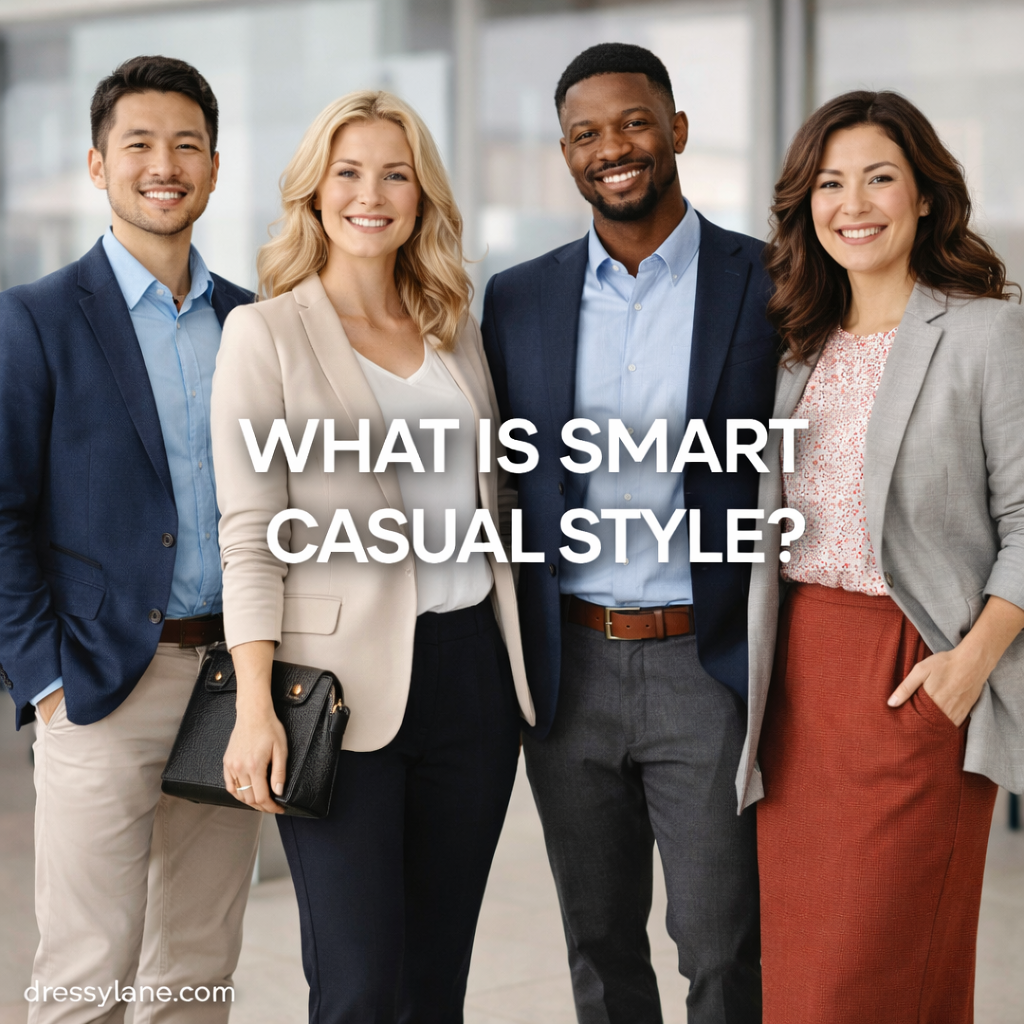
Smart casual:
Chinos + knit polo + loafers
Polished:
Wool trousers + button-down shirt + unstructured blazer + leather shoes
Warm weather:
Linen-blend trousers + polo or linen shirt + loafers
Cool weather:
Dark trousers + merino crew neck + wool coat + boots
If you prefer building your wardrobe around repeatable formulas, see how to build simple outfits that always work.
Timeless Style Still Needs to Fit the Occasion
Timeless pieces are versatile, but no wardrobe is completely context-free.
Dark jeans and a white shirt may work beautifully for lunch but be inappropriate for a formal wedding.
A suit might be timeless but unnecessary at a casual backyard gathering.
Before choosing an outfit, consider:
- Venue
- Dress code
- Time of day
- Weather
- Activity
- Level of formality
Our guide to choosing an outfit that fits the situation explains how to make that decision.
If you are worried about looking too formal, see what to wear when you don’t want to overdress.
For unclear dress codes, use our guide to dressing when the invitation is vague.
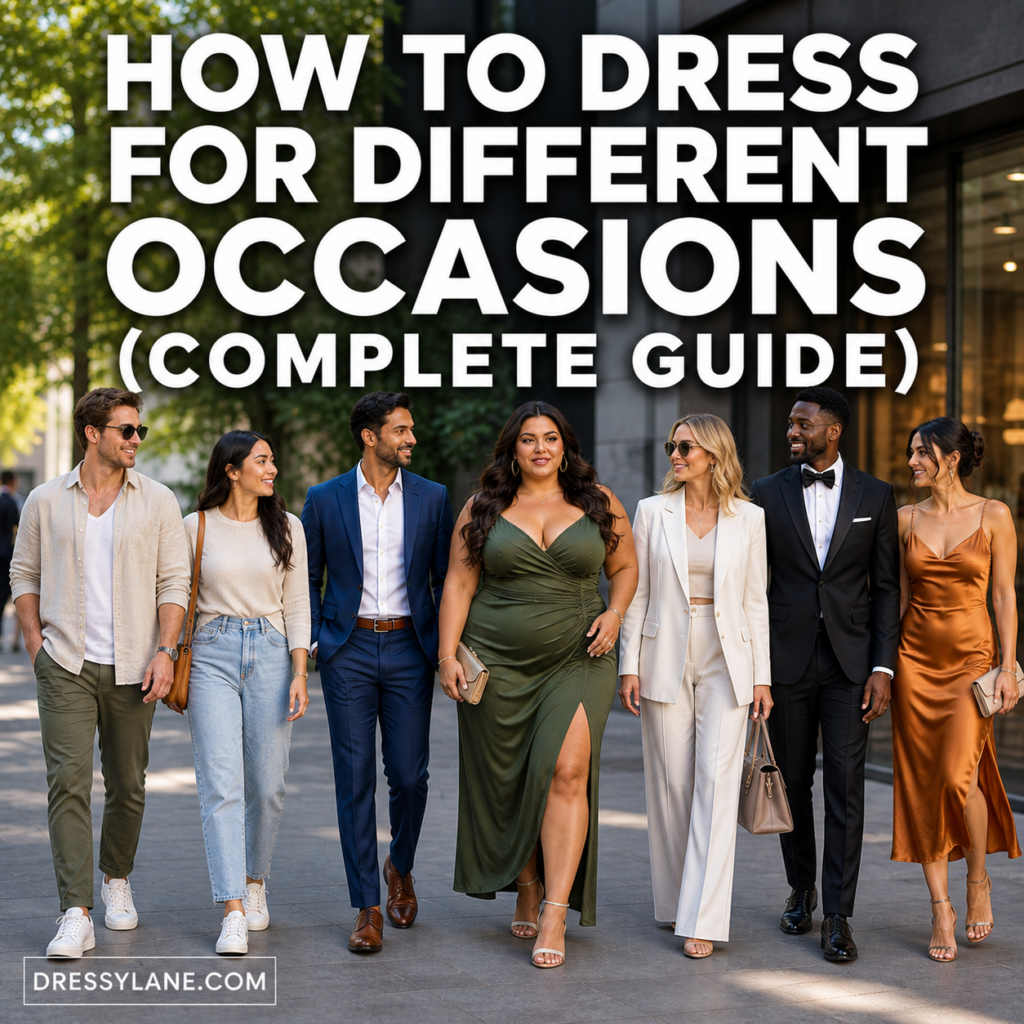
And for a broader overview, see our complete guide to dressing for different occasions.
Choose Accessories That Can Move Between Outfits
Accessories are one of the easiest places for a timeless wardrobe to become unnecessarily trend-dependent.
Useful long-term options might include:
- Simple leather belts
- Understated necklaces
- Small earrings
- Classic watches
- Leather or canvas bags
- Neutral scarves
- Simple sunglasses
- Leather shoes
- Minimal sneakers
This does not mean statement accessories are forbidden.
If oversized earrings, colorful scarves, unusual glasses, or distinctive watches are genuinely part of your style, they may have more longevity in your wardrobe than supposedly timeless accessories you never enjoy wearing.
Personal consistency matters.
Take Care of What You Own
A timeless wardrobe still looks tired when it is poorly maintained.
Develop simple maintenance habits:
- Follow washing instructions.
- Avoid unnecessarily overwashing delicate items.
- Fold knitwear that stretches on hangers.
- Use appropriate hangers for jackets and shirts.
- Remove stains promptly.
- Depill knitwear when necessary.
- Polish or clean shoes.
- Replace worn heel caps and soles when practical.
- Repair loose buttons and small tears early.
- Store seasonal clothing clean and dry.
Also learn when something has reached the end of its useful life.
“Timeless” does not mean keeping a stretched T-shirt for 20 years.
Common Timeless Style Mistakes
Turning timeless style into a uniform you dislike
You do not have to wear camel coats, loafers, white shirts, and navy trousers simply because they appear on classic wardrobe lists.
Buying expensive clothing too quickly
First learn what you actually wear. Then invest selectively.
Avoiding all trends
Timeless style is not anti-fashion. A new silhouette or color can refresh your wardrobe when you genuinely like it.
Mistaking neutral for timeless
A poorly fitting beige garment is not automatically more timeless than a beautifully fitting green one.
Ignoring lifestyle changes
A wardrobe can contain wonderful clothes and still fail if it belongs to your life from five years ago.
Keeping things that no longer fit
Clothing should serve your current body and circumstances, not function as an archive of previous versions of yourself.
A Practical Tip for Building a Timeless Wardrobe
Before buying something, picture three complete outfits you can make with it using clothes you already own.
Not hypothetical future purchases.
Your current clothes.
If you are considering a camel cardigan, perhaps you can immediately picture it with:
- Dark jeans + white T-shirt + loafers
- Navy trousers + blue shirt + sneakers
- Midi skirt + cream top + boots
That is a useful purchase.
If a garment only works after you buy different trousers, new shoes, another jacket, and the right accessories, it is probably not filling a gap. It is creating one.
In practice, this simple test prevents a lot of wardrobe clutter.
Frequently Asked Questions
How do I dress timelessly without looking boring?
Use texture, color, accessories, and personal details within relatively simple silhouettes. A burgundy merino sweater, striped shirt, suede shoe, patterned scarf, or textured jacket can add personality without depending on an extreme trend.
Can I have timeless style without wearing neutral colors?
Yes. Neutrals are useful because they combine easily, but colors such as burgundy, forest green, rust, pale blue, or other shades you consistently enjoy can become part of your long-term palette.
How can I dress without following trends?
Build around silhouettes, colors, and outfit combinations you already know you enjoy. Treat trends as optional ideas rather than instructions.
What should I do if my personal style is changing?
Do not replace everything at once. Identify exactly what no longer works and experiment with one category—such as trousers, shoes, or tops—while keeping the rest of your wardrobe familiar.
How do I update my wardrobe when my lifestyle changes?
Identify the practical difference first. A new climate might require different fabrics; a new job might require a different level of formality; working from home might require more comfortable crossover clothing. Buy specifically for those new needs.
How do I know whether something is truly my style?
Pay attention to what you repeatedly wear when nobody else is influencing the decision. Your favorite repeat outfits usually reveal more about your personal style than a mood board does.
Do timeless clothes have to be expensive?
No. Construction, fabric, fit, usefulness, and maintenance matter more than the price tag. It is often better to learn exactly what you need before spending more on individual pieces.
Are jeans timeless?
Denim has remained a wardrobe staple for decades, but individual cuts and washes move in and out of fashion. Straight or moderately shaped jeans in dark or medium washes tend to be particularly adaptable, but choose a cut you actually enjoy wearing.
Should I get rid of trendy clothes?
Not simply because they are trendy. If you still enjoy wearing something and it works with your wardrobe, keep it. The point of timeless dressing is to reduce unnecessary fashion turnover, not create more of it.
Final Thoughts
Dressing timelessly is not about trying to make yourself immune to fashion.
Clothing changes. Your taste changes. Your body changes. Your career, climate, routines, and priorities may change too.
A useful timeless wardrobe is flexible enough to change with you.
Start with clothes that fit. Choose fabrics appropriate for how you live. Build a color palette that makes outfits easy to combine. Learn which silhouettes you repeatedly enjoy, and maintain the pieces worth keeping.
Ignore trends that do nothing for you and enjoy the ones that do.
Most importantly, do not mistake somebody else’s definition of “classic” for your own personal style.
The clothes with the greatest staying power are often not the ones a fashion guide tells you will last forever. They are the pieces you repeatedly reach for because they fit, feel right, work with the rest of your wardrobe, and still feel like you.
That is what makes style genuinely timeless.