Humid weather creates a different dressing problem from dry heat. When there’s already a lot of moisture in the air, sweat doesn’t evaporate from your skin as efficiently. A perfectly comfortable outfit in dry 85°F weather can suddenly feel sticky and heavy at the same temperature with high humidity.
That makes airflow, drying speed, and fit particularly important.
The goal isn’t necessarily to wear the least clothing possible. A loose linen shirt with lightweight trousers can feel more comfortable than a fitted tank and rigid denim shorts because neither piece stays pressed tightly against your skin.
Choose Fabrics Based on What Happens When You Sweat
Fabric labels only tell part of the story.
Lightweight linen works well in humidity because its relatively open structure encourages airflow and the fabric doesn’t need to sit tightly against the body. Cotton voile, cotton gauze, and lightweight poplin can also be comfortable.
Tencel or lyocell can feel cool and smooth against the skin, while lightweight chambray gives you some of the appearance of denim without the weight of traditional jeans.
Useful options include:
- Linen and linen blends
- Cotton voile or gauze
- Lightweight cotton poplin
- Tencel or lyocell
- Lightweight chambray
- Moisture-wicking technical fabrics
I wouldn’t use the old rule that all polyester or nylon should be avoided. A thick polyester blouse may feel awful in humid weather, but a lightweight performance shirt engineered to move moisture can be much more comfortable.
Construction matters.
I’d also be cautious with anything that becomes heavy, transparent, or clingy when wet. If you’re buying clothes specifically for a humid climate, it’s worth considering how the fabric behaves after you’ve been outside for 30 minutes—not just how it feels in an air-conditioned fitting room.
Give Your Clothes Some Space
This is one of the easiest changes to make.
You don’t need everything dramatically oversized, but a little room between the fabric and your body makes humid weather much easier to tolerate.
Think:
Straight-leg trousers instead of skinny pants.
Relaxed linen shirt instead of a fitted button-down.
A-line dress instead of a bodycon silhouette.
Camp-collar shirt instead of a tight polo.
Areas where skin and fabric remain in constant contact—waistbands, underarms, thighs, and the back—can become especially uncomfortable once moisture builds up.
A relaxed silhouette allows more air movement and gives damp fabric less opportunity to cling.
What Women Can Wear in Humid Weather
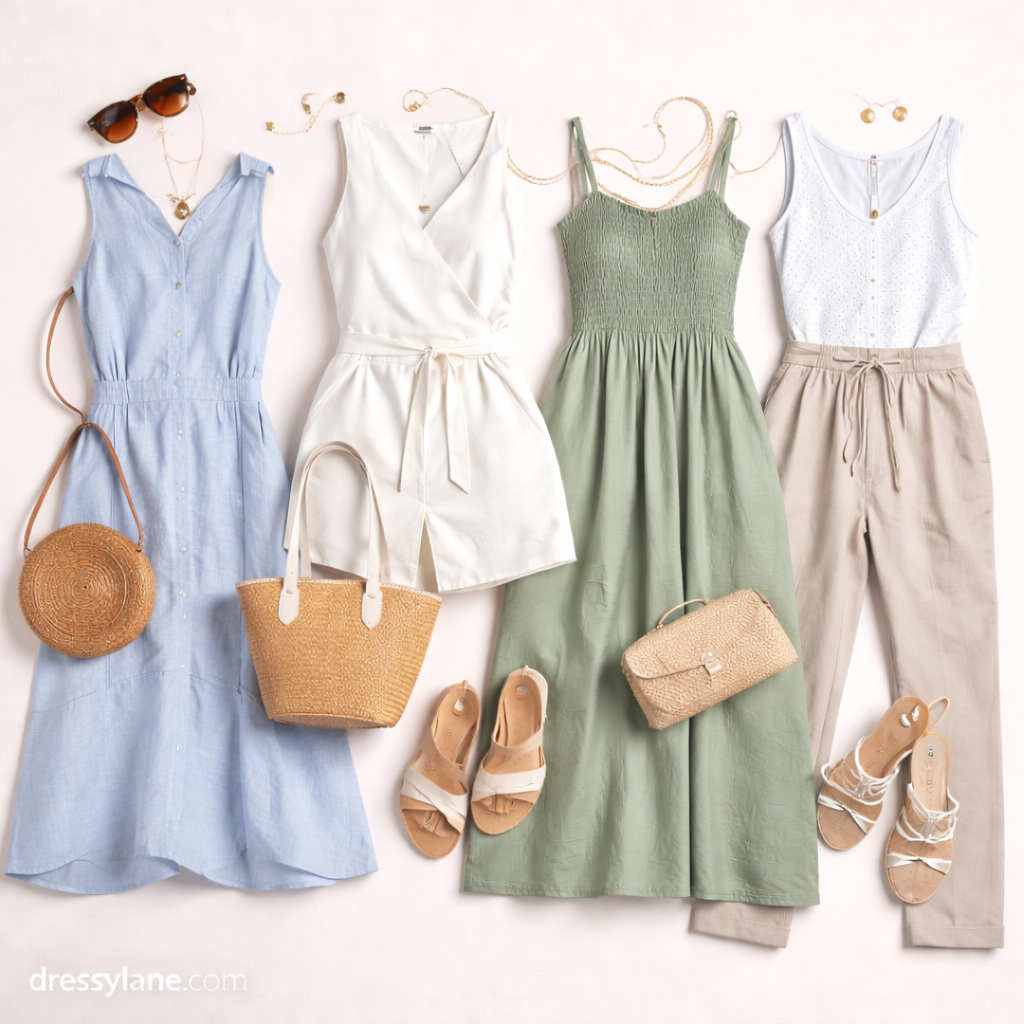
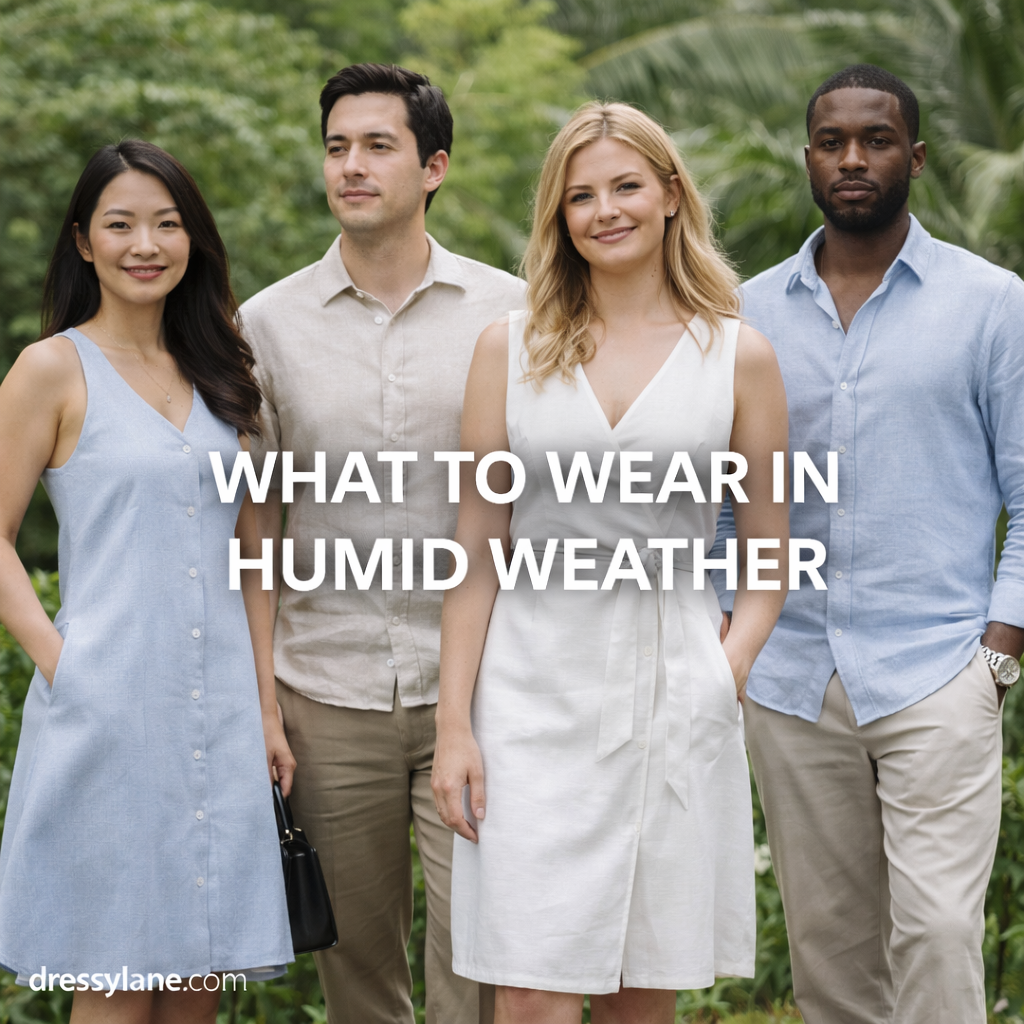
For women, a loose midi dress is one of the simplest options.
Look for linen blends, cotton poplin, lightweight jersey, or Tencel, ideally in a silhouette that skims rather than hugs the body.
For separates, try:
- Linen tank + wide-leg trousers + flat sandals
- Loose cotton T-shirt + lightweight shorts + sneakers
- Sleeveless blouse + A-line midi skirt + sandals
- Cotton button-down + relaxed shorts + leather sandals
- Lightweight trousers + breathable shell + loafers for work
I’d check the lining before buying any summer dress or skirt. I’ve seen plenty of lightweight garments with a surprisingly heavy synthetic lining underneath, which defeats much of the reason for choosing an airy outer fabric.
For very humid days, I’d also skip heavy shapewear unless it’s genuinely necessary. An additional tight layer directly against the body can become uncomfortable quickly.
What Men Can Wear in Humid Weather
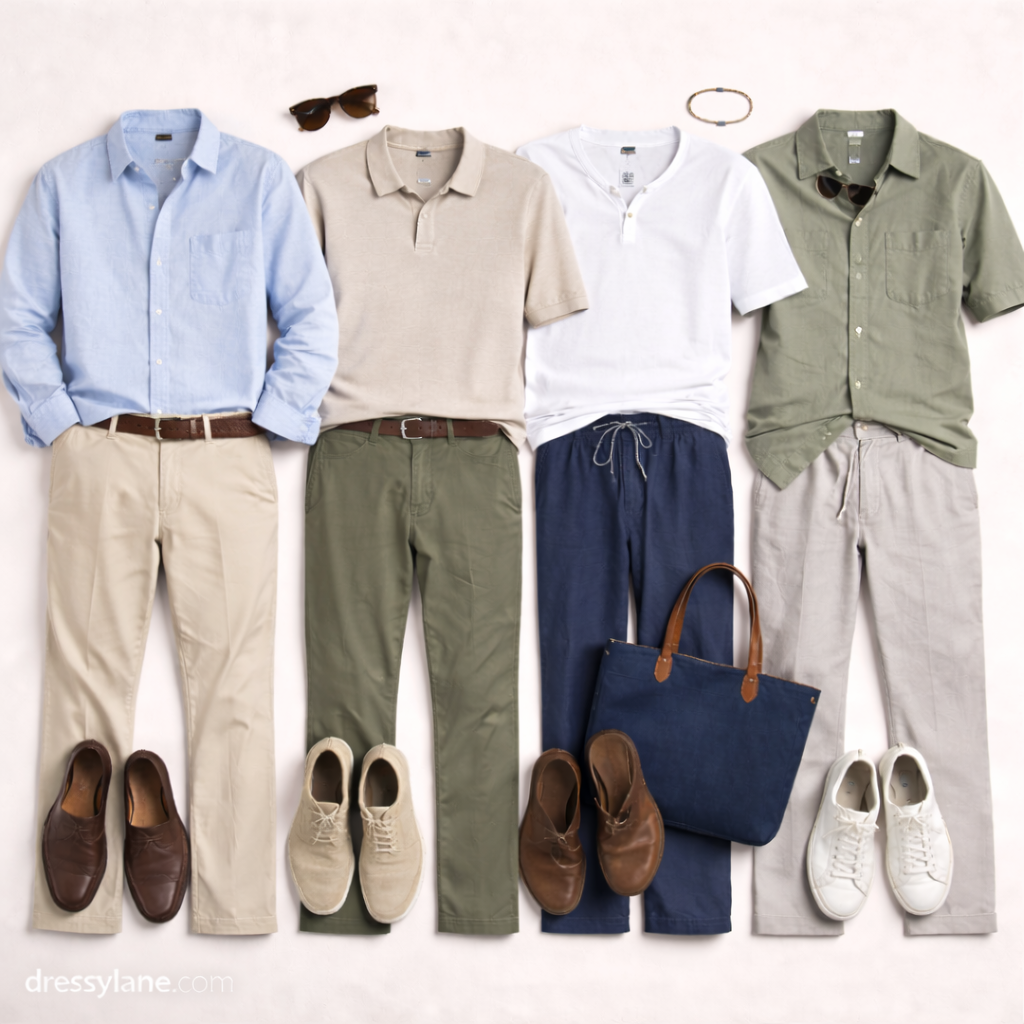
A linen or linen-cotton shirt is hard to beat when you need something more polished than a T-shirt.
Wear one with lightweight trousers and loafers for dinner or with tailored shorts and sneakers for something casual.
Other useful combinations include:
- Cotton T-shirt + relaxed shorts + sneakers
- Camp-collar shirt + lightweight chinos + loafers
- Linen shirt + drawstring trousers + sandals
- Lightweight polo + straight-leg trousers + leather sneakers
For pants, look beyond standard heavy chinos. Lightweight cotton twill, linen blends, tropical-weight wool, and certain technical fabrics can provide a cleaner appearance without trapping as much heat.
I’d avoid extremely slim trousers on a humid day. Even a breathable fabric becomes less comfortable when it’s wrapped tightly around your legs.
The same goes for undershirts. If you need one for sweat management, choose a thin moisture-managing version rather than automatically adding a thick cotton T-shirt underneath your shirt.
Don’t Assume Shorts Are Always Cooler
Shorts make sense in humidity, but they’re not your only option.
Loose trousers can be surprisingly comfortable because they shade the legs from direct sun without staying pressed against the skin.
A pair of wide-leg linen trousers, for example, may feel better during a long outdoor lunch than tight denim shorts.
The same principle applies to skirts and dresses. A flowing midi skirt creates plenty of air movement, while a fitted mini skirt may cling once you begin sweating.
Choose the silhouette based on airflow rather than simply how much skin it exposes.
Dressing for a Humid Commute and Cold Office
One of the hardest situations is walking through hot, humid weather and then spending eight hours in strong air conditioning.
Build the outfit for the hotter environment first.
For women, that could mean lightweight trousers and a sleeveless blouse, with a fine cardigan or unlined blazer kept at the office.
For men, try a lightweight button-down with breathable trousers and keep a blazer nearby if the dress code requires one.
I wouldn’t wear the extra layer during the commute just because you’ll eventually need it indoors. Carry it separately whenever practical.
A light cardigan, overshirt, or unlined jacket is much easier to manage than arriving at work with a sweat-soaked blazer.
Think About Sweat Visibility Too
It’s completely reasonable to consider whether a fabric shows moisture.
Certain medium-gray, light blue, and muted-color fabrics can make sweat marks especially noticeable. White, black, prints, and some textured fabrics may disguise moisture more effectively, depending on the material.
This is one reason I wouldn’t insist on wearing only pale colors in humidity.
Light colors can be useful in direct sunlight, but color doesn’t determine breathability. A loose navy linen shirt may be much more comfortable than a pale gray shirt made from thick fabric.
If visible sweat bothers you, test a garment at home before relying on it for an important meeting or event. A small amount of water on an inconspicuous area can give you an idea of how dramatically the fabric changes color when damp.
Shoes Need to Handle Moisture Too
Humidity doesn’t stop at your ankles.
For casual settings, supportive sandals and breathable sneakers are practical. Loafers can work for dressier outfits, particularly with lightweight socks or no-show socks where appropriate.
If your feet sweat heavily, moisture-managing socks can make closed shoes considerably more comfortable.
I’d be careful about wearing brand-new sandals for a full day in humid weather. Damp skin plus unfamiliar straps is an easy recipe for rubbing and blisters.
This is a day for shoes you’ve already broken in.
Keep Accessories Light
Heavy accessories become surprisingly noticeable when you’re already hot.
A small crossbody bag, lightweight tote, simple jewelry, sunglasses, and a breathable hat are usually plenty.
Large leather totes can feel particularly cumbersome during long walks in humid weather, especially when they’re packed heavily.
For outdoor activities, prioritize sun protection and practicality over adding accessories simply to complete the outfit.
What I’d Avoid on Very Humid Days
Some clothes are simply harder to tolerate once the air becomes sticky.
I’d generally skip:
- Rigid skinny jeans
- Thick denim
- Heavy lined jackets
- Body-hugging synthetic dresses
- Thick cotton sweatshirts
- Heavy shapewear
- Multiple unnecessary layers
- Shoes that already rub your feet
Be especially careful with garments that are both tight and slow to dry. That’s often a worse combination than either characteristic by itself.
Final Thoughts
Knowing what to wear in humid weather is less about following a list of approved fabrics and more about understanding what happens to your clothes once you’re hot and sweating.
Choose lightweight linen, cotton voile, poplin, Tencel, chambray, or purpose-built moisture-wicking fabrics. Give shirts, dresses, skirts, and trousers enough room for air to move, and pay attention to linings, waistbands, socks, and other details that stay directly against your skin.
Women can rely on loose midi dresses, wide-leg trousers, breathable skirts, and simple tops. Men can build around linen shirts, camp-collar shirts, lightweight trousers, tailored shorts, and relaxed T-shirts.
Most importantly, judge an outfit by how it will feel after you’ve spent half an hour outside—not by how comfortable it feels while you’re getting dressed in air conditioning.