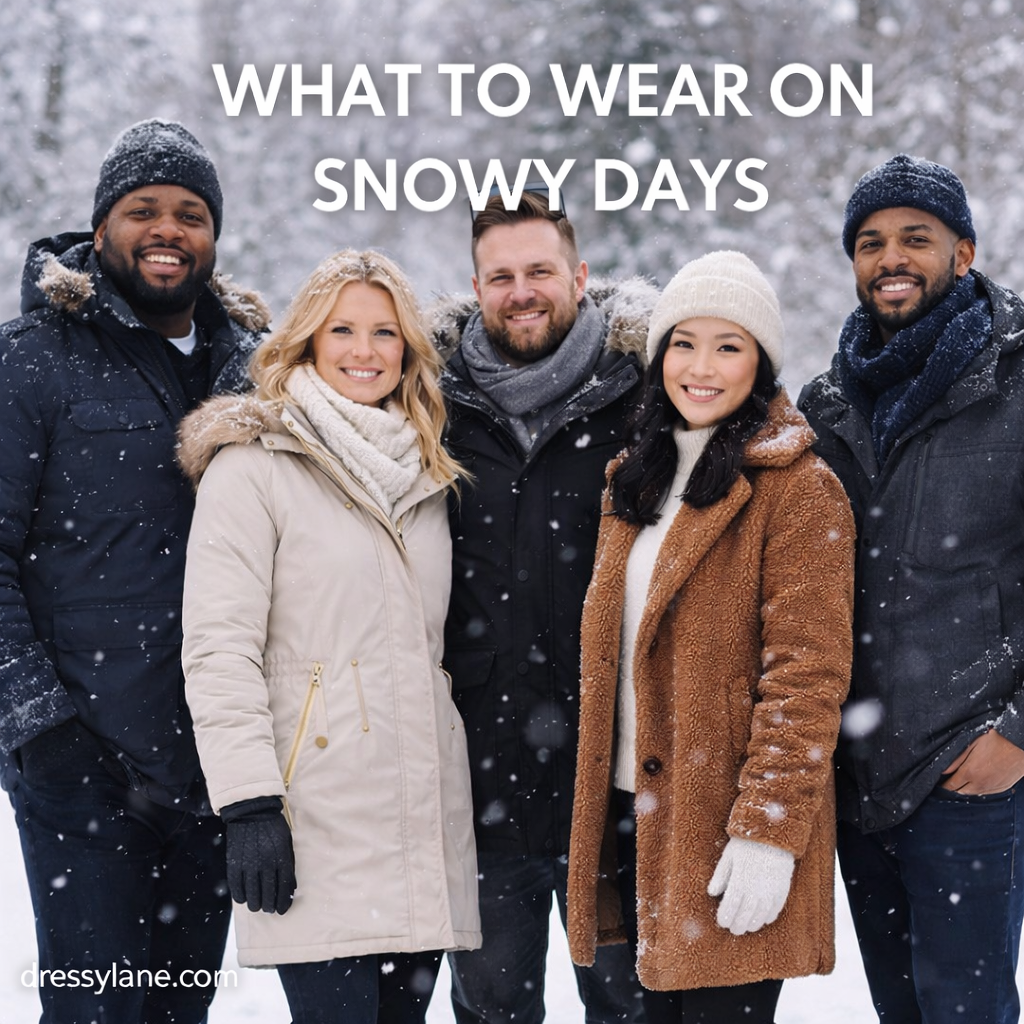
Snow changes the way you need to dress in ways that cold weather alone doesn’t. You aren’t only dealing with low temperatures—you may also be walking through slush, standing on icy pavement, brushing snow off a car, or stepping into a heated building with wet boots.
That makes footwear, moisture protection, and hem length just as important as your sweater.
Knowing what to wear on snowy days starts with a simple priority: keep yourself warm and dry first, then make the outfit look good within those requirements.
A wool coat and leather boots may be perfectly adequate for a light flurry and short commute. Several inches of snow, freezing temperatures, or icy sidewalks call for proper winter equipment.
Start With Your Boots, Not Your Coat
If there’s snow on the ground, footwear is the first thing I’d decide.
Look for boots with:
- Water-resistant or waterproof construction
- A textured rubber outsole
- Enough room for winter socks
- Appropriate insulation for the temperature
- A shaft high enough for the snow depth you’re likely to encounter
Traction deserves particular attention.
A boot can be warm and waterproof but still be a poor snow boot if the outsole is nearly smooth. Snow that melts and refreezes can make sidewalks especially slippery.
I’d choose a less elegant boot with dependable grip over a beautiful smooth-soled boot every time there’s ice involved.
For light urban snow, a weather-resistant ankle or Chelsea boot may be enough. For deeper snow or prolonged outdoor time, use an actual snow boot.
Build Three Layers That Each Have a Job
You don’t need to pile on every warm garment you own.
A better approach is:
Base layer → insulating layer → protective outer layer.
For genuinely cold conditions, a lightweight merino or synthetic thermal base layer provides warmth while managing moisture.
Over that, add insulation such as a merino sweater, wool knit, fleece, or lightweight insulated layer.
Finally, use a coat that blocks wind and can handle snow.
For example:
Merino base layer + wool sweater + insulated parka
is generally more useful than wearing a T-shirt, thick hoodie, chunky cardigan, and coat simply because each piece feels warm individually.
Your layers should also allow you to move comfortably. If you can’t bend your arms or sit comfortably once the coat is zipped, the system is too bulky.
Your Outer Layer Needs to Handle Moisture
Dry powdery snow and heavy wet snow aren’t the same problem.
A wool coat can work well during light snow, particularly for short trips around town. But wool isn’t a substitute for waterproof outerwear during prolonged wet snowfall.
When conditions are genuinely messy, look for a parka, insulated jacket, or shell with water-resistant or waterproof construction.
A hood is especially useful when snow is blowing rather than falling straight down.
I’d also check the cuffs. Adjustable or close-fitting cuffs help prevent cold air and snow from entering the sleeves, which is one of those small details you appreciate once you’ve actually spent time outside.
What Women Can Wear on Snowy Days
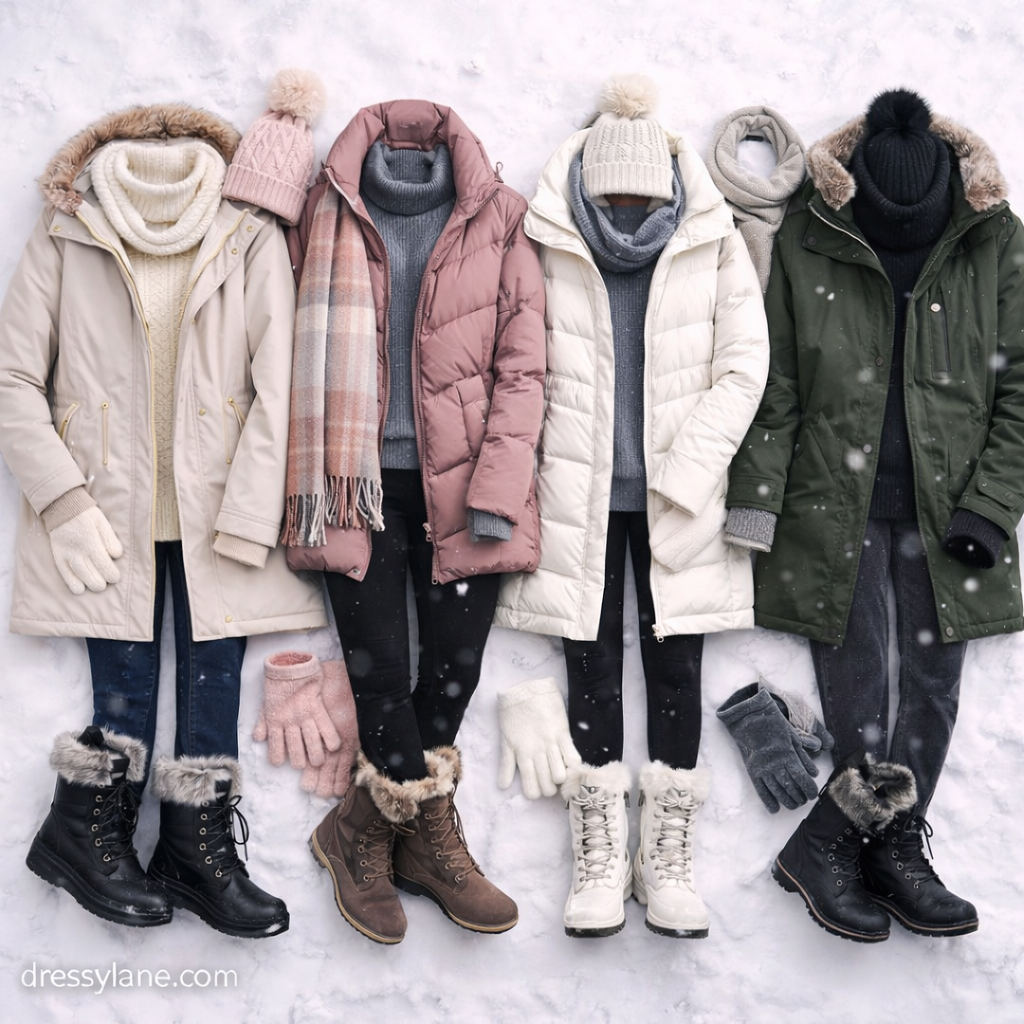
For an everyday snowy commute, try:
Thermal top + merino sweater + straight-leg trousers + insulated coat + waterproof boots.
Straight or gently tapered pants are particularly practical because they can sit above or inside boots without dragging through slush.
Other combinations include:
- Straight jeans + thermal layer + sweater + puffer + snow boots
- Wool trousers + turtleneck + long insulated coat + waterproof ankle boots
- Midi skirt + thermal tights + sweater + knee-high boots + long coat
- Knit dress + thermal tights + insulated boots + winter coat
I’d actually skip very wide, floor-skimming trousers when there’s snow or slush on the ground. Wet hems become heavy, dirty, and uncomfortable surprisingly quickly.
Leggings can work as part of a practical winter outfit too, particularly when they’re thermal or fleece-lined and paired with a longer sweater or coat. Just match their warmth to the conditions rather than assuming every pair of leggings provides insulation.
What Men Can Wear on Snowy Days
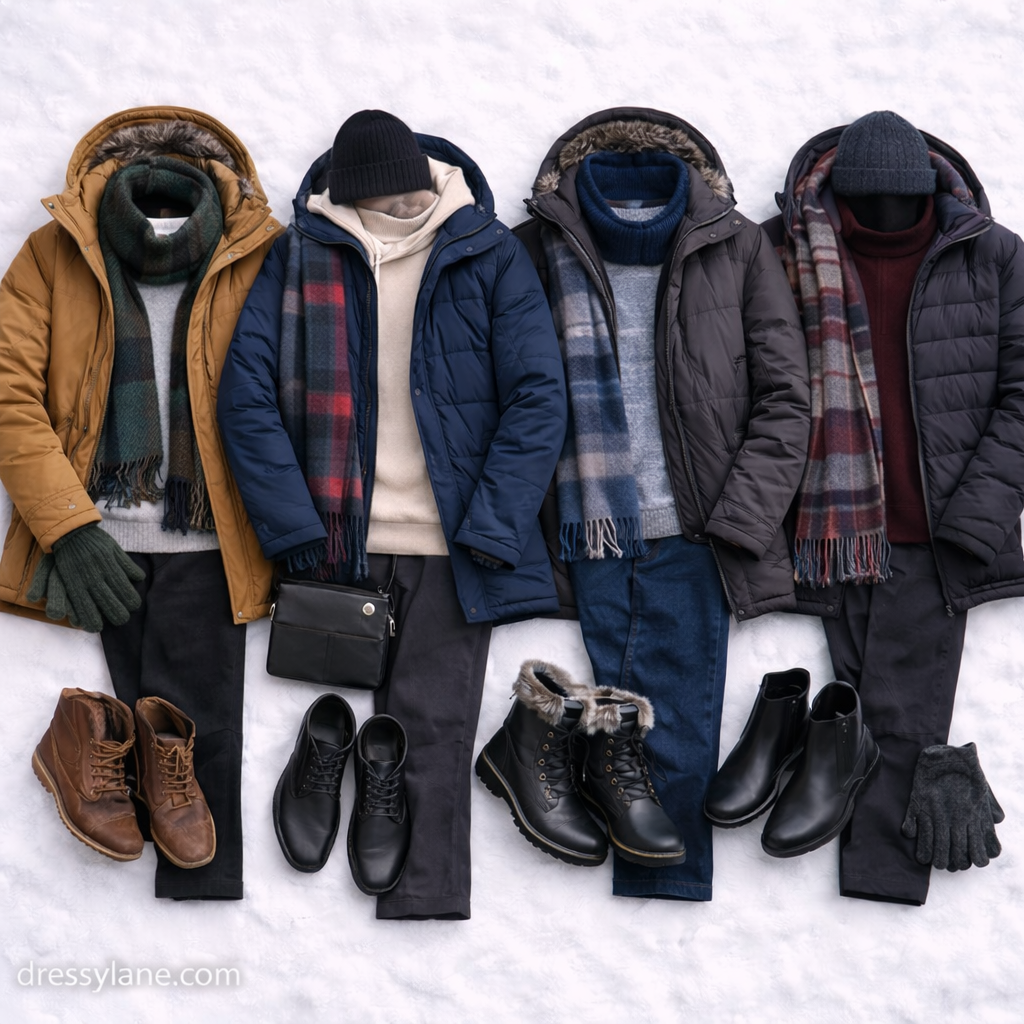
For men, a reliable combination is:
Thermal base + merino crewneck + wool trousers or jeans + parka + waterproof boots.
For a work commute:
Oxford shirt + fine-gauge sweater + wool trousers + long winter coat + weather-resistant boots
keeps the outfit polished once the outerwear comes off.
Other useful combinations include:
- Flannel shirt + thermal layer + jeans + insulated jacket + boots
- Merino sweater + corduroy trousers + parka + winter boots
- Quarter-zip knit + chinos + insulated coat + waterproof Chelsea-style boots
If you need to wear dress shoes indoors, I’d rather commute in proper winter boots and change shoes at work than spend the day with wet socks because you tried to protect a pair of dress shoes through slush.
That small habit can also extend the life of your better footwear.
Socks Matter More Than You Think
Thick socks aren’t automatically warmer if they make your boots too tight.
Your toes need enough room to move, and overly tight footwear can reduce circulation.
Merino or technical winter socks are useful because they provide insulation and handle moisture better than ordinary cotton socks.
I’d avoid cotton socks for long periods outside in snow. Once cotton becomes damp from sweat or melted snow, it can stay wet against your feet.
If you regularly deal with snow, test your boots while wearing the socks you actually plan to use with them.
Protect Your Hands, Head, and Neck
Small exposed areas can make an otherwise warm outfit feel inadequate.
A wool or merino beanie, scarf, and insulated gloves can make a significant difference without adding much bulk to the rest of the outfit.
For everyday commuting, lined leather gloves can provide a cleaner appearance while still offering warmth.
For shoveling snow, extended outdoor activities, or severe cold, use properly insulated gloves or mittens instead.
I’d also tuck loose scarf ends inside the coat when it’s windy. It keeps the scarf in place and helps seal the opening around the neck.
Watch Your Hemlines Around Slush
Fresh snow can look clean. The edge of a busy winter sidewalk often isn’t.
Melting snow quickly turns into gray slush mixed with water, dirt, and road salt.
That makes ankle-length or boot-friendly trousers particularly useful.
Long coats can provide welcome warmth, but make sure the hem still clears wet ground and stairs comfortably.
The same applies to maxi skirts and very long dresses. If the hem is likely to brush through slush, save it for a dry day.
This is one situation where practical proportions can prevent both discomfort and unnecessary cleaning.
Dress Differently for Light Snow and Heavy Snow
Not every snowy forecast requires expedition gear.
Light Snow and Short Trips
For a light flurry with mostly clear sidewalks, a wool coat, sweater, jeans or trousers, scarf, gloves, and weather-resistant boots may be enough.
You can keep the outfit relatively polished because exposure is limited.
Heavy Snow, Ice, or Long Outdoor Time
Upgrade the practical pieces.
Choose an insulated and weather-resistant coat, thermal base layers, waterproof boots with traction, warm socks, insulated gloves, and a proper hat.
If ice is present, traction takes priority over how sleek the footwear looks.
I wouldn’t try to make ordinary fashion boots perform the job of snow boots when conditions are genuinely bad.
Commuting to Work in Snow
A snowy commute often requires two versions of the same outfit: what works outside and what works once you arrive.
Build the indoor outfit first—perhaps trousers, a shirt, and a fine sweater—then add weather protection over it.
A long coat or parka, scarf, gloves, hat, and snow-ready boots become your commuting shell.
Once indoors, those pieces come off.
If necessary, keep dress shoes at work and change out of your winter boots when you arrive. This is much easier than trying to find one shoe that’s simultaneously ideal for ice, slush, and a formal office.
Don’t Overheat Before You Get Outside
One overlooked problem with snowy-day dressing is becoming too warm indoors before you even leave.
If you put on every layer and spend 15 minutes getting ready in a heated room, you may start sweating before stepping outside.
Then that moisture can make you feel colder later.
Put your coat, scarf, hat, and gloves on near the end of your routine, and remove outer layers once you’re back indoors.
A good layering system should be easy to adjust.
What I’d Avoid in Snow
When snow is accumulating, I’d generally leave these at home:
- Smooth-soled shoes
- Canvas sneakers
- Untreated delicate footwear
- Cotton socks for prolonged outdoor exposure
- Floor-skimming trousers
- Very long skirts that can drag through slush
- Thin coats without enough insulation
- Bulky layers that restrict movement
The goal isn’t to eliminate style. It’s to avoid garments that become noticeably worse the moment snow starts melting.
Final Thoughts
Knowing what to wear on snowy days is less about creating a stereotypical winter outfit and more about dealing with the specific problems snow creates.
Start with waterproof or weather-resistant boots that provide useful traction. Keep trouser and skirt hems away from slush. Use a moisture-managing base layer when conditions warrant it, add efficient insulation, and finish with outerwear capable of handling the wind and moisture you’re expecting.
Women can work with straight trousers, jeans, thermal tights, sweaters, dresses, and practical boots. Men can use wool trousers, jeans, merino knitwear, flannel shirts, winter coats, and snow-ready footwear.
And when conditions become severe, don’t try to make fashion pieces perform jobs they weren’t designed for. The best snowy-day outfit is the one that lets you walk outside warm, dry, and steady on your feet—and still leaves you with a normal outfit once the coat and boots come off.