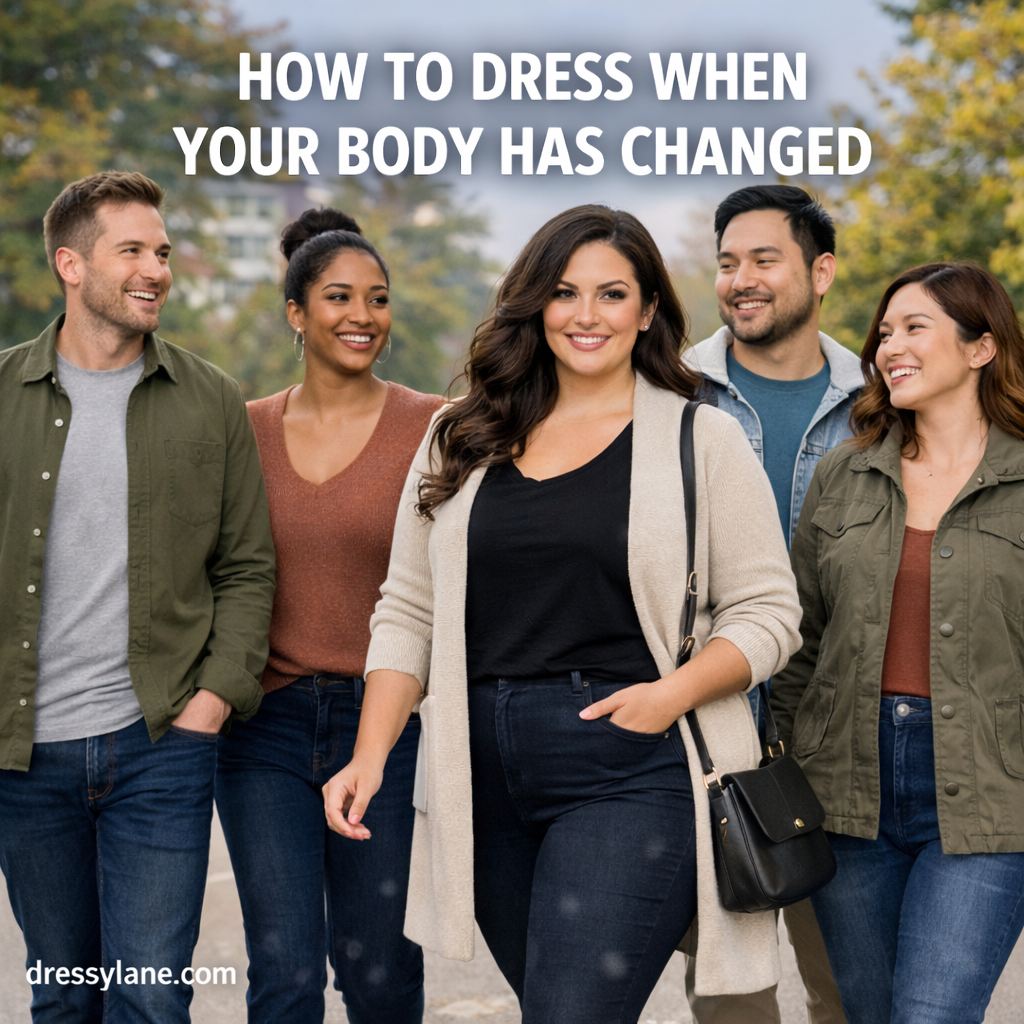
Bodies change — and that’s a normal part of life. Weight fluctuations, aging, pregnancy, injury recovery, medical changes, or lifestyle shifts can all affect how clothes fit and how you feel in them. Learning how to dress when your body has changed isn’t about hiding yourself — it’s about adapting your style so it supports comfort, confidence, and self-expression.
This guide focuses on practical, compassionate style advice to help both women and men feel good in what they wear, no matter where they are in their journey.
Start by Letting Go of Old Size Expectations
One of the biggest obstacles to dressing well after body changes is emotional, not physical.
- Sizes are tools, not labels
- Your worth isn’t tied to past measurements
- Clothes should adapt to your body — not the other way around
Once you release attachment to old sizing, shopping and dressing become much easier and more enjoyable.
Focus on Fit, Not the Number
Fit has far more impact than size.
What good fit looks like
- Clothing that doesn’t pinch, pull, or restrict
- Garments that move with you comfortably
- Waistbands and seams that sit naturally
Well-fitting clothes immediately improve posture, confidence, and overall appearance.
Choose Fabrics That Support Comfort
When your body changes, comfort becomes essential.
Best fabric choices
- Stretch blends that adapt to movement
- Soft knits that don’t cling
- Breathable cotton and modal for daily wear
- Lightweight layers instead of stiff structure
Avoid overly rigid fabrics that exaggerate discomfort or restrict movement.
Rebuild Your Wardrobe With Versatile Basics
Instead of replacing everything at once, focus on adaptable essentials.
- Neutral tops that layer easily
- Pants with flexible waistbands or stretch
- Jackets that skim the body without squeezing
- Dresses or shirts that work across seasons
A small collection of reliable pieces reduces stress when getting dressed.
How to Dress When Your Body Has Changed: Women
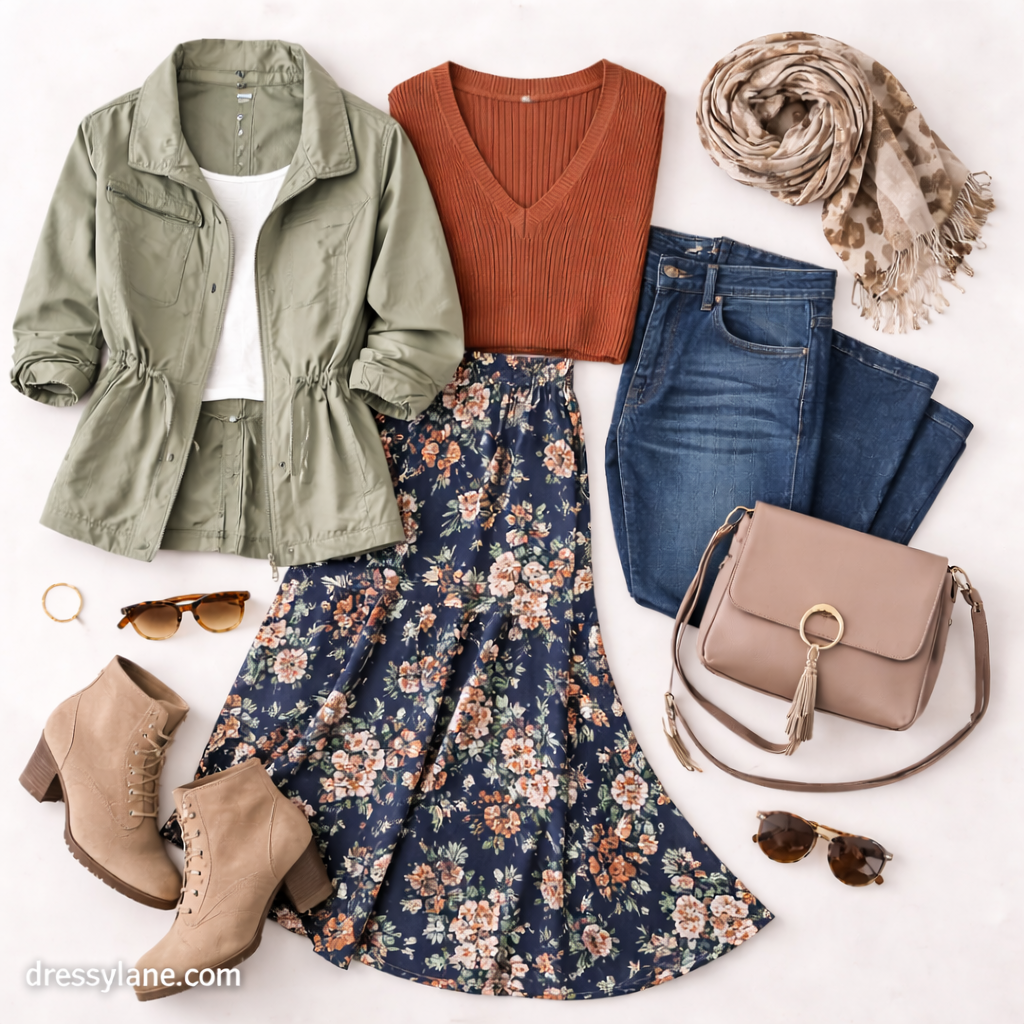
Women often experience body changes in the hips, waist, chest, and arms.
Flattering, comfortable approaches
- Tops with gentle drape rather than cling
- High-rise or mid-rise bottoms for support
- Dresses with relaxed silhouettes or waist definition without tightness
- Layering with cardigans, wraps, or lightweight jackets
Footwear tips
- Supportive shoes that reduce pressure on joints
- Low heels, block heels, or cushioned flats
Accessories that help
- Scarves to draw attention upward
- Structured bags for balance
Style should feel supportive — never punishing.
How to Dress When Your Body Has Changed: Men
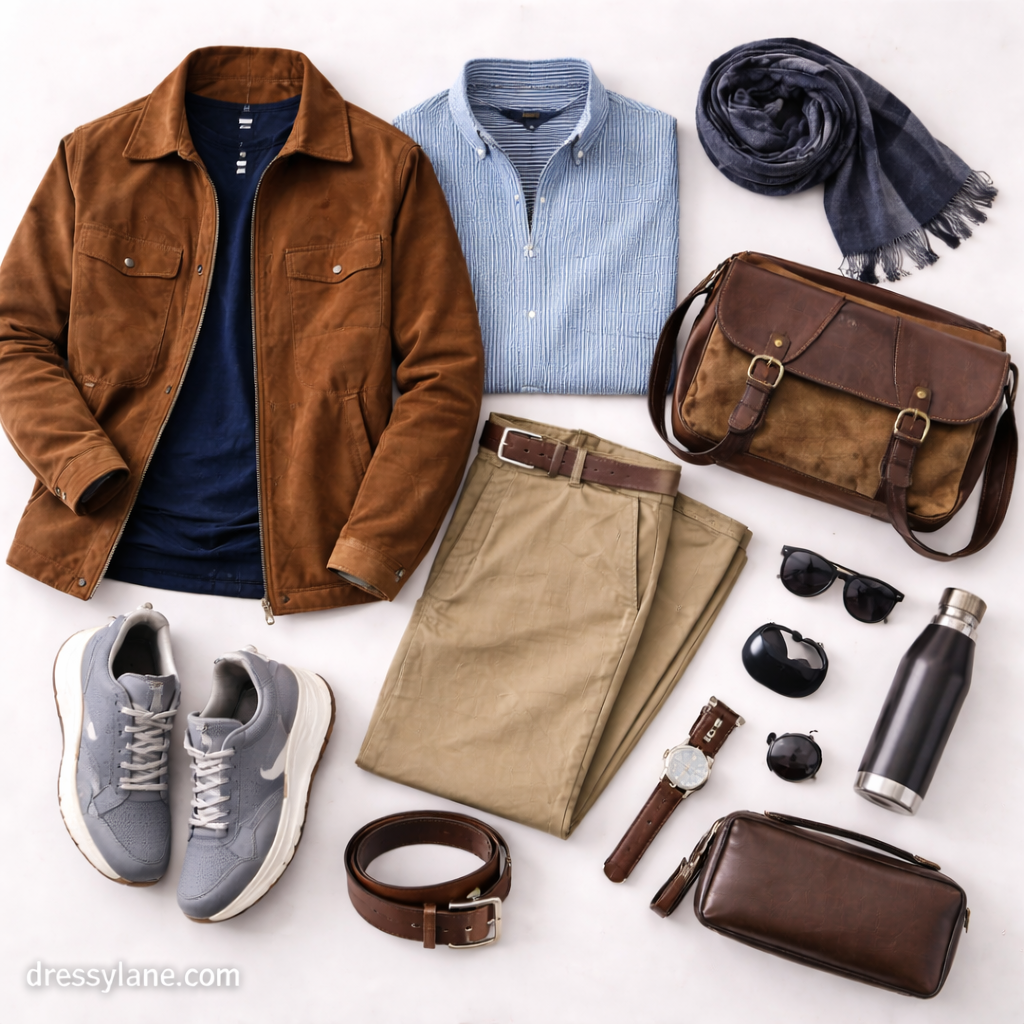
Men may notice changes in the midsection, shoulders, or overall proportions.
Comfortable, confident strategies
- Shirts with stretch or relaxed tailoring
- Straight-leg or tapered pants instead of overly slim fits
- Jackets that fit shoulders properly without pulling at the waist
- Layering with open overshirts or lightweight jackets
Footwear tips
- Cushioned soles for all-day comfort
- Clean sneakers or supportive boots
Good tailoring — even minimal adjustments — can make a significant difference.
Use Proportions to Create Balance
You don’t need to hide your body to dress well.
Simple proportion tips
- Balance fitted pieces with relaxed ones
- Use layers to create visual structure
- Avoid extremes — too tight or too oversized
Balanced outfits feel intentional and comfortable at the same time.
Shop for the Body You Have Now
Dressing well means dressing the present version of yourself.
- Buy clothes that fit today, not “someday”
- Keep a small range of sizes if your body fluctuates
- Prioritize how clothes feel, not just how they look
Confidence grows when your clothes support your current needs.
Common Style Mistakes After Body Changes
- Holding onto uncomfortable clothing “just in case”
- Dressing too loosely out of fear of fit
- Avoiding mirrors or trying things on
- Comparing your body to past versions
Style should evolve with you — not hold you back.
Final Thoughts
Learning how to dress when your body has changed is an act of self-respect. Your body deserves clothes that feel good, move well, and reflect who you are now.
By focusing on fit, comfort, and adaptable style choices, you can rebuild a wardrobe that supports confidence — not comparison. Style isn’t about returning to who you were. It’s about showing up fully as who you are today.