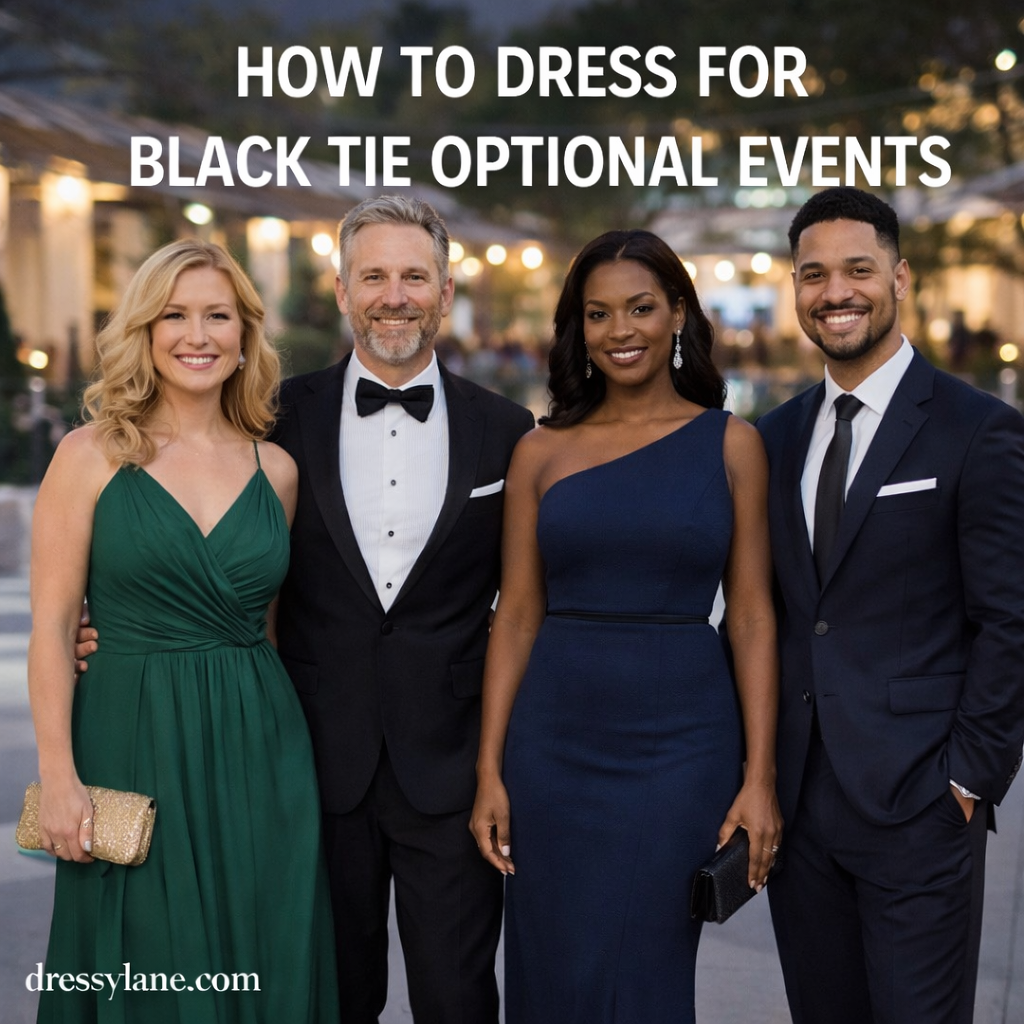
Seeing “black tie optional” on an invitation can leave you wondering whether you need to rent a tuxedo, buy a floor-length gown, or simply dress a little nicer than usual.
The good news is that you have options. A tuxedo or evening gown is welcome, but a beautifully tailored dark suit or an elegant formal dress can be just as appropriate.
The important distinction is that “optional” applies to traditional black tie attire, not to the overall level of formality. You’re still dressing for an upscale occasion, whether it’s an evening wedding, charity gala, or formal dinner.
Here’s how to get the dress code right without buying an entirely new wardrobe.
What Does Black Tie Optional Actually Mean?
Black tie optional means the hosts would welcome traditional black tie attire but don’t require every guest to follow it.
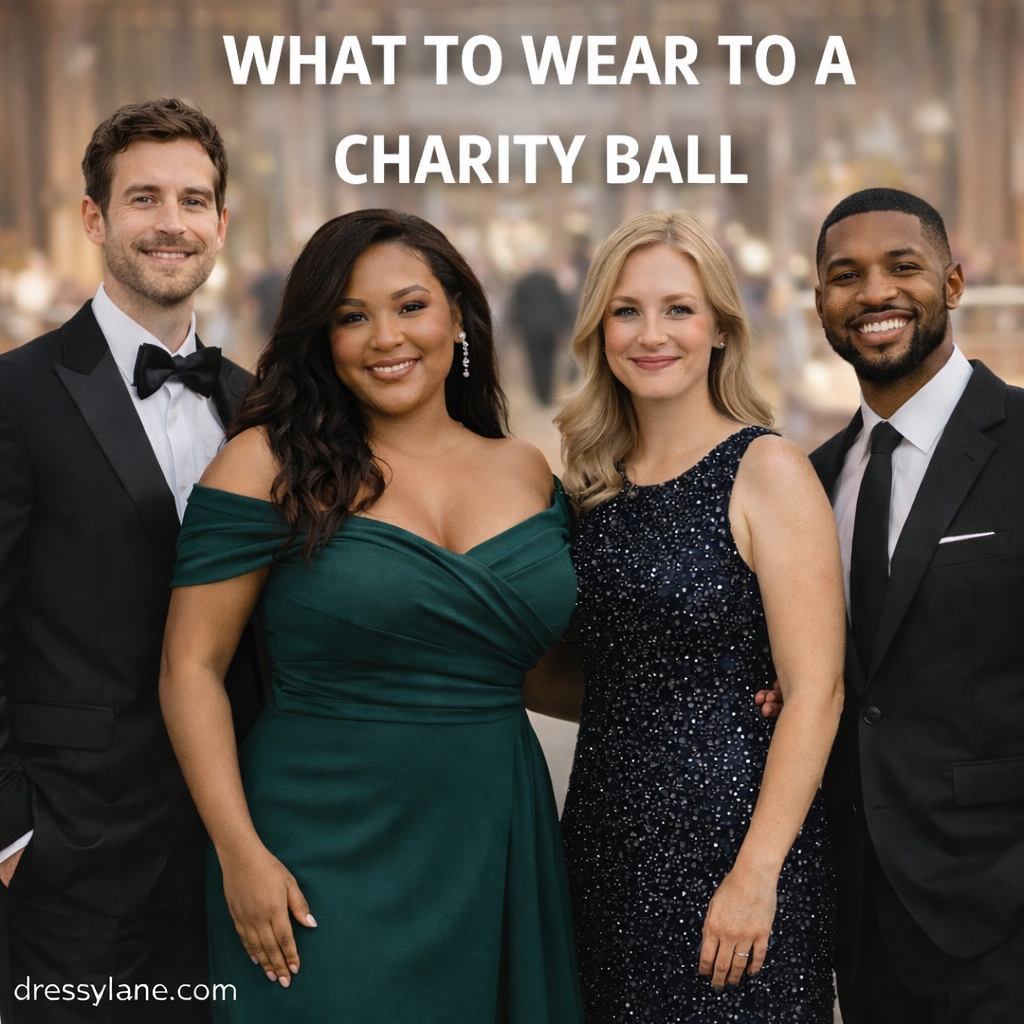
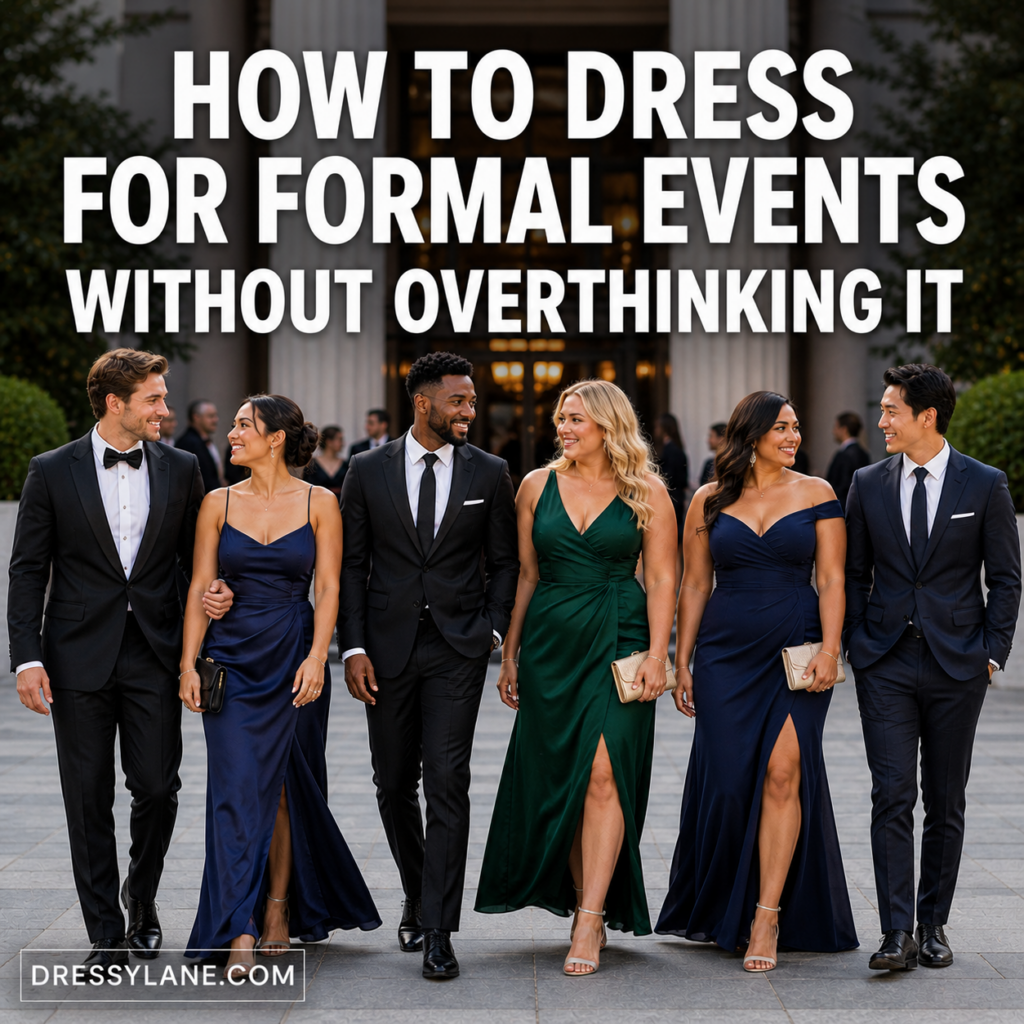
For men, that generally means choosing between a tuxedo and a dark formal suit. For women, a floor-length evening gown is appropriate, but an elegant cocktail dress, formal midi dress, or suitably dressy jumpsuit can also work.
Think of it this way: if you arrive in a tuxedo or gown, you shouldn’t feel overdressed. If you arrive in a well-tailored navy suit or sophisticated cocktail dress, you shouldn’t feel underdressed either.
What I wouldn’t do is interpret the invitation as permission to wear ordinary business casual clothing.
A blazer with chinos or a simple cotton sundress might work for a semi-formal event, but neither is a reliable choice for black tie optional.
Black Tie Optional Attire for Women
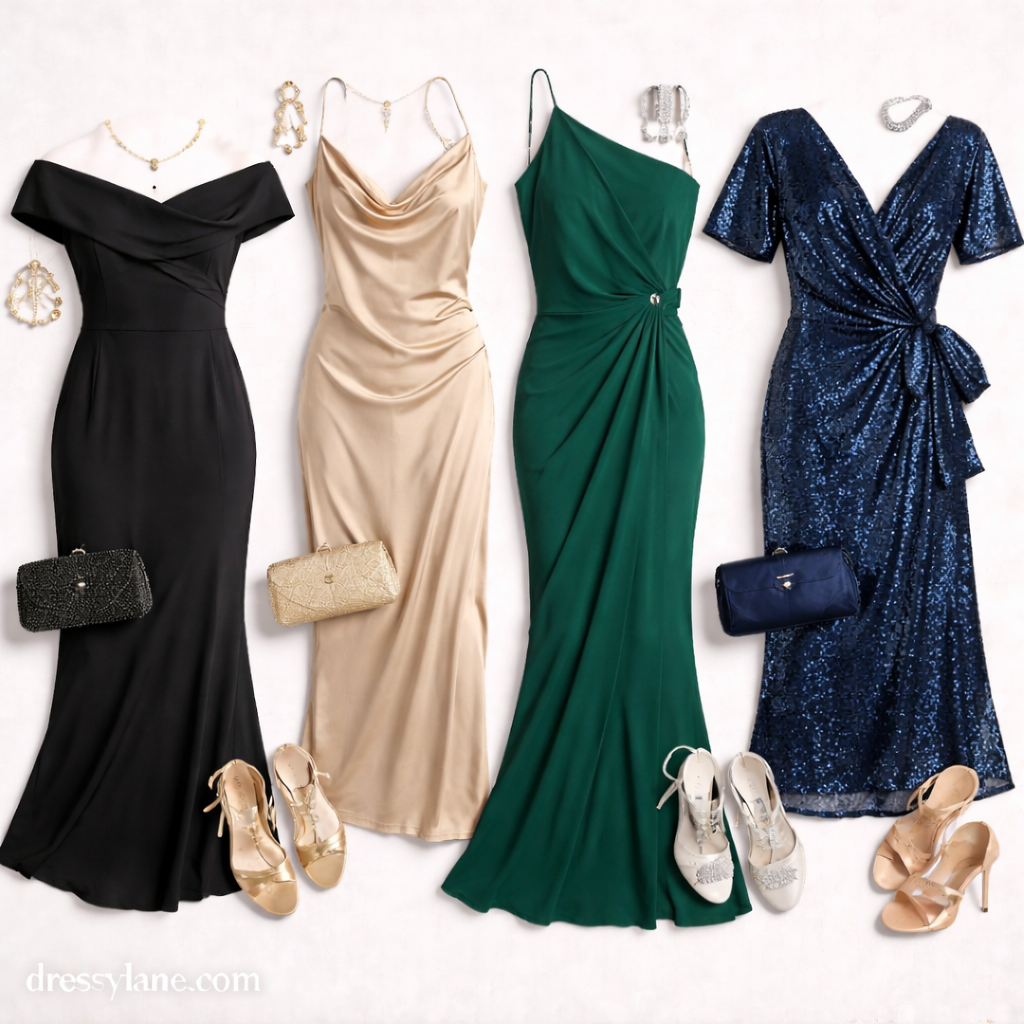
The easiest starting point is an evening dress in a refined fabric. You don’t necessarily need a dramatic gown, but the outfit should look noticeably dressier than something you’d wear to a nice restaurant.
A Floor-Length Gown Is Always Appropriate
If you enjoy dressing up, this is an excellent opportunity to wear a gown.
Consider a floor-length crepe dress in midnight blue with a softly draped neckline, a black column gown with an asymmetric shoulder, or a flowing burgundy chiffon dress.
You don’t need elaborate beading or sequins. A simple silhouette in a beautiful fabric can look just as formal.
I’d actually favor a clean, well-fitting gown over an inexpensive dress covered in embellishments. Heavy decoration doesn’t automatically make clothing look more elegant, especially when the fabric underneath is thin or poorly constructed.
Pay particular attention to the hem. A floor-length dress should work with your chosen shoes without dragging excessively or becoming a tripping hazard.
Can You Wear a Midi or Cocktail Dress?
Yes. A formal midi dress or sophisticated cocktail dress is entirely acceptable for most black tie optional events.
The key is choosing something with enough presence for an evening occasion.
For example, a black crepe midi dress with a fitted bodice, softly flared skirt, and elegant neckline would work beautifully with metallic slingbacks and a small satin clutch.
Other good options include:
- A deep emerald satin midi dress with a draped neckline.
- A burgundy velvet cocktail dress for a winter event.
- A navy crepe dress with an asymmetric hem.
- A structured, below-the-knee dress with subtle embellishment.
I’d skip casual floral sundresses, jersey wrap dresses, and very short party dresses. Even with expensive accessories, these can feel out of place beside guests wearing tuxedos and evening gowns.
What If You Don’t Want to Wear a Dress?
A formal jumpsuit or evening pantsuit can work, particularly for contemporary weddings and galas.
Look for wide-leg crepe trousers, a defined waist, and an elegant neckline. A black one-shoulder jumpsuit with pointed-toe heels and sculptural earrings is a good example.
A tuxedo-inspired women’s suit in black or midnight blue is another option.
Avoid office-style separates unless you’ve deliberately styled them as formal eveningwear. An ordinary blazer and work trousers won’t necessarily meet the dress code.
Black Tie Optional Attire for Men
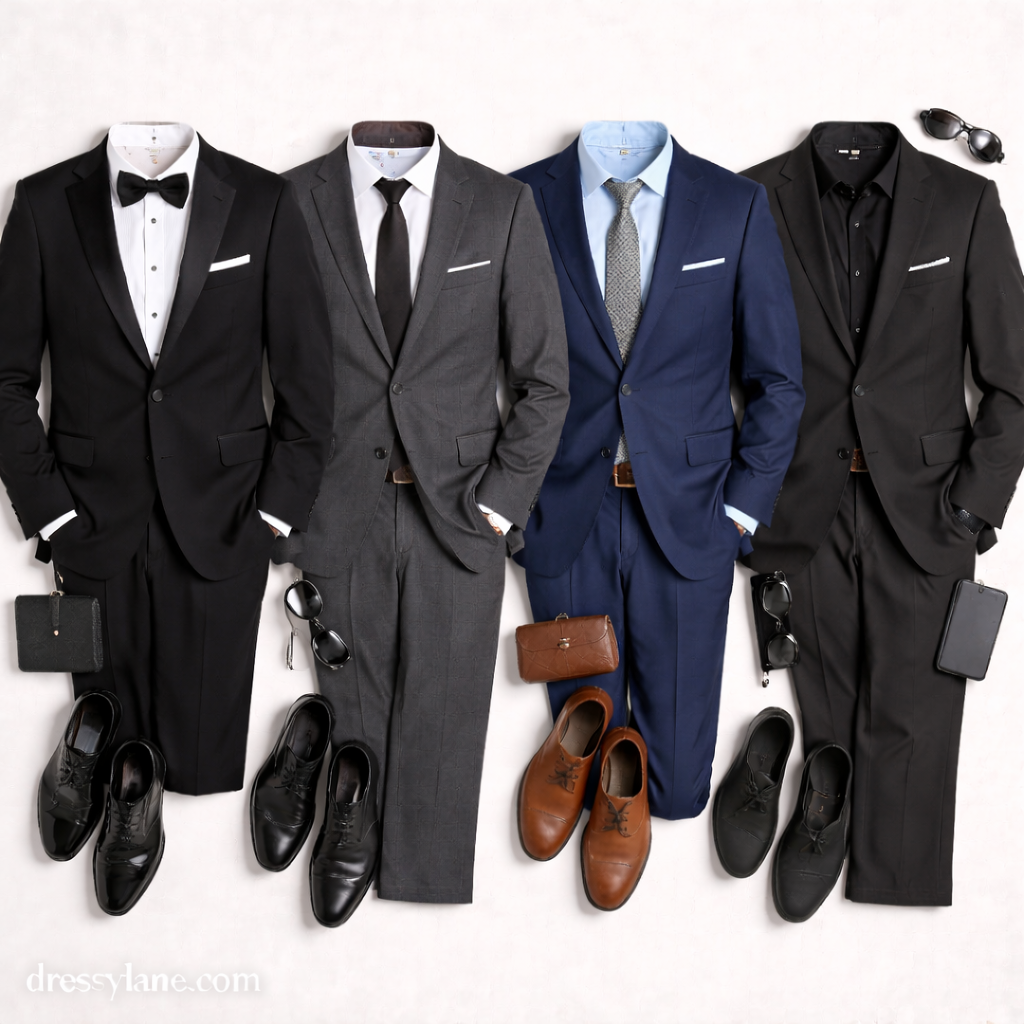
For men, the decision is relatively straightforward: wear a tuxedo or a dark, well-tailored suit.
Both are acceptable, but the details determine whether the outfit looks appropriate.
Option 1: Wear a Tuxedo
If you already own a tuxedo and enjoy wearing it, there’s no reason to leave it at home.
A classic combination includes:
- Black or midnight blue tuxedo.
- White formal dress shirt.
- Black bow tie.
- Black formal shoes.
- Optional white pocket square.
Patent leather shoes are traditional, although highly polished black formal shoes can also work.
One detail worth remembering: a tuxedo is a complete outfit, not simply a black suit with a bow tie. Traditional tuxedos have distinguishing features such as satin-faced lapels and coordinating formal trousers.
Option 2: Wear a Dark Suit
If you don’t own a tuxedo, I wouldn’t rush to rent one for a single black tie optional event.
A properly fitted dark suit is specifically permitted by the dress code and can be worn again for weddings, formal dinners, and other occasions.
My preferred combination would be a midnight navy wool suit, crisp white dress shirt, dark silk tie, and polished black Oxford shoes.
Charcoal and black suits also work.
Focus on these details:
- Choose a matching suit rather than a blazer with separate trousers.
- Make sure the jacket fits properly across the shoulders.
- Have the trousers hemmed to work with your shoes.
- Wear a formal dress shirt and tie.
- Keep shoes clean and polished.
I’d avoid brown brogues, colorful patterned shirts, and casual loafers when trying to make a regular suit feel sufficiently formal.
You don’t need to overcompensate with accessories. A simple white pocket square and understated cufflinks, if your shirt accommodates them, are plenty.
Shoes and Accessories: Where Formality Really Shows
You can choose the right dress or suit and still make the outfit feel too casual with the wrong finishing touches.
For women, refined heels, dressy slingbacks, and elegant flat evening shoes can all work. A small clutch or structured evening bag is generally more appropriate than a large everyday tote.
Choose jewelry based on the neckline and fabric.
If your dress has an embellished neckline, you might only need small earrings. With a simple black column dress, a pair of statement earrings can add interest without overwhelming the outfit.
For men, polished black leather shoes are the most versatile choice. A dark silk tie, neatly folded pocket square, and simple watch complete a formal suit.
I’d skip novelty ties and oversized accessories. They tend to distract from otherwise elegant tailoring.
Does the Venue or Time of Day Change Anything?
Yes, although the stated dress code should always take priority.
A black tie optional wedding at a historic hotel or grand ballroom will likely feel more traditional than a contemporary rooftop celebration.
For a ballroom wedding, a floor-length gown or tuxedo may feel particularly natural. At a modern evening venue, a formal midi dress or dark suit can be equally comfortable within the dress code.
Season also matters.
Velvet and heavier crepe work beautifully for winter events, while lightweight silk, chiffon, and breathable formal suiting are more practical for summer.
Don’t assume that a daytime event automatically makes the dress code casual. If the invitation says black tie optional, maintain the requested level of formality while adjusting your fabrics for the weather.
What Colors Work Best?
Black, navy, charcoal, burgundy, emerald, and deep plum are dependable choices for evening events.
However, black tie optional doesn’t mean everyone must wear dark clothing.
A formal dress in dusty blue, muted rose, or a sophisticated metallic can work beautifully, especially for spring and summer celebrations.
Fabric and silhouette matter more than following a strict color palette.
For weddings, avoid white, ivory, and bridal-looking champagne outfits unless the couple has specifically requested them.
Men wearing suits should generally stick to dark colors, particularly for evening events. A light beige linen suit may be stylish for a summer wedding, but it isn’t the most reliable interpretation of black tie optional.
Common Black Tie Optional Mistakes to Avoid
The biggest mistake is treating black tie optional as interchangeable with cocktail attire.
There is some overlap, particularly for women’s formal cocktail dresses, but black tie optional generally calls for a more elevated overall look.
Other mistakes include wearing an ordinary business suit without formal accessories, choosing casual fabrics, ignoring tailoring, and assuming expensive clothing automatically looks formal.
I’d also avoid buying something you can’t comfortably sit, walk, or dance in.
Try on the complete outfit before the event, including shoes and accessories. A dress that looks beautiful while standing may become uncomfortable when seated, and trousers that haven’t been hemmed properly can ruin the line of an otherwise excellent suit.
What I’d Wear If I Were Unsure
If the invitation provides no additional guidance, I’d choose a conservative interpretation of the dress code without automatically committing to full black tie.
For women, that means a floor-length or formal midi dress in crepe, satin, or another refined evening fabric, paired with elegant shoes and a small bag.
For men, a dark navy or charcoal suit with a white dress shirt, silk tie, and polished black shoes is a dependable combination.
If you already own a tuxedo or evening gown, wearing it is completely appropriate.
There’s no need to spend money on traditional black tie clothing simply because the invitation mentions it as an option.
Final Thoughts
Black tie optional gives guests flexibility, but the occasion is still formal.
A tuxedo or evening gown is welcome, while a dark tailored suit, sophisticated cocktail dress, formal midi dress, or elegant jumpsuit can also meet the dress code.
The details make the difference: refined fabrics, proper tailoring, polished shoes, and accessories that suit the occasion.
Choose the level of formality that works for you, then make sure every part of the outfit feels intentional. That approach is far more reliable than trying to look formal simply by adding more accessories or wearing something uncomfortable.