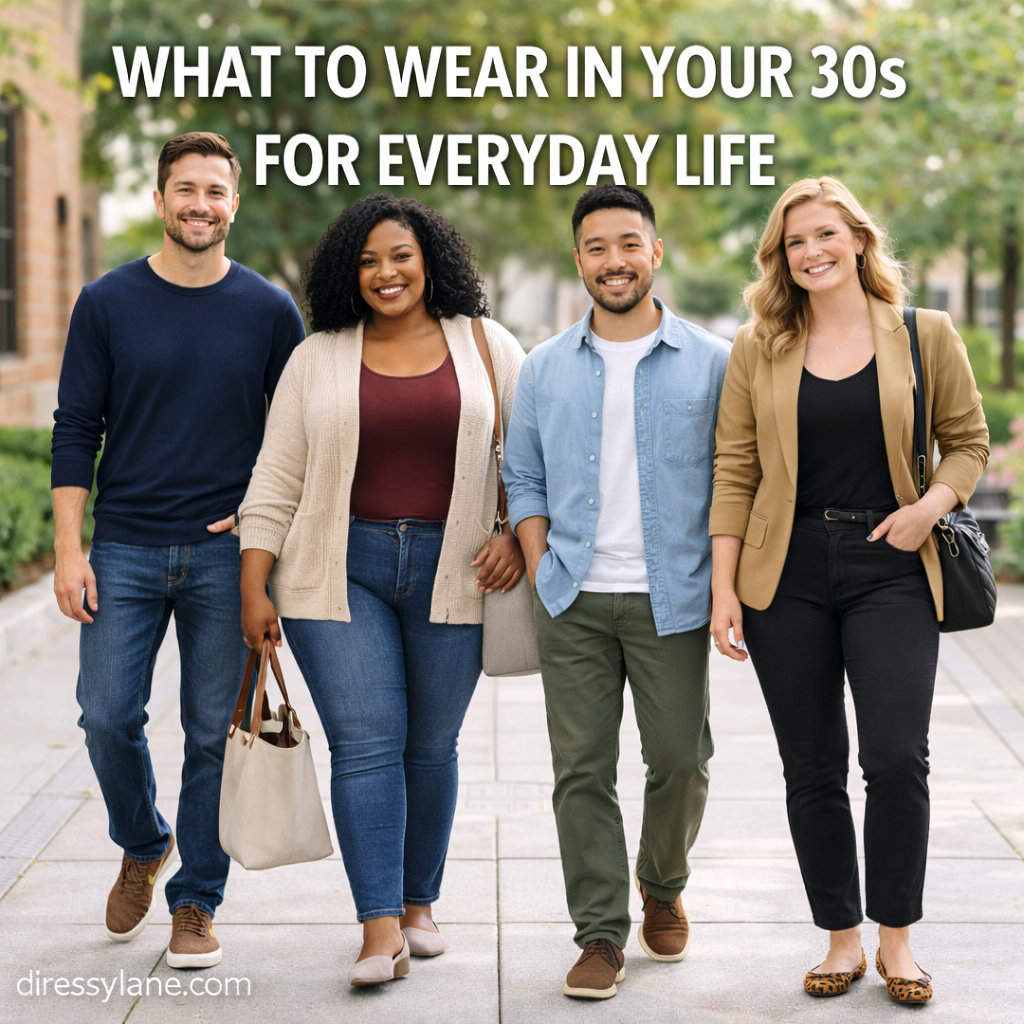
There isn’t a point at 30 when jeans, sneakers, short skirts, graphic T-shirts, or anything else suddenly becomes inappropriate.
What often does change is your tolerance for clothes that make everyday life harder.
You may have a morning commute, several hours at a desk, errands after work, dinner with friends, school pickup, travel, or a weekend that involves considerably more walking than you expected. An outfit that only works while you’re standing in front of a mirror isn’t particularly useful.
That’s why everyday style in your 30s is less about “dressing your age” and more about figuring out which clothes consistently work for the life you actually have.
Your Best Clothes Should Work on Ordinary Days
It’s easy to build a wardrobe around hypothetical occasions.
The more useful question is: What do you wear on a normal Tuesday?
If most of your week is casual, you probably need excellent jeans, trousers, knitwear, T-shirts, comfortable shoes, and outer layers more than you need another special-occasion outfit.
If you work in an office, perhaps your real uniform is trousers, an Oxford shirt or knit, loafers, and a jacket.
If you work from home, you may want clothes that are comfortable enough for several hours at a desk but still presentable enough for a video call, coffee meeting, or trip outside.
I’d spend the largest part of a clothing budget on whatever category you actually wear most.
That sounds obvious, but closets often reveal the opposite: ten “nice” tops and only two pairs of everyday trousers that someone genuinely likes.
Repeat Outfits on Purpose
By your 30s, knowing what works is an advantage—not evidence that your style has become boring.
If straight-leg jeans, a fine-gauge sweater, and loafers consistently make you feel good, repeat that silhouette.
Change the color, fabric, or outer layer rather than rebuilding the outfit from scratch.
For example:
- Dark jeans + cream merino sweater + brown loafers
- Medium-wash jeans + navy cotton knit + sneakers
- Black jeans + gray sweater + ankle boots
The basic formula stays the same.
This is one of the easiest ways to make a wardrobe more useful. Find two or three silhouettes you reliably like and let individual pieces rotate within them.
Pay More Attention to Fabric Than the Label
Everyday clothes get worn hard.
They spend hours against office chairs and car seats. They get washed repeatedly. Sleeves are pushed up, bags rub against coats, and trousers need to survive sitting without becoming permanently stretched at the knees.
For that reason, fabric matters.
Heavyweight cotton jersey tends to hold its shape better than extremely thin T-shirt fabric. Cotton twill works well for chinos and casual trousers. Fine-gauge merino is useful because it can look polished without being bulky.
Other practical choices include:
- Oxford cloth
- Cotton poplin
- Denim
- Linen blends
- Ponte
- Wool blends
- Fine-gauge cotton knitwear
I wouldn’t automatically equate “natural” with “better.” A little elastane can make trousers considerably more comfortable, and wrinkle-resistant blends can be useful if you’re commuting or traveling.
Look at how a garment behaves after several hours of actual wear, not just how luxurious the fabric description sounds.
Fit Should Allow You to Move
“Well fitted” doesn’t mean close to the body.
Straight, wide, oversized, relaxed, and fitted silhouettes can all look intentional.
The useful test is movement.
Sit down in trousers before buying them. Reach forward in a jacket. Raise your arms in a shirt. Walk in a dress and make sure it doesn’t constantly twist or ride up.
Pay particular attention to shoulders, waistbands, sleeve length, and hems.
If a pair of trousers looks great standing up but becomes uncomfortable after 20 minutes of sitting, I’d leave it behind. Everyday clothing has to pass the sitting test.
The same goes for shoes. A pair you can tolerate during a restaurant dinner isn’t necessarily suitable for a day involving a train platform, office stairs, grocery store, and walk home.
What Men Can Wear in Their 30s Every Day
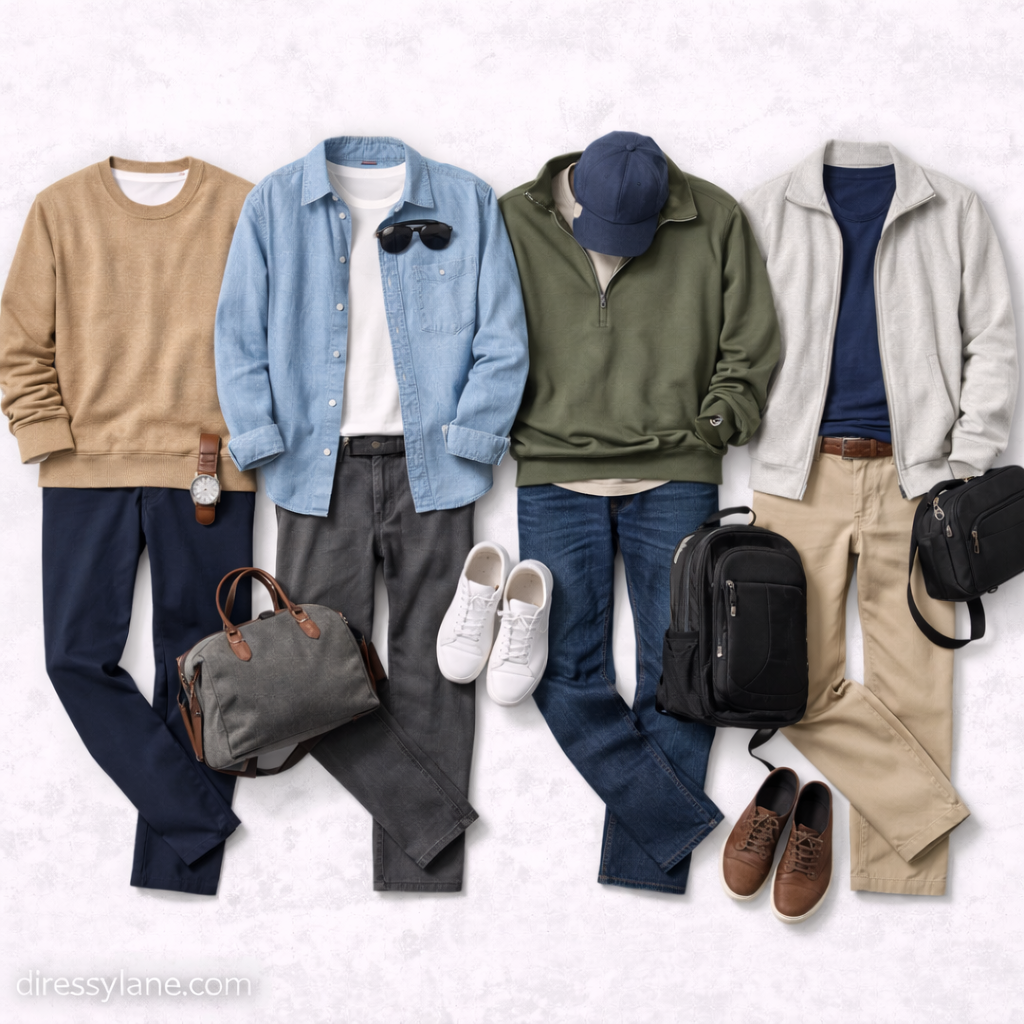
For men, a dependable everyday wardrobe can be surprisingly small if the pieces work together.
Start with straight or tapered jeans, chinos or casual trousers, substantial T-shirts, Oxford shirts, knitwear, and one or two useful outer layers.
An overshirt is particularly practical because it sits between a shirt and a jacket. Cotton twill works for much of the year, while wool or heavier blends make sense in cooler weather.
For a Casual Day
Try medium-wash straight jeans, a heavyweight T-shirt, an overshirt, and leather or canvas sneakers.
The outfit is completely casual, but the extra layer gives it enough structure for lunch, errands, or an informal social plan.
For Work or a Meeting
Chinos or wool-blend trousers with an Oxford shirt and loafers work in many business-casual environments.
If the office is more relaxed, swap the shirt for a fine-gauge crewneck or knit polo.
A navy or charcoal unstructured blazer is useful if you occasionally need another level of polish without wearing a full suit.
For Dinner or Drinks
Dark denim with a knit polo, merino sweater, or textured button-down is usually enough for a restaurant that doesn’t require formalwear.
Add Chelsea boots, suede loafers, or clean leather sneakers depending on the venue.
I wouldn’t automatically reach for a blazer every time you want to look dressed up. Good knitwear and the right shoes can accomplish much of the same thing without making a casual dinner feel like a business meeting.
What Women Can Wear in Their 30s Every Day
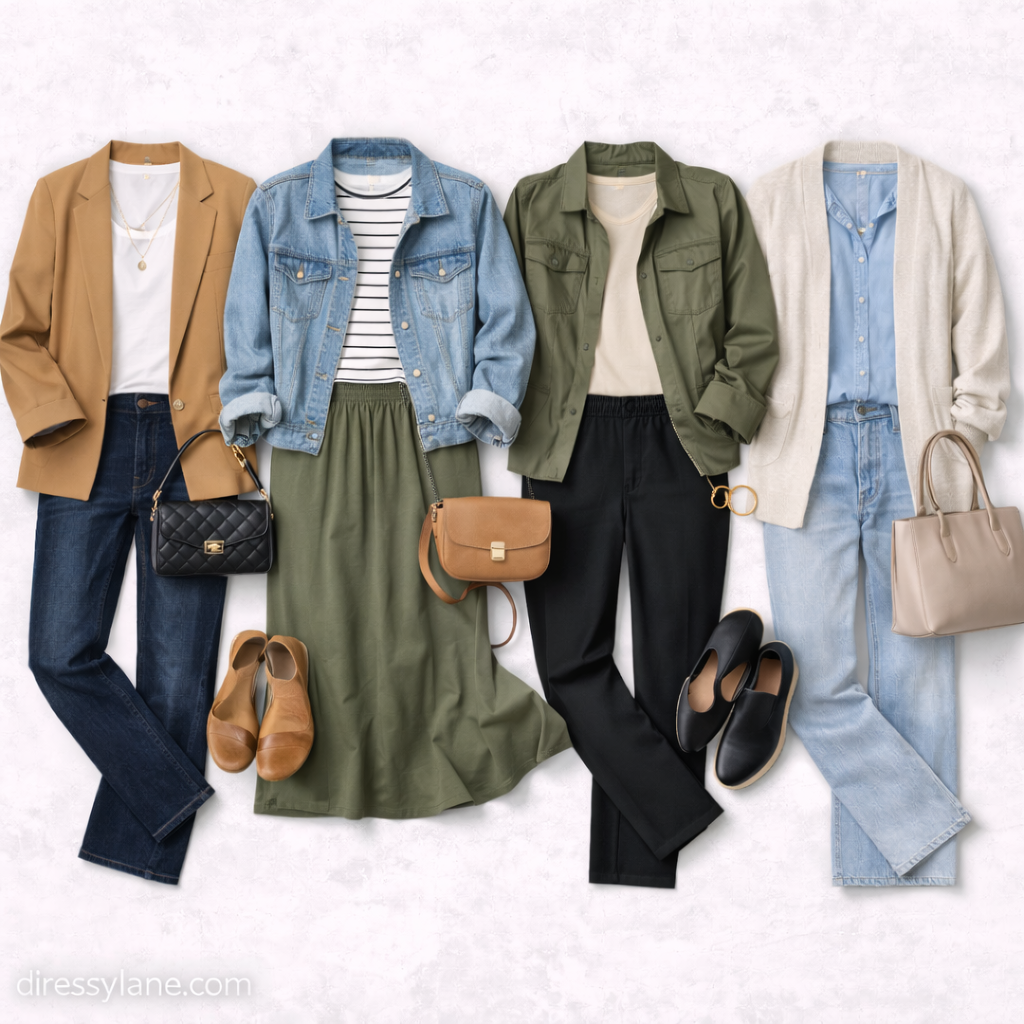
For women, everyday dressing becomes easier once you know which proportions you actually enjoy wearing.
Maybe that’s wide-leg trousers with a closer-fitting top. Maybe it’s straight jeans with an oversized cotton shirt. Maybe dresses genuinely make your mornings easier.
There isn’t one silhouette that suddenly becomes correct in your 30s.
For an Ordinary Day
Straight jeans with a ribbed knit, cotton shirt, or substantial T-shirt create an easy starting point.
Add loafers, ballet flats, leather sneakers, or ankle boots.
If you prefer wider trousers, try them with a tucked or slightly shorter knit so the waistband remains visible. That’s an easy way to create shape without needing anything tight.
For Work
Straight or wide-leg trousers in wool blend, ponte, or substantial crepe can be comfortable enough for a full workday while still looking polished.
Pair them with a cotton poplin shirt, fine-gauge knit, blouse, or simple jacket.
A midi dress can be even easier: one piece, comfortable shoes, and an outer layer.
I’d choose a work dress based partly on how it behaves when sitting. Some dresses that look perfect standing become surprisingly restrictive or ride up once you’re at a desk.
For Errands That Might Turn Into Plans
This is where a useful everyday wardrobe earns its keep.
Try dark jeans, a fitted knit, loafers, and a trench or casual jacket. Or wear relaxed trousers with a cotton T-shirt, leather sneakers, and a cardigan.
Either outfit can handle groceries or appointments without making you feel overdressed, but neither needs a complete change if someone suggests lunch afterward.
Dresses Can Be Practical Everyday Clothes
Dresses sometimes get categorized as either extremely casual or “for occasions,” but there is a useful middle ground.
A cotton shirtdress, ribbed knit midi, simple jersey dress, or linen-blend dress can be as easy as jeans.
The difference comes from styling.
A knit midi with sneakers and a denim jacket is casual. The same dress with loafers and a structured coat becomes more polished.
For colder weather, knee-high boots underneath a midi dress solve both the footwear and exposed-leg problem without requiring much thought.
If dresses suit your routine, I’d keep a couple that can survive normal washing and don’t require special undergarments or constant adjustment.
Shoes Should Match Your Actual Amount of Walking
Your 30s may be when you finally accept that uncomfortable shoes don’t become comfortable through optimism.
Keep footwear that covers the situations you genuinely encounter.
That could mean:
- Everyday sneakers
- Loafers or flats
- Ankle or Chelsea boots
- Sandals
- A dressier shoe for events
You don’t need every category.
If you walk several miles a day, prioritize cushioning and fit. If you drive almost everywhere and work in an office, your needs may be completely different.
I’d rather see a good outfit with practical shoes than an outfit that looks perfect in a photo but makes someone miserable after six blocks.
Learn the Five-Minute Upgrade
Everyday clothes become far more versatile when you know how to move them up one level.
You don’t necessarily need to change the entire outfit.
Try swapping:
- Athletic sneakers → leather sneakers or loafers
- T-shirt → fine-gauge knit
- Hoodie → overshirt or casual jacket
- Casual tote → structured leather or canvas bag
- Distressed jeans → clean dark denim
- Everyday jewelry → one slightly stronger piece
For men, changing sneakers to suede loafers and adding an overshirt can completely alter jeans and a T-shirt.
For women, swapping sneakers for loafers and adding earrings or a structured jacket can do the same.
Keep the upgrade simple enough that you’ll actually use it.
Don’t Automatically Dress “Older”
This is one rule I’d reject completely.
Turning 30 doesn’t require giving up trends, bright colors, short hems, relaxed jeans, sneakers, or anything else you genuinely enjoy.
What usually improves is your ability to tell which trends fit into your existing wardrobe.
If you love a current silhouette, wear it.
The difference is that you don’t need to rebuild your closet around every new silhouette that appears.
A trend should ideally work with clothes you already own. If buying one fashionable pair of trousers immediately requires three new tops and two pairs of shoes, I’d think twice.
Maintenance Becomes Part of Having Good Style
A small amount of clothing maintenance makes ordinary outfits look noticeably better.
Steam wrinkled shirts.
Remove pills from knitwear.
Clean sneaker midsoles occasionally.
Polish leather shoes.
Hang coats properly.
Get trousers hemmed rather than letting them drag along the pavement.
These aren’t glamorous purchases, but they matter.
I’ve found that people often interpret well-maintained clothes as expensive clothes, even when the individual pieces are fairly ordinary.
A $50 pair of trousers that fits correctly and has a clean hem can look better than a much more expensive pair that’s too long.
Keep Some Personality
A functional wardrobe shouldn’t become a sea of beige simply because you’re in your 30s.
If you like color, use it.
Wear the burgundy sweater, green trousers, red flats, patterned shirt, unusual jacket, or silver jewelry.
The easiest approach is to let your practical wardrobe provide the background.
Straight jeans, a white T-shirt, red shoes, and an interesting jacket still create an easy outfit. Navy trousers with a forest-green knit aren’t difficult to coordinate.
Your repeatable pieces should make personal choices easier, not eliminate them.
Final Thoughts
Knowing what to wear in your 30s for everyday life has very little to do with dressing older.
It’s about recognizing which clothes earn their space in your wardrobe.
Choose fabrics that survive regular wear. Find trousers you can actually sit in. Keep shoes that suit the amount of walking you do. Repeat outfit formulas that consistently work, and learn one or two simple ways to make them more polished when your plans change.
Most importantly, dress for the life you have now rather than an imaginary version of what someone in their 30s is supposed to look like.
A good everyday wardrobe isn’t the one with the most timeless pieces or the fewest trends. It’s the one you can open on a busy morning and quickly find something you genuinely want to wear.