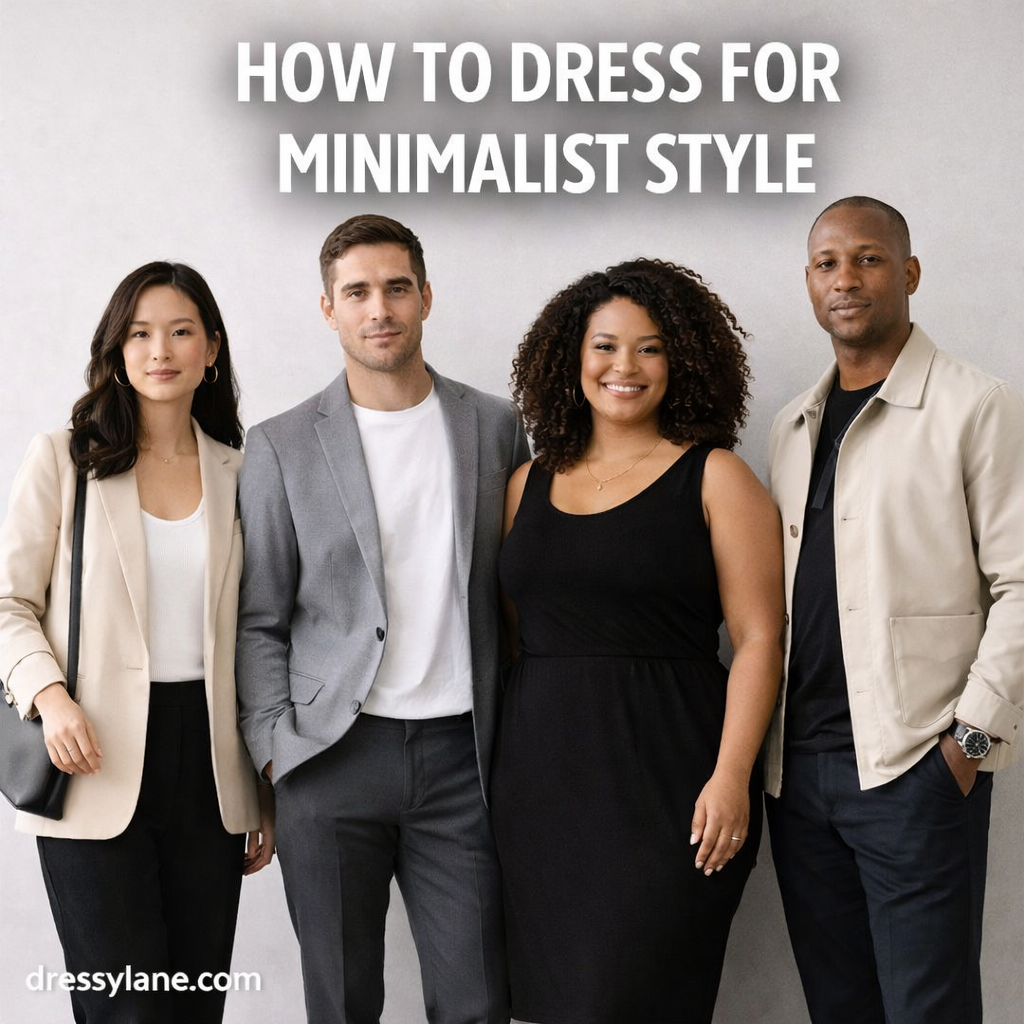
Minimalist style is easy to recognize but surprisingly easy to get wrong.
A good minimalist outfit might be nothing more than black trousers, a white cotton shirt, and loafers. What makes it work isn’t the number of pieces. It’s the cut of the trousers, the weight of the shirt, the proportions, and the fact that nothing feels accidental.
You also don’t need to empty your closet, wear beige every day, or build a perfectly coordinated 20-piece capsule wardrobe.
Minimalist style is really about editing: choosing straightforward clothes with good proportions and letting fabric, fit, and subtle details do more of the work.
Minimalist Doesn’t Have to Mean Plain
There’s a difference between a simple outfit and an unfinished one.
Consider a white T-shirt with black trousers. A thin undershirt-style tee with shapeless pants may look like something you threw on. A substantial cotton crewneck with a clean shoulder line, tucked into straight or gently wide-leg trousers, creates an entirely different silhouette.
That’s where minimalist dressing gets interesting.
Instead of relying on prints, embellishment, or lots of accessories, look for interest in:
- The texture of a ribbed knit
- The drape of wool trousers
- A crisp cotton poplin shirt
- A heavyweight jersey T-shirt
- Brushed wool or cashmere
- Washed linen in warmer weather
- Suede or smooth leather shoes
Texture is particularly useful. A cream cable-free knit with charcoal trousers has more depth than two thin, flat fabrics in similar colors, even though the outfit is still extremely simple.
Choose a Palette You Actually Want to Wear
Black, white, gray, navy, cream, camel, olive, and brown are common in minimalist wardrobes because they’re easy to combine.
But you don’t need all of them.
I’d actually recommend choosing two or three main neutrals rather than buying a little of every “minimalist” color.
If you naturally wear black, gray, and white, build around those. If warmer colors suit you better, cream, chocolate brown, camel, and olive can create the same streamlined effect.
And color isn’t forbidden.
A dark burgundy sweater with charcoal trousers can look just as minimalist as a beige one. So can a muted blue shirt under a navy coat.
What matters more is keeping the palette controlled enough that the pieces naturally work together.
Pay More Attention to Shape Than Decoration
Minimalist outfits put proportion under a microscope because there aren’t many other elements competing for attention.
If you’re wearing wide-leg trousers, a shorter jacket or neatly tucked top can give the outfit definition. With slim or straight trousers, a slightly roomier sweater or overshirt can create balance.
This doesn’t mean everything needs to be fitted.
In fact, some of the best minimalist outfits use volume. A long wool coat over straight trousers can look excellent. So can a boxy cotton shirt with relaxed pants.
The difference between relaxed and shapeless is usually intentional proportion.
Look at shoulder placement, sleeve length, trouser break, where a jacket ends, and how much fabric gathers around your waist and ankles. Those details matter much more here than whether something happens to be fashionable this season.
What a Useful Minimalist Wardrobe Looks Like
I wouldn’t start by deciding you need exactly 10, 20, or 30 pieces.
Start with the clothes you actually use.
For many people, a practical foundation might include straight-leg jeans, trousers, solid T-shirts, a few knit tops or sweaters, a crisp shirt, versatile outerwear, and two or three pairs of shoes.
Then make sure those pieces communicate with one another.
A charcoal sweater should work with your jeans and trousers. Your everyday coat should fit over both a T-shirt and a knit. Your shoes shouldn’t require an entirely separate group of outfits.
That’s more useful than reaching an arbitrary capsule-wardrobe number.
Minimalist Style for Women
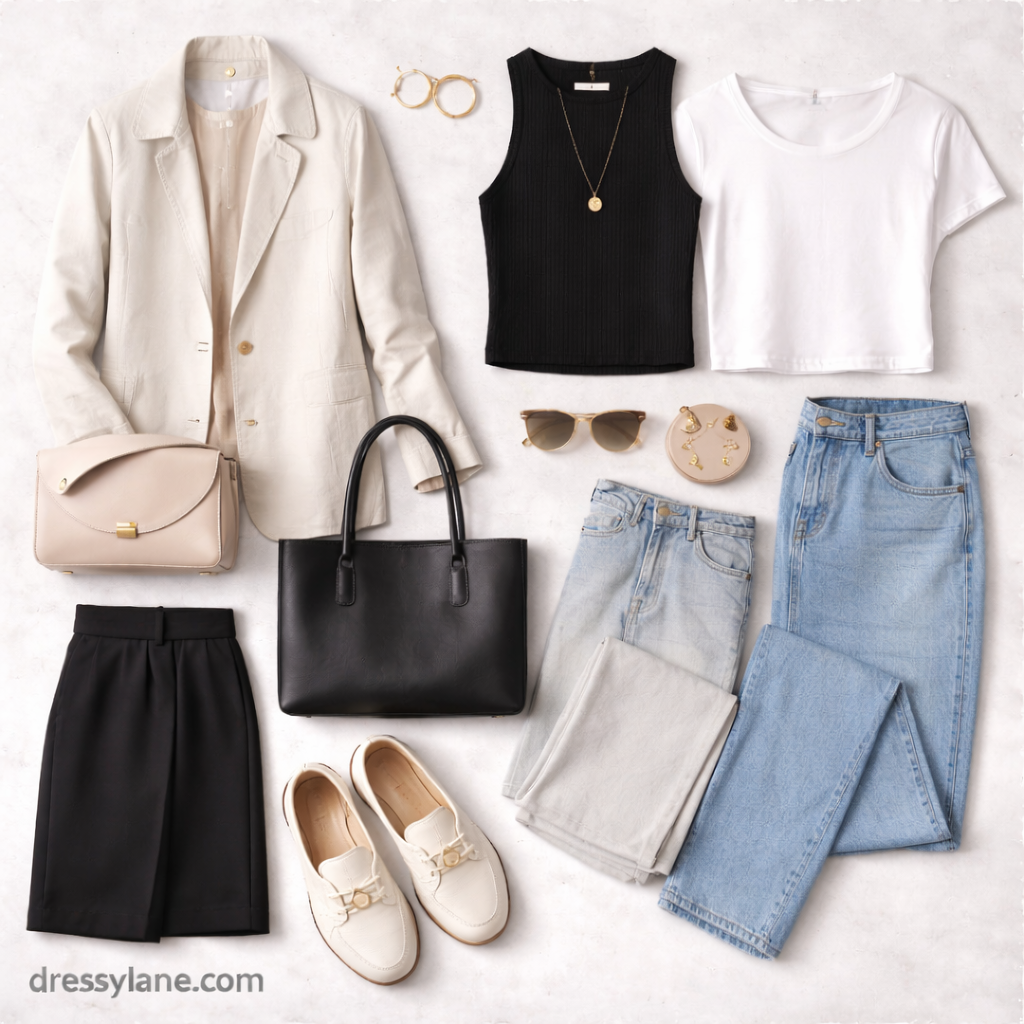
For women, minimalist dressing works particularly well when the silhouette provides the visual interest.
Try straight or wide-leg trousers with a fitted crewneck knit and loafers. Another easy combination is dark straight-leg jeans, a crisp oversized-but-not-enormous poplin shirt, and simple leather flats.
A practical minimalist wardrobe might include:
- Straight-leg or wide-leg trousers
- Dark jeans without heavy distressing
- Cotton T-shirts with substantial necklines
- Fine-gauge crewneck or mock-neck knits
- A simple midi dress
- A cleanly cut blazer or short jacket
- A wool coat or streamlined trench
- Loafers, flats, ankle boots, or simple sneakers
You don’t need to remove jewelry completely. Small hoops, a simple chain, or one sculptural ring can actually make a restrained outfit feel more personal.
I’d also avoid making every garment oversized at the same time. An oversized coat, huge sweater, very wide trousers, and chunky shoes can overwhelm the person wearing them. Usually one or two relaxed proportions are enough.
Minimalist Style for Men
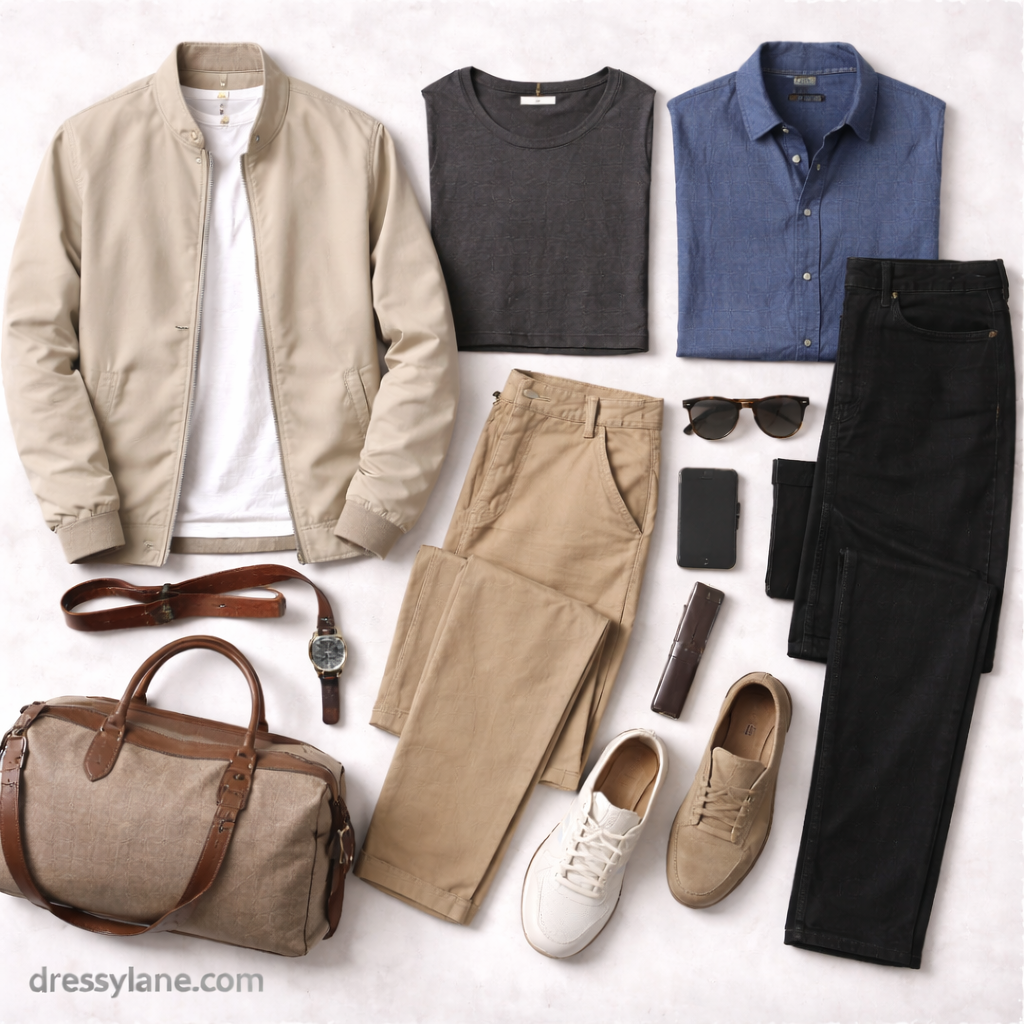
Men can use many of the same principles.
Start with straight or gently tapered trousers, dark denim, heavyweight T-shirts, Oxford or poplin shirts, fine-gauge knitwear, and uncomplicated outerwear.
An easy everyday outfit could be charcoal trousers, a white heavyweight T-shirt, and black leather sneakers. In cooler weather, add a navy wool overshirt or simple crewneck sweater.
Other useful combinations include:
- Dark jeans + gray merino sweater + leather sneakers
- Navy trousers + white Oxford shirt + loafers
- Olive chinos + cream knit + suede shoes
- Black trousers + knit polo + clean sneakers
Logos aren’t automatically incompatible with minimalist style, but I’d avoid making branding the focal point. A large graphic across the chest changes the visual character of an otherwise restrained outfit.
Subtle texture—a waffle knit, brushed wool jacket, suede shoe, or Oxford-cloth shirt—usually adds more interest without adding clutter.
Don’t Confuse Minimalism With Expensive Basics
One misconception worth dropping is that minimalist clothes need to be costly.
A $200 plain T-shirt isn’t automatically better for this style than a $30 one.
Look at the actual garment.
Does the collar lie flat? Is the cotton substantial enough that it doesn’t twist after washing? Are the seams straight? Does the shoulder sit where you want it? Does the fabric recover its shape?
I’d rather own an inexpensive T-shirt that fits beautifully than a luxury “essential” bought simply because it was marketed as timeless.
Spend more where construction and materials genuinely make a difference for you—perhaps a wool coat, leather shoes, trousers, or knitwear—and be practical everywhere else.
Accessories Should Have a Reason to Be There
Minimalist accessories don’t necessarily have to be tiny or invisible.
A structured leather tote, substantial watch, geometric earrings, or distinctive pair of glasses can become the strongest element in an otherwise restrained outfit.
The trick is not making everything compete.
If the bag is the focal point, you probably don’t need equally prominent jewelry, patterned shoes, and a statement belt.
One strong detail often looks more intentional than several smaller ones.
Don’t Purge Your Closet Just to Become “Minimalist”
This is the minimalist-style advice I’d ignore most quickly: getting rid of perfectly useful clothing just to achieve an arbitrary wardrobe size.
Minimalism isn’t a contest to see who can own the fewest shirts.
If you wear six different sweaters regularly, keep six sweaters. If your climate requires rain gear, summer clothing, heavy winter layers, and work clothes, your wardrobe will naturally be larger than someone’s who lives in one climate and works from home.
Instead, pay attention to what isn’t being worn.
If a shirt requires special trousers you never reach for, or shoes only work with one outfit, that’s more useful information than the total number of pieces in your closet.
Final Thoughts
Learning how to dress for minimalist style isn’t about stripping your wardrobe of color or reducing it to a prescribed number of basics.
It’s about being more deliberate with what you wear.
Start with a limited color palette, pay attention to proportion, and choose fabrics that give simple silhouettes some depth. Build around pieces that genuinely work together rather than buying something merely because it looks “minimalist.”
Most importantly, leave room for personality.
Maybe your wardrobe is almost entirely black. Maybe you always wear a silver watch. Maybe you prefer wide trousers, crisp white shirts, or olive outerwear.
Those repeated choices are what turn minimalism from a generic aesthetic into personal style.
When the fit, fabric, proportions, and colors are working together, you don’t need much else.